

How AI Fleet Management Turns Data into Better Decisions
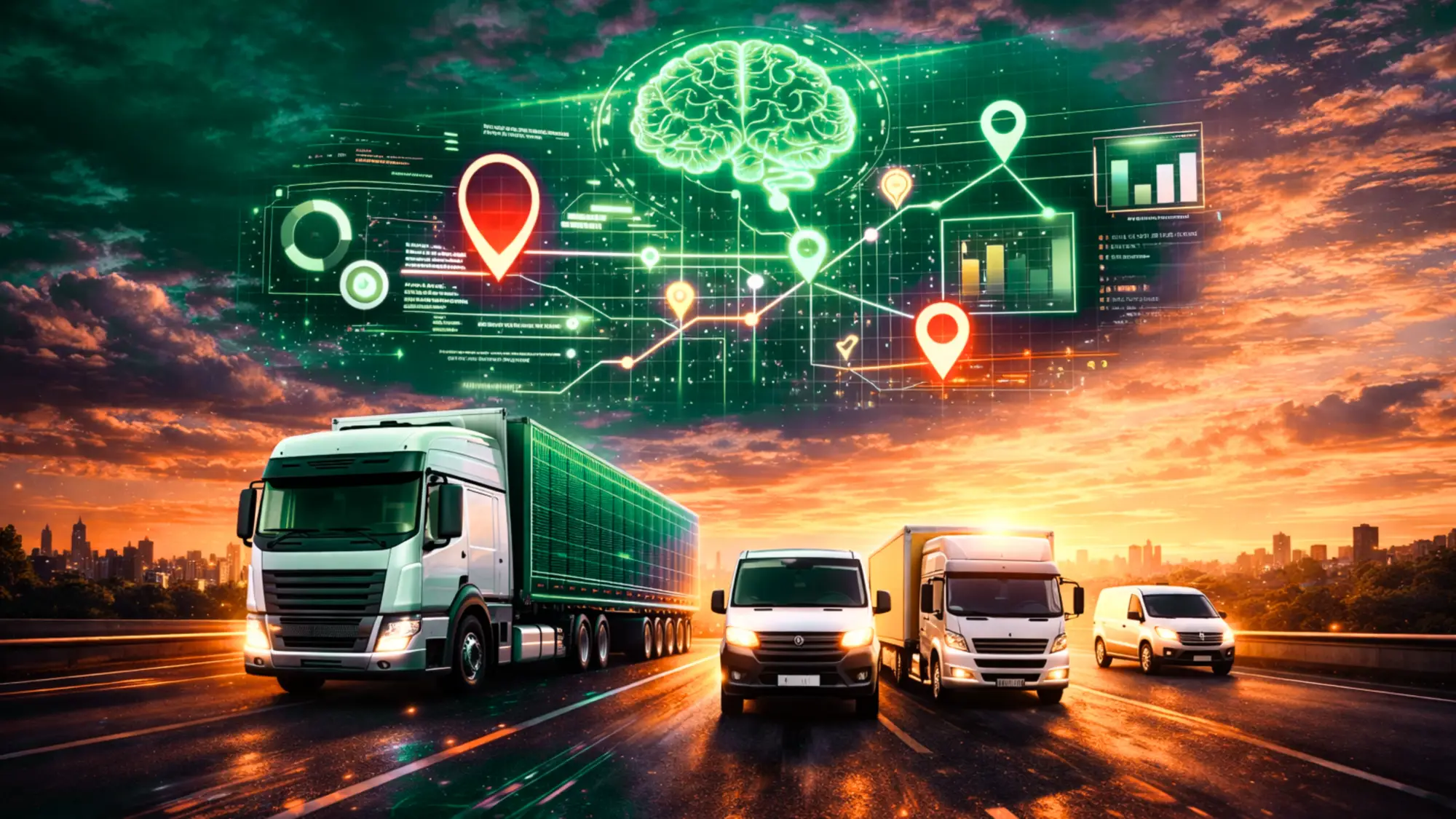
In 2026, artificial intelligence in fleet management is not a futuristic add-on, because fleets now generate too much data for manual decisions: location updates, driver behavior, idle time, route variation, and operational exceptions. AI in fleet management turns this data into actions by detecting patterns, predicting risk, and recommending the next best decision during the shift.
This guide explains what artificial intelligence in fleet management means, how it works, the technology behind fleet management technology, why AI in fleet management services is rising, the benefits and real use cases, how AI improves fuel control, the risks you should plan for, why Safee supports an AI-ready approach, and a practical roadmap to implement AI in fleet management.
If you want a demo that maps AI capabilities to your real fleet KPIs, request a Safee walkthrough now.
What Is Artificial Intelligence in Fleet Management?
Artificial intelligence in fleet management is the use of machine learning and advanced analytics to turn fleet data into predictive insights and automated decisions. Instead of only showing what happened, AI in fleet management helps you anticipate what will happen and what action you should take next, such as detecting risky behavior early or predicting which assets will become problematic.
In practical operations, AI fleet management works best when it sits on top of strong visibility, monitoring, and reporting foundations, because AI needs reliable inputs such as real-time tracking, historical data, and consistent event logs. Safee provides real-time visibility and reporting foundations across monitoring, alarms, dashboards, and reports that support data-driven decision-making.
If you want to build AI capability on a strong operational data foundation, request a demo.
Read also: how Safee combines between the software and hardware
How It Works?
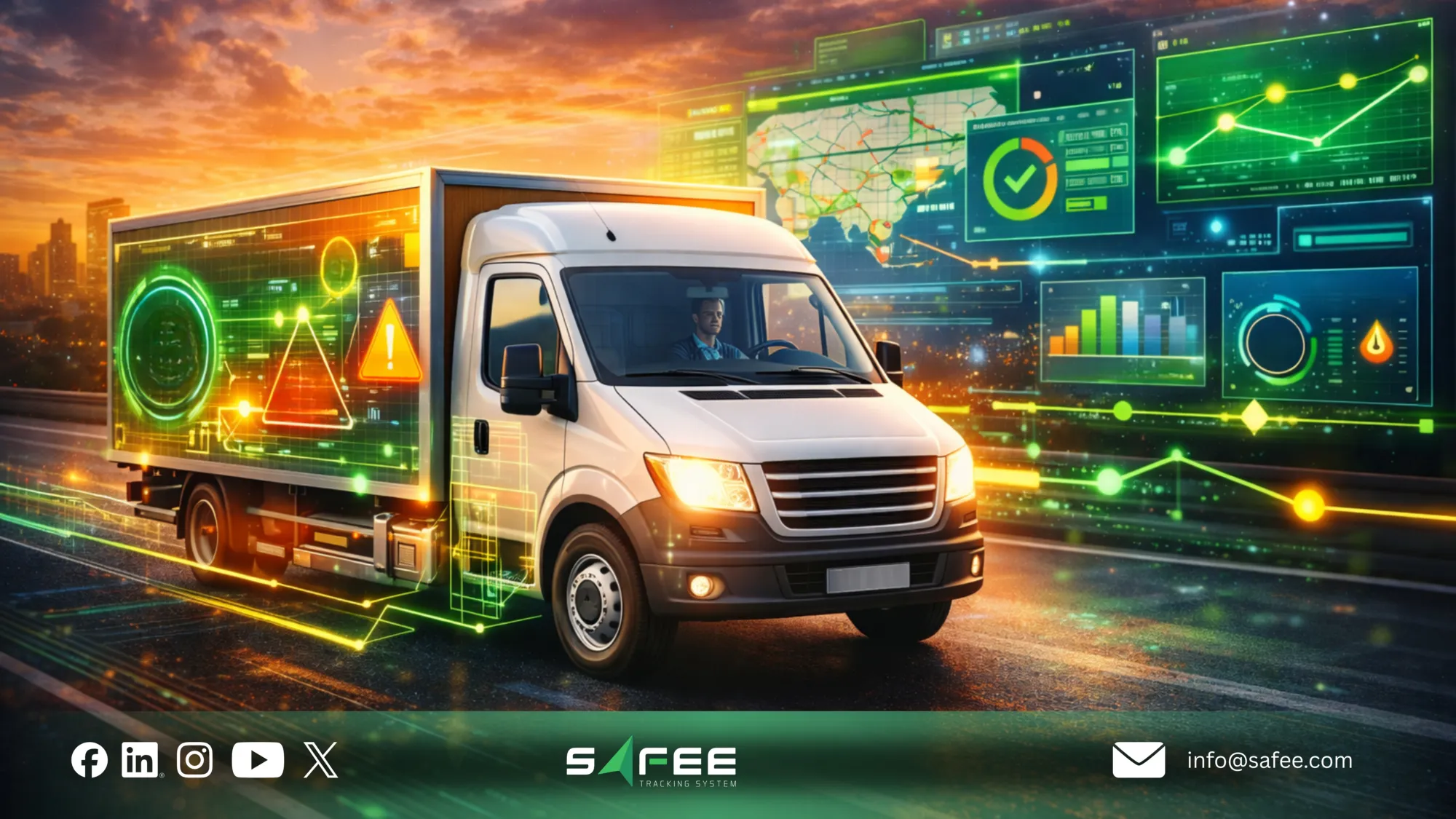
AI in fleet management works as a continuous loop: collect data, detect patterns, predict outcomes, recommend actions, and measure results. The stronger your data and operational workflow, the better artificial intelligence in fleet management performs, because AI relies on consistent updates and clear definitions of events and performance.
-
- Data collection from vehicles, drivers, and operations systems builds the raw input for AI fleet management.
-
- Pattern recognition identifies behaviors like repeated idling, route deviations, and abnormal stop time.
-
- Prediction estimates risk such as likely delays, downtime probability, or abnormal driving trends.
-
- Recommendations support dispatch and managers with next-best actions like reassigning resources or focusing supervision.
-
- Feedback loops use reporting to measure outcomes and improve future decisions.
If you want continuous improvement powered by analytics, contact Safee today.
The Technology Behind Modern AI Fleet Management
Modern AI fleet management is powered by multiple layers of fleet management technology, and the best results come when these layers work together in one operational platform. AI models need clean data streams, consistent event definitions, and a scalable data warehouse or analytics layer to process fleet activity at scale.
-
- Telematics and tracking streams provide real-time location and status updates that AI can analyze.
-
- Data processing pipelines clean, normalize, and structure fleet data for reliable analytics.
-
- Machine learning models detect anomalies, forecast risk, and classify behavior patterns.
-
- Dashboards and reports turn AI insights into operational actions and KPIs.
-
- Alerting and exception workflows push AI insights to the right people at the right time.
If you want AI-driven exceptions that trigger faster action, contact Safee today.
The Rise of AI in Fleet Management Technology
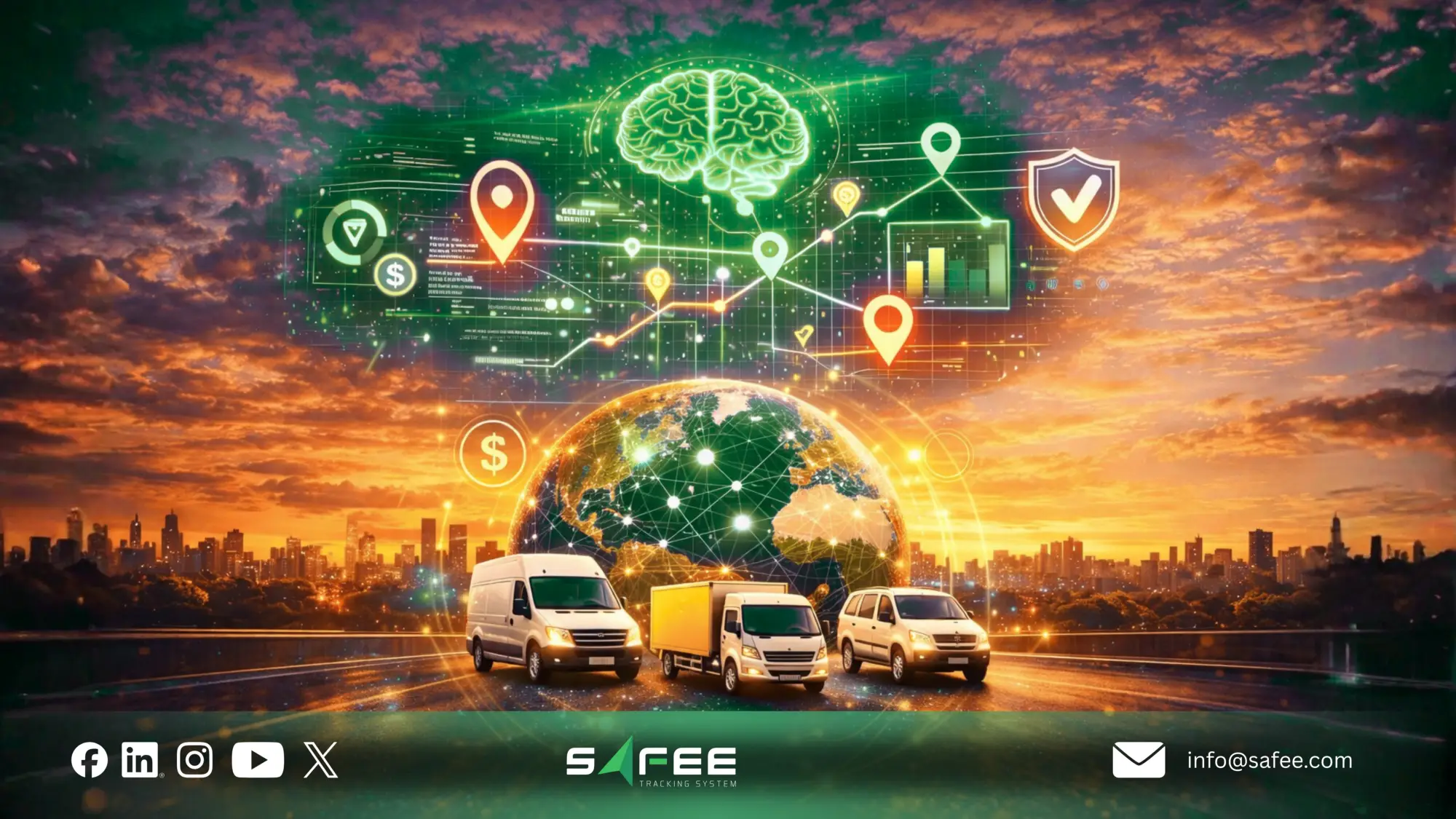
The rise of AI in fleet management technology is driven by one practical reality: fleets have grown too complex for manual supervision. More vehicles, more routes, tighter delivery windows, and higher customer expectations mean managers need automation that detects issues early and prioritizes attention.
As fleet management technology matures, businesses are shifting from visibility-first systems to decision-first systems. That is why AI in fleet management services is expanding: organizations want fewer dashboards that require interpretation and more systems that deliver clear recommendations, risk scoring, and measurable performance improvements.
If you want to move from visibility to decision intelligence, request a Safee demo now.
Read also: how cold chain can be managed with Safee
Core Benefits of AI in Fleet Management
AI in fleet management creates measurable benefits when it is applied to real KPIs and operational workflows.
-
- Faster decisions through automated prioritization of the most critical vehicles and trips.
-
- Lower fuel and cost waste by detecting patterns like repeated idling and inefficient routing.
-
- Better safety outcomes by identifying risky driving trends early and enabling coaching.
-
- Higher asset utilization by predicting downtime risk and balancing workload across vehicles.
-
- Stronger customer experience through improved ETA confidence and fewer service failures.
If you want more predictable delivery performance, request a Safee walkthrough now.
Real-World Use Cases of AI in Fleet Management
Real-world AI in fleet management use cases work best when they connect to clear operational actions rather than general analytics.
-
- Predictive maintenance signals based on abnormal patterns in vehicle behavior and usage history.
-
- Driver risk scoring to prioritize coaching and reduce incidents.
-
- Dynamic dispatch support to recommend better resource allocation during peak hours.
-
- Exception detection for route deviations, unusual stops, and offline assets.
-
- Performance benchmarking by site, route, or vehicle category using dashboards and reports.
If you want measurable performance comparisons, request a demo.
AI in Fleet Fuel Management and Cost Control
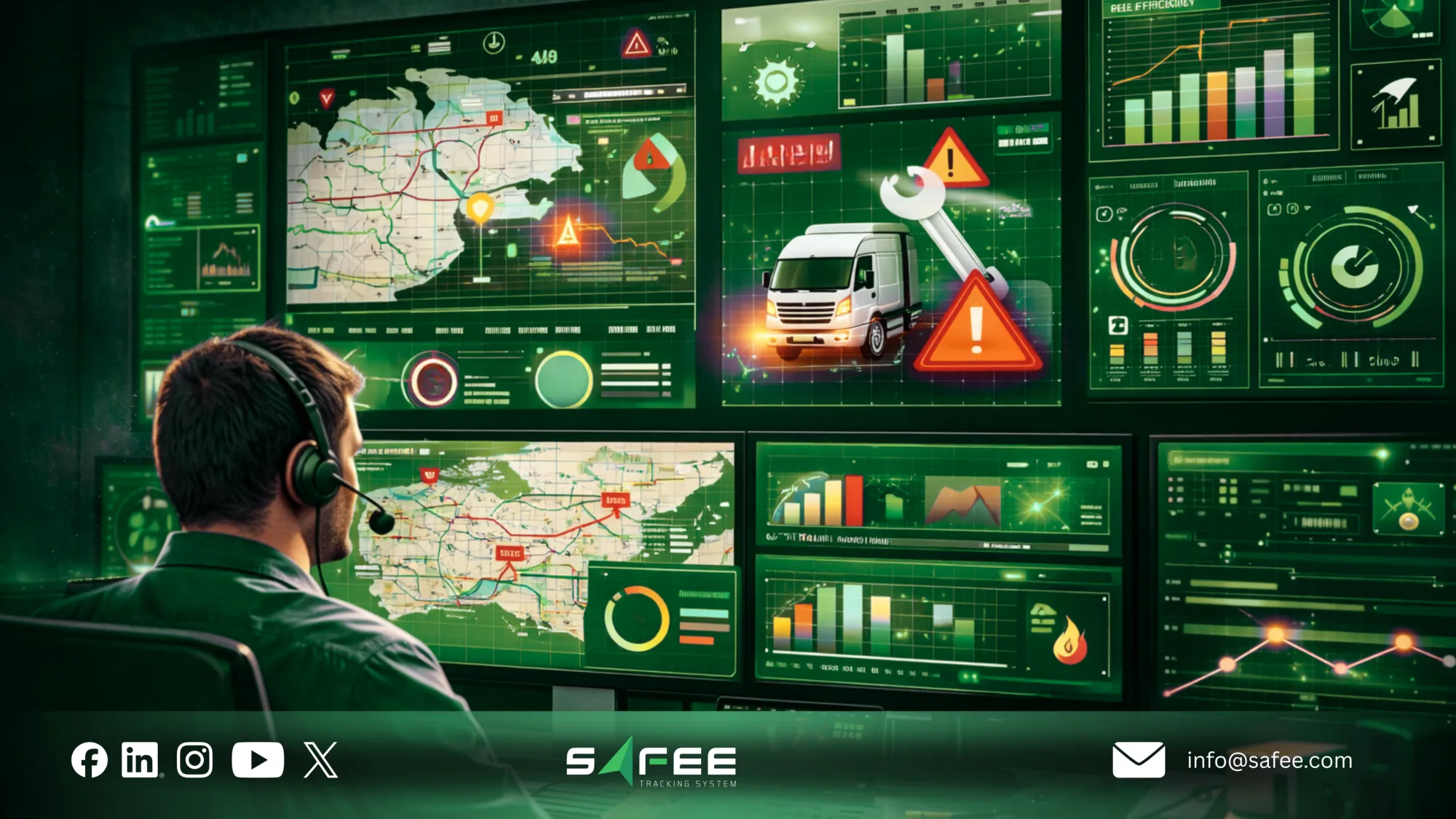
Fuel cost is one of the largest controllable expenses, and AI in fleet management helps because it can detect patterns humans miss across thousands of daily events. When AI identifies repeated idling, detours, harsh driving, and inefficient routing patterns, you can reduce fuel waste and protect margins without increasing workload.
Fuel control becomes stronger when AI fleet management is connected to reporting and dashboards that track trends over time, so you can prove improvement and enforce consistent policies. Safee supports reporting and operational monitoring designed to reduce vehicle idling and improve productivity, which directly supports fuel cost control goals.
If you want fuel control tied to reporting that leadership trusts, request a Safee demo now.
Read also: why sensors management is essential for every fleet
AI in Fleet Management Services: From Data to Decisions
AI in fleet management services is valuable when it turns raw tracking data into clear decisions. Instead of asking your team to interpret multiple screens, artificial intelligence in fleet management can rank risks, recommend actions, and automate alerts so managers act faster and more consistently.
The best AI in fleet management services are built on a platform foundation that already supports real-time monitoring, alarms, dashboards, and reporting. Safee provides these operational layers, which allows organizations to move toward AI-driven decisioning with structured data and consistent workflows.
If you want to build an AI-ready operation on top of proven fleet monitoring, contact Safee
Challenges and Risks of AI Fleet Management
AI fleet management delivers value, but it also comes with risks you must manage, especially if data quality and governance are weak. The biggest risk is expecting AI to fix operational issues without improving the fundamentals: consistent tracking, clear workflows, and disciplined reporting.
-
- Poor data quality leads to weak predictions and false alerts.
-
- Over-alerting creates fatigue and reduces trust in the system.
-
- Lack of process ownership causes AI insights to be ignored.
-
- Change management is required so teams adopt AI-driven workflows.
-
- Privacy and compliance requirements must be respected based on your policies and local regulations.
If you want governance built into your fleet technology approach, contact Safee today.
Why Safee Is Your AI-Powered Fleet Management Solution
Safee supports an AI-powered direction by providing the platform foundations that artificial intelligence in fleet management needs: real-time visibility, monitoring tools, alarm-based exception handling, dashboards, and report-based analysis. When your data is consistent and your workflows are structured, you can apply AI in fleet management to improve safety, utilization, fuel control, and decision speed.
Safee is designed to provide smart real-time visibility and easy-to-use reporting, analysis, and management features that help reduce idling, improve productivity, and minimize downtime, which are the exact KPI areas where AI fleet management drives the strongest impact.
If you want a demo focused on your KPIs and fleet structure, request a Safee demo now.
Implementing AI in Fleet Management: A Practical Roadmap
Implementing AI in fleet management works best when you build capability in phases: first visibility, then governance, then automation, then predictive decisioning. This avoids the common failure of launching AI models before your operation has reliable data and disciplined workflows.
-
- Phase 1: Standardize tracking, monitoring views, and reporting so your data is consistent.
-
- Phase 2: Define KPIs and exception rules that AI will optimize, such as idle time, route deviation, and risk behavior.
-
- Phase 3: Implement alerts and dashboards that support action during the shift.
-
- Phase 4: Introduce AI-driven scoring and prediction for maintenance, safety, and fuel optimization.
-
- Phase 5: Review results monthly, tune models, and expand use cases across the fleet.
If you want continuous improvement tied to reporting, contact Safee today.
Conclusion:
Now artificial intelligence in fleet management helps you move from reacting to problems to preventing them—by turning fleet data into alerts, predictions, and next-best actions.
The best results come when AI in fleet management is built on strong fleet management technology like real-time monitoring, dashboards, and reporting—so decisions stay clear and measurable.
Request a Safee meeting now to see how an AI-ready platform fits your KPIs.
Ready to improve your fleet operations?
Tell us what you would like to improve. A Safee specialist will reply by email.
Usually replies within one business day • No sales spam
Your details are used only to respond to your request. Privacy Policy