Which Road Oil Transport Tips Matter Before Dispatch?
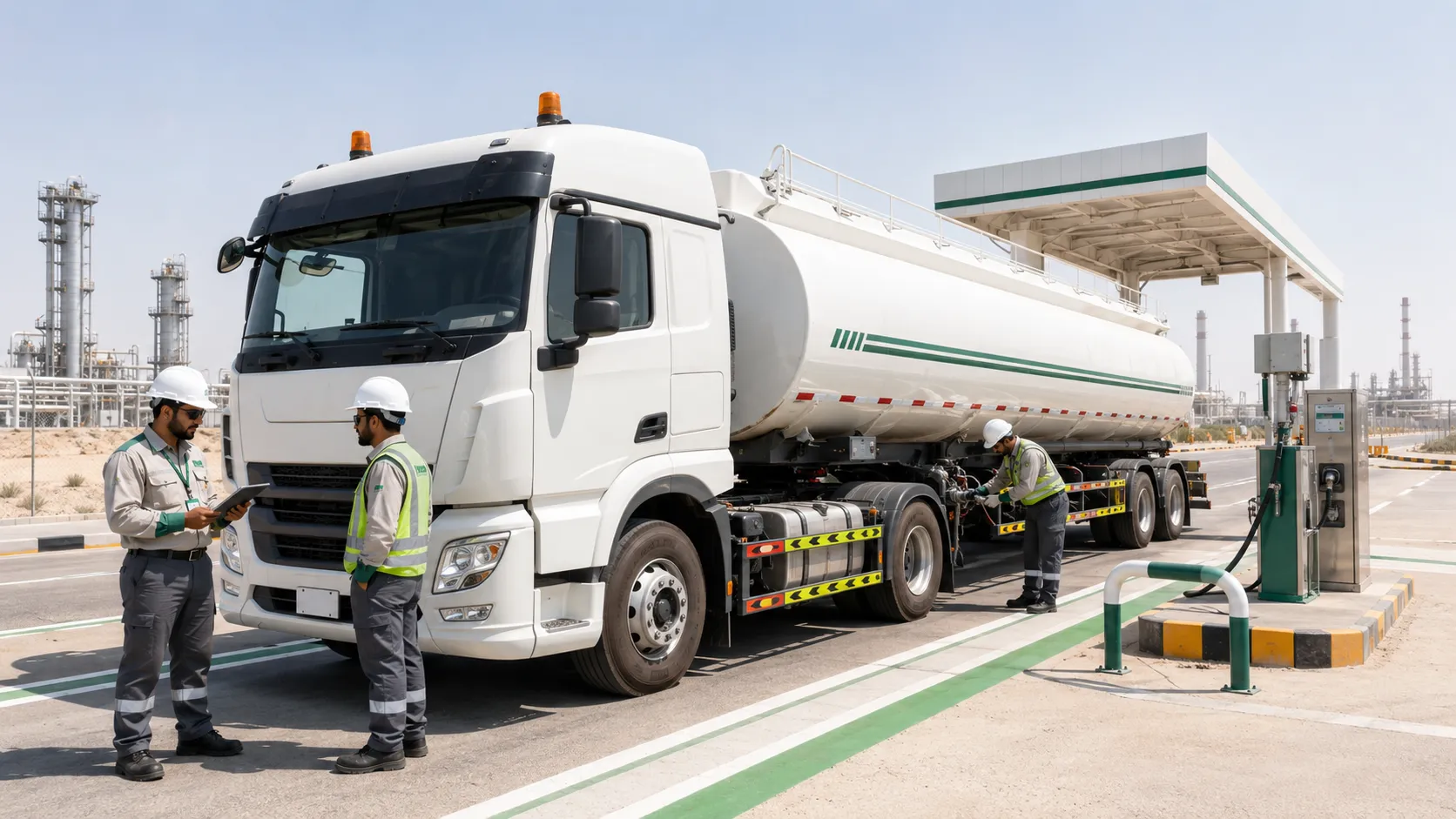
When maritime uncertainty around the Strait of Hormuz increases, road transport becomes a more important continuity tool for GCC oil and gas operators. It cannot replace the scale of marine movement, but it does become a critical option for inland distribution, depot-to-site transfers, short-haul redistribution, and urgent industrial supply.
That shift puts more pressure on dispatch, route approval, driver readiness, tanker condition, receiving-site controls, and communication reliability. For B2B operators, the safer approach is not to move faster by default but to tighten the checks that happen before dispatch and maintain stronger control throughout the journey.
The following guidance focuses on the practical controls fleets should not miss before transporting oil by road when Hormuz-related risk affects logistics planning.
Why road transport matters more as Hormuz risks rise?
The Strait of Hormuz remains a major pressure point for regional energy logistics. When disruption risk rises, the immediate challenge for GCC operators is not to replace marine transport one for one but to protect inland continuity with disciplined road movements. That usually means prioritizing essential loads, validating alternative corridors, and avoiding the dispatch shortcuts that appear when supply pressure increases.
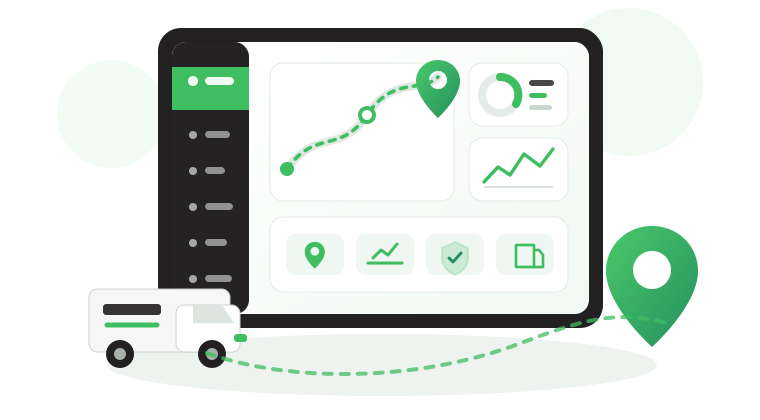
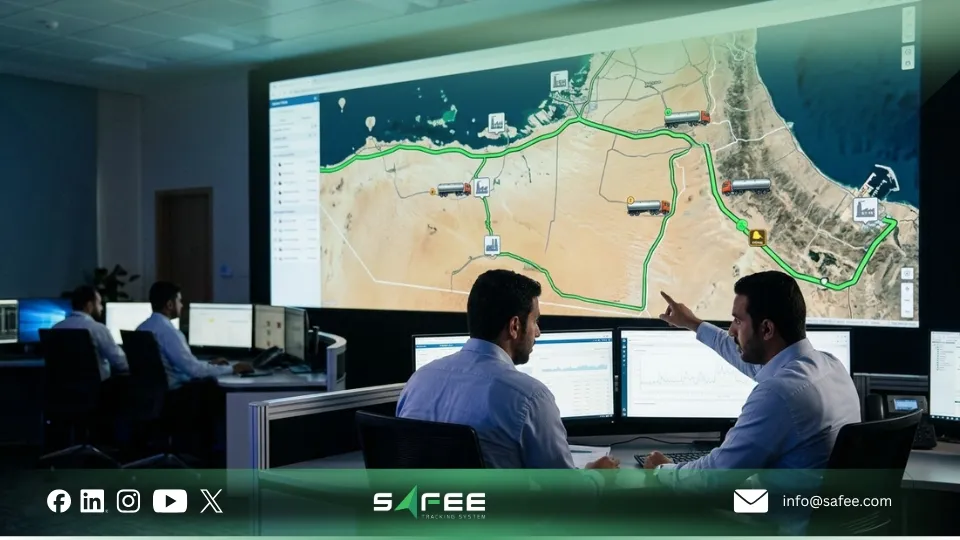
In practice, the companies that handle this period best are the ones that combine operational discipline with real-time visibility. In operational terms, that level of control depends on more than map visibility alone. Teams need approved journey planning, live vehicle monitoring, configurable alerts, escalation logic, and post-trip reporting. That is where a connected operating environment becomes commercially valuable, not just operationally useful.
They know which journeys are genuinely necessary, which routes are approved for hazardous cargo, which sites are ready to receive the load, and what action to take if a truck stops, deviates, or loses communication.
8 road oil transport tips before dispatch
The following tips highlight the key checks and control measures fleets should apply before moving oil by road under higher-risk conditions.
Tip 1: Verify driver, tanker, and shipment documents
The most important safety control still happens before the engine starts. Hazardous-load movements should not proceed unless the operator has confirmed driver qualifications, dangerous-goods documentation, vehicle registration, tanker inspection status, insurance validity, route permissions, emergency contacts, and receiving-site instructions.
This is also the point where local compliance variables should be checked carefully. GCC operators may need to validate country-specific transport rules, restricted-zone access, site induction requirements, spill-response readiness, insurer conditions, and any national reporting obligations. If the load is moving in Saudi Arabia, teams should also confirm that local digital workflows and tracking requirements align with relevant compliance expectations, such as WASL-related processes where applicable. This is also where digital control reduces avoidable gaps. Instead of relying on manual follow-up across calls, spreadsheets, and isolated records, operators need a clearer operational view of vehicle status, compliance-related exceptions, and journey readiness before dispatch.
Tip 2: Approve the Route before the truck moves
When Hormuz-related risk increases, dispatch teams often face pressure to move cargo quickly. That pressure makes ad-hoc routing more dangerous, not less. Before any oil transport journey begins, the route should be reviewed against road condition, congestion, checkpoints, borders, populated zones, restricted infrastructure, weather exposure, rest opportunities, and emergency access constraints.
An approved-corridor model is more reliable than shift-by-shift improvisation. It reduces decision fatigue, keeps risk treatment consistent, and makes it easier to spot when a requested journey falls outside the company’s acceptable risk envelope for hazardous cargo. This is exactly where journey management systems add value. Operators need more than route discussion; they need a structured process for approving journeys, monitoring execution, and controlling deviations against defined trip rules. For hazardous cargo, route approval is not just a planning task. It is a frontline risk-control measure.
Tip 3: Define speed, stop, and communication thresholds
A solid journey plan turns policy into measurable controls. Before dispatch, operators should define who the approved driver is, what vehicle and tanker are allowed, which speed thresholds apply, how long the trip should take, where checkpoints sit, when rest logic applies, and what level of deviation requires escalation.
Communication thresholds are especially important on long GCC routes. If the fleet team does not define how long a truck can remain silent, off-route, or stationary before intervention, control room decisions become inconsistent and reactive. The point is to remove ambiguity before the trip begins.
Thresholds like speeding, unplanned stops, route deviation, delayed arrival, and communication silence become far more useful when they are built into the operating workflow itself. That allows control-room teams to move from passive tracking to faster, more consistent exception response.
Tip 4: Tighten loading, unloading, and handover controls
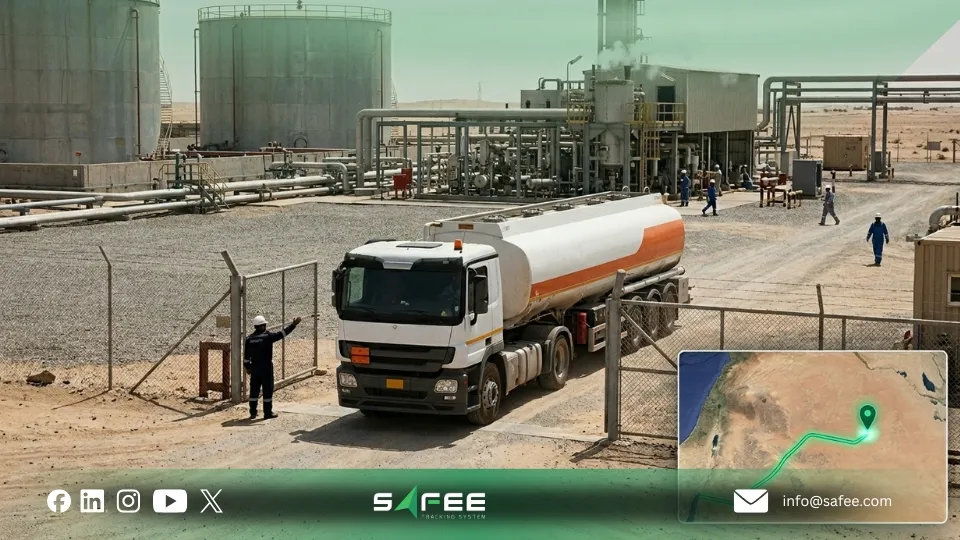
Loading and unloading are frequently the highest-risk phases of the workflow because multiple teams, physical interfaces, and ignition hazards come together at the same point. At a minimum, operators should verify site risk assessment, ignition-source control, earthing or bonding requirements, hose compatibility, overfill prevention, emergency-stop awareness, spill-response readiness, and traffic segregation.
Handover discipline matters just as much. Before release, the team should confirm seal integrity, quantity confirmation, site sign-off, anomaly logging, and dispatch notification that the transfer has been completed. Weak handover control can undermine an otherwise well-managed journey.
Tip 5: Prepare for remote routes and communication loss
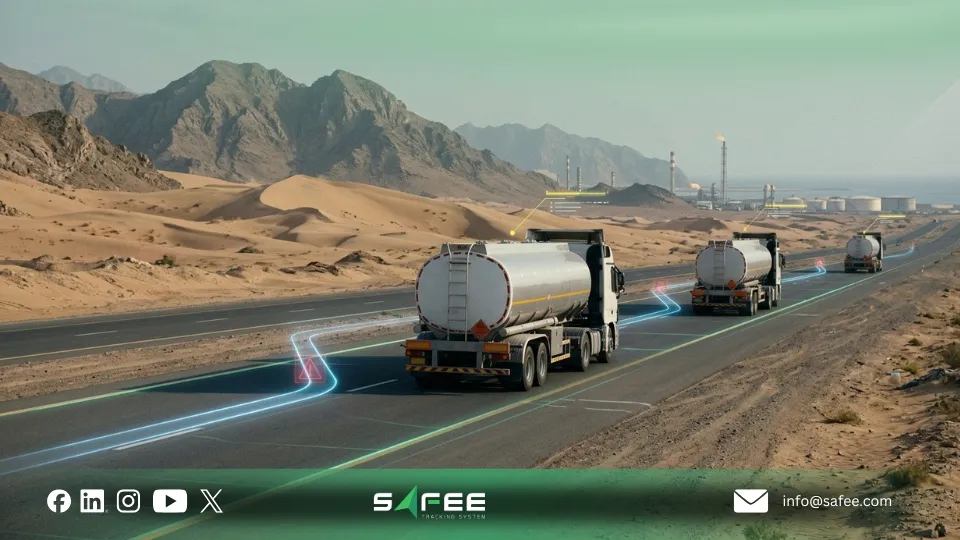
A route that looks acceptable under normal cellular coverage can become high-risk once the journey crosses into desert, border, or low-signal terrain. For remote operations, fleets should define fallback communication methods, escalation owners, and the conditions under which a truck must stop, check in, or reroute.
This is where satellite-backed communication can add practical value. The goal is not technology for its own sake; it is keeping the control room connected to the movement when standard networks become unreliable.
For operators crossing desert corridors, border routes, and low-signal areas, communication resilience should be built into the journey plan, not treated as a backup after failure. Maintaining visibility and escalation capability in remote terrain is essential for both safety control and operational continuity.
Tip 6: Use real-time monitoring for exception management
Live visibility only matters when it drives action. During hazardous journeys, dispatchers should actively monitor for route deviation, speeding, unscheduled stops, missed checkpoints, geofence breaches, communication gaps, and late-arrival drift. Each of these events should trigger a defined operational response rather than a passive record in the system.
For B2B operators, this is where monitoring becomes commercially important as well as operationally important. Faster exception management protects continuity, reduces incident exposure, and improves the audit trail when customers or regulators need confirmation that the movement remained under control.
The value of live monitoring increases further when alerts are paired with stronger operational context. Faster visibility into route deviation, geofence breaches, prolonged stops, and communication gaps helps operators intervene sooner, protect continuity, and improve the audit trail after the journey ends.
Tip 7: Review completed journeys and update corridor rules.
Journey management does not end when the truck arrives. Operators should review completed trips for repeated delays, unsafe stops, route deviations, communication black spots, and site-level handover issues. Those findings should feed directly into corridor approval, dispatch rules, and driver coaching.
Without post-trip review, fleets repeat the same risk pattern under pressure. With it, they create a safer and more defensible operating model for future hazardous-load movements.
Tip 8: Turn controls into daily practice with connected systems
Operational discipline is easier to define than to sustain, especially when hazardous-load movements increase under logistics pressure. What B2B operators need is not another disconnected tool, but a connected operating environment that links journey planning, live visibility, alerts, reporting, visual context, and remote-route communication.
For oil and fuel transport by road, this kind of connected workflow helps operators improve trip control, speed up escalation, strengthen compliance visibility, and create a more defensible post-trip record when routes become less predictable.
Request a Safee demo to see how a connected fleet workflow can support higher-risk road transport operations.
Also read: Why Leading Fleets Choose Safee Journey Management System
Pre-dispatch checklist for road oil transport across the Hormuz Strait
The checklist below summarizes the minimum practical checks operators should confirm before moving hazardous oil cargo by road.
Control area | What to verify before dispatch |
Driver readiness | License validity, dangerous-goods qualifications, fatigue fit-for-duty, and route briefing completed |
Vehicle and tanker | Registration, inspection or tanker certificate status, mechanical readiness (e.g. tire pressure, engine oil, brakes, cooling water, etc), and required safety equipment. |
Shipment documents | Load paperwork, shipment identification, seal references, insurance, and authority permissions |
Route control | Approved corridor, restricted-zone access, checkpoints, rest logic, and emergency access considerations |
Communication plan | Primary communication method, fallback method, escalation tree, and contact numbers |
Receiving site | Delivery instructions, site acceptance conditions, unloading readiness, and sign-off expectations |
Emergency readiness | Spill response capability, incident reporting path, and stop-work decision authority |
How to operationalize this checklist consistently
For many operators, the challenge is not defining the checklist. It is making sure every control is visible, followed, escalated, and reviewable across every journey. That is where a connected operational workflow becomes valuable for dispatch, HSE, and fleet management teams.
Avoiding Hormuz-related disruption does not simply mean shifting cargo inland. It means controlling the full journey more tightly before dispatch, during execution, and after completion. For GCC operators moving oil and fuel by road, that requires approved routes, verified assets and people, clear escalation thresholds, reliable communication, active monitoring, and defensible reporting.
That is the operating standard B2B fleets should aim for when supply pressure rises. At Safee, we support that standard by helping operators build a more connected control model across planning, monitoring, response, and review.
If your business is reviewing how to move hazardous cargo more safely under current logistics risk, contact us about the right operating model for your fleet.
Also read: What Is a Video IVMS & How It’s Revolutionizing Fleet Safety
FAQs about road oil&gas transport tips
What should operators verify before transporting oil by road?
They should verify the driver, vehicle, tanker inspection status, shipment documents, route permissions, communication plan, emergency contacts, and receiving-site readiness before dispatch.
Why is route approval important when Hormuz-strait risk affects logistics?
Because dispatch pressure can lead to improvised routing. Approved corridors reduce exposure to unsuitable roads, restricted areas, delays, and inconsistent risk decisions for hazardous cargo.
What is the main value of real-time monitoring during hazardous movements?
It helps teams detect and act on route deviation, speeding, missed checkpoints, prolonged stops, and communication loss while the journey is still underway.
How can Safee support road oil transport operations?
Safee helps operators strengthen hazardous-load control through journey planning support, live monitoring, faster exception visibility, reporting discipline, and stronger communication continuity across higher-risk routes.
Ready to improve your fleet operations?
Tell us what you would like to improve. A Safee specialist will reply by email.
Usually replies within one business day • No sales spam
Your details are used only to respond to your request. Privacy Policy