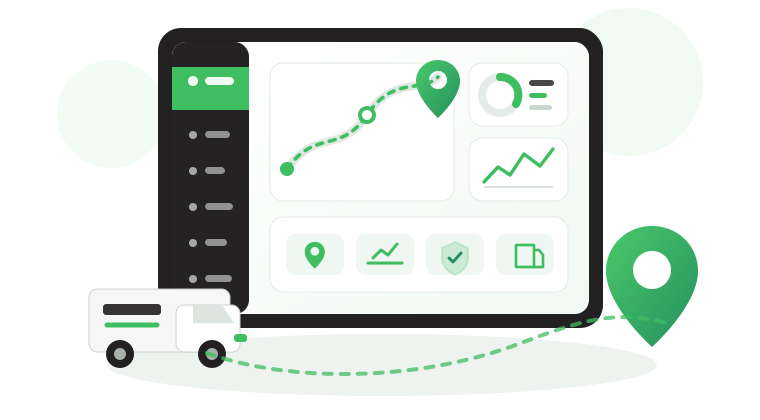

How Agricultural Fleet Management Protects Every Season
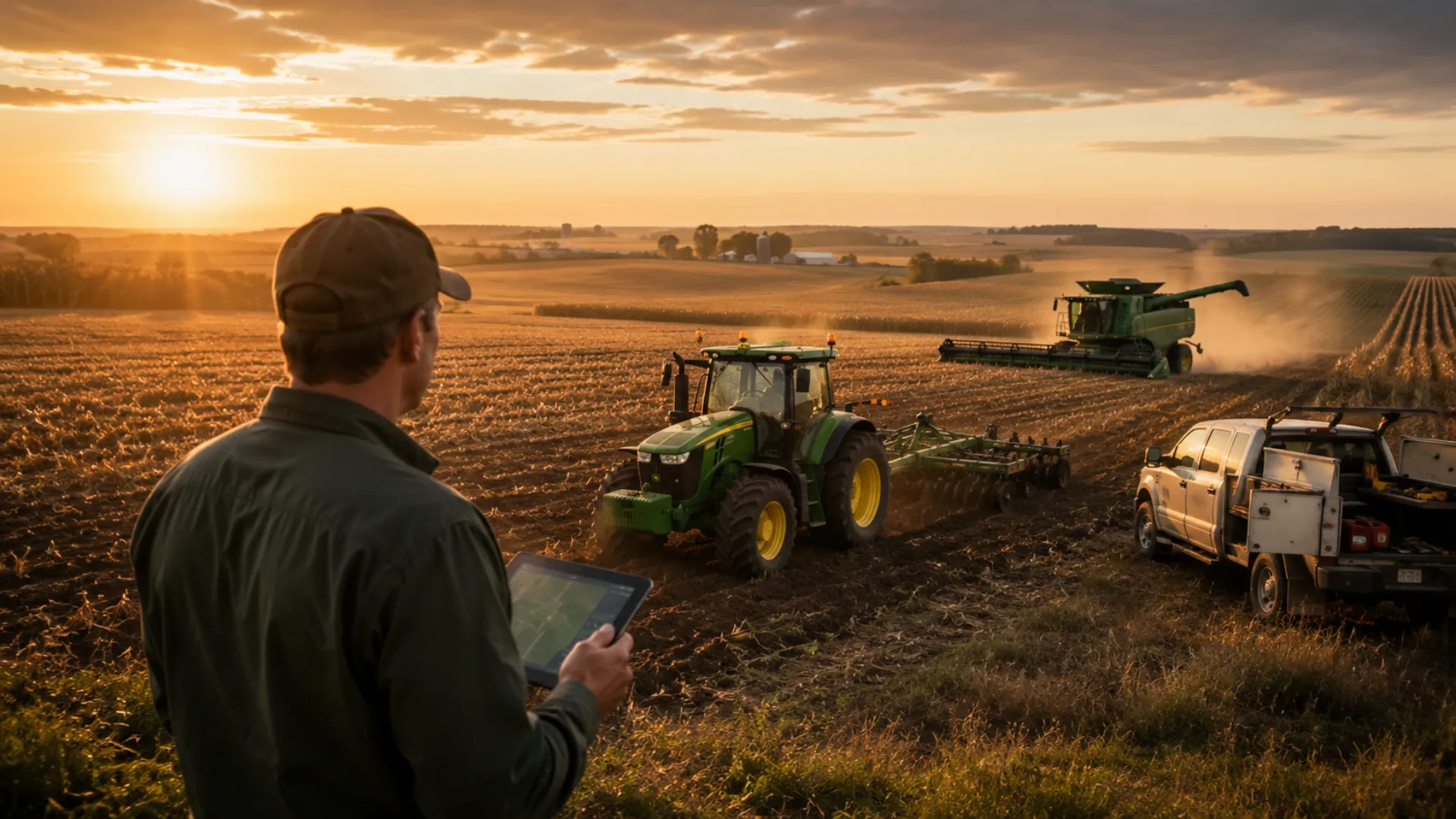
A farm can lose valuable hours before anyone sees the problem clearly. A tractor waits in the wrong field, a harvester needs service during peak harvest, a transport truck is delayed at the loading point, and fuel use is reviewed after the season is already over. For farms and agribusinesses in the UAE, the GCC, and global markets, agricultural fleet management is no longer just about tracking machines. It is about protecting seasonal productivity when timing matters most.
This guide explains what agricultural fleet management means, how agriculture fleet management differs from basic GPS tracking, how Agriculture Fleet Tracking and Management supports tractors, harvesters, transport trucks, and field-support vehicles, and how Safee helps teams connect live visibility, field zones, engine-hour maintenance, fuel review, operator accountability, reports, and seasonal planning in one workflow.
What is agricultural fleet management?
Agricultural fleet management is the process of tracking, coordinating, maintaining, and improving the vehicles and powered equipment used across farms and agribusiness operations. It can include tractors, harvesters, sprayers, pickups, water trucks, transport trucks, trailers, ATVs, service vehicles, and other field-support assets.
For a farm manager, the value is practical: which tractor is working in which field, which harvester needs service before the next shift, which transport truck is waiting too long at the loading point, and which operator is assigned to each machine. A strong setup replaces scattered calls, paper records, and delayed updates with live tracking, configured alerts, maintenance records, and scheduled reports.
Agriculture fleet management covers more than road vehicles. A farm fleet may include machines working inside fields, moving between plots, serving storage sites, or transporting goods between farms, depots, and processing facilities.
- Tractors used for field preparation, planting, spraying, towing, and general farm work.
- Harvesters operating during short, high-pressure seasonal windows.
- Transport trucks moving crops, feed, water, livestock, or farm inputs.
- Pickups and service vehicles supporting supervisors, mechanics, and field crews.
- ATVs and light utility vehicles used for inspection, irrigation checks, and field movement.
- Trailers, tanks, and powered implements where tracking or usage visibility is required.
This is where Agriculture Fleet Tracking and Management becomes different from basic GPS tracking. GPS shows a machine on the map. Agriculture Fleet Tracking and Management Software should help managers understand whether that machine is being used productively, whether it is working in the correct field zone, whether it needs maintenance, and whether the seasonal plan is still on schedule.
For real-time vehicle and equipment visibility, we recommend you to explore our Live Vehicle Tracking capabilities.
Why do farms and agribusinesses lose money without fleet management tools?
Farms usually know that equipment is expensive. What is harder to see is how much productivity is lost through poor visibility, reactive maintenance, weak utilization tracking, and delayed decisions.
- Machines sit idle because managers cannot see real-time availability.
- Harvesters lose valuable hours because maintenance was not planned around engine hours.
- Operators spend extra time moving between fields without field-zone visibility.
- Fuel use is difficult to review by vehicle, field operation, or shift.
- Transport trucks wait too long at farms, silos, depots, or processing points.
- Maintenance records stay in notebooks, spreadsheets, or workshop conversations.
- Supervisors depend on calls and messaging apps instead of live operational data.
- Leadership cannot compare utilization, downtime, fuel events, and seasonal performance easily.
During planting and harvest, lost hours can create pressure across labor, equipment, logistics, storage, and delivery commitments. Good agricultural fleet management gives teams earlier visibility, so the right person can act before a small delay becomes a seasonal bottleneck.
Benefits of agricultural fleet management for farmers and agribusiness?
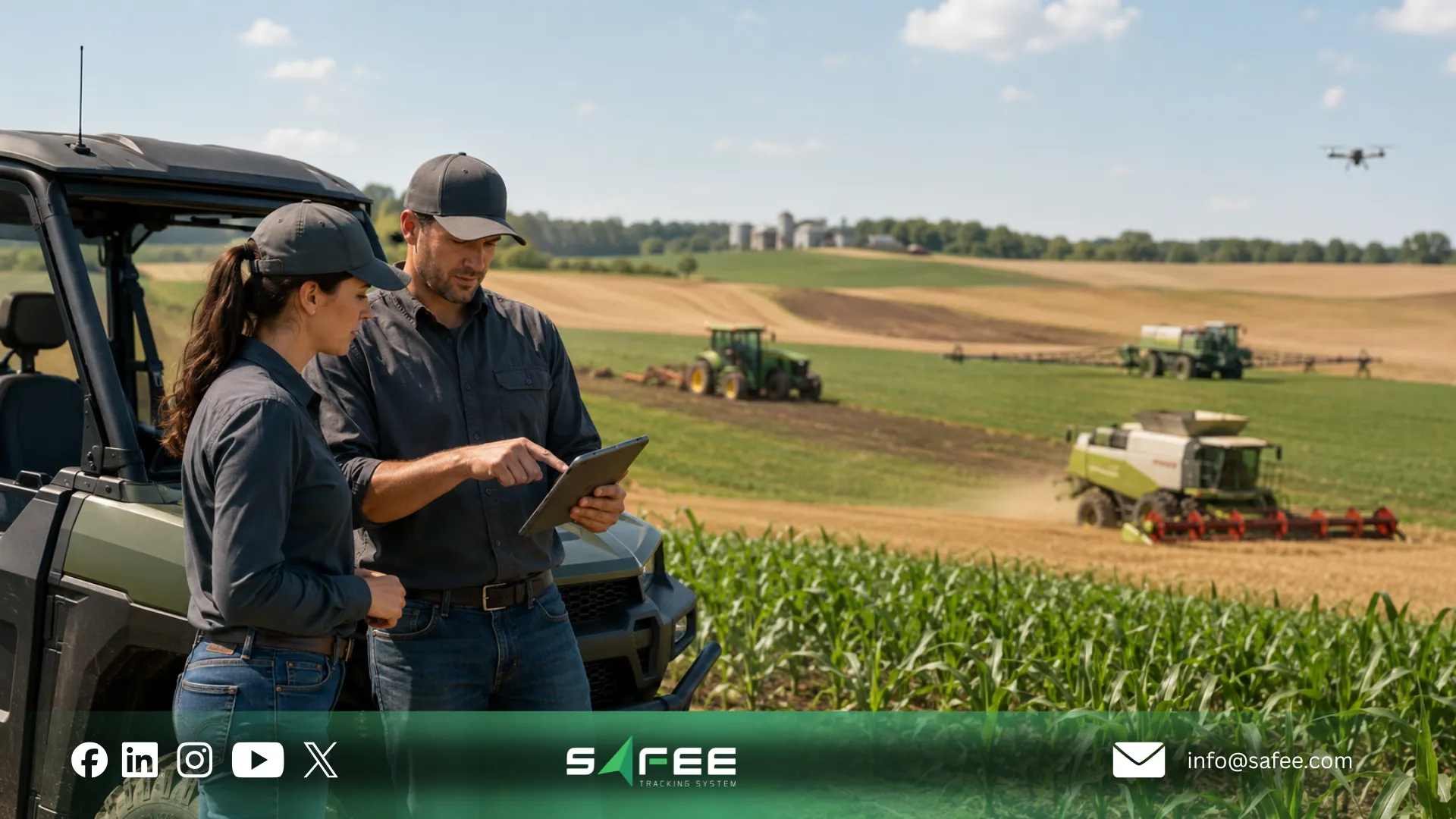
Agricultural fleet management helps farms and agribusinesses make better decisions from machine, vehicle, operator, and field data. The value is not only seeing where each tractor, harvester, tanker, or transport truck is. The real value is knowing which machine is active, which asset is idle, which field is being served, which vehicle needs maintenance, and which operation may create a delay before planting or harvest is affected.
For mixed agricultural fleets, one standard setup rarely works. A tractor, harvester, pickup, tanker, and crop transport truck may need different alerts, maintenance rules, field zones, fuel reports, and operator workflows. That is why Agriculture Fleet Tracking and Management Software should be configured around the real operating model: vehicle type, field activity, seasonal workload, depot structure, operator roles, and reporting needs.
At Safee, we help agricultural teams connect live visibility, alerts, maintenance workflows, operator accountability, sensor data, and Fleet Reporting into one practical workflow. This helps managers reduce manual calls, respond earlier to exceptions, and review farm operations with clearer data.
The following benefits show how agricultural fleet management turns daily machine data into practical control across the areas that matter most to farms and agribusinesses: uptime, field coverage, fuel cost, operator accountability, and seasonal planning.
Reduce equipment downtime during critical harvest seasons
Agricultural fleet management helps reduce downtime by making maintenance needs visible before machines fail during critical seasons. A breakdown during an ordinary week is inconvenient, but a tractor or harvester failure during harvest can disrupt labor schedules, transport availability, storage planning, and delivery timing.
A practical maintenance workflow should use engine hours, inspection findings, service history, alerts, and machine usage patterns to plan service earlier. Instead of relying only on calendar reminders, farm teams can schedule maintenance based on how each machine is actually used.
Our Maintenance Management can support service schedules, maintenance alerts, open task follow-up, and reporting for tractors, harvesters, sprayers, and farm transport vehicles. When compatible equipment data is available, CANbus Integration can also help teams use diagnostic signals and machine data to improve maintenance visibility.
This gives farm managers a clearer answer to important questions: which machine is due for service, which defect needs follow-up, which asset should not be assigned to the next shift, and which equipment needs attention before the next planting or harvest window.
Want to connect inspections, service reminders, and reports before the next harvest season? Talk to our experts about configuring a maintenance workflow around your tractors, harvesters, sprayers, and farm transport vehicles.
Track and optimize agricultural vehicle routes for better field coverage
Agricultural route control is not only about the shortest road route. It is about improving how vehicles and machines move between fields, depots, storage points, water points, loading zones, workshops, and service areas.
With geofencing, farm teams can create virtual boundaries around farms, fields, depots, workshops, silos, irrigation areas, livestock zones, restricted areas, and delivery points. When a vehicle or machine enters or leaves a zone, the system can record the activity or trigger an alert.
Safee’s Live Vehicle Tracking can help managers see where assets are operating, while Alarms and Alerts can highlight unplanned movement, long stops, route deviation, or unauthorized use. For farm transport routes that need planned movement, approval, active monitoring, and post-trip review, our Journey Management System can also support a more structured workflow.
This helps supervisors answer practical questions faster: which field is being covered, which vehicle is closest, where delays are happening, and whether transport activity between fields, depots, and storage points is following the expected plan.
For remote farms or low-coverage field operations, our SatComm can also be considered where visibility is required beyond reliable cellular network coverage.
Control fuel and operating costs across the agriculture fleet
Agricultural fleet management helps control fuel and operating costs by showing how machines and vehicles are used across fields, routes, operators, seasons, and work types. Fuel is one of the most visible costs in agriculture, but it is often difficult to review accurately because field work, idling, towing, heavy loads, and seasonal peaks all affect consumption.
The goal is not to blame one driver or one machine. The goal is to identify patterns that deserve action. These may include excessive idle time, repeated waiting points, underused machines, unusual fuel behavior, maintenance issues that affect efficiency, or transport delays between field, depot, and storage.
Our Fleet Reporting can help managers review utilization, downtime, fuel-related events, route activity, and repeated exceptions. For deeper sensor-related workflows, Safee’s Advanced Modules and Fleet Management Sensors Guide can support evaluation around fuel, weight, temperature, humidity, tire pressure, or other data points where compatible hardware is configured.
This gives farm owners and operations teams a clearer basis for weekly reviews. Instead of depending on estimates or scattered updates, they can compare fuel patterns, asset usage, field-zone activity, operator assignments, and seasonal performance from more reliable fleet data.
Improve operator accountability and seasonal planning
Machines do not operate by themselves. Agricultural fleet management becomes more valuable when each tractor, harvester, transport truck, or service vehicle is connected to the operator, shift, field zone, and task.
Safee’s Driver Management can support operator assignment, behavior visibility, and performance review where relevant. This helps managers understand who operated which machine, when the asset was active, where alerts occurred, and whether follow-up is needed.
This is especially useful during seasonal pressure. Before planting or harvest, managers can review machine readiness, assign operators, activate the right alerts, monitor key field zones, and set reporting routines. After the season, the same data can help teams review utilization, downtime, fuel patterns, maintenance issues, and operator workflows.
Agriculture fleet management works best when it becomes part of the weekly operating rhythm. Review alerts, check maintenance status, compare utilization, inspect fuel patterns, update field zones, and refine the seasonal plan before the next peak period.
Need a practical Agriculture Fleet Tracking and Management Software setup for your farm or agribusiness? Talk to Safee about mapping your tractors, harvesters, transport trucks, field zones, operators, alerts, maintenance rules, fuel visibility, and reports around your seasonal workflow.
Also read: The Essential Guide to Fleet Management Sensors
How to implement agricultural fleet management step by step
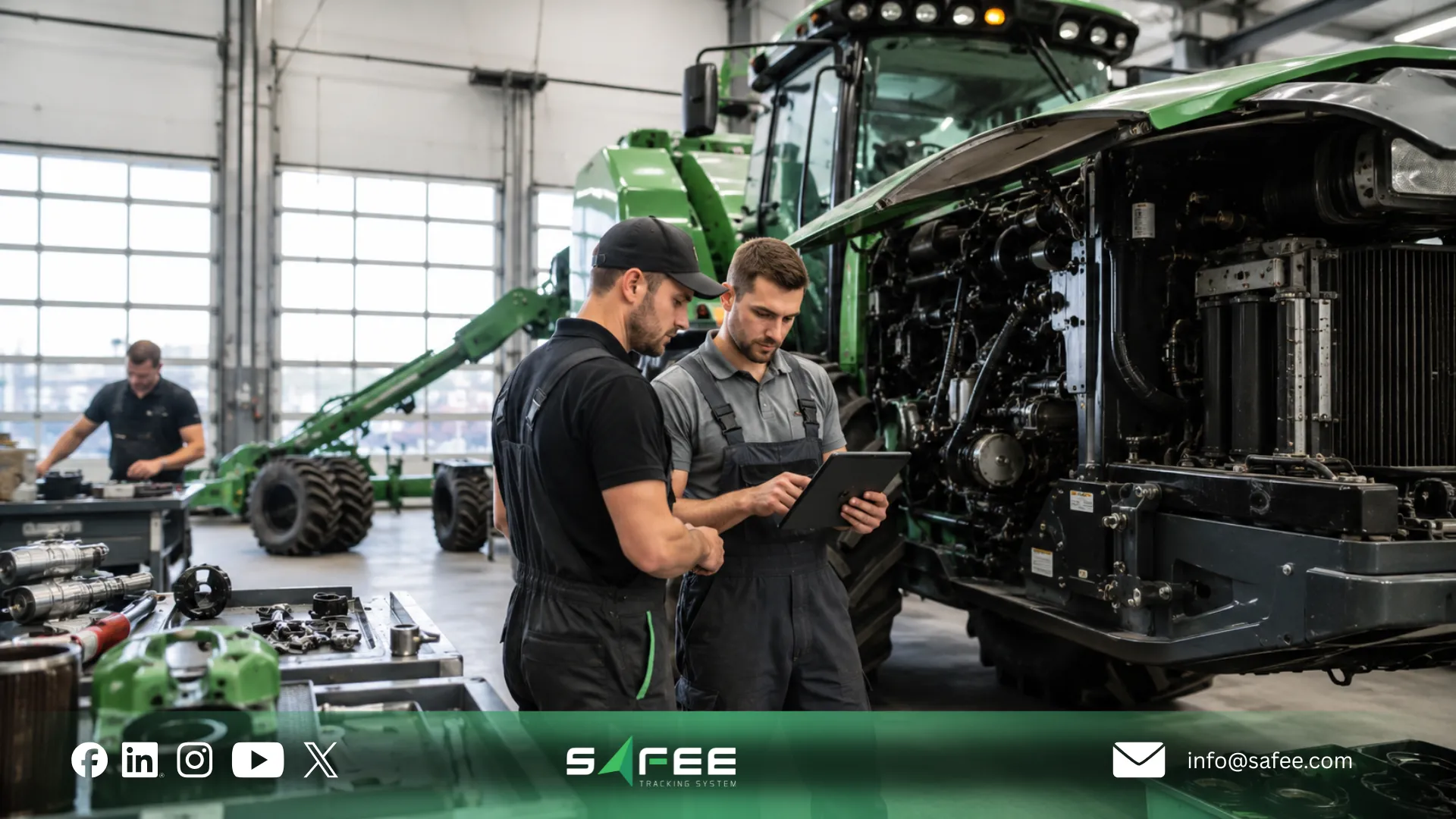
Implementing agricultural fleet management should be treated as an operations project, not only a device installation. The platform should reflect the farm’s real vehicles, field zones, seasonal priorities, maintenance process, user roles, and reporting cadence.
Before deployment, define what success should look like. For one farm, the priority may be reducing downtime during harvest. For another, it may be tracking fuel use, improving asset utilization, or monitoring transport activity between farms and storage sites.
Inventory all farm vehicles
Create a clean record for every powered asset: asset ID, type, assigned region, operator pool, fuel type, maintenance history, engine-hour source, installed device, and sensor needs. Do not limit the inventory to road vehicles if a powered asset affects field productivity.
Install telematics on each vehicle and piece of powered equipment
Choose devices and data sources based on machine type, power source, network coverage, required data, and field conditions. Start with the data that helps managers make better decisions: location, activity, engine hours, geofence events, maintenance needs, fuel signals, and alerts.
Set up digital maintenance logs for each machine
Create service histories for tractors, harvesters, transport trucks, and powered assets. Include service type, engine hours, inspection results, open defects, corrective actions, next service rule, alert status, and closure record.
Create field operation zones with geofencing
Build geofences for fields, farm entrances, storage areas, silos, workshops, water points, livestock zones, chemical or fertilizer storage, restricted areas, customer delivery points, and fuel points. Decide which zones need alerts and which only need activity records.
Monitor fuel consumption per vehicle and field operation
Review fuel by tractor, harvester, transport truck, pickup, field zone, shift, operator, route, season, and work type. Verify fuel sensor compatibility and calibration before rollout where fuel-level data is required.
Schedule maintenance based on engine hours, not calendar time
Define engine-hour intervals by machine type, calendar checks for low-use assets, pre-season inspection rules, post-season checks, critical defect categories, no-operation rules, ownership, and workshop review cadence.
Track driver per shift and field zone
Connect operator identity with assigned machine, shift, field zone, route or task, alerts, fuel or idle patterns, inspection notes, and post-shift defect reports. Safee’s Driver Management can support assignment and behavior visibility where configured.
Review fleet utilization weekly
Compare active time, idle time, field-zone activity, long stops, route completion, machine availability, maintenance downtime, operator assignment, seasonal workload, and repeated exceptions. Use the review to move assets or adjust plans.
Integrate with farm management software
Connect fleet data with farm management software, ERP, maintenance tools, fuel records, dispatch workflows, or reporting dashboards where needed. Start with data that reduces duplicate work or improves decisions.
Build a seasonal fleet plan around planting and harvest cycles
Define critical machines, pre-season inspection needs, backup coverage, operator assignments, field zones, active alerts, leadership reports, maintenance tasks, harvest transport routes, and spare vehicle availability.
Preparing for planting or harvest? Contact us to discuss field zones, machine tracking, engine-hour maintenance, fuel visibility, and seasonal reporting before the pressure starts.
Why choose Safee for agricultural fleet management?
Safee is a strong fit for agricultural operations that need more than basic vehicle location. For farms and agribusinesses, the value comes from connecting vehicles, operators, field zones, alerts, maintenance, fuel visibility, reports, and seasonal workflows into one practical operating model.
- Where are tractors, harvesters, and transport trucks now?
- Which machines are active, idle, delayed, or unavailable?
- Which field zones are being covered?
- Which vehicles need maintenance before the next shift?
- Which operators are assigned to which machines?
- Which fuel, route, or idle patterns need review?
- Which reports should managers review before the next seasonal peak?
Instead of relying only on calls, paper records, and spreadsheets, teams can use our system with different types of modules and features, including Tracking Data Analyzer (TDA), Google Maps Search, Mobile App, and others to improve daily control.
Safee’s agriculture-ready features for farm and agribusiness fleet management
At Safee, we can support agricultural fleet workflows around seasonal demand fluctuations, field zone tracking, and the unique maintenance needs of agricultural machinery. The setup should be configured around the farm’s asset types, fields, operators, seasonal cycles, reporting needs, and connectivity realities.
We offer 3 types of solutions with different features, including:
- Live Vehicle Tracking for real-time visibility of tractors, harvesters, transport vehicles, service trucks, and field-support assets.
- Geofencing for fields, depots, silos, workshops, water points, restricted zones, and delivery areas.
- Alarms and Alerts for route deviation, unauthorized movement, long stops, speeding, harsh events, maintenance exceptions, and operational issues.
- Administration Panel for user, vehicle, and configuration management across farms, depots, teams, and regions.
- Fleet Control for stronger oversight where remote commands and operational control are relevant to the fleet setup.
- CANbus Integration for vehicle health insights and diagnostic data where compatible equipment can provide it.
- Driver Management for operator assignment, identity, behavior visibility, and performance review.
- Fleet Reporting for utilization, downtime, maintenance status, route activity, fuel-related events, and management review.
- Advanced Modules for specialized monitoring such as fuel, temperature, humidity, tire pressure, weight, or other sensor-related workflows where configured.
- SatComm for remote agricultural operations that require visibility where normal cellular coverage may be limited.
The most important point is fit. A farm does not need a generic setup copied from a logistics company. It needs a configuration built around field work, machine types, seasonal workload, operators, maintenance windows, connectivity, and management reporting.
How Safee helps agricultural operations?
Safee helps agricultural operations control costs and improve seasonal productivity by making fleet activity visible, reviewable, and easier to manage. Cost control does not come from one feature alone. It comes from better decisions repeated across maintenance, fuel use, machine assignments, route movement, field coverage, and reporting.
A farm may use Safee to identify underused tractors, review long idle periods, monitor harvest transport movement, and plan service before peak workloads. An agribusiness may use Safee to compare utilization across depots, monitor transport trucks between farms and storage sites, and review operator assignments by region. A contractor may use Safee to standardize reports across multiple customer sites.
- Earlier maintenance follow-up.
- Fewer manual location calls.
- Better field-zone visibility.
- Clearer asset utilization.
- More structured fuel review.
- Stronger operator accountability.
- Better seasonal planning.
- More consistent management reports.
- Stronger audit trails for internal review.
Agricultural fleet management works best when it becomes part of the weekly operating rhythm: review alerts, check maintenance status, compare utilization, inspect fuel patterns, update field zones, and refine the seasonal fleet plan before the next peak period.
Ready to improve agricultural fleet management before the next planting or harvest cycle? Request a Safee demo to configure tracking, alerts, maintenance rules, fuel visibility, field zones, and Fleet Reporting around your farm operation.
FAQs about agricultural fleet management
What vehicles does agricultural fleet management software track?
Agricultural fleet management software can track tractors, harvesters, sprayers, transport trucks, pickups, service vehicles, ATVs, trailers, tankers, and other powered equipment where compatible tracking or telematics hardware is configured.
How does agriculture fleet management help during planting and harvest seasons?
Agriculture fleet management helps during planting and harvest by showing machine location, field-zone activity, operator assignments, maintenance status, idle time, route movement, and exceptions. This helps managers act earlier when equipment, transport, or maintenance issues could delay seasonal work.
Can agricultural fleet management software track fuel for tractors and harvesters?
Yes. Agricultural fleet management software can support fuel visibility for tractors, harvesters, and other vehicles when the required telematics data, fuel monitoring setup, or compatible sensors are configured. The exact method depends on the machine type, hardware compatibility, calibration needs, and reporting requirements.
How does farm fleet management reduce maintenance costs?
Farm fleet management supports maintenance cost control by tracking engine hours, service schedules, open defects, inspection results, and maintenance alerts. It helps teams plan service before peak workloads and review repeated issues by machine, operator, field, or season.
Is agricultural fleet management software suitable for small and medium farms?
Yes. Small and medium farms can use agricultural fleet management software to improve visibility, reduce manual follow-up, plan maintenance, monitor fuel patterns, and understand asset utilization. The best setup should start simple and focus on the vehicles, field zones, alerts, and reports that matter most to the farm.
For farm owners and agribusiness teams evaluating agricultural fleet management, the next step is to review your asset list, field zones, seasonal peaks, maintenance rules, fuel data, operator assignments, and reporting needs with Safee.
Ready to improve your fleet operations?
Tell us what you would like to improve. A Safee specialist will reply by email.
Usually replies within one business day • No sales spam
Your details are used only to respond to your request. Privacy Policy