Fleet Management by Sector in Saudi Arabia: What to Track and Test
Many teams assume that fleet management by sector in Saudi Arabia comes down to one tracking setup with different labels. In practice, a refrigerated truck, a wheel loader, and a fuel tanker can share the same map and still need very different data.
Cold chain fleets need cargo temperature. Heavy equipment needs reliable activity data, while dump trucks and other load-carrying vehicles may also need weight monitoring. Oil and gas fleets need journey control and a way to reach the vehicle outside cellular coverage.
What changes in fleet management by sector in Saudi Arabia?
Every fleet needs location, status, alarms, and reports. What changes is the question your team must answer after each trip. Did the cargo stay in range? Did the machine work or sit idle? Was the journey approved and completed safely?
The right fleet management setup depends on the operational decisions your team needs to make. For each sector, identify the data required, confirm how it will be collected, and test whether the system can support those decisions before a full rollout.
| Sector | Main operational priority | Data and hardware to verify | What to test before rollout |
|---|---|---|---|
| Cold chain | Protect temperature-sensitive cargo and respond to excursions. | Temperature by zone, door status, sensor connectivity, and humidity where required. | Trigger a temperature exception and sensor-loss event. Confirm the alerts reach the responsible team and the readings appear in the trip history. |
| Heavy equipment | Understand equipment use, idle time, and maintenance needs. | Engine hours, supported activity signals, work-zone records, and maintenance schedules. | Compare reported working and idle time with actual equipment activity. Confirm which measurements the installed hardware can support. |
| Oil and gas | Control journey risks, driver behavior, and communication gaps. | IVMS events, JMS journey approvals and deviations, plus SatComm where cellular coverage is insufficient. | Test a route-deviation alert, driver safety event, and communication-loss response on a representative route. |
These checks help determine which sensors, tracking devices, software modules, and operating procedures each vehicle group needs. A feature list alone does not confirm that the system will work with your equipment or routes.
Each of these depends on hardware: a sensor, an input on the tracker, a camera, or a satellite device. So ask for a hardware plan for each sector, not only a feature list.
Temperature, humidity, and door monitoring help protect sensitive cargo, while weight sensors help monitor vehicle and axle loads. These serve different purposes and should be selected according to the cargo, vehicle configuration, and operational requirements. A refrigerated truck may need both when load monitoring is also necessary, but neither setup should be assumed for every vehicle.
In Saudi Arabia, fleet requirements depend on the transport activity, cargo, vehicle type, and applicable regulations. Food transport operators need to check SFDA requirements, while Wasl reporting depends on the registered activity. Construction and oil and gas fleets must also account for applicable transport rules, site access conditions, and client HSE requirements. Confirm these obligations before selecting sensors, alarms, or reporting workflows.
If your company runs vehicles in more than one sector, talk to a Fleet Expert to see which data each vehicle group needs.
Also read: Which Fleet Management Companies in KSA Fit Your Operation?
What to monitor in each sector
The three sectors share one platform, but each has its own alerts and reports. Here is what matters most in each one.
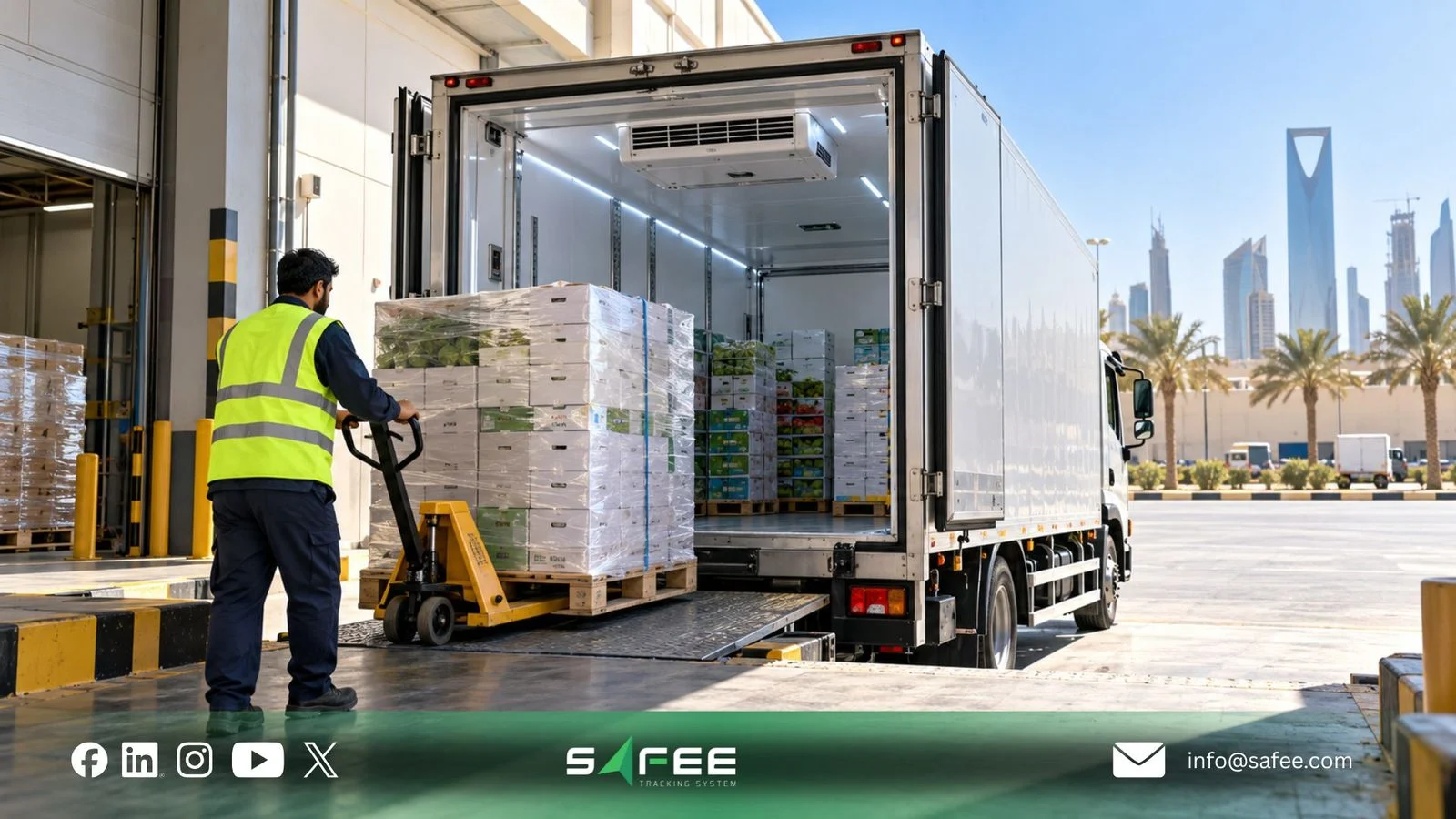
Temperature monitoring for cold chain fleets
A cold chain fleet in Saudi Arabia has to show that the product stayed within its range from loading to delivery. A temperature excursion is a reading outside that range. Monitoring should catch it while the driver can still act.
In Saudi Arabia, fleet requirements depend on the transport activity, cargo, vehicle type, and applicable regulations. Food transport operators need to check SFDA food transport requirements, while Wasl reporting depends on the registered activity. Construction and oil and gas fleets must also account for applicable land transport regulations, site access conditions, and client HSE requirements. Confirm these obligations before selecting sensors, alarms, or reporting workflows.
Safee’s Cold Chain Solution covers temperature across several zones, humidity, fridge door status, exportable history, and alerts with a tolerance. It also links with the Journey Management System (JMS), so you can set temperature and humidity ranges for each trip. Temperature alarms can apply inside or outside geofences, and a humidity condition lets you set a target, a tolerance, and a time limit.
A refrigerated vehicle can use multiple sensors to monitor different temperature zones. The number supported and how each sensor connects depend on the hardware and tracker interfaces. Before rollout, verify that every sensor is correctly mapped to its vehicle and compartment, and that its readings appear accurately in Safee.
The alerts worth reviewing first are:
- A reading out of range for longer than the agreed tolerance.
- A door left open too long or too often on a delivery run.
- A sensor that stops reporting, which can look like a stable temperature.
- A delivery stop that lasts longer than the cargo can tolerate.
If your refrigerated vehicles report to Wasl, Safee can send the fridge status from a digital input or from a temperature threshold you set. The right method depends on your activity and hardware. Our article on the Wasl platform in Saudi Arabia explains the wider Wasl setup.
Utilization and maintenance for heavy equipment
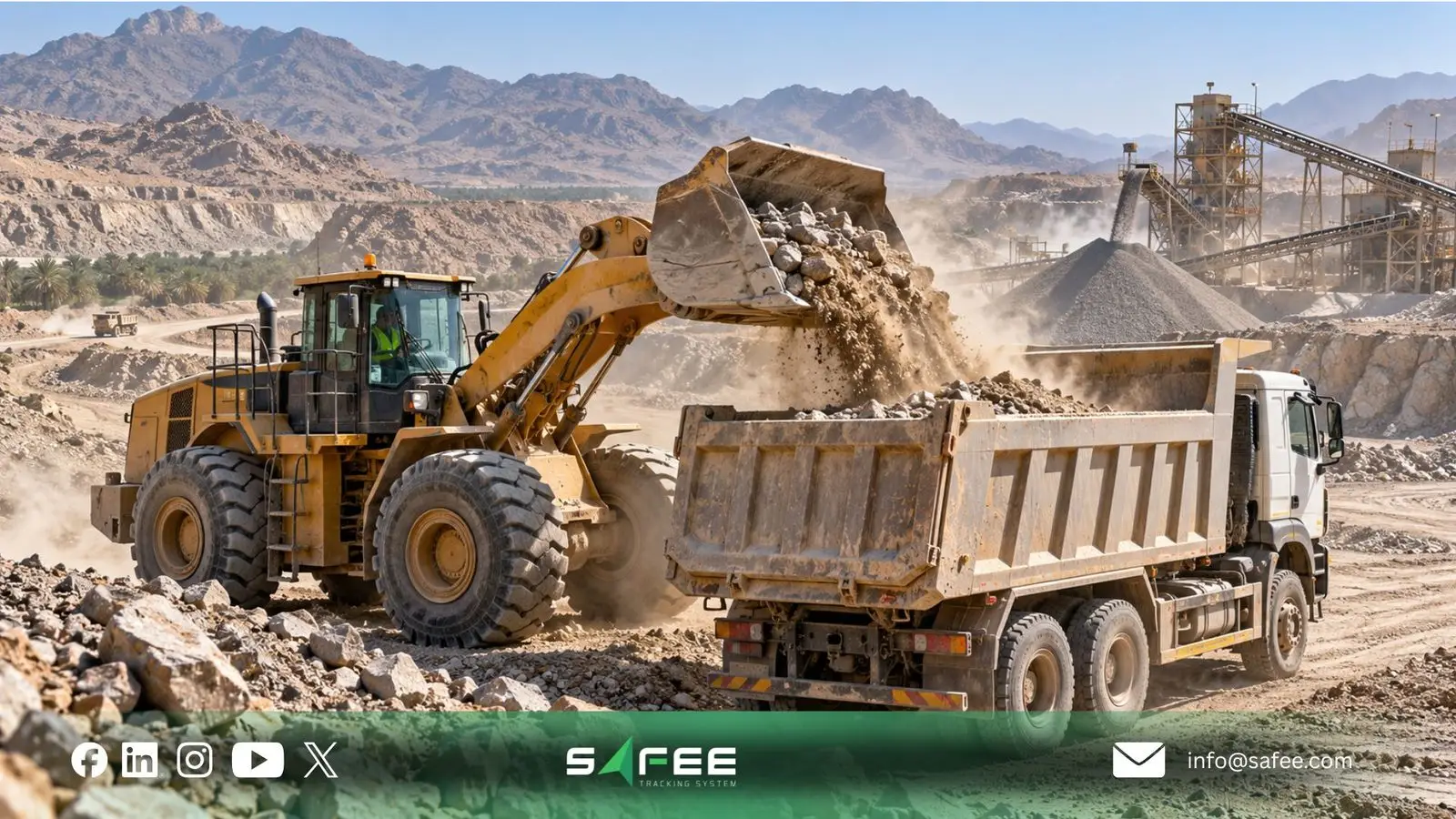
Heavy equipment fleet management starts with understanding how each machine is used. Engine hours show how long the engine has run, while equipment activity data helps distinguish active operation from idle or inactive periods. Actual productive work depends on the machine and the signals available, so utilization should be measured against an appropriate operating schedule rather than inferred from vehicle movement alone.
For construction and equipment fleets, the useful signals are:
- Engine hours and equipment activity status, using supported ignition, engine, or equipment inputs. Use Equipment Activity Monitoring to distinguish active and idle periods where the required signals are available; a vehicle idle report alone does not establish productive working time.
- Time inside assigned work zones, with alarms for stops inside or outside a geofence.
- Maintenance tasks that trigger on odometer, date, or elapsed time.
- Fuel and idle fuel, where the vehicle or a sensor provides the data.
For dump trucks, tippers, and transporters, Weight Monitoring adds total, per-axle, and trailer weight, overload alerts, and calibration points. It works with KIMAX or analog sensors, keeps the trailer setup separate from the truck head, and shows a tamper indicator when readings look unreliable. While the vehicle moves, it also filters out abnormal readings.
For off-road machines, confirm which signal the tracker can read, such as ignition or an engine-hours source, before you promise utilization reports to management.
Journey control and connectivity for oil and gas
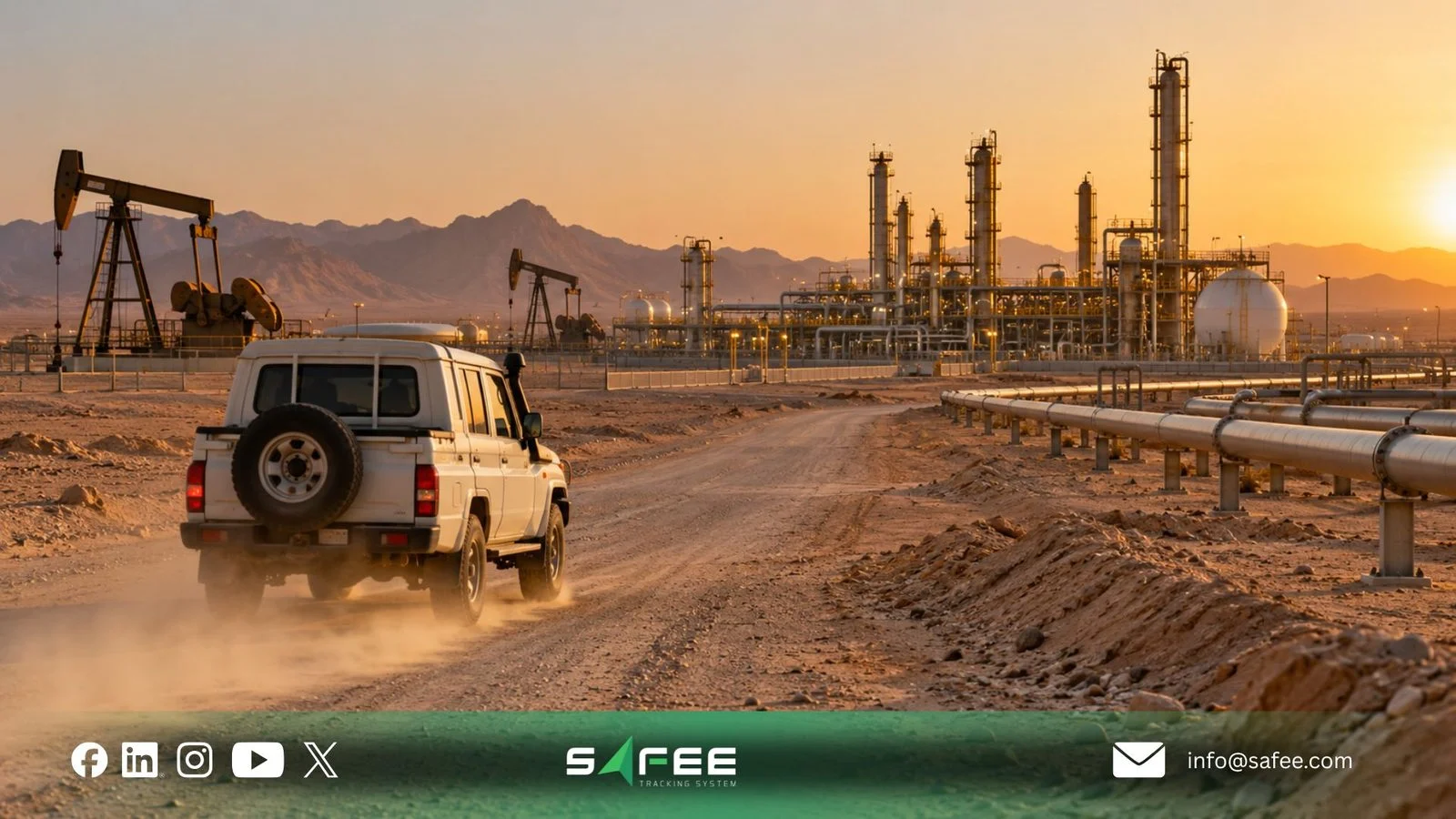
Oil and gas fleet management in Saudi Arabia centers on journey risk. Routes are long, sites can be remote, and one unsafe trip costs far more than a late delivery.
IVMS helps HSE teams monitor speeding, harsh acceleration, harsh braking, and seatbelt events where supported by the installed devices. Safee’s road safety and driver-rating reports help teams review these violations, while the RALG report also distinguishes risk-exposure factors such as night driving and fatigue.
For journey control, JMS supports planned routes, risk assessment, approvals, geofences, and route deviation alarms. Each journey task can carry start and end criteria, limits for speed, duration, distance, and lost communication, and the checkpoints the vehicle must pass.
For remote routes with unreliable cellular coverage, Safee SatComm can add a compatible Orbcomm or Iridium satellite device as a secondary communication channel. Depending on the hardware and service configuration, it supports location requests, panic alarms, and communication monitoring. Before deployment, confirm which messages can use the satellite connection, any location-request limits, and what happens to other tracking or IVMS data during an outage. SatComm reduces communication blind spots but does not guarantee continuous updates or transmit every IVMS or video event.
TPMS belongs here only where vehicles are fitted with tire sensors. It reads tire values, not tank or process pressure.
Our oil and gas fleet management software page covers remote-site tracking and HSE reporting. For journey risk across the region, read road oil transport safety for GCC fleets.
Also read: Dangerous Goods Transport in Saudi Arabia: Fleet Controls
How to prepare your fleet for each sector
Good sector monitoring is decided before installation. These three steps keep the setup tied to real vehicles and real routes.
Match sensors to your vehicles
Temperature and weight monitoring both depend on physical sensors and on how they connect to the tracking unit. A strong software demo does not prove that your vehicles can supply the data.
Before you buy sensors, agree on:
- Vehicle body, and the number of compartments, temperature zones, and doors to monitor.
- Sensor type, how it connects, and which tracker input it uses.
- For weight: KIMAX or analog sensors, number of axles and trailers, and head-and-trailer pairs.
- Calibration method, who carries it out, and how often.
- Alarm tolerances and time limits that reflect real operations.
- Wasl or client reports that depend on the data.
Before a full rollout, pilot the setup on one representative vehicle or machine from each group. Compare sensor readings and equipment activity data with observed conditions, verify that alerts reach the assigned person, and check that reports show the correct asset, event time, and recorded status. For IVMS and SatComm, use the journey and connectivity checks below, including a safe test of the alert and escalation workflow. Resolve any data, hardware, or reporting gaps before approving the wider rollout.
If you are not sure which sensors your trucks can support, request a Safee Fleet Demo to review a hardware plan for each vehicle group.
11 things to check before an IVMS and SatComm rollout
Oil and gas journeys need the most preparation. Before go-live, check these points:
- Journeys and vehicles: Name the routes, sites, and vehicle groups that need IVMS and satellite coverage.
- Event source: Confirm which device records speeding, harsh braking, harsh acceleration, and seatbelt events.
- Alarm limits: Set speed limits, tolerances, and time limits for each vehicle group instead of copying defaults.
- Fatigue rules: Define continuous driving, rest time, and day start time before you configure the fatigue alarm.
- Driver identification: Make sure every event can be tied to a named driver.
- Video: Agree on the cameras, the alarms that trigger recording, the license level, and who reviews the footage.
- Journey approval: Write down the checks a journey must pass before it starts.
- Routes, zones, and checkpoints: Define approved corridors, restricted zones, and the checkpoints each journey must pass.
- Coverage gaps: Mark where cellular coverage drops along each route.
- SatComm setup: Confirm the satellite device and network, the communication threshold, and the daily location request limit.
- Panic response: Make sure panic alarms reach a named person, with a tested escalation path.
If your oil and gas routes leave cellular coverage, get a Fleet-Fit Recommendation to plan IVMS and SatComm for those journeys.
What to track after go-live
Each sector needs its own indicators. One scorecard for a refrigerated truck, a wheel loader, and a tanker hides the problem each figure should show. Start with these:
- Temperature exceptions: Number and duration of out-of-range readings, plus door-open time, per cold chain vehicle.
- Sensor gaps: Temperature or weight sensors that stopped reporting, and how long each gap lasted.
- Equipment utilization: Engine hours, active and idle periods, and time spent in assigned work zones. Validate activity classifications against actual machine operations before using them as productivity indicators.
- Maintenance: Tasks due against tasks completed, measured against usage.
- Journeys and connectivity: Journeys approved and completed, missing-communication events, and the response to each panic alarm.
Also read: Tanker Fleet Management: Routes, Driver Risk, and Connectivity
How Safee helps with sector-specific fleet management
At Safee, we set up the platform around your sector, your vehicles, and the sensors they carry. Live Vehicle Tracking, Alarms and Alerts, Fleet Reporting, and Driver Management give every sector the same base: location, alarms, driver records, and scheduled reports.
On top of that base, we add the modules each sector needs:
- Cold Chain Solution: Temperature, humidity, and fridge door monitoring, with tolerance-based alerts and exportable history.
- Weight Monitoring: Total, per-axle, and trailer weight, with overload alerts and calibration tools.
- Journey Management System: Planned routes, risk assessment, approvals, geofences, checkpoints, and post-journey reports.
- SatComm: A backup satellite channel with location queries and panic alarms for remote routes.
The sector should decide which modules you turn on, not the other way around. Safee does not set sector rules or issue permits. Our role is the data, alarms, and reports that help your team follow them.
Separate fleet tools vs a unified fleet management platform
| What to compare | Separate tools without integration | Safee with the relevant modules configured |
|---|---|---|
| Cold chain monitoring | Temperature alerts and vehicle journey records may need to be reviewed separately. | Cold Chain Solution brings temperature, humidity, and door events alongside supported vehicle and journey data. |
| Weight monitoring | Load measurements may need to be matched manually with vehicle and trip records. | Compatible weight sensors support vehicle, axle, and trailer weight monitoring with overload alerts and fleet reporting. |
| Equipment utilization | Machine activity and maintenance records may require reconciliation between systems. | Equipment Activity Monitoring and the Maintenance Module support activity review and maintenance planning within the fleet platform. |
| Driver safety | IVMS events, video evidence, and journey records may be managed in different applications. | IVMS reporting, Video-iVMS, and JMS can support a connected safety review when the required devices and modules are deployed. |
| Journey control | Route approvals, checkpoints, and alerts may be managed through separate workflows. | JMS supports journey planning, approvals, geofences, checkpoints, and configurable alerts. |
| Remote operations | Satellite location services and cellular tracking may require separate monitoring workflows. | SatComm supports satellite location requests and panic alarms alongside the primary fleet-tracking environment, subject to device and service configuration. |
Separate tools can work effectively when they exchange data reliably and support clear operating procedures. A unified platform becomes valuable when fleet teams need to review multiple operational functions together. With Safee, confirm the required modules, hardware compatibility, reporting capabilities, and integration scope before deployment.
Planning fleet management by sector in Saudi Arabia across cold chain, equipment, and energy work? Contact our team to map each sector to the modules, sensors, and reports it needs.
FAQs about fleet management by sector in Saudi Arabia
Can one vehicle need both temperature and weight sensors?
Yes. A refrigerated truck may need temperature sensors to protect its cargo and weight sensors to monitor axle or vehicle loads. Whether both are necessary depends on the cargo, vehicle configuration, and operational or reporting requirements.
Is equipment utilization the same as truck tracking?
No. Truck tracking primarily shows location and movement. Equipment utilization combines engine hours, activity status, and operating schedules to assess how machinery is used. Measuring productive work accurately requires suitable equipment signals and verified activity definitions.
Do all oil and gas fleets need satellite connectivity?
Not necessarily. SatComm makes sense on routes and sites beyond reliable cellular coverage, such as remote desert roads. It reduces blind spots there, but it does not guarantee continuous coverage.
Does Safee decide which rules apply to my sector?
No. Sector requirements come from the relevant authorities, your clients, and your own HSE policy. Our role is to set up the sensors, alarms, journeys, and reports that help your team meet them.
Ready to improve your fleet operations?
Tell us what you would like to improve. A Safee specialist will reply by email.
Usually replies within one business day • No sales spam
Your details are used only to respond to your request. Privacy Policy