
9 Fleet Management KPIs That Expose Hidden Costs
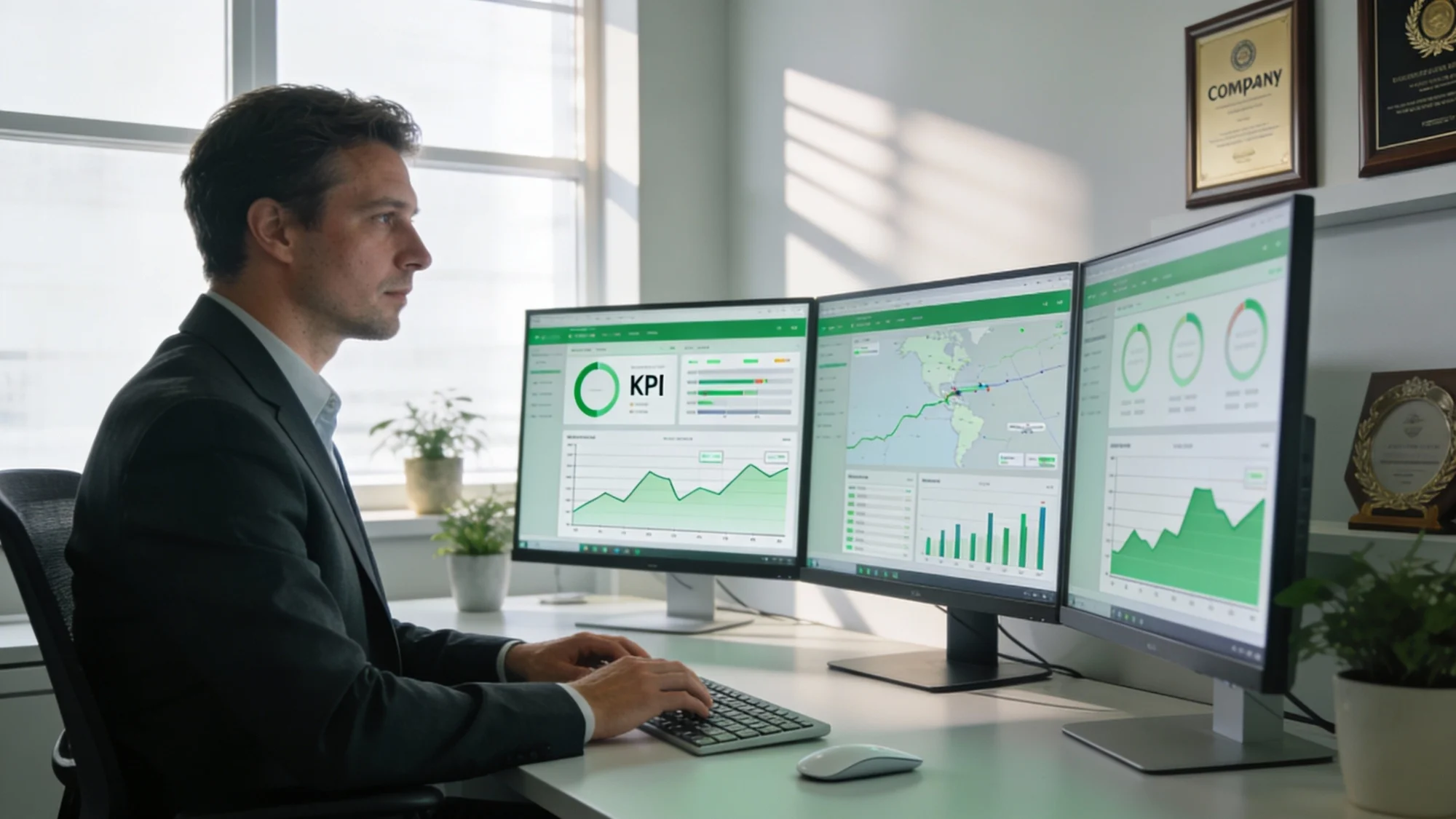
If you feel like your fleet’s operational costs are rising without a clear explanation, you are likely facing a visibility gap. For B2B managers, managing a fleet without Fleet Management KPIs is like flying an airplane without a cockpit dashboard; you know you’re moving, but you have no idea if you’re about to crash into a financial deficit.
Relying on gut feelings about driver behavior or fuel consumption is no longer enough. To maintain a competitive edge, you need to transform raw data into a high-integrity truth engine.
In this guide, we explore how the right Fleet Management KPIs allow you to stop “silent” financial leaks, enforce driver accountability, and turn your fleet from a cost center into a predictable, profit-generating asset using Safee’s advanced telematics.
What are fleet management KPIs?
In the world of logistics and transport, Fleet Management KPIs (Key Performance Indicators) are the vital signs of your business health. They are not merely numbers on a report; they are the strategic benchmarks you use to determine if your assets are generating profit or draining your capital.
For a B2B manager, these KPIs act as a “truth engine.” While metrics tell you what happened (e.g., “we spent $10,000 on fuel”), KPIs tell you why it matters to your bottom line (e.g., “our fuel efficiency dropped by 12% due to unauthorized idling”). Without these indicators, you are essentially driving your business in the dark, unable to distinguish between a top-performing driver and a liability.
At Safee, we define effective Fleet Management KPIs as actionable data points that solve three primary pain points:
- Cost Leakage: Identifying exactly where money is being wasted in real-time.
- Operational Accountability: Turning subjective driver performance into objective, fair scoring.
- Asset Longevity: Shifting from “repairing breakdowns” to “preserving value” through predictive usage data.
Essentially, these KPIs transform your fleet from a chaotic collection of moving parts into a disciplined, measurable, and highly profitable machine.
Also read: Safee Journey Management System for Smarter Fleet Safety

Difference Between KPIs, Metrics, and Goals
To achieve peak performance, you must distinguish between what you want to achieve, what you are tracking, and which data points actually dictate your success. Mixing these up leads to “data fatigue” where you have plenty of reports but zero clarity.
Here is how we categorize them at Safee to ensure your fleet stays on track:
- Goals: These are your high-level business objectives. A goal is broad and strategic, such as “Reducing total operational costs by 15% this year” or “Becoming the safest taxi fleet in the region.”
- Metrics: Metrics are simply raw data points. They track everything happening in your fleet—fuel consumed, total mileage, number of oil changes. Every KPI is a metric, but not every metric is a KPI. For example, “Total Miles Driven” is a metric; it’s good to know, but it doesn’t tell you if you are winning or losing.
- KPIs: These are the critical metrics that measure progress toward your goals. A Fleet Management KPI takes raw data and gives it context. If your goal is cost reduction, your KPI isn’t just “Fuel Spent,” but rather “Fuel Cost per Kilometer.”
Think of your Goal as the destination on a map, Metrics as the various readings on your vehicle’s sensors, and KPIs as the specific indicators like the fuel gauge or engine temperature that tell you if you will actually reach that destination safely and profitably.
Why Fleet Management KPIs Matter for Business Success?
In the B2B world, what isn’t measured cannot be managed, and what isn’t managed will eventually fail. For a fleet-heavy business, Fleet Management KPIs are not a luxury—they are an absolute necessity for survival and scaling. Relying on “intuition” or “gut feeling” to judge your fleet’s health is a recipe for invisible financial leaks.
Tracking the right indicators matters for three critical reasons that impact your boardroom decisions:
- Eliminating “Silent” Financial Leaks: You might see a total fuel bill, but KPIs show you the waste. By tracking idle time and fuel efficiency per route, you identify costs that provide zero value to the company. This turns “lost money” back into “available capital.”
- Evidence-Based Accountability: Management becomes difficult when it’s your word against the driver’s. KPIs provide an objective “scorecard.” When you have data on harsh braking, speeding, and unauthorized stops, you can enforce safety policies with indisputable evidence, improving driver culture and reducing insurance liabilities.
- Maximizing Asset Lifecycle ROI: Your vehicles are massive capital investments. KPIs like “Maintenance Cost per Mile” or “Asset Utilization Rate” tell you exactly when a vehicle is becoming a liability rather than an asset. This allows you to time your fleet renewals perfectly, avoiding the trap of over-maintaining aging vehicles.
Ultimately, Fleet Management KPIs move your business from a “Reactive” state (fixing things when they break) to a “Proactive” state (optimizing performance before costs skyrocket).
Stop bleeding profits through unmonitored operations. See how Safee’s Dashboard turns complex KPIs into clear, profitable actions.
Also read: Video IVMS: The Complete Solution for Safer and Smarter GCC Fleet Operations
Top Fleet Management KPIs to Track
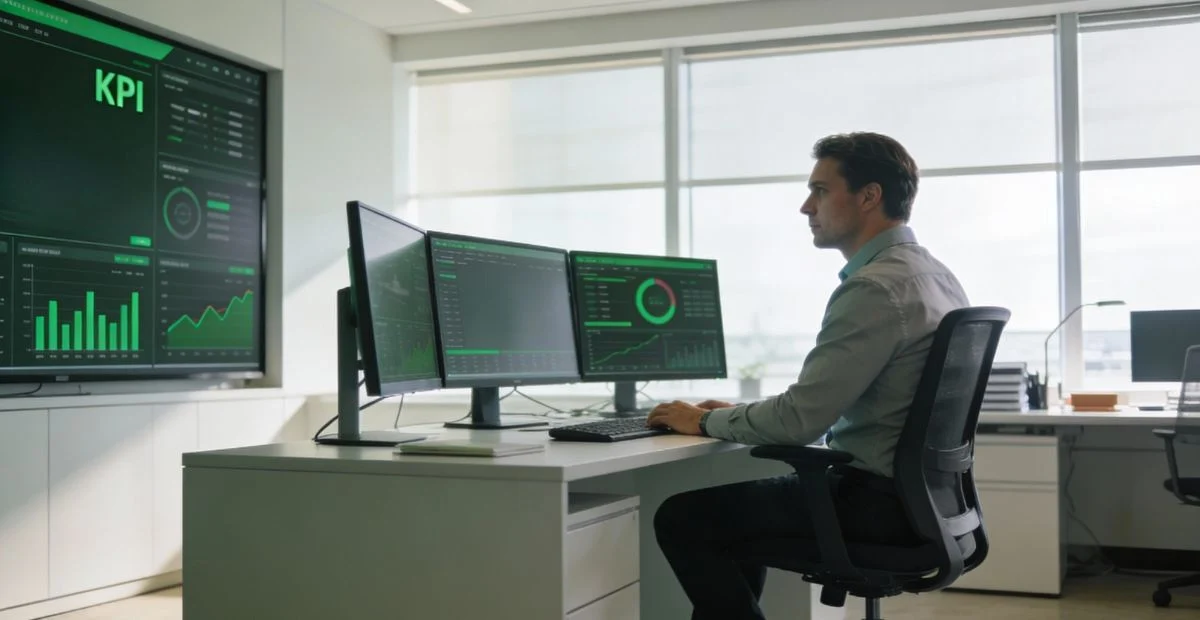
To manage a fleet effectively in 2026, you must look beyond “where is the driver?” Professional managers use these four categories of Fleet Management KPIs to maintain absolute governance over their operations:
1. Financial & Cost Efficiency KPIs
These indicators hit the bottom line directly. If these are off, you are losing profit.
- Total Cost per Kilometer (CPK): This is the ultimate “health check.” It combines fuel, maintenance, insurance, and labor divided by distance. A rising CPK means an aging, inefficient asset.
- Fuel Economy & Idling Costs: Fuel accounts for roughly 25-30% of operational expenses. Tracking idling time specifically identifies “wasted money” spent while the vehicle is stationary.
- Asset Utilization Rate: Are your taxis earning or sitting? Aim for a rate above 85-90%. Underutilized vehicles are “lazy capital” that should be sold or redeployed.
2. Maintenance & Asset Health KPIs
These protect your biggest capital investments (the vehicles).
- Preventive Maintenance (PM) Compliance: Tracks the percentage of services done on time. Higher compliance equals fewer “surprise” breakdowns.
- Vehicle Downtime: Every hour a taxi is in the shop is an hour of lost revenue. Tracking this identifies problematic models that need replacing.
3. Driver Safety & Performance KPIs
Your drivers are your brand’s face and your biggest liability.
- Driver Safety Score: Using telematics to track harsh braking, rapid acceleration, and speeding. High scores mean lower insurance premiums and fewer accidents.
- Empty Miles (Dead Mileage): For taxi fleets, this is the distance driven without a passenger. Reducing this through better dispatching is the fastest way to boost profit.
4. Compliance & Regulatory KPIs
Ensuring you stay on the right side of the law to avoid crippling fines.
- Regulatory Compliance Rate (e.g., Wasl): Monitors how often your fleet meets local legal standards.
- Inspection Pass Rate: Ensures vehicles are safe before they hit the road, preventing legal and financial fallout.
Also read: Fleet Driver Performance Management: Safee’s Full Guide
How to Set and Measure Effective Fleet Management KPIs
Setting KPIs is not a one-time task; it is a strategic process of aligning your fleet’s daily movement with your company’s financial goals. If the KPIs are too vague, they will be ignored. If they are too complex, they will be misunderstood.
To set and measure Fleet Management KPIs that actually drive results, follow this expert framework:
1. Align with Specific Business Goals
Don’t track everything at once. Start with your biggest “Pain Point.”
- Strategy: If your current struggle is high overheads, prioritize Fuel Economy and Maintenance Cost per Mile. If your struggle is customer complaints, prioritize ETA Accuracy and Driver Safety Scores.
2. Use the SMART Framework
Every KPI must be:
- Specific: (e.g., Reduce idle time).
- Measurable: (e.g., Reduce by 15%).
- Achievable: (Don’t aim for 0% idling; it’s impossible).
- Relevant: (Does this save money or time?).
- Time-bound: (Achieve this within the next quarter).
3. Automate the Data Collection
The biggest mistake is manual data entry. Human error ruins KPI integrity.
- Expert Tip: Leverage a taxi fleet management system like Safee to capture data directly from the vehicle’s CAN-bus or GPS. This ensures your measurements are indisputable and “Audit-Ready.”
4. Establish a Baseline and Benchmark
You cannot measure improvement if you don’t know where you started.
- The Process: Spend the first 30 days simply observing the data without making changes. This is your “Baseline.” Then, compare it against industry standards to see how much “money is being left on the table.”
5. Review and Refine Regularly
KPIs are not static. As your fleet grows from 10 to 100 vehicles, your focus will shift. Set a monthly “Performance Review” to adjust your thresholds and celebrate wins with your team.
Why measure manually when you can automate? Explore Safee’s Reporting Tools and turn raw data into instant KPI insights.
Common Challenges in Tracking Fleet Management KPIs
Identifying the right indicators is only half the battle. Many managers find that their KPI strategy stalls due to practical hurdles that distort data or create friction within the team. Understanding these challenges is the only way to build a resilient system that lasts.
From our experience at Safee, these are the most common “KPI Killers” you must prepare for:
- Data Silos and Fragmentation: If your fuel data is in one spreadsheet, your maintenance logs in another, and your GPS tracking in a third software, you can’t get a “single version of the truth.” This fragmentation leads to conflicting reports and stalled decision-making.
- Low Data Quality (The “Garbage In, Garbage Out” Trap): Relying on manual driver logs or outdated sensors results in inaccurate KPIs. If your sensors aren’t calibrated or your software can’t filter out “noise” (like GPS drifting), you’ll end up making expensive business decisions based on flawed information.
- Driver Resistance and Culture: Drivers often view KPIs as “spying” rather than “safety coaching.” Without a culture of transparency and a fair scoring system, drivers may attempt to tamper with devices or find workarounds, rendering your KPIs useless.
- Alert Fatigue and Information Overload: Tracking too many KPIs at once is just as dangerous as tracking none. When managers are bombarded with hundreds of “red flags” daily, they stop reacting to the ones that actually matter, leading to operational paralysis.
- Lagging vs. Leading Indicators: Many fleets focus only on lagging indicators (what happened, like total accidents). The challenge is shifting to leading indicators (what is likely to happen, like harsh braking frequency) to prevent costs before they occur.
Don’t let technical hurdles derail your strategy. See how Safee unifies your data into a single, clean stream of truth.
Also read: The Role of Asset Tracking in Fleet Operations
Best Practices for Improving Fleet Performance with KPIs
Tracking KPIs is a waste of time unless it leads to a change in behavior. To move the needle on your fleet’s performance, you need to treat these metrics as the foundation of a “continuous improvement” cycle.
Here are the industry’s best practices for turning data into a competitive advantage:
- Gamify Driver Performance: Don’t just use KPIs to punish; use them to reward. Create a “Driver Leaderboard” based on safety and fuel efficiency scores. When drivers compete for the “Driver of the Month” title (with a tangible bonus), your safety KPIs will improve organically without constant micromanagement.
- Implement “Actionable” Dashboards: Ensure your management team has access to real-time visualizations, not just static PDF reports. A dashboard should show “Red Zones” that require immediate attention, allowing you to intercept a problem (like a vehicle overheating or a route deviation) before it becomes a financial loss.
- Focus on Leading Indicators: While it’s important to know your total fuel spend (lagging), focus your daily energy on Idling Time and Harsh Acceleration (leading). Improving these today will automatically lower your fuel bill tomorrow.
- Standardize Feedback Loops: Set a weekly 15-minute briefing with your operations team to review KPI trends. If the “Downtime Rate” is creeping up, investigate immediately. This prevents small issues from snowballing into fleet-wide crises.
- Integrate with a Centralized Ecosystem: The most successful fleets use a single source of truth. By integrating your taxi fleet management software with your maintenance and payroll systems, your KPIs become a seamless part of your entire business workflow.
Strategy without execution is just a hallucination. Start your performance journey with Safee and see the difference that real-time governance makes.
Also read: Real-Time GPS Fleet Tracking: Benefits, Challenges & Best Practices
How Safee Helps You Reduce Costs, Improve Safety & Boost Efficiency
Understanding your Fleet Management KPIs is the first step, but owning a platform that automates their tracking is what separates market leaders from the rest. Safee is engineered to be the all-in-one ecosystem that eliminates the complexity of data collection, giving you a crystal-clear view of your fleet’s performance in real-time.
Here is how our platform turns your KPI strategy into operational excellence:
- Unified Data Governance: Safee breaks down “data silos” by integrating over 1,400 hardware protocols into a single, intuitive dashboard. You no longer need to jump between software to see your fuel, maintenance, and driver safety KPIs—everything is in one place.
- Precision Cost Suppression: With our advanced fuel monitoring and engine diagnostics, Safee identifies “hidden” waste like excessive idling and unauthorized route deviations. By providing a 99% accuracy rate in data, we help you stop financial leaks before they impact your monthly P&L.
- AI-Driven Driver Coaching: We move beyond simple tracking to active safety improvement. Safee’s behavioral analytics generate automated “Safety Scores” for every driver, allowing you to reward high performance and proactively coach risky behaviors like harsh braking or speeding.
- Seamless Scalability: Whether you manage 10 vehicles or 10,000, Safee’s cloud-based architecture scales with you. Our modular system ensures that as your business grows, your ability to monitor complex KPIs remains fast, reliable, and “audit-ready.”
At Safee, we don’t just provide software; we provide the “Operational Brain” your fleet needs to stay profitable, safe, and fully compliant with local regulations.
Transform your fleet from a cost center into a data-driven success story. Request a Personalized Safee Demo today and see your KPIs in action.
FAQs about Fleet Management KPIs:
How do you measure fleet performance?
Measuring performance is done by comparing raw data against predefined fleet management KPIs. You start by establishing a baseline for costs, safety, and time, then use taxi fleet management software to track real-time deviations. Success is measured by the steady reduction in operational waste (like idling) and the increase in asset uptime and driver safety scores.
What is fleet KPI?
A fleet KPI (Key Performance Indicator) is a specific, quantifiable measurement used to evaluate the success of a fleet in meeting its operational and financial goals. Unlike a simple metric, a KPI provides context—it doesn’t just tell you how much fuel you used, but how efficiently you used it to generate revenue.
What are the 4 pillars of fleet success?
To achieve excellence, a taxi fleet management system must focus on four critical pillars:
- Safety: Protecting drivers, passengers, and assets.
- Efficiency: Maximizing fuel economy and minimizing “dead mileage.”
- Compliance: Meeting all legal and regulatory standards (like Wasl).
- Financial Health: Optimizing the Total Cost of Ownership (TCO) and maximizing ROI.
How do you monitor fleet management?
Effective monitoring is achieved through a centralized fleet management system that integrates GPS tracking, telematics, and AI-driven analytics. Instead of manual oversight, the system monitors every vehicle 24/7, sending automated alerts only when a fleet management KPI threshold is breached, allowing you to manage by exception rather than by guesswork.
Ready to improve your fleet operations?
Tell us what you would like to improve. A Safee specialist will reply by email.
Usually replies within one business day • No sales spam
Your details are used only to respond to your request. Privacy Policy