


How to Deploy Fleet Management Sensors That Teams Trust

Most fleets are drowning in data but starving for insights. While GPS shows where your trucks are, Fleet Management Sensors tell you if you’re actually losing money. The difference between simple tracking and true operational control lies in how you govern these signals.
In this guide, we move beyond basic telemetry to show you how to build a sensor-driven operation that is audit-ready, compliant, and leak-proof.
Why Do Fleet Management Sensors Matter?
GPS answers where and when. Sensors answer what condition and what event. That difference is where operational control lives.
Here’s what changes when you add sensors into a governed fleet workflow:
- You move from visibility to enforceable policy. A location pin won’t tell you if a refrigerated load went out-of-range, if fuel dropped unexpectedly, or if a door opened at the wrong time.
- You gain evidence, not just notifications. Good operations don’t just “alert”; they log, review, and report exceptions consistently (for audits, claims, and continuous improvement).
- You reduce noise by designing alarms intentionally. Safee’s alarm-based methodology supports software alarms triggered by configurable alarm conditions—not only hardware tracker alarms—so teams can tune rules to real operations instead of living with default noise.
Want to see which fleet management sensors fit your vehicles and workflows? Talk to Safee for a quick sensor-to-dashboard mapping
Also read: Cold Chain Monitoring Solutions for Safe, Compliant, and Reliable Deliveries
What counts as a fleet sensor in Safee?
In practice, a fleet sensor is any input that feeds condition/event data into the platform so it can be monitored live, used to trigger alerts, and reported historically.
Safee’s platform guide shows sensor-driven monitoring and filtering capabilities. including temperature, humidity, load weight, and liquid amount views, plus module-based management for specialized use cases like fuel, weight, temperature/humidity, and more.
Also read: Why Small Businesses Need Fleet Management Solutions
Fleet Sensor Types
| Sensor type | Data captured | Operational decisions | Recommended alerts | Reporting/Explorer |
| Temperature | Cargo or compartment temperature over time | Protect cold-chain integrity, prove conditions per trip, investigate exceptions | Temperature alarms tied to geofences and operating windows | Temperature monitoring + historical review via platform workflows |
| Humidity | Humidity % over time | Prevent silent damage (packaging, pharmaceuticals, food quality) | In-range / out-of-range humidity alerting with schedules and routing | Humidity monitoring + exportable history patterns |
| Fuel level | Fuel level | Control fuel cost, validate refueling, investigate suspected loss | Fuel Fill / Fuel Theft alarm-condition logic (thresholds, tolerances, time windows, speed constraints) | Fuel dashboards/reports (e.g., fuel fill/theft reporting exists in platform reporting list) |
| Weight | Load weight trend + violations | Overload prevention, safety enforcement, operational event detection (load/unload) | Load weight limit + load/unload detection patterns | Weight tracking + explorers (raw sensor data explorer listed) |
| Door status | Door open/close events | SOP enforcement, theft risk reduction, cold-chain integrity context | Fridge Door Open alarm condition | Door timeline + door-open reporting |
| Liquid amount | Liquid amount calculated from weight | Detect fill/empty operations, reduce manual logs | Fill/empty events with thresholds + dwell/idle logic (module-based) | Liquid transportation explorer + historical review |
| Tire/TPMS | Tire pressure/temperature events | Safety + maintenance prevention workflows | Pressure/temperature exception alerts (policy-based) | Dashboards + incident log workflow |
How does Safee operationalize sensor data?
A sensor only becomes operationally useful when the platform turns readings into governed actions:
- Monitor live conditions alongside location and status
Safee supports map-based monitoring with rich filtering (including filters for temperature, humidity, load weight, and liquid amount where licensed/modules apply).
- Configure policy as alarm conditions
Safee’s Alarm Conditions wizard guides admins through naming, target level selection, geofence selection, parameter setup, and notifications routing.
This matters because fleets need rules that match reality: operating hours, delivery zones, and escalation paths.
- Route alerts via notifications without overwhelming operators
Safee’s notification approach explicitly recommends optimizing notification volume and classifying by criticality to avoid disturbing operators and to surface critical events efficiently.
- Prove and improve with reports & explorers
Safee’s platform includes report-based methodologies and explorer-based tooling (e.g., Thermo-King explorer, Fuel explorer, ROADEK sensor raw data explorer listed in the guide’s explorer section).
Also read: Why Digital Transformation Matters for Modern Fleets
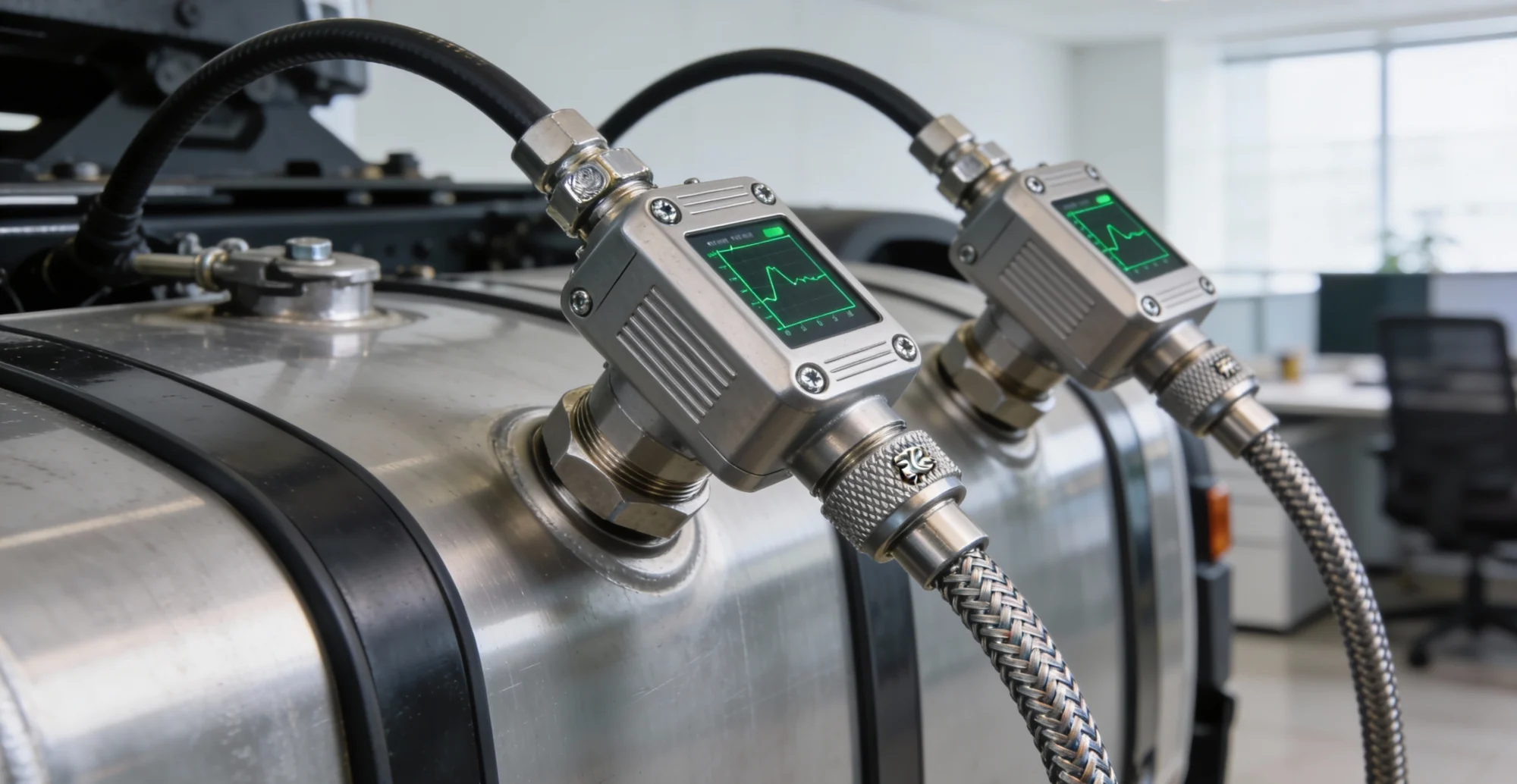
How Do You Move From Basic Monitoring to Temperature Assurance?
Temperature monitoring is the backbone of cold chain operations, but it’s also useful beyond refrigerated fleets (e.g., sensitive equipment transport).
What good looks like operationally:
- Live monitoring with context: temperature is most actionable when paired with trip phase (loading, transit, delivery) and location logic (inside a depot geofence vs. on-road).
- Exception-first alerting: alarm only when conditions matter (e.g., during a delivery window) to avoid “always-on” noise.
- Evidence-ready history: maintain clear history views and exports for dispute resolution, internal QA, and customer assurance.
At Safee, we support temperature-related monitoring and alarm-condition patterns, including temperature conditions tied to geofence logic (inside/outside geofence temperature alarm conditions are documented).
If temperature proof and exception handling are mission-critical, request a Safee walkthrough of cold-chain monitoring workflows (demo + alert policy setup).
The Top Fleet Management Sensors
Fuel monitoring sensors and CANbus
Why Is Your Fuel Data Failing to Stop Shrinkage?
Fuel is more than an operating cost; it’s a high-friction area prone to disputes and theft. The problem for most fleets isn’t a lack of data—it’s a lack of trusted events. You don’t need a thousand data points; you need to know exactly when, where, and why fuel entered or left your tanks.
The Source Doesn’t Matter
Whether you pull data from a CANbus interface or an external sensor (BLE/Analog/Digital), the “label” is secondary. What matters is data stability. A high-performance platform must filter out the “sloshing” and noise to provide a clean signal for event detection. Safee bridges this gap by applying intelligent logic—using geofences, speed constraints, and time thresholds—to distinguish a legitimate fill from a suspected theft.
The Weekly Fuel Audit
Monitoring fuel is only effective if it leads to action. To maintain financial integrity, your team should follow this weekly routine:
- Audit Refueling Locations: Cross-verify fill events against authorized geofences and schedules to eliminate “off-route” refueling.
- Investigate Rapid Drops: Use automated “theft-alert” logic to trigger immediate escalations when consumption doesn’t match engine activity.
- Verify System Health: Perform monthly sensor stability checks to ensure your evidence remains defensible in a dispute.
Weight sensors
Are You Tracking Axle Loads Or Just Guessing?
For heavy fleets, weight data is a critical operational pillar. It’s the difference between staying compliant and facing massive fines for overloading. But the challenge isn’t just seeing a number on a screen; it’s ensuring that data is tamper-proof and calibrated enough to drive real-time decisions on safety and efficiency.
Moving Beyond Raw Data
A weight sensor is only as good as the logic behind it. Safee’s platform doesn’t just display raw weight; it applies smart detection logic to identify loading and unloading events. By using time thresholds, tolerance windows, and geofence constraints, the system can automatically flag when a vehicle exceeds its legal limit or when an unauthorized unload occurs in the wrong location.
The Zero-Failure Calibration Checklist
To ensure your weight data holds up under scrutiny, every installation or reconfiguration must pass this five-point validation protocol:
- Logic Mapping: Confirm each sensor input is correctly assigned to the specific axle or trailer context.
- Static Stability: Verify the reading remains steady while stationary, with zero drift beyond minimal sensor noise.
- Reference Validation: Compare platform readings against a certified scale ticket and document any variance.
- Directional Testing: Perform a controlled load/unload to ensure the system correctly reflects the increase or decrease in real-time.
- Alert Dry-Run: Simulate a threshold breach to confirm the notification reaches the right stakeholder instantly.

Door sensors
Is a Door Opening Just an Event Or a Breach of Protocol?
In high-stakes logistics, a door sensor provides much more than a simple open/closed status; it provides context. Without it, a temperature spike is just a mystery. With it, you have an “incident narrative” that can prove exactly when, where, and why your cargo’s integrity was compromised.
The Anatomy of a Door-Based Investigation
Door sensors turn raw telemetry into actionable evidence. By correlating timestamps with location data, you can move from “guessing” to “knowing.” Operationally, this supports three critical areas:
- Cold Chain Context: Proving that an excursion was the direct result of a door being left open too long or at the wrong time.
- Security Forensics: Investigating unauthorized access with precise timestamps that hold up in a dispute.
- SOP Enforcement: Identifying patterns of negligence, whether it’s “repeat offender” drivers or recurring issues at specific customer sites.
Beyond the Switch: Safee’s Intelligent Logic
A basic alarm is noise, but a smart alarm is a tool. Safee allows you to build complex logic around your door events. Instead of getting an alert every time a door moves, you can set conditions that matter:
Trigger an alert only if the door is open while the vehicle is at a certain speed, outside a geofence, or if the temperature exceeds a specific threshold.
This layered logic ensures your team only acts on events that truly threaten the mission.
Liquid transportation monitoring
Are Your Liquid Deliveries Leaking Profit?
Liquid transportation is notorious for manual log errors and “missing” inventory. In this sector, monitoring isn’t just about levels; it’s about accountability. To run a tight operation, you need to stop treating liquid as a “reading” and start treating it as a financial KPI that is tracked, converted, and audited in real-time.
From Raw Signals to Operational Intelligence
The challenge with liquids is turning a sensor’s signal into a trusted volume. Safee’s Liquid Transportation module simplifies this complexity by focusing on two critical pillars:
- Precision Conversion: Automatically converting sensor signals into “actual amount” based on your specific cargo and tank logic.
- Automated Event Detection: Using “Dwell & Idle” logic to distinguish between normal tank sloshing and a legitimate fill/empty operation. This ensures your platform flags events with surgical precision.
What to Watch
A robust system should do more than record data—it should protect your assets. By leveraging Safee’s monitoring filters, you can instantly detect and act on:
- Unauthorized Emptying: Immediate alerts for unexpected volume drops that don’t match your route plan.
- Out-of-Hours Operations: Flagging any fill or empty events that occur outside of approved shifts.
- Location Deviations: Validating that every liquid transaction happens exactly where it’s supposed to—at the approved terminal or customer site.
Fuel distribution sensors
Is Your Fuel Distribution Data Airtight?
In fuel offloading, “close enough” isn’t good enough. When your operations rely on pulse-count signals to estimate quantity, the margin for error is razor-thin. To protect your revenue, you need to move beyond raw pulse tracking and implement a system that validates every drop offloaded.
The Foundations of a audit-defensible System
Success in pulse-based distribution isn’t just about counting; it’s about contextual validation. Safee’s Fuel Distribution module is designed to eliminate the common pitfalls of pulse-tracking through three critical layers:
- Precision Calibration: Moving beyond generic settings to a “Pulse-to-Quantity” configuration that matches your specific flow-meter hardware.
- Smart Event Filtering: Defining exactly what constitutes a “Legitimate Offload” to prevent the system from flagging system noise or mechanical vibrations as fuel movement.
- Anti-Fraud Constraints: Applying speed and movement logic to ensure offloading is only recorded when the vehicle is stationary and at an authorized location.
Eliminating False Positives
The biggest headache for managers is the “False Detection” of fuel events. Safee addresses this by incorporating restricted offloading alarm conditions. By layering constraints—such as minimum volume thresholds and sensible time/distance breaks—the platform ensures that an alert only fires when a real transaction occurs. This turns your telemetry into audit-ready evidence.
Also read: How Telematics Vehicle Tracking Is Redefining Modern Fleet Management?
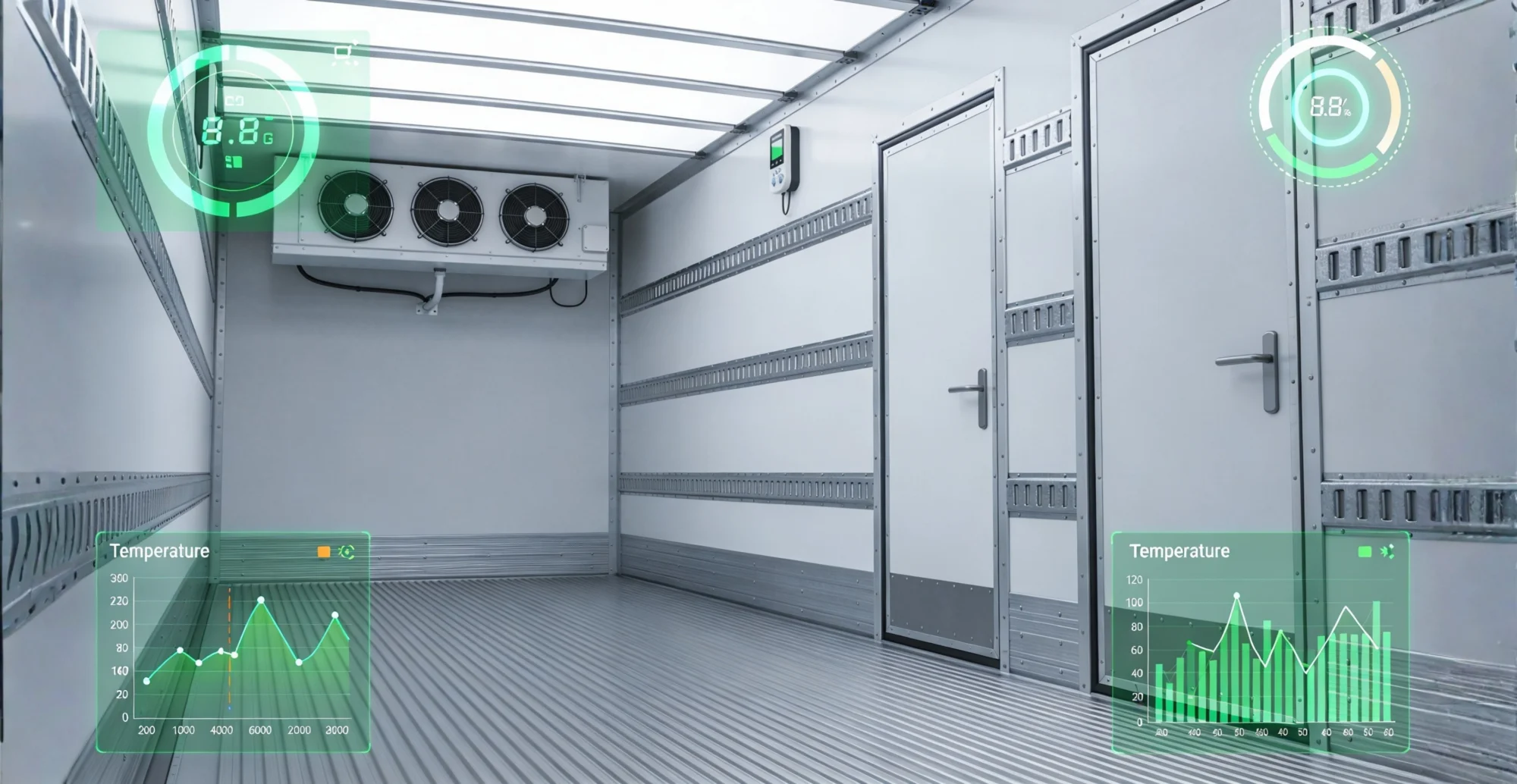
How to Design Alerts That Your Team Actually Follows?
Alert fatigue isn’t a technical glitch; it’s a governance failure. If your operators are bombarded with 100 notifications an hour, they will eventually ignore the one that actually matters.
The goal of a high-performance system like Safee is to separate the “noise” (data stored for audits) from the “signals” (events requiring immediate action).
The Blueprint for Clean Sensor Alerts
To keep your operations focused, your alert logic must be filtered through these four strategic layers:
- Geofence Intelligence: A temperature spike inside a depot (loading) means something very different than a spike on the open road. Use location to define the alert’s urgency.
- Operational Schedules: Don’t let alerts wake up your team for events that happen outside of business-relevant windows unless they are critical.
- Time & Drift Tolerances: Avoid “flapping” alerts. Set time windows to ensure a notification only fires if a condition persists, rather than reacting to minor, transient sensor drifts.
- Movement Constraints: For high-sensitivity events like fuel theft, apply speed logic. A fuel drop while a truck is moving at 80km/h is likely a sensor ripple; a drop while stationary is a red flag.
Who Owns the Incident?
An alert without an owner is just noise. Your SOP should follow a clear hierarchy:
- Ops Desk: Triage the event and verify the context (location, trip phase).
- Supervisor: Approve the incident classification and initiate corrective action.
- Compliance/HSE: Review recurring patterns to update the SOP and prevent future failures.
Also read: Fleet Maintenance Management Software: 5 Reasons to Know
The 5-Step Sensor Deployment List
The most common failure in fleet management isn’t a broken sensor—it’s a broken process. If your team doesn’t trust the data, they won’t act on it. To avoid the “we installed it, but nobody uses it” trap, follow this disciplined operational playbook:
1. Strategic Installation
Don’t just mount a sensor; place it where it reflects reality. Avoid heat sources, airflow artifacts, or areas of excessive vibration.
- Pro Tip: Document every installation with photos and Asset IDs. It’s your best friend when troubleshooting a year from now.
2. Signal Mapping
A sensor is just a signal until it’s mapped to a vehicle, a driver, and a route. Use Safee’s structured fleet model to ensure that every raw signal is correctly assigned to its “Digital Twin” in the platform. Without correct mapping, your analytics are meaningless.
3. Calibration
Raw readings are rarely “audit-ready.” You must define calibration checkpoints and—crucially—record who approved them. In Safee, calibration changes are auditable, ensuring that if a threshold is moved, there’s a clear trail of “why” and “who.”
4. Stress-Test Validation
Never enforce a policy based on a system you haven’t tested. Run controlled “disaster” simulations:
- Open a fridge door for 10 minutes.
- Perform a controlled refuel.
- The Goal: Confirm the alarm fires, the notification reaches the right person, and the escalation logic actually works.
5. The Operational Rhythm
Monitoring is a marathon, not a sprint. Use Safee’s scheduled reporting to establish a heartbeat for your operations:
- Daily: Review exceptions (What fired? Who acted? What was ignored?).
- Weekly: Analyze trends (Identify “repeat offender” sites or drivers).
- Monthly: Audit sensor health and adjust thresholds only when backed by evidence.
Is Your Fleet Ready for Go-Live?
Before you roll out sensors across your entire fleet, every asset must pass through this five-stage validation gate. If a step is skipped, your data isn’t just unreliable—it’s a liability.
Phase 1: Install
- Strategic Mounting: Sensor is placed to reflect real-world conditions (free from airflow/vibration interference).
- Connectivity Audit: Power and signal stability verified under operational conditions.
- Asset Labeling: Physical sensors are clearly labeled to match their digital IDs in the platform.
Phase 2: Map
- Context Assignment: Each sensor input is mapped to the correct vehicle, trailer, or specific compartment.
- Semantic Naming: Standardized naming conventions applied (e.g., “Front-Zone-Temp”) so reports remain readable for non-technical stakeholders.
Phase 3: Calibrate
- Baseline Calibration: Calibration performed against a certified reference and recorded (Who, When, How).
- Stationary Stability: Readings show zero “drift” or noise while the vehicle is at rest.
Phase 4: Alert
- Smart Rule Design: Alarm logic includes geofence, schedule, and time-tolerance windows to filter out noise.
- The “Dry-Run” Test: A controlled event (e.g., door open, temp breach) successfully triggered the notification and escalation path.
- Owner Assignment: Every alert has a designated recipient trained on the required action.
Phase 5: Report & Governance
- Historical Reconstruction: Can the system reconstruct “what happened” during a dispute? (Validated via a test export).
- Scheduled Distribution: Reports are automated for the specific stakeholders who need proof of compliance.
- Noise Control Policy: Non-actionable alerts are disabled or tuned. Do not let the system train your team to ignore alarms.
- Change Log: A protocol is in place to log any configuration changes only when the asset is stationary.
How to choose the right sensor stack
If you are evaluating sensor options or modernizing an older setup, don’t start with a shopping list. Start with the operational gaps you need to close. A sensor is just a commodity; the intelligence lies in how your platform handles the data it sends.
The No-Regrets Buyer Criteria
When choosing a partner, ignore the marketing fluff and look for these five pillars of operational depth:
- Integration Reality: Can the platform actually ingest signals from your existing hardware? Safee’s protocol-based architecture is built specifically to bridge different message formats into one cohesive view.
- Configuration Depth: Does the system allow for “Surgical Alerts”? You need a platform where you can layer geofences, schedules, and movement constraints to ensure an alarm only fires when it truly matters.
- Governance & Permissions: Can you restrict who edits alarm conditions? Safee recommends a strict permission model to prevent “configuration chaos” and ensure your audit trails remain untampered.
- Calibration Path: Is there a way to validate data quality? Look for “Raw Data Explorer” views that allow your technical team to verify sensor health before you enforce policies on your drivers.
The Pre-Commitment Checklist
Before you sign the contract, verify these variables to ensure the solution fits your specific fleet “DNA”:
- Asset Geometry: Will the sensor placement work for your specific reefer compartments or tank layouts?
- Geofence Authority: Identify exactly where your “Safe Zones” and “High-Risk Zones” are to set the right alert context.
- The Human Element: Who exactly will receive the notification, and what is their Mandatory Action when it fires?
- Retention Needs: Does the export format meet your internal QA and customer “Proof of Delivery” requirements?
The Demo Killer Questions
Take these questions into your next meeting with a provider to see if they truly understand fleet operations:
- How do you prevent false alerts?
- Can I audit who changed a threshold?
- What is the workflow for validating sensor accuracy during a phased rollout?
- Can your platform handle different cargo rules on a per-trip basis?
Also read: Real-Time GPS Fleet Tracking: Benefits, Challenges & Best Practices
If you’re ready to turn fleet management sensors into a clean, auditable operation (not dashboard noise), Safee can help you map your sensor stack to modules, alarm conditions, and reporting workflows—then roll it out with a governance-first checklist.
Stop guessing and start governing. Book a Safee Demo to see how we turn raw sensor pulses into audit-ready reporting.
FAQs about fleet management sensors
What are fleet management sensors?
Fleet management sensors are vehicle or cargo sensors (e.g., temperature, fuel, weight, door, tire) that feed condition/event data into a telematics platform for alerts and reporting.
Which fleet sensors matter most for cold chain operations?
Temperature and humidity monitoring are core, and door sensors add operational context and evidence when excursions happen (for example, door-open events tied to time and conditions).
How do I avoid false alerts from sensors?
Design alerts with tolerances/time windows, schedules (day/time constraints), and location logic (geofence scope). Start with “notify-only,” validate baseline readings, then tighten thresholds.
Do I need CANbus, or can I use external fuel sensors?
Both are possible depending on vehicle type and data availability. What matters is whether your chosen source is stable enough for event detection and reporting—and whether your platform supports governance rules like thresholds, time windows, and movement constraints for fuel events.
Ready to improve your fleet operations?
Tell us what you would like to improve. A Safee specialist will reply by email.
Usually replies within one business day • No sales spam
Your details are used only to respond to your request. Privacy Policy