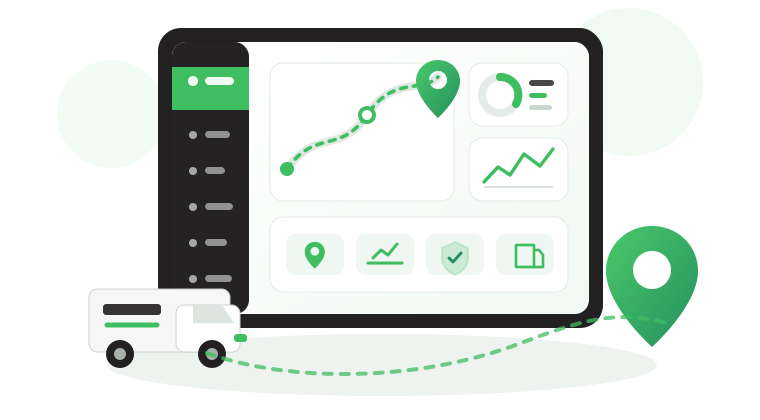


Fleet Fuel Pump Management: RFID, Cards, and Telematics
A pump log can show that fuel was dispensed. A fuel card can show that a transaction occurred. A receipt can document a purchase, and a spreadsheet can record it for finance. But those records do not always answer the operational questions that matter most: Which vehicle was actually there? Who was driving it? Was the location expected? Did the fuel event make sense in the context of the trip and vehicle? That is the real challenge behind fleet fuel pump management.
For commercial fleets, controlling fuel is not simply about collecting more transaction records. It is about connecting those records with enough operational evidence to determine whether a refueling event is expected, explainable, incomplete, or worth investigating.
RFID access systems, fuel cards, manual logs, spreadsheets, and Telematics each contribute a different piece of that evidence. None should automatically be treated as the complete picture. Safee adds the vehicle-side context around available refueling records through capabilities such as location and trip visibility, supported driver identification, fuel monitoring, configured alerts, and reporting.
This buyer guide compares those tools by what they can actually tell fleet, operations, and finance teams and where additional verification is still required.
What does fleet fuel pump management involve?
Fleet fuel pump management is the process of recording, controlling, reconciling, and reviewing fueling activity across company depots, internal pumps, external stations, project sites, and field operations.
For fuel management for fleet vehicles, the pump or transaction record is only the starting point. A useful control process may need to establish:
- which vehicle is associated with the transaction;
- which driver was assigned to the vehicle;
- when and where the refueling event occurred;
- how much fuel was recorded;
- whether the vehicle was actually present;
- whether the event matched its trip or operational activity;
- whether supported fuel-level data showed a compatible change;
- and whether any exception needs review, escalation, or reporting.
The key distinction is between access or transaction control and operational verification.
An RFID-controlled pump, for example, may tell you that a particular identifier was presented. A fuel card may document the commercial transaction. Neither automatically proves the full sequence of vehicle movement, driver assignment, tank behavior, and subsequent fuel consumption.
Telematics provides a different evidence layer: location, vehicle movement, stops, trips, geofence activity, available driver context, and—where suitable data sources are configured—fuel-related signals. Our Live Vehicle Tracking provides location-based operational visibility, while the Fuel Monitoring Module adds supported fuel monitoring and history.
Already using pump records, fuel cards, or manual logs? Request a Safee demo to identify which parts of your current fuel-control workflow can be strengthened with vehicle, driver, fuel, alert, and reporting context.
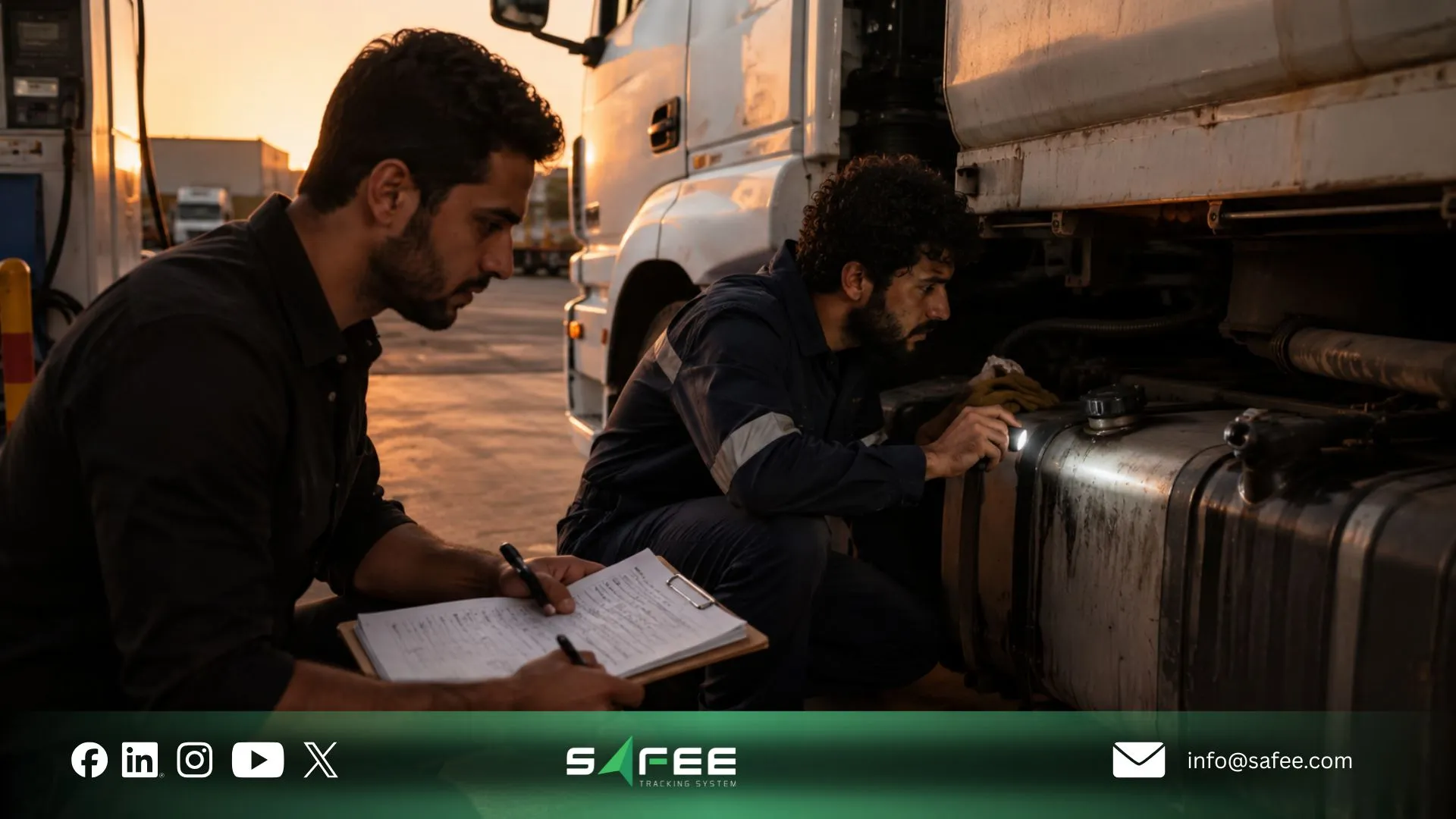
RFID vs fuel cards vs spreadsheets vs telematics
Choosing between RFID, cards, spreadsheets, and Telematics is the wrong framing if the organization expects one technology to answer every fuel-control question. These tools serve different purposes.
RFID fleet fuel management generally refers to using RFID identifiers within a fueling workflow—for example, identifying an authorized user, vehicle, tag, or pump-access event where the pump system supports it. This can create a structured access record, but that record does not automatically establish the full route, assigned driver, actual vehicle activity, or subsequent consumption.
There is an important distinction here. The Driver Identification System can use compatible telematics IDs such as RFID cards, iButton keys, or BLE beacons to associate a driver with a vehicle. That is driver identification and driver-to-vehicle assignment; it should not be confused with third-party RFID pump-access control.
Fuel cards contribute a different type of evidence. Depending on the card program and data available, they can support transaction and invoice review using records such as station, time, product, volume, or account references. Their main strength is commercial and financial control. Their limitation is that a transaction record alone may not establish what the referenced vehicle was doing at that time.
A fleet fuel management spreadsheet can bring pump logs, receipts, card records, odometer readings, approvals, and manual notes into one place. For a very small operation, pilot, or temporary process, that may be adequate. Problems emerge as teams need faster exception handling, consistent identifiers, controlled versions, repeat reporting, or stronger auditability.
Fleet fuel management with Telematics approaches the problem from the operational side. It adds vehicle location, stops, movement, trip history, geofences, available driver assignment, idle context, and supported fuel signals around the original record. It does not automatically replace the pump or commercial transaction record; instead, it helps the reviewer test that record against what the fleet was actually doing.
That makes the technologies complementary rather than interchangeable.
Here is how the four approaches compare:
| Tool | Main Strength | Main Limitation | Best Use |
| RFID | Identifies an access/user or vehicle identifier where supported | Does not always prove route activity, actual consumption, or the assigned driver in the fleet platform | Controlled pump-access environments and structured access logs |
| Fuel Cards | Provides payment, station, and available transaction records | Can lack complete vehicle, driver, route, and operational context | Finance control, transaction review, and invoice reconciliation |
| Spreadsheet | Flexible, low-barrier manual consolidation | Weak at scale for live exceptions, version control, alerts, and repeatable audit trails | Very small fleets, pilots, temporary tracking, or controlled manual processes |
| Telematics | Adds location, movement, stops, trips, driver assignment, geofences, and supported fuel-level context | Depends on correct configuration, suitable data sources, and data quality; does not itself create the original commercial transaction | Commercial fleets that need operational validation and exception review |
The strongest fuel-control model is therefore usually layered rather than dependent on one record. Pump systems, RFID logs, or fuel cards can remain the source of the fueling or commercial transaction, while Telematics helps establish whether that record aligns with vehicle and driver activity.
A spreadsheet may also remain part of the workflow where reliable integration is not available. What matters is that teams understand which system owns each record, what each source can prove, and where manual verification is still necessary.
Why does pump data need vehicle and driver context?
Pump data becomes much more useful when the reviewer can reconstruct what happened around the transaction.
Consider a depot record showing a vehicle ID, a timestamp, and a recorded fuel volume. On its own, that record cannot necessarily answer:
- Was the vehicle physically at the depot at that time?
- Had it entered the approved refueling area?
- Which driver was assigned to it?
- Did the vehicle stop long enough for the event to make operational sense?
- Was the recorded volume reasonable for that vehicle and its recent activity?
- Did available fuel-level data show a corresponding increase?
- Did the fuel level fall unexpectedly afterward?
This does not mean every mismatch indicates misuse. An apparent exception could result from an incorrect vehicle identifier, shared credentials, delayed data entry, maintenance work, route changes, emergency fueling, sensor instability, or another legitimate operational reason.
That is why good fleet fuel pump management should flag discrepancies for investigation rather than automatically convert every discrepancy into an accusation.
Useful exception patterns include:
- fueling recorded outside approved depots or locations;
- a transaction when vehicle history shows the asset somewhere else;
- unusually large volumes relative to the vehicle or previous fuel state;
- repeated small fills that warrant pattern review;
- no corresponding vehicle activity near the recorded station;
- missing or inconsistent driver assignment;
- an unexpected fuel drop after a refueling event;
- recurring mismatches associated with a particular vehicle, branch, shift, or fueling source.
At Safee, we can add location, stop, route, geofence, driver, and supported fuel-level evidence around these cases. Safee’s fuel monitoring capabilities can use compatible sources including CANbus, analog, digital, pulse-based, and BLE setups, while calibration and signal quality remain important to interpreting the resulting fuel data correctly.
For more detail on sensor inputs, calibration, and fuel-event validation, read our Fleet Fuel Level Monitoring.

The workflow of fleet fuel management with telematics
A practical fleet fuel management with Telematics workflow turns a raw fuel record into a reviewable operational event.
Step 1: Capture the fuel or pump event.
Start with the original source. Depending on the operation, that may be an internal pump log, RFID access record, fuel-card transaction, receipt, imported file, or manually entered record.
Do not lose the source record when adding Telematics evidence. Finance may still need the card or invoice record, while operations needs the vehicle timeline.
Step 2: Match it with vehicle location, driver, trip, and time.
Review whether the vehicle location and movement history support the recorded event.
Did the vehicle enter the depot or station area? Was it stopped? Was the time consistent? Which trip was active? Who was assigned to the vehicle?
Our Live Vehicle Tracking and Driver Identification System can provide relevant location and driver-to-vehicle context when those capabilities are configured.
Step 3: Compare the event with fuel-level data or expected consumption.
Where compatible vehicle data or sensors are available, use the Fuel Monitoring Module and fuel history to check whether the available readings support the event.
Fuel data should never be interpreted without considering source quality and configuration. Tank profile, calibration, signal stability, vehicle angle, movement, and sensor type can all affect what a reviewer sees. Our Fuel Explorer and history tools are designed to help teams examine fuel changes over time rather than relying only on a single live reading.
Step 4: Flag exceptions and turn them into reports or alerts.
Not every discrepancy deserves an immediate alarm.
A major mismatch between vehicle location and the recorded fueling location may need rapid investigation. Repeated minor discrepancies might be better handled through an exception report reviewed by operations or finance.
Our Alarms and Alerts Module can support configured exception notifications, The Fleet Reporting capability can then support filtered, scheduled, and exportable fleet reports for different operational stakeholders.
Want to test this workflow against your existing pump, card, or spreadsheet records? Contact us to map the source record, vehicle data, identifiers, exception logic, and reporting process before deciding what should be automated.
How to evaluate fuel fleet management solutions?
The right fuel fleet management solutions should be evaluated by the evidence and workflow they can support—not by the longest feature list.
Before comparing platforms, map the variables that determine whether a proposed setup will actually fit your operation:
- internal pumps versus external stations;
- fuel-card providers and available transaction data;
- RFID or other access systems already in use;
- vehicle and tank types;
- availability and quality of vehicle fuel data;
- compatible sensor requirements;
- vehicle and driver identifiers across systems;
- number of branches, depots, or project sites;
- exception and approval workflows;
- reporting needs across operations, fleet, finance, and management.
Then test each solution against the questions that matter operationally.
Can the solution connect fueling records with vehicles and drivers?
Ask how vehicle IDs, driver IDs, pump identifiers, card references, and transaction records are matched. A demo should distinguish automatic matching from imported or manual reconciliation.
Can it support internal pumps and external fueling records?
Do not accept a generic claim of “fuel integration.” Identify exactly what sources can be connected, imported, or reviewed and what remains outside the platform.
Can it reduce dependency on spreadsheets?
The objective does not have to be immediate spreadsheet elimination. A better first target may be moving repeated validation, alerts, exception ownership, and scheduled reporting out of manually maintained files.
Can it produce exception reports for finance and operations?
Finance and operations often need different views of the same event. Finance may focus on transactions and reconciliation, while operations need vehicle location, driver, route, fuel behavior, and closure evidence.
Safee’s Fleet Reporting supports report filtering, scheduling, and export, including time-, asset-, and driver-related views.
Can it scale across branches, depots, and mixed vehicle fleets?
A rigid rule for every asset may generate misleading exceptions. Thresholds, fuel sources, tank profiles, approved locations, user roles, and reporting workflows may vary between vehicle groups and operating sites.
Questions worth putting directly into the RFP or provider demonstration include:
- Which pump, card, invoice, API, file, or manual records can the proposed solution use?
- Is each connection a direct integration, scheduled import, file upload, or manual reconciliation process?
- How are inconsistent asset, driver, card, and transaction identifiers resolved?
- What vehicle-location and trip evidence is available around a refueling record?
- What fuel results depend on CANbus, external sensors, BLE, or another data source?
- How are calibration, signal quality, and abnormal readings validated?
- Can exception rules vary by asset group, branch, depot, geofence, time, or event severity?
- Can reports show who reviewed an exception and how it was resolved?
A credible comparison should clearly distinguish platform capability, compatible data sources, deployment configuration, and data that is simply not available.
How does Safee support fuel visibility around refueling events?
At Safee, we support fuel visibility by connecting available fuel records with the wider operational context of the vehicle. Our role in this workflow is centered on Telematics validation, fuel monitoring, and operational evidence, rather than direct administration of depot pumps or unsupported claims about pump-level control.
Within our fleet management environment, teams can review fueling activity alongside Live Vehicle Tracking, supported driver-to-vehicle identification, the Fuel Monitoring Module, Alarms and Alerts, fuel history, and Fleet Reporting.
Depending on the deployment, our fuel capabilities can use compatible vehicle or sensor data from sources such as CANbus, analog, digital, pulse-based, and BLE inputs. This allows fleet teams to review fuel levels, consumption history, fuel changes, and related operational patterns with additional Telematics context instead of relying only on manual records.
How Safee connects fuel events with vehicle, driver, and telematics context
When an internal depot or another existing system records a refueling event, we do not position Safee as replacing that source record. The pump or transaction system remains the source for what it recorded.
What we add is the operational context around that event.
With Safee, teams can review:
- where the vehicle was at the relevant time;
- whether it entered or left a configured geofence;
- when it stopped or moved;
- which driver was associated with the vehicle where Driver Identification is configured;
- what trip activity occurred before and after the event;
- and whether supported fuel-level history provides additional evidence for review.
For fleets with shared vehicles, our Driver Identification System can provide additional context by linking drivers with vehicles through supported identification methods including RFID, iButton, and BLE.
This RFID functionality is related to driver identification. We do not present it as Safee controlling or operating a depot’s RFID pump controller.
Our objective is not to generate an automatic verdict that a fueling record is correct or incorrect. Instead, we help Fleet Managers, Operations, and Finance teams build a more complete evidence set around the event so they can investigate it with better operational context.
From pump records to actionable fuel reports
At Safee, we help turn available fuel-related records into information that different stakeholders can actually review and use.
Operations teams may need to identify fueling exceptions by branch or vehicle. Finance teams may need records that can be compared with card transactions or invoices. Fleet Managers may need to review recurring patterns by vehicle or driver, while leadership may require a summarized view instead of transaction-by-transaction analysis.
Our Fleet Reporting capability supports configurable report parameters, automated scheduling, and PDF or Excel exports. Reporting can cover trip and location data, vehicle performance, drivers, fuel, time and activity, geofences, and other connected fleet information.
Within our fuel monitoring environment, teams can also review fuel usage history, fuel graphs, and fuel-change records. Where suitable fuel data is available, conditions such as Fuel Fill and possible Fuel Theft-type events can also support further review.
This creates a more connected workflow:
source record → vehicle context → driver context → supported fuel evidence → exception → alert or report → investigation
instead of relying only on:
receipt → spreadsheet → month-end review
If your current process requires several systems to reconstruct one refueling event, talk to Safee about how we can connect the operational evidence around the systems and records you already use.
Why choose Safee for telematics-based fuel control?
At Safee, we understand that fuel-control workflows become more complex as fleets expand across multiple depots, external stations, long routes, mixed vehicle types, shared vehicles, remote operations, and different reporting responsibilities.
For commercial fleets in the UAE, Saudi Arabia, the wider GCC, and international markets, we do not position Safee as a replacement for every pump, fuel card, RFID system, spreadsheet, or accounting platform.
Instead, we help connect fuel-related reviews with the broader fleet environment.
Within Safee, teams can use Live Vehicle Tracking, Fuel Monitoring, driver-related context, Alarms and Alerts, and Fleet Reporting as part of the same fleet management environment. Our Fuel Monitoring Module supports compatible fuel data sources and provides fuel history, consumption views, refueling-related detection, and reporting capabilities.
For fleets evaluating fleet fuel pump management, the practical value is the ability to strengthen existing pump and transaction records with additional Telematics evidence that can support faster, more consistent, and more accountable exception review.
The exact workflow depends on the fleet’s fuel sources, vehicle types, identifiers, available fuel data, hardware configuration, integrations, branches, reporting requirements, and operational processes. These variables should be reviewed during solution design rather than assumed in advance.
Request a Safee demo to see how fuel events, tracking, supported driver context, Alarms and Alerts, and Fleet Reporting can fit into your fuel-control workflow.
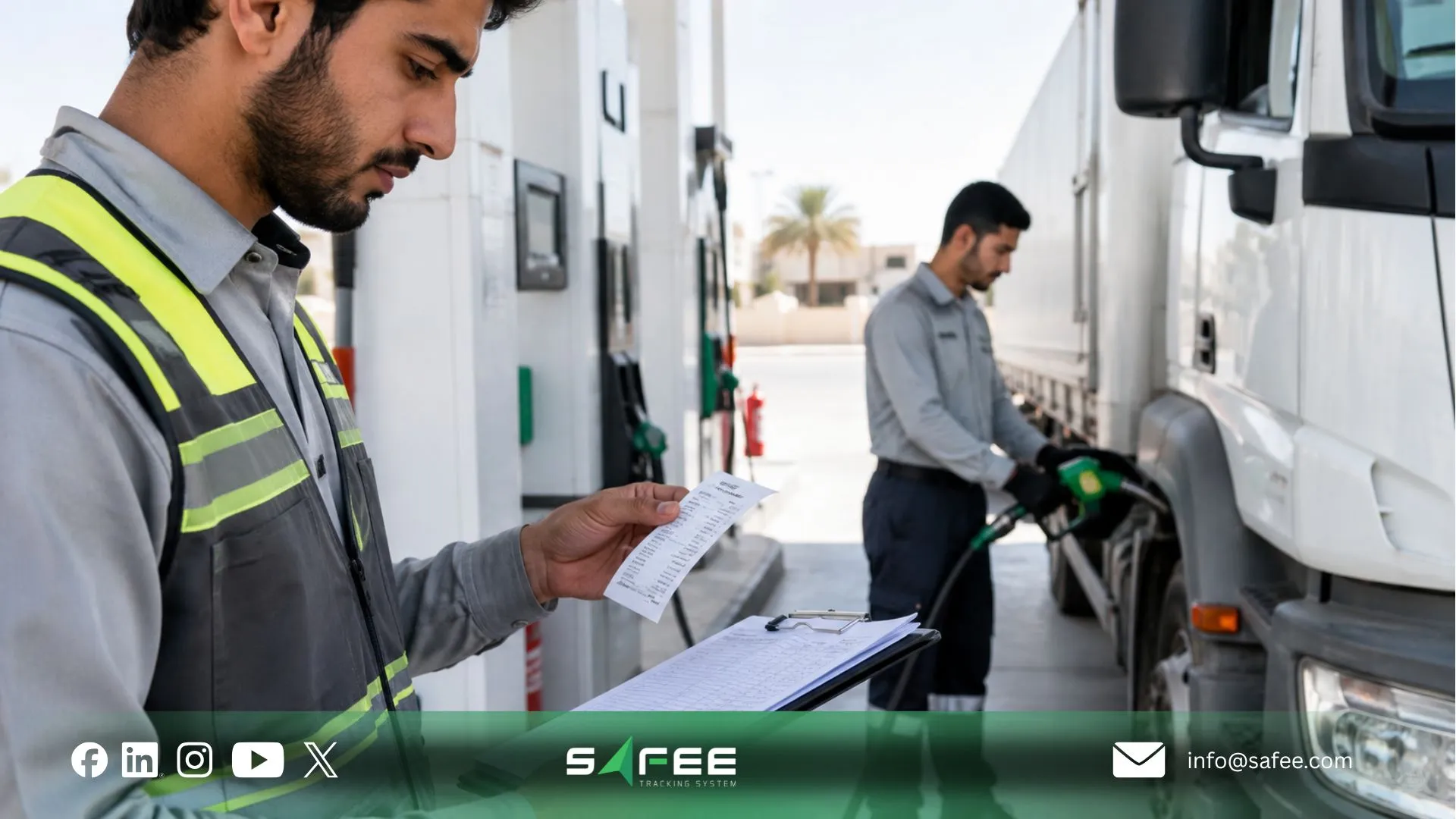
FAQs about fleet fuel pump management
Can one system manage internal and external fueling records?
It depends on what the internal pump system, external station, fuel-card provider, or other source can make available and how the fleet platform can receive that information. Buyers should verify whether each source supports direct integration, API exchange, file import, or manual reconciliation rather than assuming all fueling records will automatically appear in one system.
How does RFID fleet fuel management support fuel control?
RFID fleet fuel management can help create a structured identity or access record where an RFID-enabled fueling system is used. That record can answer who or what identifier was presented, depending on the pump system.
When is a fleet fuel management spreadsheet no longer enough?
A fleet fuel management spreadsheet becomes difficult to rely on when teams spend significant effort combining files, correcting inconsistent vehicle IDs, copying GPS information manually, resolving duplicate versions, rebuilding recurring reports, or investigating exceptions long after the fuel event occurred.
How does fleet fuel management with telematics improve pump data review?
Fleet fuel management with Telematics adds independent operational context around the original pump, RFID, card, or manual record. Reviewers can compare the transaction with vehicle location, stops, trips, geofence history, available driver assignment, and supported fuel-level data.
Ready to improve your fleet operations?
Tell us what you would like to improve. A Safee specialist will reply by email.
Usually replies within one business day • No sales spam
Your details are used only to respond to your request. Privacy Policy