
Fleet Fueling Management: How to Control Every Refueling Event?
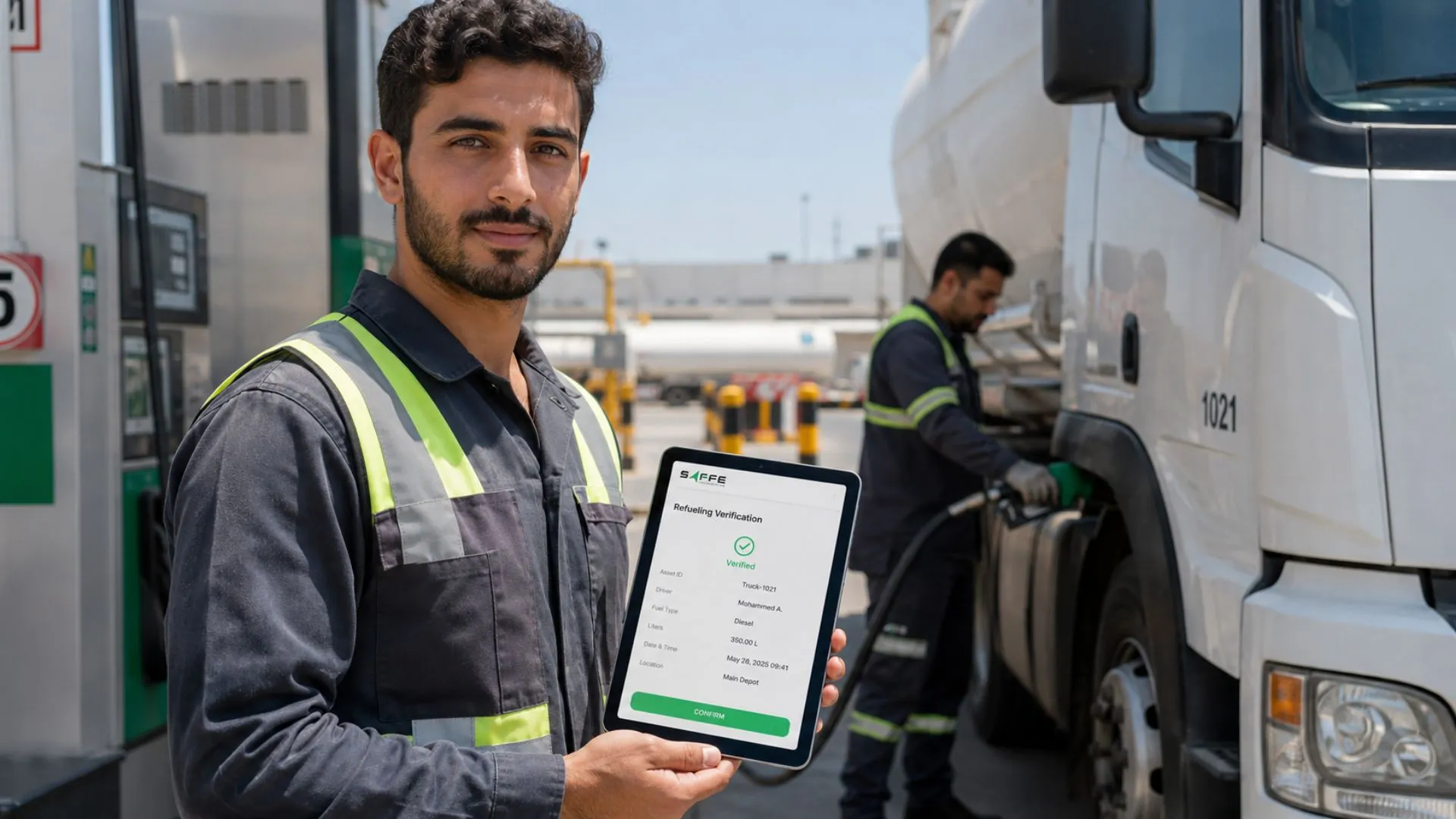
A fuel receipt confirms that fuel was purchased. It does not necessarily confirm that the correct vehicle received it, that the assigned driver was involved, or that the transaction happened at an approved location. Fleet fueling management addresses that operational gap by treating every fill-up as an event that can be identified, checked, explained, and escalated when necessary.
For commercial fleets, this changes the fuel-control question. Instead of waiting for monthly consumption totals and asking why costs increased, Operations and Finance can ask: Was this specific refueling event expected, authorized, and consistent with what the vehicle was doing?
What is fleet fueling management?
Fleet fueling management is the process of controlling and verifying refueling events across company vehicles. The focus is not merely how much fuel the fleet consumed over a week or month. The focus is the individual fill-up and whether the available evidence supports it.
A useful refueling record should bring together:
- Vehicle identity.
- Driver or responsible assignment.
- Refueling time.
- Refueling location.
- Fuel volume.
- Available fuel-level or vehicle data.
- Route, trip, depot, or branch context.
- Event status and any required follow-up.
This makes fleet fueling management narrower than general fleet and fuel management. A broader fuel program may examine consumption, idling, route efficiency, and long-term cost trends. Event-level fueling control investigates what produced those numbers.
For example, a vehicle may show acceptable monthly consumption while still recording repeated fill-ups at locations that fall outside company policy. Conversely, one unusually large fill-up may be perfectly reasonable for a vehicle returning from a long route. The event needs context before a manager can classify it.
Want to see how your existing fueling records can be connected with operational data? Request a Safee demo and review your current refueling workflow with the team.
Why are refueling events hard to control
Most fueling problems begin with fragmented evidence.
Finance may receive invoices and receipts. Operations may have GPS history. Drivers may send photographs or manual forms. A branch may maintain its own spreadsheet. Another depot may use fuel cards or internal pump records. Each source can be valid while still leaving the business unable to reconstruct one refueling event quickly.
That becomes harder when fleets operate with:
- Multiple drivers using the same vehicles.
- Several depots or branches.
- External stations and internal fuel points.
- Long-distance or remote routes.
- Different vehicle tank capacities.
- Night or emergency operations.
- Manual authorization processes.
- Delayed invoice reconciliation.
A receipt, for example, may show an apparently legitimate purchase. Operations still need to know whether the relevant vehicle was actually near that fueling point. If the vehicle was elsewhere, the transaction requires investigation. If it was there but outside the expected route, the team needs another layer of context.
This is why fuel management for fleet operations cannot depend on receipts alone. The control process needs a connection between commercial records and operational evidence.
Our current fuel workflows can combine fuel information with trip activity, location, idling, geofence context, and configured alert logic, helping teams review a fuel event while its operational context is still available.
Fleet fueling management vs fleet fuel management
The two disciplines support each other, but they operate at different levels.
| Area | Fleet fuel management | Fleet fueling management |
| Main focus | Total consumption, cost, efficiency, and trends | Individual refueling events |
| Main question | Where is fuel being used or wasted? | Was this fill-up correct and authorized? |
| Best use | Cost control, policy review, consumption analysis | Refueling control and exception review |
| Typical evidence | Consumption trends, idling, route performance, total fuel use | Vehicle, driver, time, location, volume, event context |
| Management action | Improve overall fuel efficiency and policy | Verify, approve, investigate, or escalate a specific event |
A mature fuel fleet management process needs both views. Trend analysis tells managers where a problem may exist; refueling event tracking helps explain the transactions behind that trend.
For teams that need the broader fuel-control perspective, our Fuel Tracking capability and the Best Fleet Fuel Management System guide provide the wider context.

How does fleet fueling management work?
An effective workflow moves from identification to validation and then to action.
- Identify the event: Start with the available vehicle, driver, time, location, and volume data. The data source may differ between fleets, so the process should not assume that every organization uses the same hardware or fueling system.
- Match the event with operational context: Compare the fill-up with vehicle movement, assigned driver, route, operating hours, depot, and approved fueling locations. A transaction that looks unusual in isolation may make sense once the route is reviewed.
- Validate the fuel behavior: Where fuel-level information is configured, compare the recorded refueling volume with tank-level behavior. Data quality matters here. Sensor source, tank configuration, calibration, filtering, and vehicle conditions affect the reliability of the evidence. Safee supports fuel inputs including CANbus and different sensor configurations, depending on the deployment. Teams investigating tank behavior can use the Fleet Fuel Level Monitoring workflow to understand how fuel changes can be evaluated against vehicle activity.
- Classify the event: Not every abnormal value is misuse. An event may be normal, require clarification, reflect a data-quality issue, indicate a policy exception, or justify escalation.
- Route exceptions to alerts or reports: Events requiring immediate attention can move into an alert workflow, while patterns that require periodic review may belong in scheduled reporting.
Our documentation includes configurable Fuel Fill and Fuel Theft alarm conditions. These depend on fuel-level information being available and can be configured around geofences and specific days or times.
If your team currently reconciles fuel cards, GPS history, and spreadsheets manually, contact us to map the data sources, locations, alert rules, and review responsibilities required for a controlled fueling workflow.
Common problems Fleet fueling management helps detect
Fleet fueling management is valuable because it highlights exceptions that aggregate fuel totals can hide.
- Unauthorized fill-ups: A fill-up may occur outside the permitted workflow, time window, or operational requirement. The event should be reviewed rather than automatically treated as misconduct.
- Fuel card misuse: A transaction may exist without sufficient evidence connecting it to the intended vehicle. Comparing the commercial record with vehicle location and driver context can expose mismatches that need investigation.
- Fueling outside approved locations: Companies may define specific stations, depots, or project sites for refueling. Events elsewhere can be checked against the route, dispatch requirements, and authorized exceptions.
- Unusual fuel volume: A quantity may be normal for one vehicle but illogical for another. Tank profile, previous fuel level, distance traveled, vehicle type, and operational activity all matter before the event is classified.
- Fuel drop after refueling: A fuel-level rise followed by an unexpected drop deserves review. The cause could involve sensor behavior, tank characteristics, leakage, operational activity, or possible fuel misuse. The system provides evidence for investigation; it should not replace operational verification.
The same principle applies to repeated events. One unusual fill-up may have a straightforward explanation. Repeated anomalies connected with the same vehicle, driver, location, or branch can reveal a control problem that deserves management attention.
Reports and KPIs fleet managers should review
The objective of refueling event tracking is not to make managers manually inspect every normal transaction. Reporting should direct attention toward exceptions, patterns, and unresolved cases.
Useful reports include:
| Report | What managers should review |
| Refueling event report | Vehicle, driver, location, time, fuel amount, and event status |
| Fuel exception report | Events requiring investigation because of location, volume, timing, or other anomalies |
| Driver fueling behavior report | Repeated fueling patterns and exceptions associated with driver assignments |
| Location-based fueling report | Activity by station, depot, branch, project site, or operating area |
| Fuel drop after refueling report | Fuel-level changes following a recorded fill-up |
| Open exception view | Events awaiting verification, ownership, or closure |
These reports should support different functions. Operations need the trip and vehicle context. Finance may need a cleaner link between transaction evidence and invoice review. Fleet managers need visibility into repeated exceptions and policy enforcement.
Useful KPIs can include:
- Refueling events per vehicle.
- Exceptions per driver.
- Average fuel per fill-up by comparable vehicle type.
- Events outside approved fueling locations.
- Branch-level fueling exceptions.
- Repeated fuel drops following refueling.
- Open exceptions requiring review.
These metrics need context. A higher number of fueling events is not automatically bad, and an unusually high average fill-up is not automatically suspicious. Vehicle type, duty cycle, route length, tank size, and operating policy affect interpretation.
Our Fleet Reporting capability supports customizable filtering, scheduled delivery, and report exports, allowing recurring operational evidence to be distributed to the teams responsible for review.
Need a cleaner reporting process between Fleet, Operations, and Finance? Review our Fleet Reporting capability or speak with us about the reports and review cadence your fueling process requires.
How does Safee support fleet fueling management?
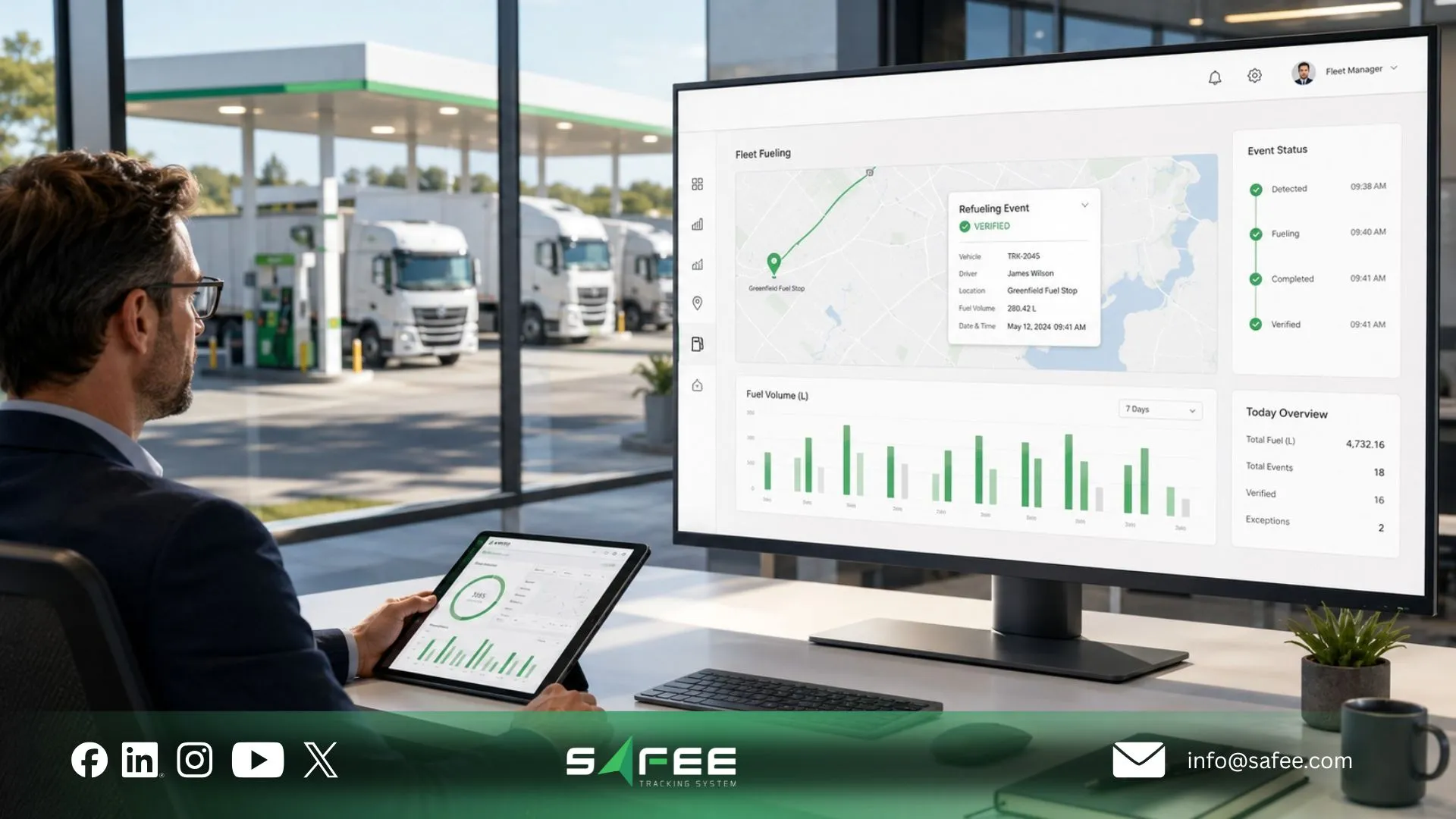
At Safee, we support fleet fueling management by connecting the fuel event with the operational information needed to understand it.
Instead of looking at fuel as an isolated transaction, teams can bring together relevant layers such as:
- Fuel Tracking / Fuel Monitoring Module for fuel visibility and fuel-related changes.
- Live Vehicle Tracking for location and vehicle activity context.
- Driver Management for assignment and accountability context.
- Alarms and Alerts for configured exception workflows.
- Fleet Reporting for recurring review and management evidence.
- Telematics data where connected devices and vehicle data sources are available.
Our Fuel Monitoring Module supports fuel information from CANbus and multiple sensor configurations, while Fuel Explorer and history capabilities can be used to review usage and fuel changes.
The value for Operations and Finance is not simply adding another fuel dashboard. It is being able to investigate the same event from structured evidence.
Consider a vehicle that records a fill-up late in the evening. A manager can ask:
- Was the vehicle actually at the fueling location?
- Was the location approved?
- Who was responsible for the vehicle?
- Did the route justify the stop?
- Did the available tank data support the recorded fuel addition?
- Was there an unusual drop afterward?
- Is this a one-time event or part of a repeated pattern?
That turns fuel misuse detection from guesswork into an operational review process.
The exact configuration should still be determined by the fleet’s vehicles, fuel-data sources, tank profiles, operating locations, driver policies, reporting responsibilities, and available integrations. Our platform should therefore be configured around the actual refueling workflow rather than forcing every operation into the same template.
FAQs about fleet fueling management
What is fleet fueling management?
Fleet fueling management is the process of identifying, verifying, and reviewing individual vehicle refueling events using information such as vehicle, driver, time, location, fuel volume, and event status.
How is fleet fueling management different from fleet fuel management?
Fleet fuel management focuses mainly on overall consumption, cost, efficiency, and trends. Fleet fueling management focuses on individual fill-ups and whether each event was expected, authorized, and explainable.
Can fleet fueling management detect unauthorized refueling?
It can help identify events that require review, such as fueling outside approved locations or times, unusual volumes, or events that do not match vehicle activity. Managers should verify the available evidence before classifying an event as misuse.
Does fleet fueling management require fuel sensors?
Not in every workflow. Vehicle location, driver assignment, transaction records, geofences, and operational records can already support some event verification. Fuel-level data and compatible sensors add another validation layer when the deployment supports them.
What reports should fleet managers use for fueling control?
Useful reports include refueling event reports, fuel exception reports, driver fueling behavior reports, location-based fueling reports, fuel-drop reviews, and open-exception reports. KPIs should then highlight recurring patterns by vehicle, driver, branch, location, or event type.
Ready to improve your fleet operations?
Tell us what you would like to improve. A Safee specialist will reply by email.
Usually replies within one business day • No sales spam
Your details are used only to respond to your request. Privacy Policy