

Are Your Drivers Ready for Oil and Gas Fleet Management?

In oil and gas fleet management, a vehicle can be fully maintained, fuelled, tracked, and ready to move, but the operation is still exposed if the driver is not fit, documented, trained, and route-ready. One expired site induction, one unmanaged fatigue concern, or one repeated harsh-driving pattern can turn a normal dispatch into an HSE issue, a client escalation, or an audit problem. For fleets operating from the UAE across the GCC and global energy sites, driver readiness is not paperwork. It is a live safety control.
This guide gives oil and gas fleet managers and compliance teams a practical checklist for verifying driver conditions before and during high-risk operations. You will see which documents, health checks, training records, journey rules, and fleet management driver behaviour signals should be reviewed, and how Safee can support fleet driver management through driver visibility, alerts, journey controls, reporting, and compliance-ready workflows across GCC and international operations.
Why does driver conditions matter in oil and gas fleet management
Driver conditions are the standards a driver must meet before being assigned to oil and gas fleet work. These conditions may include license validity, medical fitness, vision suitability, defensive driving training, site induction, journey management readiness, behaviour history, and compliance documentation.
In standard transport, an incomplete driver file may create an admin delay. In energy operations, it can create real operational exposure. Drivers may work on remote roads, industrial sites, desert routes, restricted zones, and high-temperature environments where a missed check can affect people, assets, clients, and production continuity.
If your team is still building the driver selection stage, read Safee’s related guide on oil and gas fleet management driver selection before finalising this compliance checklist.
Compliance question | Why it matters |
Is the driver legally and operationally eligible? | Prevents unqualified assignment and missing approval gaps. |
Is the driver medically and visually fit for the duty? | Supports fleet management driver safety on long, remote, or high-risk routes. |
Has the driver completed required training and induction? | Reduces avoidable incidents and restricted-site non-compliance. |
Does the driver behaviour record show recurring risk? | Helps decide whether the driver is suitable for a route, vehicle, or site. |
Can the business prove what was checked? | Strengthens fleet compliance management and audit readiness. |
Request a Safee demo to review how your team can connect driver conditions, alerts, records, and reports before assigning drivers to high-risk energy routes.
What does oil and gas fleet management demand beyond a license?
A valid license is only the first checkpoint. Oil and gas fleet management needs a wider readiness view because the driver may operate under client HSE rules, route permits, restricted access, remote-area communication protocols, and strict journey controls.
- The correct license category for the assigned vehicle and operating country.
- Current medical or fitness-to-drive status where required by policy, client, or local rules.
- Vision suitability for long-distance, night, desert, or industrial-site driving.
- Defensive driving, HSE, or site-specific induction records.
- Journey management understanding, including approved routes, stops, check-ins, and escalation.
- Vehicle familiarisation and pre-trip inspection discipline.
- Behaviour history, including speeding, harsh braking, harsh acceleration, route deviation, and incident patterns.
- Compliance documents that are current, centralised, and easy to retrieve during reviews.
Our Driver Management capabilities are relevant here because driver data, behaviour monitoring, history, and reporting should not sit in disconnected spreadsheets when routes are high-risk
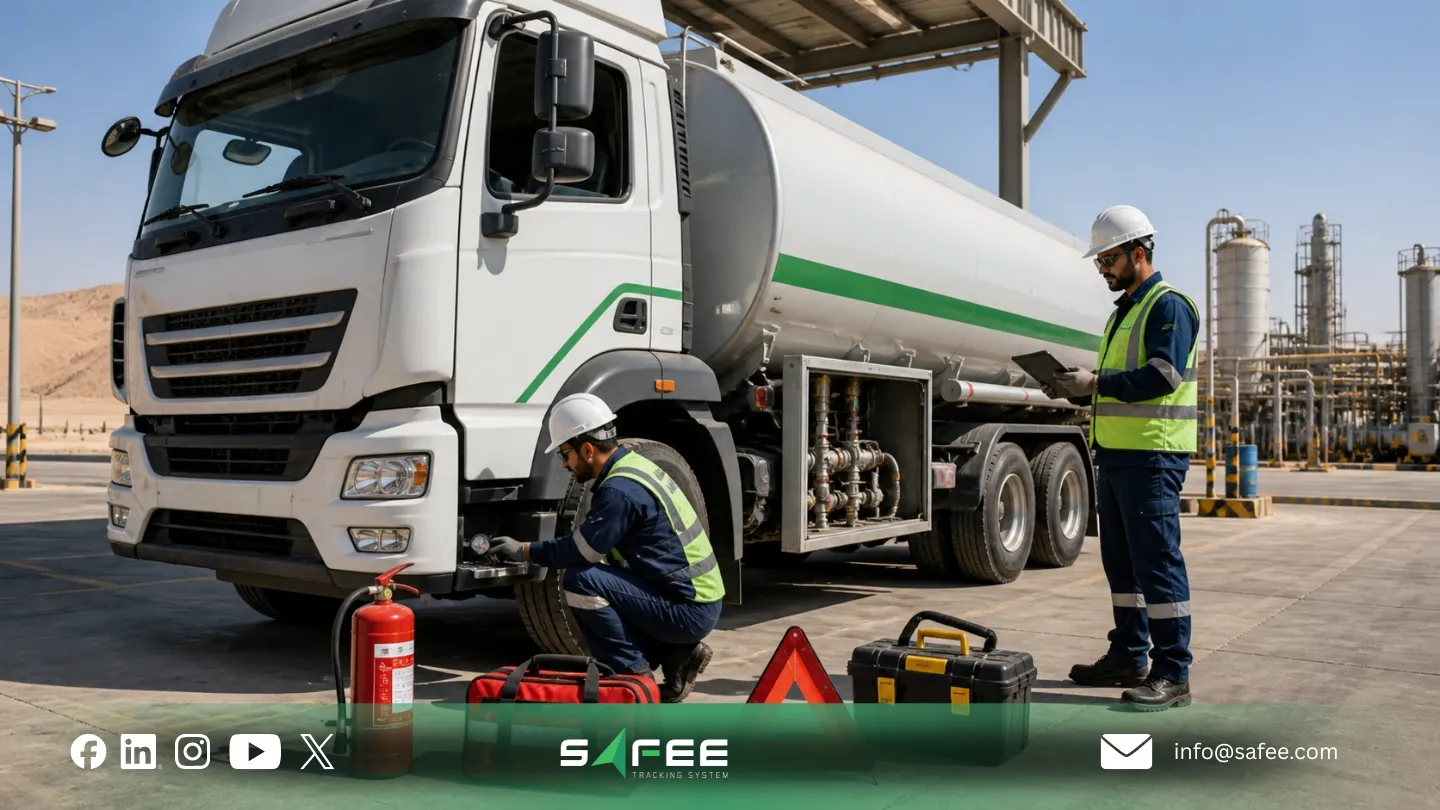
10 conditions every oil and gas fleet management driver must meet
Each organisation should verify these conditions against local regulations, client contracts, internal HSE policies, and site rules. The checklist below gives compliance teams a practical structure without assuming one universal legal standard for every country.
Driver Condition | What to Verify | Why It Matters |
Correct license category | License class matches vehicle type, route, and operating area. | Prevents unqualified vehicle assignment. |
Medical fitness | Fitness-to-drive status is current where required. | Supports safe duty allocation. |
Vision suitability | Vision checks or declarations are documented where required. | Reduces risk on long, night, remote, or industrial routes. |
Defensive driving training | Training and refresher status are complete. | Strengthens fleet management driver safety. |
Site or client induction | Driver understands access, movement, and HSE rules. | Reduces restricted-site and client compliance risk. |
Journey management readiness | Driver understands route, stops, communication, and escalation. | Improves trip control before and during movement. |
Behaviour record review | Speeding, harsh events, idling, deviation, and incident patterns are reviewed. | Supports safer driver assignment and coaching. |
Vehicle familiarisation | Driver knows the assigned vehicle and inspection steps. | Reduces misuse, downtime, and avoidable defects. |
Compliance document validity | Required documents are current and stored centrally. | Supports fleet compliance management. |
Corrective action status | Past incidents and required follow-ups are closed. | Prevents repeated unmanaged risk. |
This checklist should not live in a file that only one person controls. It should become part of a managed workflow where driver records, expiry dates, alerts, and behaviour reviews are visible to the right teams at the right time.
Fleet management driver safety on GCC energy routes
Health and vision checks matter because GCC oil and gas drivers may work through heat, long travel windows, desert roads, remote locations, heavy industrial traffic, and strict site movement rules. The purpose is not to collect sensitive information unnecessarily. The purpose is to confirm that the driver is fit for the duty assigned.
- Which fitness or medical records are required for each driver category?
- Are vision checks required for night, remote, or high-risk routes?
- Who approves fitness before driver assignment?
- How are temporary restrictions or duty limitations recorded?
- Which teams can view sensitive records, and what should be limited by role?
- How does the process protect driver privacy while supporting safety decisions?
For privacy-sensitive driver data, reading about fleet driver management and privacy explains why monitoring works best when drivers understand what is tracked, why it matters, and who can access the information.
Certifications and fleet compliance management documents
Fleet compliance management depends on keeping driver documents complete, current, and easy to verify. In oil and gas operations, missing documents can delay deployment, block site access, or create pressure during client and internal audits.
- Driving license and relevant vehicle category.
- Internal driver authorisation or approval record.
- Defensive driving certificate.
- Site induction record and client-specific approvals.
- HSE training and journey management training records.
- Medical or fitness-to-drive documentation where required.
- Identity and access documents where required.
- Incident investigation or corrective action closure records.
The key is not only storing the document. Compliance teams need to know what is valid, what is missing, what is approaching expiry, who owns renewal, and whether an expired document should block assignment to active routes.
Fleet management driver behaviour before assignment
Fleet management driver behaviour before assignment means reviewing how a driver has performed in real operating conditions before approving them for a route, vehicle, or high-risk task. This helps fleet, HSE, and compliance teams decide whether the driver is ready, needs coaching, or should be limited from certain routes until risk patterns are corrected.
These records may include speeding, harsh braking, harsh acceleration, idling, route deviation, stop patterns, seat-belt events where available, and previous incident history.
Behaviour data should not be used only for penalties. It should help managers identify risk, coach drivers, improve route planning, and make fair assignment decisions. A repeated harsh-braking pattern may point to driver behaviour, but it may also point to route design, traffic conditions, load, schedule pressure, or vehicle condition.
Behaviour Pattern | Possible Meaning | Recommended Follow-Up |
One-off exception | Unusual traffic, route event, or operational disruption | Review context before action |
Repeated pattern | Coaching need, route issue, fatigue risk, or vehicle concern | Assign supervisor or HSE review |
High-risk trend | Driver may not be suitable for some routes until corrected | Escalate, document action, and monitor improvement |
For performance-review structure, Safee’s article on driver performance KPIs can support teams that want to turn behaviour data into clearer coaching and management actions.
How to verify driver conditions in oil and gas fleet management?
Verification turns the checklist into a working control system. In oil and gas fleet management, driver conditions should be verified before assignment, monitored during active routes, and reviewed at scheduled intervals based on risk level.
- Run a pre-assignment eligibility check for license, role, training, site access, and route suitability.
- Review document validity and expiry dates before the driver is approved for high-risk work.
- Confirm training, induction, and journey management readiness.
- Check driver behaviour history and any open corrective actions.
- Assign the driver to the right vehicle, route, and risk level.
- Monitor active routes with location, speed, route adherence, and exception alerts.
- Record follow-up actions and close the loop after alerts, incidents, or document gaps.
- Review trends through scheduled compliance and management reporting.
Document audits aligned with fleet compliance management rules
Document audits should be based on risk, not only calendar reminders. A driver assigned to remote oilfield routes, client-controlled sites, or cross-border work may require tighter review than a lower-risk support role.
- Is the driver record complete and searchable?
- Are required documents current?
- Are expiry dates visible and assigned to an owner?
- Are site-specific approvals attached to the driver profile?
- Are expired documents blocked from active assignment where policy requires it?
- Is there a record of who reviewed the file and when?
- Can compliance teams export a clear summary for audits or client reviews?
Continuous fleet driver management on active oil and gas routes
Continuous fleet driver management means driver readiness does not stop when the vehicle leaves the depot or site. In energy operations, route risk can change because of weather, road conditions, client access rules, fatigue, traffic, or schedule pressure.
- Live vehicle and driver visibility.
- Route adherence and geofence monitoring.
- Speeding, harsh braking, harsh acceleration, and idling alerts where configured.
- Stop and movement pattern review.
- Route deviation and unauthorised-use alerts.
- Driver behaviour trends by route, vehicle, or project.
- Exception reports for supervisors, HSE, and compliance teams
At Safee, our Alarms and Alerts module supports configurable real-time notifications, while the Journey Management System helps teams review driver readiness, vehicle condition, route hazards, and trip approvals before and during journeys.
Request a Safee demo to configure driver-condition alerts, route exceptions, and compliance reports around your oil and gas operating model.
Refresher training for fleet management driver safety
Refresher training keeps fleet management driver safety connected to real operations. It should not only happen during onboarding. It should be triggered by route changes, role changes, incident history, repeated alerts, client requirements, or scheduled review cycles.
- Review driver behaviour before training.
- Brief the driver on route risks and site-specific rules.
- Reinforce vehicle inspection and defect-reporting expectations.
- Refresh defensive driving, fatigue, and communication standards.
- Document corrective actions and post-training monitoring.
- Use follow-up reports to verify whether behaviour improves.
When route risk is the main concern, our journey risk assessment content provides a useful reference for connecting route, driver, vehicle, and environmental risk before a trip begins.

Why choose Safee for oil and gas fleet management driver compliance
At Safee, we support oil and gas fleet management teams from our UAE base with tools designed for operations across the GCC and global markets. For driver compliance, the value is not only seeing where vehicles are. The value is connecting driver records, behaviour monitoring, alerts, journey controls, reports, and follow-up actions in one practical operating workflow.
Oil and gas fleets often involve operations, HSE, compliance, HR, logistics, contractors, maintenance, and site supervisors. When records and route activity are scattered across spreadsheets, email, and disconnected tools, teams can miss expiry dates, behaviour trends, or corrective actions.
- Centralised driver records and driver-vehicle assignment through Driver Management.
- Driver behaviour monitoring for speeding, harsh events, idling, and route discipline where configured.
- Alerts for operational, safety, and compliance exceptions.
- Journey controls for driver readiness, route risk, and trip monitoring.
- Reports for supervisors, HSE leaders, compliance teams, and management review.
- Audit-friendly records that help teams review what happened, who responded, and what changed.
Our essential modules, particularly Driver Management, Alarms and Alerts modules and added models, especially Journey Management System, are especially relevant for teams that need to verify driver readiness and monitor high-risk routes without relying only on manual follow-up.
Better fleet compliance management, fewer audit surprises
Better fleet compliance management means fewer surprises because the team can see gaps before they become audit findings, client escalations, or route-assignment failures. The objective is not to claim automatic compliance. The objective is to make compliance easier to verify, manage, and document.
- Current driver records and expiry visibility.
- Configured alert review and escalation ownership.
- Driver behaviour monitoring tied to route context.
- Corrective action tracking after incidents or repeated exceptions.
- Role-based access for operations, HSE, HR, and compliance teams.
- Daily exception checks, weekly supervisor reviews, and monthly management summaries.
Contact Safee to review how driver records, behaviour monitoring, route alerts, and fleet compliance management reports can support your oil and gas fleet management workflow across the GCC and global energy operations.

FAQs About oil and gas fleet management driver conditions
What conditions must an oil and gas fleet management driver meet?
An oil and gas fleet management driver should meet conditions related to license validity, medical fitness, vision suitability, defensive driving, site induction, journey management readiness, vehicle familiarisation, behaviour history, compliance documents, and closed corrective actions. Exact requirements should be verified against local regulations, company policy, client contracts, and site rules.
How often should fleet driver management records be reviewed?
Fleet driver management records should be reviewed before assignment, during scheduled compliance checks, after incidents, when documents approach expiry, when the driver changes role or route, and when behaviour alerts show repeated risk. The review cadence should match the risk level of the operation.
Which fleet compliance management documents expire most often?
Expiry patterns depend on local rules, client requirements, and site access policies. Common records to monitor include driving licenses, defensive driving certificates, site inductions, medical or fitness-to-drive documents where required, and client-specific approvals. Renewal ownership should be assigned clearly.
How do I track fleet management driver behaviour on high-risk routes?
Track fleet management driver behaviour through location visibility, route adherence, speeding alerts, harsh-driving alerts, stop patterns, route-deviation reports, and supervisor review workflows. The data should be reviewed with route context so teams can distinguish driver behaviour from road risk, schedule pressure, vehicle condition, or site constraints.
How can Safee support oil and gas fleet management compliance?
Safee can support oil and gas fleet management by helping teams centralise driver visibility, monitor route and behaviour exceptions, configure alerts, review reports, and maintain clearer follow-up records for compliance and safety governance.
Ready to improve your fleet operations?
Tell us what you would like to improve. A Safee specialist will reply by email.
Usually replies within one business day • No sales spam
Your details are used only to respond to your request. Privacy Policy