
Which Fleet Management Companies in KSA Fit Your Operation?
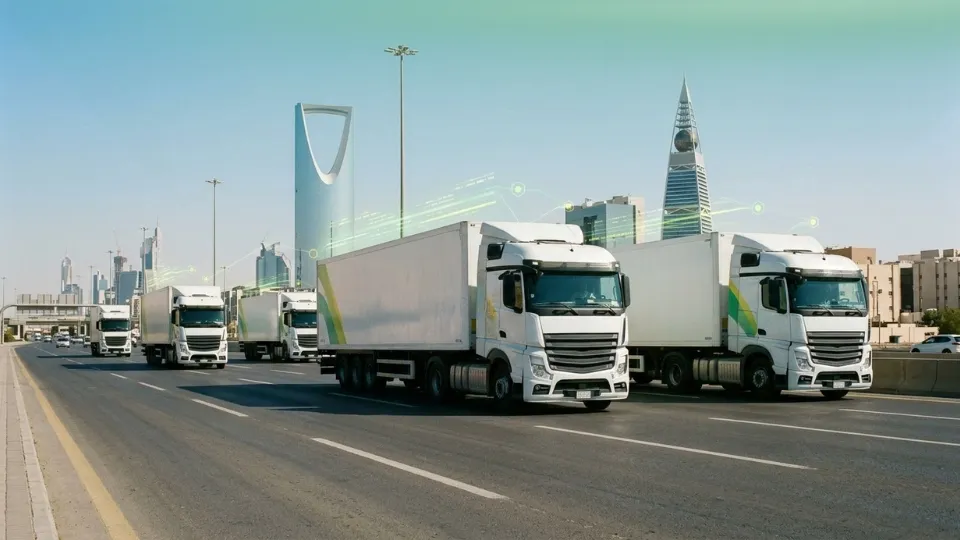
Businesses comparing fleet management companies in KSA are rarely looking for a map alone. Most are trying to reduce dispatch delays, unauthorized movement, fuel waste, weak branch coordination, and reporting gaps that slow decisions across teams. In Saudi Arabia, those problems become more expensive when fleets operate across multiple cities, service zones, contractors, and compliance workflows.
That is why a vehicle tracking system in Saudi Arabia should be evaluated as part of a broader operating model. The strongest fleet management solutions in Saudi Arabia combine live visibility, alerts, reporting, user control, and Saudi-ready workflows rather than basic tracking only.
In this guide, we explain what a fleet management system in Saudi Arabia should actually deliver, why centralized operations matter, how a vehicle tracking system in Saudi Arabia supports daily control, what features deserve priority, how leading sectors use GPS fleet tracking, and how to compare fleet management companies in KSA without getting distracted by feature-heavy sales talk. We also show how we at Safee connect Live Vehicle Tracking, Fleet Monitoring and Insights, Alarms and Alerts, Fleet Reporting, and Journey Management System into one practical control model for Saudi B2B fleets.
What is a fleet management system in Saudi Arabia?
For buyers reviewing fleet management companies in KSA, a fleet management system in Saudi Arabia is the operating layer that connects vehicles, drivers, trips, alerts, and reporting in one environment. It should help teams monitor live activity, investigate exceptions quickly, and turn daily movement into usable decisions.
That distinction matters because many businesses already have location data. The real gap is elsewhere: too many updates still move through calls, spreadsheets, WhatsApp messages, or delayed branch reports. When those signals are fragmented, service delays, misuse, idle time, and accountability issues stay hidden longer than they should.
A serious platform should combine live visibility, trip history, geofences, alerts, user permissions, dashboards, and management reporting. In other words, the system should not just show where the vehicle is. It should show what happened, what needs attention, and who should act next.
At Safee, we build that control layer through Live Vehicle Tracking, Fleet Monitoring and Insights, Alarms and Alerts, and Fleet Reporting. For fleets that need deeper trip discipline, we extend that model through Journey Management System and Saudi-ready workflows.
Turn tracking into operational control. contact our team for a discussion built around your routes, branches, and reporting priorities.
Why do Saudi businesses need centralized fleet operations today?
Saudi fleets often operate across several cities, depots, job sites, and customer zones at the same time. As that footprint grows, the main challenge is no longer visibility alone. It is coordination: who sees the issue first, who owns the response, and how leadership gets one reliable operating picture.
Centralized fleet operations solve that problem by giving dispatch, supervisors, and management one shared source of truth. A branch manager can review route behavior and delays quickly. A supervisor can see whether an exception is local or recurring across the wider fleet. Leadership can compare performance without waiting for manual consolidation.
This is where a vehicle tracking system in Saudi Arabia becomes commercially valuable. It stops being just a tracking tool and starts acting as a control model for response speed, accountability, and service consistency across the business.
What centralization fixes in practice
- Blind spots between dispatch, field teams, and management
- Different branches following different rules and review habits
- Slow response to route drift, idle time, missed visits, or unauthorized movement
- Manual reporting cycles that arrive late and miss context
- Weak visibility into which exceptions need action now and which can wait for review
Build one operating view. Review our Essential Modules and Added Value Modules to see how we help B2B teams centralize tracking, alerts, reports, and trip control.
How does a vehicle tracking system work?
A vehicle tracking system in Saudi Arabia works by collecting location and movement data from the vehicle, sending that data to the platform, and converting it into records managers can actually use. The technical flow is straightforward. The value depends on how well the platform turns raw tracking into operational action.
- Data capture: devices record location, movement, and relevant vehicle activity.
- Data transmission: the information is sent to the platform for live monitoring and historical review.
- Data interpretation: the platform converts raw points into trips, stops, idle time, route paths, and geofence events.
- Exception detection: rules trigger alerts for the events that matter, such as unauthorized use, route deviation, prolonged idling, or operating-hours violations.
- Review and reporting: dashboards and reports help managers move from reaction to pattern analysis, coaching, and policy improvement.
The difference between a basic tracker and a serious fleet platform is what happens after the location point arrives. At Safee, we connect real-time tracking with Alarms and Alerts, Fleet Monitoring and Insights, Fleet Reporting, and Journey Management System so managers are not left watching dots on a map without context.
See how tracking becomes management. Read our telematics fleet management guide or book a Safee demo to review the right setup for your Saudi fleet.
Essential features of fleet management solutions in KSA
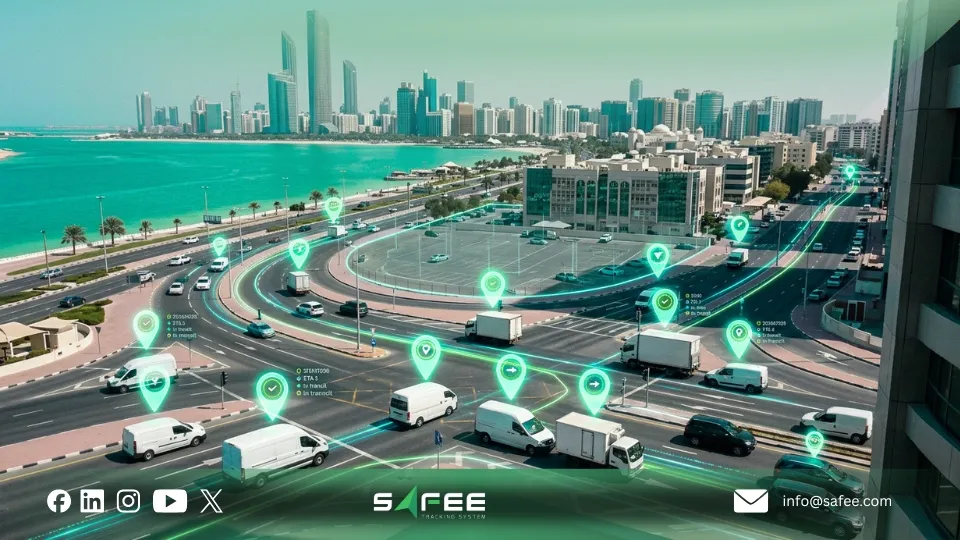
Not all fleet management solutions in Saudi Arabia are built for the same level of operational depth. Some stop at location visibility. The stronger ones help B2B teams monitor, investigate, respond, report, and scale with cleaner governance.
When evaluating features, the real question is simple: will this feature only display data, or will it help the team act faster and manage better? That is the standard serious buyers should use when comparing fleet management companies in KSA.
- Centralized live tracking that helps teams identify what needs attention now
- Trip history and playback for investigating delays, unexplained stops, and service execution
- Geofence management for depots, customer sites, project zones, and restricted areas
- Configurable alerts that match policy instead of generic default settings
- Dashboards and reports that support management review, not just live observation
- Role-based access so dispatch, supervisors, and leadership see what is relevant to them
- Auditability and workflow control for stronger branch-level accountability
- Integration readiness so the platform fits wider operational and compliance needs
At Safee, these features come together across Review our Essential Modules and Added Value Modules. That is why we position Safee as a broader fleet operations platform, not a standalone tracker.
Prioritize the features that remove real friction. Talk to Safee about the module mix that fits your vehicles, users, and reporting model.
Top 6 Applications of GPS fleet tracking in Saudi Arabia
A vehicle tracking system in Saudi Arabia creates value only when it is aligned with the way the business operates. A delivery fleet, a service fleet, a project fleet, and a compliance-sensitive transport operation do not all need the same control model. They need visibility matched to their workflow.
- Delivery and distribution fleets: teams need route progress, stop verification, delay visibility, and faster dispatch coordination when customer commitments are time-sensitive.
- Field service and maintenance fleets: managers need clearer site-visit confirmation, area coverage visibility, and better control of technician movement during the workday.
- Cold chain and sensitive logistics: operators need live visibility, trip history, and exception workflows to protect service quality and compliance.
- Construction and project fleets: supervisors need geofences, utilization context, and multi-site visibility across equipment and vehicles.
- Oil and gas support operations: wider service areas and stricter internal controls increase the value of permissions, reporting, and alert discipline.
- Government and public service fleets: route consistency, oversight, and reporting become easier when multiple teams or regions are involved.
For specialized workflows, Safee extends core tracking through Wasl integration in Saudi Arabia and sector-ready modules for logistics, construction, oil and gas, government, and mixed-fleet operations.
If you manage delivery, service, regulated transport, or mixed-vehicle operations, request a Safee consultation so we can align the platform with your routes, reporting needs, and control priorities.
How to choose the best fleet management companies in Saudi Arabia
The best way to compare fleet management companies in KSA is to start with the operating model you actually need to run. A long feature list is not enough. The right provider is the one that helps your team monitor, investigate, respond, report, and scale without adding operational noise.
Start with your fleet reality: vehicle types, operating geography, branch structure, daily users, exception types, compliance requirements, and the management decisions your business needs every week or month. That step keeps the shortlist grounded in business fit rather than generic demos.
What should verify before choosing a provider in KSA
Evaluation area | What to verify | Why it matters |
Live visibility | Map clarity, filters, status context, and ease of finding exceptions | Helps dispatch and supervisors react faster. |
Alerts | Rule flexibility, escalation logic, and relevance of notifications | Reduces noise and improves exception handling. |
Reporting | Trip, utilization, trend, and exception visibility | Supports management review and optimization. |
User access | Role-based views and branch segmentation | Improves governance and usability. |
Onboarding | Configuration support for dashboards, roles, alarm logic, and rollout priorities | Determines how quickly the team gets real value. |
Operational fit | Alignment with your industry workflow, branch structure, and Saudi compliance context | Prevents buying a generic tool for a specific need. |
A serious evaluation should also include these questions:
- How does the provider structure branches, users, and permissions?
- Which alerts can be customized and escalated?
- How do dashboards align with management review and branch comparison?
- What historical views are available for investigation and audit preparation?
- How does onboarding work beyond installation and hardware activation?
If pricing is part of the shortlist discussion, compare total operating value rather than entry cost alone. Our fleet management software cost guide explains why weak reporting, poor configuration support, and limited scalability often make cheap systems more expensive over time.
Use Safee as a practical benchmark. Start with our website, review the core modules, then contact our team for a discussion based on your fleet size, exception profile, and Saudi operating model.
Why is Safee one of the leading fleet management platforms in Saudi Arabia
At Safee, we are not built to be just another tracking layer. We help B2B operators turn vehicle movement into a more disciplined operating model for monitoring, alerts, investigation, reporting, and growth.
Our platform combines live visibility, configurable alarms, management-ready dashboards, and operational modules in one environment. That gives dispatch teams faster context, supervisors cleaner exception handling, and leadership stronger reporting with less manual effort.
For Saudi operators, that model becomes even more practical because Safee supports Wasl integration while extending depth through Journey Management System, Fleet Monitoring and Insights, Fleet Reporting, and our wider fleet management platform.
For regional operators and global B2Bs working in the Kingdom, the key question is not whether a provider can show location. It is whether that provider can help reduce waste, improve accountability, speed up review, and standardize decisions across teams. That is exactly where we focus.
Start your Safee evaluation. If you are comparing a vehicle tracking system in Saudi Arabia or reviewing fleet management companies in KSA, begin with Safee and request a demo tailored to your vehicles, teams, and reporting priorities.
FAQs about fleet management companies in KSA
What do fleet management companies in KSA typically provide?
Fleet management companies in KSA usually provide a combination of live vehicle tracking, trip history, geofences, alerts, dashboards, reporting, and operational control tools. More advanced providers also support workflow governance, user roles, compliance-related needs, and industry-specific modules.
How should businesses compare fleet management companies in KSA?
Businesses should compare fleet management companies in KSA based on operational fit, not just feature lists. The most important factors are live visibility, alert quality, reporting depth, onboarding support, scalability, Saudi-specific workflow readiness, and how well the provider matches the company’s branch structure and daily operating model.
What is the difference between fleet management companies in KSA and basic tracking providers?
Basic tracking providers mainly show vehicle location and movement. Stronger fleet management companies in KSA go further by helping businesses manage alerts, reporting, route discipline, investigation workflows, user permissions, and day-to-day operational control from one platform.
What features should companies look for in fleet management solutions in Saudi Arabia?
The most important features in fleet management solutions in Saudi Arabia usually include live tracking, trip history, geofences, configurable alerts, management reporting, role-based access, and governance-ready workflows. For some sectors, companies may also need industry-specific capabilities such as cold chain monitoring, journey management, or Saudi compliance support.
Why is a vehicle tracking system in Saudi Arabia not enough on its own?
A vehicle tracking system in Saudi Arabia is useful for location visibility, but many B2B fleets need more than maps. They also need alert handling, branch-level oversight, reporting, accountability, and workflow control. That is why many businesses move from simple tracking to a broader fleet management platform.
Are fleet management companies in KSA suitable only for large fleets?
No. Fleet management companies in KSA can support both growing and large-scale fleets. The real deciding factor is operational complexity, not vehicle count alone. A smaller fleet with multiple branches, time-sensitive delivery, or compliance pressure may need a structured platform earlier than expected.
Which industries benefit most from fleet management companies in KSA?
The strongest fit is usually for delivery and distribution, field service, logistics, cold chain, construction, oil and gas support, and other multi-vehicle B2B operations that need stronger visibility, reporting, and operational discipline.
Why should Saudi businesses evaluate Safee among fleet management companies in KSA?
Safee should be evaluated as more than a live tracking provider. We help Saudi B2B fleets combine live visibility, alerts, reporting, journey control, and operational workflows in one platform, which makes it easier to improve response speed, accountability, and day-to-day control.
Ready to improve your fleet operations?
Tell us what you would like to improve. A Safee specialist will reply by email.
Usually replies within one business day • No sales spam
Your details are used only to respond to your request. Privacy Policy