
Balady Waste Hauler Qualification in Saudi Arabia: Fleet Readiness Guide
Preparing for Balady waste hauler qualification in Saudi Arabia is not only about completing an online request. The bigger operational risk appears when the information submitted for workforce, vehicles, containers, and supporting documents no longer matches what the fleet is actually using in the field. A vehicle can be correctly registered yet unavailable for work, a driver assignment can change after submission, or a contract can move into execution while trip and collection evidence remains scattered across different tools.
This guide explains the official qualification workflow first, then shows how to keep the same operational records usable after qualification. You will see how waste vehicle registration, workforce and container records, Madinati operating plans, vehicle-driver assignment, waste hauler trips in Saudi Arabia, completion checks, and recurring reporting fit together. It also separates the Balady/Madinati government workflow from Safee’s internal fleet-management capabilities.
What is Balady Waste Hauler qualification in Saudi Arabia?
Balady’s Waste Transporters Qualification Service is an electronic service for waste transport companies seeking authorization to carry out waste-transport activity within municipalities.
It states that the transporter submits a registration request, enters transporter details, registers workforce, vehicles, and containers, uploads attachments, and then submits the request for municipal review. After approval, the registration certificate is issued electronically.
For a fleet team, Balady waste hauler qualification Saudi Arabia readiness therefore has two layers.
- The official registration and review process inside Balady.
- The internal discipline required to keep the same vehicles, drivers, equipment, contracts, and operating records accurate once the fleet starts working.
The records used for qualification should not become a one-time administrative snapshot. They should remain aligned with the live fleet so Operations, Compliance, and management are working from the same version of reality.
Waste vehicle registration and municipal review
Treat waste vehicle registration as both a government submission step and an internal data-governance task. Balady defines the official fields, documents, review process, and certificate outcome. Your fleet team, however, still needs to make sure the vehicle submitted to the authority is the same asset being dispatched, maintained, assigned to a driver, and reported internally.
Before submission, Operations and Compliance should be able to confirm:
- How drivers are assigned to vehicles or shifts;
- Which vehicles are in scope for the waste-hauling activity;
- Which contract, depot, service area, or operating unit each vehicle supports;
- Which vehicles are active, unavailable, under maintenance, or awaiting documentation;
- Which records must remain current after qualification rather than being checked only once.
- Who corrects a mismatch between the government record and the internal fleet record; and
At Safee, our Administration Panel Module can structure users, vehicles, drivers, sites, categories, groups, permissions, and configuration settings. Driver Management adds driver records and Dynamic or Manual Driver Assignment, depending on the fleet model.
For the data-governance side of this problem, our article on fleet data management explains why identifiers, ownership, permissions, and record quality matter before reports or integrations can be trusted.
Why incomplete waste fleet records delay readiness
Qualification becomes harder when the application file and the live operation are maintained separately. One team may hold vehicle details, another manages drivers, dispatch works from a different route list, and supervisors reconstruct completed activity after the shift.
The problem is not the number of files by itself; it is the lack of a clear source of truth when those files disagree.
Typical gaps include:
- Unclear ownership of the correct vehicle or driver record; and
- A vehicle appearing in the qualification list but not in the active fleet list;
- A previous driver remaining associated with a vehicle after reassignment;
- A vehicle being included although it is unavailable or outside the intended contract scope;
- Field collection activity that cannot be connected easily to the responsible vehicle, time, or route.
The control objective is to align the records before submission and keep them aligned during operations.
For waste fleets, our Waste Management Module adds collection-specific context through RFID-enabled container identification, collection records linked to the collecting vehicle, the Waste Container Explorer, and the Vehicle–Container History Report. These capabilities support operational traceability; they do not replace Balady qualification requirements.
Our guide to waste management fleet tracking goes deeper into route visibility, collection evidence, missed-service review, and post-shift control.
Madinati operating plans
Once qualification is in place, the operating question changes: how does an active waste-management contract become work that can be planned, assigned, monitored, completed, and reviewed?
Balady currently describes the Operational Plans Service under Waste Management (Madinati) as an electronic service that allows waste transporters to create trips and operational plans for active waste-management contracts.
At Safee, our role is different. We support Madinati integration with Jeddah Amanah, including reporting vehicle locations, weights, and statuses to Madinati. The exact municipality, contract, vehicles, fields, devices, sensors, and transmission scope still need to be confirmed for each deployment.
Waste vehicle registration, workforce and container records
A workable operating model connects three record groups before dispatch:
- Vehicle records identify the asset doing the work and whether it is operationally available.
- Workforce records identify the driver or crew responsible for the vehicle or journey.
- Container and collection records establish what service activity occurred when the waste workflow uses container-level tracking.
This is where waste vehicle registration must connect with daily operations instead of remaining a static administrative record. A registered vehicle can still be dispatched with an outdated driver assignment, the wrong service area, or incomplete collection evidence.
Our Driver Management supports Dynamic and Manual Driver Assignment, while the Waste Management Module can connect RFID container activity to the collecting vehicle. Together, those records help the team review a clearer chain of responsibility: vehicle, driver, planned work, collection activity, exception, and final review.
That chain matters because it helps managers identify whether a problem started in master data, dispatch planning, field execution, or reporting rather than treating every exception as a generic “tracking issue.”
Madinati operating plans and vehicle-driver assignment
A vehicle appearing in an operating plan is not enough if Operations cannot confirm who is responsible for executing the work and whether that vehicle is ready for the operating period.
At Safee, our Journey Management System (JMS) is an internal journey-planning and monitoring capability. It can support structured journey workflows, route controls, real-time monitoring, and post-journey review. Driver Management supplies the assignment context, while geofencing can help operations teams monitor depots, collection districts, transfer sites, disposal locations, or other fleet-defined operating zones.
Before dispatch, the team should be able to answer:
- Who investigates and closes an exception?
- Is the responsible driver identified for the shift or journey?
- What evidence will be reviewed after the work is completed?
- Which route, stop, delay, or geofence exceptions need action?
- Is the intended vehicle available and assigned to the correct work?
- Does the planned movement match the intended contract and service area?
- Are the relevant depots, collection zones, transfer sites, or disposal locations represented correctly?
Madinati operating plans are part of the official government workflow; Safee JMS is an internal fleet-management workflow. They may support the same operation, but they should not be presented as the same system or as automatically synchronized unless the exact integration scope has been confirmed.
Waste Hauler trips in Saudi Arabia and completion reviews
Managing waste hauler trips in Saudi Arabia requires more than confirming that a vehicle completed its route. After each trip, operations teams should compare the planned work with actual execution—including the assigned vehicle and driver, route activity, collection records, and operational exceptions—to confirm whether the service was completed as expected and whether any issue requires follow-up.
At Safee, we can support different layers of that review through:
- Live Vehicle Tracking for current vehicle location and movement context;
- Journey Management System (JMS) for planned and monitored journeys;
- Alarms and Alerts for configured operational exceptions;
- Fleet Reporting for recurring operational and management review; and
- The Waste Management Module for container-level collection activity where RFID is deployed.
The key distinction is between trip completion and service completion. A truck reaching the end of a route does not, by itself, prove that every expected collection occurred. Where RFID-based collection is configured, the Waste Container Explorer and Vehicle–Container History Report can add container-level timestamps, locations, and collection history to the vehicle and journey record.
Our article on fleet management reporting explains how the same operational data can be structured into daily, weekly, and management-level review rather than rebuilt manually each time.
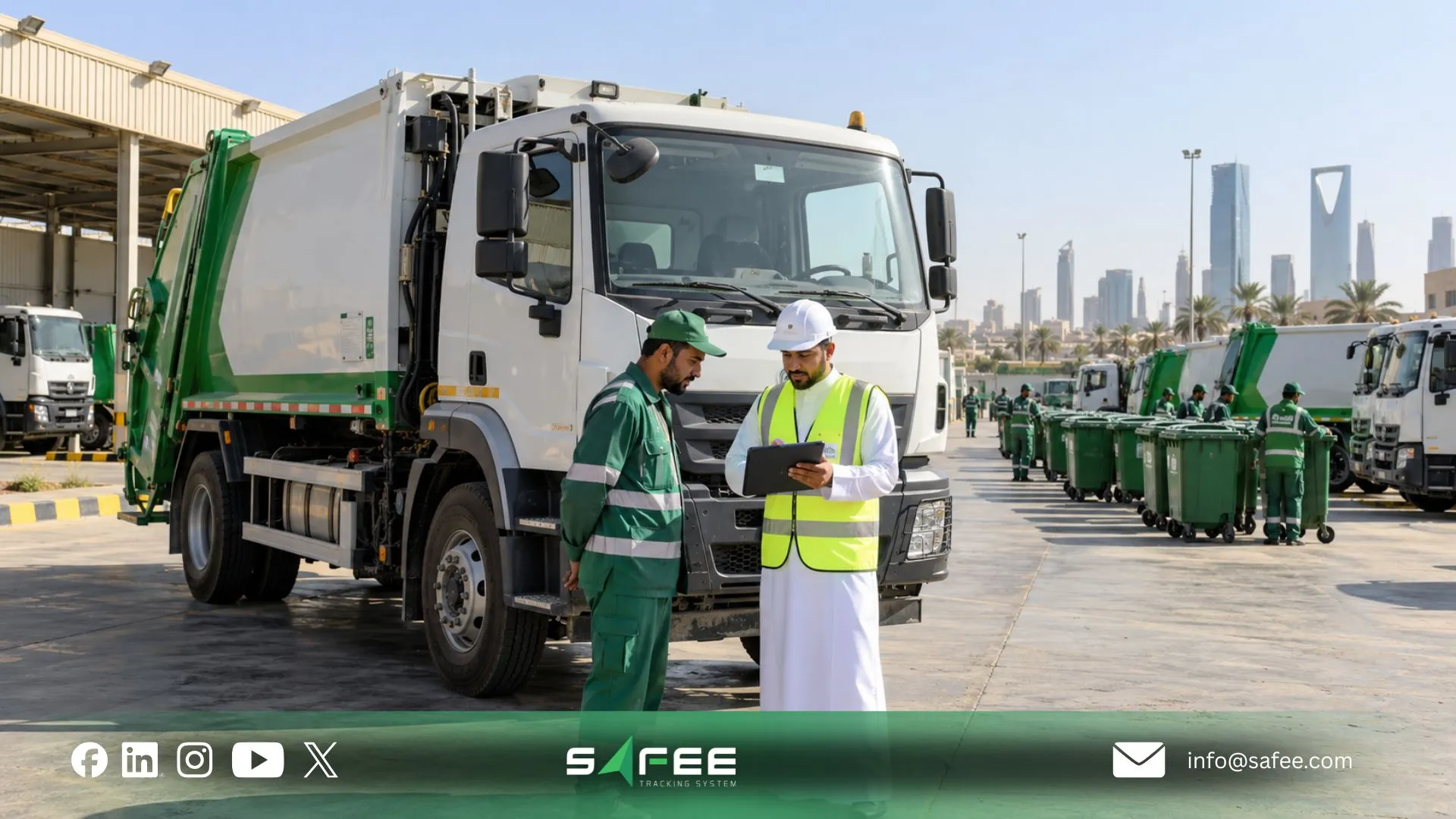
How to prepare Balady Waste Hauler qualification in Saudi Arabia
The most reliable way to prepare for Balady waste hauler qualification in Saudi Arabia is to separate official evidence from internal fleet controls, then reconcile the two before submission.
Start with the current Balady service and municipality requirements for the applicable activity. Build the official request from those requirements. In parallel, make sure the same vehicles, workforce records, containers, contracts, assignments, and operating areas are correct inside the fleet environment. Fleet software should improve consistency and traceability; it should never be presented as a substitute for the government process.
Align waste fleet vehicle records before submission
Before submission, reconcile the official qualification record with the live fleet record. For every vehicle in scope, confirm that:
- The same vehicle identity is used across the relevant internal records;
- The vehicle belongs to the correct operating entity, branch, or business unit;
- Its current operational status is accurate;
- The driver-assignment method is defined;
- Supporting internal documents have a clear owner and review date;
- The activity attributed to the vehicle matches its real operating scope;
- Tracking or sensor inputs have been validated where the project depends on them;
- The team knows who corrects any mismatch and in which system;
- Relevant depots, sites, service areas, or operational geofences are mapped where needed; and
- Responsibility for post-qualification record maintenance is assigned.
This is an internal fleet-readiness checklist, not an official Balady checklist. Balady’s current service page should remain the source of truth for the registration steps, required fields, attachments, review, and certificate process.
16 things to check before preparing Madinati operating plans
Before translating an active waste-management contract into Madinati operating plans, review these 16 points internally:
- Applicable authority and municipality: Confirm which official workflow governs the project.
- Qualification status: Confirm the required registration or qualification status in the official source.
- Contract scope: Define the service, locations, waste activity, customer, and contractual obligations.
- Vehicle list: Include only vehicles intended for the operating scope.
- Vehicle identifiers: Reconcile identifiers across fleet, administration, and applicable portal records.
- Vehicle status: Flag vehicles that are unavailable, under maintenance, or not ready for assignment.
- Workforce records: Confirm that the drivers or crew intended for the work have current internal records.
- Vehicle-driver assignment: Define how the responsible driver will be associated with each vehicle or journey.
- Depots and operating sites: Check that the correct operating locations are represented internally.
- Collection zones: Map the service areas used by dispatch and supervision.
- Container records: Where the workflow uses container-level records, confirm container identity and status before dispatch.
- Journey or route structure: Define how planned movement will be represented and monitored internally, while using the applicable Madinati workflow for the official operating plan.
- Exception policy: Decide which delays, deviations, prolonged stops, geofence events, or other configured events need review.
- Completion evidence: Define what proves the planned activity occurred and, where relevant, that the expected collection was completed.
- Reporting ownership: Assign responsibility for daily, periodic, and exception-based reviews.
- Integration scope: Safee publicly documents Madinati integration with Jeddah Amanah. Confirm municipality, vehicles, required fields, weight or other sensor inputs, transmission workflow, error handling, and project configuration before relying on it operationally.
Before go-live, the customer and Safee team should also agree on a concise scope matrix covering the municipality and Madinati workflow, included vehicles and contracts, external versus internal data fields, required sensors, missing or rejected data handling, ownership of corrections, necessary Safee modules, and the reports used after launch.
That scope review is more useful than treating the phrase “Madinati integration” as proof that every Balady service or municipal workflow is automatically covered.
Contact Safee with the municipality, contract scope, vehicle types, and expected operating workflow so the responsibilities can be mapped before deployment.
Review Waste Hauler trips in Saudi Arabia after qualification
Qualification is a milestone, not the end of fleet governance. Once vehicles enter normal operations, waste hauler trips in Saudi Arabia should be reviewed against the service plan, contract commitments, and applicable external requirements.
A practical post-trip review asks four questions:
- Was the correct resource dispatched? Check vehicle status and the driver assignment used for the work.
- Was the intended journey executed? Compare planned movement with actual route context, stops, timing, and relevant geofence activity.
- Did an exception occur? Review configured Alarms and Alerts and apply the organization’s escalation rules.
- Was the service activity completed? Where RFID-based waste collection is deployed, review container-level activity rather than relying on vehicle movement alone.
Our Fleet Reporting supports customizable reports, filtering, scheduled delivery, and PDF or Excel export. That gives supervisors and managers a repeatable review process instead of forcing them to reconstruct evidence after every trip.
For a wider governance view, our fleet management regulations in the GCC guide explains how external requirements can be translated into daily fleet controls without confusing software capability with legal authority.
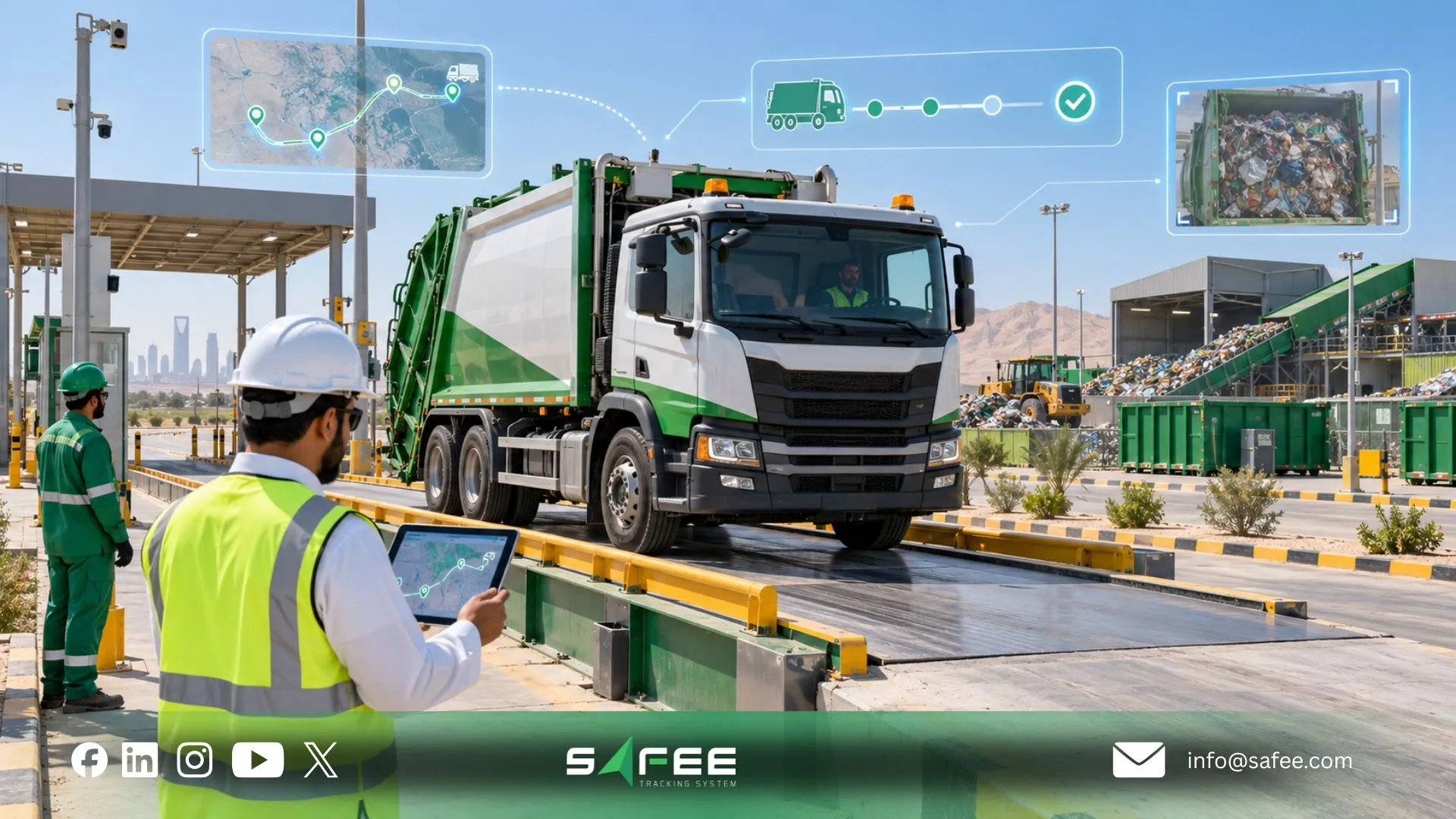
Safee: Best waste fleet journey fit for your operation
For a waste fleet, the best system is the one that fits the operation that actually needs to be controlled, not the one that simply makes the broadest compliance claims.
At Safee, we help waste-fleet teams connect the operational information that sits behind daily execution: vehicles, drivers, journeys, service areas, collection activity, exceptions, and reporting. This gives Operations and Compliance teams a clearer view of what was planned, what happened in the field, and where follow-up is required.
For waste-management operations, our Waste Management Module adds capabilities designed specifically for collection workflows, including RFID-enabled container identification, collection visibility, the Waste Container Explorer, and the Vehicle–Container History Report.
Depending on the fleet’s requirements, these capabilities can work alongside:
- Journey Management System (JMS) for planning and monitoring journeys;
- Driver Management for vehicle-driver assignment;
- Live Vehicle Tracking for real-time movement visibility;
- Alarms and Alerts for configured operational exceptions;
- Fleet Reporting for recurring operational review; and
- Tracking Data Analyzer (TDA) for deeper analysis of tracking data.
For operations that also require Madinati connectivity, Safee documents Madinati integration with Jeddah Amanah. The exact municipality, vehicles, data fields, sensors, and transmission requirements should be confirmed as part of the project scope.
When assessing whether Safee fits the operation, the better questions are operational ones: Can your team identify the responsible vehicle and driver? Compare the planned journey with actual execution? Confirm collection activity? Detect exceptions quickly? And retrieve the evidence later without rebuilding it from multiple systems?
If the answer to those questions is yes, our platform is supporting keeping qualification-related fleet records connected to day-to-day waste-hauling execution.
Safee vs government portal tasks alone
| Dimension | Government / Municipal Task | Documented Safee Scope | What Must Be Verified |
| Hauler qualification | Balady provides the official electronic workflow. Its current service page covers transporter details, workforce, vehicles, containers, attachments, municipal review, and electronic issuance of the registration certificate after approval. | Safee can support the internal fleet records and operating context around vehicles, drivers, tracking, waste collection, and reporting. | Current eligibility, required documents and fields, activity scope, municipality-specific conditions, and certificate details. |
| Contracts | Balady/Madinati services may use active waste-management contracts as the basis for subsequent operating workflows. | Safee can organize the vehicle, driver, journey, collection, and reporting context used to execute contracted work. | Which contract data must be created, registered, validated, or exchanged for the specific workflow. |
| Operating plans | Balady describes the Operational Plans Service as allowing waste transporters to create trips and operating plans for active waste-management contracts. | JMS supports internal journey planning and monitoring; Driver Management supports driver-assignment context. Safee also documents Madinati integration with Jeddah Amanah. | Municipality, waste activity, plan fields, submission workflow, covered vehicles, exchanged data, and integration configuration. |
| Journey monitoring | The authority defines any external data or workflow required for the applicable service. | JMS, Live Vehicle Tracking, geofencing, Alarms and Alerts, and Fleet Reporting support internal execution and review. | Which data must be transmitted externally and which controls remain internal to the fleet. |
| Completion and exceptions | The authority or contract defines the relevant service and regulatory requirements. | Waste collection records, alerts, reports, and tracking data can support internal investigation where the required modules and data sources are configured. | What proves service completion, which exceptions require external action, and who owns escalation and correction. |
The difference matters. Balady/Madinati remains the government workflow for qualification, contracts, trips, and operating plans where those services apply. Safee supports the operational layer around fleet data, journey execution, waste-collection visibility, exceptions, and reporting. The two should be connected only to the extent that the actual project and integration scope has been verified.
How do Safee’s customers assess trip execution and exceptions?
Once waste-hauling operations are running, the key question is not simply whether a trip was completed, but whether the planned work was carried out as expected and whether exceptions were identified and resolved.
With Safee, teams can compare planned journeys with actual fleet activity and review the events that require operational attention. Useful measures include:
- Planned versus actual routes;
- Driver-assignment mismatches;
- Planned versus completed journeys;
- Route deviations, prolonged stops, and geofence events;
- Unresolved exceptions at the end of the reporting period.
- Missed or disputed collections requiring investigation; and
- Collection activity linked to each vehicle where RFID is used;
To make these comparisons meaningful, fleets should use consistent KPIs, similar operating periods, and the same route, contract, and exception criteria.
Fleet Reporting gives managers a repeatable view of operational performance, while Tracking Data Analyzer (TDA) can provide deeper analysis of connected tracking data when an exception requires further investigation.
The practical test is simple: Can the team see the exception, identify who should act on it, and verify later whether it was resolved?
This gives waste-fleet managers a clearer way to evaluate operational improvement without relying on assumptions or unverified savings claims.
For fleets preparing for Balady waste hauler qualification in Saudi Arabia, the strongest operating model is to keep government qualification, municipal obligations, and internal fleet controls clearly separated while maintaining consistent records between them. Safee can support the operational side with vehicle and driver context, journey management, exception monitoring, waste-collection visibility, reporting, analytics, and its documented Madinati integration scope without presenting itself as the authority that grants qualification.
Bring Safee one representative contract scope, vehicle list, driver-assignment workflow, and waste route. Request a demo to map the Safee modules and Madinati integration components that fit the operation while keeping Balady and municipal steps inside the official government workflow.
FAQs about Balady waste hauler qualification Saudi Arabia
Who issues a waste hauler qualification certificate?
Balady provides the official qualification workflow, while the relevant municipality reviews the request. After approval, the current service workflow issues the registration certificate electronically. Safee does not issue or replace this government certificate.
How do qualification, contracts and operating plans connect?
Qualification establishes the transporter’s registration status, contracts define the waste-service obligation, and Madinati operating plans turn active contracts into planned trips and field activity where the service applies.
At Safee, we support the operational side by connecting vehicles and drivers with journey monitoring, waste-collection activity, exceptions, and reporting, so teams can manage what happens after qualification more consistently.
Does using Safee mean automatic synchronization with Balady?
No. Safee should not be presented as automatically synchronized with every Balady or Madinati workflow.
At Safee, we provide Madinati integration with Jeddah Amanah, including vehicle location, weight, and status reporting. The exact integration scope is confirmed for each operation based on the municipality, vehicles, required data, devices, and project configuration.
How should requirements be checked across municipalities?
Check the current requirements of the authority and municipality responsible for each operation, because qualification, operating-plan, data, and integration requirements may differ.
Once that scope is clear, Safee can help translate it into day-to-day fleet controls through vehicle and driver records, journey monitoring, waste-collection visibility, alerts, and reporting according to the modules and integration configured for the project.
Ready to improve your fleet operations?
Tell us what you would like to improve. A Safee specialist will reply by email.
Usually replies within one business day • No sales spam
Your details are used only to respond to your request. Privacy Policy