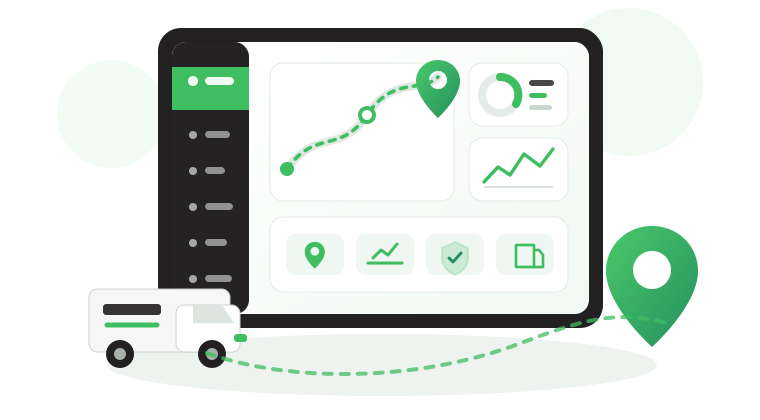


How Delivery Fleet Management Cuts Last-Mile Costs and Delays
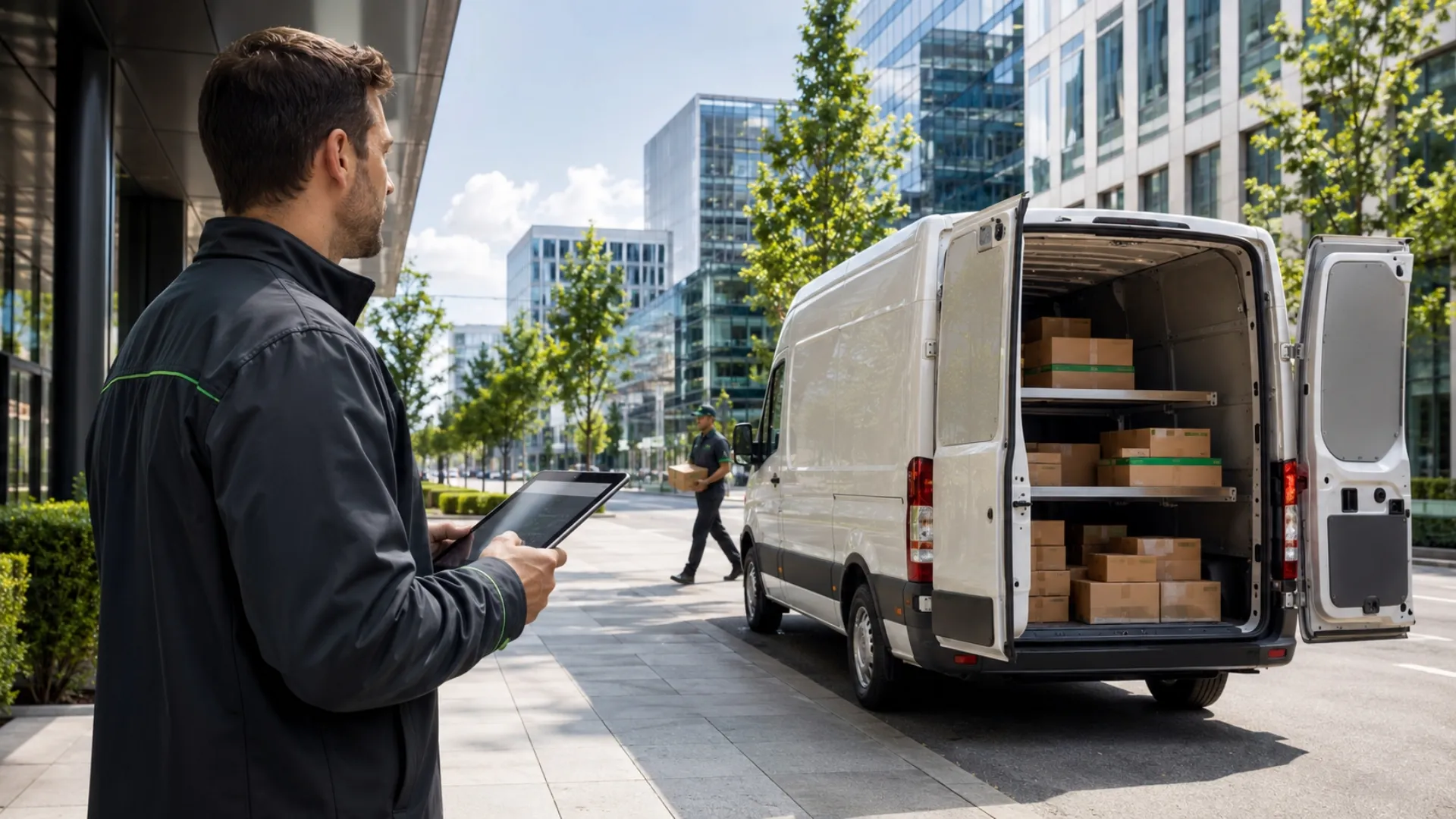
A delivery fleet can look active while still losing money on every route. Drivers are moving, orders are assigned, and customers are waiting, but dispatchers may still chase updates by phone, failed attempts may repeat in the same zones, food orders may be delayed during peak hours, and managers may only see the problem after the shift is over. For courier and food delivery fleets in the GCC, basic GPS tracking is no longer enough.
This guide explains how last-mile fleet operations help B2B operators control routes, drivers, alerts, failed deliveries, food delivery quality, peak demand, and reporting from one practical workflow. You will also see how Safee, a UAE-based fleet management platform serving GCC and global operators, can support courier delivery fleet management, food delivery fleet management, fleet and delivery management, and last-mile performance through live tracking, route control, alerts, cold chain workflows where configured, Fleet Reporting, and implementation support.
What is delivery fleet management?
Delivery fleet management is the process of planning, tracking, coordinating, and improving the vehicles, drivers, routes, orders, alerts, and reports used to move goods from dispatch to the customer. It connects dispatch planning, driver assignment, route monitoring, delivery status, exception handling, proof of service, and performance review.
For delivery businesses, the fleet is the operating system behind customer experience. A missed ETA, wrong stop sequence, vehicle breakdown, temperature issue, or delayed driver response can become a failed delivery, refund request, customer complaint, or lost account.
Modern delivery operations give teams the visibility to act while the route is still active. Instead of waiting for a customer complaint, supervisors can monitor route progress, detect delays, review alerts, and use reports to improve the next shift.
Fleet and delivery management: From dispatch to doorstep
Fleet and delivery management covers the full delivery lifecycle, from vehicle readiness before dispatch to route review after the shift. The goal is to make delivery execution more predictable and less dependent on manual follow-up.
Before dispatch, teams need vehicle availability, driver assignment, route plans, order grouping, customer time windows, and readiness checks. During the route, they need live location, route progress, geofence events, driver behavior, delays, and alerts. At the customer location, they need delivery confirmation, exception notes, and driver communication. After the shift, they need reports on route performance, failed attempts, driver behavior, vehicle use, and operating cost.
Courier delivery fleet management often focuses on high stop density, parcel visibility, returns, proof of delivery, and failed attempt reduction. Food delivery fleet management adds tighter delivery windows, freshness, temperature-sensitive workflows, and high-pressure peak periods.
Why do last-mile delivery operations drive cost in E-Commerce?
Last-mile delivery is expensive because it is fragmented. One route may include many stops, uncertain customer availability, dense traffic, route changes, driver communication gaps, and multiple exception types. Even when warehouse operations run well, the final delivery stage can create cost through failed attempts, overtime, fuel waste, idle time, rerouting, and manual coordination.
A structured fleet control model reduces this pressure by giving operations teams clearer visibility. Teams can compare planned routes against actual routes, review delay patterns, identify repeated failed delivery zones, manage driver communication, and refine alert rules.
A strong last-mile setup should answer practical questions: which routes regularly miss service windows, which drivers need coaching, which customer zones create repeat failed attempts, which vehicles are underused or delayed, which alerts need immediate action, and which reports supervisors should review daily or weekly.
This is where last-mile control becomes more than tracking. It becomes a repeatable operating process for cost control, service quality, and customer satisfaction.
For real-time route visibility and historical route review, explore our Live Vehicle Tracking and Google Directions.
Also read: Dispatch Fleet Management System for Smart Control
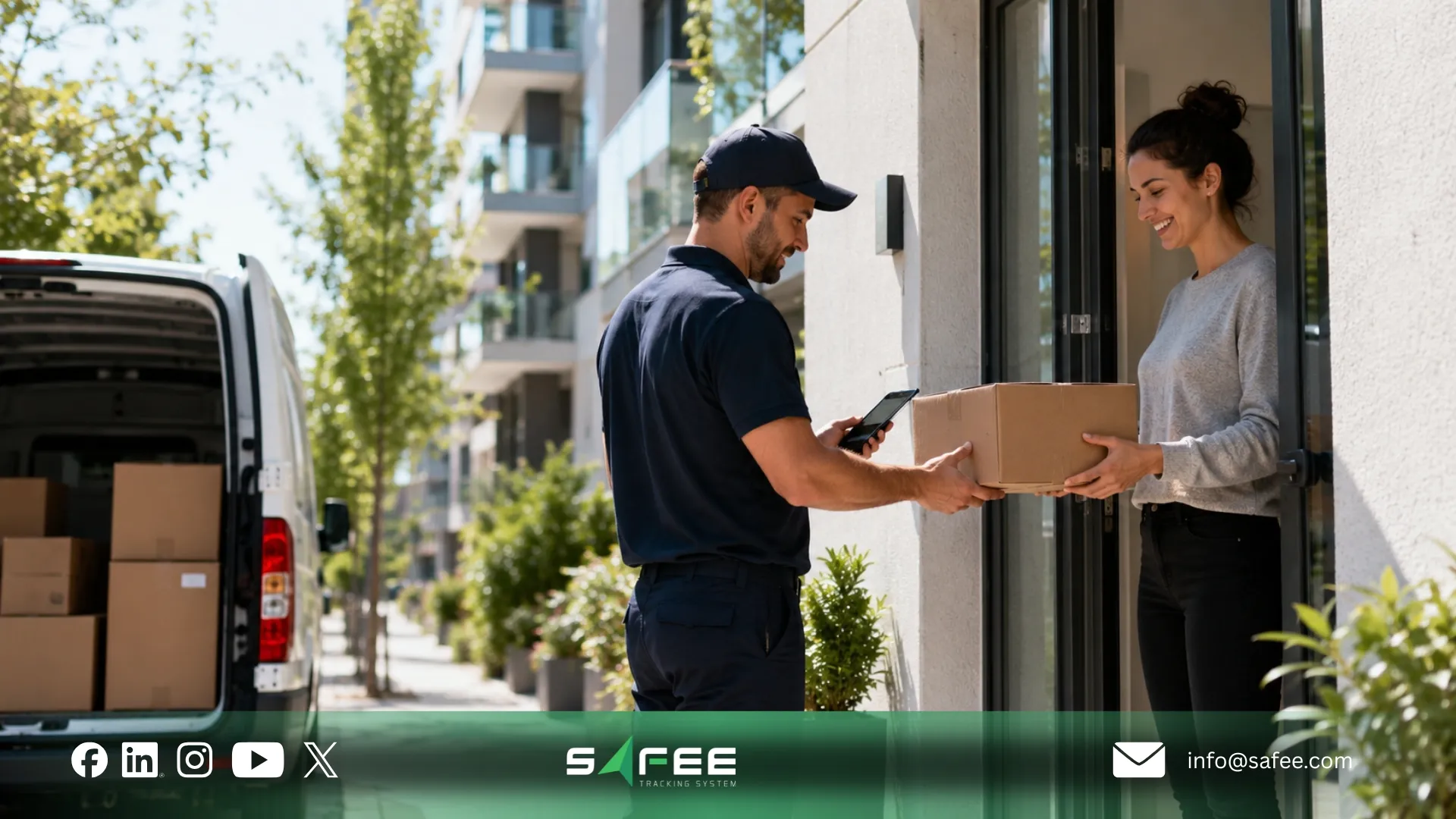
Key benefits of courier and food delivery fleet management
Courier and food delivery fleets share the same pressure: customers expect speed, accuracy, and transparency. The operating constraints are different, but both models need visibility, alerts, route control, driver communication, and management reporting.
These benefits show how daily route data can turn into action that helps teams reduce failed attempts, control food delivery costs, and scale courier operations during peak demand.
Reduce failed deliveries with real-time tracking and driver communication
Real-time tracking and alert workflows help reduce failed deliveries by making delays, route deviations, and stop-level issues visible before the customer complains. Failed deliveries often happen because teams discover the issue too late: the driver is delayed, the route is out of sequence, the customer is unavailable, or a high-priority order is not escalated.
For courier delivery fleet management, live visibility can support route progress monitoring, driver location review, geofence alerts, delay escalation, ETA support, and failed delivery pattern analysis. For food delivery fleet management, the same visibility becomes more sensitive because late delivery can affect freshness, service quality, and customer trust.
Our Alarms and Alerts can help teams configure alerts for geofence breaches, route exceptions, unsafe driving, unauthorized use, and vehicle-related issues. For managers who need mobile access during active routes, the Mobile App can support faster field response.
Cut food delivery fleet management costs with better route control
Food delivery fleet management costs are shaped by route distance, driver productivity, idle time, late pickups, vehicle availability, and temperature-sensitive workflows. The goal is not only to choose the shortest route. The better question is which route plan protects the delivery promise while controlling operating cost.
Useful routing decisions may consider order priority, delivery windows, vehicle location, driver availability, traffic, temperature-sensitive cargo, pickup timing, customer density, route history, and repeated delay zones.
Our Journey Management System can support route planning, trip monitoring, and post-trip review, while Google Directions can support route path planning and route deviation detection. For temperature-sensitive food deliveries, our Cold Chain Solution can support temperature and humidity visibility, alerts, dashboards, and reporting where compatible sensors and workflows are configured.
Scale courier delivery fleet management for peak demand periods
Courier delivery fleet management must be scalable before peak demand starts. Seasonal campaigns, same-day delivery spikes, e-commerce promotions, holidays, and contract surges expose weak dispatch rules quickly.
A scalable setup needs clear driver assignment rules, vehicle availability visibility, route grouping logic, alert ownership, role-based dashboards, daily performance reports, driver review workflows, customer communication processes, and integration readiness with order, ERP, or dispatch systems.
Our platform can support peak-demand control by connecting Live Vehicle Tracking, Alarms and Alerts, Fleet Reporting, and Last Mile Delivery workflows into one operational view.
Planning for delivery peaks? Contact us to review your driver workflows, dispatch rules, alerts, and reports before the next surge.
Also read: Logistics Fleet Management: From Fleet Data to Supply Chain Control
Top trends in courier fleet management
The most important trends in courier fleet management are valuable only when they solve real operating problems. For delivery operators, the priority is not using advanced features for their own sake. The priority is to reduce delays, improve route decisions, support customers, and make performance easier to review.
- AI-assisted route planning and analytics: Useful when teams have clean route data, clear dispatch rules, and reports that show repeated delays or failed delivery zones. Safee can support route visibility, Journey Management, and Tracking Data Analyzer workflows for better review.
- Real-time customer and operations visibility: Delivery teams need earlier awareness of delays, geofence events, route exceptions, and delivery status. Safee supports live tracking, alerts, and reporting that can help teams act faster.
- Cold chain delivery control: Food delivery and grocery fleets increasingly need temperature and humidity visibility. Safee’s Cold Chain Solution can support temperature-sensitive workflows where compatible sensors and reporting rules are configured.
- Mixed vehicle delivery models: Last-mile fleets may include vans, bikes, refrigerated vehicles, EVs, and outsourced vehicles. Safee can support multi-vehicle monitoring and role-based reporting depending on the operating model.
- Sustainability and cost reporting: Operators need clearer fuel, idling, utilization, and route efficiency reports. Safee Fleet Reporting and Tracking Data Analyzer can support internal performance review.
- Contactless proof and exception evidence: Delivery teams need better evidence when orders are delayed, missed, or disputed. Proof-of-delivery workflows should be validated during implementation depending on the existing order and customer systems.
For management review, connect trend analysis to our Fleet Reporting and Tracking Data Analyzer.
Also read: Transportation Fleet Management: Routes, Costs & Compliance
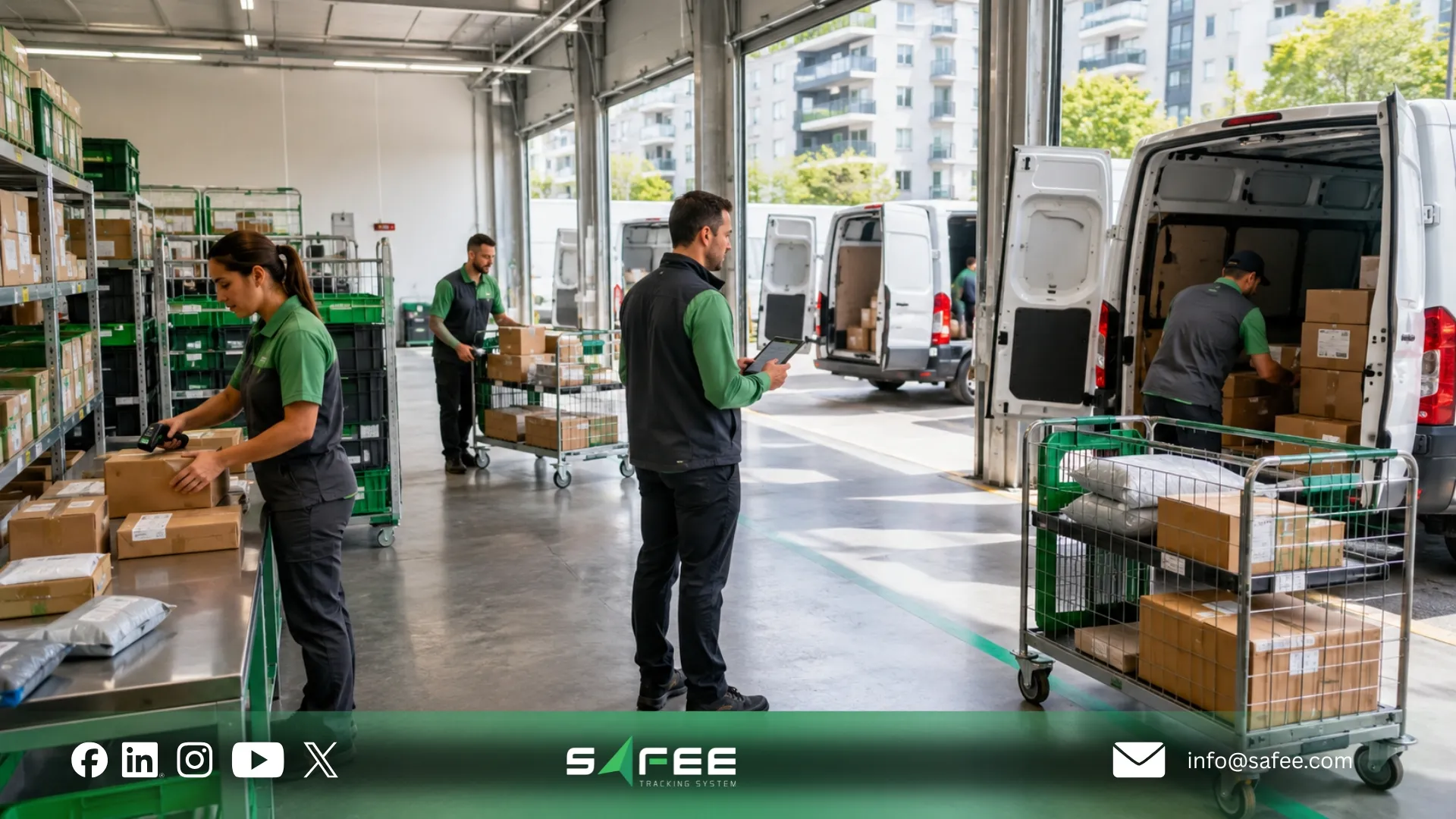
How trends are reshaping last-mile delivery fleet operations?
The biggest shift is from reactive delivery management to exception-led operations. In the past, many delivery teams handled problems through phone calls, driver messages, spreadsheets, and customer complaints. Stronger last-mile control depends on live data, configurable alerts, and structured reporting.
A courier supervisor should not need to call every driver to ask where they are. The dashboard should show route progress. Alerts should highlight geofence breaches, route delays, and unusual driver behavior. Reports should show which routes repeatedly underperform. Managers can then adjust dispatch rules, coach drivers, update customer communication, or change route design.
For food delivery fleet management, the trend is also moving toward more controlled quality workflows. Temperature-sensitive routes need visibility into location, cargo condition where sensors are configured, alert ownership, and post-route records that can support internal quality review.
Why choose Safee for courier and food delivery fleets?
Choosing a fleet management platform is not only a feature comparison. It is an operating decision. The right platform should match how your fleet works today and support how it will scale tomorrow.
At Safee, we help delivery teams move beyond map-based tracking. From our UAE base, we support B2B fleets across the GCC and wider global markets with live tracking, configurable alerts, journey management, fleet reporting, cold chain workflows, driver and vehicle monitoring, mobile access, and integration planning.
A delivery fleet team should evaluate Safee around practical questions: can dispatchers see active routes clearly, can supervisors receive the right alerts without noise, can managers review route and driver performance, can food delivery teams monitor temperature-sensitive workflows where required, and can reports support weekly operations meetings?
Book a Safee implementation consultation to map your last-mile workflows, user roles, alerts, reports, cold chain needs, and integration requirements before deployment.
Safee tools for courier delivery fleet management and food delivery fleet management
For courier delivery fleet management, Safee can support the daily operating rhythm: monitor vehicles, track route movement, review geofence events, configure alerts, check driver behavior, and analyze reports after the route. This helps teams move from manual supervision to structured control.
For food delivery fleet management, Safee is especially useful when delivery visibility must connect with cargo condition, route timing, and exception response. Cold chain teams can evaluate temperature and humidity monitoring, dashboards, alerts, logs, and reporting where relevant sensors and workflows are configured.
- Live Vehicle Tracking for live vehicle location, status, trip activity, and route context.
- Alarms and Alerts for configurable exception notifications related to routes, geofences, driver behavior, and vehicle events.
- Journey Management System for trip planning, route monitoring, and post-trip review.
- Last Mile Delivery for delivery-focused routing, tracking, and scheduling workflows.
- Fleet Reporting for scheduled reports, management review, and operational performance analysis.
- Cold Chain Solution for temperature-sensitive food, grocery, and cold chain delivery workflows where configured.
- Mobile App for managers, supervisors, and drivers who need access outside the office.
- Tracking Data Analyzer for turning route and event data into clearer operational insights.
Explore our solutions for more details
How Safee helps delivery fleet operators reduce costs and improve customer satisfaction?
Cost reduction in last-mile operations usually comes from many small improvements, not one single feature. Better route control can reduce unnecessary movement. Alerts can reduce late responses. Reports can reveal repeated inefficiencies. Driver visibility can support coaching. Cold chain monitoring can reduce quality incidents where configured. Integration planning can reduce manual entry and duplicated work.
Safee helps delivery operators build a practical management cycle:
- Plan routes, driver assignments, service windows, and escalation rules.
- Monitor live vehicle movement, route progress, geofences, and operational status.
- Act on alerts, delays, deviations, failed attempts, and delivery exceptions.
- Review driver performance, route history, delivery patterns, utilization, and reports.
- Optimize route rules, driver coaching, alert thresholds, reporting cadence, and customer communication.
This cycle matters because customer satisfaction depends on operational consistency. Customers do not only want a fast delivery. They want accurate expectations, fewer failed attempts, and fewer unexplained delays. A structured fleet and delivery management workflow gives your team the visibility to manage that expectation.
A practical rollout plan for delivery fleet operations
A rollout plan should start with operational problems, not software screens. Before deployment, define which problems create the highest cost or service risk: failed deliveries, poor route visibility, delayed driver communication, food quality exceptions, unclear reporting, or weak peak-demand control.
- Map delivery workflows: List vehicle types, delivery zones, driver groups, customer windows, peak periods, and existing dispatch tools.
- Define KPIs: Track failed delivery rate, on-time delivery, route adherence, idle time, driver events, food delivery exceptions, and cost per route.
- Configure routes and geofences: Use depots, customer zones, restaurants, warehouses, restricted areas, and common delay points as operational control zones.
- Set alert ownership: Decide who receives each alert, which alerts are urgent, and how issues are closed.
- Build reporting cadence: Create daily route reports, weekly driver reviews, failed delivery analysis, and monthly management dashboards.
- Review and optimize: Use real delivery data to refine routes, dispatch rules, driver coaching, and customer communication.
To plan this rollout, request a demo or implementation discussion.
Also read: Fleet Management Software for Dairy Industry
FAQs about delivery fleet management
What is delivery fleet management software?
Delivery fleet management software is a platform that helps companies manage delivery vehicles, drivers, routes, alerts, reports, and delivery performance from one system. It usually includes live tracking, driver visibility, route monitoring, geofences, exception alerts, dashboards, and reporting.
How does food delivery fleet management differ from courier delivery fleet management?
Food delivery fleet management is usually more time-sensitive and may require freshness, temperature, and short-window delivery control. Courier delivery fleet management often focuses on parcel density, route sequencing, proof of delivery, failed attempt reduction, and high-volume stop management. Both need visibility, alerts, route discipline, and reporting.
What features should I look for in fleet and delivery management software?
Look for live vehicle tracking, route monitoring, configurable alerts, geofencing, driver behavior visibility, reports, dashboard access, integration readiness, mobile visibility, maintenance context, and cold chain monitoring if you deliver food or temperature-sensitive goods.
How does delivery fleet management reduce failed deliveries?
It reduces failed deliveries by helping teams track vehicles in real time, identify delays earlier, communicate with drivers, monitor geofence activity, review route performance, and analyze repeated failure patterns. The main benefit is faster exception response and better post-shift improvement.
What are the key trends in courier fleet management for 2026 and 2027?
Key trends in courier fleet management include AI-assisted route planning, real-time customer notifications, sustainability reporting, EV and fuel visibility, mixed vehicle delivery models, contactless delivery confirmation, cold chain workflows, and stronger integration between fleet platforms, dispatch systems, and customer communication tools.
Is Safee suitable for courier and food delivery fleets in the GCC?
Yes. Safee is suitable for GCC delivery operators that need live tracking, route control, configurable alerts, driver visibility, cold chain workflows where configured, Fleet Reporting, mobile access, and implementation support. The right setup depends on vehicle types, delivery model, food sensitivity, route density, integrations, and reporting needs.
Ready to improve your fleet operations?
Tell us what you would like to improve. A Safee specialist will reply by email.
Usually replies within one business day • No sales spam
Your details are used only to respond to your request. Privacy Policy