
How Transportation Fleet Management Controls Routes and Costs
A transport fleet can look busy while still leaking money every day. Vehicles are moving, drivers are assigned, and trips are scheduled, but dispatchers still chase updates, routes drift from plan, fuel and idle time are hard to explain, and compliance records arrive too late for confident review. For GCC and global transport operators, basic tracking is no longer enough when routes, costs, drivers, and service commitments all need live control.
This guide explains how transportation fleet management helps operators control vehicles, drivers, routes, schedules, maintenance, cost per kilometer, and compliance-related workflows. You will learn what transport fleet management covers, how fleet management in transportation reduces operational waste, which implementation steps matter, and how we at Safee support fleet and transport management through live tracking, alerts, reports, route workflows, driver visibility, maintenance, and integrations.
What is transportation fleet management?
Fleet management in transportation is the process of planning, monitoring, controlling, and improving the vehicles, drivers, routes, schedules, costs, maintenance, and compliance requirements that keep transport operations moving.
For transport operators, the fleet is not only a group of vehicles. It is a live operating network: trucks must reach loading points, vans must complete deliveries, coaches must follow passenger schedules, and rail-related assets may need freight coordination. A strong platform helps managers see where vehicles are, which routes are delayed, which drivers need support, and which costs or compliance gaps need review.
At Safee, we help transportation teams move from manual follow-up to connected fleet control. Our platform can support live visibility, configurable alerts, Fleet Reporting, Driver Management, Maintenance Management, route workflows, and integration discussions around each operator’s transport model.
Need a clearer view of transport routes, drivers, costs, and exceptions? Request a Safee demo to review the workflows your operation should control before rollout.
Also read: Logistics Fleet Management: From Fleet Data to Supply Chain Control
What does transport fleet management cover?
Transport fleet management covers every layer needed to move people, goods, or freight reliably. It connects vehicle availability, driver assignment, route execution, schedule adherence, maintenance readiness, compliance checks, and performance reporting.
- Trucks used for long-haul, regional, or last-mile freight.
- Vans used for fleet delivery management, service routes, or urban distribution.
- Coaches and buses used for passenger transport and scheduled movement.
- Light vehicles used by supervisors, field teams, and support crews.
- Intermodal or rail-related freight workflows where asset visibility, reporting, or integration planning is required
- Drivers, dispatchers, route planners, HSE, compliance, maintenance, finance, and leadership teams.
- Recurring corridors, delivery zones, depots, hubs, loading points, restricted areas, and customer sites.
A practical fleet management transport setup should help teams answer daily questions: which vehicles are available, which route is at risk, which driver is assigned, which vehicles need service, which compliance record is missing, and which cost center needs attention.
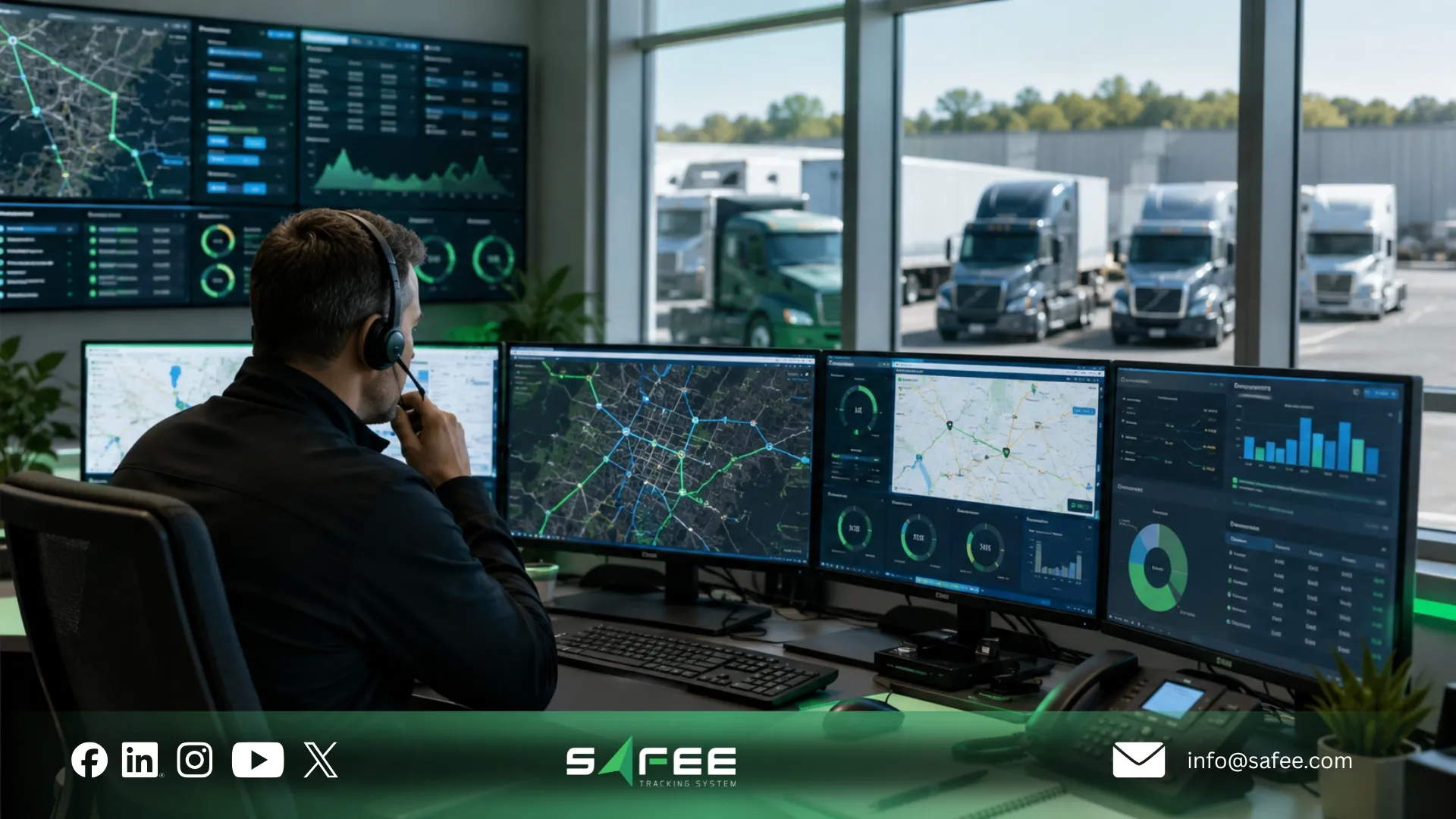
For live route and vehicle visibility, our Live Vehicle Tracking can support real-time location, trip activity, geofences, driver identity, and alarm status in one operational view.
Also read: Best Fleet Fuel Management System in 2026
The cost of poor fleet management in transportation
Poor fleet management in transportation creates cost leakage across fuel, maintenance, overtime, route inefficiency, missed schedules, driver behavior, asset underuse, and manual administration.
Because generic industry figures can be hard to verify, the safer B2B approach is to measure cost inside your own operation. Transportation and fleet management should compare planned activity against actual activity so teams can identify where cost per kilometer is increasing and why.
- Cost per kilometer by vehicle, route, depot, region, and customer.
- Fuel consumption by driver, trip, vehicle class, and operating condition.
- Idle time during loading, unloading, waiting, or unauthorized stops.
- Empty kilometers, weak backhaul planning, and poor route density.
- Unplanned maintenance, roadside breakdowns, and replacement vehicle costs.
- Driver overtime caused by inefficient scheduling or route delays.
- Manual reporting effort across dispatch, finance, and compliance teams.
- Underused vehicles that remain in the fleet without clear productivity value.
Our Fleet Reporting can help transport teams move from scattered spreadsheets to scheduled reports for cost, utilization, route behavior, maintenance, safety, and management review.
Also read: Fleet Driver Management Privacy and Safety Guide
The four core pillars of effective transport fleet management
Effective transport fleet management depends on four connected pillars:
asset utilization, route control, driver governance, and cost visibility. These pillars help operators manage performance without relying only on end-of-day reports or manual updates.
Vehicle scheduling and utilization
Vehicle scheduling decides which asset is assigned to which route, trip, shift, depot, or customer commitment. Utilization shows whether that asset is being used productively. Without this visibility, some vehicles become overused while others sit idle, and dispatchers may assign vehicles without knowing maintenance status.
- Track availability, active time, idle time, and maintenance downtime.
- Review kilometers by route, trip, vehicle, region, and customer.
- Identify empty kilometers and poor return-trip planning.
- Compare utilization by branch, depot, region, or transport mode.
Our Live Vehicle Tracking and Fleet Reporting modules can support this review by connecting location, activity, route history, and utilization reports.
Driver hours, fatigue risk, and compliance workflows
Driver hours, fatigue risk, and compliance workflows are central to fleet management in transportation. Long driving periods, night operations, tight delivery windows, and cross-region movement can create safety and compliance risk if they are not governed clearly.
Legal requirements differ by country, transport type, vehicle class, and operating model. Fleet software can support compliance-related workflows, but it should not be treated as a substitute for legal or regulatory review.
- Driver working hours and rest rules where applicable.
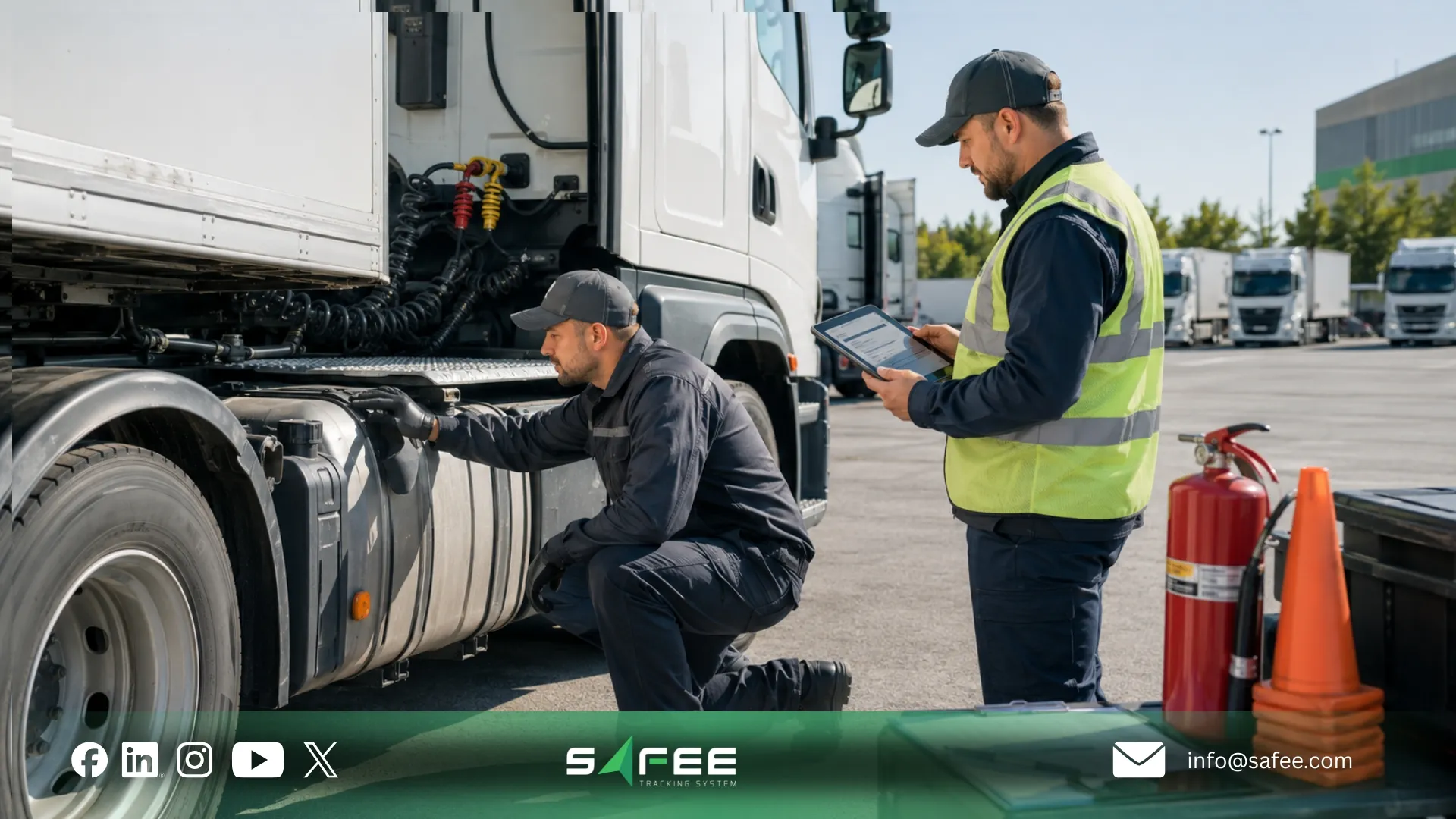
- Vehicle inspection and roadworthiness workflows.
- Permit, registration, insurance, and license validity reminders.
- Cross-border documentation and data retention rules.
- Internal HSE policies, escalation rules, and audit trails.
- Passenger transport, dangerous goods, or specialized freight requirements where relevant.
Our modules such as Driver Management, Alarms and Alerts, and the Administration Panel can help teams monitor assignments, driver behavior, alerts, user roles, and review workflows.
Speak with our team about configuring driver alerts, inspection reporting, HOS-related workflows where applicable, and role-based access around your transport compliance requirements.
Also read: Fleet Management Regulations in GCC: Compliance
Cost per kilometer control
Cost per kilometer is one of the most useful financial indicators in transportation and fleet management because it connects distance, fuel, maintenance, driver behavior, route design, waiting time, and vehicle utilization.
A fleet delivery management operation may focus on stop density, failed delivery patterns, and route sequence. A long-haul freight operator may focus on corridor efficiency, fuel consumption, rest planning, and backhaul use. Passenger transport may prioritize schedule adherence, safety alerts, and vehicle readiness.
Safee’s fuel tracking and reporting capabilities can support fuel visibility, while Tracking Data Analyzer and Fleet Reporting help teams review trends instead of relying only on total monthly spend.
Here is a table summarizing these factors:
Pillar | What it controls | Safee capability |
Vehicle scheduling and utilization | Availability, active time, idle time, vehicle assignment, and underused assets | Live Vehicle Tracking, Fleet Reporting |
Driver governance and compliance workflows | Driver assignment, behavior alerts, fatigue indicators, inspections, and role-based reporting | Driver Management, Alarms and Alerts |
Route and delivery control | Route adherence, geofences, delays, recurring corridors, delivery zones, and post-trip review | Journey Management System, Google Directions, Last Mile Delivery |
Cost per kilometer visibility | Fuel, maintenance, idle time, empty kilometers, utilization, and cost allocation | Fuel Control, Tracking Data Analyzer, Fleet Reporting |
10 steps to successfully implement transportation and fleet management
A Successful implementation is not only a software installation. It is a process of mapping the operation, cleaning data, defining rules, training teams, and reviewing performance after go-live.
- Map your current fleet: Build a clean inventory of trucks, vans, coaches, buses, rail-related assets, support vehicles, depots, regions, routes, drivers, current tools, and cost categories.
- Define KPIs: Choose KPIs with owners, reporting cadence, and action rules. Useful KPIs include on-time arrival, cost per kilometer, idle time, route adherence, inspection completion, fuel use, and safety alerts.
- Select a transport fleet management platform: Avoid selecting software by feature list alone. Focus on whether the platform supports your vehicles, routes, depots, connectivity needs, reporting structure, users, and integration requirements.
- Install telematics on all transport vehicles before go-live: Plan hardware by vehicle class, electrical system, engine data needs, sensors, cameras, fuel monitoring, driver identification, and remote-route coverage. Not every vehicle needs the same setup.
- Migrate existing vehicle and driver records into the new system: Clean vehicle IDs, plate numbers, driver records, licenses, depot assignments, maintenance records, route templates, cost centers, and naming conventions before import.
- Set up route templates and schedule patterns: Configure depots, hubs, customer points, passenger stops, fuel stations, approved corridors, restricted zones, arrival windows, and return-route logic where relevant.
- Configure driver HOS compliance rules and fatigue risk thresholds: Set this only after verifying applicable local requirements. Configuration may include driving time, rest periods, shift duration, break reminders, consecutive trips, and supervisor alerts.
- Train dispatchers and fleet managers on platform reporting tools: Training should use real fleet scenarios such as a delayed route, idle vehicle, overdue inspection, maintenance warning, driver event, or recurring cost issue.
- Launch driver performance scorecards and review weekly with team leaders: Use scorecards for coaching and accountability, not unfair pressure. Track speeding, harsh events, route adherence, idle time, inspections, on-time performance, and follow-up.
- Connect fleet management data with invoicing and cost-allocation workflows: Discuss how fleet data may support trip costing, fuel allocation, customer billing, branch reports, ERP workflows, and cost-center visibility where supported.
Planning a transport fleet management rollout? Contact us to align devices, data migration, route templates, driver rules, alerts, reports, dashboards, mobile access, and integration needs before launch.
Also read: Safee Journey Management System for Smarter Fleet Safety

Why choose Safee for transportation fleet management?
Safee helps transportation operators manage vehicles, drivers, routes, alerts, maintenance, reports, and compliance-related workflows through one connected fleet platform. From our UAE base, we support B2B fleets across the GCC and wider global markets with a modular approach that can be configured around each transport operation.
For transport companies, the challenge is not only knowing where vehicles are. The bigger challenge is turning fleet data into better decisions: which vehicle should be assigned, which route is delayed, which driver needs coaching, which asset needs maintenance, which cost center is rising, and which report leadership should review.
- Live Vehicle Tracking for trucks, vans, coaches, support vehicles, and multi-site fleets.
- Alarms and Alerts for speeding, geofence events, route exceptions, unauthorized movement, and maintenance triggers.
- Fleet Reporting for cost, utilization, safety, maintenance, driver performance, and management review.
- Maintenance Management for service planning, inspection follow-up, and downtime control.
- Driver Management for assignment visibility, driver behavior, tasks, and performance review.
- Journey Management System and Google Directions for route planning, approved corridors, navigation support, and post-trip review.
- Last Mile Delivery workflows for high-frequency delivery operations and customer-facing transport routes.
- Mobile App access for supervisors, dispatchers, and field teams who need visibility away from the office.
- Tracking Data Analyzer for deeper review of patterns, exceptions, and operational trends.
Safee for multi-mode transport operations
Whether you manage road freight, passenger coaches, delivery vans, support vehicles, or rail fleet and freight management workflows, Safee can help structure a platform setup around the transport mode, user role, and reporting need.
- Freight trucks may need route control, fuel monitoring, driver behavior, rest planning, and cost per kilometer review.
- Delivery vans may need fleet delivery management, route density, customer windows, last-mile delivery workflows, and mobile supervisor access.
- Coaches may need schedule adherence, passenger route monitoring, safety alerts, and inspection routines.
- Support vehicles may need location visibility, unauthorized movement alerts, and utilization reporting.
- Rail fleet and freight management may require asset visibility, freight coordination, reporting, and integration planning depending on the operating model.
Our value is in configuration. Dispatchers can focus on live route execution, fleet managers can focus on availability and utilization, HSE can focus on safety exceptions, finance can review cost indicators, and leadership can use our Fleet Reporting for management decisions.
Also read: Best Fleet Management Software in Syria: Why Safee Fits Modern Fleets?
How does Safee help transport operators improve cost-per-kilometer visibility?
Safee can help operators work toward cost-per-kilometer improvement by making fuel consumption, idling, route adherence, empty kilometers, vehicle utilization, maintenance planning, driver behavior, trip delays, and cost allocation more visible.
Ready to improve transportation fleet management across routes, drivers, costs, and compliance workflows? Book a Safee demo to map your vehicles, routes, alerts, reports, and integration needs before rollout.
FAQs about transportation fleet management
What does transportation fleet management software include?
Transportation fleet management software typically includes live vehicle tracking, route monitoring, driver assignment, driver behavior alerts, maintenance workflows, inspections, geofencing, Fleet Reporting, cost analysis, mobile access, and compliance-related support workflows.
How does transport fleet management reduce cost per kilometer?
Transport fleet management helps reduce cost per kilometer by showing fuel waste, excessive idling, route deviations, empty kilometers, underused vehicles, maintenance delays, and driver behavior issues.
What are the biggest compliance challenges in fleet management in transportation?
The biggest challenges include driver hours, fatigue risk, vehicle inspections, license and permit validity, maintenance records, safety policies, data privacy, and cross-border documentation where applicable. Requirements vary by country and transport type.
How does fleet and transport management software handle multi-mode operations?
Fleet and transport management software can group vehicles, routes, drivers, depots, alerts, and reports by transport type. Trucks, vans, coaches, support vehicles, and rail-related assets can each have different dashboards, rules, maintenance workflows, and reporting views.
Can transportation fleet management software support rail fleet and freight management?
Yes, transportation fleet management software can support rail fleet and freight management where the operating requirements, asset data, tracking methods, reporting needs, and integrations are clearly defined. Operators should verify asset visibility, freight coordination, maintenance records, reporting formats, and integration scope before deployment.
Is Safee suitable for transportation fleet management in the GCC?
Yes. Safee is suitable for GCC transportation fleets that need live tracking, driver visibility, route control, alerts, maintenance, Fleet Reporting, mobile access, cost review, and integration planning. The right configuration depends on vehicle types, route models, operating regions, users, and reporting requirements.
Ready to improve your fleet operations?
Tell us what you would like to improve. A Safee specialist will reply by email.
Usually replies within one business day • No sales spam
Your details are used only to respond to your request. Privacy Policy