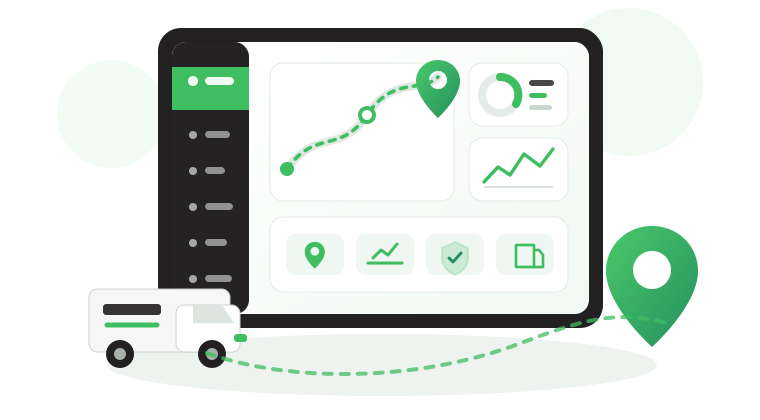

How Bus Fleet Management Improves Transit Reliability
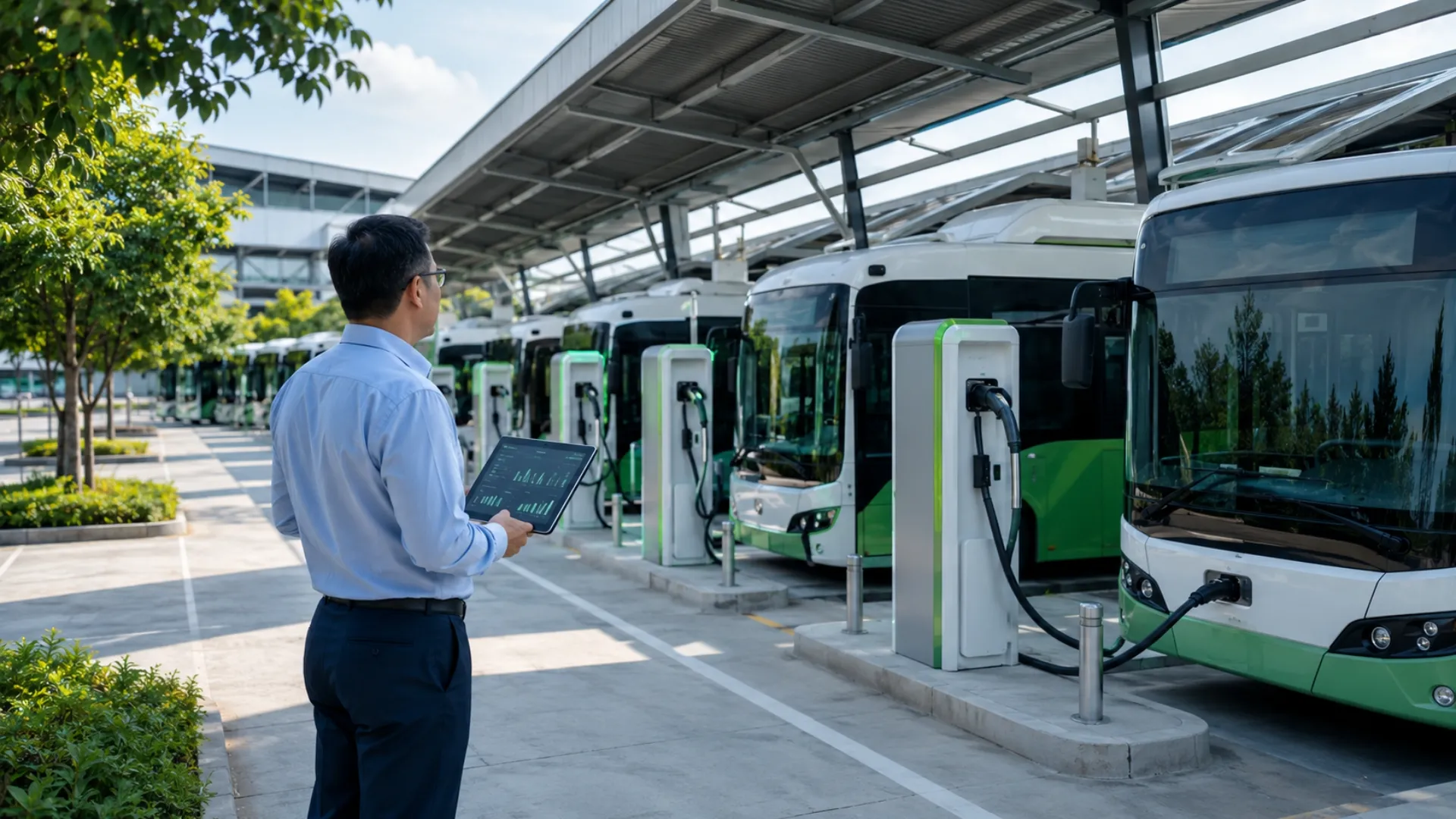
A bus operation can look active while service reliability quietly drops. Buses leave the depot, drivers start shifts, and routes keep running, yet control teams still chase updates by phone, maintenance teams discover readiness issues too late, HR teams hear driver complaints after pressure has already built, and safety officers only see route or behavior issues after the shift is over. For public transport operators in the UAE, the GCC, and global markets, that gap affects passengers, drivers, cost, and trust.
This guide explains how bus fleet management helps transit operators connect route control, vehicle readiness, driver welfare, privacy-aware monitoring, EV readiness, and reporting into one operating workflow. It also shows how we at Safee can support B2B bus fleets
What is bus fleet management?
Fleet management for buses is the process of planning, monitoring, maintaining, and improving bus operations across vehicles, drivers, routes, stops, depots, schedules, passenger demand, safety policies, fuel or battery use, and management reporting.
For public transport operators, staff shuttle providers, airport bus services, intercity coach operators, government passenger fleets, and private transport companies, the goal is not simply to know where each bus is. The goal is to know whether the service is running as planned, whether drivers are protected from unfair pressure, whether vehicles are ready, whether exceptions are reviewed, and whether managers can prove what happened.
A modern bus operation depends on dispatch decisions, route adherence, driver shifts, depot processes, passenger demand, maintenance readiness, EV charging windows, and reports for operations, HSE, HR, finance, and leadership. Without connected fleet management for buses, these details often stay scattered across calls, spreadsheets, manual logs, depot records, and delayed reports.
Public transport fleet management and route control
Public transport fleet management is the control layer behind reliable passenger service. Every route depends on consistent departures, route adherence, safe driving, vehicle readiness, and clear escalation when service breaks down.
In daily operations, a transit control center needs to answer questions quickly:
- Did the bus leave the depot on time?
- Is the bus following the approved route and stop sequence?
- Is the bus ahead of schedule, delayed, stopped too long, or off route?
- Which driver is assigned to the vehicle and shift?
- Is the vehicle available, in service, charging, delayed, or under maintenance?
- Which alerts need action, and who owns the response?
- Which reports should be reviewed by operations, HSE, HR, maintenance, finance, or leadership?
For this reason, the best bus fleet management tools are connected workflows, not isolated screens. A live map becomes more useful when it is connected to route adherence, stop timestamps, geofences, driver records, alert rules, vehicle readiness, and scheduled reports.
Driver welfare and privacy in bus fleet management
Driver welfare is central to bus fleet management because the route plan often puts pressure on the driver. Tight headways, passenger complaints, traffic delays, split shifts, overtime, aggressive schedules, and repeated route stress can affect safety and retention. Fleet data should help the company understand these pressures, not simply blame drivers for every exception.
A privacy-aware setup should make data use clear before deployment. Operators should define what is tracked, when tracking is active, who can see location and driver behavior data, how long records are retained, and how reports are used for coaching, safety review, or escalation. This is especially important for HR leads and safety officers who need fair evidence without creating a culture of hidden surveillance.
- Use driver behavior data for coaching and safety review, not automatic punishment.
- Review speeding, harsh braking, idling, route deviation, and long stops with route context.
- Separate dispatcher visibility from HR review and leadership reporting.
- Give drivers a clear process to correct wrong assignments or missing route context.
- Limit access to sensitive driver, route, and historical trip records by role.
- Use reports to identify fatigue patterns, repeated route pressure, and unrealistic schedules.
Our Driver Management module can help connect driver assignment, driver records, behavior events, and task visibility in one workflow, while helping your operations, HR, and safety teams review patterns instead of relying on screenshots or informal messages, there is our Fleet Reporting
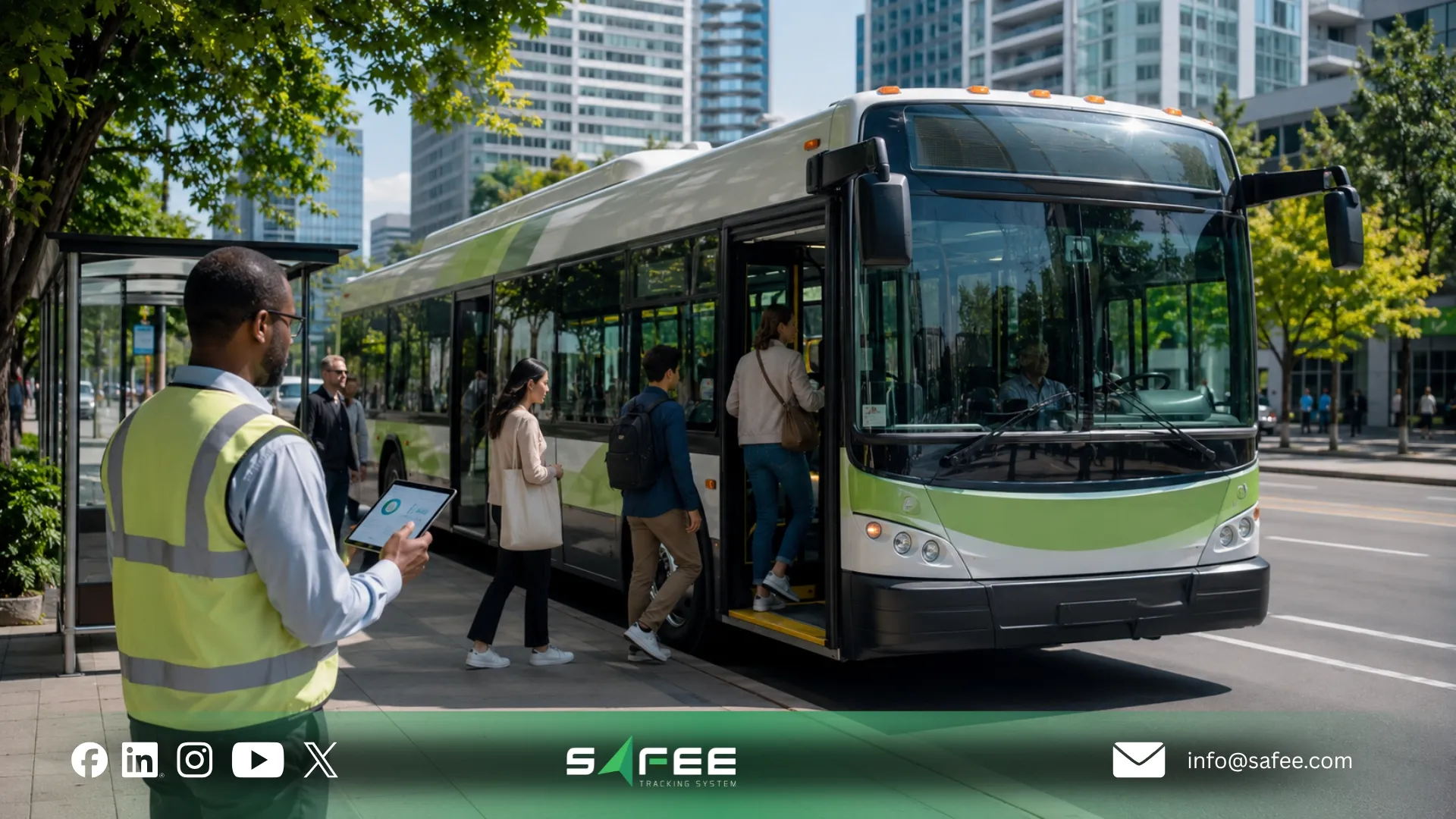
Fleet management for buses across different service models
Fleet management buses changes by service model. A city transit network, airport shuttle, intercity bus fleet, staff transport operation, and government passenger fleet may all need route visibility, but each one has different risks, users, alerts, and reports.
Bus Operation | Main Control Need | Privacy / Welfare Concern | Safee Workflow Fit |
Public transport | Route adherence, stop timing, service reliability | Shift pressure, route stress, fair event review | Live tracking, alerts, reporting, driver management |
Staff shuttles | Shift arrival, site access, contractor review | Overtime, long waits, route clarity | Journey management, geofences, mobile access |
Intercity buses | Long routes, rest stops, maintenance readiness | Fatigue, night driving, route risk | Journey management, maintenance, driver reports |
Airport or terminal buses | Terminal dwell time, short headways, turnaround | Repeated congestion, pressure to recover delays | Geofences, alerts, fleet reporting |
EV bus fleets | Charging windows, battery readiness, range planning | Driver instructions around range and route-energy limits | Electric Vehicle Monitoring, alerts, reporting |
When you search for fleet management buses solutions, you should avoid one-size-fits-all claims. The right configuration depends on route type, depot model, driver policy, vehicle type, reporting cadence, and integration requirements.
Route adherence and service reliability
Route adherence means the bus follows the approved route, stop sequence, timing pattern, and operating rules. It is one of the most important indicators in bus fleet management because it directly affects passenger experience, dispatcher workload, and service credibility.
A strong setup should allow the control center to see whether each bus is on route, off route, ahead of schedule, behind schedule, stopped too long, entering a depot, leaving a terminal, or returning from a turnaround.
Safee can support this workflow through Live Vehicle Tracking, geofences, Alarms and Alerts, and scheduled Fleet Reporting. The configuration should reflect your actual routes, stops, depots, layover zones, service windows, and alert ownership.
- Dispatcher intervention when repeated delays appear.
- Post-route review after complaints or incidents.
- Stop-level or zone-level arrival and departure history where configured.
- Driver coaching based on repeated route or timing issues.
- Terminal and depot performance review.
- Management reporting by route, depot, driver, vehicle, and exception type.
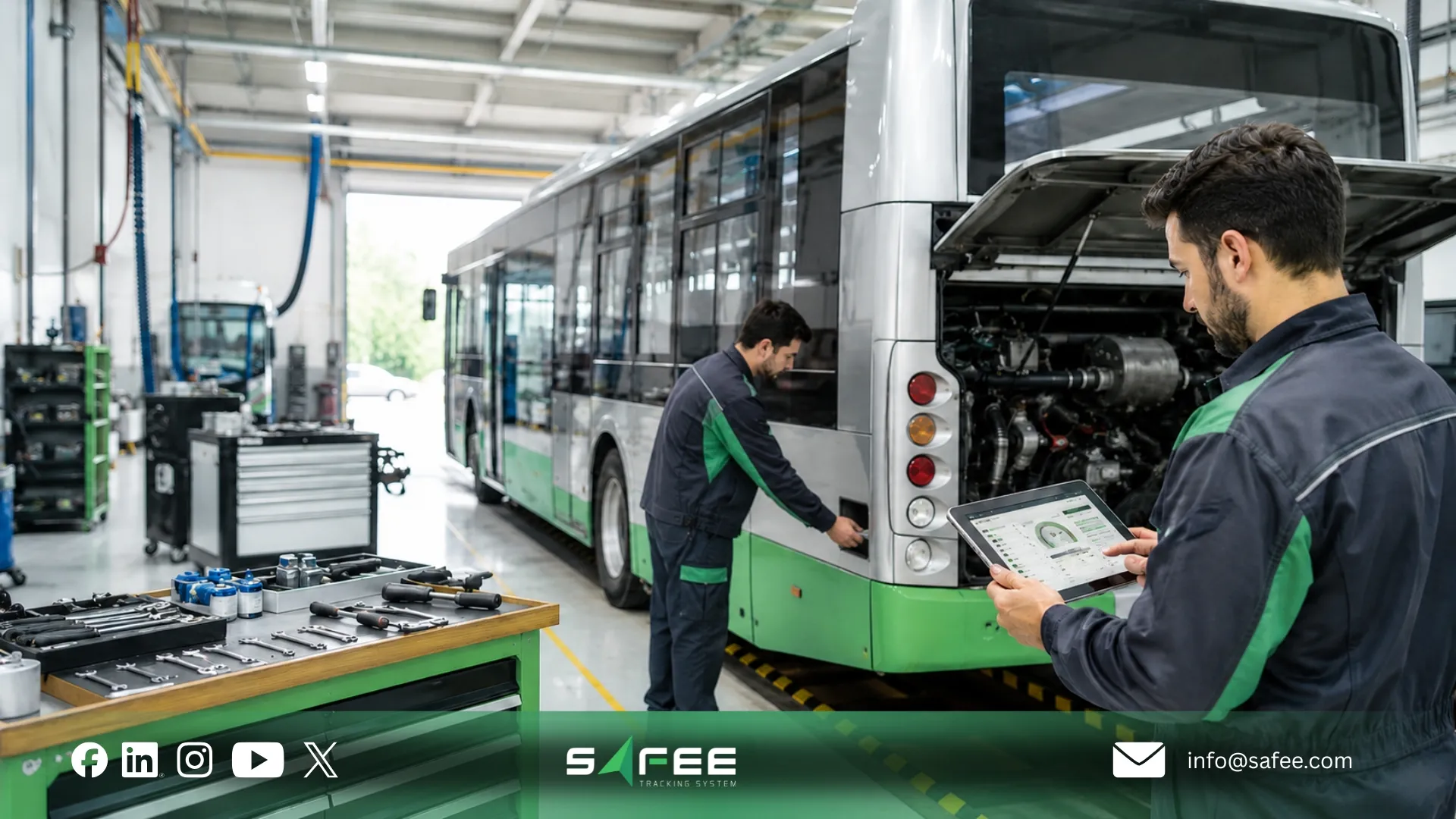
Maintenance and bus readiness
A reliable bus schedule can fail if the vehicle is not ready. Maintenance visibility is therefore a core part of bus fleet management. The objective is not to promise automatic savings; it is to reduce blind spots before a readiness issue affects passengers, drivers, or dispatch.
For transit and intercity operations, maintenance workflows may include:
- Mileage-based, engine-hour-based, or date-based service reminders where configured.
- Daily readiness checks before first departure.
- Defect follow-up by vehicle, depot, route, or vehicle type.
- Downtime review for buses repeatedly unavailable for service.
- Maintenance reports for operations, maintenance teams, finance, and leadership.
- Alerts for open defects or repeated issues that should be reviewed before dispatch.
The Maintenance Module supports service scheduling, maintenance alerts, task creation, and follow-up workflows so bus operators can make readiness part of daily control instead of an end-of-day surprise.
Want to reduce manual maintenance follow-up? Contact Safee to review bus readiness workflows, open defects, scheduled service, alerts, and reports.
EV bus fleet management for mixed fleets
EV bus fleet management adds a new operating layer to traditional bus operations. Diesel buses are usually managed around fuel availability, refueling, maintenance, route scheduling, and depot operations. Electric buses also require battery visibility, charging schedules, charger availability, route-energy planning, and low-range escalation rules.
- Which EV buses have enough charge for the next service block?
- Which routes consume more energy because of traffic, terrain, climate, passenger load, or driving behavior?
- Which chargers are available, occupied, unavailable, or reserved?
- What happens when a late return causes a missed charging window?
- How should dispatch respond to low-range alerts?
- Which diesel and EV buses should share routes, drivers, and depots without using identical rules?
A battery percentage is useful, but dispatchers need operational context: route distance, dwell time, climate load, reserve policy, driver behavior, and charging plan. Our Electric Vehicle Monitoring can support EV visibility where vehicle, battery, and charging data are available, while Alarms and Alerts and Fleet Reporting can help teams review low-range events and repeated energy patterns.
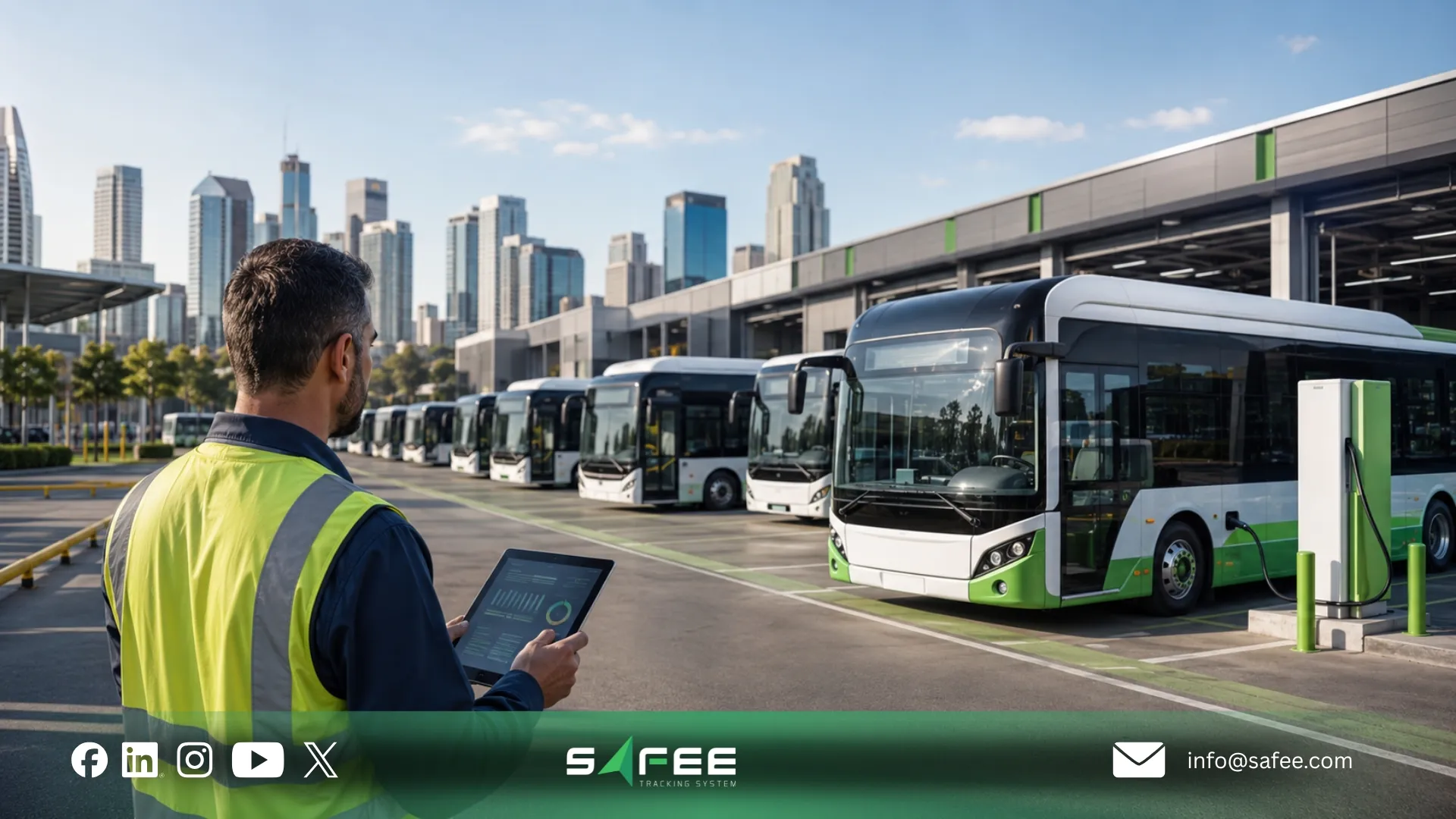
Bus fleet management tools to compare
The right bus fleet management tools depend on your operating model. A fleet management bus workflow should be evaluated against daily decisions, not only against a feature list. Before choosing a platform, define routes, stops, depots, terminals, drivers, user roles, vehicle types, EV requirements, maintenance process, and reporting needs.
- Live Vehicle Tracking: Real-time bus location, route progress, geofences, and trip activity.
- Alarms and Alerts: Route deviation, speeding, harsh events, long stops, idling, geofence events, maintenance triggers, and EV range alerts where configured.
- Driver Management: Driver assignment, driver records, behavior events, task visibility, and fair review workflows.
- Journey Management System: Planned route control, approvals, active trip monitoring, and post-trip review where structured journey governance is needed.
- Maintenance Module: Service schedules, open defects, readiness follow-up, and maintenance alerts.
- Fleet Reporting: Scheduled reports for route performance, safety, maintenance, driver review, utilization, and leadership dashboards.
- Mobile App: Supervisor and manager access when teams are away from the control room.
- Tracking Data Analyzer: Deeper analysis of recurring route delays, idling, utilization, driver behavior, and exceptions.
- Electric Vehicle Monitoring: EV charge visibility, battery-related monitoring, and EV readiness workflows where connected data is available.
Comparing bus fleet management tools? Talk to Safee about mapping buses, depots, routes, alerts, reports, user roles, integrations, and EV readiness before implementation.
Integrations, passenger data, and access control
Bus operations may depend on scheduling tools, CAD/AVL systems, ticketing, HR, ERP, maintenance systems, passenger counting, video systems, or EV charging data. Integration should be scoped before deployment so each data field has a source of truth and each user role has the right level of access.
Where passenger-related data, incident notes, onboard video, or complaint records are involved, the workflow should avoid unnecessary exposure. Operations may need live service status; HR may need driver-related reports; HSE may need safety events; leadership may need trends; customer service may need trip evidence. Not every team needs raw historical movement data.
- Define the source of truth for routes, stop IDs, vehicle IDs, driver IDs, and service blocks.
- Confirm whether data moves through API, import/export, scheduled reports, or manual upload.
- Separate real-time dispatch visibility from HR, HSE, and leadership reporting.
- Set data retention and export permissions before sensitive data is activated.
- Verify requirements for video, passenger data, and driver behavior review with internal legal, HR, IT, and safety teams.
Bus fleet management rollout checklist
A bus fleet management rollout should start with the operating workflow, not only the device installation. Use this checklist to define the model before scaling across depots or routes.
- Define the fleet scope: buses, depots, terminals, routes, stops, drivers, supervisors, and user roles.
- Clean master data: vehicle IDs, driver records, route IDs, stop locations, depot zones, terminal zones, and maintenance records.
- Configure Live Vehicle Tracking, geofences, and route adherence rules.
- Set Alarms and Alerts for route deviation, speeding, harsh events, idling, long stops, maintenance, and EV low-range events where applicable.
- Build Fleet Reporting for operations, HSE, HR, maintenance, finance, and leadership.
- Define driver welfare and privacy rules before driver behavior data is used for coaching or escalation.
- Configure Maintenance Module workflows for service schedules and readiness follow-up.
- Scope integrations with CAD/AVL, ticketing, ERP, HR, maintenance, passenger-counting, video, or EV charging systems where required.
- Pilot selected routes, review alert quality, and adjust rules before full rollout.
- Review KPIs monthly: route adherence, delayed departures, long stops, vehicle availability, driver workload, maintenance impact, complaints, EV range events, and report usage.
Ready to configure bus fleet management around your real routes and depots? Book a Safee demo to review route adherence, driver welfare, privacy controls, EV monitoring, alerts, reports, and integrations.
Why choose Safee for bus fleet management?
Safee is a UAE-based fleet technology platform serving B2B fleets across the GCC and global markets. For transit and passenger transport operators, we help connect buses, drivers, routes, depots, alerts, maintenance, EV monitoring, privacy-aware reporting, and management review in one practical workflow.
Our platform is not a generic map. The value is in configuration: which routes matter, which alerts need action, which users can see which data, which reports management reviews, which vehicles are ready, and which EV workflows need battery or charging visibility.
Build a bus fleet management workflow with Safee
Bus fleet management becomes valuable when it helps operators deliver reliable routes, protect drivers, manage privacy, keep vehicles ready, prepare for EV transition, and review performance with clear evidence. The strongest setup is configured around the real operating model: depots, routes, stops, drivers, vehicle types, charging plans, alert owners, reports, and user permissions.
If your team manages public transport, shuttle, intercity, airport, staff, or mixed passenger fleets, Contact Safee to design a practical bus fleet management workflow for the UAE, GCC, or global operations.
FAQs about bus fleet management
What is bus fleet management?
Bus fleet management is the process of managing buses, drivers, routes, stops, depots, maintenance, alerts, fuel or battery use, driver behavior, privacy controls, and reports so passenger transport operations can run safely and predictably.
How does public transport fleet management improve service reliability?
Public transport fleet management improves service reliability by giving control teams visibility into route adherence, delayed departures, long stops, route deviation, driver assignment, vehicle readiness, and repeated service issues that need management review.
What bus fleet management tools should transit operators compare?
Important bus fleet management tools include Live Vehicle Tracking, route adherence monitoring, Alarms and Alerts, Driver Management, Maintenance Module workflows, Fleet Reporting, Mobile App access, Tracking Data Analyzer, and EV monitoring where configured.
How does fleet management for buses support driver welfare?
Fleet management for buses supports driver welfare when operators use data to review workload, route pressure, fatigue patterns, repeated delays, and driving events with context. The goal should be fair coaching, safety improvement, and clearer operational evidence.
What is different about EV bus fleet management?
EV bus fleet management adds battery visibility, charging status, charger availability, route-energy planning, low-range alerts, and mixed-fleet rules. Diesel and EV buses may share the same network, but they should not always follow the same energy and readiness rules.
Can Safee support bus fleet management for GCC and global operators?
Yes. Safee can support UAE-based, GCC, and global B2B bus operators through configurable workflows for live tracking, alerts, driver management, maintenance, reporting, journey control, mobile access, analytics, and EV monitoring where connected data is available.
Ready to improve your fleet operations?
Tell us what you would like to improve. A Safee specialist will reply by email.
Usually replies within one business day • No sales spam
Your details are used only to respond to your request. Privacy Policy