
Intelligent Fleet Management System—or Just Another Tracker?
Fleet buyers evaluating an intelligent fleet management system are often shown the same vehicle map under several labels: intelligent, automated, remote, modern, or wireless. The terminology sounds advanced, yet the same operational gaps remain: alerts have no clear owner, managers can see vehicles across branches but cannot approve the next action, and separate tools record different versions of the same event. For multi-site fleets in the UAE, Saudi Arabia, the wider GCC, and international markets, buying labels instead of workflows can create duplicated systems and weaker control.
This guide explains what each capability actually does, how a tracking and fleet management system turns vehicle data into assigned and reviewable action, and where human approval must remain. It also shows how Safee connects tracking, alarms, reporting, journeys, drivers, maintenance, permissions, mobile access, and validated integrations in one modular platform rather than selling a standalone GPS device.
Three layers of fleet intelligence
These are capability layers, not competing product categories. Intelligence interprets data, automation executes approved rules, and remote management gives authorized users controlled access from distributed locations.
Intelligence finds the exceptions that matter
An intelligent fleet management system adds operational context to raw events. A stop, route deviation, temperature alarm, maintenance warning, or driver event becomes useful only when it is connected to the correct vehicle, driver, site, journey, policy, and recent history.
The intelligence layer may rank exceptions, group related events, expose recurring patterns, or highlight missing evidence. It supports judgment rather than replacing the Operations, HSE, Maintenance, Dispatch, or management role that owns the final decision. For broader AI definitions and governance, read our AI in fleet management services guide and AI fleet management overview.
Automation turns approved rules into action
An automated fleet management system performs predefined actions when configured conditions are met. It may route an event, notify the responsible role, start an escalation timer, deliver a scheduled report, create a follow-up task, or send a case for approval.
- Define the trigger that starts the workflow.
- Assign an accountable owner and escalation path.
- Separate automatic actions from decisions requiring approval.
- Specify the evidence and status required for closure.
Automation accelerates a clear process. When ownership and closure are undefined, it only moves ambiguity faster.
Remote management extends control across locations
A remote fleet management system enables authorized users to review and act when vehicles, branches, field teams, and decision-makers are geographically distributed. Remote access must remain tied to user roles, vehicle and site scope, approval rights, manual-override authority, and action history.
Our Fleet Management Mobile App supports approved access on the move, while the Administration Panel structures sites, vehicles, drivers, users, and permissions. A modern fleet management system can contain all three layers; “modern” describes the connected baseline, not a fourth product category.
How does a tracking and fleet management system close the loop?
A capability should be evaluated from the first vehicle event to the final operational record. The value lies in continuity between visibility, interpretation, assigned work, approval, evidence, and closure.
- The vehicle tracking and fleet management system receives location, movement, or sensor data.
- The intelligence layer checks the driver, journey, geofence, vehicle group, maintenance status, and related events.
- The automated layer assigns the exception and starts the approved notification or escalation rule.
- An authorized manager reviews the evidence through web or mobile access.
- The manager approves, rejects, reassigns, requests verification, or records a permitted exception.
- The action owner documents the outcome so the closure record can be reported and reviewed.
Tracking makes the event visible
A vehicle tracking and fleet management system can show that a vehicle stopped, deviated, entered a zone, or generated an alarm. It cannot determine the operational meaning without journey purpose, driver assignment, geofence, vehicle condition, customer activity, and policy context.
Safee’s Live Vehicle Tracking connects current and historical movement with available vehicle, driver, geofence, and alarm information. Readers who need a detailed explanation of tracking technology, benefits, and implementation challenges can use the real-time GPS fleet tracking guide.
Automation creates ownership and closure rules
Once the event is understood, automation should identify the action owner, deadline, escalation rule, evidence requirement, and closure authority. Our Alarms and Alerts can support configured detection and notification, but the fleet must still decide what happens after the alert and who is accountable for the result.
Also read: Before You Apply: What a Fleet Management Manager Must Prove
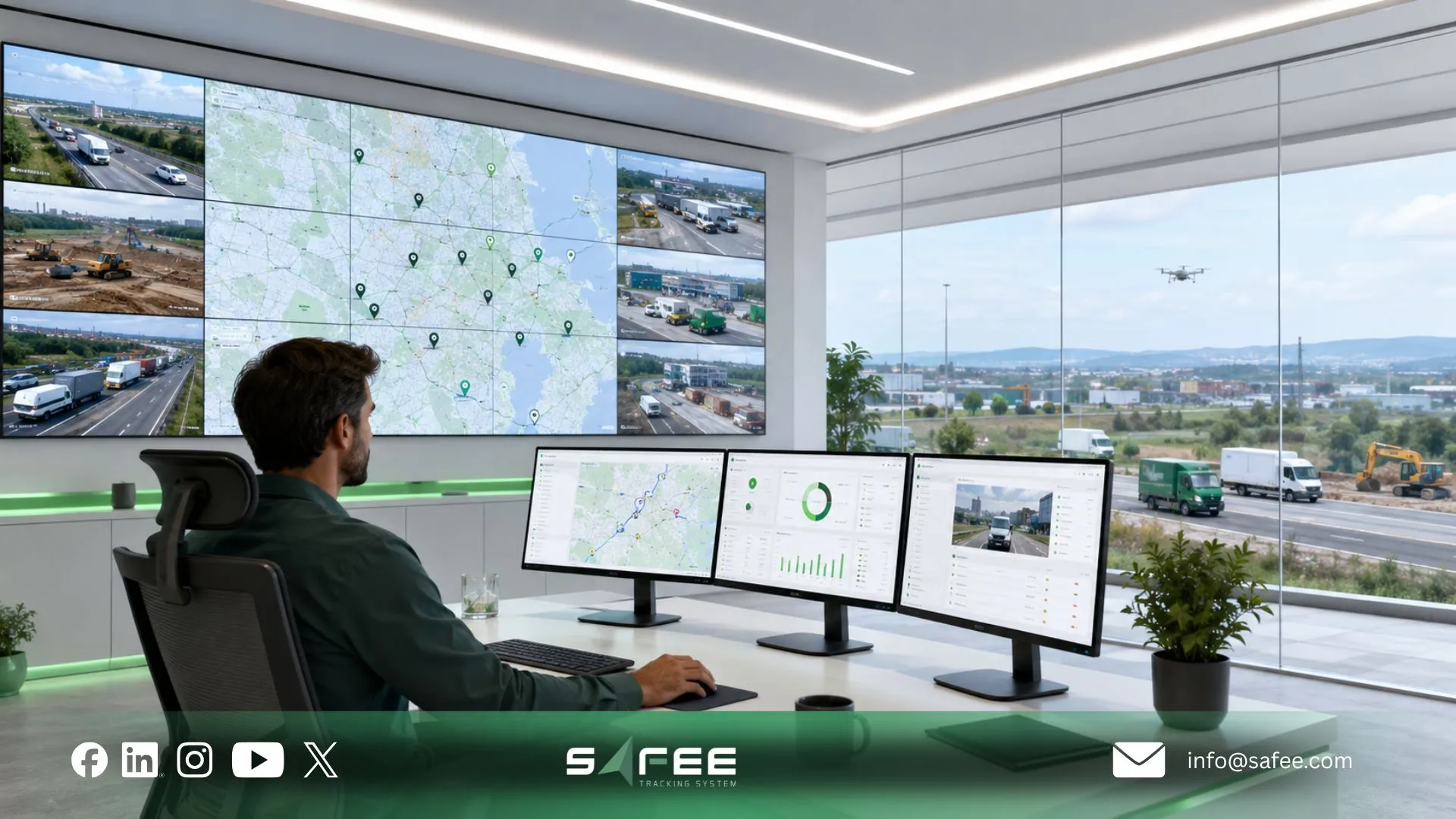
Stop buying fleet tools until you find the real gap
Fleet teams should diagnose the operating failure before buying another tool. The correct capability depends on whether the gap is prioritization, repetitive execution, distributed authority, or fragmented records.
Cut through data noise with intelligence
If managers receive many alarms and reports but cannot distinguish routine activity from high-impact exceptions, the primary gap is interpretation. An intelligent fleet management system should narrow the review by adding context and surfacing recurring or higher-priority patterns instead of forwarding every event to more people.
Replace manual follow-up with automation
If teams repeatedly assign incidents, send reminders, distribute reports, and chase overdue actions, the primary gap is execution. An automated fleet management system can standardize assignment, reminders, scheduled delivery, escalation, and approved status changes once ownership is defined.
Control distributed fleets with remote governance
If branches, depots, projects, or field operations depend on managers located elsewhere, the primary gap is controlled remote access. This is especially relevant to logistics, oil and gas, construction, cold chain, government, and field-service fleets across the GCC and international markets. The organization must define what each role can view, assign, approve, override, and close.
Repair broken handoffs through integration
If transport orders, vehicle activity, maintenance, HR, fuel, or incident records sit in separate systems, the primary gap is system ownership and data exchange. An integrated TMS and fleet management system can connect Transportation Management System (TMS) planning data with vehicle execution, but the project must define the source of each record, shared identifiers, exchange direction, and final system of record.
Real power behind an intelligent fleet management system
A real time fleet management system answers what is happening now. Intelligent control addresses what the event means, who should respond, which action is permitted, and how the outcome will be verified.
Real-Time data shows the current state
Live data can show location, movement, speed, stop status, route position, geofence activity, recent alarms, and device communication. This is the operational starting point, but visibility alone does not assign responsibility, authorize intervention, or confirm closure.
Intelligent control defines the next action
Two vehicles may show the same stop duration while carrying different risk. A delivery vehicle inside an approved customer location may require no response; a temperature-controlled vehicle outside its approved journey with a related sensor alarm may require immediate review. Closed-loop control then preserves the owner, action, approval, escalation, evidence, and final status.
Some buyers search for a tracking system for fleet management across several branches. The stronger requirement is normally a platform that connects tracking with decision ownership and reviewable closure, not simply a larger map.
How does a modern fleet management system fit together?
These terms describe different architectural dimensions. A platform can be modern in its operating model, modular in deployment, wireless in connectivity, and integrated with transportation or enterprise systems.
Modern systems create the connected baseline
A modern fleet management system connects vehicles, drivers, sites, users, permissions, events, records, and management review. Its value is continuity: teams should not have to reconstruct the same event from unrelated dashboards, spreadsheets, screenshots, and messages. Organizations still digitizing manual processes can use Safee’s manual-to-digital fleet management guide.
Modular systems support controlled expansion
A modular fleet management system allows capabilities to be deployed according to operational priority, data readiness, and governance maturity. A fleet may begin with reliable tracking and exception visibility, then add reporting, driver workflows, maintenance, journey control, fuel visibility, analytics, mobile access, video, or specialized sensors. Our essential fleet management modules show the connected core platform.
Wireless systems move data, not decisions
A wireless fleet management system moves vehicle or device data through cellular, satellite, or another supported communication path. Connectivity transports the data; it does not interpret events or assign accountability. Coverage must be validated against geography, vehicle type, update frequency, device compatibility, and operational continuity. For supported low-coverage scenarios, Safee offers SatComm satellite fleet tracking.
Integrated TMS connects planning with execution
A TMS may manage orders, loads, dispatch plans, carriers, and delivery commitments, while fleet management focuses on vehicles, drivers, journeys, events, maintenance, safety, and execution visibility. TMS must not be confused with our Journey Management System, which supports journey planning, risk review, approval, monitoring, exceptions, and post-journey review within the fleet workflow.
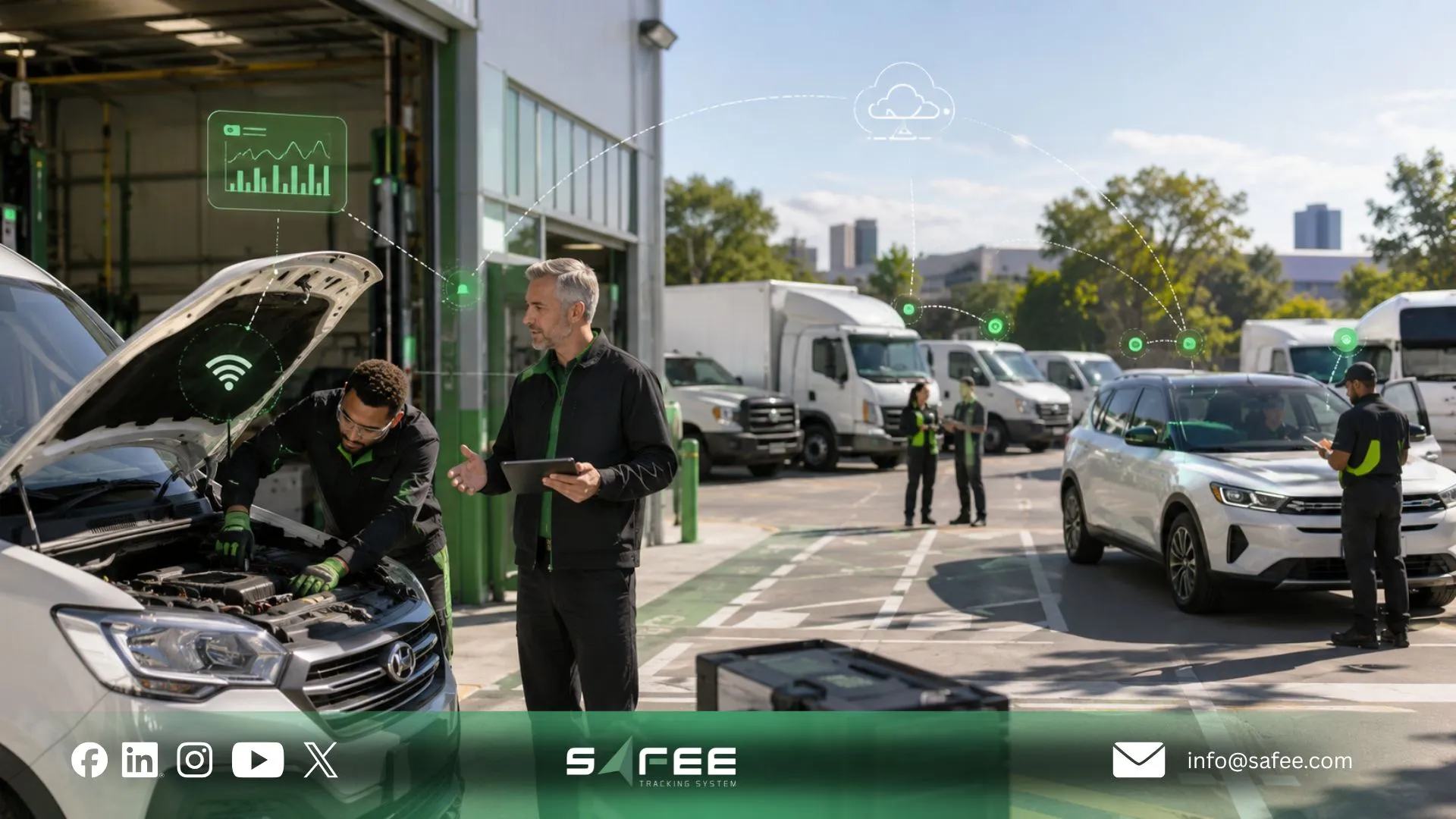
Automated fleet management system without human boundaries
Decision ownership is the boundary that keeps automation useful and controlled. Fleet teams should classify actions before configuration rather than allowing a technical setting to become operational policy.
Automate low-risk, repeatable work
- Approved notifications and scheduled reports.
- Assignment to a predefined role or queue.
- Escalation timers and overdue reminders.
- Creation of follow-up tasks or approval requests.
- Reversible status changes supported by reliable data.
Before automating an action, confirm that the trigger is clear, the data is reliable enough, the result has an owner, manual override is controlled, and incomplete information routes the workflow to a person.
Use intelligence to prioritize and recommend
The system may rank exceptions, group related incidents, expose repeated patterns, flag conflicting information, or suggest the next record to review. Users should be able to inspect the supporting evidence and accept, reject, or investigate the recommendation.
Keep high-impact decisions under human control
Human approval should remain explicit for safety-critical intervention, policy exceptions, disciplinary action, costly recovery or maintenance decisions, dispatch restrictions, threshold changes, serious-incident closure, and acceptance of incomplete evidence. The record should preserve who decided, what evidence was available, and why the decision was taken.
How to build an intelligent fleet management system without duplicate tools?
Build the workflow architecture before comparing feature labels. This prevents the business from buying several tools that detect the same event while leaving ownership, approval, or closure unresolved.
Map decisions before comparing features
- What data creates the event?
- What context determines its operational meaning?
- What action may run automatically?
- Who owns and approves the resulting work?
- What evidence confirms closure?
- Who needs remote access, and at what permission level?
- Which external system must receive or return the final status?
A vehicle tracking fleet management system should be evaluated by what happens after detection, not only by the quality of the map or the number of available alerts.
Choose one system of record
Identify the authoritative source for vehicles, drivers, assignments, journeys, transport orders, maintenance tasks, alarms, approvals, and closure records. Not every record must originate in the fleet platform, but the source, exchange direction, conflict rule, and final review location must be explicit.
Expand capabilities in the Right sequence
- Reliable visibility: validate vehicle, driver, device, site, and event data.
- Defined ownership: assign responsibility for exceptions, approvals, and reports.
- Controlled automation: configure low-risk notifications, assignments, reminders, and escalation.
- Decision support: add prioritization, pattern analysis, or recommendation workflows.
- Remote governance and integration: extend approved access and exchange only the data required by TMS, ERP, HR, maintenance, fuel, finance, or compliance systems.
This is a dependency model, not a fixed timetable. Automation should not expand before ownership is clear, and intelligence should not be trusted before the supporting data is stable enough for the intended decision.
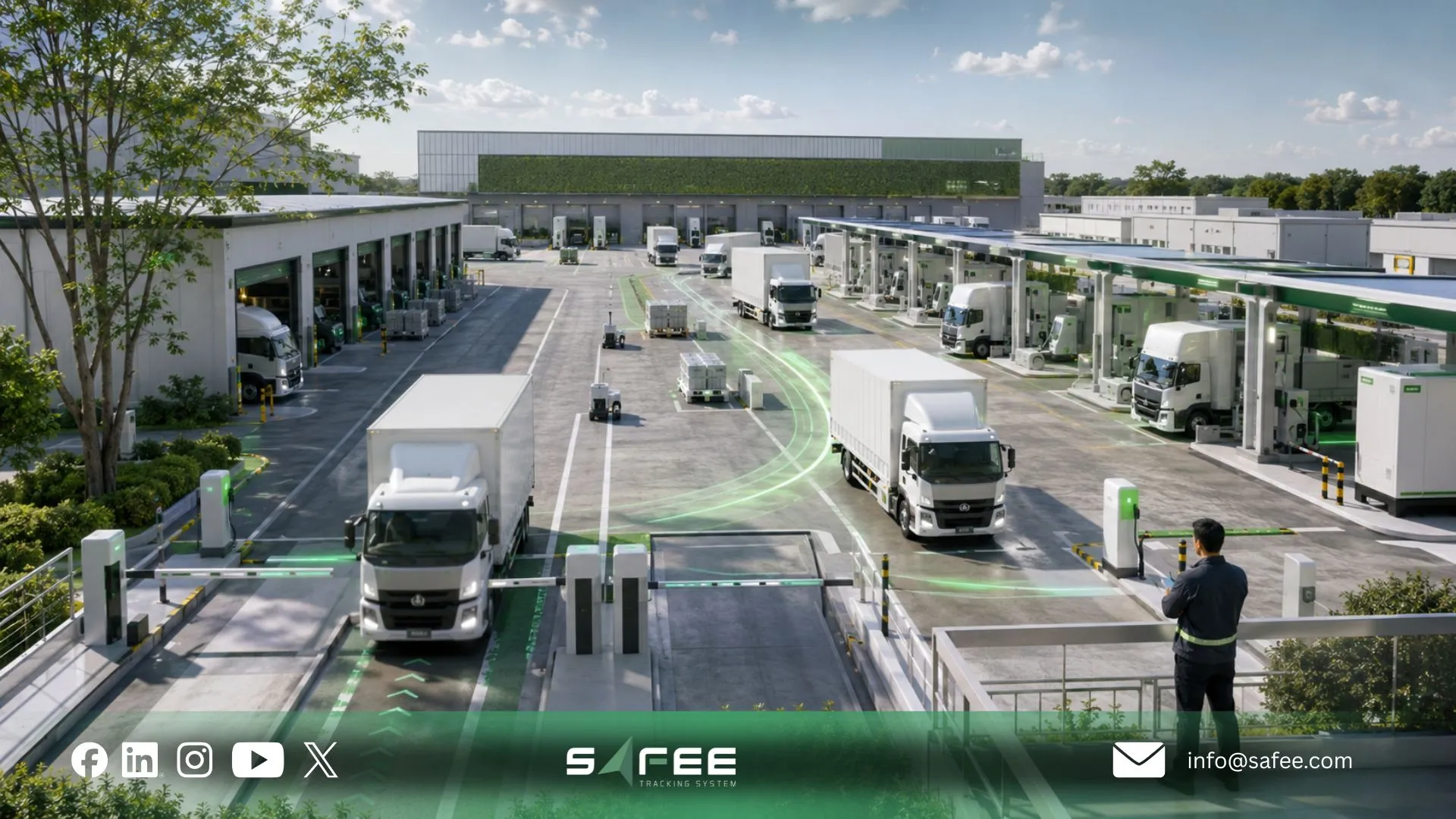
How Safee builds an intelligent fleet management system
Safee is headquartered in the UAE and supports B2B fleet operations across Saudi Arabia, the wider GCC, and international markets. We provide a connected fleet management environment—not a standalone GPS device, so capabilities can be mapped to the customer’s vehicles, sites, users, policies, workflows, and validated integration scope.
One data foundation connects the fleet
Our platform can connect Live Vehicle Tracking, Alarms and Alerts, Fleet Reporting, Journey Management System, Driver Management, Maintenance Module, Administration Panel, Tracking Data Analyzer, Mobile App access, and other supported modules, devices, sensors, and integrations. Shared records make each event easier to review in its vehicle, driver, journey, maintenance, location, and historical context.
Ownership and escalation shape automation
We help translate the approved operating process into platform configuration: which condition creates an event, which role owns it, when escalation begins, whether approval is required, who may override the workflow, and which status represents closure. The exact capability depends on the selected modules, compatible data sources, and agreed project scope.
Role-based access protects remote control
Our web and mobile environments can support managers across branches, projects, depots, and field locations. We structure access around sites, vehicle groups, users, reports, and operational responsibility rather than giving every user unrestricted visibility or control.
Modular growth prevents platform fragmentation
We provide a modular fleet management system so organizations can phase capabilities around operational priorities. Where technically validated, Application Programming Interface (API) and business-system integration can exchange relevant data with TMS, Enterprise Resource Planning (ERP), HR, dispatch, waybill, asset-management, maintenance, fuel, business-intelligence, or compliance platforms. Integration readiness does not mean universal plug-and-play compatibility; fields, identifiers, direction, permissions, testing, ownership, and support responsibilities must be confirmed for each project.
Take control of your fleet workflow with Safee
Do not choose an “intelligent,” “automated,” or “remote” label before deciding what the platform must display, interpret, execute, recommend, escalate, and leave for human approval. We at Safee can map your priority workflows, vehicle and site structure, user roles, approval boundaries, modules, connectivity requirements, reporting needs, and integration responsibilities into one scoped operating environment.
Contact us to request a workflow-mapping demonstration for your UAE, Saudi Arabia, GCC, or international fleet operation.
FAQs about intelligent fleet management system
Is an intelligent fleet management system always automated?
No. Intelligence interprets or prioritizes information; automation executes a configured action. An intelligent fleet management system may recommend the next review step without sending, assigning, escalating, or closing anything.
Can an automated fleet management system work without AI?
Yes. Rule-based notifications, scheduled reports, maintenance reminders, alarm routing, overdue escalation, and approval routing can operate without artificial intelligence or machine learning.
Does a remote fleet management system mean the fleet runs autonomously?
No. Remote describes where authorized users can monitor and act. Human ownership, local procedures, permissions, approval responsibility, and manual intervention still apply.
How is a real time fleet management system different from an intelligent system?
Real-time capability shows current location, movement, status, and available events. Intelligence adds contextual interpretation and prioritization, while closed-loop management assigns the response and records approval, evidence, and closure.
Is a modular fleet management system less integrated?
Not necessarily. Modularity describes how capabilities are selected or phased; integration describes whether data, identities, records, and workflows remain connected across modules and external systems.
How is an integrated TMS and fleet management system different from a journey management system?
An integrated TMS and fleet management system connects broader transportation planning—such as orders, loads, dispatch, carriers, and delivery status—with vehicle execution. A Journey Management System focuses on journey planning, risk review, approval, monitoring, exceptions, and post-journey review within fleet operations.
Is a wireless fleet management system the same as an intelligent system?
No. Wireless describes how data is transmitted. Intelligence describes how that data is interpreted. A complete solution also requires compatible devices, reliable data, workflow rules, permissions, and accountable owners.
Ready to improve your fleet operations?
Tell us what you would like to improve. A Safee specialist will reply by email.
Usually replies within one business day • No sales spam
Your details are used only to respond to your request. Privacy Policy