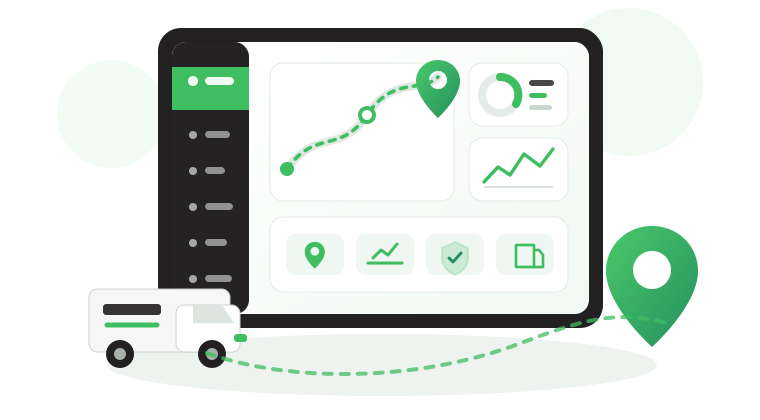

Truck Fleet Management in the GCC: Why Weight Monitoring Matters

A truck leaves a loading site looking ready for dispatch, but one axle is overloaded. The driver does not know it, operations cannot see it, and the compliance team only discovers the issue after a roadside check, customer delay, or safety incident. For heavy-vehicle operators, this is where truck fleet management moves from routine coordination to real business risk.
This guide explains how weight monitoring helps B2B fleets in the UAE, the wider GCC, and global operations connect load visibility with fleet compliance management, fleet safety management, and fleet risk management. It also shows how we at Safee support truck fleets.
What does weight monitoring mean in truck fleet management?
In truck fleet management, weight monitoring means using onboard sensors and telematics to understand how much load a truck carries, how that load is distributed, and whether the vehicle is operating within approved limits. The data becomes useful when it is connected to Live Vehicle Tracking, trip history, alerts, driver assignments, and fleet reports rather than viewed as an isolated sensor reading.
A practical weight monitoring workflow usually covers:
- Location context to know where a weight event happened.
- Load distribution insight to reduce instability and mechanical stress.
- Axle load monitoring to identify overloaded or unevenly loaded axles.
- Total vehicle weight visibility for the truck or truck-trailer combination.
- Alert ownership so the right person responds before the truck continues.
- Historical reports for internal review, audit preparation, and incident analysis.
Safee’s Weight Monitoring System supports real-time visibility into vehicle and axle loads, helping fleet teams bring weight data into the wider fleet management environment.
Why is vehicle weight a truck fleet management KPI in the GCC?
Vehicle weight becomes a key performance indicator when it is tracked consistently against internal policy, route requirements, vehicle configuration, loading practices, and regulatory expectations. This is especially relevant for GCC fleets operating in logistics, construction, oil and gas, cold chain, municipal services, heavy transport, and cross-border routes.
Weight is not only a technical value. It affects safety, tire and suspension wear, braking distance, fuel use, load stability, customer delivery commitments, and the ability to document what happened during an inspection or incident.
Fleet managers, safety leads, and compliance officers can use weight as a KPI by tracking:
- Trips started above internal or legal weight thresholds.
- Vehicles that repeatedly approach maximum load limits.
- Axle imbalance events by depot, route, customer, or vehicle type.
- Loading sites associated with recurring overweight exceptions.
- Alerts that were acknowledged, escalated, or ignored.
- Weight trends by vehicle, trailer, region, or operation.
The better question is not only, “How heavy was the truck?” It is, “How often does weight create risk, and how fast does the operation respond?”
Also read: Weight Monitoring System in Safee: Setup, Alerts & Reports
Why does weight matter for fleet compliance management?
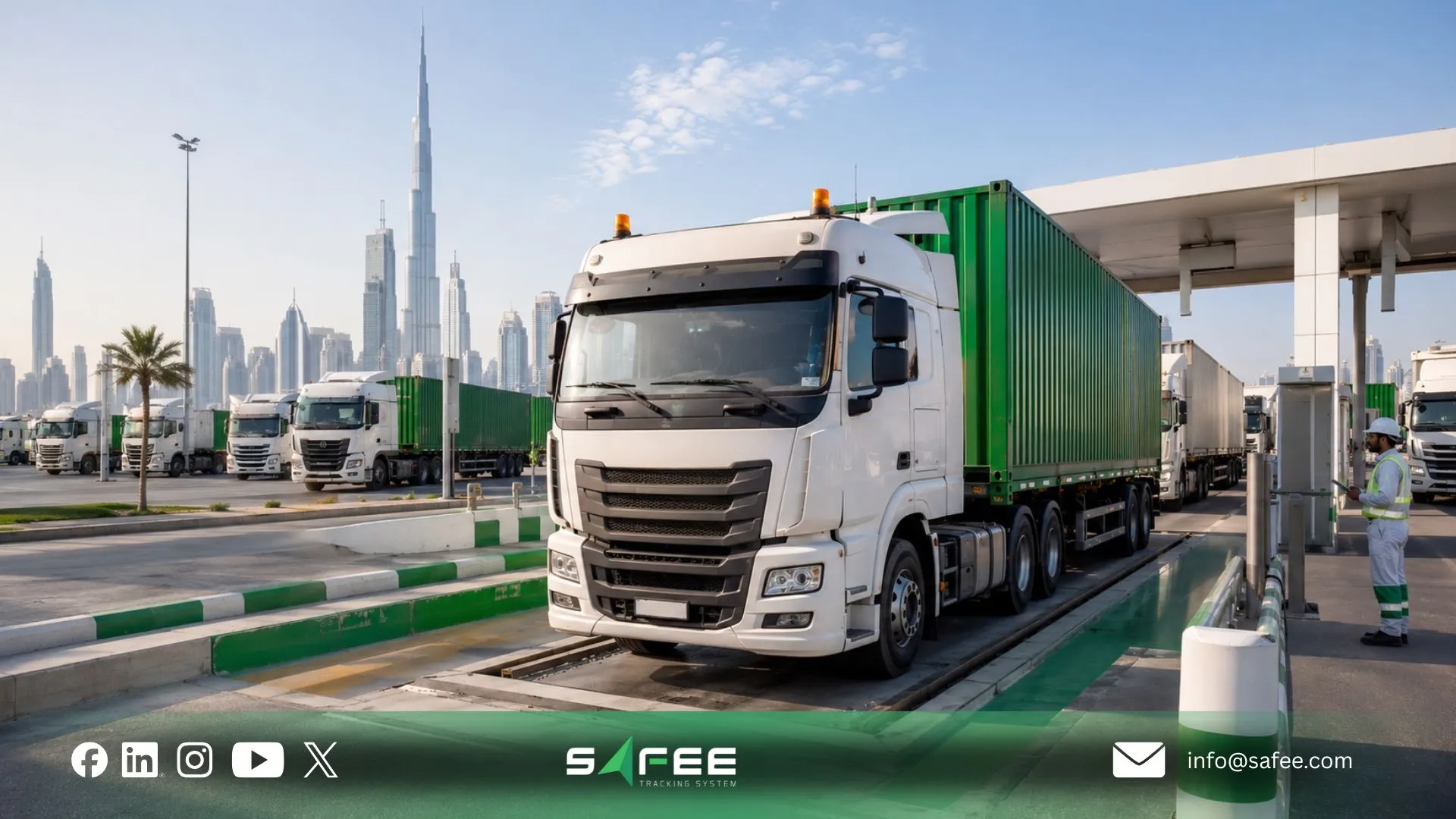
Weight sits at the center of fleet compliance management because overloaded trucks can damage roads, increase stopping distance, affect steering stability, create inspection exposure, and increase the severity of incidents. Governments and road authorities use weight rules to protect infrastructure, regulate heavy transport, and create accountability across operators, loading sites, and drivers.
Because fleet management regulations differ by country and authority, operators should verify the rules that apply to each vehicle group and route. A truck fleet management system cannot replace legal review, but it can help operationalize the rules by turning weight limits into measurable alerts, reports, and follow-up workflows.
Stakeholder | What weight monitoring supports | Evidence to keep |
Compliance officer | Proof that load controls, alerts, and reviews exist. | Weight reports, alert logs, trip history, corrective actions |
Fleet manager | Better dispatch decisions and vehicle utilization. | Vehicle-level trends, exception summaries, depot reports |
Safety lead | Reduced exposure to unsafe load distribution. | Overload alerts, axle imbalance events, investigation notes |
Operations team | Faster decisions before the truck leaves the loading area. | Live dashboard readings, route context, alert acknowledgements |
Finance / insurance team | Stronger risk documentation for claims, reviews, and renewals. | Historical reports, incident records, management review notes |
Talk to our experts about mapping your fleet compliance management workflow into weight alerts, user roles, reports, and review routines before rollout.
What Should you verify for fleet management regulations?
Fleet management regulations are not identical across the UAE, Saudi Arabia, Oman, Qatar, Kuwait, Bahrain, and wider international routes. Compliance teams should define which limits apply and how the business will document its response to exceptions.
Key items to verify include:
- Maximum gross vehicle weight limits.
- Axle load limits and trailer-specific rules.
- Road, bridge, port, or municipal restrictions.
- Permit requirements for exceptional or heavy loads.
- Inspection and weighbridge procedures.
- Required driver and vehicle documents.
- Retention periods for weight records and trip evidence.
- Responsibilities of the operator, shipper, driver, and loading site.
- Evidence required to dispute a violation or support an internal investigation.
Operator Priorities: Fleet Risk Management and Insurance Reviews
For operators, weight monitoring is also a fleet risk management tool. Overloading can contribute to tire stress, suspension wear, braking issues, load instability, vehicle downtime, damaged cargo, claims, and reputation risk. A fleet that can show how it detects and escalates load exceptions is in a stronger position than a fleet that only reacts after problems occur.
Weight records can support internal risk reviews by showing which sites, routes, cargo types, vehicles, or contractors create repeated exceptions. This does not guarantee lower insurance premiums, but it can give risk teams clearer evidence of active control and management follow-up.
Shared wins for fleet safety management
Weight monitoring strengthens fleet safety management because it makes hidden load-related hazards visible before trucks continue on the road. A vehicle may appear ready to move, while the data shows an overloaded axle, uneven distribution, or a load close to the legal threshold.
The shared wins include safer dispatch decisions, better loading-site discipline, fewer avoidable roadside surprises, clearer driver accountability, stronger investigation records, and better cooperation between operations, HSE, and compliance teams.
For example, if most overload alerts come from one depot, the issue may not be individual driver behavior. It may be a loading procedure, supervision gap, equipment issue, or customer-specific cargo pattern. That is how truck fleet management turns weight data into operational improvement.
How to monitor truck weight in modern truck fleet management?
Modern truck fleet management should treat weight monitoring as a connected workflow. The goal is not to collect readings only. The goal is to help the team decide whether to stop dispatch, rebalance the load, notify a supervisor, document an exception, or review a recurring risk pattern.
Here is a practical workflow includes:
- Define vehicle types, axle configurations, trailer types, and applicable weight rules.
- Select suitable onboard sensors for the operating model.
- Map sensors correctly to axles, trailers, and vehicle profiles.
- Configure thresholds based on policy and local requirements.
- Assign alert recipients by role, region, depot, or customer.
- Connect weight events with GPS location and trip history.
- Review reports on a defined cadence.
- Use findings for driver coaching, loading-site improvement, compliance evidence, and route planning.
Onboard sensors for fleet compliance management reporting
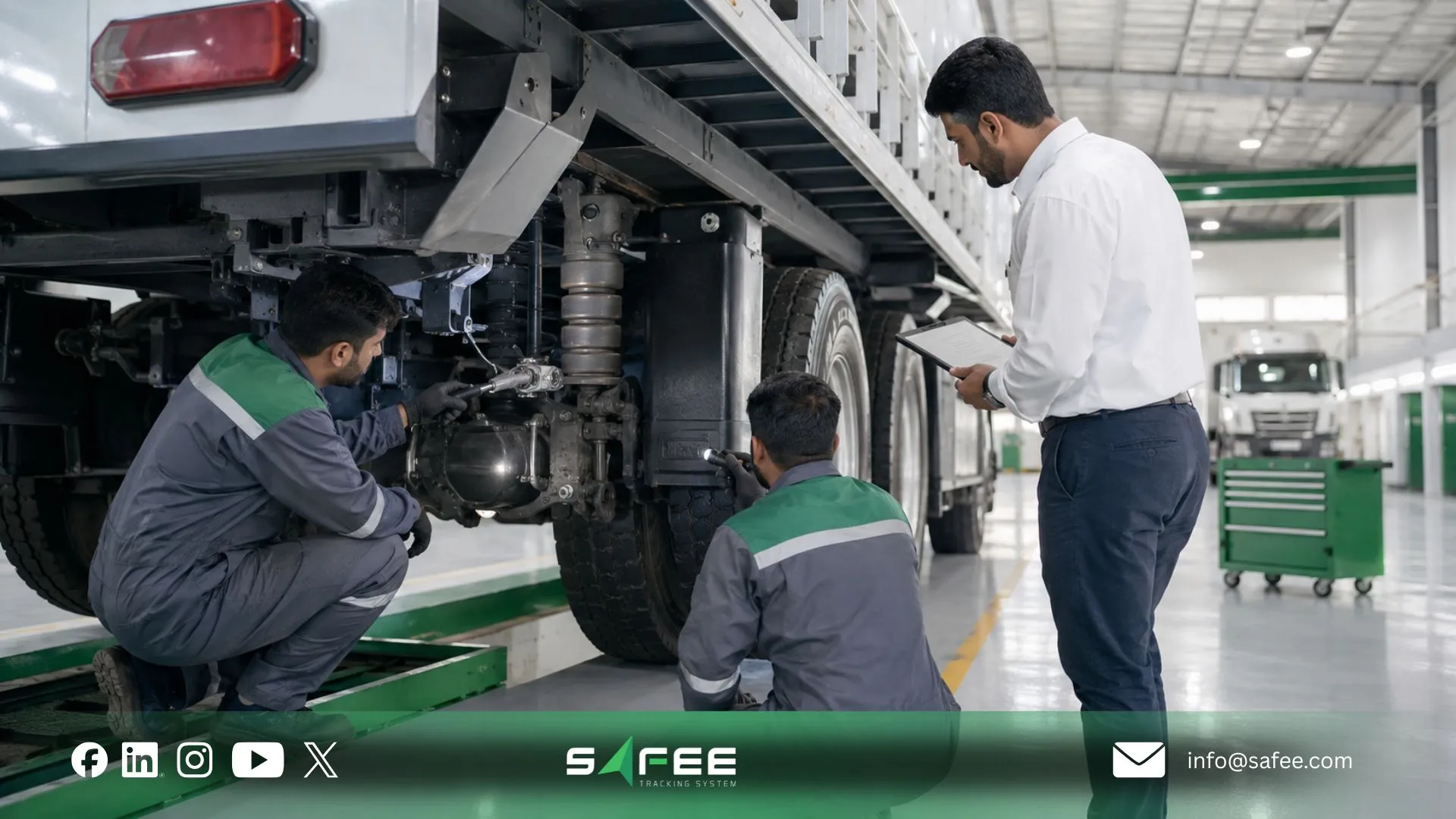
Onboard sensors are the foundation of reliable fleet compliance management reporting. They convert load conditions into data that the fleet platform can display, alert on, and store. Depending on the vehicle and configuration, sensors may connect to axles, suspension systems, trailers, or load-related measurement points.
Safee supports real-time weight monitoring through sensor options such as Analog, ROADEK, and KIMAX within its advanced module environment. On the Safee platform, weight sensors sit alongside live tracking, alerts, reporting, maintenance, and other fleet control tools.
Before deployment, fleet teams should confirm:
- Which vehicle types need weight monitoring.
- Whether the focus is axle load, total vehicle weight, trailer weight, or all three.
- How calibration and validation will be handled.
- Which teams own exceptions: dispatch, HSE, compliance, operations, or site supervisors.
- Whether records need to be exported for audits, customers, insurers, or internal reviews.
- How weight data should connect with maintenance, incident review, and loading-site control.
Real-time alerts that strengthen fleet risk management
Real-time alerts make weight monitoring actionable. Without alerts, weight data may be discovered after the trip is complete. With Alarms and Alerts, the team can respond while the vehicle is still at the loading area, depot, checkpoint, or route stage.
Useful weight-related alerts may include:
- Total vehicle weight exceeds a configured threshold.
- Axle load exceeds the approved limit.
- Load imbalance is detected.
- Trailer weight changes unexpectedly.
- Weight reading changes outside approved loading zones.
- Repeated overweight events come from the same site or customer.
- A truck starts a trip while above internal policy limits.
- An alert remains unacknowledged beyond the escalation rule.
The key is governance. Every alert should have an owner, priority, escalation path, and review process. Too many alerts create noise. Too few alerts create blind spots. A strong fleet safety management team tunes thresholds and reviews whether alerts are preventing risk or simply recording it.
Ask Safee to help configure weight alerts by vehicle type, depot, route, and compliance responsibility so your team receives the right signal at the right time.
Automated logs for fleet management regulations and audits
Automated logs help turn fleet management regulations into a reviewable operating record. Safee’s Fleet Reporting can support recurring reports, exception summaries, and data exports that help teams review vehicle activity without relying on screenshots, memory, or scattered spreadsheets.
Useful audit records may include:
- Vehicle ID and trailer ID.
- Driver assignment.
- Time and location of the weight event.
- Axle load and total weight readings.
- Alert generated and alert recipients.
- Acknowledgement time.
- Corrective action taken.
- Trip history before and after the event.
- Exported report for compliance review.
For compliance officers, the goal is not to create more paperwork. The goal is to create a clean evidence trail that supports audits, investigations, customer reviews, and internal accountability.
Also read: Fleet Monitoring is one of the Advanced Capabilities in Safee.

Why choose Safee for truck fleet management weight monitoring?
Truck weight data only becomes valuable when it reaches the people who can act on it. That is why Safee connects weight monitoring with tracking, alerts, reporting, sensors, user roles, and operational workflows instead of leaving weight data as a separate screen.
Our Weight Monitoring System gives fleets real-time visibility into axle loads and total vehicle weight. When connected with our essential modules, especially Live Vehicle Tracking, Fleet Reporting, and Alarms and Alerts, the result is a stronger truck fleet management workflow for compliance, safety, and operational control.
Compliance-first truck fleet management for GCC and global operations
Regional truck operations often involve cross-border routes, heavy cargo, mixed vehicle types, customer-specific loading rules, municipal requirements, port or site access rules, and internal HSE standards. A compliance-first truck fleet management approach helps teams convert those requirements into daily controls.
Safee can support this approach by helping fleets connect:
- Vehicle tracking and trip history.
- Weight monitoring and sensor data.
- Alerts and escalation workflows.
- Fleet reporting and audit records.
- Driver and vehicle accountability.
- Management dashboards for decision-makers.
- Regional compliance workflows where integrations apply.
For GCC fleets and global operators, the practical value is workflow alignment. A fleet manager can see where the truck is. A safety lead can review whether the load creates risk. A compliance officer can confirm whether alerts, reports, and corrective actions support policy and regulatory expectations.
Lower risk, stronger fleet safety management, clearer evidence
The reason to monitor truck weight is not only to avoid penalties. It is to build a safer, more controlled, and more defensible operation. Weight monitoring can help teams identify risk earlier, support fleet risk management discussions, improve loading discipline, and create better evidence when an exception occurs.
A practical Safee rollout should cover the full lifecycle: review vehicle types, select sensors, onboard users, configure alerts, set reporting cadence, verify compliance needs, and optimize the workflow after real data starts flowing.
Book a Safee demo to review your truck fleet management setup and identify where weight monitoring can improve load visibility, compliance workflows, fleet risk management, and safer heavy-vehicle operations across the GCC or your wider operating region.
Also read: Distraction Monitoring & Driver Assistance System of Safee Fleet Management Platform
FAQs About Truck Fleet Management and Weight Monitoring
Why do governments care about truck fleet management weight limits?
Governments care about truck weight limits because heavy vehicles affect road safety, infrastructure wear, bridge protection, and enforcement across commercial transport operators. In truck fleet management, weight monitoring helps show that load control is part of the daily workflow, not only a manual check.
How does fleet compliance management cover overweight trucks?
Fleet compliance management covers overweight trucks by defining approved limits, monitoring weight data, creating alerts, assigning responsibility, recording corrective actions, and keeping reports for audits or investigations. The exact rules should always be checked against local fleet management regulations.
Can fleet risk management software detect overloads in real time?
Yes, when connected to suitable onboard sensors and configured alert rules, a fleet system can detect overweight or abnormal load conditions in real time. The value depends on correct sensor setup, calibrated thresholds, alert ownership, and management review.
How do fleet management regulations penalize weight violations?
Fleet management regulations may penalize weight violations through fines, trip delays, inspection actions, permit issues, or operational restrictions, depending on the country, vehicle type, road, and severity of the violation. Fleet teams should verify the applicable rules with the relevant authority or legal advisor.
How does weight monitoring improve fleet safety management?
Weight monitoring improves fleet safety management by helping teams detect overloads, axle imbalance, and abnormal load changes before trucks continue on the road. This supports safer dispatch decisions, better loading-site control, and clearer incident investigation records.
Is Safee suitable for GCC and global truck fleets?
Yes. Safee is a UAE-based fleet technology company serving operators across the GCC and supporting wider international operations. Its platform connects tracking, weight monitoring, alerts, reporting, and fleet workflows for B2B teams that need stronger operational control.
Ready to improve your fleet operations?
Tell us what you would like to improve. A Safee specialist will reply by email.
Usually replies within one business day • No sales spam
Your details are used only to respond to your request. Privacy Policy