Everything You Need to Know About Utilities Fleet Management
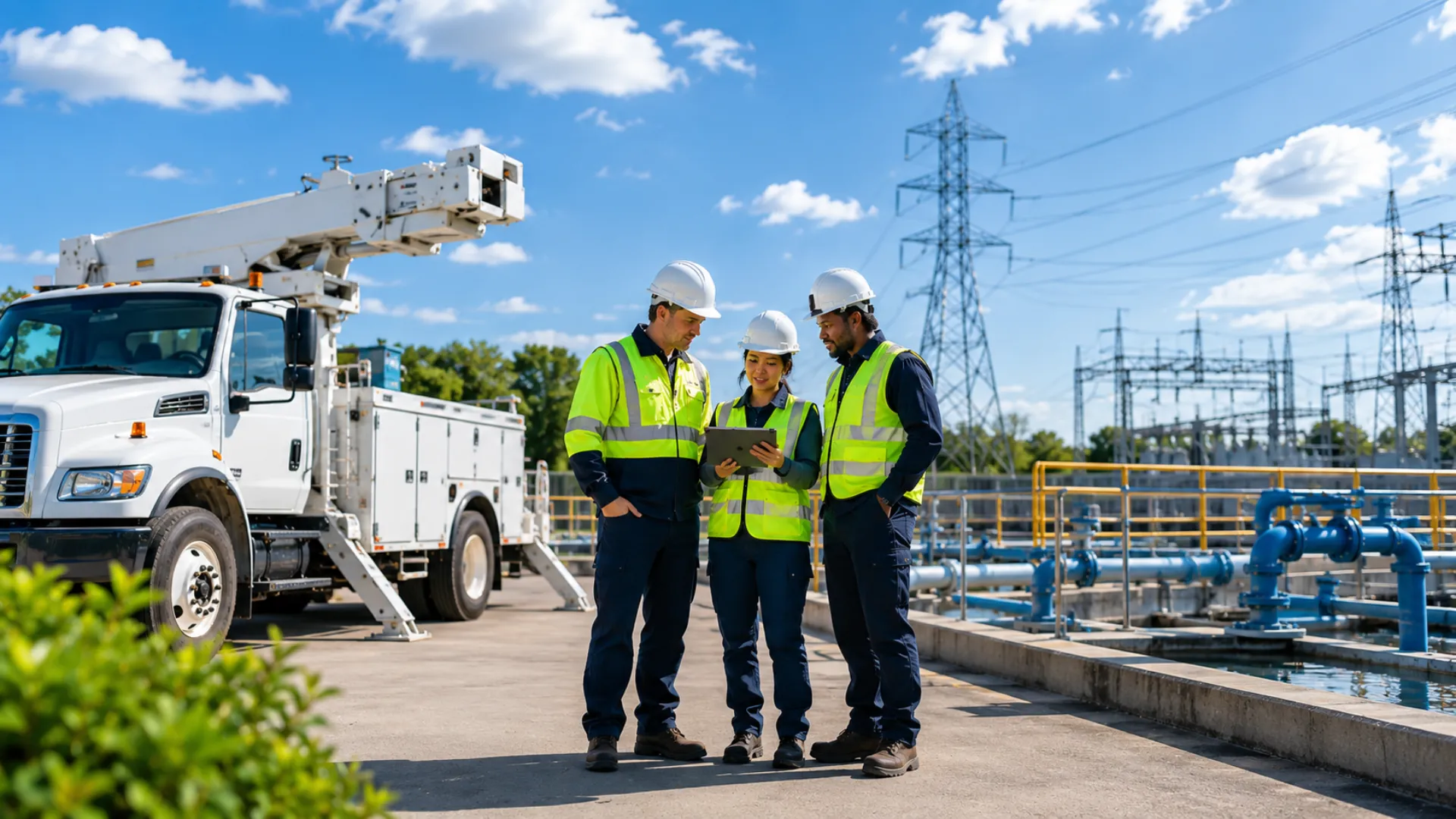
A water tanker can be on the road, a service crew can be assigned, and an emergency vehicle can be available, yet the operation may still feel out of control. Dispatchers chase updates, jobs are delayed, maintenance issues appear late, and managers receive reports after the service problem has already reached the customer. For utilities fleet management in the GCC, basic vehicle tracking is no longer enough.
This guide explains how utility fleet management works for water, energy, public service, and field maintenance fleets. You will learn what utilities fleet management software should control, how to evaluate fleet management software for utility companies, what matters in fleet management software for water tankers, and how we at Safee help teams connect live tracking, dispatch, alerts, maintenance, sensors, reports, and field workflows in one operating model.
What Is utilities fleet management?
Utility fleet management is the process of controlling the vehicles, drivers, crews, assets, routes, maintenance, alerts, and reports used by water, energy, public service, and field maintenance operators. The goal is not only to know where a vehicle is. The goal is to keep essential services moving with better visibility, faster dispatch decisions, and clearer accountability.
For a utility company, every vehicle supports a service promise. A delayed water delivery, a missed maintenance visit, or an unavailable emergency vehicle can affect customers, operations, and public trust. That is why utility fleet management must connect the field with the office through live data, alerts, maintenance workflows, route visibility, and scheduled reports.
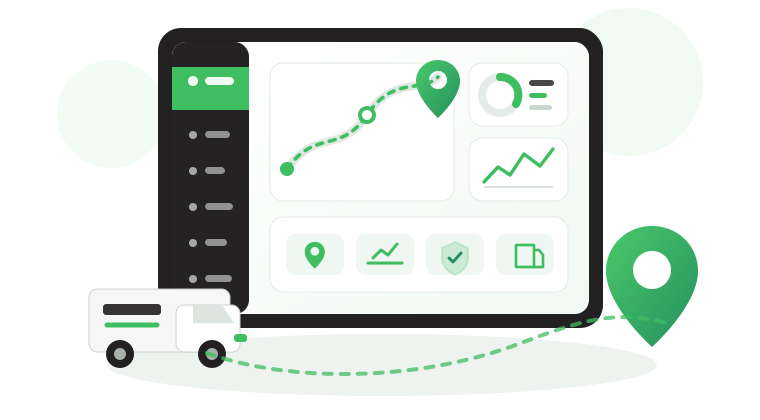
For the core fleet platform view, explore our fleet management system and our Live Vehicle Tracking capabilities.
Utility fleet management vs generic vehicle tracking
Generic tracking answers one question: where is the vehicle? Utility fleet management answers the question that matters more: what should the team do next?
- Generic tracking shows a tanker, van, or service truck on a map.
- Utility fleet management connects location with job status, driver behavior, route exceptions, maintenance, and reporting.
- Generic tracking may show that a vehicle is delayed.
- Utilities fleet management software helps managers review whether the delay came from a route issue, depot waiting time, field crew availability, vehicle condition, or customer-site delay.
This difference is especially important for GCC utility fleets, where vehicles may operate across heat, long routes, remote sites, multi-depot service zones, emergency response areas, industrial facilities, and public-service environments.
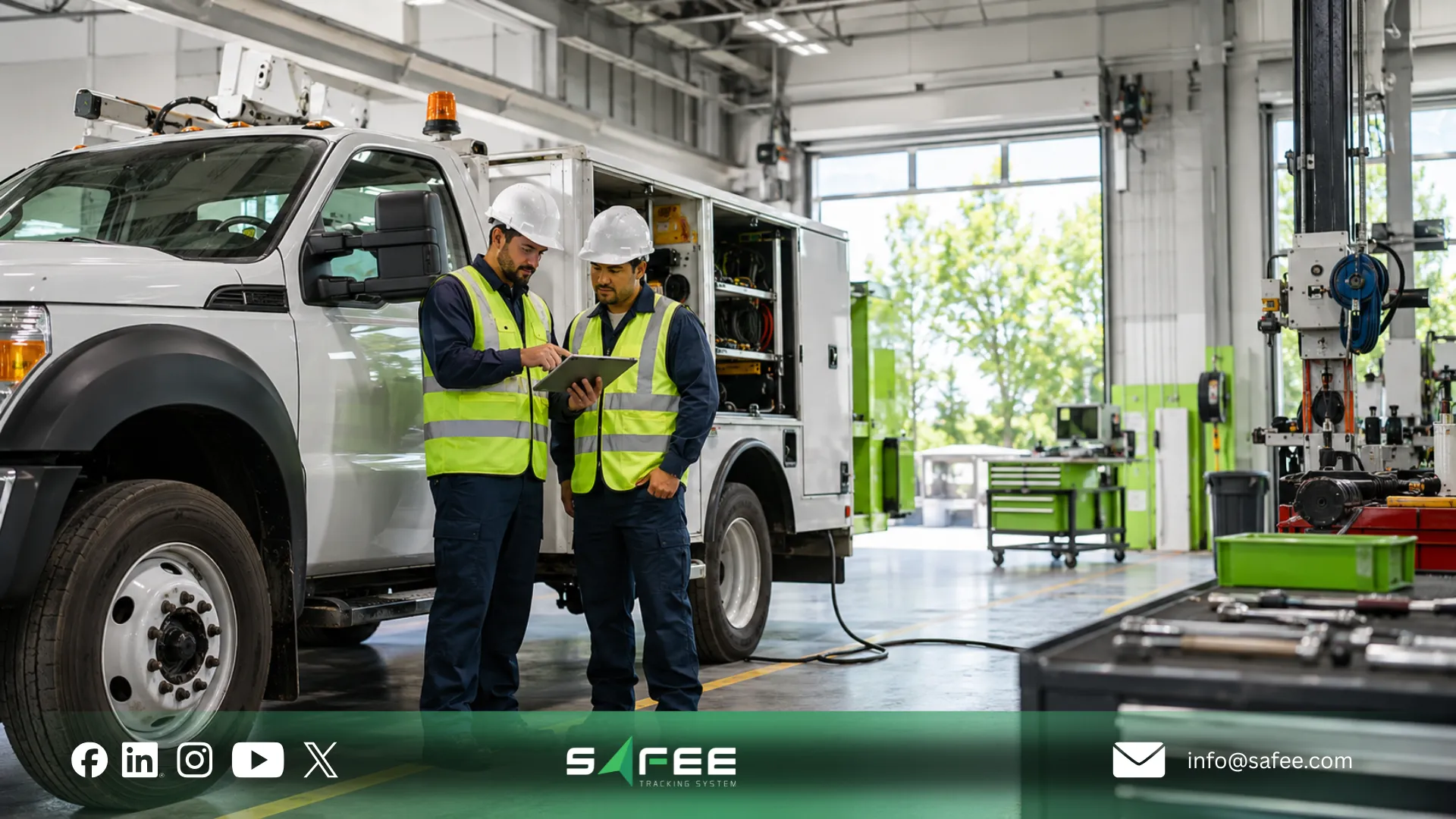
Core features to compare in utilities fleet management software
The right utilities fleet management software should help your team control daily operations, not only collect data. When comparing systems, start with the field problems you need to solve: late updates, unclear route progress, missed maintenance, weak driver accountability, poor service reporting, or limited visibility across depots.
Feature area | What it should help control | Relevant Safee link |
Live visibility | Vehicle location, route progress, geofences, depot activity, trip history, and field status. | Live Vehicle Tracking |
Alerts and escalation | Route deviation, extended stops, unauthorized use, speeding, harsh events, and urgent exceptions. | Alarms and Alerts |
Maintenance | Service schedules, open defects, preventive tasks, inspections, and vehicle readiness. | Maintenance Module |
Driver and crew accountability | Driver assignment, behavior visibility, task ownership, and performance review. | Driver Management |
Reports and governance | Daily operations reports, management summaries, utilization, exceptions, and audit-friendly records. | Fleet Reporting and Fleet Control |
Specialized sensors | Water tanker visibility, temperature, humidity, weight, fuel, cold chain, or asset-related signals where configured. |
For more details about how features will help you, explore all our solutions, including Essential Modules, Advanced Modules, and Added Value Modules
Here is a short explanation of how every feature mentioned above will help your fleet
Live visibility for utility vehicles and crews
Dispatchers should not need to call crews all day to understand field status. Live visibility should show vehicle location, trip activity, geofence entry and exit, route progress, stops, and delays in a view that supervisors can act on.
You can review this workflow through Live Vehicle Tracking where the module fits the operating model.
Alerts that create action, not noise
Utility teams need alerts that are assigned to the right person. A route deviation may belong to dispatch. A speeding event may belong to HSE. A service alert may belong to maintenance. The workflow should define who receives each alert, how fast action is expected, and how closure is recorded.
Review this feature through Alarms and Alerts where the module fits the operating model.
Maintenance for service reliability
Maintenance is not only a workshop issue in utility fleets. If a tanker or service truck is unavailable, deliveries and repair jobs may be delayed. A useful system should help teams schedule maintenance, track open defects, receive service reminders, and review repeat issues by vehicle, depot, or asset type.
Explore our Maintenance Module where the module fits the operating model.
Reports for operations and leadership
Reports should show whether vehicles, routes, crews, and depots are performing well. Utility leaders need scheduled summaries for job activity, route delays, utilization, maintenance status, driver behavior, and recurring exceptions.
Safee users can review this workflow through Fleet Reporting where the module fits the operating model.
However, if you are not sure which modules your utility fleet needs first? Talk to us about matching live tracking, alerts, maintenance, reporting, and sensor workflows to your real vehicles, depots, crews, and service zones.
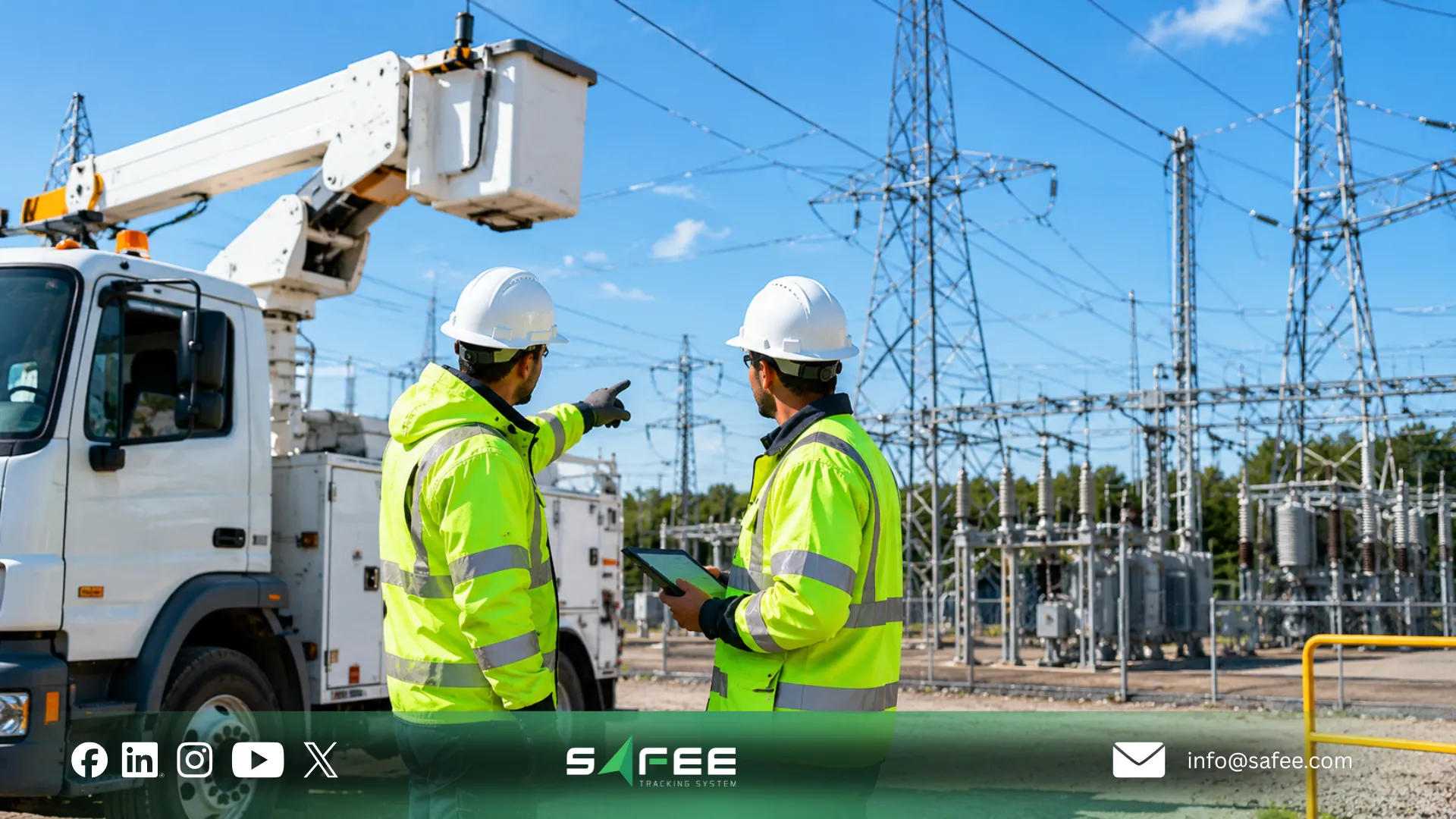
What to Control water tank fleet management?
Fleet management software for water tankers should help teams control the full delivery cycle: dispatch, depot activity, route progress, delivery visibility, tanker utilization, driver behavior, and maintenance readiness. The value is not only seeing the tanker on the map; it is knowing whether the delivery workflow is moving as planned.
- Track tanker location, depot visits, filling points, delivery zones, and route progress.
- Use geofences around depots, water filling points, customer areas, restricted zones, and service regions.
- Review route deviation, extended stops, idle time, and repeated delivery delays.
- Connect maintenance schedules with tanker readiness and repeated vehicle issues.
- Use reports to compare route performance, depot activity, utilization, and delivery exceptions.
- Evaluate tanker-specific sensors only after confirming hardware compatibility, calibration needs, data frequency, and reporting format.
For fleet management software for water tankers, the key question is not whether the platform has a long feature list. The question is whether the system can support the actual tanker workflow: where water is filled, how deliveries are dispatched, how exceptions are flagged, and how managers review service performance.
For sensor-heavy operations, review our fleet management sensors guide and our Advanced Modules to evaluate which data sources may be relevant to your tanker or utility fleet.
How to choose fleet management software for utility companies?
The best fleet management software for utility companies is the one that matches the operating model, not the one with the most features. Start by mapping how work moves from request to dispatch to field completion to management review.
Evaluation area | What to check | Why it matters |
Fleet structure | Vehicle types, tankers, vans, field trucks, depots, crews, assets, and service zones. | The system must reflect real utility operations. |
Dispatch workflow | Job assignment, nearest suitable vehicle, route sequencing, and field crew status. | Improves response time and service coordination. |
Water tanker needs | Tanker routes, filling points, depot activity, delivery records, and sensor requirements where relevant. | Supports water tank fleet management without forcing a generic workflow. |
Maintenance workflow | Service intervals, inspection checks, open defects, and vehicle readiness rules. | Reduces avoidable downtime and improves planning. |
Reporting | Daily dashboards, weekly reviews, exception reports, and management summaries. | Turns field activity into decisions. |
User access | Dispatch, maintenance, supervisors, field technicians, managers, and leadership roles. | Protects data and supports accountability. |
Integrations | Customer service, ERP, maintenance, work orders, or data export needs. | Reduces duplicate work and scattered records. |
Deployment support | Data setup, device rollout, alert configuration, report setup, user training, and post-launch review. | Improves adoption after purchase. |
Before choosing a platform, clarify your vehicle count, tanker types, depots, operating regions, required sensors, reporting cadence, user roles, internal audit needs, and integration requirements. This prevents buying software that looks strong in a demo but does not fit the daily pressure of utility operations.
Need an evaluation framework? Ask our experts for a utilities fleet management consultation to review your vehicle types, service zones, routes, tanker workflows, reporting needs, and integration requirements before deployment.
Best water tank fleet management software
The best water tank fleet management software is not always the most complex platform. It is the platform that gives water tanker operators enough control to reduce blind spots, improve dispatch discipline, keep tanker maintenance visible, and create reports that managers can actually use.
- Route control: Can dispatchers see route progress, delays, long stops, and depot activity?
- Tanker visibility: Can the platform connect tracking, geofences, tanker-specific data, and delivery records where configured?
- Maintenance readiness: Can maintenance teams track service tasks, open issues, and vehicle readiness before assignment?
- Reporting: Can managers review performance by vehicle, driver, depot, route, or service zone?
- Governance: Can user roles, alerts, and reports be configured around the team’s real responsibilities?
- Scalability: Can the setup grow from one depot to multi-depot operations without rebuilding the workflow?
For water tank fleet management, treat sensor-based monitoring carefully. Fill level or liquid-related visibility depends on compatible hardware, installation, calibration, and how the data is displayed in dashboards and reports. A provider should help you validate the workflow before deployment.
Why choose Safee for utilities fleet management?
At Safee, we support utility fleet teams that need more than basic tracking. From our UAE base, we help B2B fleets in the GCC and global markets connect live visibility, alerts, maintenance workflows, driver management, reports, sensors, and field operations into a practical control model.
- Live Vehicle Tracking: Monitor utility vehicles, water tankers, depots, geofences, trip activity, and route status.
- Alarms and Alerts: Assign route, safety, maintenance, geofence, and operational exceptions to the right team.
- Fleet Reporting: Create scheduled reports for operations, supervisors, maintenance, HSE, and leadership.
- Maintenance Module: Track service schedules, open defects, maintenance alerts, and readiness workflows.
- Driver Management: Connect drivers to vehicles, behavior events, assignments, and review workflows.
- Advanced Modules: Support specialized utility needs such as TPMS, weight, temperature, humidity, cold chain, fuel, and other sensor workflows where configured.
- Mobile App: Support managers and supervisors who need fleet visibility away from the office.
For utility operators, the strongest value comes when the platform is configured around the actual operation: depot structure, vehicle groups, crew roles, service zones, alert rules, report cadence, and integration needs. That is how utilities fleet management moves from reactive follow-up to controlled daily execution.
A practical rollout plan for utilities fleet management software
A successful rollout should be treated as an operations project, not only a device installation. Set the workflow before the system goes live.
- Audit current gaps: vehicles, routes, depots, field crews, maintenance issues, reporting gaps, customer delays, and manual workarounds.
- Define operating workflows: dispatch rules, alert ownership, maintenance escalation, job status, and reporting cadence.
- Select modules and sensors: live tracking, alerts, maintenance, reporting, driver management, tanker-related sensors, or specialized modules where relevant.
- Clean master data: vehicles, drivers, depots, service zones, asset groups, routes, users, and report recipients.
- Pilot with selected vehicles or depots: test alerts, dashboards, reports, user roles, and field adoption before scaling.
- Review and improve monthly: compare route delays, utilization, downtime, alert closure, maintenance performance, and service reliability.
Book a Safee demo to build a utilities fleet management workflow around your water tankers, energy service vehicles, field crews, depots, alerts, maintenance needs, reports, and integration requirements.
FAQs about utilities fleet management
What Is Utilities Fleet Management Software?
Utilities fleet management software helps water, energy, public service, and field maintenance operators track vehicles, manage routes, coordinate crews, monitor driver behavior, plan maintenance, receive alerts, and generate reports from one system.
How is utility fleet management different from standard vehicle tracking?
Standard tracking shows vehicle location. Utility fleet management connects location with dispatch decisions, job status, maintenance, alerts, driver accountability, reports, and governance across depots, routes, and service zones.
What features should fleet management software for utility companies include?
Fleet management software for utility companies should include live tracking, geofencing, dispatch visibility, maintenance workflows, driver behavior monitoring, alerts, fleet reports, role-based access, mobile visibility, integration readiness, and sensor support where needed.
What should fleet management software for water tankers control?
Fleet management software for water tankers should help control tanker location, depot activity, delivery routes, filling points, route deviations, extended stops, maintenance readiness, driver accountability, and delivery or service reporting. Fill level monitoring depends on compatible sensors and calibrated deployment.
What is the best water tank fleet management software?
The best water tank fleet management software is the platform that fits your tanker routes, depots, vehicle types, sensor requirements, maintenance workflow, reports, user roles, and integration environment. Safee is a strong option for teams that need tracking, alerts, reporting, maintenance, and sensor-ready workflows in one platform.
Can utilities fleet management support GCC and global operations?
Yes. A utilities fleet management setup can support GCC and global operations when it is configured around local routes, depots, service zones, reporting needs, user roles, sensor requirements, and verified compliance-related workflows for each operating market.
Ready to improve your fleet operations?
Tell us what you would like to improve. A Safee specialist will reply by email.
Usually replies within one business day • No sales spam
Your details are used only to respond to your request. Privacy Policy