
Which School Bus Fleet Management Features Protect Students?
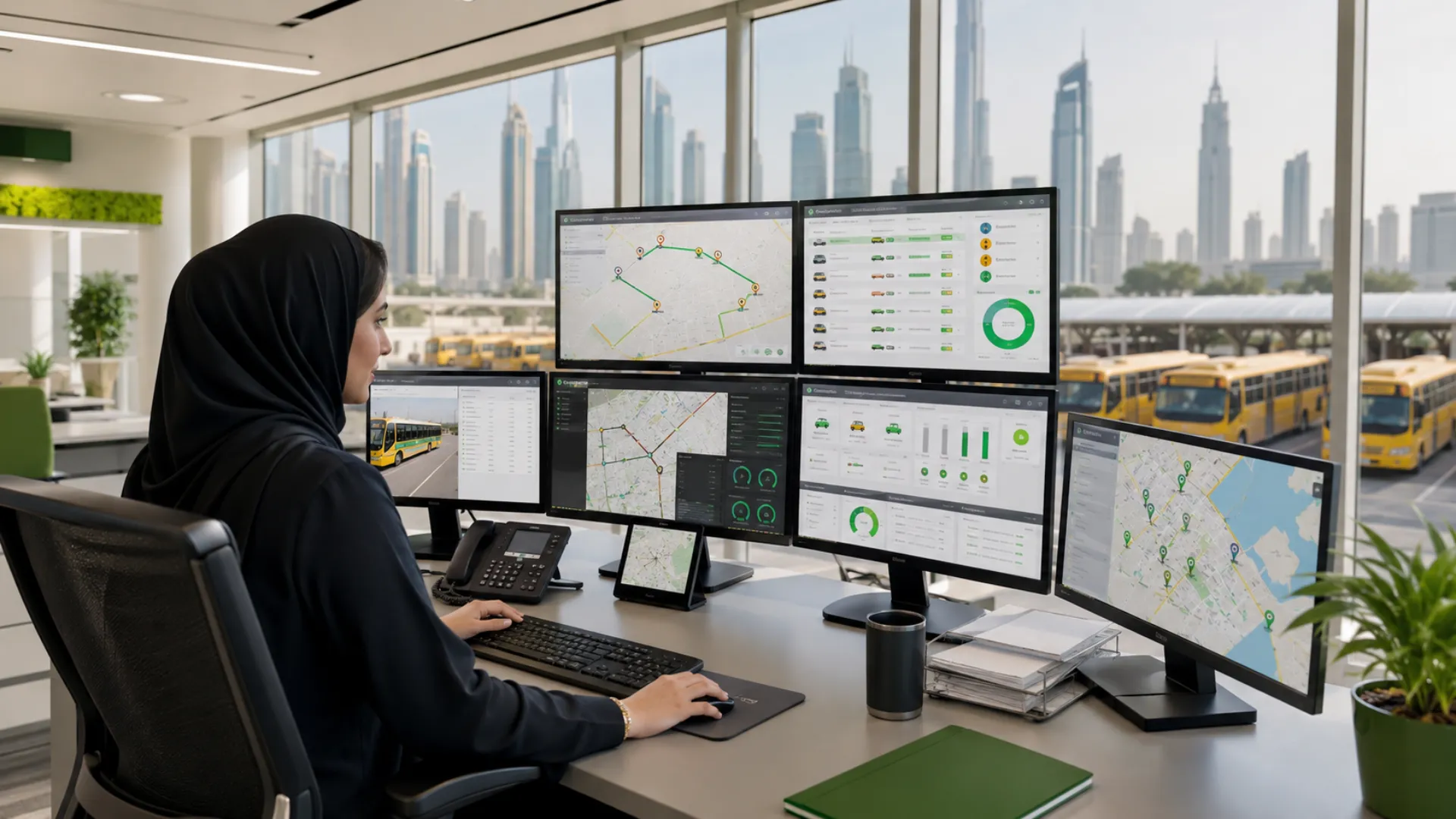
A school bus operation can look organized on paper and still feel difficult to control during pickup and drop-off. Parents call for updates, dispatchers chase drivers, schools ask for proof, and managers only discover route delays, missed stops, or unsafe driving after the trip is already over. For GCC schools and transport contractors, school bus fleet management is not just about tracking buses; it is about protecting students, controlling routes, and keeping every stakeholder informed.
This guide explains how school bus fleet management supports student safety, parent communication, route visibility, driver accountability, and contractor reporting. It also covers employee transportation fleet management, student transportation fleet management, the fleet management business model behind scalable school transport, and how Safee can help.
What is school bus fleet management?
School bus fleet management is the process of monitoring, controlling, and improving school transport operations through live vehicle tracking, route management, driver accountability, student transport records, alerts, maintenance follow-up, and reporting. For schools, campuses, and transport contractors, the value is not only knowing where a bus is. The value is knowing whether the route is on plan, whether the driver follows safety rules, whether exceptions are handled, and whether the school can review what happened after the trip.
In daily operations, a strong system should help answer practical questions: Did the bus leave on time? Did it follow the approved route? Were stops completed? Which alerts need action? Which vehicle needs maintenance? What report should be shared with the school, contractor, or operations team?
Our Live Vehicle Tracking can support real-time bus visibility, geofencing, alarm status, and fleet performance data, while Fleet Reporting helps teams organize trip, safety, and operational review records.
The importance of student transportation fleet management
Student transportation fleet management should be built around one priority: students must move safely, routes must be controlled, and the school must have clear records when questions arise. A bus route involves more than a vehicle and a driver. It involves students, parents, dispatchers, schools, escorts, supervisors, and sometimes external contractors.
A practical student transport workflow should support:
- Live school bus location for authorized users.
- Approved routes, geofences, pickup points, and drop-off zones.
- Student boarding and alighting records where the workflow is configured.
- Driver identity and driver behavior monitoring.
- Alerts for speeding, route deviation, long stops, emergency events, or unauthorized movement.
- Maintenance reminders for safety-critical vehicles.
- Trip history and reports for school administrators, contractors, and operations leaders.
For identity and accountability, link your driver records with vehicle use through our Driver Management and Driver Identification System. For route approval and trip monitoring, our Journey Management System can help teams structure school runs from planning to post-trip review.
Also read: Driver Identification System
Employee transportation fleet management for staff, campuses, and industrial sites
Employee transportation fleet management uses many of the same controls as school transport, but the passenger profile and operating priorities are different. Staff shuttles, campus buses, labor transport, and industrial site routes usually focus on shift punctuality, site access, route discipline, HSE visibility, and contractor performance.
This matters for companies running combined school and staff transport because one platform may need different workflows for each passenger group. School routes may need parent communication and student records, while employee routes may need shift schedules, site entry logs, contractor reporting, and HSE review.
- Use separate route groups for schools, campuses, staff housing, and industrial sites.
- Configure different alert priorities for student transport and employee shuttles.
- Limit data access by role using an administration workflow.
- Review service quality by route, driver, vehicle, and client contract.
- Use mobile visibility for supervisors who manage trips away from the control room.
Our Administration Panel helps administrators manage sites, vehicles, drivers, and permissions. Also lots of our tracking features can support mobile oversight and field coordination where configured.
Also read: Safee Driver App for Smarter, Safer Fleet Management
A fleet management business process for school bus operators
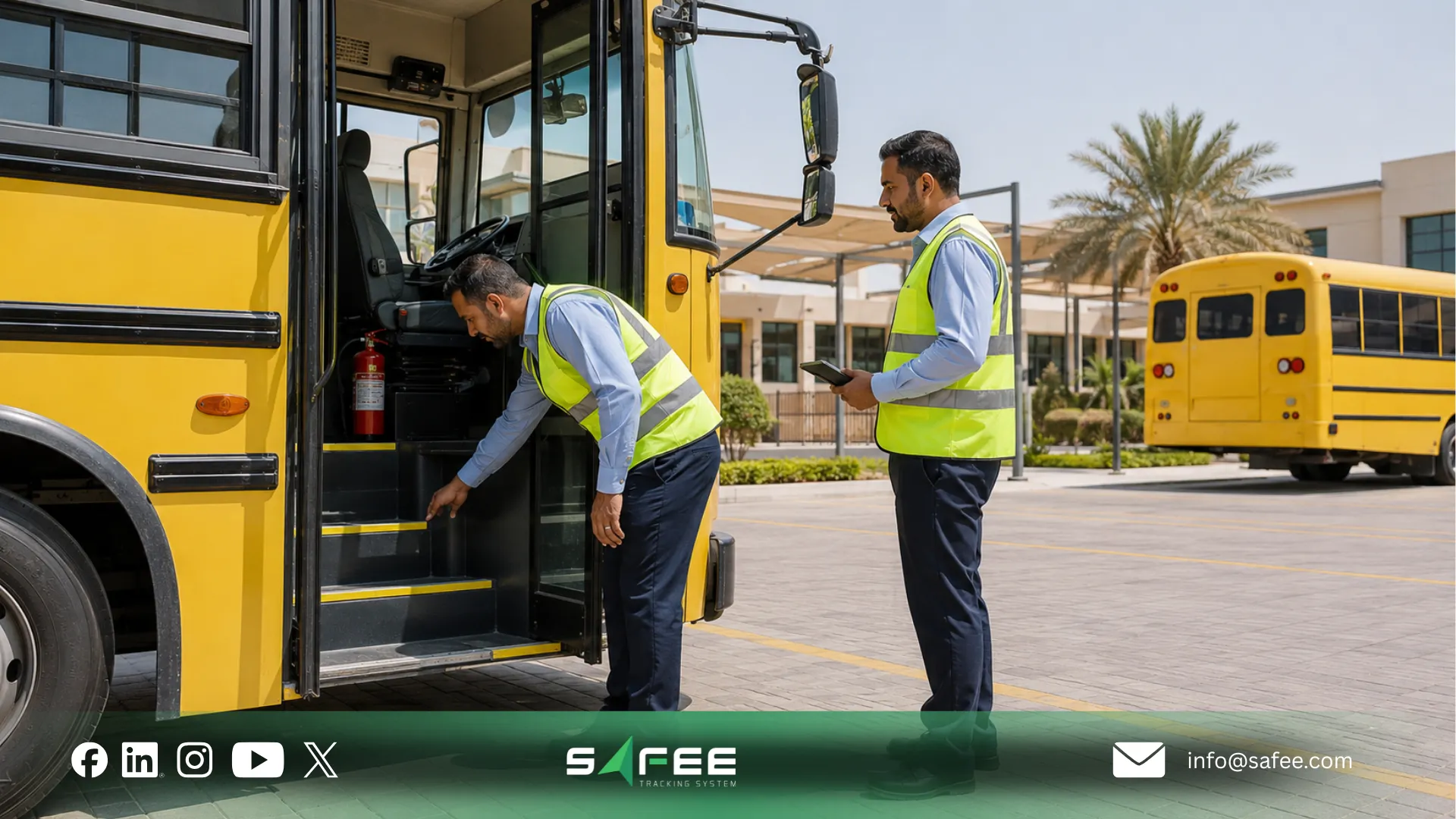
A school transport operation needs more than buses and drivers. It needs a fleet management business process that defines how routes are created, how trips are approved, who monitors live movement, who receives alerts, how incidents are documented, and how reports are shared.
This process becomes especially important for contractors. A scalable fleet management business model depends on repeatable service quality, not manual follow-up. When every new school or campus requires a different manual process, growth becomes difficult to control. When the process is standardized, contractors can show service quality with data.
Business process area | What to define | Why it matters |
Route setup | Approved stops, zones, timing, geofences, escalation owners | Keeps pickup and drop-off predictable |
Driver and vehicle assignment | Driver identity, bus readiness, escort rules, vehicle eligibility | Improves accountability and reduces dispatch errors |
Live monitoring | Who monitors trips and what alerts need immediate action | Helps teams act during the route, not after complaints |
Parent and school communication | ETA, delay, stop confirmation, and approved visibility levels | Reduces uncertainty and repeated calls |
Incident and exception review | How route deviations, missed stops, speed events, or complaints are documented | Creates a record for investigation and improvement |
Reporting cadence | Daily route reports, weekly service review, monthly contractor review | Supports client trust and operational governance |
Building a scalable school transport fleet management business? Contact us to map your route controls, alert owners, reports, and client review workflow.
Core benefits of school bus and employee transportation fleet management
The main benefit is operational certainty. A connected system helps transport teams reduce uncertainty during time-sensitive routes, improve safety follow-up, and give managers clearer evidence when questions arise.
Benefit | School bus use case | Employee transport use case | Useful Safee link |
Live route visibility | Track bus movement during pickup and drop-off | Monitor shuttle route progress and site arrivals | Live Vehicle Tracking |
Alert ownership | Escalate speeding, route deviation, emergency, or long-stop events | Assign alerts to operations, HSE, or contractor managers | Alarms and Alerts |
Driver accountability | Review driver assignment and behavior by route | Monitor repeat driver-risk patterns across shifts | Driver Management |
Mobile response | Enable supervisors to review route status away from a desk | Support mobile oversight for campuses and industrial sites | Mobile App |
Trip and service reporting | Share route history, exceptions, and stop records with school teams | Review punctuality, utilization, and contractor performance | Fleet Reporting |
Maintenance readiness | Keep buses roadworthy before student routes | Reduce shuttle downtime before shift movement | Maintenance Module |
These benefits are strongest when the workflow is configured around the real operation: school routes, employee routes, depots, campuses, student records, parent communication expectations, reporting cadence, and safety policy.
15 safety and control features to compare in school bus fleet management
Use the following checklist to evaluate school bus fleet management platforms. Some features may require specific devices, integrations, or internal approval, so confirm the exact scope before deployment.
- Live bus tracking: Authorized users can monitor bus location, route status, and trip progress.
- Geofencing: Schools can monitor approved routes, school zones, depots, and stop areas.
- Route deviation alerts: Dispatchers can respond when a bus leaves an approved path.
- Driver identity: Driver assignment can be tied to trip records and behavior events.
- Driver behavior alerts: Speeding, harsh braking, harsh acceleration, and idling can be reviewed.
- Emergency alert workflow: Drivers or supervisors can escalate urgent events to assigned users where configured.
- Student check-in: Boarding and alighting records can be supported where devices or integrations are configured.
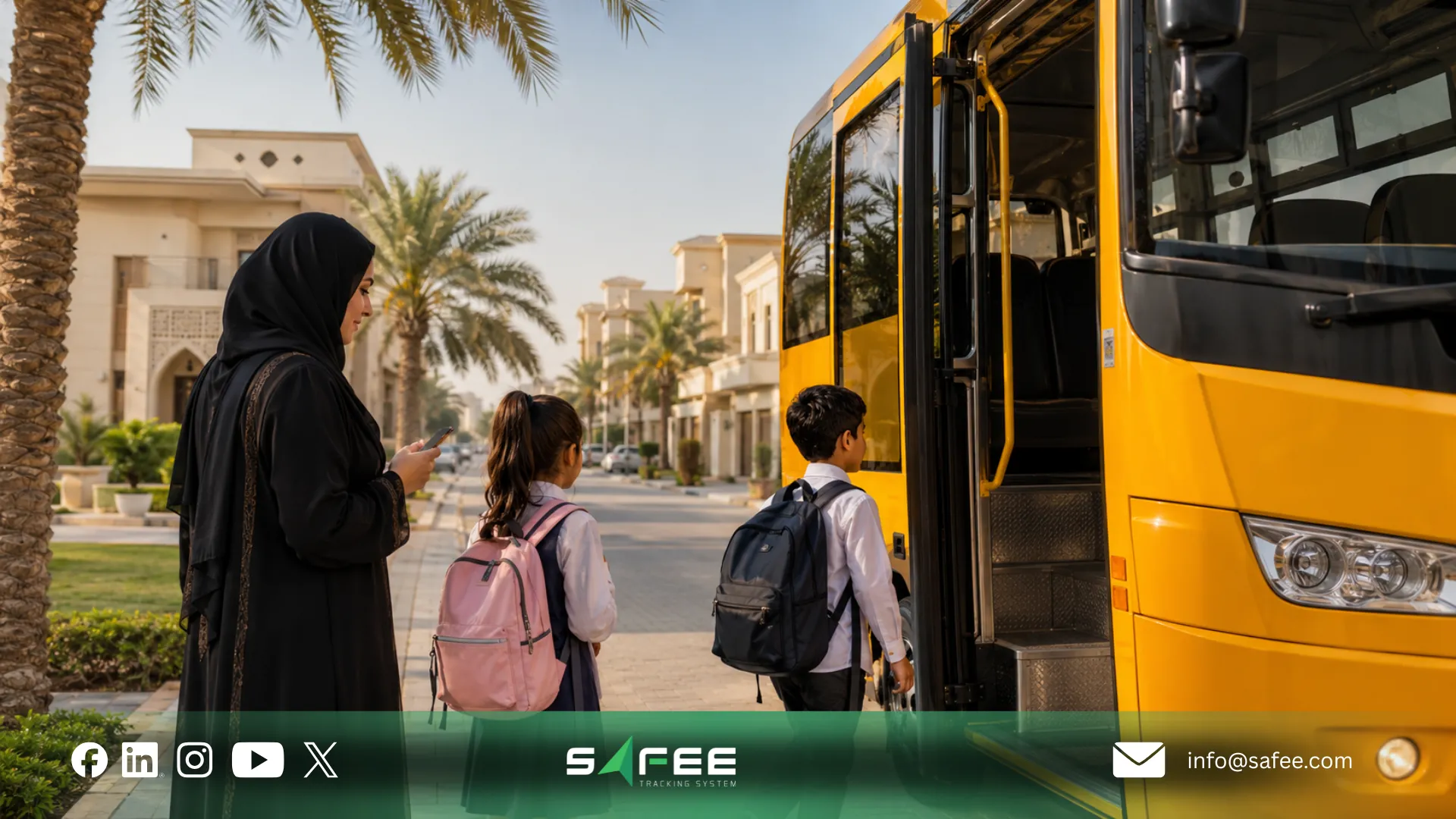
- Parent communication workflow: ETA, delay, or stop status can be connected to approved communication channels where integrated.
- School administrator reporting: Schools can review trip history, route exceptions, and safety events.
- Maintenance readiness: Service schedules and open defects can be visible before route assignment.
- Video review where needed: ViVMS can provide event context for incident review and coaching where configured.
- Mobile supervision: Managers can check fleet status and alerts from mobile devices.
- Role-based access: Parents, dispatchers, school administrators, and contractors should not see the same data.
- Electric bus readiness: EV buses may require battery, charging, and utilization visibility.
- Audit-friendly reports: Trip, alert, driver, and maintenance records support internal review and service improvement.
For the core controls, connect this section with our features of essential modules, like Alarms and Alerts, Fleet Control, added value modules like ViVMS, and advanced modules, including Electric Vehicle Monitoring.
How to choose school bus fleet management software?
The best school bus fleet management setup is not the one with the longest feature list. It is the one that matches your routes, student safety needs, parent communication workflow, contractor model, vehicle types, and reporting responsibilities.
Evaluation area | What to check | Why it matters |
Routes and stops | Approved routes, school stops, geofences, stop timing, route changes | Improves route control and reduces disputes |
Passenger workflow | Student check-in, check-out, parent updates, school visibility | Supports safety and communication |
Driver workflow | Driver identity, behavior events, training records, coaching notes | Improves accountability |
Vehicle readiness | Maintenance schedules, inspections, defects, emergency equipment | Protects uptime and safety readiness |
Access control | Parent, driver, school, contractor, and admin permissions | Protects sensitive data |
Reporting | Trip history, exceptions, SLA reports, route performance, safety reports | Supports governance and client review |
Integrations | School ERP, attendance, parent communication, HR, or contractor systems | Reduces duplicate work |
Rollout support | Route setup, user training, alert configuration, pilot review | Improves adoption and reduces confusion |
Before choosing a provider, ask how the system will be configured for your school routes, employee routes, vehicle groups, user roles, alert policies, and reporting cadence. Also clarify which features are available by default and which require devices, sensors, integrations, or custom workflow setup.
Why choose Safee for school bus fleet management?
At Safee, we support transport teams that need more than vehicle dots on a map. From our UAE base, we help B2B fleets across the GCC and global markets connect live visibility, alerts, driver monitoring, maintenance, mobile access, reports, journey control, and administrative oversight into one practical workflow.
For school bus fleet management, this means Safee can help operators structure the fleet data and workflow behind safer route control, clearer parent or school communication, better driver accountability, and stronger reporting. For employee transportation fleet management, the same platform can support shift routes, site movement, HSE visibility, and contractor review.
- Live Vehicle Tracking for bus location, geofences, trip activity, and route visibility.
- Alarms and Alerts for speeding, route deviation, long stops, emergency events, and operational exceptions.
- Driver Management for driver records, driver behavior review, and accountability.
- Journey Management System for planned routes, trip monitoring, route approval, and post-trip review.
- Fleet Reporting for route, safety, maintenance, and service reports.
- Maintenance Module for service schedules, defect follow-up, and roadworthiness control.
- Administration Panel for sites, vehicles, drivers, and permission management.
- Fleet Control for centralized control and operational oversight.
- Mobile App and Safee Driver App for mobile visibility and field coordination.
- ViVMS for camera-supported safety review where required.
- Advanced Modules for specialized needs such as sensors, EV monitoring, and extended operational visibility.
Implementation plan for school and staff transport fleets
A school bus fleet management rollout should be treated as an operations project, not only a device installation. Start with the route process, then configure the technology around it.
- Audit current routes, stops, vehicles, drivers, escorts, depots, schools, campuses, and reporting gaps.
- Define user roles for parents, drivers, dispatchers, school administrators, contractors, HSE, and management.
- Configure vehicle groups, school routes, employee routes, geofences, pickup points, and drop-off zones.
- Set alert rules for speeding, route deviation, long stops, emergency events, missed stops, and maintenance issues.
- Pilot selected routes before scaling to the full school or employee transport network.
- Train dispatchers, drivers, supervisors, and administrators on what is monitored and how exceptions are handled.
- Review KPIs monthly: route punctuality, repeated alerts, maintenance issues, complaints, missed stops, and report usage.
Need a rollout plan for school buses or staff transport? Book a Safee consultation to align routes, roles, alerts, reports, mobile visibility, and driver workflows before deployment.
FAQs about school bus fleet management
What is school bus fleet management software?
School bus fleet management software helps schools and transport contractors track buses, manage routes, monitor drivers, organize alerts, support student transport workflows, and generate reports from one system.
How does student transportation fleet management improve safety?
Student transportation fleet management improves safety by giving authorized teams visibility into bus location, route adherence, driver behavior, alerts, and trip history. Where configured, it can also support student check-in and check-out workflows, parent communication, and route audit records.
Can school bus fleet management support parent visibility?
Yes, parent visibility can be supported when the transport workflow includes approved communication channels, access controls, and route status data. The setup should limit what each parent can see and align with the school’s privacy and communication policy.
How is employee transportation fleet management different?
Employee transportation fleet management focuses on staff shuttles, shift punctuality, campus movement, site entry, HSE review, and contractor performance. School bus management adds stricter student safety, parent communication, stop control, and student record workflows.
What fleet management business model works best for school transport contractors?
The best fleet management business model is a managed-service model built around route visibility, safety alerts, driver accountability, maintenance readiness, parent or client communication, and transparent reporting. This helps contractors scale service quality across schools, campuses, and staff transport contracts.
Can Safee support school bus and employee transport fleets?
Yes. Safee can support school bus fleet management and employee transportation fleet management by connecting live tracking, alerts, driver management, journey control, maintenance workflows, mobile access, administration, and reporting into one workflow. The final setup depends on routes, vehicle types, user roles, integrations, and reporting needs.

Ready to improve your fleet operations?
Tell us what you would like to improve. A Safee specialist will reply by email.
Usually replies within one business day • No sales spam
Your details are used only to respond to your request. Privacy Policy