
Jeddah Madinati Vehicle Tracking for Waste Fleet: Readiness Guide
A Jeddah Madinati vehicle tracking waste fleet project can look ready on a map while still carrying operational gaps underneath. A truck may be visible in real time, yet its digital identity may not match the contracted asset, the required weight input may be missing, an equipment change may not be reflected in the system, or the team may have no clear owner for a failed transmission. For waste contractors and municipal operations teams, the real challenge is not simply tracking vehicles. It is making sure the administrative record, contracted fleet, installed equipment, and operating data all describe the same operation.
This guide explains how to separate waste hauler registration, operating plans, contractor equipment, and Jeddah Madinati vehicle tracking so each responsibility is reviewed in the right place. It also shows where Safee fits: its public website states that Safee is integrated with Jeddah Amanah requirements for reporting vehicle locations, weights, and statuses to Madinati, while our Waste Management module adds RFID-based collection records, route monitoring, weight visibility, and collection-history reporting for the operating workflow itself.
What does Jeddah municipality Madinati cover?
For a contractor, Jeddah municipality Madinati readiness is easier to understand when the project is divided into three layers instead of treating every requirement as one tracking task:
- Administrative qualification and registration: Balady currently describes its Waste Transporters Qualification Service under the Waste Management (Madinati) product. The service covers transporter registration information such as workforce, vehicles, containers, attachments, municipal review, and electronic issuance of the registration certificate.
- Operating plans and trips: Balady also lists an Operational Plans Service under Waste Management (Madinati), allowing waste transporters to create trips and operating plans for active waste-management contracts.
- Fleet technology and data: Safee publicly describes its Jeddah Amanah/Madinati integration around reporting vehicle location, weight, and status. The fleet team still needs to make sure the correct physical asset, device, sensor, and operating record are connected to that data.
This distinction matters because a fleet can be administratively registered but technically misconfigured, or technically connected while an administrative step is still incomplete. Procurement and operations should therefore review both sides rather than using a live GPS signal as evidence that the whole municipal workflow is complete.
Waste Hauler registration and municipal contractor roles
A practical waste hauler registration review begins with responsibility. Balady’s current Waste Transporters Qualification Service is an authority-side administrative process; a tracking provider does not replace that process. Safee should be assessed as the fleet technology and data layer that supports the contracted operation after the required administrative scope is understood.
For a Jeddah waste project, assign a named owner to each of these areas before rollout:
- Vehicle identity records.
- Operational exception review.
- Company and contract records.
- Operating-plan and trip ownership.
- Tracking device installation and mapping.
- Reporting, evidence retention, and escalation.
- Madinati data transmission for the agreed technical scope.
- Container and project equipment records where applicable.
- Workforce or driver records where required by the applicable process.
- Weight-sensor installation and calibration where weight data is required.
The benefit of this split is practical. When something fails, the team can identify whether the problem belongs to an authority-side application, an operating plan, a vehicle master record, a device, a sensor, the Safee configuration, or the transmission workflow.
If you are preparing a Jeddah municipal waste fleet, contact Safee with the project scope, vehicle list, equipment types, and required data so the technical configuration can be reviewed separately from the authority-side registration process.
Why waste fleet records need more than vehicle locations
Location answers a useful question: Where is the vehicle? Waste operations usually need the next layer of evidence as well.
A fleet manager may need to confirm:
- When was the collection recorded?
- Did the vehicle follow the expected route?
- Which vehicle performed the collection work?
- Which container or collection point was serviced?
- What happened when a pickup was missed, delayed, or disputed?
- Was the collection confirmed rather than only inferred from proximity?
- Can the team reconstruct the operating event later from recorded data?
- What weight information was available at the relevant point in the workflow?
At Safee, our Waste Management module is designed for this broader context. Safee publicly describes RFID-based container identification, real-time collection confirmations, vehicle route monitoring, load-weight visibility, collection-history reporting, and location-aware collection insights.
Our FAQ also mentions a Vehicle-Container History Report and Waste Container Explorer for reviewing container scans, timestamps, locations, recent collection activity, and vehicle-linked history.
A useful waste operating record therefore connects several elements rather than relying on one GPS point:
- The timestamp.
- The correct vehicle identity.
- The relevant weight or status data.
- The assigned task or operating activity.
- The relevant location or collection point.
- The container or service event where applicable.
- The exception and follow-up record if something did not happen as planned.
That structure helps operations investigate what occurred, not merely observe where a truck appeared on a map. Our Live Vehicle Tracking provides the location layer, while the waste workflow adds collection-specific operating context.
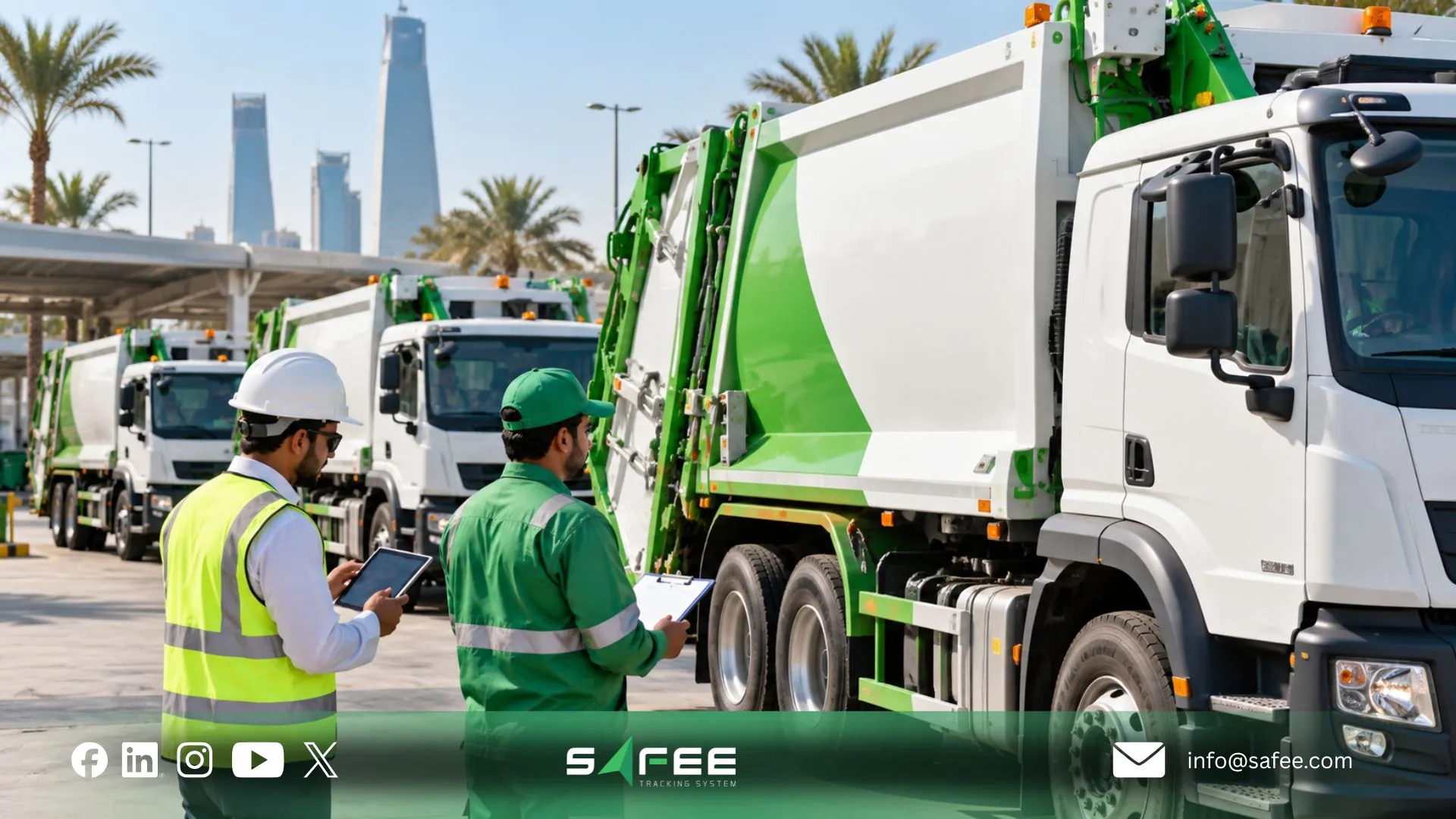
Jeddah Madinati vehicle tracking for waste operations
Jeddah Madinati vehicle tracking should be treated as a data-quality and deployment-readiness problem, not simply a hardware-installation task. Safee’s public site describes Madinati support around three data areas – vehicle location, vehicle weight, and vehicle status – inside a broader fleet platform that can combine tracking with supported IoT sensors and operational modules.
Before a Jeddah waste vehicle enters active service, the implementation team should be able to answer four questions:
- Is this the correct contractor asset for the project?
- Is the tracking device mapped to that exact physical vehicle?
- Are the required sensor and status inputs available, compatible, and configured?
- Can the team detect and investigate a missing, abnormal, or mismatched record?
This is where fleet data governance becomes operational. For a deeper explanation of identity, completeness, assignments, and source reliability, read our Fleet Data Management guide.
Waste fleet qualification and vehicle identity records
Vehicle identity is the foundation of usable municipal tracking data. If the physical truck, fleet record, tracking device, contractor equipment register, and authority-side record do not point to the same asset consistently, technically valid GPS data can still support the wrong vehicle.
Before activation, reconcile the project documentation with the Safee vehicle record. Depending on the project and applicable authority requirements, the review may include:
- Operational status.
- Tracking device identifier.
- Vehicle registration identifier.
- Internal fleet or asset number.
- Installed sensor configuration.
- Contractor ownership or assignment.
- Vehicle category and operational role.
- Weight configuration where applicable.
- Trailer or attached equipment where relevant.
- Project, contract, depot, or service-area assignment.
The exact fields required for Madinati, waste hauler registration, or a particular Jeddah contract should be taken from the current official and project documentation. Do not turn a generic fleet template into an assumed municipal checklist.
Within Safee, Live Vehicle Tracking supplies real-time visibility, while the wider platform adds reporting, alerts, administration, sensor data, and specialist modules. A better activation rule is therefore: a transmitting tracker is not enough. Activate the asset only after the physical vehicle, digital identity, device mapping, sensor configuration, and project assignment have been reconciled.
Contractor equipment and location, weight and status data
In a municipal waste project, contractor equipment can include far more than the tracking unit. The technical review may involve the truck itself, telematics hardware, RFID equipment, supported weight sensors, container-identification hardware, and any other installed component that generates data used by the operating workflow.
Safee publicly identifies three data areas for its Madinati integration:
- Location: where the vehicle is and how its movement is represented.
- Status: the operating status information required by the configured workflow.
- Weight: the relevant vehicle or load reading when weight is part of the agreed scope.
For weight-related requirements, Safee provides a dedicated Weight Monitoring System. It supports real-time total, per-unit, per-axle, trailer, historical, calibration, and alert-related capabilities across supported configurations, including KIMAX, Analog, and ROADEK sensor options.
For a waste fleet, a weight number becomes more useful when the team can interpret its operating context:
- Which vehicle generated the reading?
- At what time and location was it recorded?
- Which supported sensor or hardware source supplied it?
- Was the vehicle collecting, moving, stopped, or unloading?
- Did the value change in a way that matches the operation?
- Is an abnormal reading more likely to indicate an actual load change, calibration issue, communication gap, or hardware problem?
At Safee, our Alarms and Alerts environment can support configured sensor and operating exceptions where the required source data is available. The important constraint is that software cannot create a reliable weight or status value when the compatible source, installation, connectivity, or configuration is missing. Vehicle-by-vehicle validation is therefore safer than assuming one hardware profile applies to the whole fleet.
Jeddah municipality madinati vs the national balady workflow
The safest way to read this heading is administrative workflow versus technical Jeddah integration, not Madinati versus Balady as if they were completely unrelated systems.
Balady currently groups the Waste Transporters Qualification Service and Operational Plans Service under its Waste Management (Madinati) product. Those services cover authority-side workflows such as transporter registration and creating trips or operating plans for active waste-management contracts.
Safee, by contrast, describes a Jeddah Amanah/Madinati technical integration that supports reporting vehicle locations, weights, and statuses. That statement describes a data-integration scope. It should not be interpreted as proof that a transporter, contract, vehicle, or project has completed every separate authority-side requirement.
For project governance, maintain two connected but distinct controls:
Administrative and contract readiness
- Active contract or project scope.
- Correct transporter or contractor entity.
- Applicable registration or qualification status.
- Any additional authority or project approvals that apply.
- Operating plans and trips where the active contract requires them.
- Vehicle, workforce, container, and attachment records required by the applicable service.
Technical and fleet-data readiness
- Data-quality review.
- Reporting responsibility.
- Correct vehicle status logic.
- Reliable location transmission.
- Correct vehicle identity in Safee.
- Correct device-to-vehicle mapping.
- Sensor and hardware compatibility.
- Exception ownership and escalation.
- Required supported weight input where applicable.
The operational lesson is straightforward: connectivity does not replace administrative qualification, and administrative qualification does not guarantee that every vehicle and sensor is configured correctly. Both sides need evidence before the fleet is treated as rollout-ready.
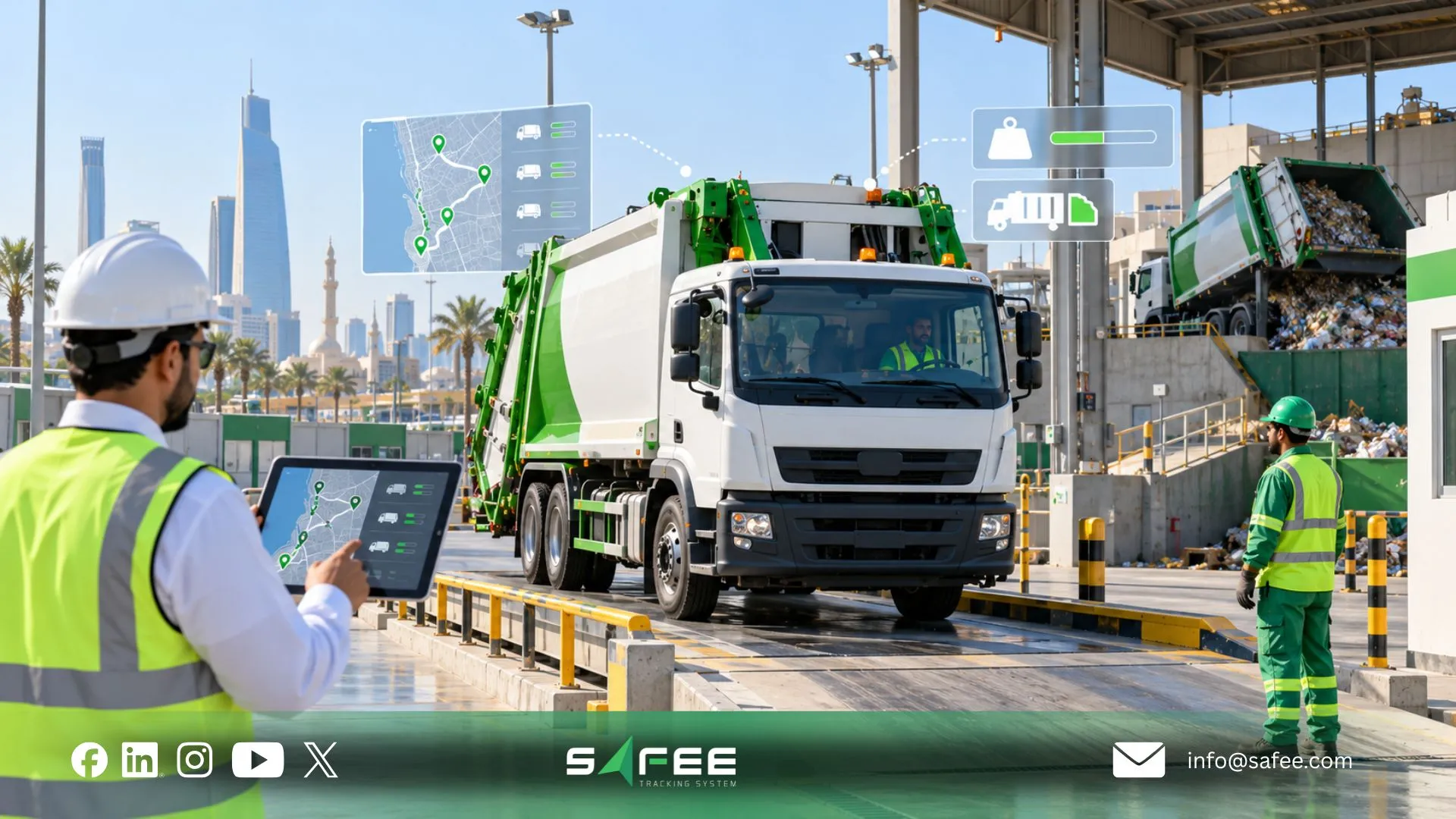
How to prepare Jeddah Madinati vehicle tracking
A controlled Jeddah Madinati vehicle tracking rollout starts from the contracted operating scope, not from whichever devices happen to be installed first. This reduces rework because every configured asset has a documented reason to be in the project.
Use this deployment sequence:
- Confirm the project and contract scope.
- Match every physical vehicle to its digital identity.
- Confirm the agreed Madinati transmission scope.
- Reconcile contractor equipment and vehicle records.
- Configure the required Safee modules and data mappings.
- Verify the installed tracking hardware and supported sensors.
- Establish exception review, escalation, and recurring reporting.
- Validate location, weight, status, and waste-task data where applicable.
For teams building a wider operating process around this deployment, our Fleet Management Operations Guide explains how ownership, monitoring, alerts, reporting, and follow-up fit together after go-live.
Match contractor equipment to the agreed project scope
Start with the approved project or contract equipment list and reconcile it against the digital fleet. Do not build the master list from vehicles that merely happen to appear in the tracking portal.
For each asset, document:
- Who owns configuration changes?
- Who investigates data-quality problems?
- What operational function does it perform?
- Is it part of the current Jeddah waste project?
- Which tracking device and sensors are installed?
- Who decides whether the asset can enter active service?
- Is weight information relevant and required for this vehicle?
- Does the asset need only location tracking, or additional data?
- Does the collection workflow use RFID or container identification?
- Is the hardware combination supported and configured correctly?
At Safee, our platform is a Hardware Agnostic, meaning it is designed to work with diverse compatible hardware and sensors rather than one closed device ecosystem. That flexibility is valuable for mixed fleets, but it does not remove the need to validate compatibility for the exact device, sensor, vehicle, and data requirement in the agreed Jeddah scope.
14 things to check before Waste Hauler registration
Before waste hauler registration is treated as operationally complete – and before final fleet activation – use this 14-point control to identify missing records and mismatches early. This is a fleet-readiness checklist, not a substitute for the official Balady service requirements.
- Contractor identity: Confirm that the company information matches the entity responsible for the project and relevant authority-side application.
- Project scope: Identify the contract, service area, operating activity, or waste-management scope supported by each vehicle.
- Vehicle identity: Reconcile the physical registration identifier with the Safee vehicle record and the applicable project record.
- Internal asset number: Confirm the contractor’s fleet number where an internal equipment register is used.
- Vehicle category: Make sure the system classification reflects the actual function of the vehicle in the waste operation.
- Tracking device mapping: Verify that the installed telematics device is attached to the correct digital vehicle.
- Device communication: Confirm that the device communicates consistently before relying on its data operationally.
- Location quality: Review timestamps and vehicle position during real movement, not only while the vehicle is parked in the depot.
- Weight requirement: Determine whether weight information is required for this vehicle and project scope.
- Weight hardware and calibration: Where weight is required, validate the supported sensor setup and calibration for that vehicle configuration.
- Vehicle status data: Define the operating statuses expected from the configured workflow and verify that the data source can produce them reliably.
- Waste-task data: Where proof of collection matters, define whether RFID, container identification, task confirmation, or another operating record is required.
- Madinati transmission review: Confirm the agreed technical scope for transferring location, weight, and status data through Safee’s Jeddah Amanah/Madinati integration.
- Exception ownership: Assign named responsibility for missing data, mismatched vehicles, sensor faults, device replacements, transmission gaps, and abnormal operating records.
Balady’s official Waste Transporters Qualification Service should still be reviewed separately for the current administrative submission fields and documents. The purpose of this list is to prevent a technically incomplete fleet from being treated as ready just because an administrative request has progressed.
Review Jeddah Municipality Madinati operating exceptions
Go-live is the beginning of data-quality control, not the end. A production fleet needs a repeatable process for identifying records that stop behaving as expected.
Common exceptions include:
- A status that does not match the operating condition.
- Location updates that do not match observed movement.
- A physical truck appearing under the wrong digital identity.
- A vehicle that was working correctly but stops transmitting.
- A required weight input disappearing or becoming unstable.
- A tracking device being replaced without updating the mapping.
- A collection event occurring without the expected waste-task record.
- A replacement vehicle being used before the digital record is reconciled.
- A vehicle operating outside the expected project or service-area assignment.
- A recurring gap pointing to hardware, configuration, connectivity, calibration, or operating-process failure.
At Safee, our wider platform includes Fleet Reporting, Alarms and Alerts, live tracking, sensor integrations, and waste-specific records that can support investigation. The Waste Management module also provides collection confirmations and history so the team is not limited to raw location data.
Use a four-stage exception workflow:
- Detect: identify the missing, abnormal, or mismatched record.
- Verify: check the physical asset, device, sensor, timestamp, and operating context.
- Assign: route the issue to the correct owner – operations, fleet administration, hardware support, sensor support, or the relevant external party.
- Close: record the corrective action and confirm that normal data behavior has returned.
The value is not the number of alerts generated. It is whether the team can move from an exception to a verified closure. Our 12 Fleet Management Best Practices uses the same principle: measure data availability and exception closure before treating dashboards as reliable evidence.
If your fleet is already connected but vehicle, sensor, or collection records do not line up consistently, request a Safee demo focused on data mapping and exception workflow rather than a generic feature tour.
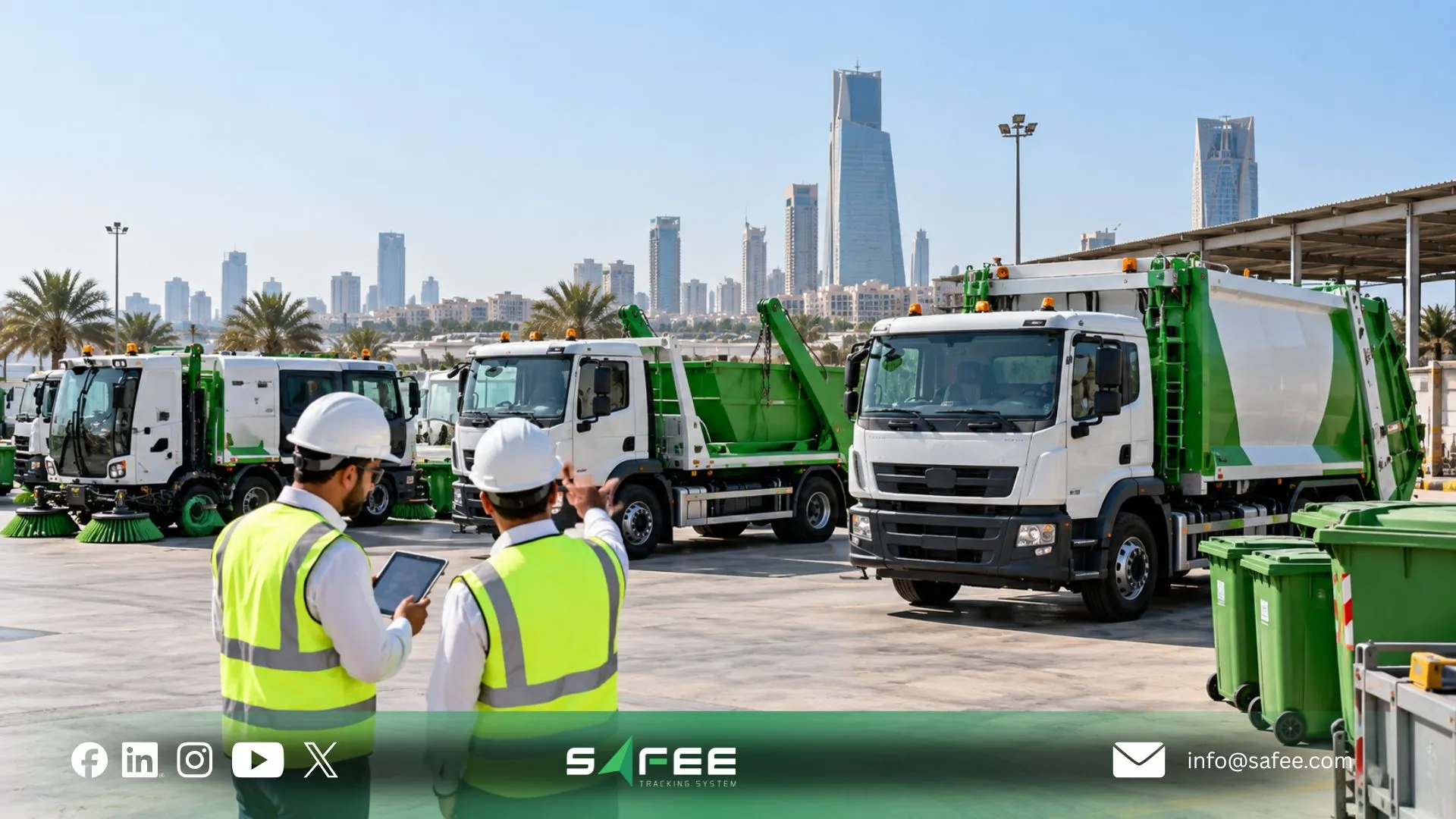
Safee: Best Madinati support for your Jeddah project scope
For a Jeddah waste project, the best solution is the one that fits the vehicles, equipment, sensor data, waste workflow, reporting requirements, and Madinati scope your team actually needs to manage.
At Safee, we support the operational layer behind that requirement. Our Jeddah Amanah/Madinati integration supports reporting vehicle locations, weights, and statuses, while our Waste Management Module adds the waste-specific context needed to understand what is happening around those vehicles in the field.
Depending on the project configuration, we can connect:
- vehicle identity with the correct tracking device;
- live movement with route and operating activity;
- recurring operational review through Fleet Reporting.
- supported weight and status inputs with the relevant vehicle;
- RFID-enabled container identification and collection records;
- configured operational exceptions through Alarms and Alerts
Our Waste Management capabilities also include real-time collection confirmation, route monitoring, load-weight visibility, collection-history reporting, Waste Container Explorer, and Vehicle–Container History Report where the relevant workflow and data sources are configured.
The value for a waste contractor is not simply seeing trucks on a map. Your team needs to know whether the correct vehicle generated the expected data, whether the planned waste activity took place, where an exception occurred, and whether the evidence can be reviewed later without rebuilding it manually from different systems.
That is where Safee fits this use case; we bring vehicle tracking, supported sensor data, waste-collection activity, exceptions, and reporting into a more connected operational workflow.
For projects requiring Madinati connectivity, we also confirm the exact vehicles, data fields, devices, sensors, and transmission scope before deployment rather than assuming that one configuration applies to every project.
Safee vs tracking without task data
| Evaluation dimension | Safee documented scope | Tracking without task data: evidence to require |
| Jeddah scope | Safee publicly states that it is integrated with Jeddah Amanah requirements for reporting vehicle location, weight, and status to Madinati. | Ask for current evidence of the exact Jeddah/Madinati scope supported, rather than a generic claim of Saudi vehicle tracking. |
| Vehicle identity | Safee combines live tracking with vehicle administration, reporting, alerts, sensor data, and wider fleet records. | Require a clear method for reconciling the physical vehicle, tracking device, contractor asset record, and project assignment. |
| Location | Safee explicitly lists vehicle location in its Madinati scope and provides Live Vehicle Tracking. | Verify update behavior, device identity, history, connectivity handling, and investigation of missing transmissions. |
| Weight and status | Safee explicitly lists weight and status in its Madinati scope and provides a Weight Monitoring System for supported configurations. | Require evidence of supported hardware, calibration, status logic, data mapping, and exception handling. |
| Waste-task context | Safee’s Waste Management module adds RFID collection confirmation, route monitoring, weight visibility, container activity, and collection history. | Determine how the provider proves that the operating task occurred rather than only showing that a vehicle visited a location. |
| Data ownership | Safee provides Fleet Reporting, Alarms and Alerts, administrative controls, and operating records that can support structured review. | Define who owns configuration, sensor calibration, data corrections, escalation, exports, retention, and project handover. |
The key difference is operational context. A location-only system can show that a truck was present. A waste-management workflow should help the fleet team determine what collection activity was recorded, what supporting data exists, and which exception needs action.
How to review Jeddah Madinati operating data quality with Safee
For a Jeddah waste project, operating data is useful only when the fleet team can trust that it belongs to the correct vehicle, device, sensor, and waste activity. The review should therefore focus on data completeness, correct mapping, exception visibility, and issue resolution rather than on a fixed savings or performance claim.
At Safee, we can help teams review this operational picture through the data available across Live Vehicle Tracking, Weight Monitoring System, Waste Management, Alarms and Alerts, and Fleet Reporting.
A practical baseline can track:
- vehicles providing usable location data;
- repeated route or collection exceptions;
- vehicles correctly mapped to their tracking devices;
- waste tasks without the expected operating record;
- missing or mismatched vehicle, sensor, or collection records;
- required weight and status data available for the agreed scope;
- unresolved exceptions and the time required to investigate them.
After go-live or a major configuration change, compare the same measures using the same fleet scope and KPI definitions. The important question is not how many alerts or reports the system produces, but whether the team can detect an issue, identify the affected vehicle or task, assign responsibility, and verify that the exception was resolved.
This gives Operations and procurement teams a practical way to assess whether the Jeddah Madinati vehicle tracking setup is becoming more reliable and easier to manage over time.
If you are preparing a Jeddah Madinati vehicle tracking rollout, contact Safee to review your vehicle identities, tracking devices, supported sensors, waste workflow, reporting needs, and agreed Madinati data scope before deployment.
FAQs about Jeddah madinati vehicle tracking for waste fleet
How does Jeddah Madinati differ from the Balady service?
They are related parts of the wider waste-management workflow. Balady covers authority-side processes such as waste-transporter qualification and operating plans, while Safee’s Jeddah Madinati scope focuses on the technical reporting of vehicle location, weight, and status to Jeddah Amanah.
Does a Jeddah connection imply approval in every municipality?
No. Safee’s documented Madinati integration relates specifically to Jeddah Amanah. Other municipalities, activities, and projects may have different administrative and technical requirements that must be verified separately.
Does every vehicle need weight sensing hardware?
Not necessarily. Weight hardware depends on the vehicle and the agreed project or Madinati data scope. Where weight data is required, the sensor, installation, calibration, device mapping, and compatibility should be validated for that vehicle.
What Jeddah reporting scope does Safee support?
At Safee, we support reporting vehicle locations, weights, and statuses to Madinati for the documented Jeddah Amanah scope. Our Waste Management Module can add RFID-enabled collection records, route monitoring, weight visibility, collection history, and vehicle-container activity where those capabilities are configured.
Ready to improve your fleet operations?
Tell us what you would like to improve. A Safee specialist will reply by email.
Usually replies within one business day • No sales spam
Your details are used only to respond to your request. Privacy Policy