

Fleet Fuel Management in Saudi Arabia: Audit Refills and Waste
Fuel spend can rise long before a monthly report explains why. For teams evaluating fleet fuel management Saudi Arabia solutions, the real challenge is not simply knowing how much fuel was purchased; it is being able to connect consumption, refills, idling, routes, vehicle activity, and unusual fuel changes to the operating evidence behind them. Without that context, Finance sees cost while Operations is left to investigate the cause.
This guide shows you how to build that evidence trail: establish a per-vehicle baseline, strengthen fuel consumption monitoring, review idling and route patterns, perform a defensible fuel refill audit, investigate abnormal fuel loss without assuming theft, and measure whether corrective actions actually reduce fleet fuel costs. It also explains how Safee’s Fuel Control, Live Vehicle Tracking, Alarms and Alerts, Driver Management, and Fleet Reporting can support that workflow when the available vehicle and fuel data are configured and validated.
What does fleet fuel management in Saudi Arabia include?
Effective fleet fuel management in Saudi Arabia combines two views: how much fuel the fleet consumes and whether individual fuel events can be explained. A monthly total can show that cost changed; it cannot, by itself, show whether the cause was vehicle duty, idling, routing, refill behavior, maintenance, data quality, or an event that needs investigation.
A useful review therefore brings together:
- Refueling records and available fuel-level changes.
- Vehicle location, movement, stops, route, and idling context.
- Fuel consumption by vehicle, trip, operating group, or period.
- Historical patterns for genuinely comparable vehicles and duties.
- Exceptions that require verification rather than automatic blame.
- Driver assignment where the required identification data is available.
- Vehicle and tank configuration, fuel-data source, and calibration status.
- Reports that allow Fleet, Operations, Finance, and Maintenance to review the same underlying event from their own responsibilities.
At Safee, our current Fuel Control feature supports compatible CANbus and external fuel-data sources and can place fuel information beside wider fleet context. If you want the broader system architecture first, read What Is a Fleet Fuel Management System and How Does It Work?.
Fuel consumption monitoring beyond invoice records
An invoice confirms a commercial transaction. It does not automatically confirm that the intended vehicle received the fuel, that the vehicle was at the expected location, or that the amount aligns with the available tank or operating data. That is why fuel consumption monitoring works best when financial records are checked against operational evidence.
For a refill or high-consumption period, compare:
- Vehicle location and stop history.
- The vehicle and fuel record involved.
- The transaction or event timestamp.
- The active trip, route, job, or operating duty.
- Available fuel level before and after the event.
- The assigned driver or responsible operator where available.
- Any unusual fuel-level change shortly before or after the refill.
- Distance, engine activity, and extended idling around the period.
The objective is not to replace invoices. It is to make the transaction auditable. Our Fleet Fueling Management guide explains how refueling evidence can be connected with the correct vehicle, time, location, driver context, and trip activity before a disputed event is approved or escalated.
Why abnormal fuel loss does not always mean theft
An abnormal fuel loss reading is a reason to investigate; it is not proof of theft. Fuel data can be affected by the source being used, tank geometry, calibration, road slope, vehicle movement, signal stability, delayed communication, maintenance activity, leakage, approved transfers, or genuine unauthorized removal.
When a drop appears, the review should test plausible explanations such as:
- Leakage or another mechanical condition.
- An undocumented refill or other data gap.
- Calibration, mapping, or configuration error.
- Tank movement or unstable sensor behavior.
- Approved workshop, transfer, or site activity.
- Normal consumption during a demanding duty cycle.
- Possible unauthorized drainage or misuse that requires further evidence.
- Extended idling or operating time that was not obvious from distance alone.
A stronger operating process is to detect the exception, add vehicle context, validate the fuel data, classify the case, and escalate only when the evidence supports that next step. Our Fuel Control Module documents fuel-change history, sudden-drop review, calibration and filtering, while Alarms and Alerts can route configured fuel-level exceptions to the appropriate users. For the investigation logic itself, see 5 Steps for Reliable Fleet Fuel Theft Detection.
Reduce fleet fuel costs with context and reliable records
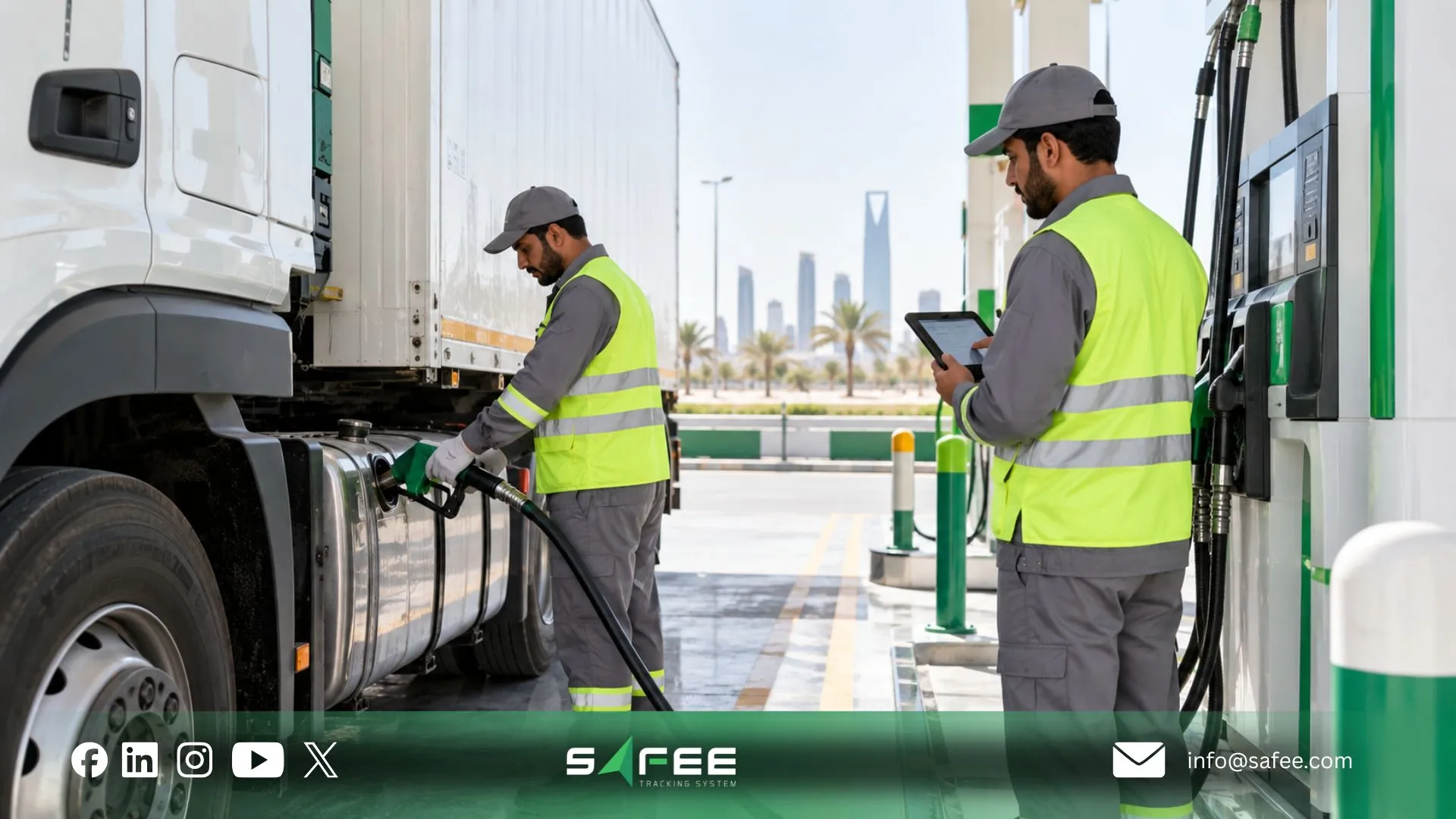
Trying to reduce fleet fuel costs with a single fleet-wide target can hide the reason fuel is being wasted. One vehicle may be affected by excessive idling, another by route design, another by maintenance condition, and another by refill-control gaps. The same monthly fuel total can therefore require very different actions.
A practical review separates three questions:
- Consumption: How much fuel did the vehicle or comparable group use?
- Context: What work, route, load, operating period, and vehicle conditions surrounded that use?
- Exceptions: Which refills, drops, idle periods, routes, or readings differ enough from the baseline to require action?
This distinction lets Finance measure cost while Operations identifies the controllable cause behind it.
Fleet fuel savings in Saudi Arabia through idle and route reviews
Fleet fuel savings in Saudi Arabia should be measured against operating causes, not a generic percentage. Idling and route activity are two useful places to start because both can be compared against actual vehicle behavior and then reviewed again after a policy or dispatch change.
For idling, review:
- Whether the idle period was required by the job or avoidable.
- How often vehicles remain engine-on without productive movement.
- Whether repeated idle patterns are concentrated by vehicle, location, shift, route, or duty.
- Whether a defined operating change reduces idle fuel usage over the next comparable period.
For route activity, review:
- Unscheduled stops or route deviations.
- Differences between comparable journeys.
- Repeated detours and unnecessary distance.
- The relationship between distance, duty, and fuel usage.
- Whether dispatch is assigning a vehicle type that is poorly matched to the job.
At Safee, we document idle fuel usage, fuel usage per trip and distance, historical fuel changes, and the vehicle context available through Live Vehicle Tracking. The saving comes from the corrective action your team takes after identifying a repeatable cause—not from the dashboard alone.
Fuel refill audit by vehicle, time and journey
A fuel refill audit should reconstruct a refill well enough that another authorized reviewer can understand why the event was accepted, questioned, or escalated. The record should connect the commercial transaction with the vehicle’s operating context.
- Vehicle: Confirm that the refill belongs to the correct asset.
- Time: Check whether the timestamp aligns with the vehicle’s activity.
- Location: Verify that the vehicle was at or reasonably near the documented fueling point.
- Driver: Review the assigned driver or responsible operator where Driver Management data is available.
- Journey: Check whether the route, trip, or duty makes the refill plausible.
- Fuel behavior: Compare available tank data with the recorded fill quantity and direction of change.
- Post-refill behavior: Look for a sudden or unexplained drop after the refill.
- History: Check whether the same vehicle, site, driver assignment, or duty repeatedly generates exceptions.
Classify the result consistently—for example, confirmed, explained exception, data-quality issue, requires clarification, or requires escalation. The exact labels are your choice; what matters is that disputed fuel events have an owner and closure evidence. The Fleet Fueling Management guide provides a deeper refill-control workflow.
Fuel consumption monitoring and tank reading differences
Calculated consumption and measured tank data answer related but different questions. Estimated consumption may come from distance, expected efficiency, manufacturer information, invoices, or another operating assumption. Measured fuel-level data depends on the source available to the vehicle and how that source is mapped, calibrated, filtered, and validated.
At Safee, our Fuel Control Module supports compatible CANbus, analog, digital, pulse-based, and BLE fuel inputs, together with tank configuration, calibration points, filtering, and fuel history. Because each source has different limitations, a gap between expected and measured fuel should start a review rather than trigger an immediate conclusion.
Key variables include:
- Vehicle and tank configuration.
- Calibration quality and validation history.
- Sampling, transmission, and event timing.
- Fuel-data source and sensor compatibility.
- Road slope, movement, and signal stability.
- Previous tank level and recent refill activity.
- Distance, duty cycle, idling, and vehicle condition.
- Availability of independent transaction, workshop, or supplier records.
Before relying on the data, ask the provider:
- How are unstable or implausible readings filtered?
- How are refills separated from normal tank movement?
- Which conditions generate fuel-related alerts or events?
- How will historical readings and recurring exceptions be reported?
- Which fuel-data source will be used for each representative vehicle group?
- Which evidence will Operations and Finance use when they disagree about an event?
- How will tank capacity, mapping, calibration, and known-event testing be completed?
- Can the event be reviewed with location, trips, stops, idling, and driver context where available?
For a deeper technical explanation of source selection and validation, read How Fleet Fuel Level Monitoring Detects Loss and Waste.
How to build a fuel consumption monitoring workflow
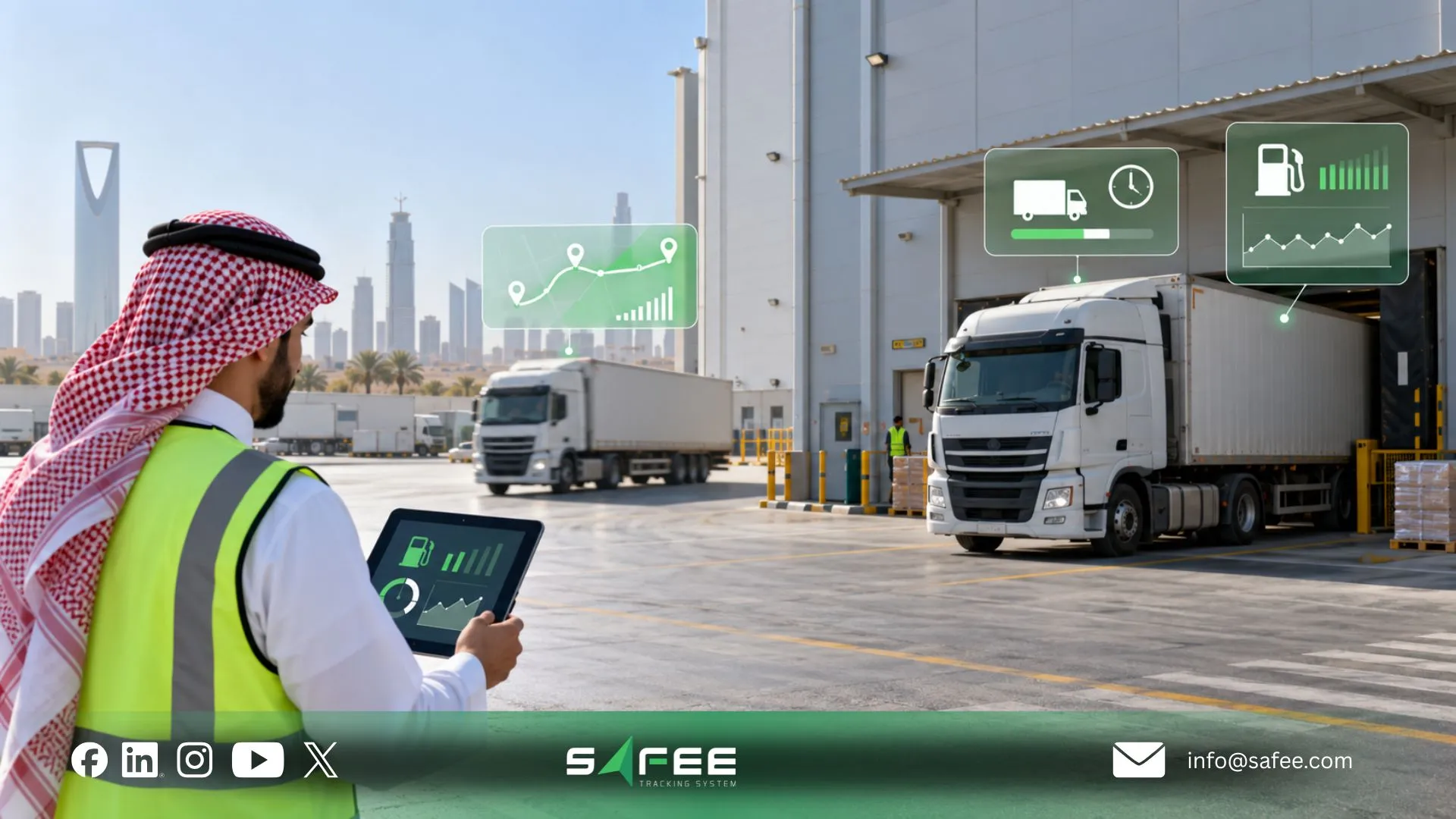
A useful fuel workflow should reduce manual investigation without turning every reading into an alert. The process starts by defining what normal looks like for each relevant vehicle group, validating the data source, setting exception logic, and assigning an owner for review and closure.
Use this operating sequence:
- Establish a validated baseline for comparable vehicles and duties.
- Monitor fuel and vehicle data for completeness and communication quality.
- Detect material exceptions using suitable thresholds and event rules.
- Compare the event with trip, location, idling, refill, driver, and maintenance context.
- Investigate the most plausible causes and request supporting records where needed.
- Close the case with a classification, owner, and evidence.
- Review recurring trends through weekly or monthly reporting.
Each stage leaves a clear operating record for the next reviewer and can be assigned to the team responsible for that action.
Set a vehicle baseline before a fuel refill audit
A refill, high-consumption period, or fuel drop cannot be judged fairly without a baseline. The baseline should describe the conditions that normally affect fuel use for the vehicle or a genuinely comparable vehicle group.
- Normal route or service area.
- Typical distance and idle profile.
- Tank arrangement and capacity.
- Typical duty and operating hours.
- Fuel-data source and calibration status.
- Validated refill history and known data limitations.
- Vehicle type, fuel type, and relevant configuration.
- Load or job characteristics where they materially affect consumption.
- Maintenance or technical conditions that may influence consumption.
Do not turn that baseline into a rigid fleet-wide number. Its purpose is to create a defensible comparison range. A short urban delivery vehicle and a long-distance project vehicle should not be judged against the same consumption threshold simply because both appear in the same fleet.
17 things to check before fleet fuel management in Saudi Arabia
Before relying on fleet fuel management in Saudi Arabia for operational or financial decisions, verify these 17 controls:
- Vehicle identity: Every fuel record is associated with the correct asset.
- Tank configuration: The tank setup and capacity used for interpretation match the vehicle.
- Fuel-data source: The team knows whether the reading comes from CANbus, a compatible sensor, a transaction feed, or another supported source.
- Calibration: Known fuel events have been used to validate the relationship between the source signal and actual tank behavior.
- Signal stability: The team understands whether movement, slope, connectivity, or sensor behavior can create misleading changes.
- Historical data: There is enough validated history to establish a useful comparison band.
- Driver assignment: Responsibility can be connected to the operating period where driver identification is configured.
- Journey context: Fuel events can be reviewed against the route, trip, job, or duty being performed.
- Location: Refills and unusual changes can be checked against the vehicle’s location.
- Approved fueling points: Depot, station, branch, workshop, and project-site activity are defined consistently.
- Refill evidence: Finance and Operations agree on which records are needed to support a fill-up.
- Idle activity: Extended engine-on periods are reviewed when they materially affect consumption.
- Route and stop history: Movement and stop context are available when an exception needs explanation.
- Alert logic: Only material conditions are configured for immediate notification; lower-priority issues can remain in reporting.
- Investigation owner: Each exception type has a person or team responsible for verification.
- Closure evidence: The organization defines what is required before a refill or fuel-loss case is considered resolved.
- Reporting cadence: Daily exceptions, weekly trends, and monthly management questions are separated instead of forcing every audience into one report.
At Safee, we can support several of these layers through Fuel Control, Live Vehicle Tracking, Driver Management, Alarms and Alerts, and Fleet Reporting. The correct combination depends on the vehicles, data sources, and decisions your team needs to support.
Investigate abnormal fuel loss before closing a case
A fuel-loss case should not be closed because the chart shows a drop, and it should not be dismissed because the first explanation sounds plausible. Review the sequence around the event and preserve enough evidence for a second reviewer to reach the same conclusion.
- Confirm that the fuel source was communicating and stable before the change.
- Check the event timestamp and whether data arrived on time or after a delay.
- Review vehicle location, ignition, movement, and idling.
- Examine the active journey, route, stop, or worksite context.
- Check for a recent refill, workshop visit, transfer, or other approved activity.
- Review driver assignment where available.
- Compare the change with the validated vehicle baseline and previous fuel history.
- Check whether similar events repeat by vehicle, location, duty, or operating period.
- Decide whether data quality, calibration, maintenance, leakage, operating conditions, or possible misuse requires the next action.
Our Fuel Explorer and history views can support the technical review of fuel changes, while Fleet Reporting can carry recurring exceptions into management review. The final classification should reflect the evidence: “abnormal” describes the signal; it does not identify the cause. For investigation design, see Fleet Fuel Theft Detection.
Safee: Best fuel control fit for your fleet data
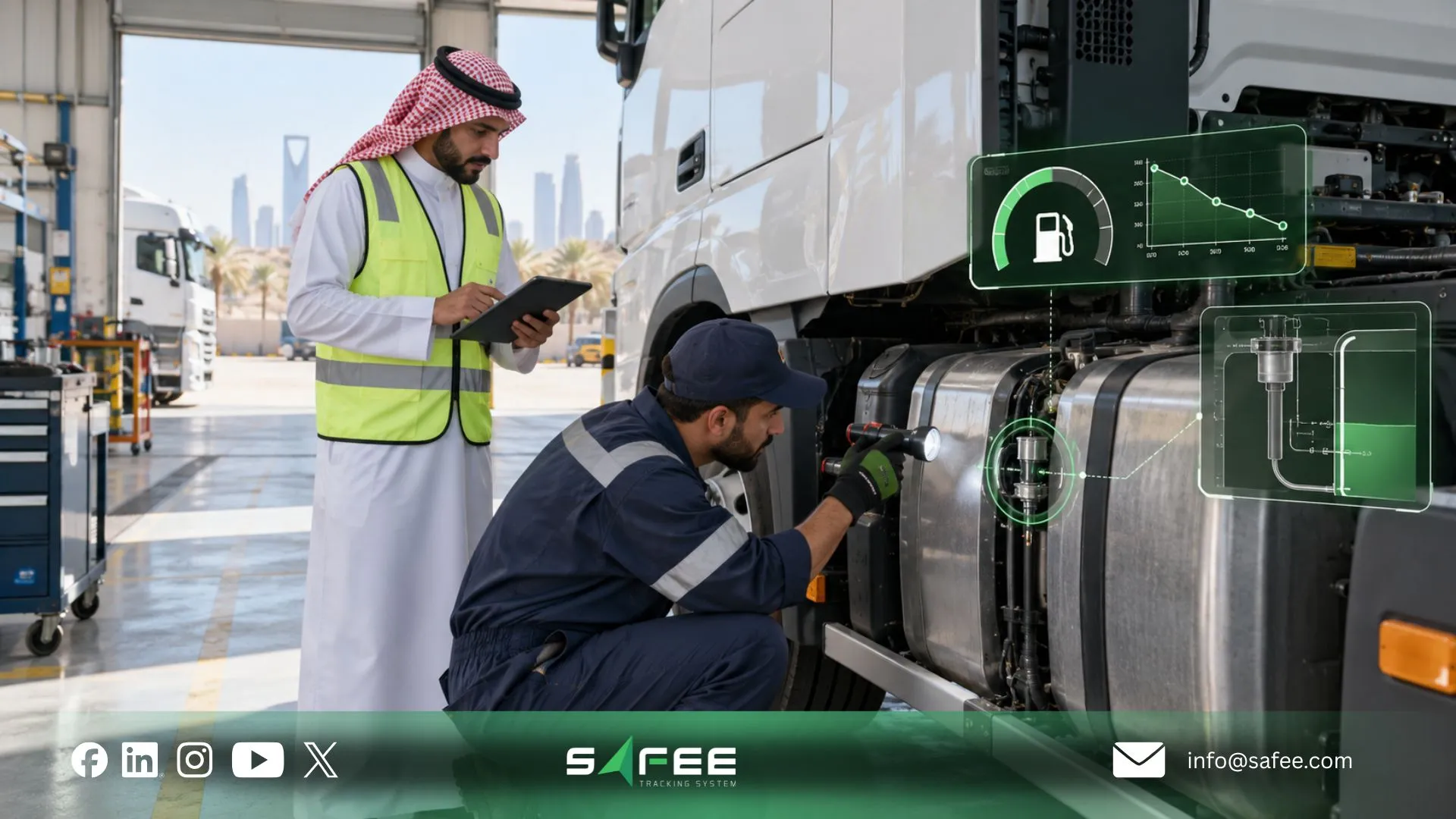
At Safee, we define “best” as the configuration that best fits your vehicles, fuel-data sources, operating risks, reporting needs, and review responsibilities—not the solution with the longest feature list or a generic savings promise.
Our Fuel Control capability can work with compatible fuel inputs and place them beside the wider fleet context available through Live Vehicle Tracking, Driver Management, Alarms and Alerts, Fleet Reporting, the Administration Panel, and other configured Safee tools. That connection matters because a fuel value becomes useful when your team can understand what changed, where it happened, what the vehicle was doing, and what evidence should be reviewed next.
For Procurement, that means comparing data compatibility, calibration, alert logic, reporting, implementation responsibilities, and pilot evidence—not just dashboard screenshots. The Fleet Fuel Management Solutions comparison guide provides a detailed buying framework.
Safee vs fuel invoices alone
| Evaluation dimension | Safee documented scope | Fuel invoices alone | What to require from any alternative |
| Measurement source | Fuel Control can use compatible CANbus and external fuel-data sources depending on vehicle and deployment. | Shows purchased fuel and spend; it does not continuously explain tank behavior. | Exact source, compatibility, installation, calibration, validation method, limitations, and communication behavior. |
| Baseline | Fuel history can be reviewed with vehicle activity, trips, stops, idling, and reporting context. | Primarily provides transaction and cost history. | A method for building vehicle- or duty-specific baselines from validated operational data. |
| Refills | Available fuel changes can be reviewed with vehicle, time, location, trip, and driver context where configured. | Confirms that a transaction occurred but may not prove which operating event it belonged to. | Evidence that links the transaction to the correct vehicle and operating context. |
| Idling | Safee documents idle fuel usage and can connect fuel review with live and historical vehicle activity. | Does not normally explain how idle behavior contributed to fuel use. | Engine/vehicle data and a clear method for identifying idle-related consumption. |
| Loss investigation | Fuel history, abnormal changes, configurable alerts, tracking context, and reports can support an investigation workflow. | A financial discrepancy can be visible, but the invoice cannot explain where or why the fuel changed. | Event timing, location, movement, data-quality checks, supporting records, owner, and closure trail. |
Fuel invoices remain important financial records. Safee’s value is the operational context that can be connected to those records when compatible data and the required modules are available. That makes the event easier to verify without pretending the platform can infer a cause from one fuel number.
How do Safee’s customers measure fuel waste and cost changes?
A credible result needs a baseline, a defined intervention, and a comparable measurement period. We do not recommend promising a fixed saving percentage before those conditions are known because actual results depend on the fleet’s starting point, vehicle duties, idling, routes, maintenance, driver behavior, refill controls, data quality, and the actions taken after an exception is identified.
1. Define the baseline period
- Fuel consumed by comparable vehicle or duty.
- Distance or operating activity.
- Idle fuel usage where reliable data is available.
- Refill activity and questioned transactions.
- Abnormal fuel events and unresolved exceptions.
- Route, duty, and vehicle-condition context.
- Validated fuel cost records.
2. Define the operational change
- Idle policy or driver-coaching change.
- Refill-control or approval process.
- New exception thresholds or alert ownership.
- Route or dispatch adjustment.
- Fuel-data calibration or sensor correction.
- Maintenance intervention.
- New weekly or monthly review process.
3. Use a comparable measurement period
Compare like with like as far as practical. Control for changes in distance, duty cycle, route, vehicle availability, season or operating conditions, load, and service requirement so the result does not simply reflect different work.
4. Measure both totals and causes
- Consumption by comparable vehicle or duty.
- Idle fuel usage.
- Refill exceptions and unresolved cases.
- Unexplained fuel drops.
- Repeat exception frequency.
- Route or stop patterns associated with waste.
- Cost per relevant operating unit when the financial data is reliable.
5. Preserve the evidence
Use Fleet Reporting and fuel history to support recurring review, while the actual business saving should be calculated from your validated operating and financial records. For a practical KPI structure, see 7 Essential Fleet Management Fuel Monitoring KPIs.
Only after this process should the organization state that its fuel-control program produced a particular saving. That keeps the result defensible for Operations, Finance, Procurement, and management.
FAQs about fleet fuel management in Saudi Arabia
Does every tank level drop indicate fuel theft?
No. A tank-level decrease can reflect normal consumption, idling, road slope, vehicle movement, delayed data, calibration or mapping issues, sensor instability, leakage, maintenance activity, an approved transfer, or genuine unauthorized removal. Review signal quality, location, movement, trip and stop context, previous fuel events, and supporting records before classifying the cause.
How does measured fuel differ from estimated consumption?
Measured fuel depends on the actual vehicle or sensor data source and the quality of its configuration, calibration, validation, and communication. Estimated consumption is calculated from another reference such as distance, expected efficiency, financial records, or operating assumptions. The two can be compared, but a difference between them is a reason to investigate the inputs rather than assume one value is automatically correct.
How should vehicles with different duties be compared?
Compare vehicles by relevant operating characteristics such as vehicle type, tank setup, route, duty cycle, distance, idling, load or service requirement, and operating conditions. The purpose of a baseline is to compare equivalent work. A long-distance vehicle should not be judged against a low-mileage urban vehicle using one fleet-wide target simply because both belong to the same organization.
Can a fixed fuel saving percentage be guaranteed?
No responsible fuel-management assessment should guarantee a fixed saving percentage without first establishing the fleet baseline and operating conditions. Actual fleet fuel savings Saudi Arabia results depend on existing waste, vehicle duties, idling, routes, maintenance, driver behavior, refill controls, data quality, and the corrective actions implemented. A savings claim should be supported by a defined baseline, a comparable measurement period, and verified operational and financial records.
Ready to improve your fleet operations?
Tell us what you would like to improve. A Safee specialist will reply by email.
Usually replies within one business day • No sales spam
Your details are used only to respond to your request. Privacy Policy