


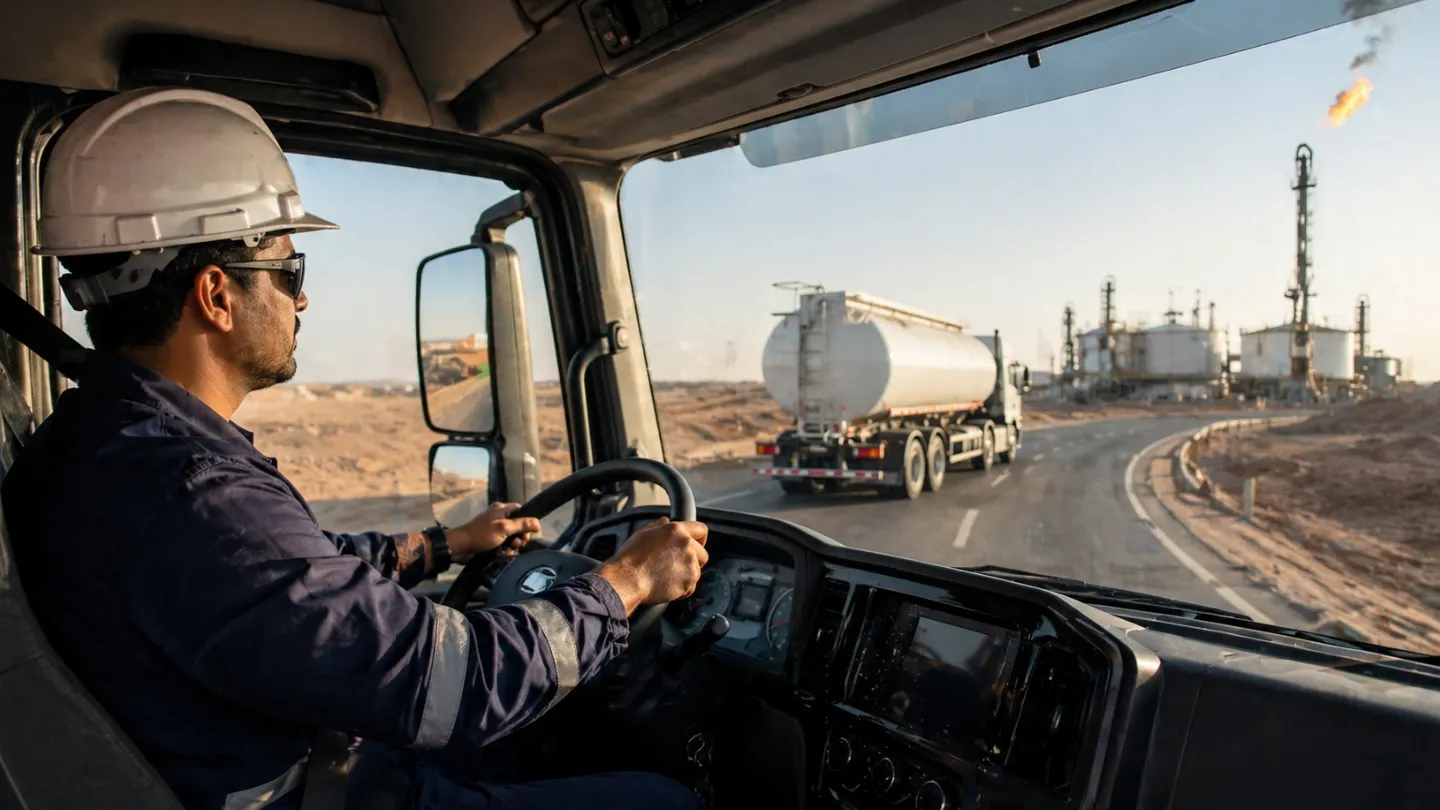
In oil and gas operations, one weak driver selection decision can create more than a transport problem. It can trigger speeding violations, fatigue risk, route deviations, site access issues, investigation workload, client concerns, and avoidable exposure for HSE and HR teams. For fleets operating from the UAE across the GCC and global high-risk locations, the driver is often the first safety control before the vehicle even moves.
This guide explains how to build a practical driver selection process for oil and gas fleet management. You will see how to screen experience, verify records, assess fleet management driver behaviour, onboard new hires, and connect hiring decisions with Safee tools. The goal is safer hiring, stronger fleet compliance management, and clearer accountability across high-risk operations.
Why does driver selection define oil and gas fleet management in the GCC?
Oil and gas fleet management starts before dispatch. It starts with selecting drivers who can operate safely on remote routes, industrial sites, desert roads, restricted zones, and long-distance assignments. In GCC energy operations, these conditions often involve heat, fatigue pressure, convoy rules, client HSE requirements, and strict journey controls.
A strong hiring process should therefore be treated as a risk-control layer, not only an HR task. Before dashboards and reports can improve performance, the organization must select drivers who understand safety rules, accept monitoring, report issues honestly, and respond correctly under pressure.
Driver selection shapes:
- How consistently journey plans, speed rules, and site instructions are followed.
- How drivers respond to fatigue, delays, route changes, and unsafe instructions.
- How accurately incidents, defects, and near misses are reported.
- How easily new drivers adopt telematics, alerts, and performance reviews.
- How strong your fleet compliance management record becomes during audits or client reviews.
Request a Safee demo to review your oil and gas fleet management driver selection workflow, including driver profiles, alert rules, reporting needs, and compliance roles.
What does oil and gas fleet management demand from every driver?
Oil and gas drivers need more than a valid license. They need the judgement to work inside a controlled safety system. Every trip may involve people, equipment, fuel, service materials, or critical field supplies. A driver who treats the route as a routine delivery can expose the operation to unnecessary risk.
A qualified driver should demonstrate:
- Safe vehicle handling in remote, industrial, and high-pressure operating conditions.
- Discipline with journey plans, approved routes, speed limits, rest rules, and site instructions.
- Awareness of fatigue, distraction, harsh driving, weather changes, and route hazards.
- Clear communication with dispatch, supervisors, HR, and HSE teams.
- Willingness to work with telematics-supported processes, including alerts, driver scoring, and trip reviews.
- Professional judgement when delays, breakdowns, restricted access, or emergency situations occur.
At Safee, we support this operating model by connecting driver identity, vehicle visibility, trip records, alerts, and reporting in one environment. This helps teams move from informal driver supervision to structured fleet driver management.
How does poor fleet driver management increase cost and risk?
Poor fleet driver management turns small behaviour patterns into larger operational problems. Repeated speeding, harsh braking, idling, route deviation, missed check-ins, or ignored vehicle defects can affect safety, cost, maintenance pressure, fuel consumption, client confidence, and audit readiness.
In high-risk operations, driver behaviour should not be managed only after an incident. Fleet management driver behaviour needs to be assessed before hiring, reinforced during onboarding, and reviewed through clear policies, alerts, reports, and coaching.
Common consequences of weak driver selection include:
- Higher incident exposure and more investigation work.
- Increased fuel waste and vehicle wear from aggressive driving.
- More downtime due to poor inspection habits or late defect reporting.
- Weaker audit trails when driver records or trip evidence are incomplete.
- Lower confidence from HSE leaders, operations teams, clients, and contractors.
- Inconsistent enforcement across branches, projects, and field sites.
Also read: Fleet Driver Management Without Invading Driver Privacy
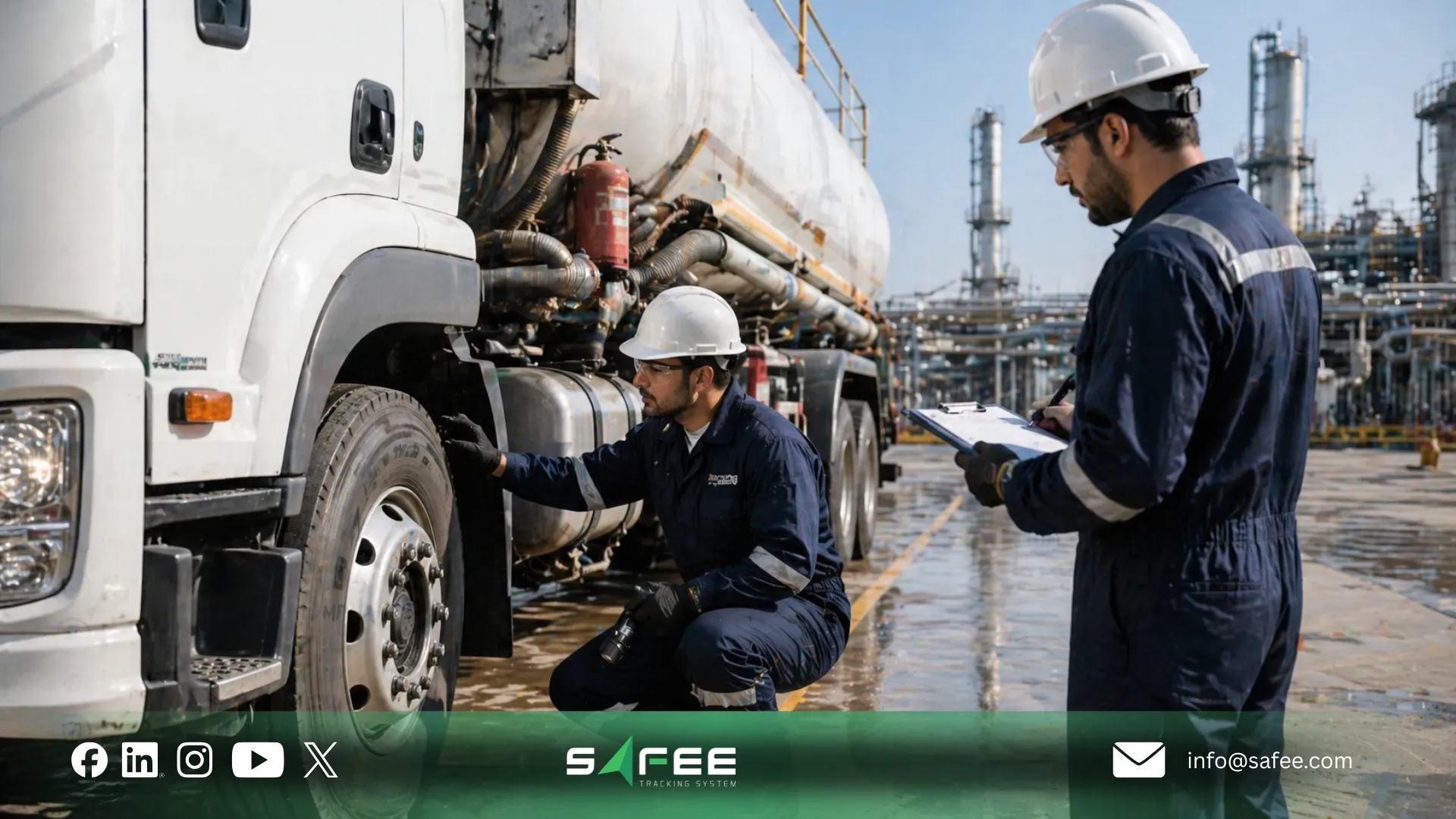
Key driver selection criteria for oil and gas fleet management
The best selection criteria combine HR screening, operational needs, HSE standards, and fleet compliance management. A candidate may have years of driving experience, but that does not automatically make them ready for oil and gas field operations in the UAE, GCC, or other regulated markets.
Selection area | What to assess | Why it matters |
Relevant experience | Vehicle type, route type, remote-area exposure, industrial-site work | Confirms whether the driver understands the operating environment. |
Safety record | Incidents, violations, near misses, corrective actions, and reference checks | Shows risk patterns before the driver enters the fleet. |
Behaviour under pressure | Speed discipline, hazard awareness, fatigue response, and stop-work judgement | Predicts how the driver may perform during real trips. |
Compliance mindset | Documentation habits, reporting accuracy, policy acceptance, and training records | Supports fleet compliance management and audit readiness. |
Experience and compliance checks for oil and gas drivers
Experience should be evaluated by relevance, not only by duration. A driver with many years in city deliveries may still need additional screening before handling oilfield routes, long-distance desert travel, hazardous work zones, or client-controlled sites.
Fleet teams should verify:
- Previous vehicle classes: light vehicles, 4x4s, buses, tankers, heavy vehicles, or service units.
- Remote-area, off-road, desert, industrial-site, or energy-sector exposure.
- History of working under HSE procedures, journey management, permits, and check-in protocols.
- Required licenses, medical checks, training records, and client/site approvals for the operating geography.
- Ability to complete inspections, checklists, trip records, and incident reports accurately.
Because requirements vary by country, client, contract, and site, Safee should support the workflow but not replace legal or regulatory review. The practical aim is to create a repeatable checklist that confirms what must be verified before the first trip.
Evaluating fleet management driver behaviour during hiring
Fleet management driver behaviour should be evaluated before the candidate joins the fleet. Interviews alone are not enough because candidates often describe ideal behaviour rather than what they actually do under pressure.
Useful scenario questions include:
- What would you do if a supervisor asked you to finish a trip faster than the approved journey plan allows?
- How do you respond when another vehicle pressures you to speed?
- What steps do you take when you feel tired during a long route?
- How would you report a near miss that caused no damage?
- What would you do if a pre-trip inspection found a defect before departure?
The best answers show honesty, judgement, policy awareness, and willingness to stop unsafe work when needed. Practical tests can add evidence through route-planning exercises, hazard-recognition assessments, pre-trip inspections, controlled-road evaluations, or simulator assessments where available.
Verifying fleet management driver safety records
Fleet management driver safety records should be reviewed carefully and fairly. The goal is not to reject every candidate with a past issue. The goal is to understand patterns, disclosure, corrective action, and future suitability.
Review available records such as:
- Previous incident reports and safety warnings, where legally accessible.
- Traffic violations or regulatory records permitted by local law.
- Employer references focused on safety conduct, not only attendance.
- Training completion records, defensive driving history, and HSE certificates.
- Vehicle damage history linked to driver conduct.
- Fatigue, attendance, or reporting concerns where relevant and lawful.
A single past issue with clear corrective action is different from repeated speeding, unreported damage, or poor cooperation after incidents. A fair process should consider disclosure, retraining, role risk level, and whether closer probation monitoring is needed.
Talk to Safee about structuring driver scorecards, safety records, and reporting workflows for oil and gas fleet management teams.
A step-by-step hiring process for oil and gas fleet management
A strong hiring process connects HR, fleet operations, and HSE from the beginning. HR checks employment suitability. Fleet managers assess operational capability. Safety leads evaluate risk exposure. Together, they create a more reliable selection decision.
- Define the risk level of the driving role.
- List the required licenses, training, medical checks, and site approvals.
- Screen resumes against fleet driver management requirements.
- Run structured interviews and scenario questions.
- Conduct practical safety and behaviour assessments.
- Verify safety history and references.
- Approve the candidate through HR, fleet, and HSE.
- Onboard the driver into compliance, telematics, journey rules, and reporting programs.
- Monitor early performance during probation.
- Use data for coaching, confirmation, reassignment, or escalation.
Screen resumes against fleet driver management requirements
Resume screening should be consistent. A simple scorecard helps HR and fleet teams compare candidates fairly instead of relying on availability or general driving experience.
Important screening criteria include:
- Relevant vehicle and route experience.
- Oil and gas, industrial, logistics, or remote-site exposure.
- Complete license, training, and employment documentation.
- Defensive driving or HSE training records.
- Experience with journey management, route discipline, and check-in protocols.
- Ability to use mobile apps, digital checklists, or telematics-supported processes.
- Clear communication skills for reporting, dispatch, and escalation.
Red flags may include missing license details, unexplained gaps in safety-critical roles, repeated short assignments, vague descriptions of incidents, or resistance to monitoring and reporting.
Practical tests for fleet management driver behaviour under pressure
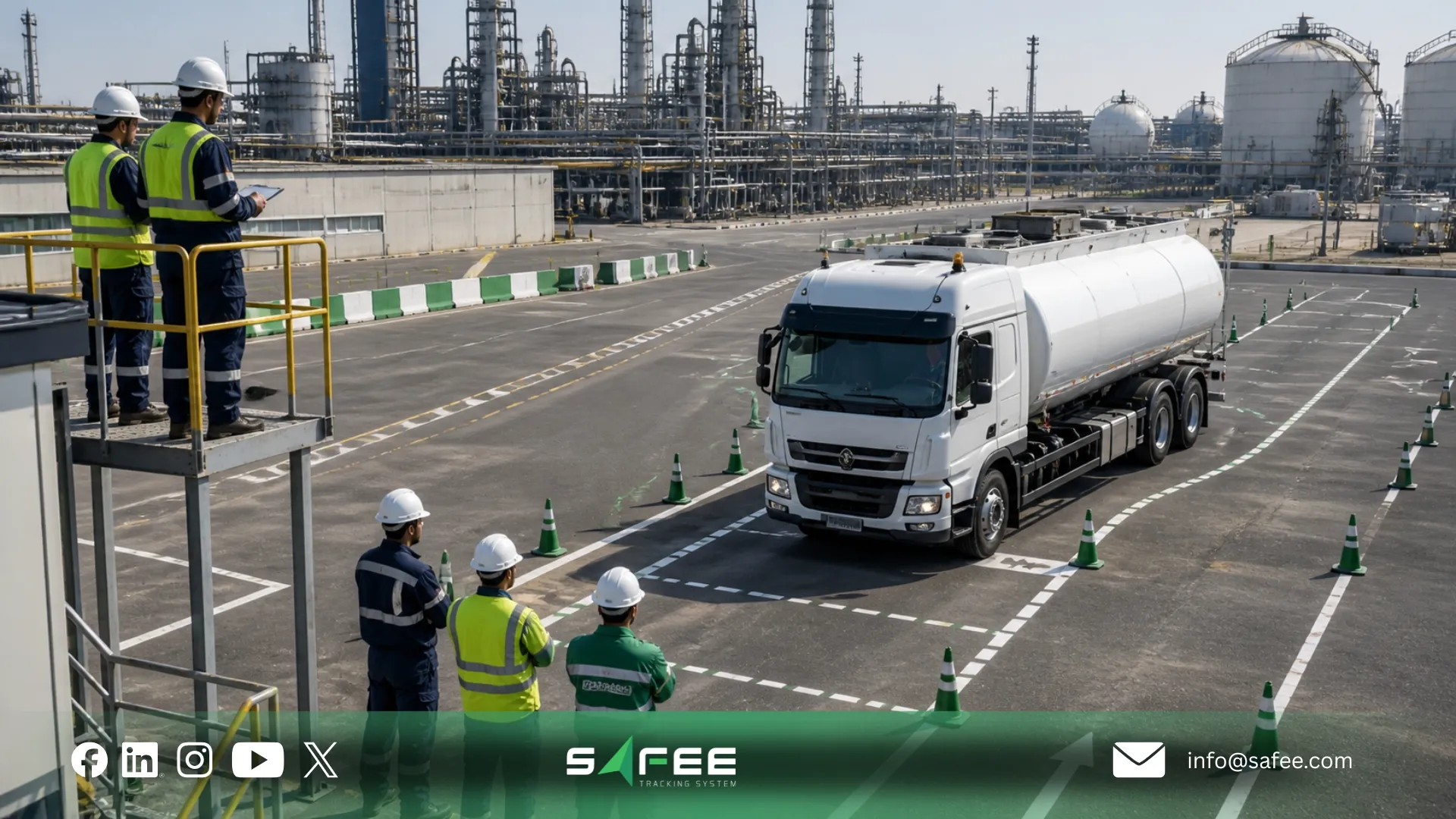
Practical testing helps reveal how candidates behave when conditions are not ideal. This matters in oil and gas fleet management because drivers may face time pressure, long routes, difficult terrain, restricted zones, and strict site rules.
Practical assessments may include:
- Pre-trip vehicle inspection and defect reporting.
- Defensive driving assessment.
- Controlled braking and turning evaluation.
- Hazard perception exercise.
- Route planning and journey discipline task.
- Communication test with dispatcher or supervisor.
- Scenario response for fatigue, breakdown, unsafe instruction, or route closure.
- Documentation accuracy check.
Assessment should focus on behaviour, not only technical control. Does the driver rush? Does the driver communicate clearly? Does the driver report risk early? Does the driver respect instructions when asked to work quickly? These answers often matter more than confidence alone.
Onboard new hires into fleet compliance management programs
Hiring is only the first control. Onboarding should connect each new driver to the company’s fleet compliance management program before they are assigned to higher-risk routes or client sites.
A useful onboarding plan should cover:
- Company driving policy and HSE expectations.
- Speed, harsh braking, harsh acceleration, idling, and route discipline rules.
- Journey management procedures and check-in requirements.
- Fatigue, rest, emergency, and stop-work procedures.
- Vehicle inspection and defect reporting workflows.
- Incident and near-miss reporting standards.
- Telematics, alerts, driver scoring, and driver data privacy expectations.
- Coaching cadence during probation and after repeated risk events.
Safee’s Journey Management System can support readiness checks before trips by connecting driver readiness, vehicle status, route hazards, and configurable approval workflows.
Also read: AI Driver Behavior Analysis for Safer Fleets
How does Safee support oil and gas fleet management in the UAE, GCC, and global markets
At Safee, we support oil and gas fleet management from our UAE base with tools designed for high-risk B2B operations across the GCC and global markets. The value is not only seeing where vehicles are. The value is connecting driver selection, driver behaviour, alerts, journey control, and reporting into one practical operating model.
Our website describes specialized fleet solutions for oil and gas that help track assets in remote locations, monitor workforce activities, and maintain compliance for high-risk operations. In practice, this means fleet, HR, and HSE teams can use one platform to support safer hiring decisions, onboarding, coaching, and governance.
Driver management tools for safer oil and gas driver operations
The Driver Management module supports driver profiles, driver-vehicle assignment, driver behaviour visibility, task management, compliance workflows, and reporting. For oil and gas operations, this helps teams connect the hiring file with real performance after deployment.
Driver scoring should not be used as a punishment tool. It should be part of a transparent safety program where drivers know what is measured, why it matters, and how coaching supports improvement.
Live tracking, alerts, and journey control for high-risk trips
Our Live Vehicle Tracking helps fleet teams monitor vehicle, driver, and asset movement during operations. Alarms and Alerts can support faster response to speeding, harsh driving, geofence breaches, unauthorized use, and other events when configured around your HSE policy.
For more demanding operations, Proactive Road Safety Solution and Video IVMS can help strengthen driver monitoring, fatigue detection, coaching, and investigation workflows where appropriate.
Fleet reporting for audits, probation, and coaching
At Safee, our Fleet Reporting supports structured review by driver, vehicle, trip, event, and performance trend. For HR and HSE leaders, this can help probation reviews, coaching documentation, audit preparation, and management reporting.
The practical results to track include fewer repeated unsafe driving events, stronger coaching follow-up, clearer probation decisions, better documentation for investigations, and more consistent policy enforcement across sites and teams.
Request a Safee consultation to connect your driver selection criteria with driver profiles, journey rules, alerts, reporting cadence, and HSE review workflows.
Also read: Fleet Driver Performance Management: Safee’s Full Guide
FAQs about oil and gas fleet management
What skills matter most in oil and gas fleet management drivers?
The most important skills are defensive driving, route discipline, hazard awareness, fatigue management, accurate reporting, and the ability to follow HSE procedures. For oil and gas fleet management, attitude and compliance mindset are as important as technical driving ability.
How does fleet driver management software improve hiring?
Fleet driver management software supports hiring by connecting driver profiles, onboarding requirements, performance monitoring, alerts, and probation reviews. It helps teams validate whether a hiring decision is working after the driver joins the operation.
How do I measure fleet management driver behaviour during selection?
Measure fleet management driver behaviour through structured interviews, scenario questions, practical driving tests, hazard-perception exercises, reference checks, and early probation monitoring. After hiring, telematics data and driver scoring can show whether behaviour matches expectations.
What fleet management driver safety tests are recommended?
Recommended tests include pre-trip inspection, defensive driving assessment, hazard recognition, route-planning exercises, fatigue-response scenarios, communication checks, and controlled driving evaluations. The exact tests should match vehicle type, route risk, site requirements, and local regulations.
How can Safee support fleet compliance management for oil and gas fleets?
Safee can support fleet compliance management by connecting driver records, live tracking, journey controls, alerts, reports, and review workflows. Teams can use this structure to improve onboarding, coaching, audit preparation, and operational accountability.