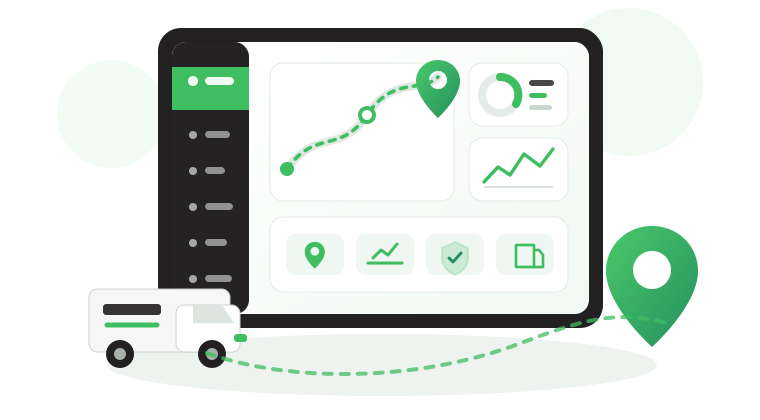
How Fire Service Fleet Management Software Builds Readiness
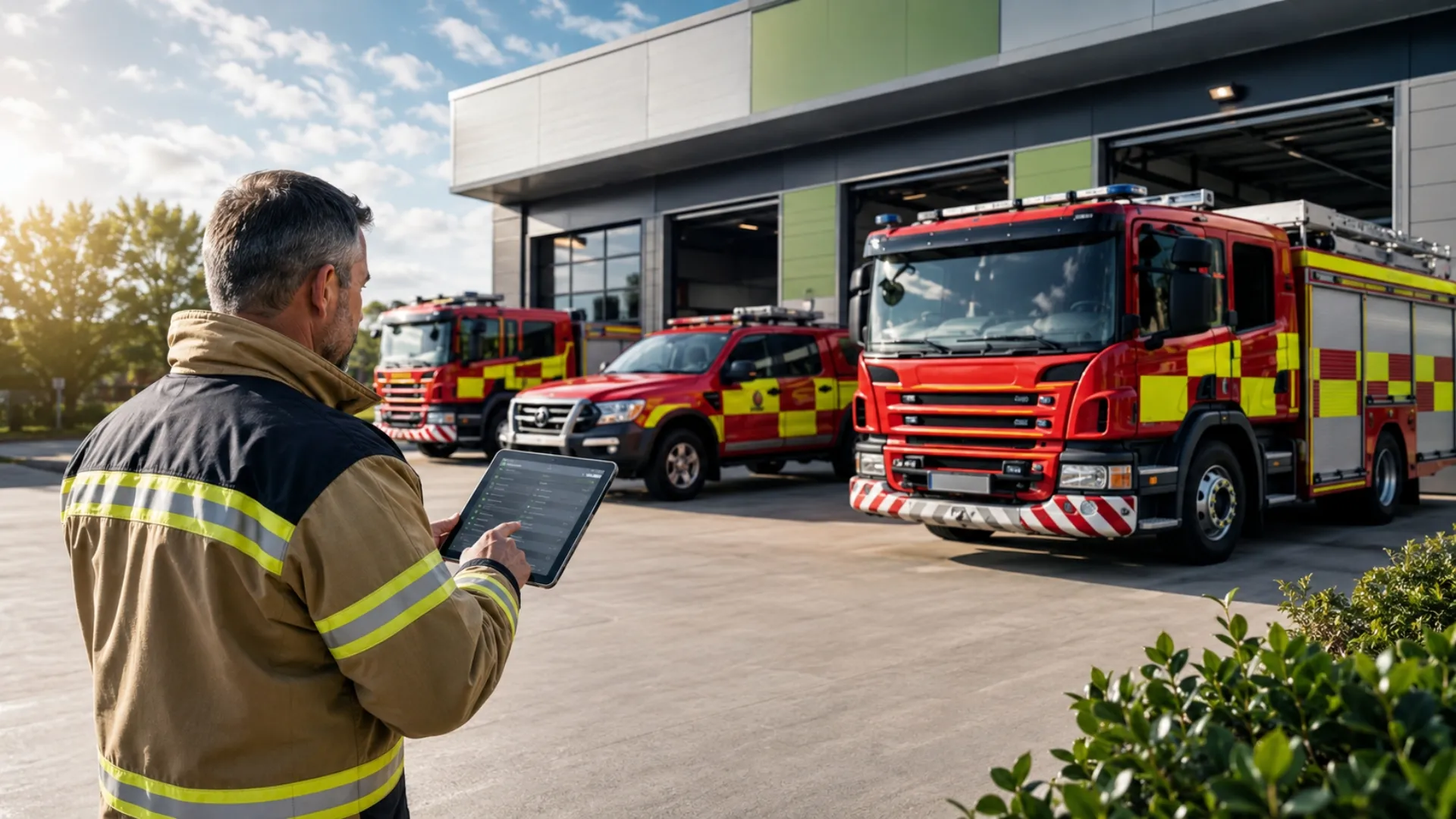
A fire engine, ambulance, rescue unit, or command vehicle can appear available on a schedule while still creating operational risk. The vehicle may be under-fueled, carrying an open defect, assigned to the wrong crew, missing a readiness sign-off, or generating driver behavior alerts that no one reviews fairly. For fire brigades and EMS teams, that gap creates pressure on dispatch, stress for drivers, unclear accountability, and weak post-incident evidence.
This guide explains how fire service fleet management software helps emergency fleet teams improve vehicle readiness, driver welfare, privacy governance, maintenance control, live visibility, and management reporting. You will also see how Safee can support UAE-based, GCC, and global B2B emergency fleet operations through a practical, configurable control layer.
What is fire service fleet management software?
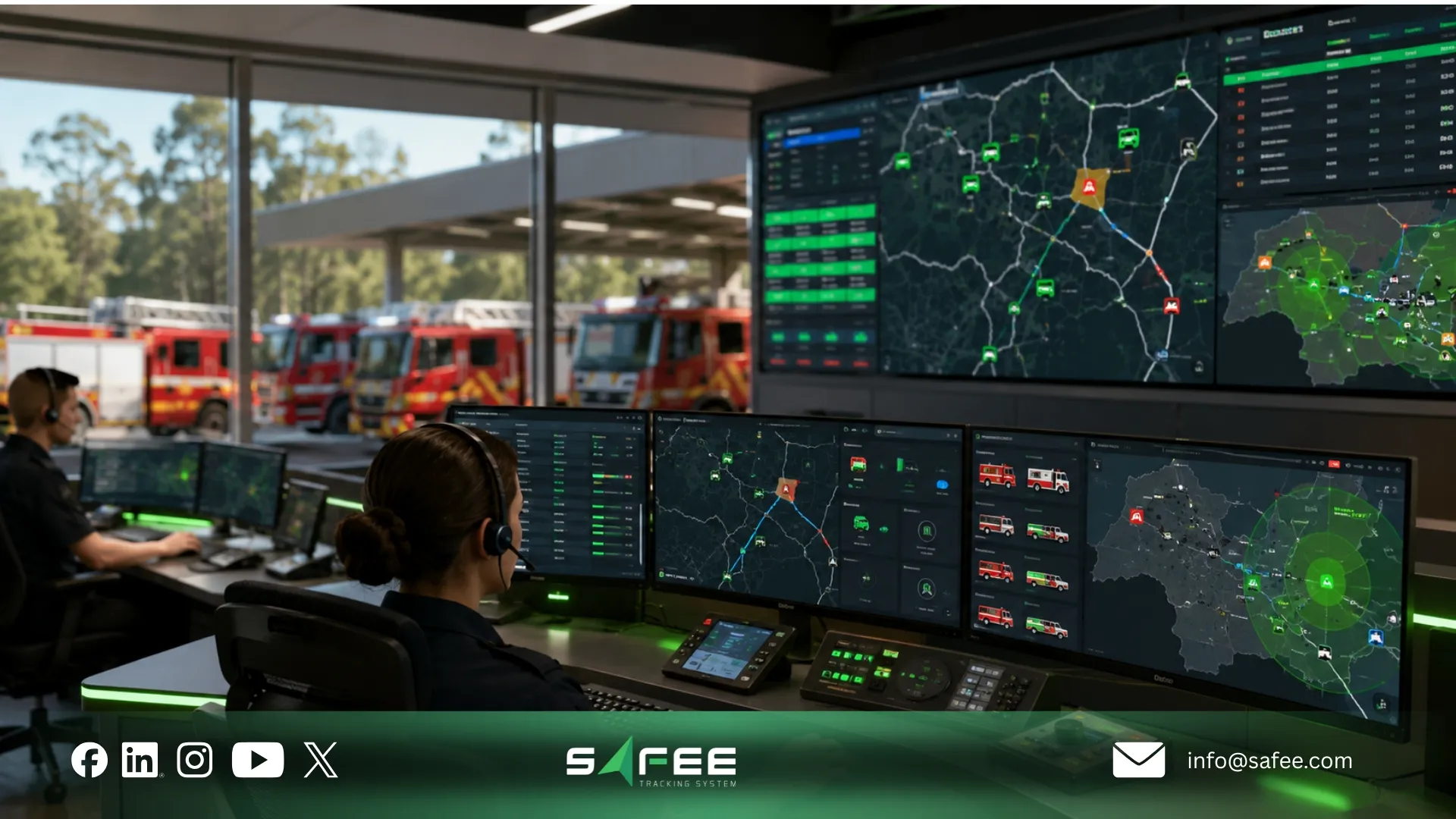
Fire service fleet management software is a connected platform that helps fire, rescue, and EMS organizations manage vehicles, drivers, inspections, maintenance, alarms, trip activity, and reports from one operational environment.
For emergency services, the purpose is wider than knowing where a vehicle is on a map. The platform should help answer practical questions before, during, and after each shift: Is the unit ready? Is it assigned? Did the crew complete the inspection? Is there an open defect? Which vehicle is closest and suitable? What happened during the route? Which exceptions need review?
A strong setup connects Live Vehicle Tracking, alerts, maintenance follow-up, driver records, role-based access, and reporting into a workflow that supports response readiness without turning fleet data into uncontrolled surveillance.
Why do fire and EMS fleets need a welfare-first control layer?
Emergency drivers operate under pressure. They may drive in congested areas, respond to urgent calls, work long shifts, and move between stations, hospitals, workshops, incident scenes, and standby zones. Fleet software should help the organization protect readiness and safety while treating driver data with fairness, context, and clear governance.
For fleet managers: Readiness and uptime
Fleet managers need to know which vehicles are available, which are in maintenance, which have open defects, and which require follow-up before dispatch. The goal is to reduce blind spots before they turn into avoidable downtime.
- Available, unavailable, in-service, and under-maintenance vehicles by station or depot.
- Open defects, overdue service tasks, and recurring maintenance issues.
- Inspection completion by driver, crew, vehicle type, or station.
- Geofence, trip, and route records for operational review.
For safety officers: Risk signals without blame
Safety officers need reliable event records, but driver behavior data must be interpreted carefully. Speeding, harsh braking, route deviations, and long idling can mean different things during an emergency response, routine movement, training, or post-incident transfer.
A useful system supports coaching and policy review. It should not create a culture where every alert is treated as a violation without operational context.
For HR and operations leaders: Driver welfare visibility
HR and operations leaders may need visibility into fatigue risk, shift pressure, repeated route stress, excessive waiting time, or patterns that affect driver welfare. This data should be reviewed under a defined policy: what is collected, why it is collected, who can see it, how long it is retained, and how drivers are informed.
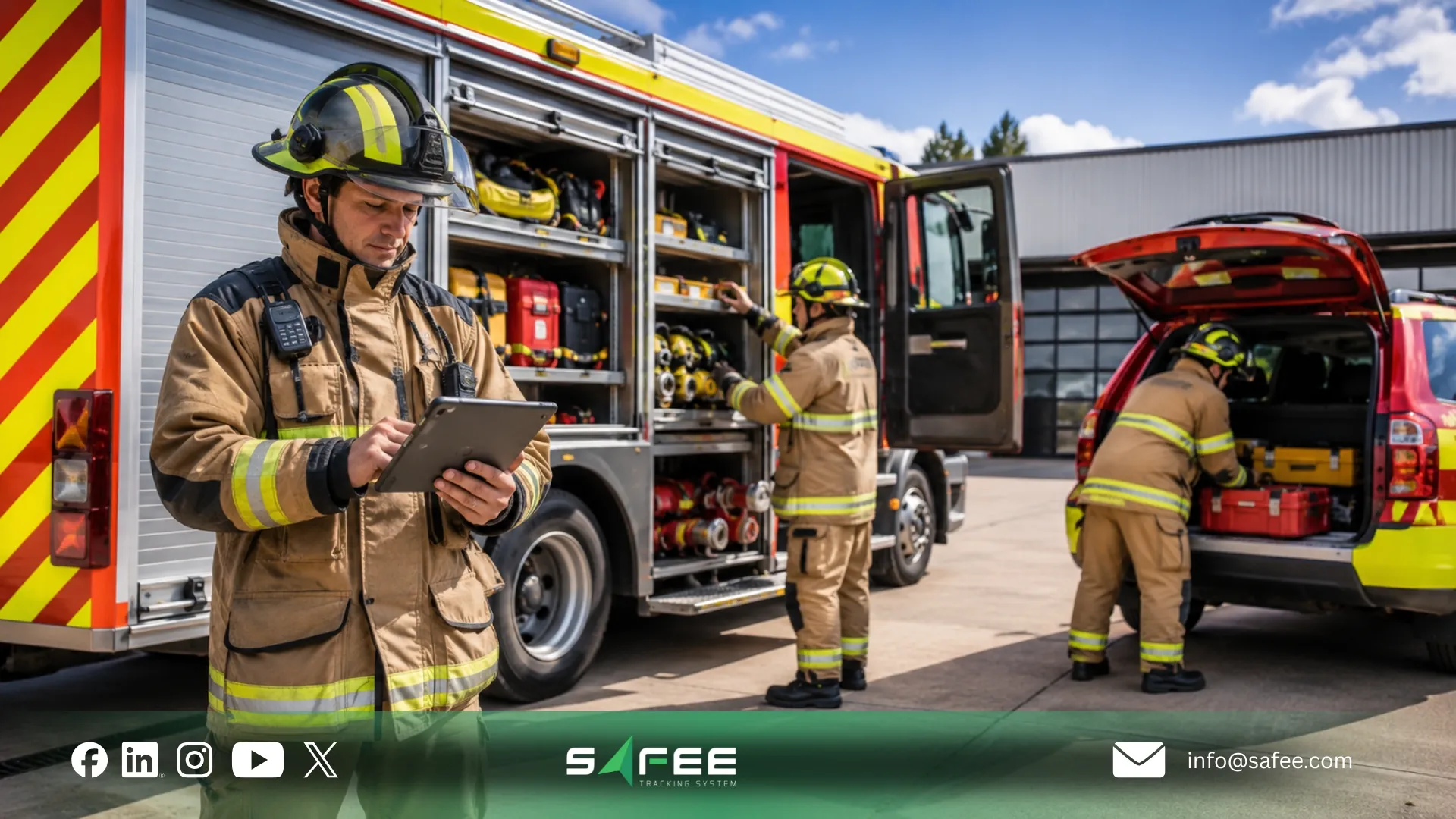
Core workflows in fire & rescue fleet management software
The best fire & rescue fleet management software does not win because it has the longest feature list. It wins when each feature is connected to a real decision: dispatch, readiness, welfare, maintenance, escalation, reporting, or leadership review.
Live vehicle tracking for dispatch and command visibility
Live vehicle tracking helps dispatchers, station officers, and command teams monitor vehicle location, movement, geofence activity, trip status, and route history. In emergency fleet operations, tracking must support action: closest suitable unit, departure time, arrival record, staging movement, hospital transfer, workshop visit, and return-to-service visibility.
- Station departure and return records.
- Incident-area or staging-zone geofences.
- Route history for after-action review.
- Visibility for active, idle, delayed, and unavailable vehicles.
Alarms and alerts that create action, not noise
Alarms and Alerts should be configured around escalation ownership. A low-fuel alert, route deviation, unauthorized movement, geofence breach, open defect, or maintenance trigger must reach the right role, not every user.
For emergency fleets, alert fatigue is a real risk. Too many low-value notifications can train teams to ignore the system. Start with high-value rules, define who owns each alert, and review closure quality in scheduled reports.
Fleet reporting for review, evidence, and improvement
Fleet Reporting helps operations, HSE, maintenance, HR, and leadership review patterns instead of relying on scattered screenshots or manual notes. Reports should support readiness trends, alert closure, driver behavior review, maintenance backlog, vehicle utilization, downtime, and station-level performance.
In fire and EMS organizations, reports should be scheduled, exportable, role-specific, and easy to discuss in operational meetings. The aim is continuous improvement, not report volume.
Maintenance module for readiness and downtime control
Emergency vehicles need proactive maintenance discipline. Our Maintenance Module can support service schedules, maintenance alerts, open task visibility, and follow-up workflows when configured around the fleet’s actual service rules.
- Define which defects block dispatch.
- Set maintenance schedules by date, mileage, engine hours, or operational rules where available.
- Review overdue tasks and repeated defects by vehicle type or station.
- Link inspection failures to maintenance follow-up where configured.
Driver management for accountability and welfare
Driver Management helps connect drivers, assignments, vehicle use, behavior events, and performance records. For fire brigade fleet management software, this should support accountability while keeping driver welfare and privacy policy visible.
The right setup should distinguish routine driving from emergency response, training, standby movement, and maintenance transfer. Review rules should be documented before driver data is used for coaching, escalation, or performance discussions.
Journey Management for Controlled Movement Where Required
JMS can support planned routes, active journey monitoring, route deviation checks, and post-journey review where the emergency fleet’s operating model requires structured trip control.
This is especially relevant for industrial fire teams, airport emergency services, oil and gas emergency response vehicles, long-distance EMS transfers, and fleets that operate across remote or high-risk routes.
EMS fleet management software
EMS fleet management software must support ambulance availability, readiness checks, driver accountability, maintenance follow-up, route visibility, and post-shift review. Ambulances may move between stations, hospitals, patient-transfer points, fuel stops, workshops, and standby locations, so visibility must be clear and controlled.
- Ambulance readiness status by station, zone, or operational group.
- Pre-shift inspection and vehicle condition records.
- Maintenance alerts for high-use vehicles.
- Hospital and station geofences, where they are useful.
- Driver behavior events reviewed with policy context.
- Trip timelines for operational review and complaint handling.
EMS teams should avoid placing clinical, patient, or sensitive medical information inside fleet workflows unless approved by the relevant medical governance, legal, and information-security teams. Fleet data should support vehicle operations, not become an uncontrolled clinical record.
Also read: Ambulance Fleet Management: Improve Response Times and Operational Safety
How should fire brigade fleet management software protect crews?
Driver welfare is not a soft benefit in emergency fleets. It affects response quality, safety culture, retention, incident review, and public trust. A fire or EMS driver who feels monitored without context may resist the system, while a driver who sees fair rules can treat fleet data as protection and support.
- Explain what data is collected: location, trip activity, driving events, inspection records, maintenance notes, and user actions.
- Define why it is collected: readiness, safety, maintenance, dispatch, incident review, and reporting.
- Separate emergency-response context from routine driving review.
- Use driver behavior data for coaching before discipline wherever policy allows.
- Give drivers a clear path to correct inaccurate assignments or missing context.
- Review fatigue, repeated high-pressure routes, long waiting time, and excessive overtime patterns through a welfare lens.
A welfare-first policy reduces mistrust. It tells drivers that data is used to improve readiness, verify facts, support training, and protect crews from unclear allegations.
Privacy and data governance for emergency fleet tracking
Privacy is central to emergency fleet tracking because the same data that improves visibility can expose sensitive movement patterns, station activity, incident response details, driver identity, and potentially patient-adjacent context. The software configuration should match the organization’s internal policy and local legal review.
Role-based access
Not every user needs the same data. A dispatcher may need live location and status. A station officer may need readiness and inspection records. A maintenance manager may need defects and service tasks. HR may need limited driver-related reports. Leadership may need trends, not raw trip surveillance.
Data minimization and purpose limitation
Collect the data needed to run safer, more reliable operations. Avoid collecting extra data because technology makes it possible. Each data field should have a clear purpose, owner, retention rule, and access level.
Incident review and retention
Incident-linked route histories, alerts, and timelines should be retained according to approved internal policy and legal requirements. Teams should define who can retrieve historical data, how exports are controlled, and how evidence is shared internally.
Patient and sensitive information boundaries
EMS operations may involve patient-adjacent movement patterns. Fleet systems should focus on vehicle, driver, route, readiness, and maintenance data. Any patient-related information should remain under approved medical systems and governance processes.
Need to align tracking, driver welfare, and privacy controls before rollout? Ask our experts to review your user roles, alert logic, reporting permissions, and data governance workflow.
Also read: Fleet Management Regulations in the GCC: Practical Compliance Guide
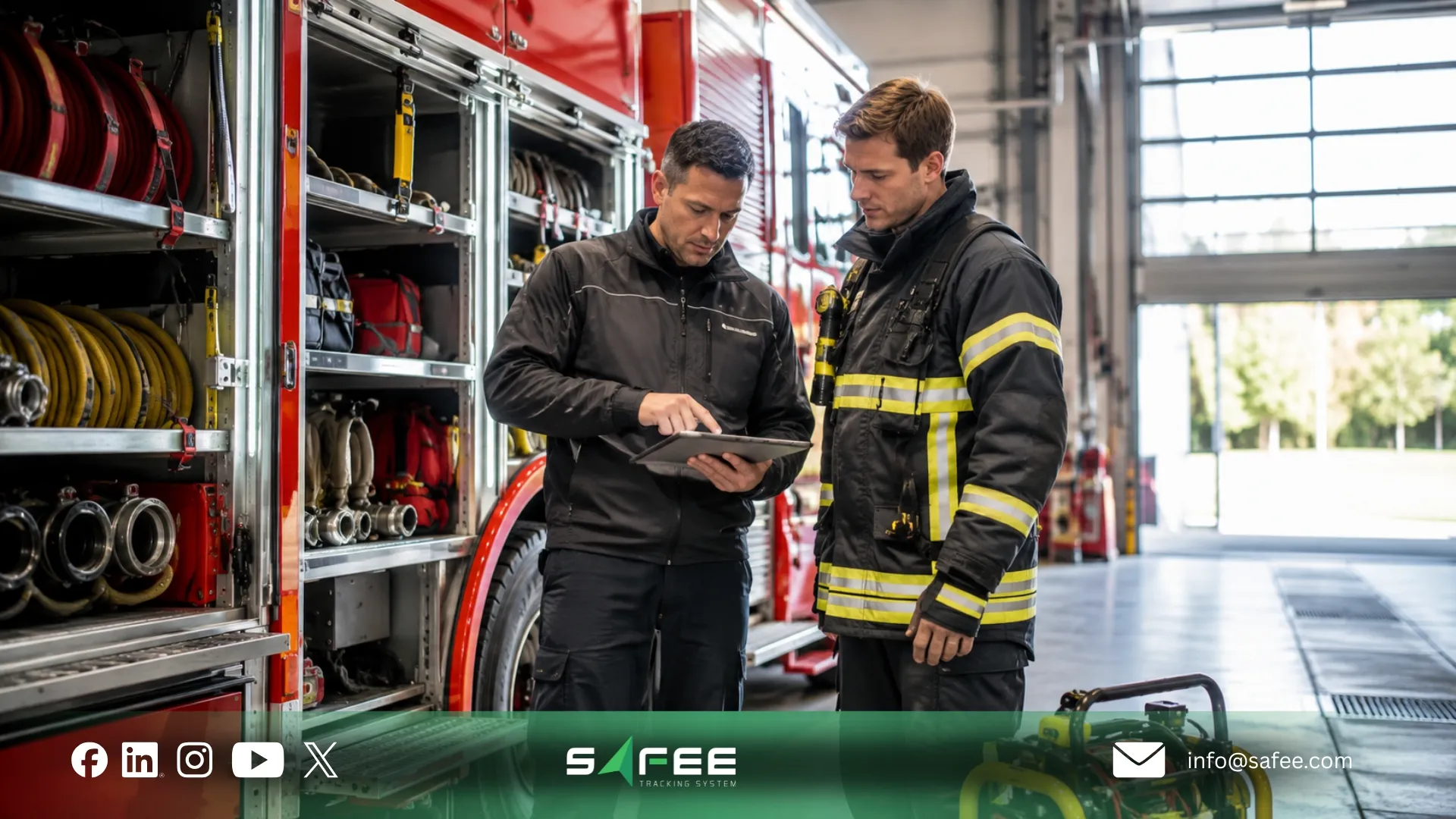
Implementation checklist before you deploy
Before deploying fire service fleet management software, define the operating model first. Software configuration should follow the workflow, not the other way around.
- Map vehicle types: fire engines, ladder trucks, tankers, rescue units, ambulances, command vehicles, support vehicles, and specialist assets.
- Define readiness rules: inspection checklist, fuel threshold, defect severity, equipment checks, and sign-off responsibility.
- Set alert ownership: which role receives each alert, response time, escalation path, and closure requirement.
- Create driver welfare policy: data collected, review rules, coaching process, dispute process, and transparency statement.
- Configure privacy controls: user roles, report access, export permissions, retention rules, and incident data governance.
- Plan integrations: dispatch, CAD, HR, maintenance, asset inventory, finance, procurement, or reporting systems where required.
- Start with a pilot: one station, one vehicle group, one EMS unit type, or one emergency response division before scaling.
Also read: Fleet Management Audit Checklist for GCC Long-Haul Trips
KPIs to track after launch fire service fleet management software
The rollout should be measured against operational outcomes, not the number of screens activated. Start with KPIs that show whether the emergency fleet is becoming more ready, safer, and easier to govern.
- Vehicle availability by station or response zone.
- Inspection completion rate before shift start.
- Open defects by severity and age.
- Maintenance downtime by vehicle type.
- Overdue service tasks.
- Critical alert closure time.
- Route deviation events reviewed with context.
- Driver behavior events resolved through coaching or policy action.
- Report review completion by operations, HSE, maintenance, HR, and leadership.
- Repeated readiness gaps by station, vehicle, or process owner.
How Safee supports GCC and global emergency fleets
Safee is a UAE-based B2B fleet management company serving fleets across the GCC and international markets. For emergency fleet operations, we help teams move from fragmented tracking and manual follow-up to a connected operating model built around Essential Modules, advanced configuration, alerts, reports, maintenance workflows, driver accountability, and mobile visibility.
A practical Safee setup for fire, rescue, and EMS fleets may include:
- Live Vehicle Tracking for location, route, geofence, and trip visibility.
- Alarms and Alerts for exception monitoring and escalation.
- Fleet Reporting for scheduled management review, exports, and operational evidence.
- Maintenance Module for service planning, open defects, and downtime follow-up.
- Driver Management for driver assignment visibility and behavior review.
- Journey Management System for controlled movement where route governance is required.
- Fleet Monitoring and Insights for dashboard visibility across vehicles, stations, and operational groups.
We do not recommend starting with every possible module. The better starting point is a workflow audit: which readiness gaps create the highest risk, which alerts matter, which reports leadership actually reviews, and which privacy controls must be in place before driver data is activated.
If you manage fire engines, ambulances, command vehicles, rescue units, industrial emergency vehicles, or airport fire service fleets, book a Safee demo focused on readiness, driver welfare, privacy, and reporting.
FAQs about fire service fleet management software
What is fire service fleet management software?
Fire service fleet management software helps fire, rescue, and EMS teams manage emergency vehicles, live tracking, inspections, maintenance alerts, driver records, route history, and reports from one connected platform. It supports readiness, dispatch visibility, safety review, and operational accountability.
How does fire brigade fleet management software support driver welfare?
Fire brigade fleet management software can support driver welfare by making shift pressure, route stress, repeated driving events, fatigue-related patterns, and vehicle readiness issues easier to review. The data should be used with clear policy context, role-based access, and fair coaching rules.
What privacy controls should fire & rescue fleet management software include?
Fire & rescue fleet management software should include role-based access, clear data purposes, controlled exports, retention rules, incident data governance, and limits on who can view driver, route, and historical trip records. Privacy requirements should be verified with the organization’s legal, HR, and information-security teams.
Can EMS fleet management software support ambulance readiness?
Yes. EMS fleet management software can support ambulance readiness by connecting pre-shift inspections, maintenance alerts, open defects, availability status, hospital or station geofences, driver assignment visibility, and post-shift reports. Patient or clinical information should remain under approved medical governance systems.
How should emergency fleets use driver behavior data fairly?
Emergency fleets should define how driver behavior data is reviewed before rollout. Emergency response, routine driving, training, standby movement, and maintenance transfers should not be treated the same unless policy clearly requires it. The goal should be safety improvement, coaching, and accurate review rather than automatic blame.
Is Safee suitable for GCC and global fire and EMS fleets?
Safee can support UAE-based, GCC, and international B2B emergency fleets through configurable modules for live tracking, alarms, fleet reporting, maintenance, driver management, journey management, and operational dashboards. The exact setup should be scoped around the fleet’s vehicle types, stations, workflows, integrations, and governance requirements.
Ready to improve your fleet operations?
Tell us what you would like to improve. A Safee specialist will reply by email.
Usually replies within one business day • No sales spam
Your details are used only to respond to your request. Privacy Policy