
Build Safer Trips with a Fleet Management Audit Checklist

A long-haul truck can leave the yard on time and still be unready for the route. One missed tyre defect, outdated document, weak fuel plan, or unassigned route alert can become downtime far from the depot, an HSE concern, a delivery dispute, or an avoidable recovery call. For B2B fleets operating from the UAE across the GCC and global routes, a fleet management audit checklist is not paperwork. It is the proof that the trip was checked, approved, monitored, and reviewed correctly.
This guide shows fleet managers and dispatchers how to build a long-haul fleet management audit checklist around vehicle readiness, driver readiness, documents, route planning, fuel, tracking, alerts, and post-trip records. It also explains how we at Safee connect the checklist with live vehicle tracking, fleet maintenance management, fleet safety management, fleet management route optimization, Alarms and Alerts, Journey Management, Fleet Reporting, and SatComm for GCC and international long-haul operations.
What should a fleet management audit checklist prove?
A fleet management audit checklist should prove that the right vehicle, driver, documents, route, fuel plan, monitoring setup, and escalation process were reviewed before dispatch. The value is not the form itself. The value is the record it creates for operations, maintenance, safety, and management teams.
For long-haul fleets, the checklist should answer a practical audit question: if something goes wrong on the road, can your team show what was checked, who approved the trip, which exceptions were corrected, and how the vehicle was monitored after departure?
That is why the primary focus should be auditability. A normal fleet management checklist helps teams prepare. A fleet management audit checklist also helps teams prove that preparation happened and that open risks were handled before the truck left.
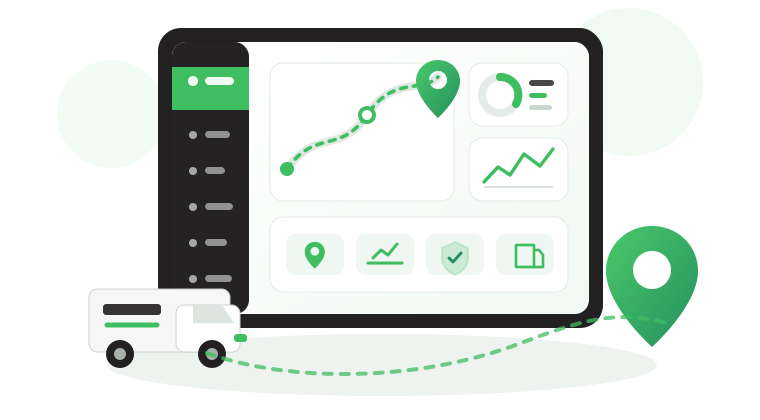
For live route visibility, our Live Vehicle Tracking helps teams track vehicle, driver, alarms, geofence, fuel, and performance data in one operating view.
Planning long-haul routes across the GCC? Request a Safee demo to connect your fleet management audit checklist with live tracking, alerts, journey monitoring, and reporting before dispatch.
Why do long-haul routes need auditable pre-trip control?
Long-haul operations leave less room for assumptions. A small maintenance issue can become a roadside stop. A missing permit can delay delivery. An unclear escalation rule can slow response when a vehicle stops, deviates from the route, or loses contact.
In GCC long-haul work, fleets may deal with heat, desert roads, cross-border movement, remote routes, customer access rules, ports, industrial zones, and weak signal areas. These conditions make dispatch control more important than simple availability.
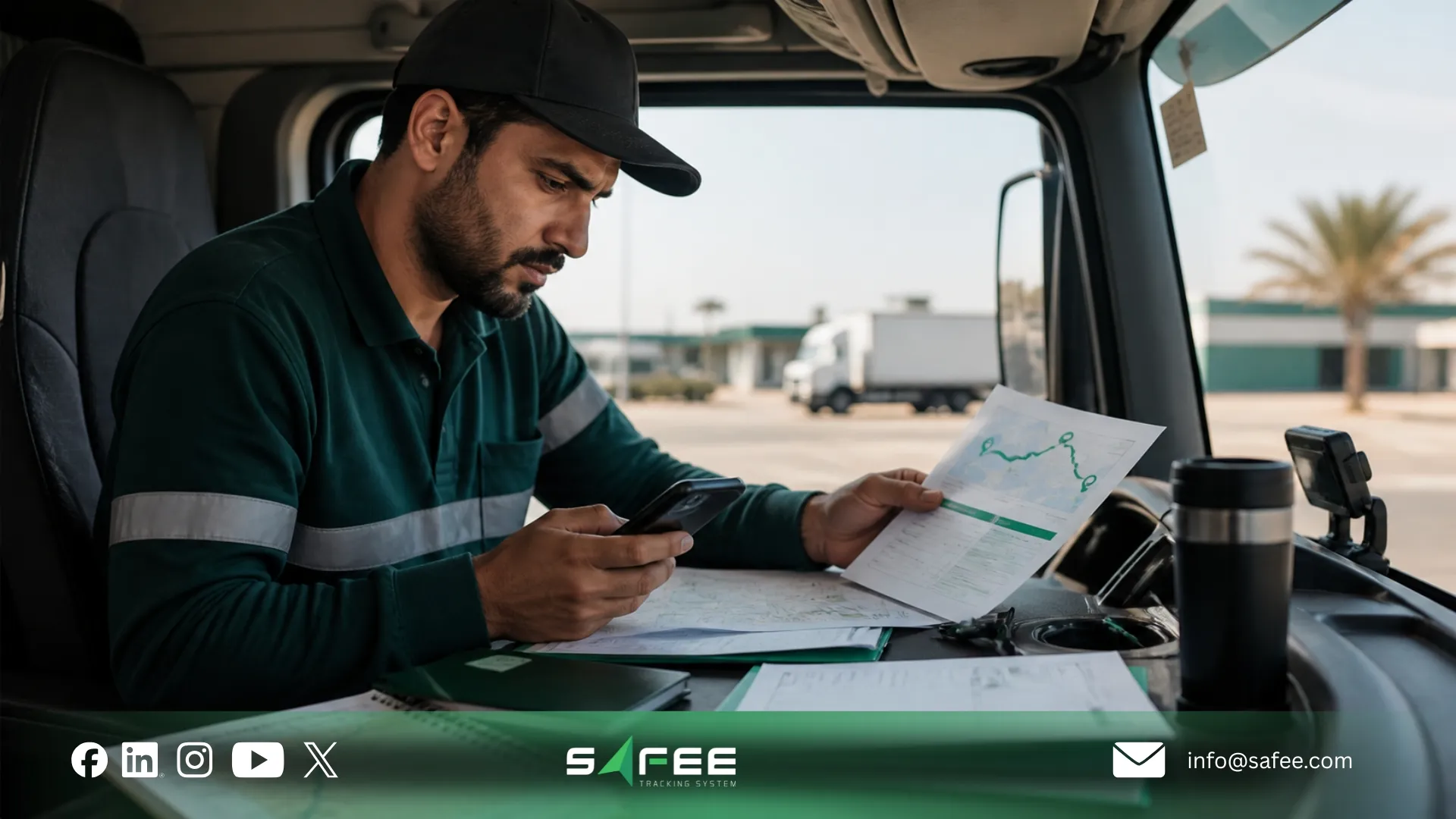
A strong fleet management audit checklist gives each team a clear role: maintenance confirms vehicle condition, dispatch confirms route and documents, safety confirms driver readiness, and the fleet manager approves exceptions before release.
Core items in a fleet management audit checklist
The checklist should be short enough to use every day but complete enough to protect long-haul safety, uptime, compliance, and service reliability.
Audit area | What to verify | Primary owner |
Vehicle readiness | Tyres, brakes, fluids, battery, lights, defects, trailer, service status | Maintenance |
Driver readiness | License, fitness, rest status, route briefing, emergency procedure | Fleet manager / HSE |
Document readiness | Registration, insurance, permits, waybill, cargo documents, customer access | Dispatch |
Route readiness | Approved route, stop points, refuel plan, backup route, risk zones | Dispatch / Operations |
Monitoring readiness | Tracking active, alerts assigned, geofences, reporting cadence, escalation contacts | Fleet manager |
Post-trip audit update | Defects, route deviations, fuel notes, alerts, safety events, corrective actions | Driver / Maintenance |
Use three outcomes for every major finding: safe to dispatch, dispatch after correction, or no dispatch until repaired or approved. This keeps the audit checklist operational rather than symbolic.
Also read: Fleet Management Regulations in the GCC: Practical Compliance Guide
Fleet maintenance management checks before dispatch
Fleet maintenance management is the process of planning, tracking, and controlling vehicle conditions so trucks remain safe, available, and fit for the assigned trip. Before a long-haul route, maintenance checks should focus on failure points that become expensive when support is far away.
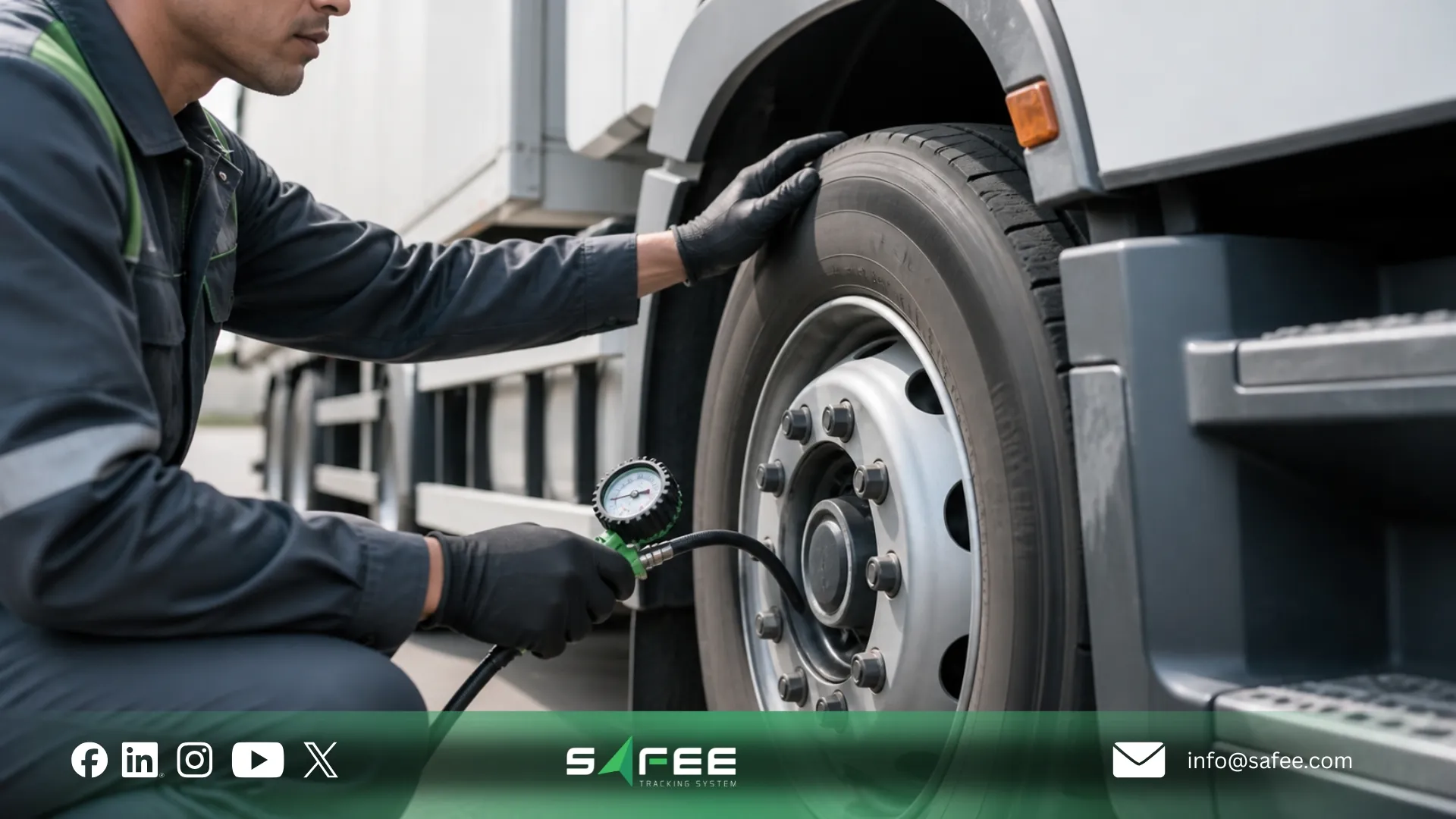
- Tyres: pressure, tread depth, sidewall damage, uneven wear, valve caps, wheel nuts, and spare readiness.
- Brakes: response, warning indicators, air pressure behaviour where relevant, pads, and known defects.
- Fluids: engine oil, coolant, brake fluid, clutch fluid where applicable, washer fluid, and hydraulic fluids where required.
- Cooling system: coolant level, radiator condition, hoses, caps, fan operation signs, and overheating history.
- Battery: terminals, mounting, charging behaviour, and starting weakness.
- Lights and visibility: headlights, brake lights, indicators, reflectors, mirrors, windscreen, and warning equipment.
- Trailer and coupling: coupling security, electrical connections, air lines, landing gear, load restraint, and trailer tyres.
- Open defects: unresolved issues from the previous trip and any maintenance alert that should block dispatch.
At Safee, our Maintenance Module can help connect service tasks, maintenance alerts, and roadworthiness follow-up with the wider fleet maintenance management process.
Want to connect pre-trip inspections with maintenance alerts and reports? Talk to Safee about configuring a fleet maintenance management workflow for long-haul routes.
Driver and document checks for audit readiness
A fleet management audit checklist should show that the right driver, approvals, documents, and briefings were in place before the trip. This matters for long-haul dispatch because document gaps are harder to fix once the vehicle is already on route.
Driver items to verify
- Driver name, ID, license category, and license validity.
- Assigned vehicle and trailer combination.
- Fitness-for-duty confirmation and rest or fatigue-control check.
- Route briefing completion and emergency procedure briefing.
- Communication and check-in expectations.
- Load awareness, cargo handling instructions, and driver digital sign-off.
Document items to verify
- Vehicle registration and insurance documents.
- Permits required for the route, cargo, customer site, port, or border crossing.
- Delivery note, waybill, invoice, cargo manifest, or customs documents where applicable.
- Customer access approvals and special cargo documentation where required.
- Incident and breakdown reporting procedure.
Safee’s Driver Management capabilities are useful when driver identity, vehicle assignment, behaviour visibility, and performance review need to support safer dispatch decisions.
Fleet safety management sign-off before the engine starts
Fleet safety management starts before the truck leaves. The driver’s risk exposure is often created during dispatch: unrealistic timing, weak rest planning, unclear stop points, poor communication rules, or missing emergency equipment.
- Confirm driver fitness and rest status before assignment.
- Brief the driver on approved route, stop points, restricted areas, and high-risk sections.
- Clarify speed policy, harsh-driving expectations, and fatigue controls.
- Confirm emergency contact process and breakdown escalation.
- Verify load condition, securing status, and route documents.
- Activate tracking, geofences, route deviation alerts, and check-in expectations.
- Define no-dispatch rules for critical safety issues.
Safee’s Alarms and Alerts module supports instant notifications, 50+ alarm types, custom alert delivery, geofencing, driver and vehicle monitoring, and categorized reports.
Fleet management route optimization checks for long-haul trips
Fleet management route optimization is not only choosing the shortest route. For long-haul fleets, it means building a route that is realistic, safe, monitored, and aligned with fuel, rest, customer, and delivery requirements.
- Approved route and backup route.
- Planned stops, rest points, refuel points, and customer locations.
- High-risk areas, restricted roads, roadworks, port access, or industrial-zone requirements.
- Estimated travel windows based on route policy and customer expectations.
- Fuel level before departure, approved refuel points, and backup fuel options.
- Communication coverage gaps and check-in rules.
- Geofences for depot, route corridor, customer site, border, and restricted zones.
- Route-deviation alert ownership and escalation rules for unplanned stops, late arrival, or loss of contact.
At Safee, we offer a Journey Management System to help connect route approval, journey monitoring, alerts, driver compliance, fuel-efficiency analytics, and post-journey reporting.
Need stronger route sign-off for long-haul dispatch? Request a Safee consultation to map route approvals, geofences, alerts, fuel checks, and escalation rules around your operating model.
Also read: Fleet Management Checklist for GCC Desert Truck Operations
How to run the audit checklist end to end
A checklist only works when it becomes part of the operating process. For long-haul fleets, the audit workflow should be built into dispatch through six stages.
Stage | Action | Audit output |
Prepare | Assign vehicle, driver, route, documents, and load early | Trip file ready for inspection |
Inspect | Complete vehicle, driver, document, route, and monitoring checks | Issues visible before dispatch |
Correct | Fix defects, update documents, adjust route, or reassign vehicle/driver | Risk reduced or escalated |
Approve | Named person releases, delays, or blocks dispatch | Traceable decision |
Monitor | Track trip progress, alerts, stops, and route adherence | Live operating control |
Review | Update maintenance records, audit checklist, and route plan | Continuous improvement |
During the trip: Tracking, alerts, and escalation
The audit checklist should confirm monitoring before departure, then continue through the trip. Dispatchers should know which alerts matter, who receives them, and what action follows.
- Live tracking is active and visible to the responsible team.
- Driver contact method and mobile access are working where relevant.
- Route-deviation, geofence, overspeeding, harsh-driving, long-stop, and maintenance alerts are assigned.
- Check-in cadence and escalation contacts are clear.
- Reports are available for operations, maintenance, HSE, and management review.
For low-coverage routes, our SatComm satellite tracking helps maintain visibility beyond traditional network coverage in remote regions, deserts, borders, and long-haul Gulf routes.
After the trip: Update the fleet management audit checklist
The audit checklist should not end when the truck returns. Post-trip updates turn each long-haul journey into a learning loop for maintenance, routing, safety, and management review.
- Arrival status and completion notes.
- Route deviations, reason codes, unplanned stops, and long stationary events.
- Fuel events, refuel points, and unusual fuel behaviour.
- Driver check-ins, missed check-ins, and communication gaps.
- Overspeeding, harsh braking, harsh acceleration, and other safety alerts.
- Maintenance concerns reported by the driver.
- Tyre, cooling, brake, battery, trailer, or load issues.
- Customer access, document, or delay problems.
- Corrective actions before the next dispatch.
We designed our Fleet Reporting to support customizable, scheduled, and exportable reports for monitoring, compliance tracking, performance evaluation, and management review.
Need a cleaner audit trail for long-haul dispatch? Book a Safee demo to connect checklist sign-off, alerts, trip reports, and post-trip follow-up in one workflow.
Why choose Safee for a fleet management audit vhecklist?
At Safee, we help fleet teams move the fleet management audit checklist from a paper form into a live operating workflow. For long-haul routes, the value is not only knowing where trucks are. It is connecting inspections, route planning, driver readiness, alerts, maintenance follow-up, reporting, and post-trip review in one repeatable process.
As a UAE-based fleet technology platform serving B2B fleets across the GCC and global markets, Safee is especially relevant for operations that need visibility across intercity routes, remote corridors, cross-border movement, and multi-team dispatch workflows.
- Use Live Vehicle Tracking for real-time location, geofences, alarms, trip status, and performance data.
- Use Alarms and Alerts to notify the right people about route, safety, maintenance, and operational exceptions.
- Use Maintenance Module to connect inspections with service tasks, alerts, and roadworthiness follow-up.
- Use Journey Management System to connect route approval, journey monitoring, compliance scores, and post-journey reporting.
- Use Fleet Reporting to create scheduled reports and evidence for management, HSE, and audit reviews.
- Use SatComm when long-haul routes move beyond reliable cellular coverage.
Visit our website to explore the wider fleet management platform and module ecosystem.
Digital checks to replace paper fleet maintenance management logs
Paper logs are easy to complete but hard to govern. They can be misplaced, filled late, skipped under pressure, or disconnected from alerts and maintenance history. Digital checks make fleet maintenance management more useful because inspection results can connect to vehicle records, maintenance alerts, reporting, and dispatch decisions.
For fleets that still rely on spreadsheets or paper forms, the priority is not digitizing every field at once. Start with items that block dispatch: critical maintenance defects, expired documents, route approval, driver readiness, tracking activation, and escalation ownership.
Better routes and stronger fleet safety management
A fleet management audit checklist should improve route discipline, maintenance follow-up, fleet safety management, and audit readiness over time. Safee supports this by connecting route planning, journey monitoring, alerts, reports, and driver behaviour visibility.
- Pre-trip driver briefing.
- Vehicle readiness confirmation.
- Route and stop-point approval.
- Live trip monitoring.
- Smart alerts for risk events.
- Escalation ownership.
- Post-trip review.
- Continuous checklist improvement.
Build a long-haul fleet management audit checklist with Safee. Contact us to align inspections, driver sign-off, route monitoring, maintenance alerts, SatComm, and Fleet Reporting before your next long-haul route.

FAQs about the fleet management audit checklist
What should a fleet management audit checklist include?
A fleet management audit checklist should include vehicle condition, tyres, brakes, fluids, battery, lights, trailer checks, driver readiness, documents, permits, route plan, fuel plan, emergency equipment, tracking setup, alerts, escalation contacts, final dispatch approval, and post-trip updates.
How is a fleet management audit checklist different from a basic checklist?
A basic fleet management checklist helps teams prepare for dispatch. A fleet management audit checklist also creates evidence: who checked each item, what exception appeared, what action was taken, who approved the trip, and what was updated after the route.
How often should fleet maintenance management checks be logged?
Fleet maintenance management checks should be logged before every long-haul dispatch and updated after the trip if the driver reports defects, overheating, tyre concerns, braking issues, fuel anomalies, warning lights, or unusual vehicle behaviour.
How does fleet management route optimization fit into the audit checklist?
Fleet management route optimization fits into the audit checklist by confirming the approved route, backup route, stop points, refuel locations, risk areas, communication gaps, geofences, route-deviation alerts, and estimated arrival windows before dispatch.
How can Safee support fleet safety management on long-haul trips?
Safee can support fleet safety management by connecting live vehicle tracking, driver monitoring, route alerts, Journey Management, SatComm, Fleet Reporting, and maintenance follow-up so teams can act before small route issues become larger operational risks.
Ready to improve your fleet operations?
Tell us what you would like to improve. A Safee specialist will reply by email.
Usually replies within one business day • No sales spam
Your details are used only to respond to your request. Privacy Policy