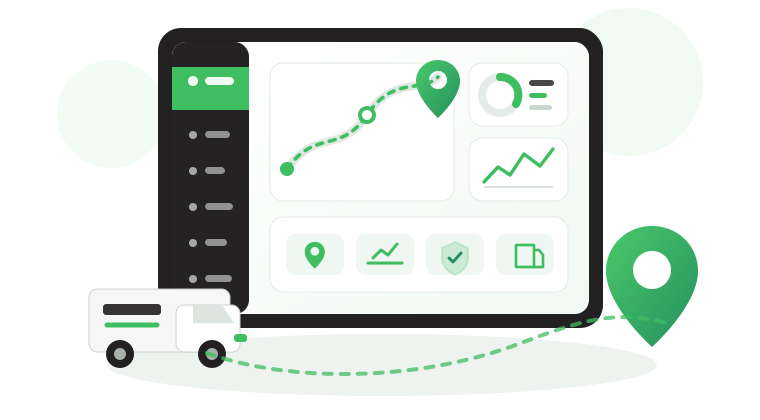

How to Improve Dealership Loaner Fleet Management
A dealership can have a full workshop, loyal customers, and a strong aftersales team, yet still lose control of courtesy cars. One vehicle is late, another is parked at the wrong branch, one customer used more mileage than expected, and the next service customer is already waiting. The problem usually appears at the service desk, but the cause is operational: weak visibility across assignments, usage, returns, mileage, condition, and readiness.
This guide explains how dealership loaner fleet management works for service centers, dealer groups, and aftersales operations in the GCC and global B2B markets. You will learn how it differs from rental fleet management, what to control during each loaner cycle, which features matter most for courtesy cars, and how Safee can support live visibility, exception alerts, readiness reporting, and branch-level accountability.
What is dealership loaner fleet management?
Dealership loaner fleet management is the process of assigning, tracking, monitoring, receiving, preparing, and reporting on courtesy cars used by service customers. It connects the loaner vehicle to the service workflow so dealership teams can see whether each car is available, assigned, late, outside an approved area, due for maintenance, or ready for the next customer.
For a dealership, a loaner vehicle is not only a temporary replacement car. It supports customer satisfaction, service retention, repair continuity, and branch operations. A courtesy car must be clean, road-ready, assigned correctly, monitored fairly, returned on time, and prepared quickly for the next handover.
- Which courtesy cars are available now?
- Who approved the handover and who confirmed the return?
- Which vehicles are late, overused, or outside approved areas?
- Was mileage, fuel, condition, damage, or exception history recorded clearly?
- Which cars are assigned to customers, service advisors, branches, or repair orders?
- Which cars should not be assigned because of maintenance, cleaning, or unresolved issues?
Why do loaner fleets need better control in dealership service operations?
Loaner fleets create pressure because they sit between customer service, workshop delays, branch operations, vehicle risk, and management reporting. A missing or unavailable courtesy car can delay a customer, increase service-desk stress, and weaken the dealership experience.
In small operations, manual updates may appear manageable. In multi-branch dealer groups, manual tracking becomes fragile. Cars move between locations, repairs take longer than expected, customers return vehicles outside normal hours, and service advisors need reliable information before they make promises.
Vehicle availability for service customers
A dealership may own enough courtesy cars on paper and still struggle with availability. The issue is not always fleet size; it is often status accuracy. Vehicles may be with customers, waiting for cleaning, parked at another branch, due for service, or returned without a complete check-in record.
- Which cars are ready for handover today?
- Which cars are still away from the branch?
- Which vehicles are expected back before the next service slot?
- Which branches are overusing or underusing their courtesy car pool?
- Which vehicles are available but not ready because of maintenance or inspection issues?
Late returns, unauthorized use, damage, and dispute risk
Loaner vehicles create disputes when records are incomplete. A customer may return the car late, exceed expected usage, drive outside approved areas, return the car with extra mileage, or dispute when damage occurred. The dealership needs a fair and consistent process that protects both the customer and the business.
- Fuel differences between handover and return.
- Late returns that affect the next service customer.
- Unauthorized movement outside approved operating zones.
- Damage found after return without clear supporting records.
- Excessive mileage, after-hours movement, or unusual usage patterns.
- Missed maintenance or readiness checks between customer assignments.
Privacy and fair monitoring for courtesy cars
Tracking a courtesy car is different from tracking an employee vehicle. The dealership should define what is monitored, why it is monitored, who can access the data, how long records are retained, and how customers are informed through the loaner agreement or internal policy. Safee supports role-based workflows, but each dealership should verify its own privacy, consent, and data-retention requirements before deployment.
For driver and access governance principles, review our Driver Management resources and adapt the workflow to your dealership policy.
Dealership loaner fleet management vs. rental fleet management
Dealership loaner fleet management is related to rental fleet management, but the business objective is different. Traditional rental fleet management and rental car fleet management usually focus on public rental bookings, pricing, contracts, branch inventory, billing, and rental utilization. A dealership loaner fleet is tied to aftersales service, workshop timelines, warranty work, customer retention, and fast turnaround between service appointments.
Fleet rental management tools can help with assignments and returns, but dealership teams need a workflow shaped around service advisors, repair orders, customer handover, branch returns, usage rules, maintenance readiness, and exception follow-up. The success metric is not rental revenue. It is service continuity, courtesy car availability, lower misuse risk, and a better customer experience.
If your operation is a public rental business rather than a dealership loaner fleet, see our guide to car rental fleet management software. For dealership courtesy cars, the workflow should stay focused on service operations, loaner control, and readiness.
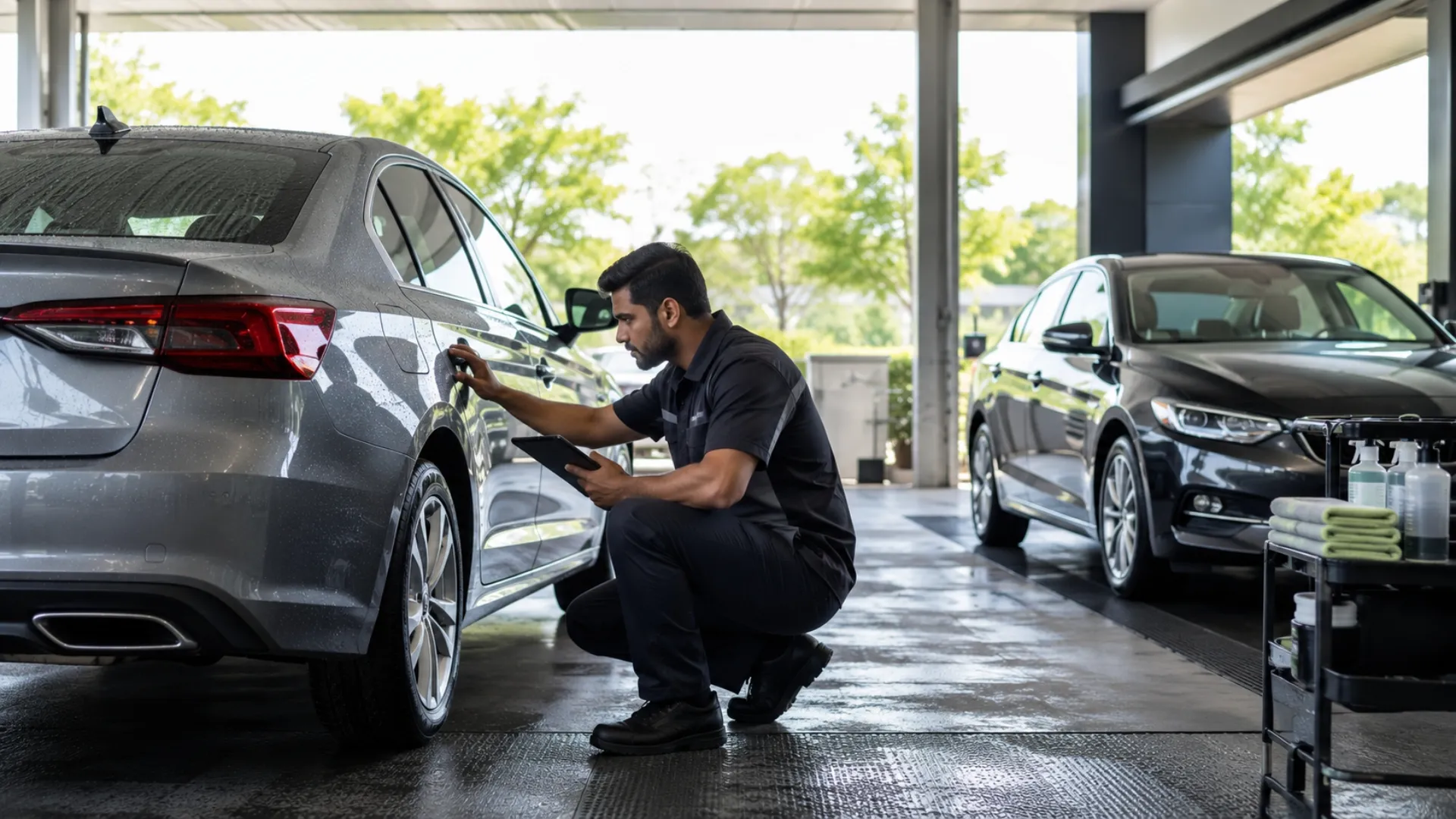
What to control during each dealership loaner cycle
A good loaner process controls the full cycle: before assignment, at handover, during customer use, at return, and before the vehicle is released again. The goal is not to collect more data for its own sake. The goal is to make the right information visible at the right moment.
Loaner stage | What to control | Why it matters |
Before assignment | Vehicle status, maintenance readiness, cleaning, branch location, availability. | Avoid handing over a car that is unavailable, unprepared, or due for service. |
Check-out | Customer/service reference, employee handover, mileage, fuel, condition, return location, expected return window. | Create a clear starting record for the loaner cycle. |
During use | Live location, geofence status, journey history, mileage, alerts, after-hours movement. | Support fair monitoring and faster follow-up when exceptions occur. |
Return | Return time, mileage, fuel, condition, damage notes, branch/location confirmation. | Reduce disputes and prepare the next action quickly. |
Ready again | Cleaning status, open issues, maintenance reminders, readiness report, next assignment. | Keep the courtesy car pool available for the next customer. |
Essential features of dealership loaner fleet management software
The best dealership loaner fleet management software is not a generic vehicle tracker. It should support the dealership’s operating model: courtesy car assignments, branch visibility, customer handover, approved use, exception alerts, maintenance readiness, and management reporting.
Live GPS tracking for courtesy cars
Live Vehicle Tracking helps dealership teams see where each courtesy car is while it is assigned. This supports real-time visibility across service branches, customer areas, return points, workshops, and storage yards.
- Confirm whether a vehicle is still in customer use.
- Locate a loaner car that has not returned on time.
- Check whether the vehicle is near the dealership or outside expected areas.
- Review movement history if a damage, late return, or misuse question appears.
- Reduce manual calls between service advisors, customers, and fleet coordinators.
Geofencing for branches, service centers, and return zones
Geofencing creates a virtual boundary around a physical location. In dealership operations, that can include the showroom, service center, branch, workshop, storage yard, customer return area, approved operating zone, or restricted location.
- Branch entry and exit records.
- Return zone confirmation.
- Out-of-zone movement alerts.
- After-hours movement review.
- Multi-branch vehicle visibility.
- Exception reporting for cars outside approved areas.
Geofences should be configured carefully. Too many zones can create alert noise. Too few zones may miss important exceptions. Start with the highest-value locations first: main dealership, service branch, storage yard, workshop, return zone, and restricted areas.
Digital Check-In and Check-Out Records
Digital check-in and check-out records help replace scattered paper forms, informal messages, and memory-based handovers. A structured record makes it easier to confirm who received the vehicle, when it left, when it returned, and what condition was recorded.
- Customer or service order reference.
- Assigned vehicle and branch.
- Check-out date and expected return time.
- Starting and returning mileage.
- Fuel level at handover and return.
- Employee handover and return confirmation.
- Readiness status before the next customer assignment.
- Vehicle condition notes and photos where the workflow supports them.
The goal is not only documentation. It is faster decision-making. If a courtesy car returns with a new issue, the team can review the handover record, journey history, mileage, and return notes before assigning it again.
Mileage, fuel, usage, and journey history
Mileage tracking helps service teams understand whether customer usage is reasonable for the loaner policy. Fuel records reduce return disputes. Journey history supports review when a vehicle is late, used outside agreed areas, or linked to a damage question. These controls are especially useful for dealership groups that operate across multiple branches or service centers.
Alarms and Alerts for Misuse and Exceptions
Our Alarms and Alerts can help teams detect exceptions that require follow-up. Alerts should be configured around dealership policy, not generic rules.
- The vehicle leaves an approved zone.
- The vehicle enters a restricted area.
- The vehicle moves after hours.
- The vehicle remains away longer than expected.
- The vehicle returns to the wrong branch.
- The vehicle exceeds usage expectations.
- Maintenance or readiness issues need follow-up.
Before rollout, define who receives each alert, what action is expected, and how an alert is closed. A useful alert workflow should reduce confusion, not add noise.
Also read: Fleet Truck Tracking System for GCC Heavy Vehicles
Fleet reporting for availability, utilization, and readiness
Fleet Reporting helps dealership leaders move beyond individual incidents and review patterns. Reports can show availability by branch, utilization by vehicle, repeated late returns, high-mileage cars, after-hours movement, maintenance due, and vehicles not ready for assignment.
- Courtesy car availability by branch.
- Assigned vs. parked vehicles.
- Utilization by vehicle and period.
- Mileage trends and unusual usage.
- Late returns and out-of-zone events.
- Maintenance due or overdue vehicles.
- Readiness status before assignment.
- Vehicles with repeated exceptions.
Maintenance reminders and readiness follow-up
A courtesy car should not be released only because it is physically available. It should also be road-ready. Our Maintenance Module can support service schedules, maintenance alerts, and follow-up workflows so dealership teams avoid assigning vehicles with unresolved issues.
To review all our features, explore our solutions, including all three modules we offer,
How Safee supports dealership loaner fleets
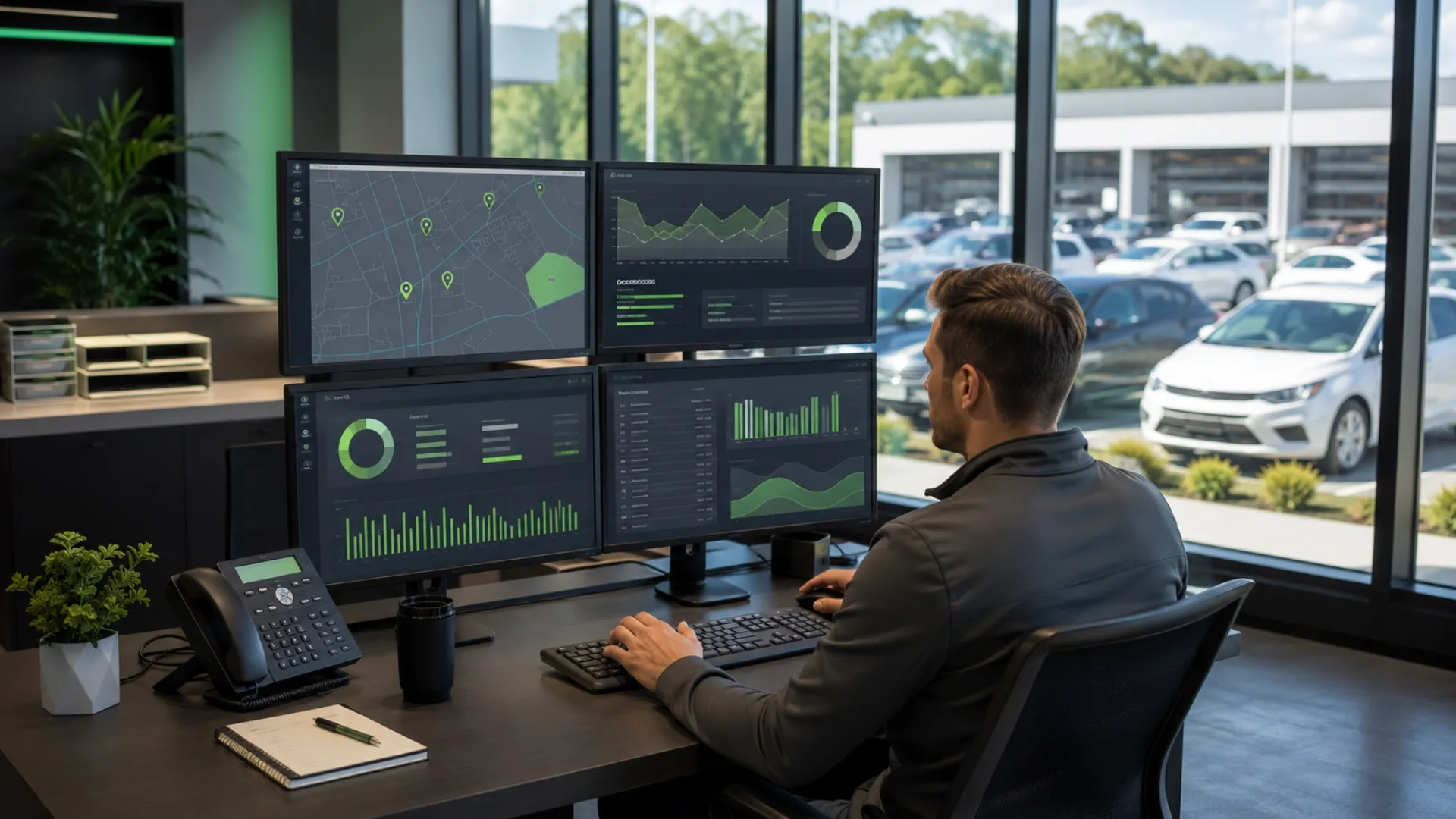
Safee is a UAE-based fleet management platform serving B2B fleet operations across the GCC and global markets. For dealership loaner fleet management, we help service teams connect live vehicle visibility, branch geofences, alerts, reports, maintenance reminders, role-based access, and mobile visibility into one practical workflow.
We do not position Safee as a replacement for dealership policy, customer agreements, insurance review, or local legal guidance. We give dealership teams clearer operational data so they can apply their policies more consistently and act earlier when courtesy car exceptions appear.
- Live Vehicle Tracking for real-time courtesy car location, movement, trip history, and geofence activity.
- Alarms and Alerts for out-of-zone movement, after-hours use, late return patterns, and operational exceptions.
- Fleet Reporting for availability, utilization, mileage, exceptions, and branch-level review.
- Maintenance Module for service schedules, reminders, vehicle readiness, and follow-up tasks.
- Driver Management for access governance, assignment visibility, and responsible review workflows.
- Mobile App for managers and supervisors who need visibility away from the office.
Want to reduce courtesy car confusion across branches? Contact us to map your dealership loaner workflow, alert rules, geofences, reporting needs, and rollout priorities.
Implementation checklist for dealership service teams
A successful rollout starts with workflow design before software configuration. Dealership teams should decide how loaner cars are assigned, monitored, returned, and prepared before turning on alerts or dashboards.
- Map the current loaner process: Identify who assigns vehicles, who approves handover, who monitors returns, and who prepares the vehicle for the next customer.
- Define loaner policy rules: Set approved usage areas, return windows, mileage expectations, fuel rules, and escalation steps.
- Configure branch and return geofences: Start with the main dealership, service center, workshop, storage yard, return zone, and restricted areas.
- Set meaningful alerts: Prioritize out-of-zone movement, after-hours use, late returns, wrong-branch returns, and readiness exceptions.
- Control access and privacy: Decide which users can see live location, journey history, reports, customer references, and exports.
- Build reporting cadence: Review daily readiness, weekly utilization, monthly branch performance, and repeated exceptions.
- Improve after real data: Use the first 30 to 90 days to refine alert thresholds, branch allocation, vehicle counts, maintenance rules, and handover steps.
This approach keeps the rollout practical. The goal is not to monitor everything. The goal is to control the events that create customer delays, vehicle misuse, unclear disputes, and avoidable downtime.

Dealership loaner fleet management KPIs to track
For B2B dealership leadership, the value of loaner fleet software should be visible in operational metrics. Start with a simple KPI set that connects courtesy car control to service performance.
KPI | Why It Matters |
Loaner availability rate | Shows whether enough courtesy cars are ready when service demand peaks. |
Late return rate | Highlights customer follow-up needs and policy gaps. |
Utilization by vehicle and branch | Shows whether some cars or locations are overused while others sit idle. |
Mileage variance | Helps identify unusual usage patterns and policy drift. |
Out-of-zone events | Supports branch control and exception review. |
Maintenance readiness | Prevents vehicles with unresolved issues from being assigned. |
Repeat exception vehicles | Shows which cars, branches, or processes need management attention. |
Dealership loaner fleet management becomes valuable when it helps service teams act faster: confirm availability, reduce misuse, prepare cars for the next customer, and review clear records when something goes wrong. For dealerships, service centers, and dealer groups, courtesy car control is part of the customer experience.
Ready to improve dealership loaner fleet management? Book a Safee demo to review your branches, courtesy car policy, alert rules, reports, maintenance readiness, privacy controls, and rollout plan.
Also read: The Essential Guide to Fleet Management Sensors
FAQs about dealership loaner fleet management
What is dealership loaner fleet management?
Dealership loaner fleet management is the process of assigning, tracking, monitoring, receiving, and preparing courtesy cars used by service customers. It helps dealerships control vehicle availability, usage, returns, mileage, fuel, condition, alerts, and readiness.
How is dealership loaner fleet management different from car rental fleet management?
Dealership loaner fleets are tied to service operations, customer satisfaction, repair timelines, warranty work, and courtesy car readiness. Car rental fleet management is usually focused on public rental bookings, contracts, pricing, billing, and rental utilization.
Can dealerships track courtesy cars in real time?
Yes. With the right telematics setup, dealerships can track courtesy cars in real time, review journey history, use geofences, receive exception alerts, and monitor whether vehicles are available, assigned, late, or outside approved areas.
What features matter most for loaner vehicles?
The most important features include Live Vehicle Tracking, digital check-in and check-out records, geofencing, mileage tracking, fuel records, Alarms and Alerts, journey history, Fleet Reporting, and maintenance reminders.
Is fleet management for vehicle sharing operations suitable for dealership loaners?
Yes, if it is configured around dealership workflows. Fleet management for vehicle sharing operations can support shared vehicle assignment, branch visibility, usage monitoring, return records, role-based access, and readiness reporting. Dealerships should adapt the configuration to aftersales and service-center needs rather than use a generic rental workflow.
How can Safee help dealer groups across the GCC and global markets?
Safee helps dealer groups connect real-time tracking, geofences, alerts, reports, maintenance reminders, driver and access governance, and mobile visibility into a controlled loaner fleet workflow. The rollout can be configured around each dealership’s branches, vehicle groups, service process, privacy requirements, and reporting cadence.
Ready to improve your fleet operations?
Tell us what you would like to improve. A Safee specialist will reply by email.
Usually replies within one business day • No sales spam
Your details are used only to respond to your request. Privacy Policy