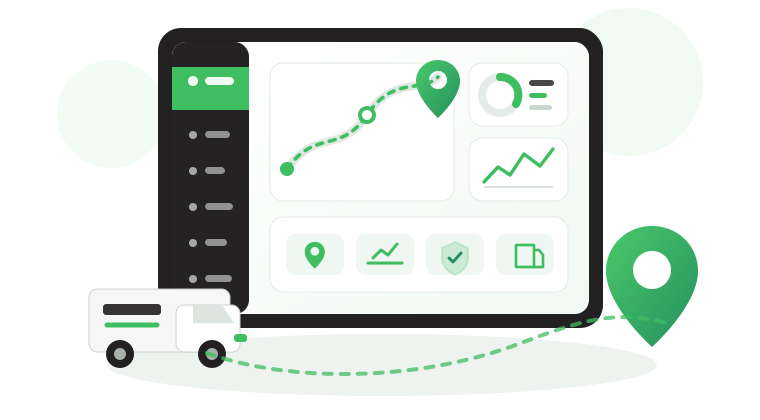

The Complete Guide to Field Service Fleet Management
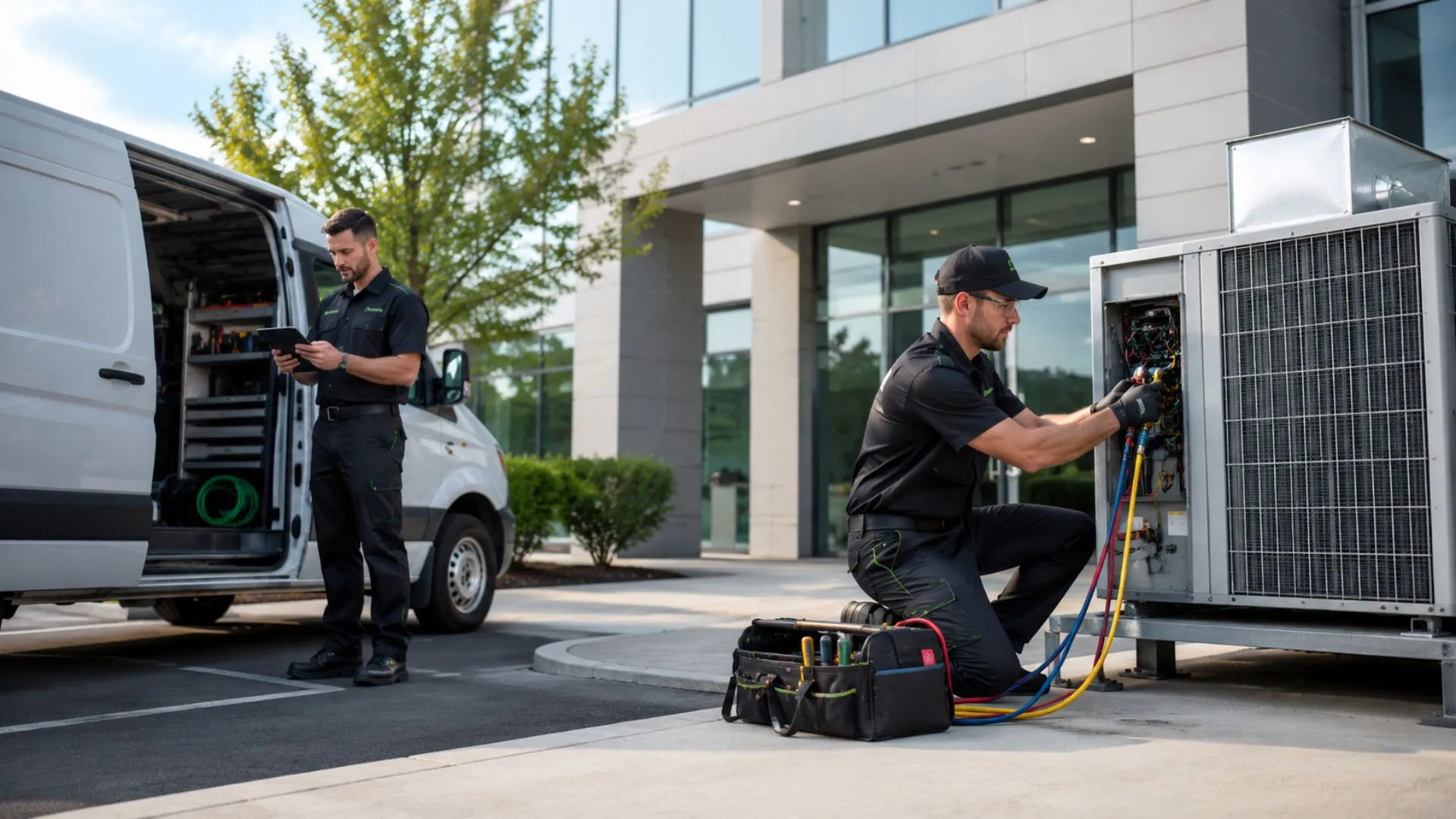
Field service fleets can look busy while still losing control. Technicians are on the road, jobs are scheduled, and customers are waiting, but dispatchers may still chase updates by phone, supervisors may not know why a visit is delayed, and drivers may feel monitored without understanding what data is collected or why. For B2B field service companies in the UAE, the GCC, and global markets, that gap affects customer SLAs, driver trust, safety, and operating cost.
This guide explains how Field Service Fleet Management helps pest control, HVAC, landscaping, telco, FMCG, and general service operators manage vehicles, technicians, routes, alerts, maintenance, and reports without turning tracking into unnecessary surveillance. It also shows how Safee supports live visibility, driver accountability, privacy-aware reporting, job route control, and management review through configurable fleet workflows.
What is field service fleet management?
Field Service Fleet Management is the process of planning, tracking, coordinating, and improving the vehicles, technicians, crews, routes, equipment, alerts, and reports that support service work outside the office.
It helps field service businesses answer the questions that matter during the working day: where is the technician, which vehicle is closest, which job is delayed, which route is off plan, which vehicle needs maintenance, and which report should management review?
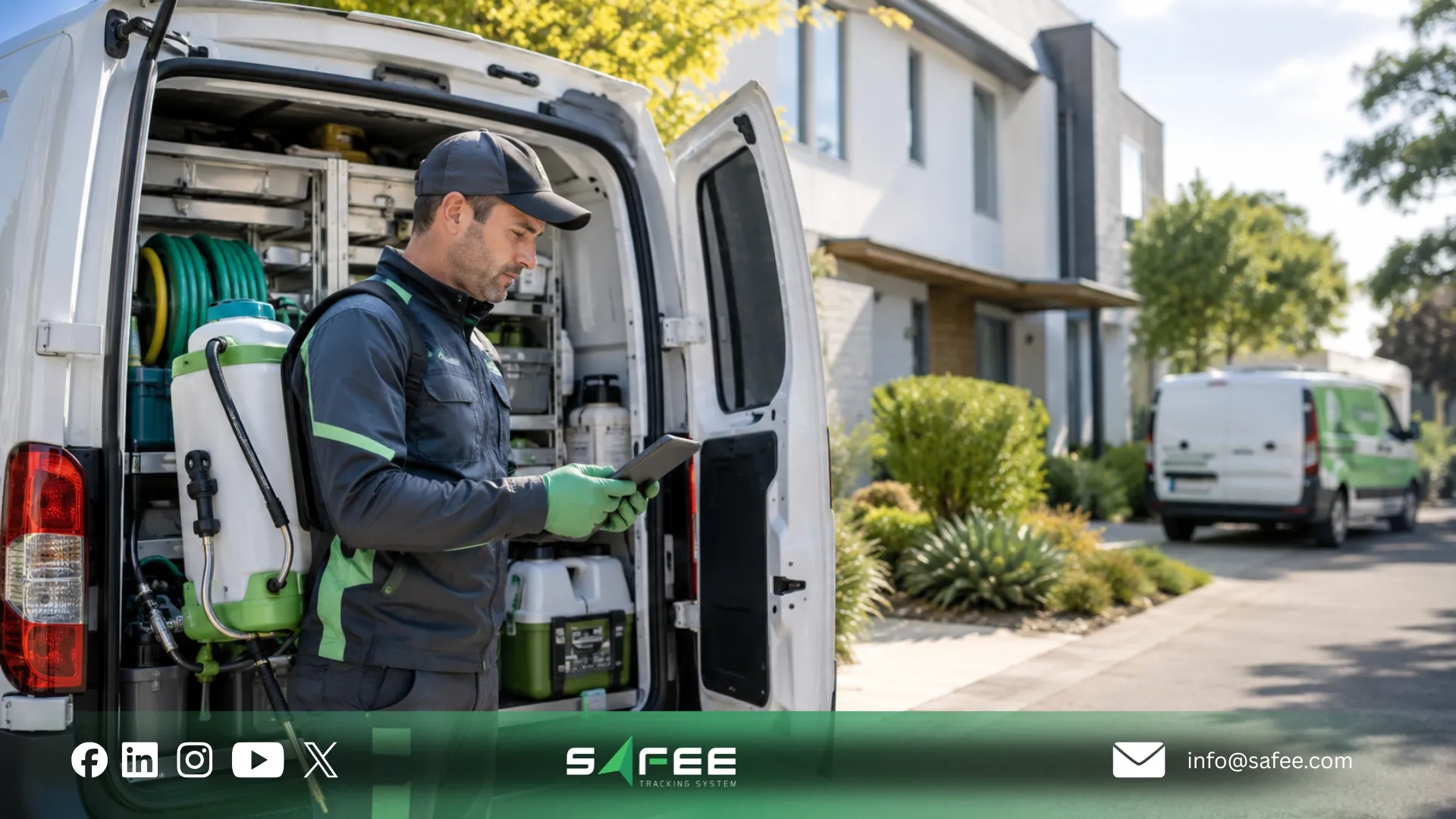
For pest control, HVAC, landscaping, telco, FMCG, and other field service operations, the fleet is the link between the customer promise and the team delivering the service. A vehicle may carry tools, chemicals, parts, equipment, or job records. A technician may move across many customer sites in one day. A dispatcher may need to adjust priorities quickly when an urgent job appears.
We, at Safee, can support this workflow through our platform that offers a collection of solutions like Live Vehicle Tracking, configurable Alarms and Alerts, Driver Management, Maintenance Management, and Fleet Reporting. These modules help teams move from manual follow-up to structured field visibility.
Why do field service fleets need driver welfare and privacy governance?
Field service tracking should improve safety, service quality, and operational control without creating unnecessary pressure on drivers or technicians.
This matters for fleet managers, HR leads, and safety officers because field service data can include location history, working hours, route behavior, customer-site activity, speeding events, idle time, long stops, and maintenance actions.
That data is useful, but it must be governed carefully.
- Tell technicians what is tracked, when it is active, and why it matters for safety, service, and job visibility.
- Keep tracking focused on work vehicles, work routes, service windows, and operational exceptions.
- Limit dashboards and reports to the teams that need them: dispatch, operations, HSE, maintenance, HR, or management.
- Review patterns before judging individuals; a delay may be caused by traffic, customer access, unrealistic schedules, route design, or vehicle condition.
- Use driver behavior data to coach, protect responsible drivers, and document service issues fairly.
Our Driver Management can help connect driver assignment, behavior visibility, task accountability, and reports in one workflow, while role-based setup should reflect each company’s internal policies and local requirements.
Fleet management for field service industries
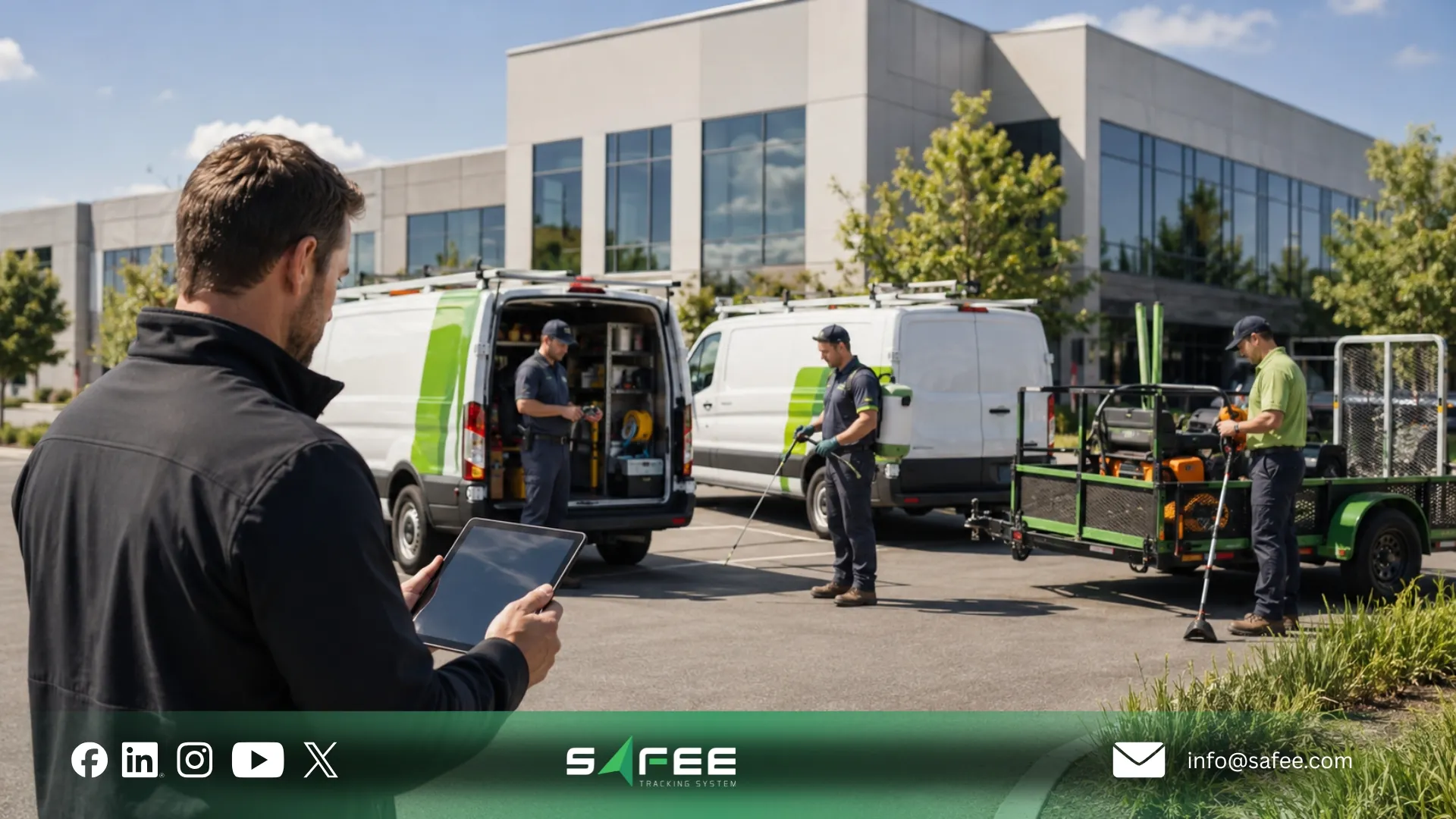
Field service industries share one challenge: work happens away from the office. The difference is in what each business needs to control. Pest control, HVAC, landscaping, telco, and FMCG fleets should not be forced into one generic delivery workflow.
The platform should match job type, route density, technician assignment, equipment needs, service zones, customer priority, and reporting cadence.
Pest control fleet management
This sector is about more than vehicle location. Teams may need to manage technicians, customer visits, chemical assets, tools, PPE, service zones, repeat schedules, and proof of arrival. A useful setup should show whether the technician reached the customer site, whether the route followed the service plan, and whether exceptions need follow-up.
For companies evaluating pest control fleet & asset management software, the key is to define the asset workflow before deployment: what is assigned to the vehicle, what must be documented, who approves usage, and which reports are needed for operations or customer service.
HVAC fleet management
HVAC fleet management depends on response speed and technician readiness. A dispatcher may need to send the nearest available technician to an urgent repair while still protecting the rest of the planned schedule.
Live location, route progress, geofences, vehicle readiness, and maintenance alerts help teams reduce unnecessary calls and act faster when service conditions change.
Landscaping fleet management
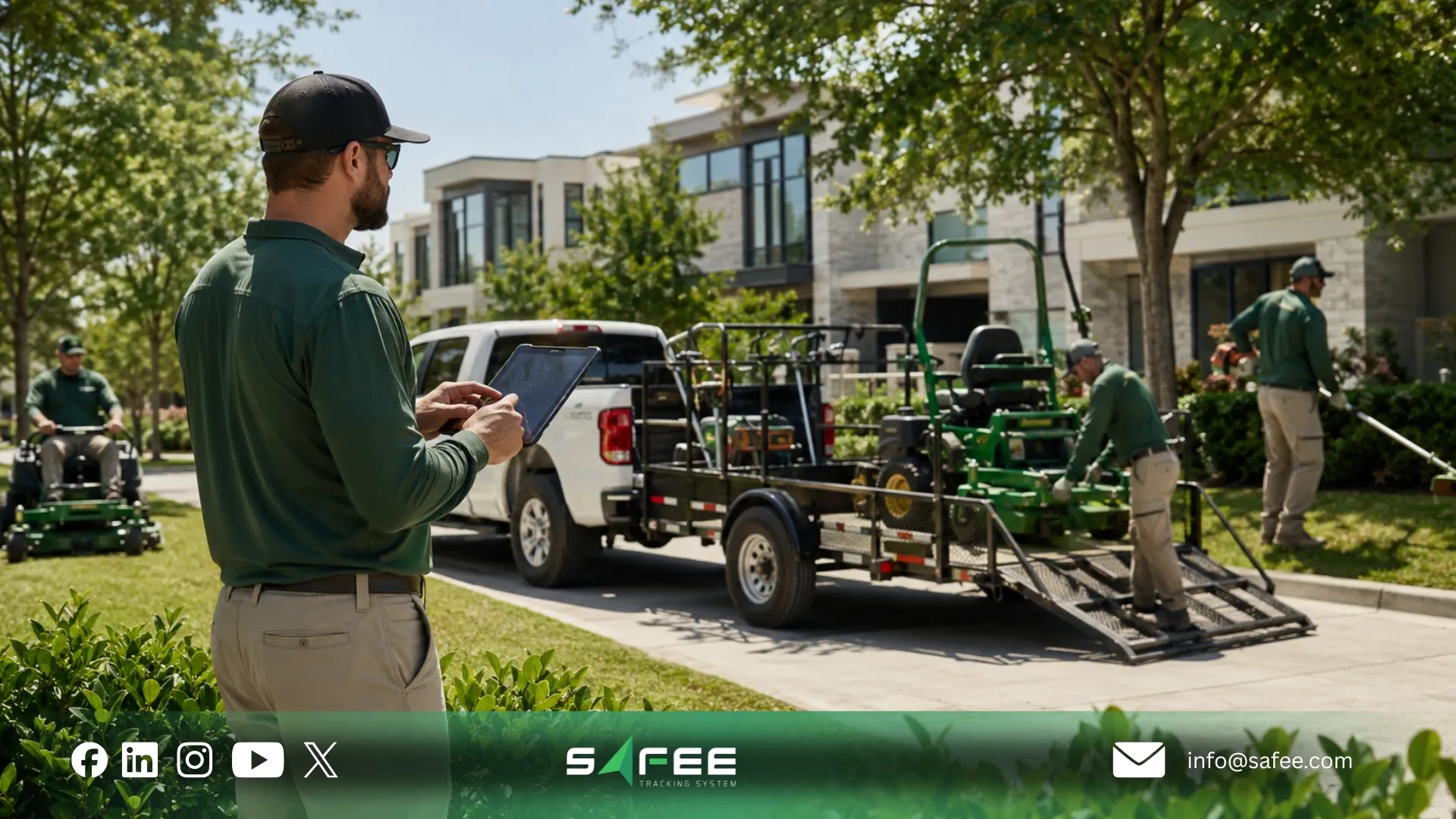
Landscaping fleet management often involves crews, trucks, trailers, tools, and recurring service locations.
Managers need to know whether a crew reached the right site, whether equipment moved as planned, whether a vehicle stayed too long at one location, and whether utilization supports the weekly work plan.
Fleet management for telco
Fleet management for telco focuses on field engineer efficiency. Installation teams, repair teams, tower crews, and emergency fault response units may all need live visibility, ETA support, route control, geofencing, and job-status reporting.
This helps dispatch and customer service teams reduce manual check-ins and improve response visibility.
Fleet management for FMCG
Fleet management for FMCG can include frequent customer visits, route repetition, high delivery density, stock movement, and time-sensitive replenishment. In this context, field service visibility overlaps with delivery execution.
Our Last Mile Delivery and route monitoring workflows can support customer zones, route adherence, high-frequency visit patterns, and management reporting where configured.
For dense routes and recurring customer coverage, investing in our Journey Management System can support route planning, active trip monitoring, and post-route review.
Also read: Delivery Fleet Management in the GCC: Smarter Last-Mile Operations
Key benefits of field service fleet management across industries
Field Service Fleet Management helps companies turn field activity into practical control. The value is not only tracking vehicles. The value is knowing which job needs attention, which technician is available, which route is delayed, which vehicle needs service, and which reports show repeated issues.
The following benefits show how field service teams can improve execution while respecting driver welfare and data governance.
Improve dispatch visibility without constant phone calls
Dispatchers should not need to call every technician to understand route status. With live vehicle visibility, teams can see location, movement, route progress, geofence activity, delays, and exception alerts from one operational view. This helps supervisors respond earlier when urgent jobs, missed windows, or route changes appear.
Use Live Vehicle Tracking Module for technician and vehicle visibility, then connect alerts and reports to the operating rhythm of each branch or service zone.
Protect drivers while improving service accountability
Driver accountability should not mean punitive tracking. In field service operations, behavior data is most useful when it protects drivers, improves safety, and explains service issues fairly. Speeding, harsh braking, route deviation, long stops, and idle time should be reviewed with context before decisions are made.
For HR and safety teams, this means setting clear rules. Safee can support the data layer, while the company defines the policy and communication process.
Reduce missed jobs and weak proof of service
Missed jobs often come from weak visibility, unclear route ownership, or delayed escalation. Field service fleet management helps teams document route history, arrival and departure activity, geofence events, and service exceptions.
This gives customer service and management teams better evidence when a customer asks what happened.
Improve vehicle readiness and maintenance follow-up
Service vans, trucks, trailers, and support vehicles should be ready before the workday starts. Maintenance gaps can create missed visits, urgent replacements, and customer dissatisfaction.
Our Maintenance Management Module can help teams track service schedules, open tasks, maintenance alerts, and follow-up actions so vehicle readiness becomes part of the field workflow.
Fleet management needs by field service industry
Each field service industry needs the same foundation, but the priority changes by business model.
Industry | Main operating need | Relevant Safee workflow |
Pest control | Technician routing, chemical/tool assignment, customer-site proof, repeat visit control | Live Vehicle Tracking, geofencing, Fleet Reporting, asset workflow planning |
HVAC | Urgent dispatch, technician readiness, service van visibility, maintenance follow-up | Journey Management System, Alarms and Alerts, Maintenance Management |
Landscaping | Crew routing, trailer/equipment movement, recurring site control, utilization review | Live Vehicle Tracking, Mobile App, Tracking Data Analyzer |
Telco | Field engineer ETA, installation/repair route control, emergency fault response | Live Vehicle Tracking, geofencing, Mobile App, Fleet Reporting |
FMCG | High-frequency visits, delivery route adherence, customer zones, replenishment visibility | Last Mile Delivery, Journey Management System, Fleet Reporting |
General field services | SLA control, job completion evidence, technician accountability, management reports | Alarms and Alerts, Driver Management, Fleet Reporting |
Explore our the essential modules, advanced modules, and added-value modules, including Live Vehicle Tracking, Alarms and Alerts, Fleet Reporting, Journey Management, Maintenance Management, and Mobile App modules to see which workflows fit your field service operation.
Core features to compare in field service fleet management software
When comparing platforms, start with the field workflow, not the device. A strong platform should help the business assign the right team, monitor the route, detect exceptions, protect drivers, document service activity, and review performance after the shift.
Live tracking and geofences
Use live location and geofences to monitor technician routes, branches, warehouses, customer zones, depots, restricted areas, and recurring service sites.
Configurable alerts
Set alerts for route deviation, long stops, unauthorized vehicle use, speeding, harsh driving, geofence breaches, maintenance triggers, or job-related exceptions.
Driver and technician management
Connect drivers or technicians to vehicles, shifts, behavior events, service windows, and reports with clear role-based access.
Route and job evidence
Use route history, timestamps, geofence records, and reports to support customer service, SLA review, and fair investigation of delays or complaints.
Maintenance workflows
Track service schedules, open defects, vehicle readiness, and follow-up tasks so field teams are not blocked by avoidable vehicle downtime.
Reporting and analysis
Use scheduled reports and data analysis to review utilization, idle time, driver behavior, route performance, missed jobs, and repeated customer delays.
Mobile access
Give managers and supervisors access to live visibility, alerts, and reports when they are away from the office or moving between sites.
At Safee, we support these workflows through Alarms and Alerts, Fleet Reporting, Mobile App, Tracking Data Analyzer and more for teams that need deeper operational review.
Also read: Trucking Fleet Management Software for GCC Fleets
How to implement field service fleet management?
A successful rollout should be treated as an operations and people process, not only a software installation. Field teams are more likely to accept tracking when the purpose is clear and the workflow helps them do their jobs better.
- Map your field service workflows by business unit: pest control, HVAC, landscaping, telco, FMCG, or mixed services.
- Define which vehicles, technicians, crews, tools, and assets need visibility.
- Explain the tracking purpose to drivers and technicians before go-live.
- Separate real-time dispatch visibility from management reporting and HR review.
- Configure alerts by severity, owner, and action path so teams avoid alert noise.
- Create geofences for branches, depots, warehouses, customer zones, recurring sites, and restricted areas.
- Set maintenance rules for service vans, trucks, trailers, and field equipment where relevant.
- Build dashboards for dispatchers, supervisors, HSE, maintenance, HR, and leadership based on role needs.
- Review results weekly: missed jobs, late arrivals, idle time, customer complaints, route overlap, driver behavior, and open maintenance tasks.
- Refine the configuration after the pilot before expanding across regions or subsidiaries.
Planning a rollout? Contact us to map vehicles, technicians, routes, alerts, reports, and privacy-aware access rules before deployment.
Why choose Safee for field service fleet management?
Safee is a strong fit for field service companies that need more than a basic tracking map. We help teams connect live visibility, driver and technician accountability, configurable alerts, maintenance follow-up, route governance, reports, mobile access, and operational analysis in one workflow.
For B2B field service operators in the UAE, the GCC, and global markets, the value with our modules is practical: fewer blind spots, less manual follow-up, better service evidence, more structured driver welfare governance, and clearer management reporting.
- Use Live Vehicle Tracking to see where vehicles and technicians are during active service routes.
- Use Alarms and Alerts to notify the right person when a service exception needs action.
- Use Driver Management to connect drivers, vehicles, behavior events, and assignment visibility.
- Use Journey Management System to support planned routes, active monitoring, and post-route review.
- Use Maintenance Management to reduce missed service tasks and improve vehicle readiness.
- Use Fleet Reporting and Tracking Data Analyzer to review repeated delays, idle time, route patterns, and exceptions.
- Use Mobile App for supervisors and managers who need access away from the office.
How does Safee help field service companies?
At Safee, we help field service companies improve job completion and cost control by making field activity visible, reviewable, and easier to manage. The safest way to measure improvement is to define your baseline first, then use reports to compare results after deployment.
- Average delay causes.
- Manual reporting effort.
- Vehicle idle time and long stops.
- Missed visits and customer complaints.
- Route overlap and unnecessary mileage.
- Fuel and idling patterns where configured.
- Maintenance downtime and open defects.
- Driver behavior events and coaching actions.
- Alerts acknowledged, closed, or unresolved.
- Jobs completed per technician, route, or branch.
Need to build a workflow around technicians, vehicles, assets, routes, alerts, reports, and driver privacy expectations? Request a Safee demo for your field service operation.
Also read: Safee Journey Management System for Smarter Fleet Safety
FAQs about field service fleet management
How does pest control fleet management improve field service control?
Pest control fleet management helps companies monitor technicians, vehicles, routes, customer visits, geofences, assets, alerts, maintenance, and reports. It is especially useful when technician routes, chemical assets, tools, and proof of service need to be managed together.
How does HVAC fleet management improve technician dispatch?
HVAC fleet management improves dispatch by showing technician location, vehicle availability, route progress, delays, and alerts. This helps dispatchers assign urgent jobs more confidently and review idle time, route issues, or service delays after the workday.
What should landscaping fleet management software include?
Landscaping fleet management software should include live vehicle tracking, geofencing, crew and vehicle assignment, equipment movement visibility where configured, route monitoring, maintenance workflows, alerts, reporting, mobile access, and utilization review by site or branch.
How does fleet management for telco improve field engineer efficiency?
Fleet management for telco helps dispatchers see engineer location, route progress, geofence activity, ETA-related workflows, delays, and job coverage. It reduces manual follow-up and supports faster response to installations, repairs, and field maintenance.
Can fleet management for FMCG support high-frequency routes?
Yes. Fleet management for FMCG can support high-frequency visit or delivery routes when configured around customer zones, delivery frequency, driver assignments, vehicle groups, route monitoring, alerts, reporting, and load-related workflows where compatible data is available.
How can field service tracking protect driver privacy?
Driver privacy is better protected when the company explains what is tracked, limits data access by role, focuses monitoring on work vehicles and work hours, and uses reports for coaching, safety, and service improvement before escalation.
Ready to improve your fleet operations?
Tell us what you would like to improve. A Safee specialist will reply by email.
Usually replies within one business day • No sales spam
Your details are used only to respond to your request. Privacy Policy