
Industrial Fleet Management: Which Model Fits Your Business?
Two fleets can operate similar trucks, pickups, vans, or specialist assets and still require very different control models. The decisive question is not the vehicle body type but who owns or controls the assets, who makes operating decisions, how sites and drivers are organized, and where responsibility sits across internal teams and external providers; that is the practical starting point for industrial fleet management.
This guide by Safee classifies the main types of fleet management by operating model. It separates private fleets, industrial operations, in-house and onsite control, mixed structures, multi-fleet environments, and outsourced responsibilities so decision-makers can identify what they are actually running, then understand how that model affects technology selection, permissions, workflows, reporting, integrations, and governance.
4 types of fleet management models
There is no single universal taxonomy that every fleet operator or provider uses in exactly the same way. For practical business fleets, however, four operating models help clarify where responsibility sits.
- Private fleet management: A private fleet is controlled primarily for the organization’s own operating needs. The vehicles may support sales, service, logistics, maintenance, employee transport, field work, distribution, or other internal activities. The important point is control. The business defines fleet policy, decides how vehicles are assigned, establishes driver and maintenance processes, and determines how operational information should be reviewed.
- Industrial fleet management This model applies fleet controls to vehicles, mobile assets, and operational workflows supporting industrial activities. Depending on the business, this can include vehicles moving between plants, yards, depots, warehouses, project areas, customer sites, or remote operating locations. The operating environment can create requirements beyond basic location tracking: vehicle and driver accountability, site structures, Geofences, maintenance readiness, operational exceptions, reporting, specialized sensors, journey governance, and integration with wider business systems.
- Mixed fleet model This model brings more than one operating structure into the same environment. A company might manage owned vehicles alongside leased vehicles, contractors, specialist equipment, multiple vehicle classes, or different business units. “Mixed” can also describe vehicle technology—such as EVs alongside petrol and diesel vehicles, but in this article the term primarily refers to combining different fleet ownership and control structures.
- Outsourced fleet management Outsourcing transfers defined fleet activities to an external provider. It does not necessarily mean transferring the whole fleet-management function. Our Fleet Management Services: In-House vs Outsourced guide makes this distinction clear: a business may retain operational decisions internally while using a provider for technology, implementation support, integrations, configuration, reporting workflows, or specialist assistance. Outsourcing technology administration also does not automatically transfer operational accountability.
The right question is therefore not simply, “Which type are we?” It is:
Who owns each decision, workflow, record, response and technology responsibility?
Types of fleet management by ownership and control model
Fleet type and vehicle type are separate dimensions.
Cars, vans, pickups, trucks, buses, trailers, EVs, and specialist vehicles describe the assets being managed. Private, in-house, mixed, industrial, or outsourced structures describe how management responsibility is organized.
That distinction matters because one industrial operation may contain several vehicle classes and still use one management architecture.
For example, a large industrial business could operate:
- Passenger vehicles for management or site movement;
- Service pickups for field technicians;
- Trucks for logistics;
- Trailers and specialist assets;
- Electric vehicles within selected operations;
- Contractor vehicles operating under different rules.
Our existing mixed-fleet guidance follows the same principle: one connected fleet environment can maintain common controls while preserving different rules for vehicle groups, duties, powertrains, users, and operational requirements. For the separate asset-based classification, see Vehicle Fleet Management: A Complete Guide by Vehicle Type.
A standardized operating structure should therefore keep common controls—vehicle identity, access governance, reporting logic, responsibility, and operational visibility—consistent without assuming that every asset requires identical alerts, maintenance logic, sensor data, or operating rules.
A broad fleet-management label is useful for orientation, but it does not tell Procurement or Operations enough about who actually controls the fleet.
Private fleet management vs industrial fleet management
Private fleets and industrial operations are related but not identical.
A private fleet is defined mainly by organizational control. The company manages vehicles for its own business requirements instead of treating transportation as a separately purchased end service.
The industrial model adds the operating environment.
An industrial operator may need to organize vehicles and drivers around:
- Plants and production areas;
- Depots and yards;
- Project or customer sites;
- Controlled operating zones;
- Workshops;
- Remote locations;
- Shift structures;
- Specialist vehicle groups;
- HSE workflows;
- Maintenance and readiness requirements.
An industrial fleet can therefore also be private. The terms describe different parts of the same operating model.
This is why an industrial fleet should not begin technology selection with the question, “How many trackers do we need?” A more useful starting point is to identify the sites, vehicles, drivers, users, groups, operational exceptions, reports, and responsibilities that must be governed together.
Safee’s Administration Panel is designed around this administrative structure, including sites, categories, vehicles, trailers, drivers, user accounts, groups, permissions, and configurable settings. Fleet Monitoring & Insights then adds centralized live and historical operational visibility, while other modules can address alerts, reporting, drivers, maintenance, journeys, and specialist requirements. Review Safee’s Essential Modules for the core operational capabilities available across the platform.
Want to see how your current fleet structure would translate into sites, groups, permissions, monitoring and reporting? Request a Safee demo using your actual operating model rather than a generic feature checklist.
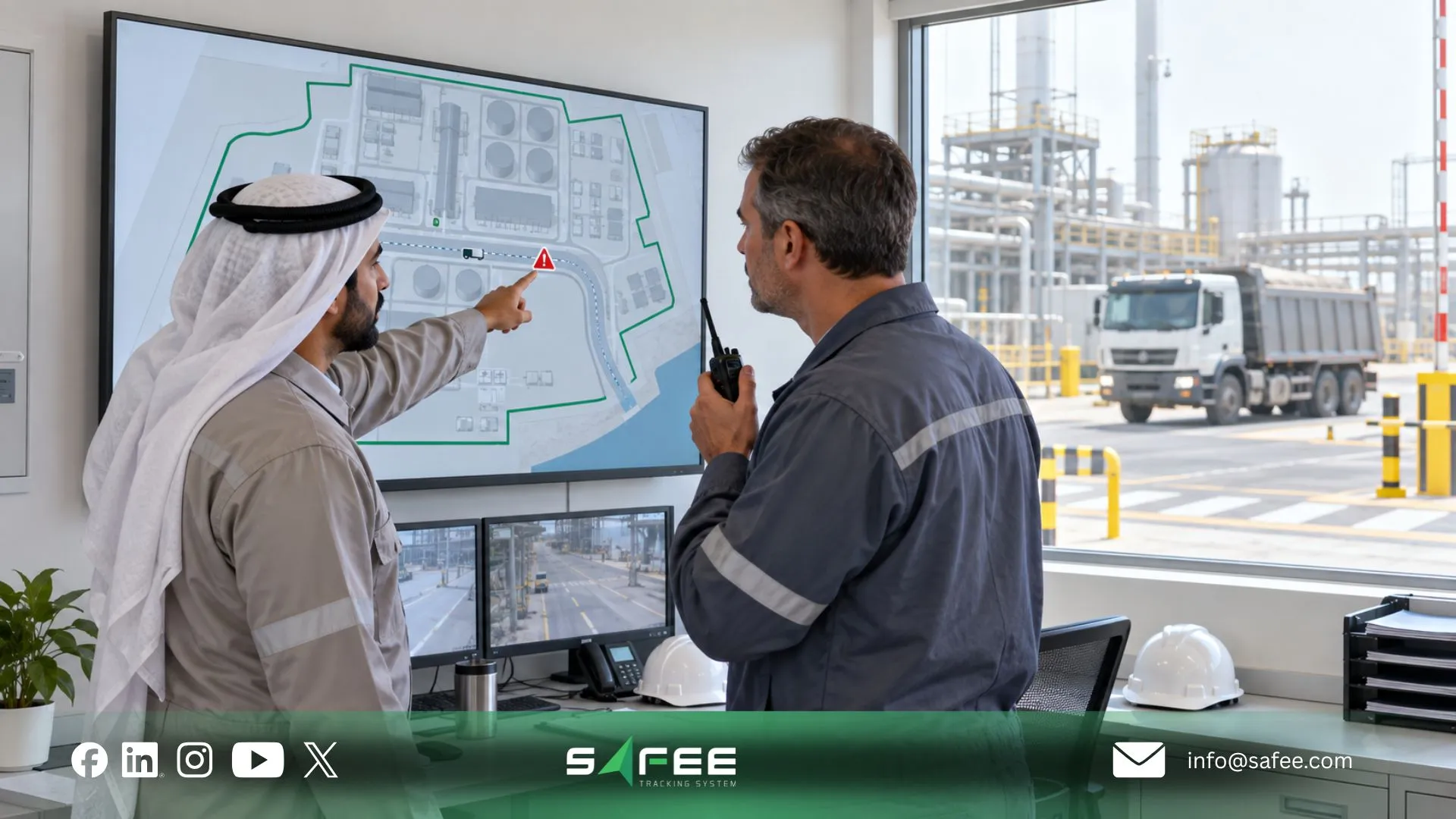
Which fleet management model fits your business
The correct model depends less on company size than on the amount of operational responsibility the organization wants—or needs—to retain.
Start with the variables that define the fleet:
- Who defines fleet policy?
- Who owns or controls the vehicles?
- Who manages drivers and assignments?
- Which teams require fleet-system access?
- Are contractor or third-party vehicles included?
- Which Alarms and Alerts need an assigned operational owner?
- Which hardware, sensors, or vehicle data sources are required?
- How many sites, depots, projects, branches, or operating areas are involved?
- Which reports need to reach Fleet, Operations, HSE, Maintenance, Finance, or management?
- Which information needs to connect with ERP, waybill, asset-management, or other business systems?
A practical comparison framework then examines four layers.
- Operational ownership: Decide which activities must stay with your organization.
- Technology ownership: Decide who administers users, vehicles, configurations, hardware, integrations, reporting, and support.
- Response ownership: Determine who receives an exception and who is accountable for action.
- Governance: Define permissions, escalation, reporting cadence, record ownership, and periodic review.
The result may be fully in-house, strongly outsourced, or somewhere between the two.
In-house fleet management with onsite operational control
In house fleet management means the organization retains direct responsibility for most fleet decisions and day-to-day control.
For an industrial business, that can develop into onsite fleet management, where Fleet, Operations, HSE, Maintenance, or site-management teams coordinate vehicles from the location where the work is taking place.
The alternative search spelling, on site fleet management, describes the same practical concept.
Onsite control can be appropriate when decisions depend heavily on immediate operating context. A dispatcher may need to know which vehicles belong to a particular plant or project. HSE may need visibility into selected events. Maintenance may need a different operational view. Management may need recurring information across several sites without giving every user access to every vehicle.
That does not mean every site should operate as a separate information island.
A central fleet architecture can maintain local operational responsibility while creating consistent fleet-wide structures for:
- Sites;
- Users;
- Permissions;
- Configurations;
- Fleet Reporting.
- Alarms and Alerts;
- Operational monitoring;
- Vehicle and driver groups;
Our Administration Panel supports role-based user permissions and structures vehicles, drivers, sites, categories, groups, and configuration. This allows access to be aligned with operational responsibility rather than assuming every user needs the same fleet view.
Mixed fleet management across ownership and responsibility models
A mixed model becomes relevant when one organization cannot describe the entire operation with one ownership or responsibility model.
Typical examples include:
- Company-owned vehicles plus leased vehicles;
- Private vehicles plus contracted transport;
- Internal drivers plus external drivers;
- Fleet vehicles plus trailers and specialist assets;
- Several subsidiaries or operating divisions;
- Conventional vehicles plus EVs;
- One internal fleet team supported by external technology or service providers.
The mistake is to respond by creating a separate fleet process for every variation.
The software should instead preserve one governable structure while allowing operational differences to remain visible.
For example, a contractor group may require different permissions and reporting from company-owned vehicles. EVs may need battery and charging information while conventional vehicles use fuel-related inputs. Industrial site vehicles may use different Geofences or operating schedules from vehicles working on public-road logistics.
At Safee, our approach to mixed fleets is to retain a common operating environment while adapting groups, data sources, permissions, monitoring rules, reporting and specialist capabilities to the relevant fleet requirements. Hardware compatibility must still be technically validated for the trackers, sensors, vehicle interfaces and data required in each deployment.
This is more useful than forcing every asset into a single generic template. A stronger operating model is one in which the required controls are clearly defined and can be governed consistently.
Large fleet management vs fleet management for small business
The difference between large fleet management and fleet management for a smaller business is not simply vehicle count.
Organizational complexity matters.
A smaller operation may have:
- Fewer sites;
- Fewer integrations;
- Simpler permissions;
- Less internal IT capacity.
- A smaller reporting structure;
- One Fleet Manager performing several roles;
A larger operation may have:
- Layered permissions;
- Several vehicle groups;
- More complex integrations;
- Specialist operational workflows;
- More demanding reporting structures.
- Multiple sites, regions, or operating units;
- Different hardware and sensor requirements;
- Fleet, Operations, HSE, Maintenance, Finance, Procurement, and IT stakeholders;
Safee’s documented platform structure addresses enterprise complexity through sites, organizational roles, permissions, compatible hardware and sensors, business-system integration, reporting, and specialist workflows—not vehicle count alone. Our platform combines modular fleet capabilities with a Hardware Agnostic approach and Business Integration for approved fleet information.
For fleet management for business, the scalability test should therefore be operational:
Can the same control structure remain understandable and governable as vehicles, users, sites, groups, devices, reports and integrations increase?
If your fleet is growing across sites or business units, contact us to map which controls should remain centralized and which should be configured by site, group or operating role. Safee’s Fleet Monitoring & Insights shows how centralized visibility can still be filtered around operational groups.
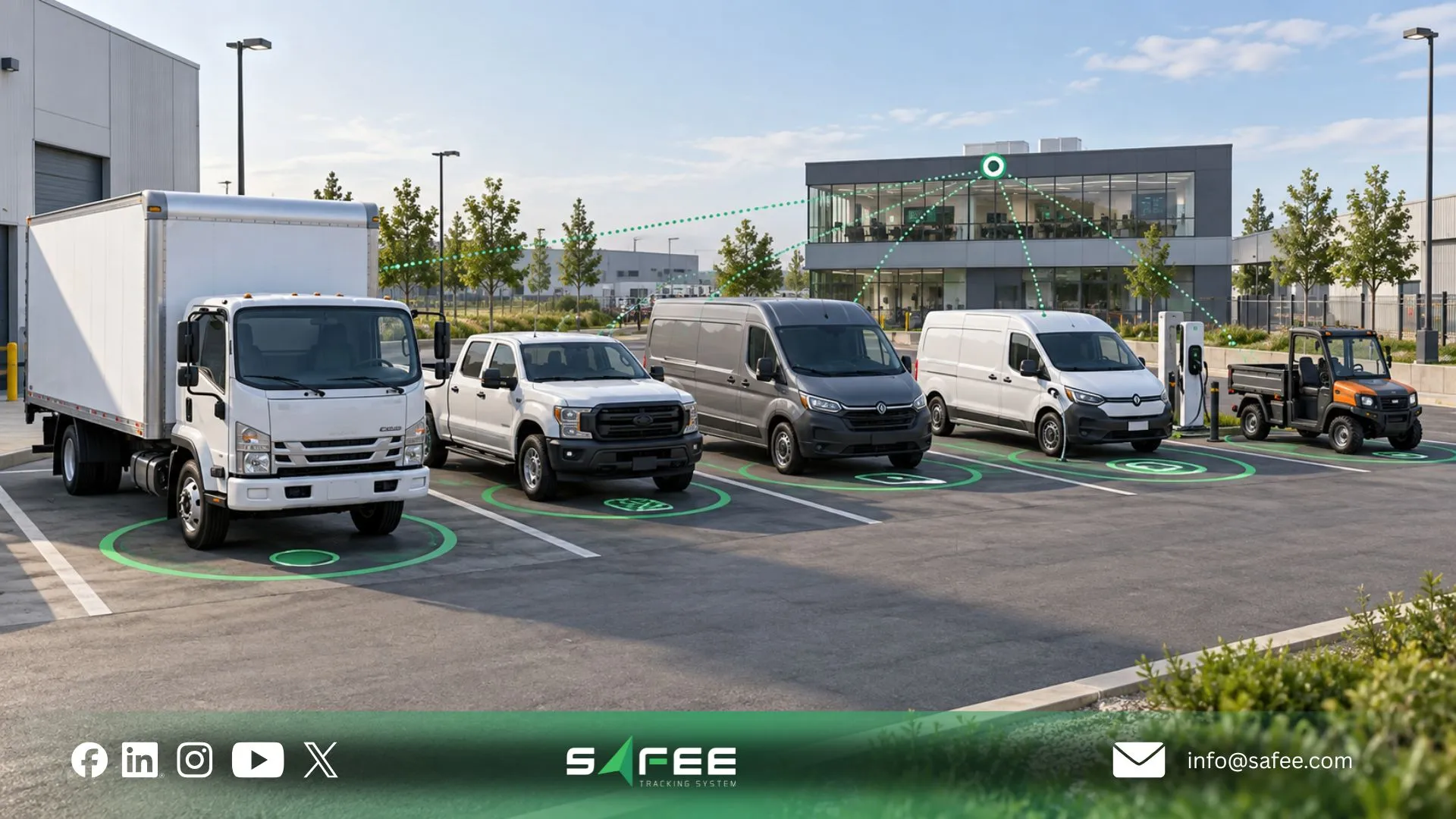
How to tell which types of fleet management you’re running
Many organizations already operate a hybrid model without describing it that way.
One team may own fleet policy. Another manages vehicles onsite. A provider supplies the platform and hardware. IT manages integration. HSE defines some alarms. Maintenance owns service workflows. Senior management receives scheduled reports.
The organization does not need a better label as much as it needs a clear responsibility map.
Start with five questions:
- Who makes the decision?
- Who performs the work?
- Who owns the system configuration?
- Who responds when the system identifies an exception?
- Who reviews whether the process is actually working?
Where those answers change, the fleet operating model changes too.
Total, complete and comprehensive fleet management as scope terms
Terms such as total fleet management, complete fleet management, comprehensive fleet management, and whole fleet management are often used to describe broad fleet coverage. The same caution applies to general fleet management and standard fleet management: neither phrase defines a measurable scope by itself. Superior fleet management is even less useful as a classification because it is an evaluative label rather than an operating model.
None of these terms should be interpreted as proof that every responsibility or capability is included.
A total fleet management proposal might include software, hardware, implementation, reporting and support. Another provider may use the same phrase for a much larger outsourced-service scope.
Safee’s fleet-management-services guidance makes the useful distinction between the software layer and the services wrapped around it. A service can add people, process, implementation, support, or transferred responsibilities, but each responsibility still needs to be defined.
Before accepting the word “total” or “complete,” verify what is actually included:
- Fleet Management and Telematics platform;
- Hardware and installation responsibilities;
- User and vehicle onboarding;
- System configuration;
- Alarms and Alerts setup;
- Driver-management workflows;
- Maintenance workflows;
- Fleet Reporting configuration;
- Business Integration;
- Technical support;
- Operational monitoring responsibilities;
- Ongoing optimization.
In other words, comprehensive fleet management is useful only when “comprehensive” is converted into a documented scope.
Multi-fleet management across sites, units and ownership models
Multi fleet management applies when an organization needs to oversee several distinguishable fleet structures without losing central visibility. In practice, that may include mixed fleet management inside one business unit and a different ownership or provider model in another. The required mixed fleet management software should preserve those distinctions without splitting the organization into disconnected systems.
Those structures might be separated by:
- Site;
- Project;
- Business unit;
- Subsidiary;
- Geography;
- Vehicle duty;
- Ownership model.
- Customer contract;
- Operational department;
This is where central fleet management becomes especially important.
Central management should not mean that every user sees every vehicle. It means there is a common administrative and data structure from which access and operational views can be segmented appropriately.
13 questions to pin down your industrial fleet management model
Use these questions before deciding whether your industrial operation is private, onsite, mixed, outsourced, or a combination of several models.
- Who owns fleet policy?
- Which reports drive decisions?
- What changes as the fleet grows?
- Who manages the fleet day to day?
- How are vehicles and drivers organized?
- Which fleet activities must stay in-house?
- Which users should see which parts of the fleet?
- Which activities could be externally supported?
- Which business systems need fleet information?
- Which sites or operating areas need separate control?
- Which operational exceptions need Alarms and Alerts?
- What hardware and data does each fleet group require?
- Who owns or contractually controls the vehicles and assets?
These questions are more useful than trying to classify a fleet from vehicle count alone.
Questions to ask the provider before deployment:
- Who configures and governs Alarms and Alerts?
- Which capabilities are included in the proposed scope?
- How are user permissions separated across roles or sites?
- Which hardware and sensors have to be technically validated?
- Which Business Integration requirements need technical scoping?
- How will our sites, vehicle groups, drivers and users be structured?
- Which responsibilities remain with our internal team after deployment?
- What Fleet Reporting filters, schedules and exports support our review process?
Have these answers already? Contact us and use them as the basis for a fleet-fit discussion covering modules, users, data sources, integrations, Alarms and Alerts, and reporting requirements. For API and business-system connectivity, our Fleet Management ERP Integration guide explains record ownership, shared identifiers, field mapping, and integration scope.
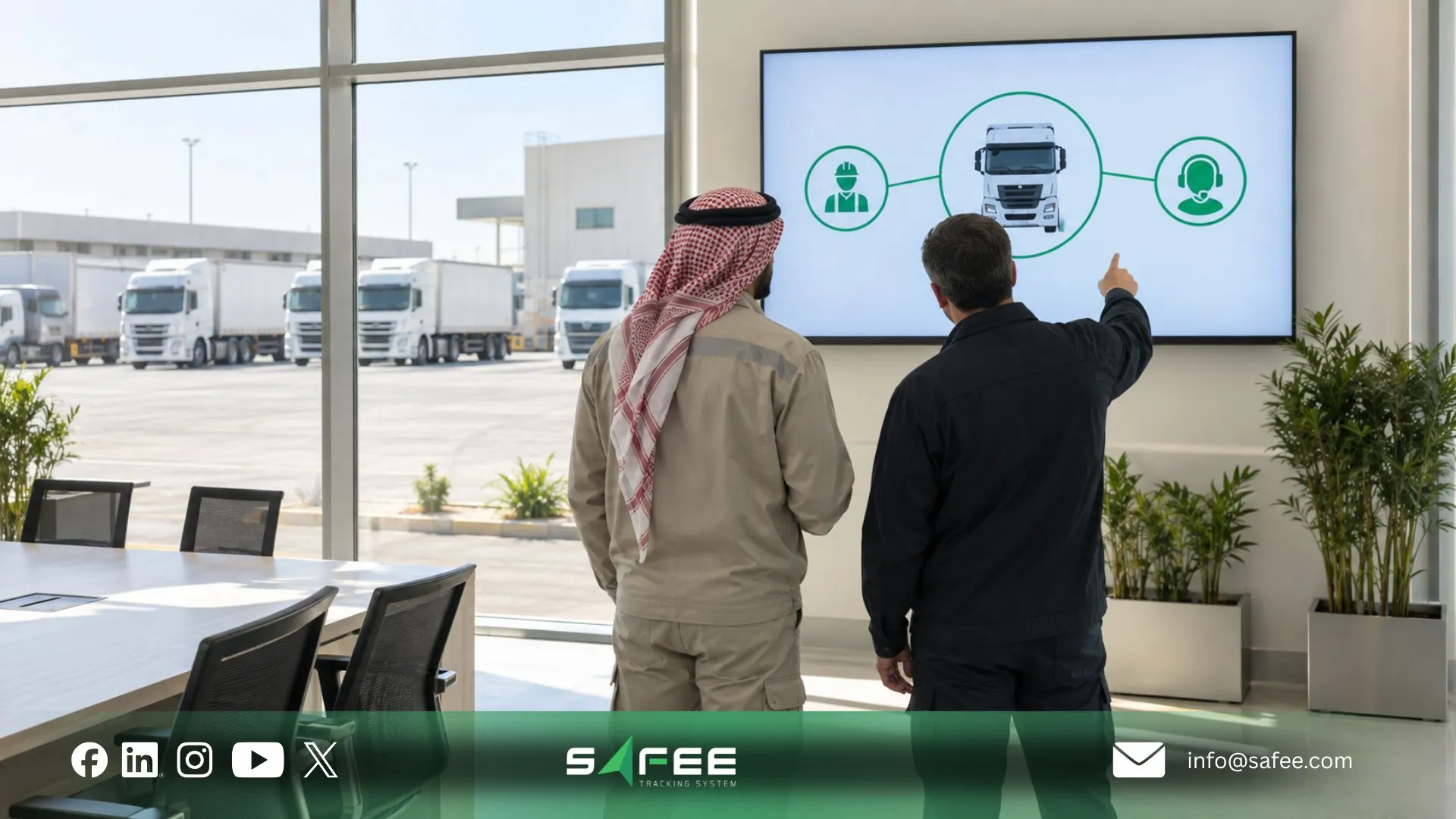
Safee: Fleet management across private, mixed and industrial models
At Safee, we approach fleet management as a connected Fleet Management and Telematics environment rather than reducing fleet operations to a standalone tracking map.
That matters because ownership models change, but many underlying control requirements remain.
A private fleet still needs vehicle and driver context. An industrial operation needs site and group structure. An onsite team needs appropriate visibility. A mixed fleet needs segmentation without fragmentation. A large multi-fleet environment needs central governance without forcing every user into the same view.
Safee connects these requirements through documented capabilities including:
- Administration Panel for users, vehicles, drivers, sites, categories, groups, permissions and configurations;
- Live Vehicle Tracking for operational location visibility;
- Fleet Monitoring & Insights for live and historical fleet context;
- Alarms and Alerts for configured operational exceptions;
- Driver Management for driver records and assignment context;
- Maintenance Management for structured maintenance workflows;
- Fleet Reporting for configurable, filtered and scheduled management information;
- Journey Management System (JMS) where structured journey governance is required;
- Tracking Data Analyzer (TDA) for deeper analysis;
- Business Integration for supported API-based connections with approved business systems;
- Specialist capabilities where the agreed fleet scope requires them.
Our platform is Hardware Agnostic, allowing diverse compatible hardware and sensors to be considered where the selected devices, protocols and required data are technically validated.
This modular approach is particularly useful for industrial fleets because an organization does not need to assume that every site, vehicle group or ownership model requires every available capability.
Safee vs Single-purpose fleet tools
| Need | Single-Purpose Tool | Safee |
| Private + industrial fleet in one account | May require separate tools or disconnected operating views as requirements expand | One connected Fleet Management and Telematics environment with fleet structures that can be organized by sites, categories and groups |
| Standard / general fleet reporting | Reporting depth and configuration depend on the selected tool | Fleet Reporting supports customizable reports, filters, scheduled delivery and supported export workflows |
| Central oversight of multi-fleet operations | Central oversight may be limited when different fleet functions sit in separate tools | Administration Panel structures users, vehicles, sites, groups and permissions, while Fleet Monitoring & Insights provides centralized operational visibility |
| Scaling from small to large fleet | Scalability, permissions, integrations and specialist workflows must be evaluated individually | Safee supports configurable Essential Modules, a Hardware Agnostic architecture and Business Integration; the exact deployment scope should be validated as complexity grows |
The comparison is about platform architecture rather than claiming that every single-purpose tool has the same limitations. Buyers should test the competing system against their actual vehicle groups, sites, user roles, reporting, hardware and integration requirements. Safee publicly documents its centralized administration, configurable reporting, fleet monitoring, modular capabilities and integration approach.
How Safee adapts from private to mixed to industrial fleets
The same platform does not require the same configuration for every fleet.
For a private fleet, implementation may begin with vehicles, drivers, users, Live Vehicle Tracking, operational Alarms and Alerts, maintenance and management reports.
An onsite industrial fleet may require additional emphasis on sites, groups, Geofences, permission boundaries, maintenance readiness, specialist data sources or structured operational reporting.
A mixed fleet may need different rules for owned vehicles, contractors, EVs, specialist assets or operating divisions while keeping management information inside one governable environment.
A multi-fleet organization may add another layer: central administrators and management require broader oversight, while regional, site or functional users receive access appropriate to their responsibilities.
Our operating model supports this through configuration rather than by treating every business as an identical fleet. The Administration Panel establishes the organizational structure; Fleet Monitoring & Insights and Live Vehicle Tracking provide operational visibility; Alarms and Alerts surface configured exceptions; Driver Management and Maintenance support accountability and readiness; Fleet Reporting provides recurring management output; and Business Integration can connect approved information with wider systems where required.
The implementation sequence should therefore follow the business model. Start with evaluation, move through deployment and onboarding, then configure the required workflows, users, hardware, data, alerts, and reports. Establish governance before routine operational review, and optimize only after the controls and responsibility model are working as intended.
Do not start with every available feature. Start with the workflows the fleet needs to control, identify who owns them, then map the appropriate modules, users, hardware, data, alerts and reports to those workflows. Request a Safee demo to map the fleet structure and module scope before deployment.
FAQs about types of fleet management
What are the main types of fleet management?
A practical way to classify the main types of fleet management is private, industrial, mixed and outsourced. They describe how fleet responsibilities, operational control and external support are organized rather than simply describing whether the fleet contains cars, vans or trucks.
Private vs industrial fleet management: What differs?
Private fleets mainly describe vehicles controlled for an organization’s own operations, while the industrial model focuses on fleets supporting industrial sites, projects and operational workflows. An industrial fleet can also be a private fleet, so the two categories frequently overlap.
Can central fleet management handle a mixed fleet?
Yes, provided the platform can separate vehicles, sites, groups, users, permissions and fleet-specific rules while preserving central visibility. Safee uses capabilities such as the Administration Panel, Fleet Monitoring & Insights and Fleet Reporting to structure those layers within one connected fleet environment.
Is in-house fleet management better than outsourced?
Neither model is inherently better. The relevant question is which responsibilities the organization should retain and which can be supported externally without losing operational visibility, governance or accountability. Safee’s fleet-services model also allows a hybrid approach in which the customer retains policy and operating decisions while technology, configuration, integrations or selected support activities are provided externally.
Ready to improve your fleet operations?
Tell us what you would like to improve. A Safee specialist will reply by email.
Usually replies within one business day • No sales spam
Your details are used only to respond to your request. Privacy Policy