

Logistics Fleet Management in Saudi Arabia: Journeys, Delays, and Costs
Ever watched your operating costs climb while trying to figure out why a delivery truck is stuck at a loading dock, wishing you had a clearer way to keep your transport schedule on track? For fleet directors and operations leads across the Kingdom, balancing route efficiency, unexpected delays, and tightening profit margins is an uphill battle where every idle minute drains capital.
In this comprehensive guide by Safee, we will break down what effective logistics fleet management in Saudi Arabia truly entails, exploring how to bridge the gap between pre-trip planning and real-world execution, eliminate hidden fuel waste, manage delivery exceptions, and leverage our advanced journey management and reporting tools to protect your bottom line.
What does logistics fleet management in Saudi Arabia cover?
Commercial transport operations across the Kingdom encompass a vast and complex array of activities, ranging from long-haul freight distribution connecting major industrial hubs (like Jubail, Dammam, Riyadh, and Jeddah) to complex urban last-mile delivery networks. Comprehensive logistics fleet management in Saudi Arabia goes far beyond basic tracking; it integrates multi-modal vehicle telematics, proactive driver behavior monitoring, precise fuel accounting, route optimization, and automated regulatory reporting into a single, unified operational framework.
By unifying these critical elements through Safee’s centralized ecosystem, fleet directors gain end-to-end visibility across regional corridors, enabling them to eliminate operational friction, reduce administrative overhead, and protect profit margins against rising fuel and maintenance expenses.
Saudi logistics operations and the road transport role
Road transport serves as the backbone of regional supply chains, carrying the vital flow of goods between industrial hubs, ports, and consumer markets. Saudi logistics operations rely heavily on timely dispatches, predictable transit times, and resilient vehicle readiness.
When transport assets operate smoothly, businesses can fulfill customer promises reliably, mitigate supply chain bottlenecks, and support the broader economic growth of the region.
Why logistics fleet visibility alone cannot resolve delays
While watching a fleet on a live map provides immediate reassurance, basic location tracking is insufficient for diagnosing root causes of operational downtime. Knowing where a vehicle is stationary does not explain why a delay occurred at a loading dock or checkpoint.
True operational improvement requires contextual analytics that connect location data with trip schedules, driver behavior, and route exceptions, transforming raw positional pings into actionable business intelligence.
Ready to eliminate blind spots and elevate your transport visibility? Contact Safee today to schedule a personalized platform demo and discover our advanced operational modules.
How logistics fleet management in Saudi Arabia controls journey costs
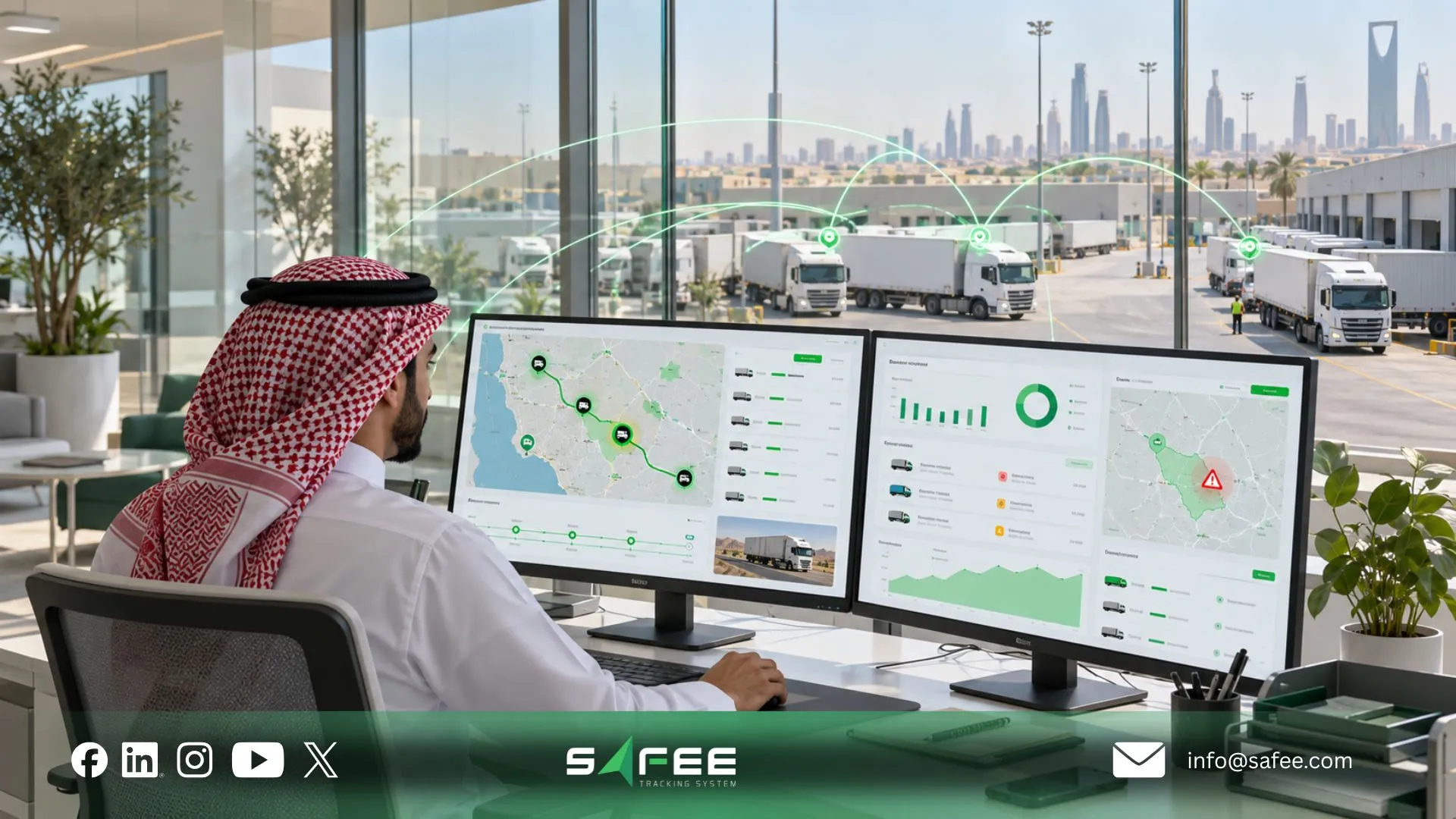
Uncovering where capital leaks within a transport network is essential for maintaining cost efficiency in competitive markets. In complex Saudi logistics operations, financial losses rarely stem from a single catastrophic event; rather, they accumulate gradually through hidden operational inefficiencies:
- Excessive Idle Fuel Burn: Vehicles remaining stationary with engines running at loading docks, border checkpoints, or during urban congestion.
- Unplanned Detours and Route Deviations: Drivers taking unauthorized paths due to lack of pre-trip planning or real-time guidance, resulting in excessive mileage and fuel waste.
- Extended Loading and Terminal Delays: Long waiting times at distribution centers that distort delivery schedules and disrupt downstream supply chain flows.
- Avoidable Maintenance Wear: Severe driving behaviors (such as harsh braking, rapid acceleration, and speeding) that accelerate vehicle depreciation and tire wear.
Identifying and quantifying these cost centers requires deep telemetry and structured post-trip analytics rather than fragmented data collection.
Fleet journey management connects plans and delivery exceptions
Effective fleet journey management bridges the gap between pre-trip planning and real-world execution. By defining approved routes, scheduled stopovers, and expected transit windows in advance, operations teams can instantly detect deviations as they happen. When a driver encounters unexpected road closures or terminal delays, automated alerts empower dispatchers to intervene, reroute assets, and communicate updated ETAs before minor issues escalate into costly service failures.
Logistics fleet visibility reveals waiting and fuel waste
Vehicle idling and prolonged waiting times at loading terminals represent significant operational expenses. Enhanced logistics fleet visibility exposes exact stationary durations, unauthorized vehicle usage, and excessive fuel consumption patterns. Correlating fuel burn data with specific route segments allows fleet managers to pinpoint inefficient driving habits and idling hotspots across regional transit routes.
Saudi logistics operations metrics for fleet managers
Tracking the right Key Performance Indicators (KPIs) enables logistics leaders to measure operational health objectively. Key metrics for evaluating Saudi logistics operations include on-time delivery percentages, cost-per-kilometer ratios, idle-time percentages, fleet utilization rates, and mean time between maintenance events. Establishing baseline measurements across these categories allows management teams to assess the direct impact of operational adjustments over time.
Need help configuring custom reporting dashboards to track these exact KPIs? Speak with Safee’s implementation expert for guidance tailored to your operational environment.
Also reaD: Wasl Platform in Saudi Arabia: What Does Your Fleet Need?
How to build a fleet journey management workflow
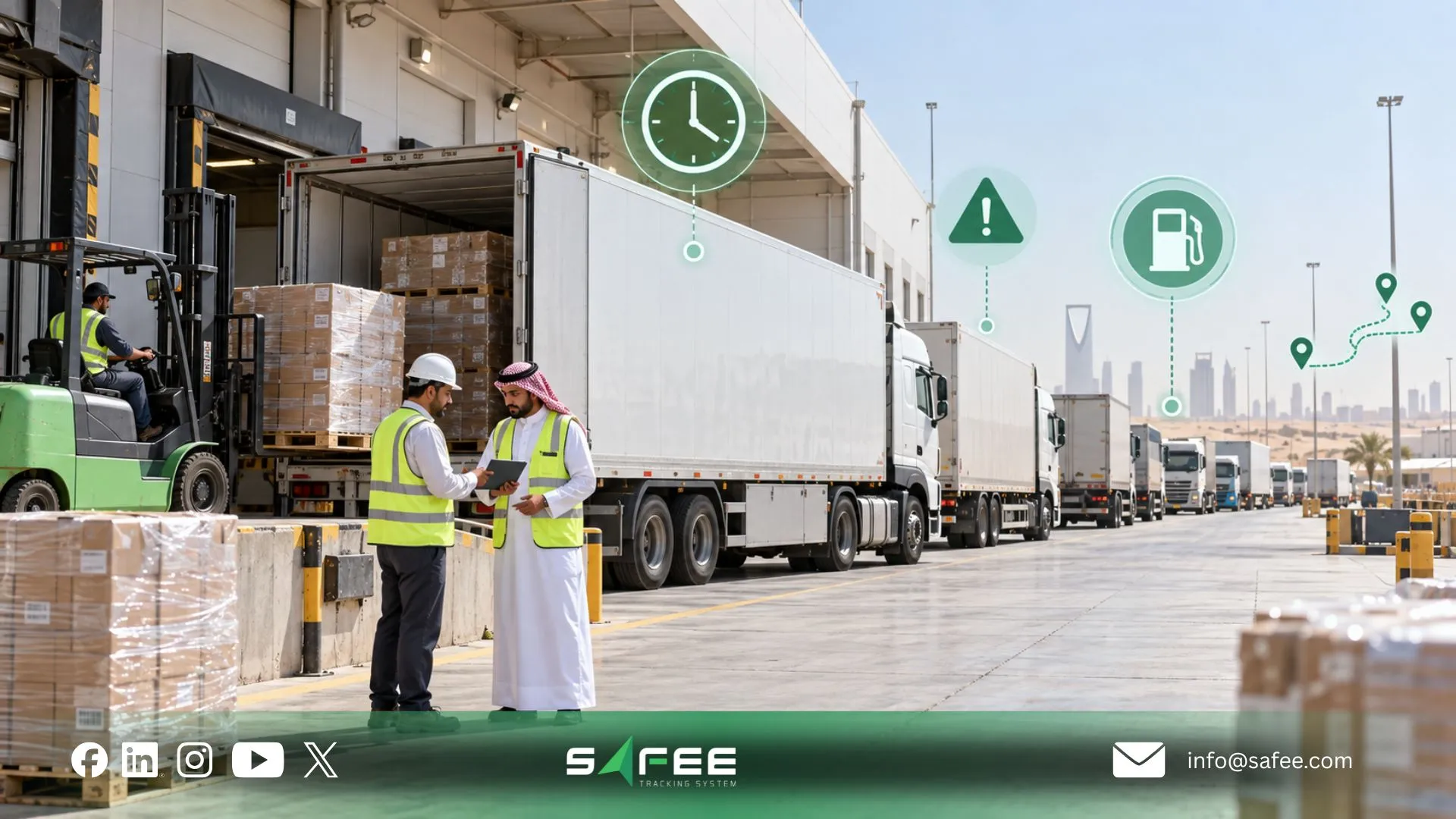
Designing a structured workflow ensures that trip planning, active execution, and post-trip reviews occur systematically across your entire transport organization, transforming chaotic logistics into a predictable science.
Plan Logistics Journeys Around Real Delivery Constraints
Successful trip planning accounts for the environmental, geographical, and regulatory realities on the ground in Saudi Arabia. When structuring logistics journeys, operations planners must factor in:
- Mandatory Driver Rest Periods: Aligning trip schedules with regional driving hour regulations and mandatory rest mandates to prevent driver fatigue.
- Vehicle Weight & Classification Limits: Ensuring routes comply with municipal and national weight restrictions for heavy transport and distribution trucks.
- Permit Requirements: Accounting for special cross-border or municipal entry permits required for specific industrial zones.
- Traffic & Environmental Windows: Factoring in peak congestion hours and extreme weather conditions (such as high summer temperatures affecting engine performance and auxiliary cooling units).
Aligning schedules with these physical and legal constraints prevents transit friction and ensures seamless execution from initial dispatch to final customer sign-off.
15 things to check before fleet journey management
Before rolling out a comprehensive journey management framework, fleet supervisors should evaluate the following operational checkpoints:
- Verify GPS telematics device power and cellular transmission stability.
- Confirm driver identification token (RFID/iButton) registration.
- Establish pre-approved geofence corridors and checkpoint boundaries.
- Set threshold parameters for speeding, harsh braking, and sharp cornering alerts.
- Validate fuel sensor calibration and baseline burn rate metrics.
- Review preventive maintenance schedules and upcoming service intervals.
- Confirm cargo temperature and humidity monitoring linkages (for cold chain assets).
- Check API synchronization status with enterprise ERP and transport management systems.
- Validate compliance with regional driving hour regulations and rest mandates.
- Test emergency SOS panic button connectivity with the central operations desk.
- Ensure digital waybill and delivery documentation accessibility via mobile apps.
- Designate internal escalation contacts for unexpected transit exceptions.
- Review historical bottleneck data for recurring regional transit delays.
- Establish automated notification rules for unauthorized vehicle movement or route deviation.
- Conduct a 24-hour sandbox simulation of trip dispatch and live tracking feeds.
Review fleet operating data and cost after each trip
Data collection holds little value if insights remain unexamined. Establishing a routine, automated post-trip review process enables operations teams to compare planned routes against actual execution. Analyzing trip duration anomalies, fuel expenditures, idle percentages, and driver adherence metrics after every completed journey helps refine future scheduling models, optimize asset allocation, and drive continuous, measurable cost reduction across your entire fleet.
Ready to turn post-trip data into actionable cost savings? Connect with our team to discuss your operational workflows.
Also read: How to Improve Road Oil Transport Safety Under Hormuz Risk

Safee: Best logistics fleet management for your operation
Selecting the right technology partner is critical to achieving sustainable operational excellence in logistics fleet management in Saudi Arabia. At Safee, we deliver an enterprise-grade fleet management ecosystem engineered for regional logistics, combining real-time GPS tracking, intelligent journey management, and automated reporting tools into a unified interface.
Designed to elevate Saudi logistics operations and maximize logistics fleet visibility, Safee’s comprehensive platform replaces fragmented tracking with robust, modular operational capabilities:
- Journey Planning: Provides comprehensive route planning, checkpoint validation, and proactive exception alerts instead of basic map displays.
- Delay Management: Delivers real-time delay detection, idle tracking, and immediate operational notifications to resolve stationary bottlenecks.
- Fuel Oversight: Features advanced fuel consumption tracking, anomaly detection, and dedicated idle-burn reduction reports to protect profit margins.
- Exception Handling: Replaces unstructured communication with standardized digital workflows, automated audit trails, and transparent exception logs.
- Operating Cost Review: Unifies analytics through dedicated dashboards that deliver automated cost-per-trip and performance reviews instead of manual spreadsheet consolidation.
Ready to transform your transport workflows and drive measurable efficiency? Contact Safee today to schedule a personalized platform demonstration and discover how our advanced fleet journey management solutions can secure your bottom line.
Safee vs location tracking only
| Evaluation Criteria | Location Tracking Only | Safee Journey Management & Fleet Operations |
| Journey Planning | Basic map display; no pre-trip route scheduling or deviation rules. | Comprehensive route planning, checkpoint validation, and proactive exception alerts. |
| Delay Management | Reactive visibility; no automated alerts for prolonged stationary time. | Real-time delay detection, idle tracking, and immediate operational notifications. |
| Fuel Oversight | Limited or absent fuel level monitoring. | Advanced fuel consumption tracking, anomaly detection, and idle-burn reduction reports. |
| Exception Handling | Manual phone calls and unstructured driver communication. | Standardized digital workflows, automated audit trails, and exception logs. |
| Operating Cost Review | Fragmented data requiring manual spreadsheet consolidation. | Unified analytics dashboards delivering automated cost-per-trip and performance reviews. |
How do Safee customers evaluate journey cost improvements?
Logistics operators measure the return on investment of journey management by evaluating before-and-after operational benchmarks. By establishing a pre-implementation baseline covering fuel expenditures, average transit times, and idle hours, fleet managers track performance gains over structured 30-to-90-day review cycles. Utilizing Safee’s automated reporting modules, organizations quantify reduced delay times and optimized fuel usage without relying on unverified claims.
Also read: 6 Steps to Build Stronger Fleet Safety Management
FAQs about logistics fleet management in Saudi Arabia
How does fleet management fit within logistics operations?
It provides the technological infrastructure required to track vehicles, monitor driver behavior, manage routes, and control operating expenses across the supply chain.
Which records are needed to calculate journey cost?
Accurate calculations require fuel consumption logs, distance traveled, maintenance expenses, toll fees, driver wages, and vehicle depreciation metrics.
Does every logistics fleet need a Wasl connection?
Commercial transport vehicles operating within the Kingdom must comply with official regulatory data integration mandates governed by transport authorities.
Is Safee a shipping company or an operations platform?
Safee is a technology provider offering advanced fleet management software, telematics, and journey management solutions, not a physical shipping carrier.
Ready to improve your fleet operations?
Tell us what you would like to improve. A Safee specialist will reply by email.
Usually replies within one business day • No sales spam
Your details are used only to respond to your request. Privacy Policy