

How AI in Fleet Management Services Improves Daily Decisions

AI in fleet management services should make operational information easier to find, prioritize, and act on. Fleet leaders need practical support for investigating exceptions, reviewing patterns, reaching source records, and deciding what requires attention first.
In this guide, we, at Safee, explain how our AI capabilities work with connected tracking, alerts, journeys, drivers, maintenance, video, analytics, and reporting data. We also show what buyers should verify before deployment and how to measure value without relying on unsupported savings claims.
What should AI actually do inside a fleet management platform?
AI should support decisions inside the same connected platform teams use to monitor vehicles, review alerts, manage journeys, follow maintenance, and access operational records. Its value should appear in daily fleet workflows, not as a separate consulting report or an isolated technology layer.
AI Should support real fleet workflows
We provide AI capabilities inside the connected platform your team already uses to review vehicles, alerts, journeys, drivers, maintenance, analytics, and reports. These capabilities should make connected fleet information easier to investigate, prioritize, and act on.
Before choosing an AI-enabled fleet management service, buyers should ask:
- Which connected fleet data can the AI capability use?
- Can users trace an answer or insight to its supporting record?
- Which operational decision becomes faster or clearer?
- How do permissions, roles, and review workflows control its use?
Generic claims about automation are not enough. Each output should remain connected to a vehicle, driver, journey, alert, maintenance record, report, or other relevant operational context.
Managers must retain operational control
AI can help teams reduce noise, identify priorities, and review connected records more efficiently, but it should not replace human judgment. Fleet managers must continue to own approvals, escalations, safety decisions, maintenance actions, compliance reviews, and policy changes.
This is especially important for fleets operating across multiple branches, depots, contractors, service teams, and approval levels. We support the review process, while the organization remains responsible for the final operational decision.
Which AI capabilities do we provide in Safee?
Our AI capabilities support different stages of fleet investigation, analysis, and safety review. The available answers, insights, and events depend on the connected modules, deployed devices, configuration, data quality, and user permissions.
AI Fleet assistant
Our AI Fleet Assistant allows authorized users to ask natural-language questions about connected fleet data. Teams can investigate vehicle status, journeys, alerts, drivers, maintenance, utilization, and reports, continue with follow-up questions, and return to the supporting records before making an operational decision.
The assistant provides a faster conversational route into the relevant Safee workspace. It does not replace Fleet Monitoring dashboards, configured alerts, structured reports, operational modules, or responsible managers.
Tracking data analyzer
Tracking Data Analyzer (TDA) turns connected tracking data into dashboards, visualizations, scheduled reports, alerts, and deeper analytical views. It can help teams review utilization, route delays, idling, recurring events, and other operational patterns.
Where sufficient clean historical data and stable definitions are available, TDA can also support predictive analysis and anomaly detection. Managers should still verify the underlying records and decide what action is appropriate.
Video in vehicle monitoring system
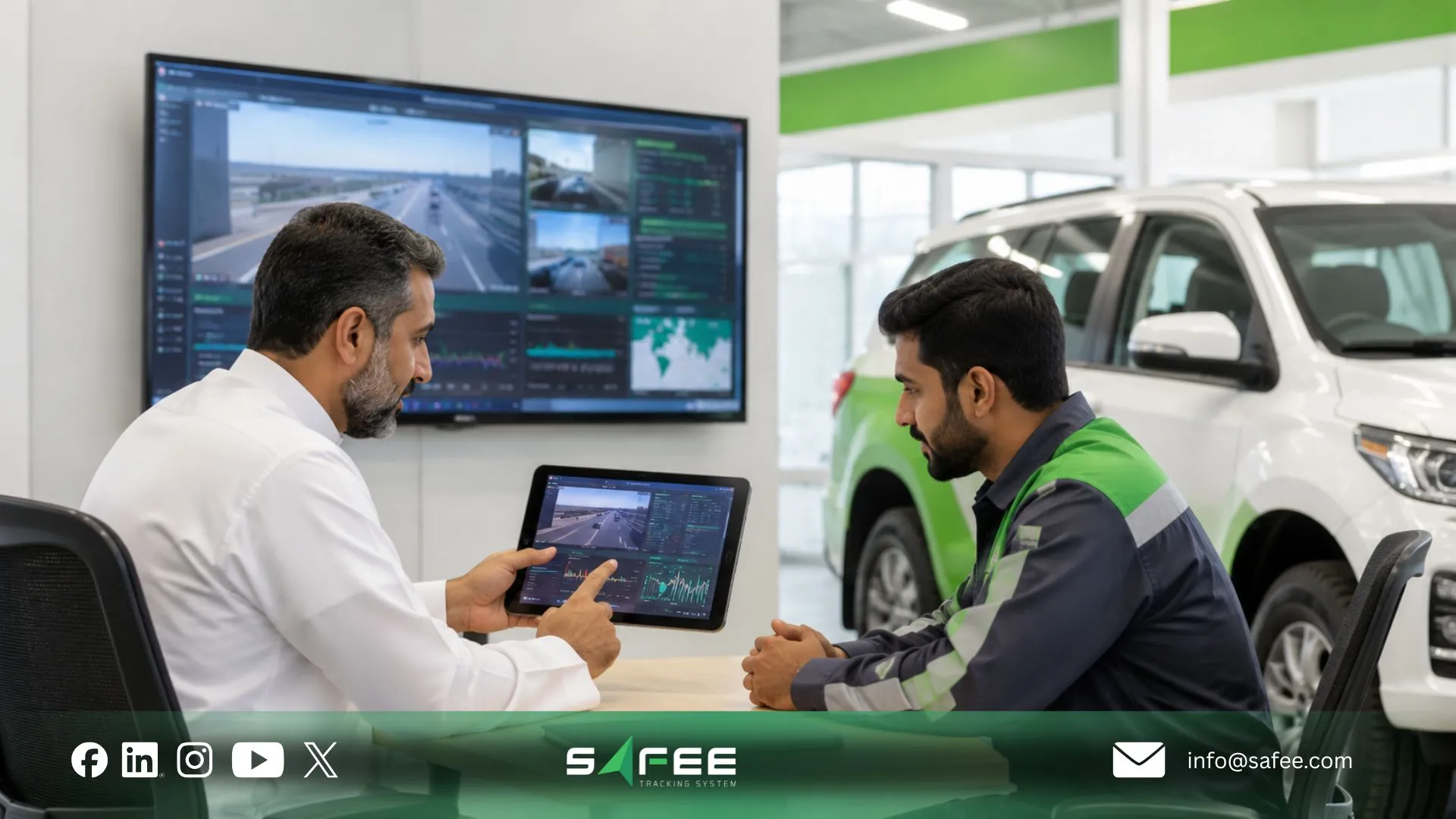
Video in Vehicle Monitoring System (ViVMS) combines video, telematics data, and automated event detection to support driver-safety review. Depending on the deployed devices and configuration, Advanced Driver Assistance Systems (ADAS) can identify road-related risks, while the Driver Monitoring System (DMS) can identify defined driver-related events.
These events may include lane departure, forward-collision risk, fatigue, distraction, smoking, seatbelt non-compliance, harsh driving, and other configured safety exceptions. Fleet and HSE teams can then review the event context and supporting video before coaching, escalation, or policy action.
Also read: Safee Tracking System for Real-Time Fleet Monitoring and Smarter Insights
How does AI use connected fleet data?
AI-supported answers and insights depend on the quality, availability, and consistency of the connected fleet records. Our AI capabilities use data from relevant Safee modules, while each module remains the primary source for its detailed records and operational workflows.
| Connected Safee Module | How Its Data Supports AI-Enabled Workflows |
|---|---|
| Live Vehicle Tracking | Provides current and historical location, movement, stops, routes, geofences, vehicle groups, and vehicle-status context. |
| Alarms and Alerts | Provides configured safety, route, idling, geofence, and operational exception records. |
| Driver Management | Adds driver identity, assignments, and accountability context where configured. |
| Journey Management System | Provides planned journeys, route controls, approvals, delays, actual movement, and post-journey records. |
| Maintenance Module | Provides service schedules, open tasks, overdue maintenance, alerts, and vehicle-readiness context. |
| Fleet Reporting | Provides structured historical data, filters, scheduled reviews, and exportable management records. |
| Tracking Data Analyzer | Adds dashboards, analytical views, recurring-pattern review, anomaly detection, and predictive analysis where supported by the available data. |
| Video in Vehicle Monitoring System | Adds video evidence and configured ADAS, DMS, and automated safety-event context. |
The quality of any AI-supported output depends on the quality of these records. Vehicle names, driver assignments, branches, routes, thresholds, permissions, and operational definitions should therefore remain accurate and consistent across the platform.
AI does not correct incomplete operational records automatically. Before deployment, fleet teams should confirm that the required modules are connected, user permissions are defined, and the data needed for each use case is available.
Where can AI improve daily fleet decisions?
AI creates practical value when it helps each team identify the records and exceptions that require attention. The objective is not to add more dashboards, but to make connected fleet information easier to investigate, prioritize, and follow through.
Operations and dispatch
Operations and dispatch teams can use AI-supported workflows to review delayed journeys, route deviations, prolonged stops, unauthorized movement, depot bottlenecks, and unresolved operational alerts.
The supporting records should remain connected to the relevant vehicle, route, journey, location, and responsible user so the team can verify the event before taking action.
HSE and driver safety
Fleet and HSE teams can review repeated safety events, configured alerts, driver-assignment context, and supporting video where available. This helps the team determine whether an event requires investigation, coaching, escalation, or a wider policy review.
Our Driver Management and Video in Vehicle Monitoring System modules add driver and video context where the required devices, assignments, and permissions are configured.
Maintenance
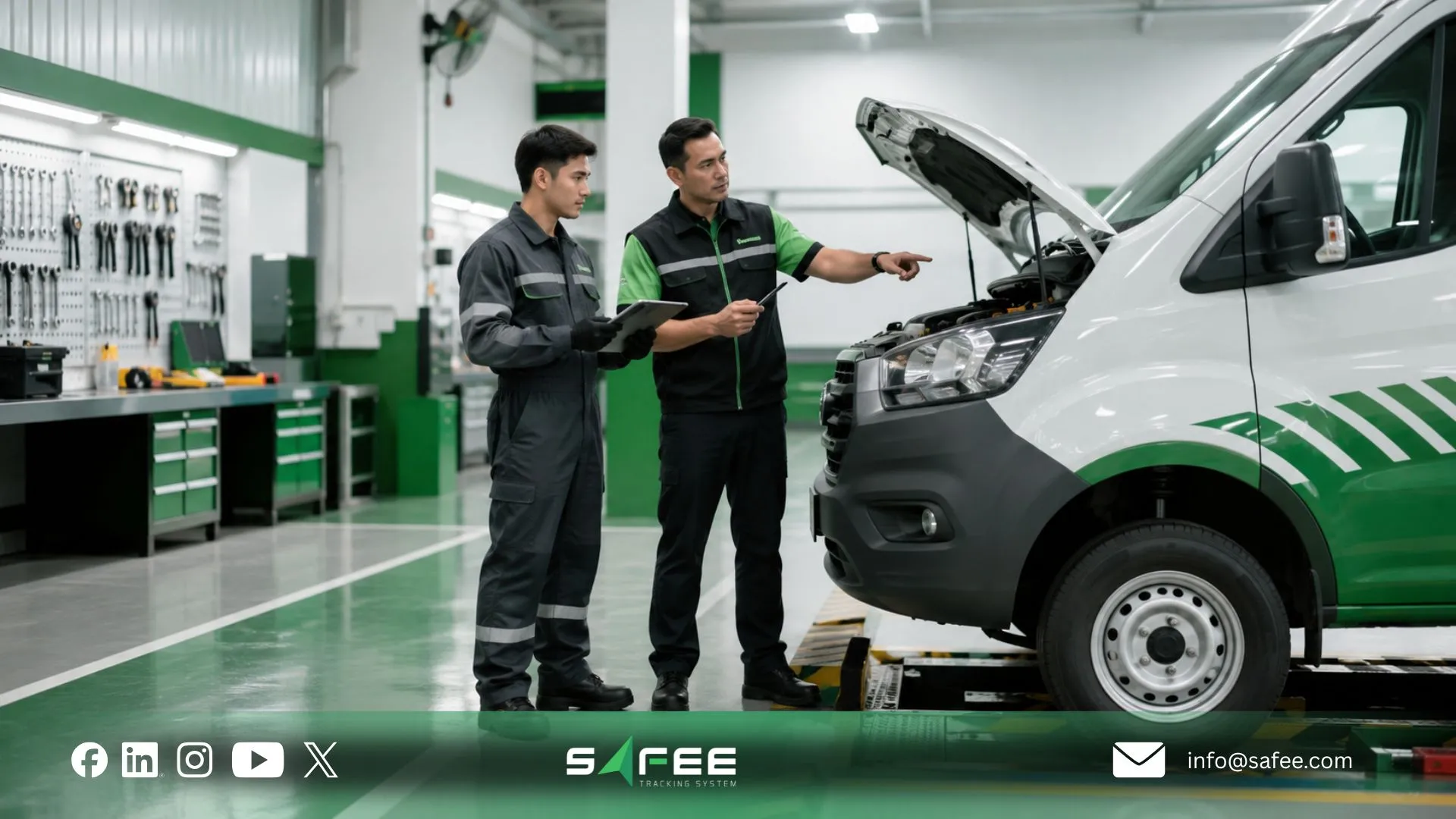
Maintenance teams can review service schedules, overdue work, open tasks, recurring vehicle issues, and readiness risks before a vehicle is dispatched.
Our Maintenance Module keeps service-related follow-up connected to the vehicle record, helping authorized users identify what is due, what remains open, and which vehicle may require attention.
Management review
Managers can use AI-supported summaries and analytical views to review recurring exceptions, utilization patterns, idling, unresolved actions, and operational trends across vehicles, branches, routes, or departments.
These outputs should support structured review rather than replace it. Management remains responsible for validating the source records, assigning actions, and confirming whether the required follow-up was completed.
Reliable AI-supported workflows also require clear data ownership. Vehicle groups, driver assignments, branches, routes, alert thresholds, user permissions, and review responsibilities should remain accurate and consistent across the platform.
Also read: AI Fleet Report vs Traditional Fleet Report: What Is Different?

What is the real cost of AI in fleet management services?
AI-enabled fleet management may increase operational spending during the initial deployment stage. Fleets may need to invest in devices, cameras, connectivity, installation, data cleanup, module configuration, integrations, user permissions, training, and workflow redesign before the platform can deliver consistent operational value.
This initial increase should be evaluated as the cost of building a connected control layer, not simply as a higher software expense. The fleet is replacing fragmented records, manual follow-up, disconnected reports, and reactive decision-making with structured data, defined responsibilities, and connected workflows.
Once the system is configured and adopted, total operating costs may decline as teams reduce avoidable manual work, shorten investigation time, improve alert follow-up, identify maintenance needs earlier, reduce fragmented reporting, and use vehicles more effectively.
The size and timing of that reduction will differ by fleet. It depends on the original operating baseline, deployed modules, data quality, configuration, user adoption, and whether managers act consistently on the information the platform provides.
For this reason, buyers should compare two cost stages:
- Initial implementation cost: devices, installation, configuration, integration, training, data preparation, and rollout.
- Ongoing operating cost: staff time, manual reporting, unresolved alerts, delayed maintenance, idle time, underused vehicles, and repeated operational leakage.
The objective is not to promise an automatic saving percentage. It is to make the initial investment measurable against the operational costs the fleet expects to reduce after deployment.
ِAlso read: Fleet Management Efficiency in the GCC: Right-Size Fleets, Cut Costs
How should fleet teams measure AI value?
AI value should be measured against verified operational baselines rather than assumed savings percentages. Each fleet should define the workflows and KPIs it intends to improve before deployment.
Useful measurements may include:
- Time required to investigate an exception
- Number and age of unresolved alerts
- Manual reporting steps reduced
- Maintenance tasks due, overdue, and completed
- Repeated safety or operational exceptions
- Utilization and idling patterns
- Time required to locate supporting records
- Management actions assigned and completed after review
We help buyers identify the relevant baselines, workflows, and KPIs before rollout. Actual results still depend on the deployed modules, connected data, configuration, user adoption, and follow-up discipline.
What should buyers check before deploying AI fleet capabilities?
Before deployment, buyers should connect each proposed AI capability to a defined operational problem, available data, responsible users, and measurable outcome.
Use these questions during the evaluation:
- Which fleet problem should the AI capability help investigate or improve?
- Which Safee modules, devices, and data sources must be connected?
- Can authorized users trace answers, summaries, and events to supporting records?
- Which roles can access the data, review outputs, and approve actions?
- What configuration, integration, training, and recurring costs apply?
- Which baseline and KPIs will be used to measure improvement?
- Which vehicles, branch, country, or team should be included in the first rollout?
A focused first deployment is usually easier to validate than a fleet-wide launch with several undefined objectives. Start with one use case, confirm the required data and responsibilities, and expand only after the workflow produces reliable results.
Why choose Safee for AI-powered fleet management?
AI capabilities create more value when they work with the same operational data your teams already use. Our connected platform brings vehicle tracking, alerts, drivers, journeys, maintenance, analytics, reporting, video, and mobile access into one operational environment.
At Safee, we provide different AI-supported capabilities for different fleet needs. Our AI Fleet Assistant helps authorized users ask questions and investigate connected records. Tracking Data Analyzer supports pattern, trend, anomaly, and predictive review where the available data supports it, while Video in Vehicle Monitoring System adds video and automated driver-safety event context.
We also help UAE, Saudi, GCC, and international fleet teams configure vehicle groups, branches, routes, users, permissions, alerts, reports, and review responsibilities around their actual operating structure. The available capabilities and outputs depend on the selected modules, deployed devices, configuration, connected data, and user permissions.
Book a Safee demo to identify which AI capabilities fit your fleet, which data should be connected first, and how the rollout should be measured.
FAQs about AI in fleet management services
What is AI in fleet management services?
AI in fleet management services refers to AI capabilities that work with connected fleet data to support investigation, analysis, prioritization, and operational review. Depending on the deployed modules, this may include natural-language questions, pattern analysis, anomaly detection, predictive review, and automated video-safety events.
Do we provide standalone AI consulting?
No. We provide AI capabilities inside our connected fleet management platform rather than as a standalone consulting service. The objective is to help fleet teams use connected tracking, alerts, journeys, drivers, maintenance, analytics, video, and reporting data inside their daily workflows.
Which AI capabilities are available in Safee?
Depending on the selected modules, devices, configuration, data, and user permissions, relevant capabilities may include AI Fleet Assistant, Tracking Data Analyzer, and Video in Vehicle Monitoring System.
These capabilities work with supporting modules such as Live Vehicle Tracking, Alarms and Alerts, Driver Management, Journey Management System, Maintenance Module, and Fleet Reporting.
Why can AI fleet management cost more during initial deployment?
Initial costs may include devices, cameras, sensors, installation, data cleanup, module configuration, integrations, user permissions, training, and phased rollout. These costs build the connected operational foundation required for reliable AI-supported workflows.
How should fleet teams measure AI value?
Fleet teams should compare performance before and after deployment using verified operational baselines. Useful measures may include investigation time, unresolved alerts, manual reporting effort, overdue maintenance, repeated exceptions, utilization, idling, and completed management actions.
How should GCC fleets evaluate AI fleet capabilities?
GCC fleets should evaluate capabilities according to vehicle types, branches, routes, remote operations, contractor structures, user roles, alert ownership, reporting requirements, support needs, and available data.
We recommend starting with one defined workflow or fleet group, validating the connected data and responsibilities, and expanding after the first use case produces reliable results.
Ready to improve your fleet operations?
Tell us what you would like to improve. A Safee specialist will reply by email.
Usually replies within one business day • No sales spam
Your details are used only to respond to your request. Privacy Policy