

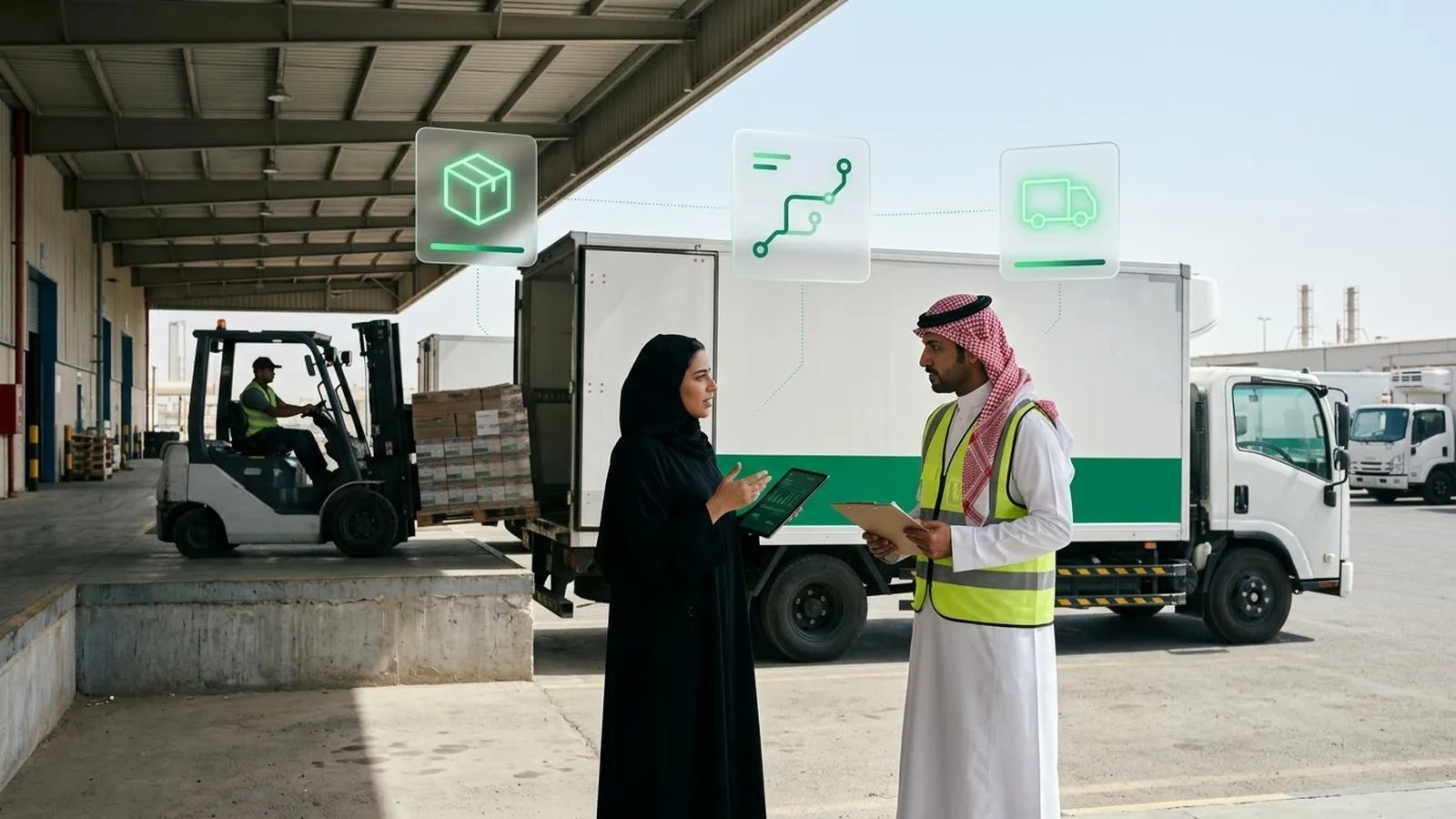
Fleet Management vs Logistics Management: How They Work Together
A shipment misses its delivery window, but the logistics and fleet teams see different problems. Logistics needs to update the customer, while fleet management must determine whether vehicle availability, a breakdown, or a delay on the road caused the issue. Without clear responsibilities and shared data, resolving one delay can require several calls between teams.
Understanding fleet management vs logistics management helps prevent these gaps. This guide explains how their responsibilities, KPIs, and systems differ, how they coordinate shipments, and how fleet ownership, Saudi transport requirements, and Safee’s tracking capabilities affect that coordination.
What is fleet management in logistics?
Fleet management in logistics focuses on keeping vehicles and drivers ready, safe, compliant, and cost-effective for transport operations. It covers maintenance, fuel, driver management, vehicle availability, and operating costs.
Logistics management coordinates the movement of goods, including transport planning, warehousing, shipping schedules, and deliveries. The two functions overlap in dispatching and route planning: logistics defines shipment requirements, while fleet management confirms transport capacity and operational constraints.
For more on managing heavy vehicles, see our guide to truck fleet management.
What is logistics management?
Logistics management plans, executes, and controls the movement, storage, and related information flows of goods from origin to destination. It includes transportation, warehousing, inventory, order fulfillment, and returns.
It is part of the broader supply chain, which also involves sourcing, procurement, and production. Fleet management supports the transportation component when a company operates vehicles or manages transport capacity.
Is fleet management part of logistics?
In freight transport and distribution businesses, fleet management often operates within or alongside the logistics function. However, its organizational position depends on how the company is structured.
A business may have a central fleet department supporting several divisions, while another may outsource transportation to carriers that manage their own vehicles and drivers. Fleet management also exists outside logistics, such as in field-service and employee transportation fleets.
For a broader overview of fleet responsibilities, read what is fleet management.
Fleet management vs logistics management
The main difference lies in what each function is accountable for: fleet management focuses on vehicle and driver performance, while logistics management focuses on fulfilling orders and moving goods.
| Comparison point | Fleet management | Logistics management |
|---|---|---|
| Primary focus | Vehicles, drivers, and transport capacity | Orders, shipments, and delivery commitments |
| Key decisions | Which vehicles and drivers are available and fit for dispatch? | What needs to move, when, and through which transport option? |
| Core responsibilities | Maintenance, fuel, safety, vehicle documents, and operating costs | Orders, inventory, warehousing, transport planning, and carrier coordination |
| KPIs | Cost per km, vehicle availability, utilization, and driving safety | On-time delivery, order fulfillment, and cost per shipment |
| Systems | Fleet management platforms, GPS tracking, and telematics | TMS, WMS, and ERP |
| Saudi compliance role | Vehicle and driver requirements, including operating cards and tracking obligations where applicable | Carrier verification and shipment documentation where required |
| Outsourced transport | Vehicle operations may be managed by the contracted carrier | Shipment planning, carrier coordination, and customer commitments remain with the contracting business |
These responsibilities are not always assigned to separate departments. In smaller operations, one team may handle both, while larger companies distribute them across multiple functions.
KPIs each team answers for
Logistics teams primarily measure shipment and customer outcomes:
- On-time delivery: Percentage of shipments delivered within the agreed window.
- On-time, in-full delivery (OTIF): Percentage of orders delivered on time with the required quantities.
- Cost per shipment: Total transport cost divided by the number of shipments.
- Inventory accuracy: Agreement between recorded and physically available stock.
Fleet teams focus on vehicle performance and operating efficiency:
- Cost per kilometer: Vehicle operating costs divided by distance traveled.
- Vehicle availability: Percentage of vehicles available for scheduled operations.
- Utilization: How much available vehicle capacity or operating time is used, based on the defined measure.
- Driving violations: Speeding and harsh-braking events relative to distance traveled.
- Empty mileage and load factor: Distance traveled without cargo and the proportion of available load capacity used.
These KPIs must be reviewed together. For example, dispatching a half-loaded truck may protect an on-time delivery target but increase cost per tonne transported and reduce load-capacity utilization. It does not necessarily reduce the share of kilometers traveled with a load.
When delivery performance declines, compare vehicle availability, dispatch delays, and shipment schedules before assigning responsibility. This helps distinguish fleet-related problems from warehouse or planning delays.
For calculation methods and additional indicators, see our guide to fleet management KPIs.
Systems on each side
Logistics teams use a Transportation Management System (TMS) to plan and track shipments, a Warehouse Management System (WMS) to manage inventory and warehouse activities, and an ERP to connect relevant business processes. Fleet teams use fleet management and telematics systems to monitor vehicles, drivers, maintenance, and operating conditions.
These systems can overlap in functionality. Some TMS platforms already provide shipment tracking through carrier feeds or telematics integrations. The challenge is ensuring that both teams work with consistent information.
For effective coordination, define which system owns each record and connect the shipment or waybill number to the assigned vehicle, trip status, and relevant tracking events. Logistics can then review shipment progress while fleet management investigates vehicle-related exceptions.
Without this connection, a fleet system may show where a truck is without identifying its shipment, while the logistics system may show a delayed order without explaining the vehicle-related cause.
For more on connecting operational fleet data with enterprise systems, see fleet management ERP integration.

How fleet management and logistics work together on each shipment
Consider a refrigerated shipment from Riyadh to Dammam. Logistics is responsible for meeting the delivery commitment, while fleet management ensures the assigned vehicle and driver can complete the trip safely. Their coordination depends on exchanging the right information before dispatch, during transport, and after delivery.
Before the trip
The logistics team confirms the shipment’s weight, required temperature range, loading time, and delivery window. Fleet management then assigns a suitable refrigerated truck and qualified driver.
Before confirming availability, the fleet team checks vehicle capacity, maintenance status, inspection validity, applicable operating documents, and driver readiness. A truck undergoing repairs or lacking a required operating card cannot simply be assigned because it appears on the vehicle list.
The critical step is confirming availability before finalizing dispatch. Logistics provides the shipment reference, cargo requirements, and schedule. Fleet responds with the assigned vehicle, driver identification, and operational readiness status. Both teams must also agree on who approves substitutions if the assigned truck becomes unavailable.
During the trip
Fleet management monitors vehicle location, stops, route deviations, and temperature readings where compatible sensors are installed. When a prolonged stop or temperature exception occurs, the fleet team investigates the cause and coordinates the necessary action.
Logistics uses trip status and updated arrival estimates to manage delivery commitments and inform the customer. Depending on the systems in use, arrival estimates may be calculated automatically or updated by dispatchers using current trip information.
Both teams need a clear escalation process. Fleet management investigates vehicle and driver issues, while logistics coordinates changes to delivery appointments and customer notifications. For temperature excursions, the responsible team must assess the readings against cargo requirements before deciding whether the shipment can continue.
Keeping communication responsibilities clear also reduces unnecessary calls to drivers during transport.
After the trip
After delivery, logistics confirms proof of delivery (POD), including the receiving time, delivered quantities, and any reported damage or shortages. Fleet management reviews actual mileage, fuel consumption, delays, and vehicle operating costs.
Both teams then compare delivery performance with the cost of completing the journey. If the truck returns from Dammam empty, the return distance affects transport profitability. However, the cost allocated to that shipment depends on the company’s costing method and whether the return journey serves another assignment.
For refrigerated shipments, historical temperature records are particularly important when a customer disputes cargo condition. A single reading at delivery cannot establish whether temperatures remained within the required range throughout transport. Teams should review the available sensor history, recording gaps, and any temperature alarms, considering sensor placement and the conditions actually measured.
These records help identify whether a delivery problem resulted from transport execution, scheduling, equipment performance, or cargo handling. For more on journey costs and delays, see logistics fleet management in Saudi Arabia.
If your teams still exchange trip updates through phone calls and spreadsheets, talk to a Safee Fleet Expert about connecting journey records and vehicle monitoring with your logistics workflows.

Who manages what with in-house and outsourced transport?
Whether you operate your own fleet, use a contracted carrier, or combine both, your logistics team remains responsible for delivery commitments. What changes is who manages the vehicles, drivers, and transport execution.
| Model | Your company’s responsibilities | Carrier’s responsibilities |
|---|---|---|
| In-house fleet | Vehicle and driver management, maintenance, compliance, dispatch, and delivery planning | No external carrier; specialist services may be outsourced |
| Contracted carrier or logistics provider | Shipment requirements, carrier selection, service levels, customer communication, and delivery monitoring | Assigned vehicles, drivers, maintenance, applicable operating permits, and transport execution |
| Mixed model | Own-fleet operations, carrier coordination, shipment allocation, and overall delivery performance | Transport execution and vehicle compliance for outsourced shipments |
When outsourcing transport, agree on data access before signing the contract. Specify which shipment updates the carrier must provide, including vehicle location, estimated arrival time, delivery status, and temperature records for refrigerated loads. Define update frequency, data retention, escalation responsibilities, and what happens when tracking data becomes unavailable. Direct visibility through a shared system may require technical integration.
In Saudi Arabia, verify the carrier’s licenses, vehicle operating cards, and applicable tracking obligations. Companies transporting their own goods must also check the requirements for private-account transport; outsourcing does not eliminate the need to verify the carrier’s compliance.
To choose the most cost-effective model, compare the total cost of serving the same routes and delivery volumes. For your own fleet, include allocated vehicle and driver costs, fuel, maintenance, insurance, downtime, and empty return journeys. Compare these against carrier charges, additional fees, and the internal coordination costs that remain. Avoid adding costs already included in your cost-per-kilometer calculation.
The mixed model may suit businesses with predictable daily routes and seasonal demand peaks, but the right choice depends on fleet utilization, service reliability, and total operating costs.
For a more detailed comparison, read our guide to fleet management services.
If you operate both company vehicles and contracted carriers, get a Fleet-Fit Recommendation to explore how Safee can support visibility across your own fleet and compatible carrier data sources.
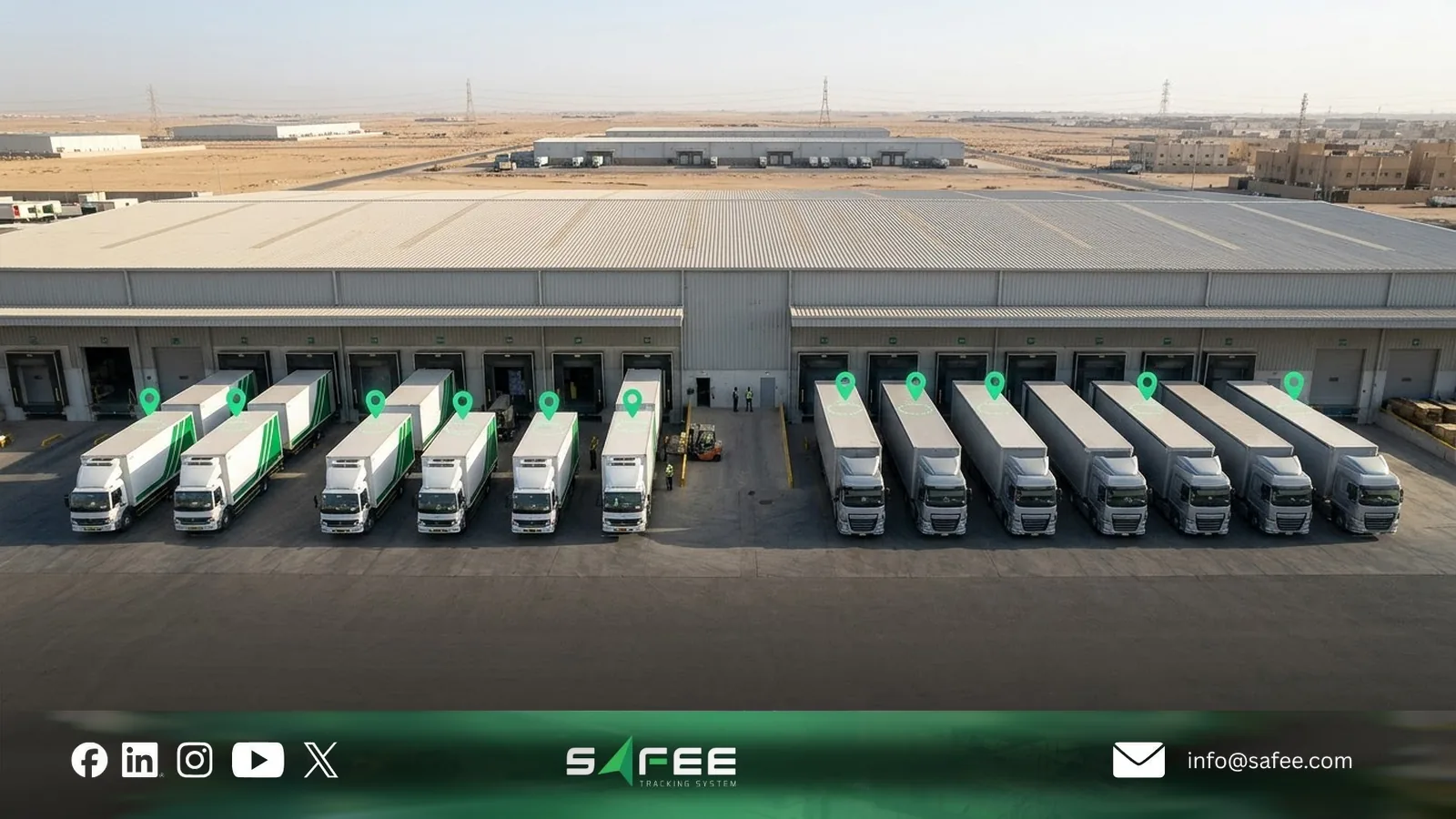
Saudi transport requirements for fleet management and logistics
Saudi Arabia’s Transport General Authority (TGA) regulates road freight, but compliance requirements differ between companies transporting their own goods and carriers transporting goods for others. Fleet and logistics teams need to coordinate the following records before dispatch:
- Activity authorization: Confirm the licensing requirements for your transport activity. Commercial carriers transporting goods for others must hold the applicable TGA license, while own-account transport has separate requirements.
- Operating cards: The fleet operator or contracted carrier must maintain valid operating cards for vehicles subject to these requirements, along with applicable driver and vehicle documents. See our guide to the Saudi operating card for transport vehicles.
- Wasl connectivity: Activities subject to Wasl requirements must meet the applicable tracking and data-sharing conditions. Fleet teams should verify vehicle registration, provider eligibility, and message transmission rather than assuming an installed GPS tracker means the connection is compliant. See our guide to the Wasl platform in Saudi Arabia.
- Electronic transport document: For shipments subject to this requirement, the licensed carrier or freight broker arranges issuance through the Bayan platform. Logistics teams should provide accurate shipment details and verify the document reference before dispatch.
- Carrier verification: Before assigning shipments to an external carrier, verify its applicable license, vehicle operating cards, and responsibility for issuing transport documents.
The practical division is clear: fleet management checks vehicle and driver readiness, while logistics verifies shipment information and delivery documentation. The carrier or other legally responsible party must fulfill the applicable regulatory obligations, regardless of how your company divides internal tasks.
How Safee helps fleet and logistics teams share one trip record
When fleet and logistics teams use disconnected systems, matching a shipment to its vehicle, delivery status, and trip history takes extra coordination. At Safee, we help connect these operational records through tracking, journey management, reporting, and supported integrations.
- Vehicle tracking: Live Vehicle Tracking provides current vehicle locations, stops, speed, and trip history, helping fleet teams investigate delays while logistics monitors shipment progress.
- Waybill identification: When Safee is integrated with a compatible waybill management system, shipment references can be associated with vehicles and used to retrieve relevant trip information.
- Load status: The Waybill Status dashboard can distinguish loaded and unloaded vehicles using information exchanged with the integrated waybill system.
- Shipment mileage: The Waybill Mileage Report links waybill references with loading and arrival times, loaded distance, and related shipment information, helping teams review transport activity.
- Journey planning: The Journey Management System (JMS) supports journey assignments, checkpoints, restrictions, and progress monitoring. Tours also supports multi-vehicle delivery planning where configured.
- Temperature monitoring: Compatible temperature sensors and refrigeration-unit integrations provide temperature history and configured alerts. Thermo King Explorer can display supported refrigeration-unit readings and alarms.
- Business integration: Safee’s Web Service API supports integration with ERP, TMS, and waybill systems, allowing selected operational data to be exchanged according to the agreed technical scope.
- Wasl monitoring: Wasl Explorer and related reports help teams review registered vehicle data, transmitted messages, and connection-related exceptions for applicable Saudi transport activities.
When cellular coverage is interrupted, compatible trackers may store trip records and upload them after reconnection. Historical gaps can be filled where records were retained, but live visibility remains unavailable during the outage without a supported alternative connection.
Safee also provides journey and delivery-planning capabilities, but it does not automatically replace your logistics, warehouse, or ERP systems. Your integration must define which system owns shipment orders, which records are exchanged, and what each team can access.
To see how your shipment references and vehicle data can work together, request a Safee Fleet Demo.
Safee vs arrival times passed on by phone
The main improvement is giving both teams access to relevant trip information without repeatedly requesting updates from drivers or dispatchers.
| Comparison point | Manual or disconnected workflows | With Safee |
|---|---|---|
| Shipment progress | Request updates from drivers or dispatchers | Vehicle location and supported journey status |
| Vehicle assigned to a shipment | Match shipment and vehicle records manually | Search using linked waybill references, where integrated |
| Loaded distance | Reconcile odometer and shipment records | Waybill Mileage Report, where integrated |
| Refrigerated shipment conditions | Collect available temperature logs separately | Connected temperature history and configured alerts |
| Journey delays | Compare planned and actual movements manually | JMS checkpoints, journey status, and supported alerts |
These capabilities depend on the installed equipment, enabled modules, and integration configuration. Both teams should agree on who monitors each exception and who takes action when a delay, missing update, or temperature alarm occurs.

FAQs about fleet management vs logistics management
Is logistics fleet management different from general fleet management?
The core functions are similar, but logistics fleets also focus on shipment schedules, delivery performance, load utilization, and coordination with warehouses and customers.
Is a transport manager the same as a fleet manager?
Not necessarily. Transport managers typically coordinate shipments, routes, and carriers, while fleet managers focus on vehicle availability, maintenance, drivers, and operating costs. Their responsibilities may overlap depending on the company.
Can a fleet platform share trip data with our TMS or ERP?
Yes, through supported API integrations. Safee can exchange operational data with ERP, waybill, and other compatible systems. The available data and integration requirements depend on each implementation. Learn more about fleet management ERP integration.
Does Safee plan loads and delivery schedules?
Safee supports journey and delivery planning through JMS and Tours, including route optimization, delivery task assignments, and estimated arrival times. However, it does not replace the broader order, inventory, and specialized load-planning functions of your logistics systems.
Ready to improve your fleet operations?
Tell us what you would like to improve. A Safee specialist will reply by email.
Usually replies within one business day • No sales spam
Your details are used only to respond to your request. Privacy Policy