


Before You Apply: What a Fleet Management Manager Must Prove
When alerts go unanswered, reports circulate without decisions, and fleet data remains fragmented across teams, the problem is not a lack of activity but a lack of authority. A fleet management manager must turn vehicle, driver, telematics, and operational data into clear decisions, assigned ownership, and verified follow-up. This capability is increasingly important for B2B fleets across the UAE, Saudi Arabia, the wider GCC, and international markets as operations become more distributed, regulated, and data-intensive.
This guide by Safee explains how fleet roles progress from coordinator to director, which qualifications support career advancement, what employers expect from a strong resume and interview, and which digital capabilities improve professional performance. Rather than repeating day-to-day fleet management tasks, it focuses on decision scope, authority, career progression, and digital readiness.
Fleet management manager: Scope, authority, and accountability
A job title does not define the role; decision authority does. The same fleet manager title may cover a regional operation in one organization and a single site in another. Employers and candidates should assess the role by its operating scope, approval rights, required outputs, and escalation boundaries.
A fleet management manager connects frontline fleet activity with business control. The role interprets events, prioritizes action, assigns ownership, verifies closure, and gives leadership a defensible view of fleet performance. It may coordinate with Operations, HSE, Finance, Procurement, Maintenance, IT, and senior management without replacing their specialist authority.
A clear role charter should define:
- The fleets, sites, vehicle groups, or business units within scope.
- Which decisions the manager can make and which require escalation.
- Ownership of alerts, reviews, and unresolved exceptions.
- Required reports, risk summaries, action registers, and closure evidence.
- System permissions, reporting lines, and specialist boundaries.
Visibility without authority creates a control gap. A manager who can see a route deviation, maintenance exception, or disputed driver event but cannot assign action or verify closure is monitoring the fleet not managing it.
The control cycle is straightforward: detect the event, validate the data, prioritize the response, assign ownership, document the action, confirm closure, and review recurring issues. Telematics supplies vehicle, driver, engine, location, and sensor data; managerial judgment determines what happens next.
Need clearer alert ownership, report access, and escalation rules? Request a Safee demo to map your fleet roles into a controlled digital workflow rather than another disconnected tracking screen.
Fleet management team roles from coordinator to director
A mature fleet management team is defined by clear decision rights rather than overlapping task lists. Fleet management staff may work with the same operational data, but their authority, permissions, and responsibilities should differ by role.
Fleet management coordinator and officer
A fleet management coordinator maintains records, assignments, and follow-up within an approved process. A fleet management officer may have similar duties but often carries greater responsibility for verifying information, applying procedures, and controlling site-level workflows.
Both roles are mainly procedural. Their value comes from accurate records, timely escalation, and reliable follow-up.
Supervisor, engineer, and specialist roles
A fleet management supervisor controls execution across a shift, site, branch, or vehicle group. The role prioritizes active exceptions, verifies that procedures are followed, and escalates risks beyond local authority.
A fleet management engineer focuses on technical matters such as vehicle suitability, reliability, telemetry, workshop evidence, and lifecycle requirements. A fleet management specialist develops deeper expertise in areas such as analytics, telematics, maintenance, safety, fuel control, or systems administration.
Although some searches use fleet management specialist vehicles, more natural professional titles include Fleet Management Specialist, Vehicle Fleet Specialist, and Fleet Systems Specialist.
Fleet manager, head, and director roles
A fleet manager coordinates decisions across functions and assigns ownership for operational issues. A fleet management executive may hold either an operational or managerial position, depending on the employer.
The head of fleet management or Director of Fleet Management normally leads the wider function across sites, departments, or countries. At this level, responsibility shifts from daily execution to policy, technology governance, supplier strategy, investment priorities, and executive reporting. The phrase director fleet management may appear in searches, but Director of Fleet Management and Fleet Management Director are more natural professional titles.
Career paths for fleet management experts and consultants
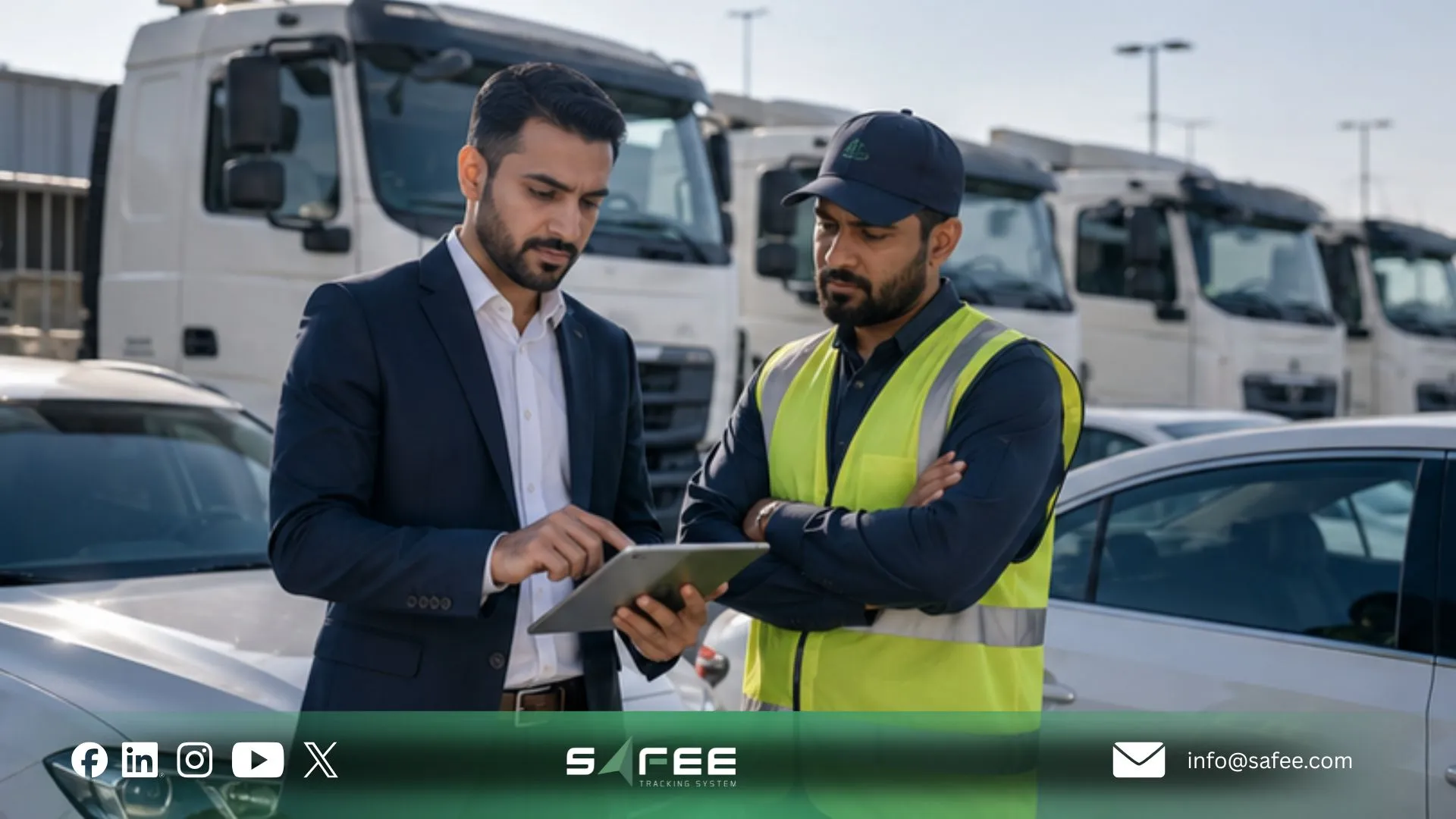
There is no single promotion route in fleet management. Career progress depends on expanding decision authority, analytical depth, stakeholder influence, and system competence—not merely moving to a new title.
Common career paths include:
Operations
- Fleet Coordinator
- Fleet Officer
- Fleet Supervisor
- Fleet Manager
- Head of Fleet Management.
Engineering and maintenance
- Maintenance Coordinator
- Fleet Engineer
- Technical Fleet Specialist
- Engineering or Maintenance Manager
- Fleet Director.
Data and systems
- Fleet Analyst
- Telematics Specialist
- Fleet Management Specialist
- Fleet Systems Manager
- Fleet Technology Leader or Consultant.
Safety and governance
- Driver Safety Officer
- Journey Management Specialist
- Fleet Safety Supervisor
- HSE Fleet Manager
- Regional Fleet Safety Lead.
Movement between these paths is common. Engineers may develop leadership skills, supervisors may build analytical expertise, and systems specialists may move into consulting. Strong candidates can explain which decisions they improved and how the results were verified.
What defines a fleet management expert?
A fleet management expert can diagnose control gaps, distinguish symptoms from causes, recommend practical action, and verify whether the response worked. Credible evidence may include better data quality, clearer alert ownership, fewer unresolved exceptions, stronger access controls, or more consistent reporting.
Within enterprise fleets, fleet management experts also connect the requirements of Operations, HSE, Finance, Procurement, HR, and IT. Their responsibilities may include data ownership, permission design, escalation routes, report distribution, integration accountability, review schedules, and audit trails.
Fleet management consultant jobs and consulting skills
Fleet management consultant jobs focus on diagnosing and improving client operations rather than managing one internal fleet. Consultants may work across operations, engineering, maintenance, telematics, safety, procurement, analytics, sustainability, or transformation programs.
Effective consulting begins with discovery, not a predetermined product recommendation. The consultant should define the business objective, fleet structure, current process, evidence gaps, integration needs, implementation constraints, and success measures. Essential skills include process mapping, requirements analysis, stakeholder interviews, data validation, change planning, and executive communication.
Fleet management qualifications and education routes
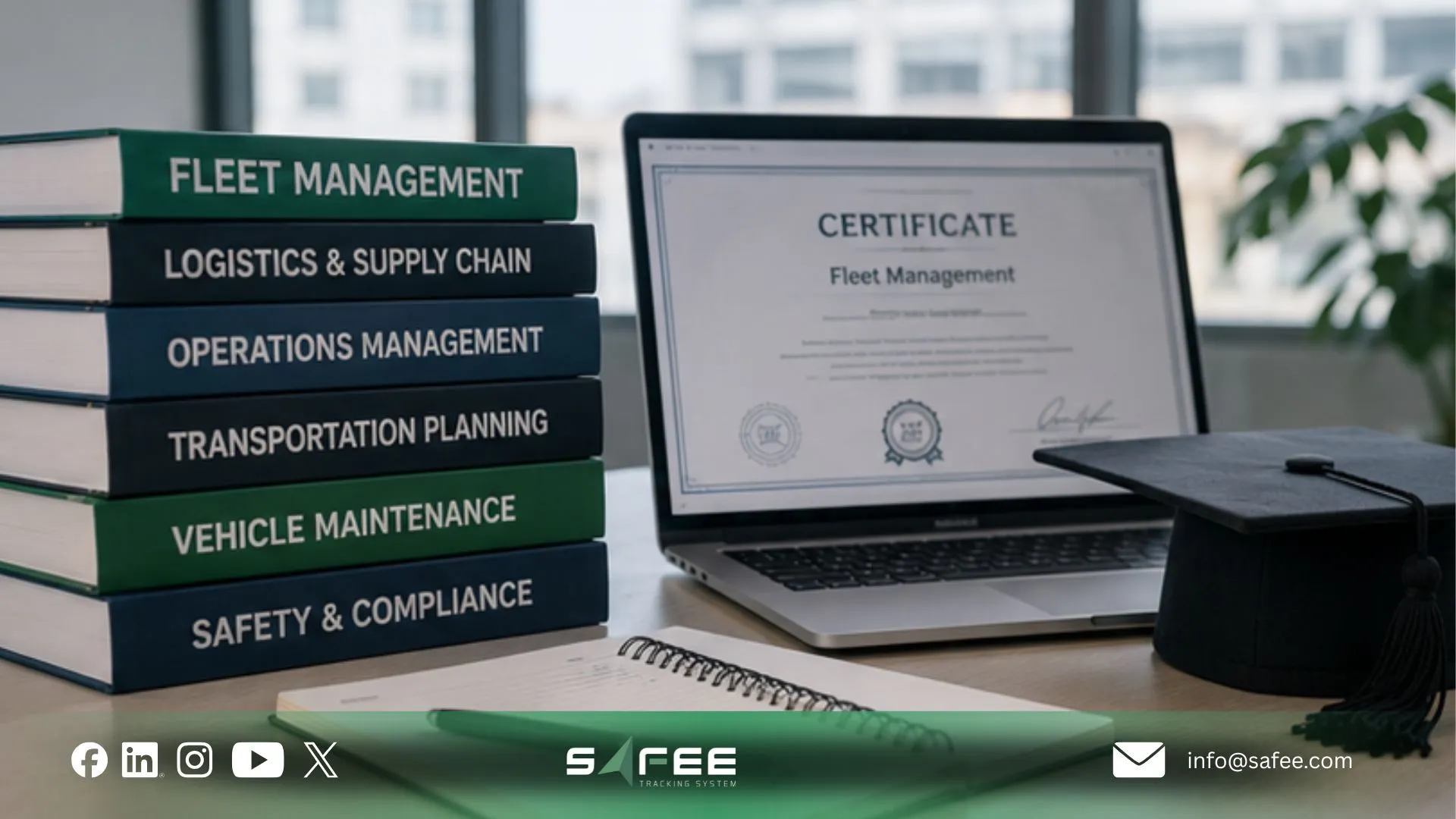
Fleet management qualifications vary by career stage, role, industry, and local employment requirements. Compare each education route by its practical relevance, recognition, assessment quality, and ability to develop modern fleet-management skills.
| Education Route | Best Fit | What to Check | Digital Capabilities to Develop |
| Degree in Fleet Management | Long-term progression into management, engineering, analytics, or enterprise leadership. Related degrees in logistics, transport, engineering, operations, business, HSE, or information systems may also be relevant. | Confirm the curriculum, practical projects, market recognition, and industry fit. Searches for university fleet management may refer to a dedicated course, a related degree, or the management of a university-owned fleet. | Telematics analysis, fleet reporting, governance, lifecycle planning, and decision modelling. |
| Diploma in Fleet Management | Entry into or progression through operational fleet roles. | Review the depth of fleet content, assessment quality, workplace relevance, and progression options. | Alert review, operational records, reporting, escalation, and workflow control. |
| Higher Certificate in Fleet Management | Experienced professionals who need structured knowledge without completing a full degree. | Check the qualification level, awarding body, recognition, and route to further study. | Data quality, role-based permissions, exception management, and auditability. |
| Vocational Fleet Management | Workshop, dispatch, inspection, maintenance, driver-operations, and technical staff. | Verify that the program develops decision support and problem-solving, not only task execution. | Mobile workflows, system use, documentation, escalation, and technical evidence. |
| Fleet Management Schools and Short Courses | Targeted skill development, specialization, or continuing professional education. | Assess instructor experience, course currency, practical scenarios, evaluation methods, and employer recognition. |
What employers expect at Each Level in fleet management resume
A strong fleet management resume should show the scope you controlled, the decisions you supported, the systems you used, and the stakeholders you coordinated. A generic list of duties rarely proves authority or capability.
Instead of writing: Responsible for fleet operations and vehicle tracking.
Use a specific, credible statement: Reviewed vehicle availability, assignments, and priority exceptions; escalated unresolved risks and prepared management reports with supporting records.
| Career Level | What to Show | Useful Proof | Avoid |
| Coordinator / Officer | Record accuracy, follow-up, escalation, and closure. | Status reports, action logs, assignment records. | Listing routine duties without ownership. |
| Supervisor | Control of a site, shift, branch, or vehicle group. | Exception summaries, readiness checks, escalation records. | Claiming enterprise authority for local work. |
| Specialist / Engineer | Analysis, technical judgment, configuration, or root-cause work. | Validated analysis, technical recommendations, report or system improvements. | Presenting raw data as an achievement. |
| Manager | Cross-functional control, team leadership, governance, and improvement ownership. | Management reports, action registers, policy implementation, supplier or system decisions. | Unsupported savings or safety claims. |
| Head / Director | Operating-model design, multi-site governance, and investment strategy. | Executive reporting, accountability models, transformation plans, and risk governance. | Confidential data or unverifiable claims. |
Build each achievement around four elements:
- Situation
- Responsibility
- Action
- Evidence
Add the relevant fleet context, such as logistics, construction, oil and gas, government, cold chain, or mixed fleets, without exposing confidential information or inventing performance results.
Fleet management interview questions that reveal real capability
Effective fleet management interview questions test judgment in realistic situations rather than memorized definitions. Strong candidates should validate evidence, assess risk, act within their authority, assign ownership, document decisions, and confirm closure.
Questions should match the seniority of the role. A coordinator should not be assessed against director-level responsibilities.
Fleet management interview questions and answers for coordinators and officers
- How would you prioritize two fleet exceptions arriving at the same time? A strong answer should compare safety risk, service impact, urgency, data validity, and the approved escalation process rather than treating every alert equally.
- What would you do if vehicle and driver records conflict? The candidate should verify the approved source, confirm the current assignment, correct only validated information, document the change, and escalate recurring data-quality issues.
- A task is marked complete without supporting evidence. What would you do? The candidate should verify completion, request the required evidence, update the record, and escalate the gap if it affects safety, compliance, or vehicle availability.
Interview questions for managers, specialists, and leaders
- How would you reduce alert fatigue? A strong answer should review the alert’s purpose, threshold, recipients, owner, duplication, escalation path, and closure process. The goal is more actionable alerts—not simply fewer notifications.
- How do you decide whether a fleet KPI is useful? The candidate should connect it to a defined decision, reliable data source, accountable owner, review cadence, and expected action.
- How would you resolve the disagreement between Operations and HSE? The answer should clarify the operating requirement, safety concern, available evidence, policy, authority limits, and escalation route.
- How would you govern access to fleet data? A strong response should address role-based access, business need, sensitive information, approval authority, user changes, periodic reviews, exports, and auditability.
- How would you evaluate a digital fleet environment? The candidate should begin with users, decisions, data sources, workflows, permissions, alerts, reports, integrations, implementation constraints, and data quality—not the number of available features.
Hiring or developing fleet leaders? Contact us for a role-focused demonstration showing how managers, HSE teams, operations leaders, and administrators work with the same fleet data through appropriate access and accountable workflows.
How Safee supports an accountable fleet management team
A modern fleet management manager needs more than theoretical knowledge or a vehicle-tracking map. Safee provides a configurable digital environment that connects visibility, exceptions, ownership, evidence, and management review across the fleet management team.
| Professional Need | Safee Capability | Management Outcome |
| Know what is happening now | Live Vehicle Tracking and Fleet Monitoring & Insights | Shared visibility into vehicles, routes, geofences, drivers, and events. |
| Act on exceptions | Alarms and Alerts | Faster prioritization, clearer ownership, and controlled escalation. |
| Turn events into evidence | Fleet Reporting | Traceable decisions, scheduled reviews, and audit-ready records. |
| Connect people to fleet activity | Driver Management | Clearer assignment visibility and accountability. |
| Manage readiness and planned movement | Maintenance Module and Journey Management System | Better control of vehicle readiness, approvals, routes, and unresolved actions. |
| Apply role-based access | Administration Panel | Appropriate permissions for users, groups, sites, vehicles, and responsibilities. |
The platform configuration should reflect the organization’s decision model. Coordinators may need records and assigned actions, supervisors need operational exceptions, specialists need analytical depth, and senior leaders need consolidated trends with access to supporting evidence.
During onboarding, each alert should have a defined business rule, recipient, response owner, escalation path, and closure requirement. Reports should likewise have a clear purpose, owner, audience, review cadence, and expected action.
Why fleet management teams choose Safee
From our UAE base, we at Safee understand the operating demands of GCC fleets, including multi-site control, long routes, demanding conditions, regulated workflows, and cross-functional reporting. Our modular platform also supports international fleets with different vehicle groups, users, integrations, and governance requirements.
Safee does not replace professional judgment. It gives each fleet management team the connected visibility, evidence, permissions, and workflows needed to apply that judgment consistently and maintain an accountable audit trail.
Strengthen Your Fleet Management Team. Request a tailored Safee demo to map your roles, vehicles, alerts, reports, permissions, and integration priorities into one accountable workflow.

FAQs about fleet management manager careers
Is fleet management manager the same as fleet manager?
The terms can describe similar roles, although Fleet Manager is more natural in professional English. Employers may still use fleet management manager as a search phrase or internal title. Compare scope, authority, outputs, reporting line, and required experience rather than relying on wording alone.
Which fleet management qualifications matter without a degree in fleet management?
Relevant experience, a diploma in fleet management, a higher certificate in fleet management, vocational training, technical qualifications, software competence, and documented improvement projects may all support progression. The right combination depends on the employer, industry, local requirements, and decision level of the role.
Can a fleet management coordinator become head of fleet management?
Yes, but progression requires more than time in service. The coordinator must expand from record and follow-up work into exception ownership, analytical reporting, cross-functional coordination, system competence, governance, leadership, and evidence of controlled improvement.
What should a fleet management resume prove?
It should prove decision scope, operating context, systems used, stakeholders coordinated, problems investigated, actions owned, outputs delivered, and how results were verified. It should avoid confidential data and unsupported performance claims.
Which fleet management interview questions reveal software readiness?
Scenario questions about data validation, alert prioritization, permissions, missing data, disputed events, report design, escalation, and system evaluation are useful. Strong candidates connect software activity to operational decisions instead of reciting features.
Do fleet management consultant jobs require fleet management supervisor experience?
Not always. Candidates may come from operations, engineering, maintenance, analytics, telematics, safety, procurement, IT, or transformation, but they still need credible operational exposure and implementation judgment.
Ready to improve your fleet operations?
Tell us what you would like to improve. A Safee specialist will reply by email.
Usually replies within one business day • No sales spam
Your details are used only to respond to your request. Privacy Policy