
Fleet Management Department: Structure, Roles and Accountability
A truck is ready for delivery, but its registration has expired. The fleet management department thought HR was handling the renewal, while HR assumed Fleet was responsible. The truck is taken out of service, the delivery is delayed, and no one knows who should have acted.
The same problem appears in maintenance approvals, driver assignments, and incident response. As fleets grow, unclear responsibilities create delays that hiring more people alone will not fix. A clear department structure defines who owns each task, who can make decisions, and when problems must be escalated.
This guide covers:
- Where the fleet department sits in the organisational structure.
- The main fleet roles, responsibilities, and job descriptions.
- How team size and monitoring needs change with fleet operations.
- How Fleet shares responsibilities with HSE, HR, Finance, and Procurement.
- How to assign Safee access permissions to each role.
What is a fleet management department?
A fleet management department is responsible for keeping company vehicles available, safe, and cost-effective. It coordinates vehicle allocation, maintenance, fuel, documents, driver-related operations, and fleet performance.
The department does not handle every task alone. HR manages employee records, Procurement handles supplier contracts, and HSE oversees safety requirements. The fleet team must know where its responsibilities end, who approves decisions, and which issues require another department’s involvement.
For daily fleet processes and operating procedures, read our guide to fleet management operations.
Fleet department, transport section, and motor pool
Companies use different names for related functions, but the responsibilities are not always the same:
- Fleet department: Manages vehicle availability, maintenance, operating costs, documents, and fleet performance.
- Transport or movement department: Organises vehicle and driver assignments, dispatch, routes, and transport schedules.
- Motor pool: Manages shared vehicles assigned to different departments or employees as needed.
In a transport or distribution company, fleet operations directly affect revenue and delivery commitments. In construction or field services, the fleet supports projects by moving employees, equipment, and materials between locations.
Some companies combine fleet management and transport operations under one department. Others separate them. The important decision is which team owns each responsibility, not what the department is called.
Where should the fleet department report?
The reporting line depends on how vehicles support the business and who has authority over fleet performance.
Three common arrangements are:
- Operations: Suits transport and distribution companies where vehicle availability directly affects deliveries and customer service. Maintenance and safety decisions still need clear controls.
- Support services or administration: Suits companies where vehicles support employees, projects, or field operations. Close coordination with operational teams prevents allocation delays.
- Supply chain: Suits distribution and retail companies where vehicle schedules must align with warehouse operations, inventory movement, and deliveries.
Before choosing, answer three questions: who approves fleet spending, who decides which department receives a vehicle, and who can remove an unsafe vehicle from service?
The fleet department should report to the function that can manage these decisions and hold the team accountable for performance. Responsibilities shared with HR, HSE, Finance, and Procurement must remain clear regardless of the reporting line.
Roles in a fleet department and what each one does
The table shows the main fleet management roles and responsibilities, including their duties and typical reporting lines. These are functions to assign, not positions every company must hire separately.
| Role | Main duties | Reports to |
|---|---|---|
| Fleet manager / head of transport | Fleet budget, policies, vehicles, providers, and performance KPIs | Operations, administration, or supply chain |
| Fleet supervisor / transport supervisor | Daily vehicle and driver allocation, breakdowns, incidents, and operational follow-up | Fleet manager |
| Fleet coordinator | Trip scheduling, assignment records, delivery documents, and operational updates | Fleet supervisor |
| Monitoring controller | Vehicle alerts, event verification, driver contact, and shift logs | Fleet supervisor or monitoring lead |
| Journey management coordinator | Journey plans, driver briefings, IVMS monitoring, and safety escalations | Operations or HSE, depending on the organisation |
| Fleet and insurance coordinator | Registration, inspections, insurance renewals, and claims | Fleet manager or administration |
| Government relations officer | Vehicle and driver transactions through applicable government platforms | Administration or government relations |
| Workshop supervisor / maintenance coordinator | Preventive maintenance, repair orders, spare parts, and workshop coordination | Fleet manager or maintenance manager |
Each role needs a defined scope of authority. The employee who records a problem may not be the person authorised to resolve it, and the person responsible for the outcome may need approval from another department.
Fleet manager and head of transport
The fleet manager is responsible for fleet costs, vehicle availability, and operational performance. They develop vehicle-use policies, manage the fleet budget, evaluate service providers, and report performance to senior management.
The role also coordinates vehicle purchasing and replacement decisions with Procurement and Finance, while working with HSE on safety requirements.
The fleet manager’s authority must be defined. Being responsible for maintenance spending, for example, does not necessarily mean having permission to approve every repair or supplier contract.
In larger companies, regional fleet managers may report to a director of transportation. For qualifications and career progression, read our article on the fleet management manager.
Fleet supervisors, coordinators, and monitoring controllers
The fleet supervisor manages daily operations. They allocate vehicles and drivers, follow trip execution, coordinate responses to breakdowns, and escalate incidents that require management or HSE involvement.
The fleet coordinator keeps schedules and operating records accurate. They prepare or update trip assignments, follow delivery documentation, record changes, and report scheduling conflicts. Decisions outside their assigned authority go to the supervisor.
The monitoring controller watches vehicle alerts and connection status, checks events, contacts drivers when required, and records actions in the shift log. The controller follows an agreed procedure rather than deciding independently how every incident should be handled.
In oil and gas or other higher-risk operations, a journey management coordinator may also review journey plans, brief drivers, and monitor IVMS-related events. The role may report to Fleet, Operations, or HSE, depending on the contract and company structure.
For example, after a speeding alert, the monitoring controller verifies and reports the event. The supervisor handles the immediate operational response, while HSE reviews cases that meet the company’s safety escalation criteria.
The distinction is simple: the controller detects and reports, the supervisor directs the operational response, and the designated manager remains accountable for follow-up.
Fleet administration, government relations, and maintenance roles
A fleet department also needs clear ownership of work outside daily vehicle operations:
- Fleet and insurance coordinator: Tracks registration, inspection, and insurance expiry dates, coordinates renewals, and follows accident claims.
- Government relations officer: Handles authorised vehicle and driver transactions through relevant government services, including applicable Saudi electronic platforms.
- Workshop supervisor or maintenance coordinator: Plans preventive maintenance, follows repair orders, manages spare-parts requirements, and coordinates internal or external workshops.
In a small fleet, one employee may handle several of these functions. However, each obligation still needs an assigned owner, an approval process, and someone to provide cover during absences.
The goal is not to create more job titles. It is to make sure every task has an owner, every decision has a clear authority, and no critical obligation is left between two departments.
Also read: Fleet document management in the GCC
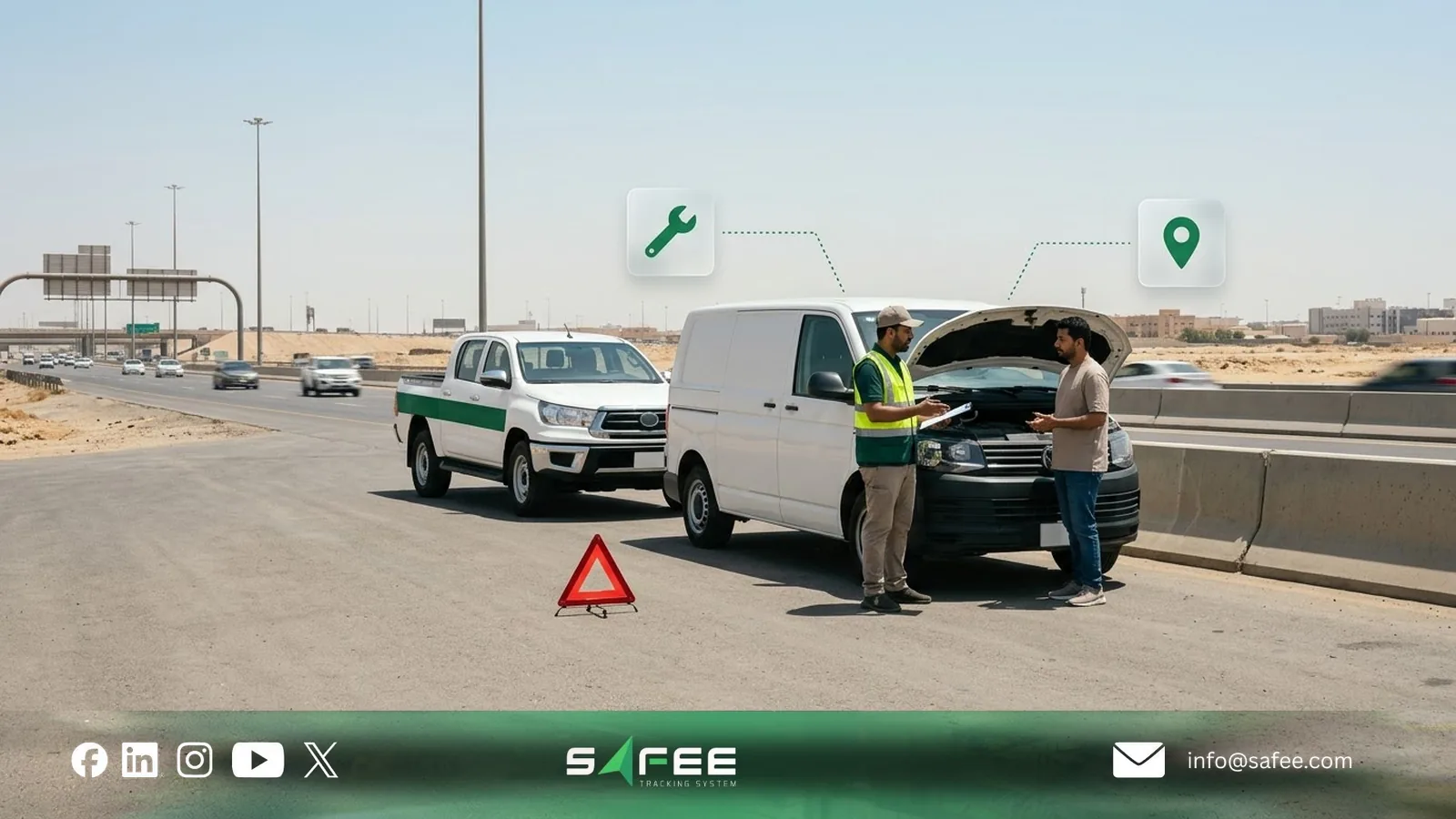
Fleet Job Descriptions You Can Adapt
A useful fleet management job description should define what the employee is responsible for, which decisions they can make, when they must escalate an issue, and how their performance will be measured.
The four descriptions below cover the main operational roles. Adapt their duties, reporting lines, and KPIs to your fleet’s structure, operating hours, and approval procedures.
For editable descriptions covering additional roles in maintenance, compliance, safety, and telematics, use our free fleet team job description library.
Fleet Manager Job Description
The fleet manager is accountable for vehicle availability, operating costs, and fleet performance within the approved budget and company policies.
Key responsibilities include:
- Budget: Prepare the fleet budget, review actual spending, and investigate significant cost variances.
- Policy: Develop vehicle-use policies and define responsibilities for allocation, maintenance, safety, and reporting.
- Vehicles: Set vehicle specifications and evaluate purchase, lease, and replacement options with Procurement and Finance.
- Service providers: Evaluate workshops, tracking providers, and fuel suppliers, and monitor contractual performance.
- KPIs: Review fleet costs, availability, utilisation, and safety indicators, then report exceptions and corrective actions to management.
- Compliance: Assign ownership of vehicle and driver documentation, monitor outstanding compliance risks, and coordinate with the responsible departments.
- Team: Define responsibilities, delegated approval limits, reporting lines, and system-access requirements for fleet personnel.
Reports to: Operations, support services, or another designated senior management function.
Two performance KPIs:
- Cost per kilometre: Relevant fleet operating costs divided by distance travelled, compared across equivalent vehicle categories and reporting periods.
- Vehicle availability rate: Service-ready vehicles divided by active fleet vehicles, expressed as a percentage.
The manager should have authority to set operational priorities and escalate financial or safety risks. Major purchases, contracts, and expenditure remain subject to the company’s approval limits.
For additional indicators, see our guide to fleet management KPIs.
Fleet Supervisor Job Description
The fleet supervisor manages daily vehicle operations and ensures that approved schedules are executed without avoidable disruptions.
Key responsibilities include:
- Allocation: Assign available vehicles and qualified drivers according to operational priorities.
- Utilisation: Monitor vehicle usage, idle capacity, and service interruptions, and recommend operational adjustments.
- Maintenance: Coordinate vehicle withdrawal, repairs, and return to service with the maintenance team.
- Documents: Verify that vehicles and drivers are cleared for assignment and escalate expired or missing documents to their designated owners.
- Costs: Review unusual fuel consumption, maintenance expenses, and operational exceptions requiring investigation.
- Accidents and fines: Coordinate immediate operational responses, preserve relevant records, and refer investigations or disciplinary matters to the authorised departments.
- Drivers: Monitor operational performance, report unsafe behaviour, and coordinate driver readiness with HR and HSE.
- Reports: Review daily fleet status, unresolved disruptions, and outstanding actions before reporting to the fleet manager.
Reports to: Fleet manager.
Two performance KPIs:
- On-time dispatch rate: Assignments dispatched by their scheduled departure time divided by total scheduled assignments.
- Disruption response compliance: Operational disruptions handled or escalated within the company’s specified response times, divided by total recorded disruptions requiring action.
The supervisor can adjust daily assignments within delegated authority. Decisions involving exceptional expenditure, serious safety risks, or changes to customer commitments must follow the escalation procedure.
Fleet Coordinator Job Description
The fleet coordinator maintains accurate schedules, trip records, and operational information so supervisors can make decisions using current data.
Key responsibilities include:
- Routes: Prepare trip schedules and coordinate assignments within the approved operating plan.
- Trip records: Maintain accurate vehicle, driver, route, departure, and arrival information.
- Trip closure: Confirm that completed trips have the required records and supporting documents before closing them.
- Drivers: Verify driver availability and report scheduling conflicts or missing information to the supervisor.
- Fuel: Record fuel transactions or reconcile fuel-card information where this responsibility is assigned.
- Escalation: Identify missing trip records, delayed assignments, and other operational discrepancies requiring supervisory action.
Reports to: Fleet supervisor.
Two performance KPIs:
- Timely trip-record completion: Trips with complete, verified records by the required deadline divided by trips due for closure.
- Missing delivery documentation rate: Trips missing required proof of delivery after the agreed deadline divided by trips requiring that documentation.
The coordinator may prepare or update assignments but should not independently approve decisions outside delegated operational limits.
If proof of delivery is not part of the company’s workflow, replace that KPI with a relevant measure of record accuracy or unresolved scheduling exceptions.
Monitoring Controller Job Description
The monitoring controller identifies vehicle events, verifies alerts, and follows the response and escalation procedures assigned to the monitoring function.
Where the role also includes journey management responsibilities, these should be stated separately in the job description. For operations requiring formal journey planning, use our journey management plan template.
Key responsibilities include:
- Alarms: Monitor configured vehicle alerts, verify available event information, and prioritise responses according to severity.
- Driver calls: Contact drivers when required by the response procedure, including for speeding, prolonged stops, or unexplained loss of communication.
- Journey monitoring: Track assigned journeys and follow scheduled check-ins. Conduct pre-trip briefings only where the role includes that responsibility.
- Event log: Record the alert, verification, action taken, escalation, and relevant timestamps.
- Fuel exceptions: Flag unusual consumption or fuel-related events when suitable data and monitoring rules are available.
- Shift handover: Transfer unresolved alerts, active incidents, and pending follow-up actions to the next shift.
- Repeat violations: Escalate repeated unsafe-driving events to the fleet supervisor and HSE according to the approved procedure.
Reports to: Fleet supervisor, monitoring lead, or HSE manager, depending on the approved organisational structure.
Two performance KPIs:
- Alert acknowledgement time: Time between an actionable alert being received and the controller acknowledging it, measured by alert priority.
- On-time escalation rate: Events escalated within the required response period divided by events requiring escalation.
Set response deadlines according to event severity and the monitoring coverage actually provided. A controller should not be rewarded simply for closing alerts without action.
The controller’s responsibility is to verify, record, and escalate events. Authority to change a trip, suspend vehicle use, or initiate a safety response must be defined by the company’s procedures.
For the skills needed to carry out these responsibilities, see our guide to fleet management courses.
If you are reviewing how your fleet team uses monitoring data, contact Safee to explore how fleet alerts, reporting, and user permissions can support your existing roles and responsibilities.
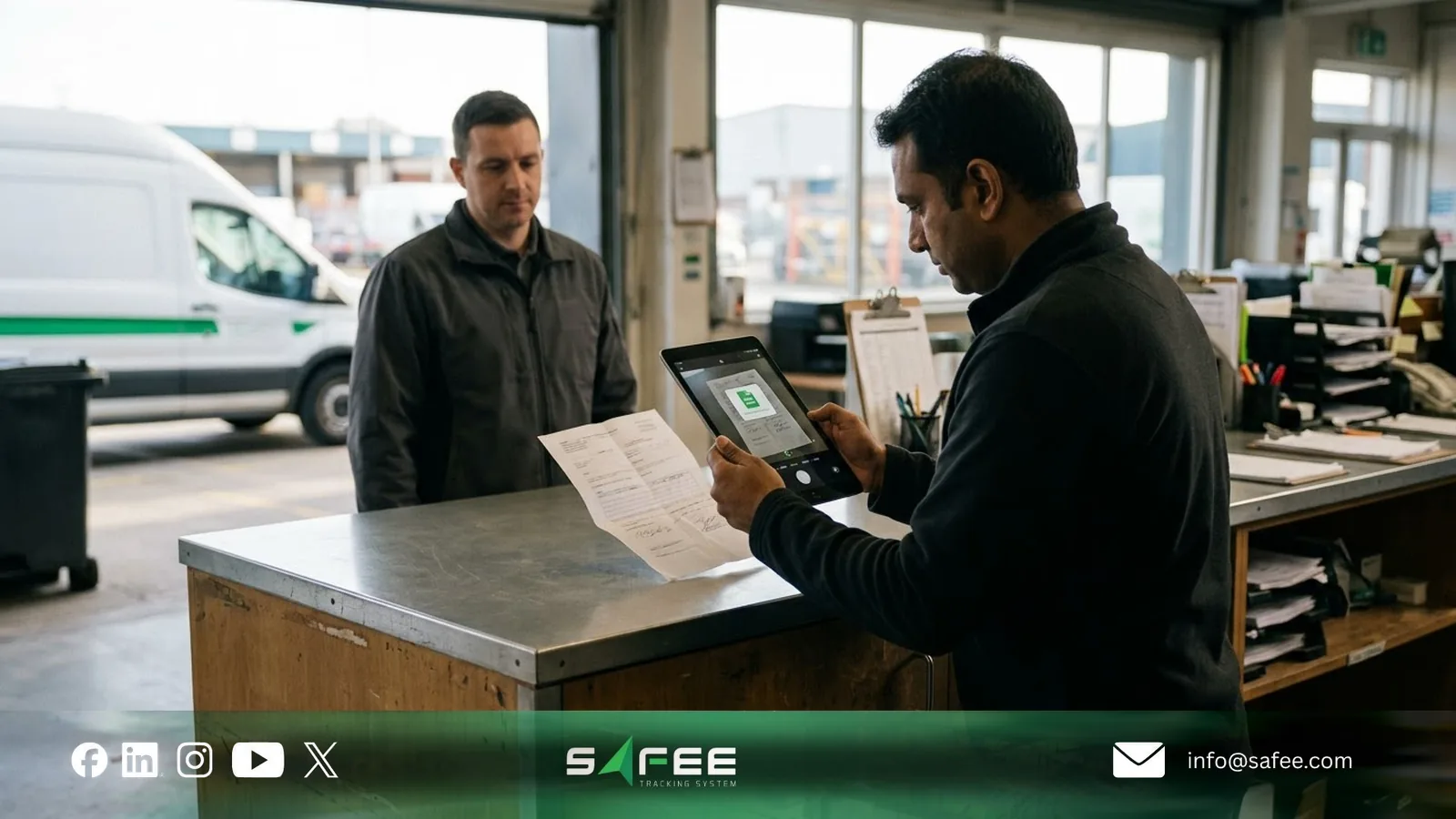
How Should Fleet Structure Change with Fleet Size?
There is no fixed employee-to-vehicle ratio for building a fleet management organizational structure. Staffing depends on the number of vehicles, operating hours, locations, trip frequency, and responsibilities assigned to the fleet team.
The table shows illustrative structures for different fleet operating profiles, not mandatory staffing levels.
| Fleet size and operating profile | Suggested team structure | Monitoring coverage |
|---|---|---|
| Up to about 20 vehicles, one site, daytime operations | A designated fleet officer supported by other departments, with a named backup | Mobile alerts and scheduled reviews during operating hours |
| Dozens of vehicles across one or two branches | Fleet manager or lead, with supervisor and coordinator responsibilities assigned according to workload | Named monitoring responsibility during active shifts |
| Hundreds of vehicles across several regions | Fleet manager, regional supervisors, coordinators, and dedicated maintenance or compliance support where needed | Shift-based monitoring when operating hours and risks justify it |
| Multi-branch operations with subcontractors | Central fleet leadership, regional supervisors, and defined subcontractor oversight responsibilities | Centralised or regional monitoring according to contracts, risk, and response requirements |
These examples should not be used as hiring thresholds.
Before adding positions, assess how much work each function generates: daily assignments, maintenance coordination, document renewals, monitoring exceptions, and reporting obligations. Also consider whether employees can cover absences and overlapping shifts without leaving critical tasks unattended.
For example, 30 trucks operating overnight on remote routes may require more monitoring coverage than 100 passenger vehicles operating during office hours in one city.
If the workload exceeds internal capacity, compare additional staffing with external support for selected functions. Our guide to fleet management services explains how to divide responsibilities between internal teams and service providers.
When Does a Fleet Need a Monitoring Room?
A fleet monitoring room becomes worth considering when the volume, urgency, or complexity of fleet events makes it difficult for supervisors to manage monitoring alongside their other duties.
Review four operating conditions:
- Night and continuous operations: Vehicles operate outside normal working hours, requiring someone to receive, assess, and respond to critical alerts during those periods.
- Long-distance and remote journeys: Routes involve extended travel, limited connectivity, or higher incident risks that require defined check-ins and escalation procedures.
- Oil and gas operations: Contracts may require IVMS monitoring, journey management controls, and documented responses to driver-safety events.
- Refrigerated transport: Temperature excursions may require prompt investigation and action to protect cargo, particularly when vehicles operate outside normal working hours.
A physical control room is not always necessary to provide this coverage. Some fleets can use supervisors on duty, remote monitoring arrangements, or mobile notifications with defined escalation procedures.
Before establishing a separate monitoring team, determine:
- Which events require immediate action rather than later review?
- When must someone be available to respond?
- How many actionable alerts must the team handle during each shift?
- Who takes responsibility when the first recipient is unavailable?
The deciding factor is whether the current team can respond to critical events within the company’s required timeframes, not simply how many vehicles it operates.
Safee’s Alarms and Alerts module supports configurable notifications through the platform, mobile application, email, and SMS. Fleet teams can direct alerts to designated recipients according to operational requirements.
However, receiving an alert does not replace human response. Each critical event still needs an assigned owner, an escalation procedure, and appropriate shift coverage.
To assess which monitoring arrangement suits your operations, contact Safee to discuss fleet visibility, alert configuration, and monitoring requirements.

Who Owns Shared Fleet Responsibilities?
Many fleet operations depend on decisions made outside the fleet management department. Fleet may identify an expired document, a safety violation, or an unexpected expense, but HR, HSE, Finance, or Procurement may be responsible for approving the next action.
To prevent delays, each shared task needs a designated owner, a clear handover point, and a record confirming completion.
| Task | Fleet department responsibility | Other department’s responsibility | Completion check |
|---|---|---|---|
| Driver recruitment | Defines operational requirements and assesses driving competence | HR manages recruitment, employment checks, and hiring approval | Driver approved for assignment |
| Driver licences and residency permits | Verifies driving eligibility before vehicle assignment and flags expiring documents | HR or the authorised administration team manages employment and residency records | Current documents verified |
| Accident investigation | Secures operational information, trip records, and vehicle status | HSE leads or coordinates the safety investigation under company procedures | Findings and corrective actions recorded |
| Client IVMS reports | Extracts the required vehicle and driver data | HSE verifies reporting requirements and reviews safety-related findings | Report reviewed and submitted |
| Fuel budgets and fuel cards | Monitors consumption, investigates exceptions, and requests card changes | Finance controls budget approvals, payments, and financial reconciliation | Approved transactions reconciled |
| Traffic fines and payroll deductions | Identifies the assigned driver and provides supporting trip information | HR reviews responsibility and applicable procedures; Finance processes authorised payments or deductions | Decision and supporting records retained |
| Vehicle purchase or leasing | Defines vehicle specifications, capacity needs, and technical requirements | Procurement manages sourcing and contracts, with Finance approval where required | Approved order or contract |
| Workshop and tracking contracts | Defines service requirements and evaluates operational performance | Procurement manages supplier selection, contractual approvals, and renewals | Approved contract and service review |
These assignments are examples, not universal reporting rules. The company should identify one person accountable for each workflow, even when several departments participate.
Consider a traffic fine. The fleet coordinator checks the vehicle assignment and trip record to identify the likely driver. HR verifies the employee-related facts and follows the applicable review procedure. Finance handles the payment or any lawfully authorised payroll deduction.
Identifying the driver does not automatically authorise a salary deduction. In Saudi Arabia, deductions must comply with the applicable provisions of the Labour Law and relevant procedures.
Record these handovers in your fleet management policy and document the approval, escalation, and closure steps in your fleet management process.
The objective is to prevent shared tasks from becoming unassigned tasks.
Who Manages Saudi Fleet Compliance Tasks?
Saudi fleet operations may involve several government platforms. The responsible employee should be named in the company’s procedures, and the person completing an official transaction must have the necessary authorisation.
Assign ownership according to the applicable transport activity and the company’s organisational structure:
- Vehicle authorisations through Absher: The government relations officer or another authorised administrator manages applicable vehicle-driver authorisations. Fleet verifies that the assigned driver meets operational requirements and that authorisation records remain current. The required Absher service depends on the transaction and vehicle context.
- Transport vehicle operating cards: The fleet or compliance coordinator tracks the expiry dates of applicable operating cards and prepares the supporting vehicle information. An authorised user completes issuance or renewal through the relevant Transport General Authority service. See our guide to the Saudi operating card for transport vehicles.
- Wasl connectivity: For vehicles and activities subject to Wasl requirements, the fleet supervisor coordinates with the tracking provider to verify vehicle-device mapping and required data transmission. The compliance owner confirms the applicable regulatory obligations. A device appearing online does not, by itself, confirm successful transmission to Wasl. See our Wasl platform guide.
- Traffic fine reconciliation: The fleet coordinator matches the violation details with vehicle and driver assignment records. Any disputed assignment or proposed employee recovery goes through the authorised HR and Finance process before a financial decision is made.
- Najm accident reports: For incidents within Najm’s service scope, the fleet supervisor coordinates the reporting and insurance follow-up, retains relevant trip records, and provides operational evidence to HSE. Incidents requiring police or emergency intervention must follow the applicable official procedures.
- Expatriate driver residency: HR or the authorised administration team tracks residency validity and manages the relevant government procedures. Fleet verifies that required driver documents and authorisations are current before dispatch.
For each task, record the responsible employee, deadline, government transaction reference where applicable, and evidence of completion. A renewal reminder or submitted application should not be treated as proof that the requirement has been satisfied.
Our guide to fleet management tools explains how operational systems and government services fit into fleet administration.
Regulatory requirements vary by activity. Confirm the current rules and authorised service channels with the relevant Saudi authority before assigning or completing a transaction.

How Safee Supports Fleet Roles and Responsibilities
Defining responsibilities in an organisational chart is only the first step. Fleet teams also need system access that reflects those responsibilities. A supervisor should see the vehicles under their control, a monitoring controller should receive relevant alerts, and sensitive configuration changes should remain restricted to authorised users.
At Safee, we support this through vehicle grouping, account permissions, driver management, and configurable alerts.
- Company Structure: Organise vehicles by site, branch, project, or operational category. Administrators can then limit each account’s vehicle access to the relevant part of the fleet.
- Accounts and Permissions: Configure access to monitoring, management functions, reports, and alarm conditions according to each user’s responsibilities. Account permissions and vehicle scope should be reviewed separately.
- Alarm Conditions: Restrict permission to create or change alarm conditions to authorised personnel. An incorrect threshold or disabled condition can prevent important events from generating the expected alerts.
- Alert Routing: Our Alarms and Alerts module supports configurable recipients and notifications through the platform, mobile app, email, and SMS. Recipients should be assigned according to event severity, operational responsibility, and shift coverage.
- Monitoring Coverage: Assign primary and backup recipients for critical alerts, particularly during shift changes and employee absences. Account activity alone should not be treated as proof that someone is actively responding.
- Driver Management: Our Driver Management module connects drivers with vehicles and supports driver groups. Access to driver records and group management can be controlled through the relevant permissions.
Consider an overspeeding alert. Safee can notify the designated monitoring user when the configured condition is met. The controller verifies the event and follows the company’s response procedure, while the supervisor or HSE team handles actions requiring its authority.
Safee supports the flow of information, but your company determines who responds, who approves corrective action, and who is accountable for closing the incident.
To see how these controls can be configured for your fleet, request a Safee Fleet Demo focused on user permissions, vehicle groups, and alert recipients.
Which Safee Access Does Each Fleet Role Need?
Access should follow the employee’s responsibilities, not their job title alone. The following permissions are suggested starting points:
- Fleet manager: Fleet-wide operational visibility and relevant management reports. Administrative settings should be granted only when the role requires them.
- Fleet supervisor: Monitoring, reports, and driver information for assigned branches or vehicle groups, with management permissions where authorised.
- Fleet coordinator: Access to assigned vehicles, trip information, and relevant operational reports without unnecessary configuration rights.
- Monitoring controller: Vehicle monitoring and alerts for assigned operations, without permission to modify alarm conditions unless specifically authorised.
- Workshop or maintenance team: Relevant vehicle status, maintenance information, and permitted maintenance functions.
- Finance: Approved fuel, operating-cost, and financial reports without unnecessary vehicle-control or system-administration permissions.
Before creating accounts, document each role’s vehicle scope, required reports, permitted actions, and alert responsibilities. Review access when employees change roles, leave the company, or move between branches.
This keeps system permissions aligned with the fleet management department’s organisational structure and reduces the risk of unauthorised changes or overlooked events.
FAQs About the Fleet Management Department
Is a Fleet Manager the Same as a Transport Manager?
Not always. A fleet manager typically focuses on vehicle availability, maintenance, costs, and lifecycle performance. A transport manager may focus on dispatch, routes, drivers, and delivery execution. Companies can combine both responsibilities or separate them according to their operating model.
Does a Company With 20 Vehicles Need a Full Fleet Department?
Not necessarily. Staffing depends on operating hours, locations, vehicle types, and workload—not vehicle count alone. One designated officer may manage a simple fleet, while 20 vehicles operating across shifts or high-risk routes may require dedicated supervision and monitoring. See our guide to small fleet management.
Should the Monitoring Room Report to HSE or Fleet?
The reporting line depends on the monitoring room’s responsibilities. Fleet or Operations may own routine dispatch and vehicle monitoring, while HSE may oversee safety-critical events and contractual IVMS requirements. Whatever the structure, define who receives alerts, directs the immediate response, and approves incident closure.
Can Safee Replace a Monitoring Controller?
Safee can detect supported events, generate configured alerts, and provide tracking records for investigation. It does not replace the human decisions required to verify incidents, contact drivers, arrange assistance, or approve corrective action. The level of human monitoring needed depends on operating risk and required response times.
Ready to improve your fleet operations?
Tell us what you would like to improve. A Safee specialist will reply by email.
Usually replies within one business day • No sales spam
Your details are used only to respond to your request. Privacy Policy