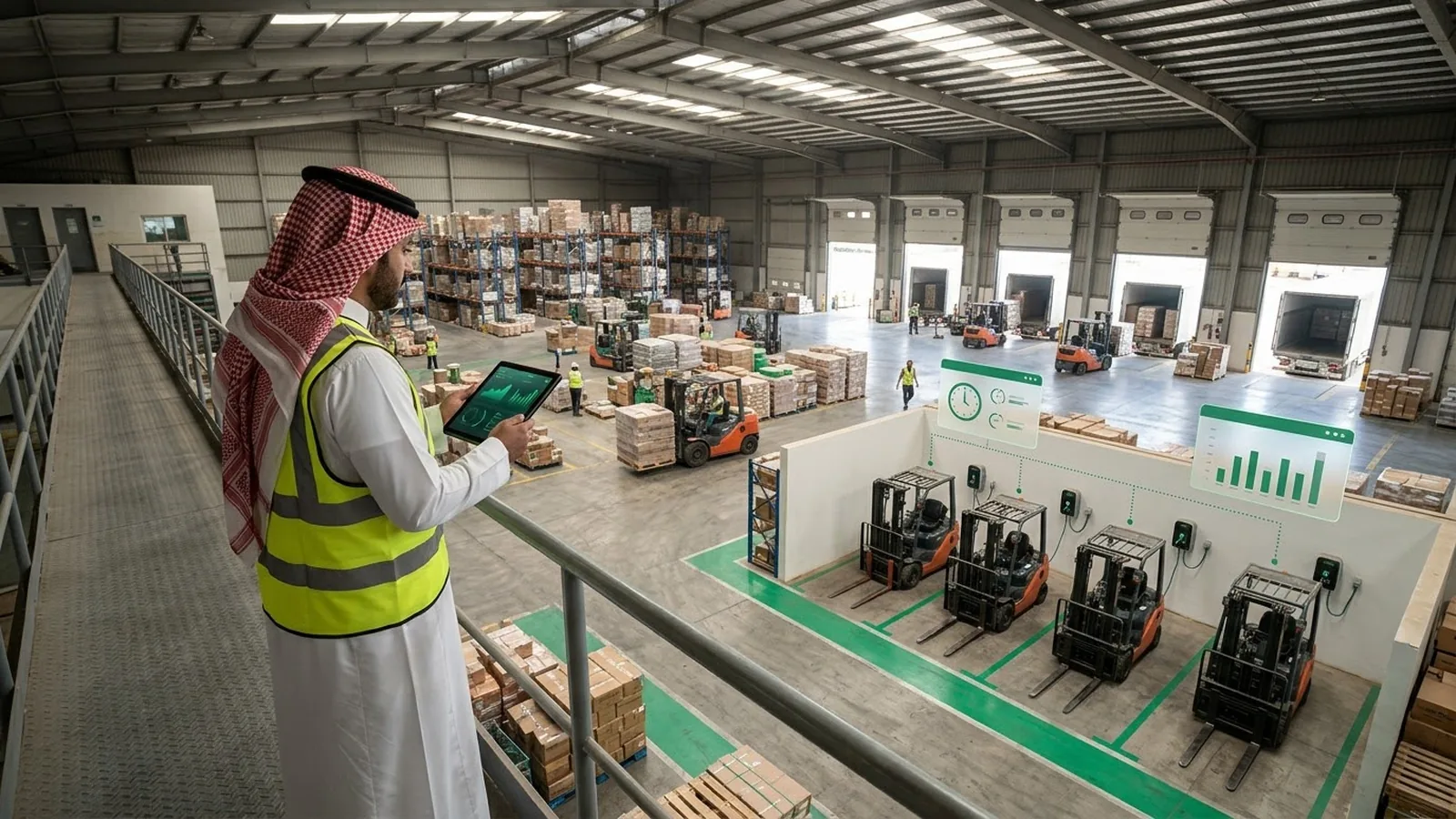
Forklift Fleet Management: Right-Size, Maintain, and Measure
Before Ramadan, a warehouse requests two more forklifts to handle queues at the loading dock. Yet several existing units may be underused. Does the operation need more equipment, or better allocation across shifts?
Forklift fleet management helps answer that question using workload, equipment availability, and operating data. This guide explains how to calculate fleet size, choose between buying and renting, select suitable forklift types, plan maintenance, meet operator safety requirements in Saudi Arabia and the UAE, and use Safee’s activity reports to support operational decisions.
What is forklift fleet management?
Forklift fleet management is the process of planning, operating, maintaining, and monitoring a fleet of forklifts to meet material-handling demand safely and cost-effectively. It covers fleet size, equipment availability, operator assignments, maintenance, and the cost of keeping each forklift in service.
Unlike road vehicles, forklifts are primarily managed using operating hours and handling activity rather than distance travelled. However, operating hours alone do not establish productivity. A forklift can remain powered on while waiting for pallets, an available loading bay, or its next assignment.
Effective management therefore compares equipment activity, peak workload, downtime, and operating costs before decisions are made about adding, replacing, or reallocating forklifts.
What does a forklift fleet include?
Managing a forklift fleet involves more than counting the trucks parked in a warehouse. Five areas affect the capacity available for each shift:
- Forklifts and attachments: Counterbalance forklifts, reach trucks, and other equipment must match the required loads, lift heights, and aisle dimensions. Attachments also affect the truck’s rated lifting capacity.
- Batteries, chargers, and fuel supply: Electric forklift availability depends on battery capacity and charging arrangements, while LPG and diesel units require suitable refueling procedures.
- Operators: Each shift needs appropriately trained and authorized operators for the equipment and tasks assigned.
- Maintenance and inspections: Service schedules, pre-use checks, and unresolved defects determine which forklifts are safe and available for work.
- Work areas and traffic routes: Loading docks, storage aisles, charging areas, and pedestrian crossings affect travel time, congestion, and operating safety.
A warehouse may have enough forklifts in total but still lack the right equipment in a particular work area. For example, an available counterbalance forklift cannot necessarily replace a reach truck required for high-bay storage.
This is why fleet capacity should be reviewed by forklift type, operating area, and shift, not only by total fleet size.
For broader construction machinery management, see our heavy equipment fleet management guide.
Who manages forklift fleet operations?
Forklift management requires coordination between operations, maintenance, safety, and procurement. The warehouse or equipment manager should have a consolidated view of availability and workload, while each function remains responsible for its own decisions.
- Warehouse or equipment manager: Determines the required fleet capacity, assigns equipment across shifts, and reviews utilization and operational bottlenecks.
- Maintenance team: Plans servicing, manages repairs, and confirms whether equipment is ready to return to operation.
- HSE team and site supervisors: Oversee operator competency, workplace safety procedures, inspections, and the handling of reported defects.
- Procurement: Evaluates purchase and rental options, supplier service commitments, and equipment-related contract costs.
The key is to assign clear responsibility for each activity. Operators should know who receives defect reports, maintenance teams should know which trucks are needed for upcoming shifts, and managers should know which units are unavailable.
Before each shift, equipment availability should reflect both scheduled maintenance and any defects that prevent safe operation. Applicable inspection and operator requirements must also be checked against the rules governing the facility in Saudi Arabia or the UAE.
How many forklifts does your warehouse need?
The right forklift fleet size depends on the work completed during the busiest operating periods, not simply the number of forklifts currently owned.
Before ordering more equipment, assess three questions:
- How many pallet movements must be completed during the peak hour?
- How long does a complete movement take for each forklift type?
- How much productive time is realistically available per forklift?
These figures help identify whether the warehouse faces a genuine capacity shortage or a problem with equipment allocation, scheduling, or travel time.
Calculate fleet size from peak workload
Start by measuring a complete handling cycle: picking up a pallet, travelling to its destination, setting it down, and travelling to the next pickup point.
The basic calculation is:
Forklifts required = Peak hourly workload ÷ Productive capacity per forklift
Consider a hypothetical warehouse handling 40 pallet movements per peak hour.
If one forklift can complete five movements during a full productive hour:
40 ÷ 5 = 8 forklifts
This is the theoretical minimum. It assumes all eight forklifts can spend the full hour completing those movements.
Actual operations may lose time to charging, equipment unavailability, congestion, and other interruptions.
For illustration, suppose each forklift is available for productive handling during 85% of the peak hour:
- Productive time per forklift: 60 × 85% = 51 minutes.
- Handling cycle time: 60 ÷ 5 = 12 minutes.
- Effective capacity per forklift: 51 ÷ 12 = 4.25 movements per hour.
- Required forklifts: 40 ÷ 4.25 = 9.41, rounded up to 10 forklifts.
The 85% figure is an illustrative assumption, not a universal utilization benchmark. If the measured cycle rate already includes waiting and interruptions, those losses should not be deducted again.
Four operational factors are especially important when measuring handling cycles:
- Travel distance: Longer routes between docks and storage locations increase cycle time.
- Lift height: High-rack put-away and retrieval can require more handling time.
- Load characteristics: Weight, dimensions, and handling restrictions affect the appropriate forklift and safe operating speed.
- Aisle layout and congestion: Narrow aisles, intersections, and competing movements can reduce throughput.
Measure cycles during both normal and peak operations. Calculate requirements separately for forklift types that cannot substitute for one another.
For a more detailed estimate, use our free Forklift Fleet Size & Utilization Calculator. It accounts for handling time, travel distance, equipment availability, traffic delays, and operator efficiency, with an option to include standby forklifts.
Managing seasonal peaks and shift demand
Warehouse demand can change significantly during Ramadan, Eid, back-to-school periods, and promotional campaigns, depending on the products handled and customer order patterns.
A seasonal increase in pallet movements does not automatically justify buying additional forklifts.
Before increasing fleet size, compare demand and equipment activity across shifts. Check whether underused forklifts can be reassigned from quieter areas, whether some replenishment work can be moved outside dispatch peaks, and whether operator coverage matches equipment availability.
If the existing fleet cannot handle the peak safely, short-term rental may provide additional capacity without a long-term purchase commitment.
Battery arrangements also influence how much capacity is available:
- Lithium-ion forklifts: Compatible systems can use opportunity charging during breaks, potentially reducing charging-related downtime.
- Lead-acid forklifts: Conventional charging requires longer charging and cooling periods. Multi-shift operations may need additional batteries or a different charging arrangement, depending on the equipment and charging system.
Check the manufacturer’s battery specifications and the actual charging schedule rather than assuming every electric forklift needs a spare battery.
Finally, compare seasonal demand with each truck’s utilization by shift. Low utilization over a month does not necessarily mean a forklift was unnecessary during the busiest hour. Peak capacity and average utilization answer different questions, and both should inform the decision.
Should you buy, lease, or rent forklifts?
Once the required capacity is established, compare how each sourcing option fits the warehouse’s workload and operating costs.
| Option | Best Fit | Maintenance Responsibility | What to Check |
|---|---|---|---|
| Buy | Stable, predictable demand over several years | In-house team or contracted service provider | Purchase and financing costs, depreciation, maintenance, resale value |
| Full-service lease | Regular operations requiring predictable equipment availability | Lessor, within the agreed service scope | Operating-hour limits, included repairs, tires, batteries, and replacement equipment |
| Short-term rental | Seasonal peaks, temporary projects, or breakdown cover | Rental provider, subject to contract | Rental duration, delivery charges, damage liability, maintenance, and return conditions |
Compare the total cost of meeting your workload, not the monthly rental or purchase price alone.
For a meaningful comparison, account for financing or depreciation, maintenance, energy, inspections, service downtime, and any contractual operating-hour limits. Operator costs should also be considered where staffing requirements differ between options.
For example, a long-term lease may look attractive because of its fixed monthly payment, but excess-hour charges or excluded battery replacements can change its actual cost. Short-term rental may cost more per month while avoiding a year-round commitment for equipment needed only during seasonal peaks.
Before committing to an additional forklift, review:
- Whether existing forklifts can cover the workload through better shift allocation.
- Whether the shortage is temporary or continues throughout the year.
- Whether the proposed equipment matches the required loads and operating environment.
- Whether the purchase or rental agreement covers the expected operating hours and maintenance needs.
The best decision is the option that meets peak demand safely at an acceptable total cost, without creating unnecessary capacity during quieter periods.
Use our Forklift Fleet Size & Utilization Calculator to estimate how many forklifts your workload requires and compare their utilization and operating costs.
If you need more reliable activity records before making a purchase or rental decision, contact Safee to discuss monitoring options for your equipment.
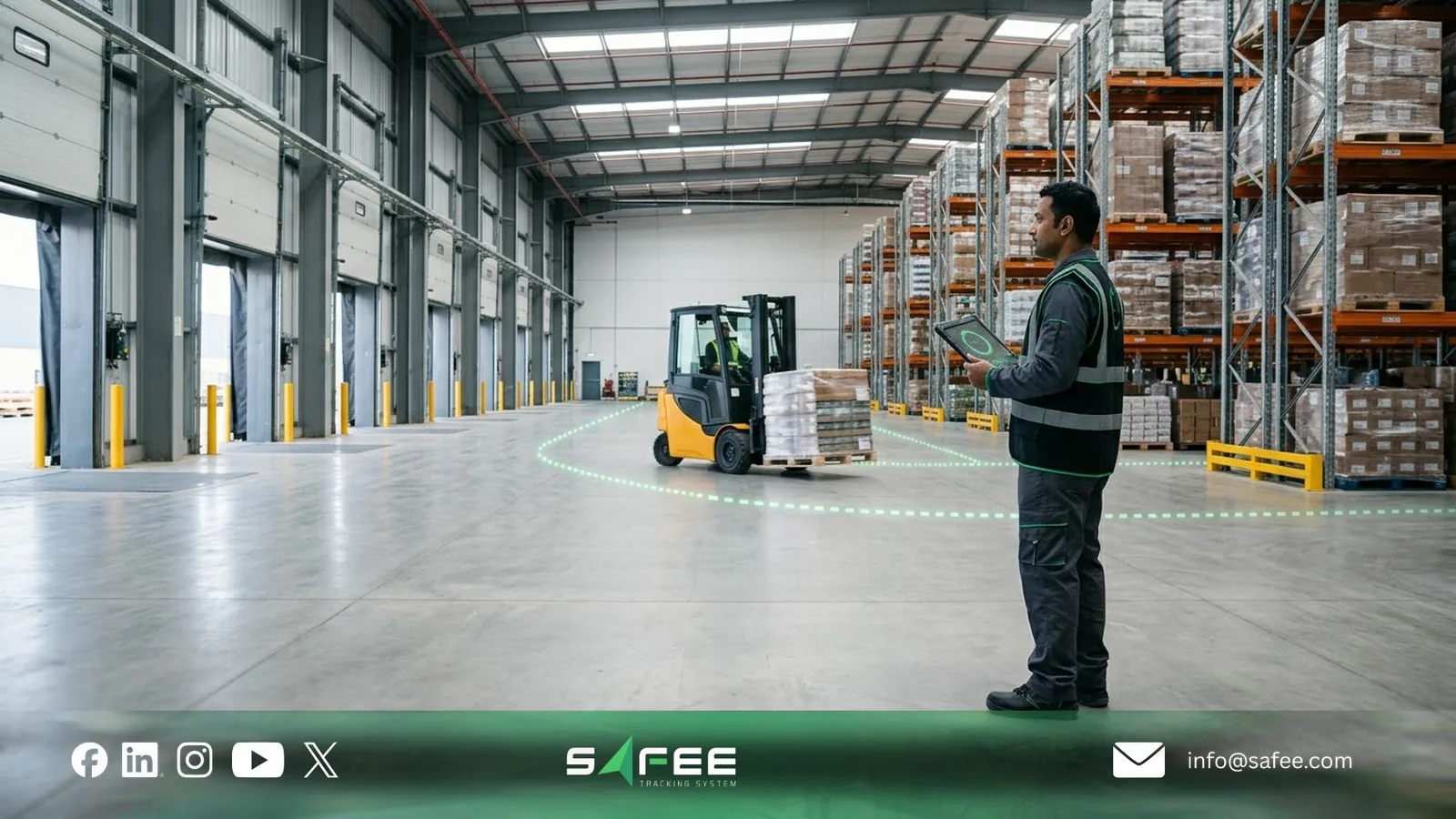
Electric vs LPG vs diesel forklifts
Electric forklifts generally suit enclosed warehouses, LPG models can serve mixed indoor and outdoor operations with adequate ventilation, and diesel forklifts are primarily suited to outdoor applications. The best choice depends on load requirements, shift duration, operating conditions, and total cost.
| Forklift Type | Best-Fit Operations | Main Trade-Off |
|---|---|---|
| Electric | Indoor aisles, cold stores with suitable models, and compatible outdoor areas | No exhaust at the point of use, but battery runtime and charging must cover each shift |
| LPG | Mixed indoor and outdoor operations with adequate ventilation | Flexible refueling, but exhaust emissions and fuel handling require safety controls |
| Diesel | Outdoor yards and suitable heavy-duty applications | Suitable for demanding outdoor work, but exhaust emissions and fuel maintenance limit indoor use |
Power type is only one selection factor. Before purchasing or renting, confirm that the forklift’s lifting capacity, mast height, tire configuration, and operating-temperature limits match the work area.
Forklifts for indoor warehouses and cold stores
Electric forklifts are generally preferable in enclosed or poorly ventilated warehouses because they produce no exhaust emissions at the point of use. LPG forklifts may be used indoors where permitted, but ventilation and exposure to combustion emissions must be assessed.
Saudi safety guidance recommends electric forklifts for poorly ventilated areas and advises against LPG refueling in confined spaces. Dubai Municipality’s Safe Forklift Operations guideline also addresses LPG fuel isolation, ventilation, and periodic monitoring of indoor air quality and carbon monoxide.
Cold stores require additional checks. Low temperatures can reduce battery performance, while movement between cold and warmer environments may cause condensation. Confirm the manufacturer’s approved operating temperature, battery runtime, and charging requirements before selecting a model.
For multi-shift operations, compare the available charging windows with actual workload. Compatible lithium-ion batteries can support opportunity charging during breaks, while conventional lead-acid systems may require longer charging and cooling periods.
Forklift operations in outdoor yards and summer heat
Diesel and LPG forklifts are common choices for outdoor handling, but electric models designed for outdoor use may also be suitable. The decision should reflect terrain, lifting capacity, operating hours, and exposure to high temperatures.
In Gulf summers, heat can reduce battery performance and affect charging arrangements. Dubai Municipality’s forklift safety guidance calls for designated, well-ventilated charging areas away from direct sunlight. Precautions against hydrogen accumulation are particularly important when charging lead-acid batteries.
Follow the manufacturer’s temperature limits and charging instructions rather than applying the same procedures to every battery type. For more on battery care and maintenance, see our fleet battery management guide.
Outdoor operations must also account for operator heat exposure and applicable midday work restrictions in Saudi Arabia and the UAE, including their scope and exceptions.
Before adding forklifts, compare each power type’s expected availability, maintenance requirements, and total operating cost under your warehouse’s actual working conditions.
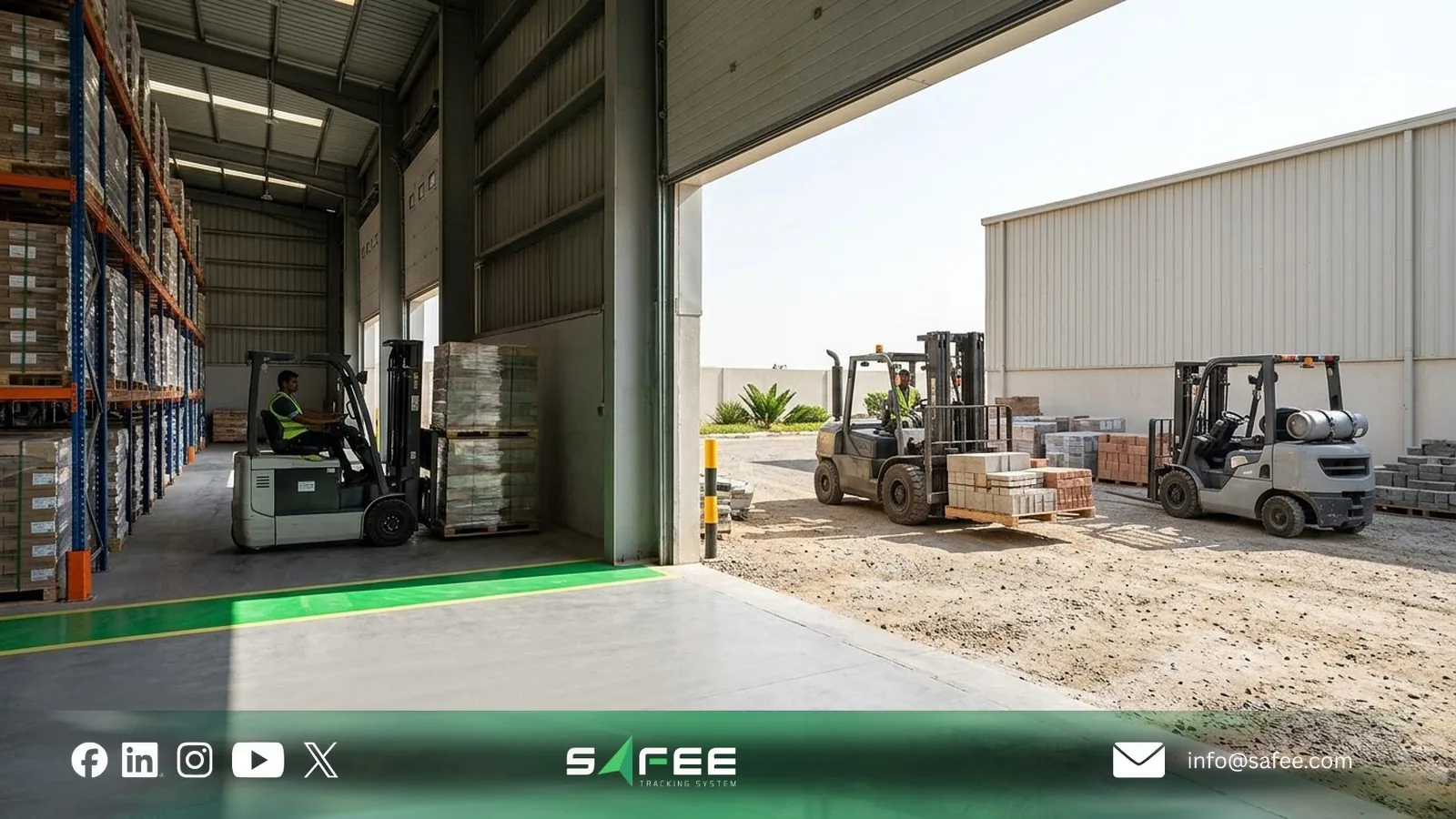
How to plan forklift maintenance and inspections
Forklift maintenance should follow the manufacturer’s operating-hour and calendar-based service intervals, rather than mileage. For warehouse managers, the priority is to identify upcoming service, track defects, and know which forklifts are available for each shift.
Start by confirming which hour meter the manufacturer uses for maintenance. Some electric forklifts distinguish between key-on time, drive-motor hours, and lift-motor hours. A tracking device may record different activity signals, so its readings should be validated before they are used to trigger service.
Daily safety checks before each shift
Every forklift should be checked before use according to its manufacturer’s instructions and applicable site requirements. Saudi Arabia’s SASO forklift safety guide identifies key pre-use checks, including:
- Tires, forks, and mast: Check for damage, excessive wear, cracks, and other visible defects.
- Brakes, steering, and lifting controls: Verify that the essential operating functions respond correctly.
- Battery or fuel system: Check for leaks, damaged connections, and unsecured components.
- Warning and safety devices: Test the horn, applicable alarms, lights, and other fitted safety equipment.
- Operator protection: Confirm the condition of the seat belt, load-capacity plate, and protective structures.
Any defect affecting safe operation must be reported, and the forklift must be taken out of service until the issue is resolved.
In Dubai, the municipality’s Safe Forklift Operations guideline requires a documented pre-shift inspection. Defective forklifts must be tagged and removed from service, with repairs documented and return to operation verified by a qualified maintenance technician and safety officer.
Use our free Forklift Daily Pre-Use Checklist to record inspections, track open defects, and document when a forklift is cleared for use.
Preventive maintenance by operating hours
Preventive maintenance intervals depend on the forklift model, power type, and operating conditions. The manufacturer’s schedule should specify both operating-hour and calendar limits where applicable.
For example, if a particular forklift requires service every 250 operating hours and its last service was completed at 1,250 hours, the next hour-based service is due at 1,500 hours. Any earlier calendar deadline must also be observed.
Toyota’s maintenance guidance uses 250-hour service intervals as one example, but the actual schedule must come from the specific forklift’s manual or authorised service provider.
Warehouse managers should maintain a record of each truck’s current service-hour reading, last completed service, next due interval, and outstanding repairs. Heavy use, dust, and high temperatures may require revised schedules according to the manufacturer’s recommendations.
Only qualified personnel should perform maintenance and repairs. For a broader approach to service scheduling and alerts, read our fleet maintenance management software guide.
Battery maintenance and charging records
Electric forklift availability depends on battery condition, charging arrangements, and the time available between shifts.
SASO’s forklift safety guidance addresses charging-area ventilation, ignition-source controls, electrical safety, and emergency washing facilities. Dubai Municipality also requires suitable charging-area precautions and a charging log.
Under Dubai’s guideline, the charging record includes the date, time, operator, starting and ending voltage, and any irregularities observed during charging.
These records help supervisors investigate charging problems and interruptions. However, voltage readings alone do not establish battery health; their interpretation depends on battery chemistry, charging conditions, and manufacturer specifications.
Charging procedures must also reflect the battery type. Conventional lead-acid batteries may require extended charging and cooling periods, while compatible lithium-ion systems can support opportunity charging.
Do not assume that every multi-shift electric forklift needs a spare battery. Compare battery runtime, charging windows, and the manufacturer’s operating limits before deciding whether additional batteries or charging capacity are necessary.
Annual forklift safety inspections
Daily checks and scheduled maintenance do not replace periodic technical examinations.
In Dubai, forklifts and their attachments require annual inspection and certification by an EIAC-accredited inspection body, with certificates retained on-site.
In Saudi Arabia, SASO’s forklift safety guide calls for a comprehensive annual technical inspection by a qualified person. Where qualified inspection personnel are unavailable internally, the guide calls for an external inspection provider. Facilities must also verify any other applicable regulatory requirements.
For every forklift, record the last inspection date, certificate or inspection reference, next due date, and any outstanding corrective actions.
The warehouse manager should review three things before assigning equipment to a shift: whether its pre-use check is complete, whether any safety-critical defect remains open, and whether required maintenance or inspections are overdue.
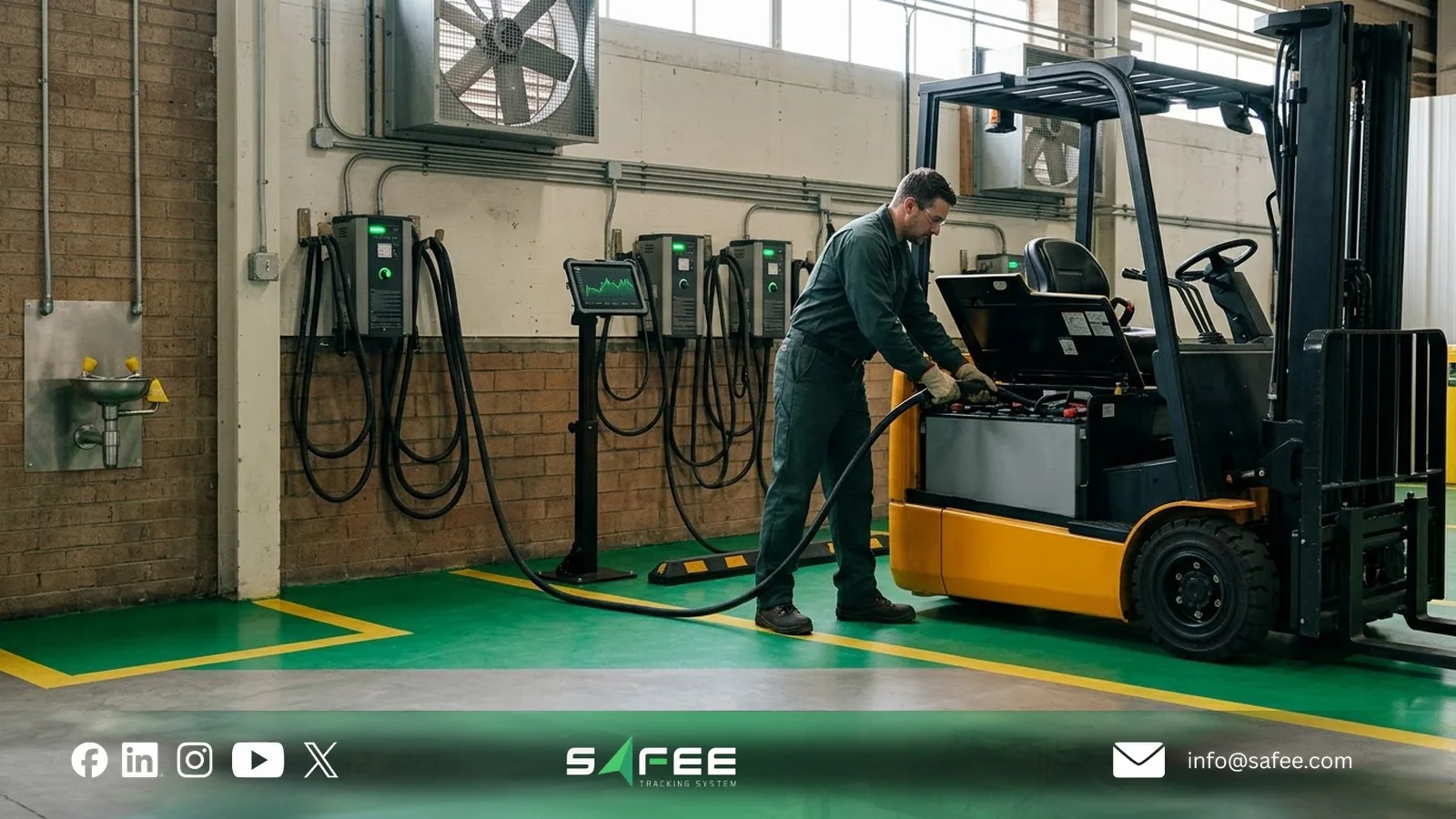
Forklift safety requirements in Saudi Arabia and the UAE
Safe forklift operations depend on qualified operators, controlled traffic routes, and equipment that is fit for use. For warehouse managers, the priority is to verify operator authorization, maintain safety records, and address site hazards before they interrupt operations or cause an incident.
Requirements differ between Saudi Arabia and the UAE, and some UAE rules apply specifically to Dubai or particular industrial zones.
Forklift operator training in Saudi Arabia
Saudi Arabia’s SASO Technical Regulation for Machinery Safety – Part 3 requires lifting-equipment operators to have the necessary competence and supporting documentation, with applicable licences obtained from the competent authorities.
SASO’s forklift occupational safety guide provides more detailed operational guidance covering:
- Training and authorization: Operators should complete appropriate theoretical and practical training, demonstrate competence, and receive authorization before operating equipment.
- Operator fitness: Personnel must be fit to perform their assigned duties safely.
- Safe driving: Operators must use the required restraints, observe site speed limits, and follow pedestrian right-of-way and load-handling procedures.
- Pre-use checks: Forklifts must be checked before operation, with unsafe equipment reported and removed from service.
- Safety records: The guide recommends that safety personnel organize periodic inspections and retain inspection records for at least 12 months.
The guidance and technical regulation serve different purposes. Warehouse managers should verify the applicable licence or authorization for each operator and equipment category rather than assuming that a generic training certificate is sufficient.
Use Safee’s free Forklift Operator License and Training Register to track operator qualifications, authorized forklift types, training dates, and upcoming renewals.
Dubai forklift safety requirements for 2027
Dubai’s Roads and Transport Authority (RTA) provides light- and heavy-equipment driving licence categories. Depending on the activity and operating location, a specific site-related driving permit may also apply. Confirm the appropriate credential before assigning operators.
For industrial establishments and warehouses within its scope, Dubai Municipality Circular 01/2026 requires the specified forklift safety measures to be implemented by January 1, 2027.
The principal requirements include:
- Traffic management: Separate forklift routes from pedestrian walkways using appropriate barriers, signage, and speed limits.
- 360-degree cameras: Provide operators with visibility around the forklift and reduce blind spots.
- Proximity sensors: Generate visual or audible warnings when approaching obstacles.
- Inspections and maintenance: Conduct documented daily pre-operation checks and follow the manufacturer’s maintenance instructions.
- Operator training: Provide accredited training and refresher courses.
- Safe operating practices: Use the required restraints, observe load limits, and prohibit passengers or lifting people on forks and pallets.
The circular recommends blue and red warning spotlights; it does not list them as a mandatory installation requirement.
For facilities approaching the January 2027 deadline, the warehouse manager should review the current equipment, operator records, traffic layout, and outstanding corrective actions with the HSE team.
These Dubai requirements should not automatically be applied across the UAE. Facilities in other emirates or separately regulated zones must check the rules applicable to their location.
Forklift fleet KPIs to track monthly
A monthly forklift fleet review should answer three questions: Are we using the right number of forklifts, are they available when needed, and what does each operating hour cost?
The following indicators connect equipment records to specific management decisions.
| KPI | How to Measure It | Decision It Supports |
|---|---|---|
| Fleet utilization by shift | Validated active hours ÷ scheduled available hours × 100 | Reallocate underused forklifts and identify shifts with capacity shortages |
| Active vs inactive time | Compare equipment activity signals with recorded powered-on or operating time, where both are available | Investigate waiting time, inefficient assignments, and activity outside expected periods |
| Maintenance cost per operating hour | Maintenance expenditure ÷ recorded operating hours | Identify high-cost equipment and investigate repair or replacement options |
| Equipment downtime | Hours unavailable for service ÷ scheduled operating hours × 100 | Assess breakdown patterns, spare capacity, and maintenance response |
| Safety incidents and impacts | Review verified incident records; calculate rates per 100 operating hours only where reliable data exists | Identify recurring hazards, operator-training needs, and high-risk locations |
| Upcoming expiries and inspections | Count certificates, authorizations, and inspections due within the next 30 or 60 days | Schedule renewals and avoid preventable equipment or operator unavailability |
Use consistent measurement rules across comparable forklifts.
For example, if a forklift records 120 validated active hours during 200 scheduled available hours, its activity-based utilization is 60%. That does not necessarily mean it spent 60% of the shift moving pallets. The result depends on how the activity signal is generated.
Likewise, maintenance cost per hour measures maintenance efficiency, not total ownership cost. A purchase or replacement decision must also consider depreciation or rental charges, energy, operator costs, and expected future repairs.
Review these KPIs by forklift type, operating area, and shift. A fleet-wide average can conceal a shortage at the loading dock while other equipment remains underused.
For further guidance on building performance reviews, see Fleet Management KPIs.
How Safee helps monitor forklift fleet performance
At Safee, we help warehouse managers replace scattered activity records and manual reminders with equipment activity monitoring, maintenance alerts, document-expiry tracking, and scheduled reports.
The available data depends on the tracking device, installed inputs or sensors, and the configuration supported by each forklift.
Our relevant capabilities include:
- Equipment Activity Monitoring: The Equipment module identifies active and inactive periods using a configured equipment signal. Supported sources include digital inputs and, with compatible devices, certain Bluetooth or CAN-bus RPM data.
- Equipment Activity Report: Reports active and inactive durations for configured equipment, helping supervisors compare usage across selected periods.
- Maintenance Module: Creates maintenance tasks and alerts based on dates or recorded ignition/engine time, where the relevant source is available.
- Expiries Explorer: Helps track the expiry dates of documents entered into the platform, such as applicable vehicle or operator records.
- Alarms and Alerts: Supports configurable alerts for relevant operating events, including schedule or geofence conditions where positioning data is reliable.
- Driver Management: Can associate an operator with equipment using supported identification hardware, such as iButton or RFID readers.
- Fleet Reporting: Supports customized, scheduled reports delivered to the responsible team.
Equipment activity is not automatically the same as productive handling time or the manufacturer’s service-hour reading. Before deployment, Safee and the warehouse team should confirm which signal is available, how it is interpreted, and whether it matches the intended reporting or maintenance requirement.
Safee has also announced its approval by Saudi Arabia’s Communications, Space and Technology Commission (CST) as a tracking service provider. The applicable hardware and service requirements should still be verified for each deployment.
Manual tracking vs Safee fleet monitoring
| Management Task | Manual Approach | With Safee |
|---|---|---|
| Review equipment use | Collect hour-meter readings and shift records | Compare activity periods from configured equipment signals |
| Schedule maintenance | Check service logs and hour-meter readings | Receive configured date- or engine-time-based maintenance alerts |
| Identify underused equipment | Compare supervisor reports and paper logs | Review active and inactive periods across comparable units |
| Identify operators | Use sign-in sheets or shift records | Associate operators with equipment where compatible ID readers are installed |
| Track document expiry | Maintain spreadsheet reminders | Receive alerts for expiry dates recorded in the platform |
| Share monthly reports | Compile and email separate files | Schedule equipment and fleet reports for relevant supervisors |
Safee’s reporting does not replace the manufacturer’s hour meter, a documented pre-use inspection, or the site’s safety procedures.
Indoor positioning, automated impact detection, and electronic on-truck checklists should not be assumed to be included in every Safee installation. They require separate confirmation of compatible hardware, supported integrations, and the proposed configuration.
What warehouse managers still need to decide
Safee provides operational data and alerts, but the warehouse team remains responsible for interpreting the results and acting on them.
A manager must still determine whether to reallocate a forklift, increase capacity, buy or rent equipment, approve maintenance, or remove an unsafe truck from service. Operator qualification and compliance with local safety requirements also remain the facility’s responsibility.
The practical value of Safee is earlier visibility into equipment activity, maintenance needs, and administrative deadlines, so managers can make those decisions using more consistent information.
To evaluate which activity and maintenance data can be captured from your existing forklifts, request a Safee Fleet Demo.
FAQs about forklift fleet management
How many forklifts does a warehouse need?
Divide peak hourly pallet movements by the number of movements one forklift can complete per productive hour. Then adjust for equipment availability, charging, congestion, and shift requirements. Check each forklift type separately, as equipment assigned to different tasks may not be interchangeable.
How do you calculate forklift fleet utilization?
Divide validated active hours by scheduled available hours and multiply by 100. For example, 120 active hours out of 200 available hours gives 60% utilization. The result depends on the activity signal used and does not necessarily represent productive pallet-handling time.
How often should a forklift be serviced?
Follow the manufacturer’s operating-hour and calendar-based maintenance intervals, adjusted for the equipment’s working conditions. Forklifts also require pre-use safety checks and periodic technical inspections under applicable local requirements. Remove any unsafe equipment from service until defects are resolved.
Should You buy, lease, or rent forklifts?
Buying may suit consistently high utilization over several years, while full-service leasing can provide predictable costs and maintenance coverage. Short-term rental is often more suitable for seasonal demand or temporary replacements. Compare total costs, operating-hour limits, and equipment availability before deciding.
Do forklift operators need a license in Saudi Arabia?
Operators must have the required competence, authorization, and applicable licences under Saudi lifting-equipment regulations. SASO provides an equipment operator licensing service, but employers should verify the appropriate licence and training requirements for each forklift category and operating environment.
How does Safee help manage forklift fleets?
Safee can monitor active and inactive equipment periods, generate activity reports, and provide maintenance and document-expiry alerts. Available functions depend on compatible tracking devices and equipment signals. Warehouse managers use these records to assess utilization and plan maintenance, while retaining responsibility for fleet sizing and safety decisions.
Sources
- dubizzle: UAE driving licence types
- Emirates Driving Institute: heavy forklift license
- Acclaim Handling: how many forklifts a warehouse needs
- BigRentz: forklift maintenance and typical service intervals
Ready to improve your fleet operations?
Tell us what you would like to improve. A Safee specialist will reply by email.
Usually replies within one business day • No sales spam
Your details are used only to respond to your request. Privacy Policy