

What Heavy Equipment Fleet Management Software Must Deliver
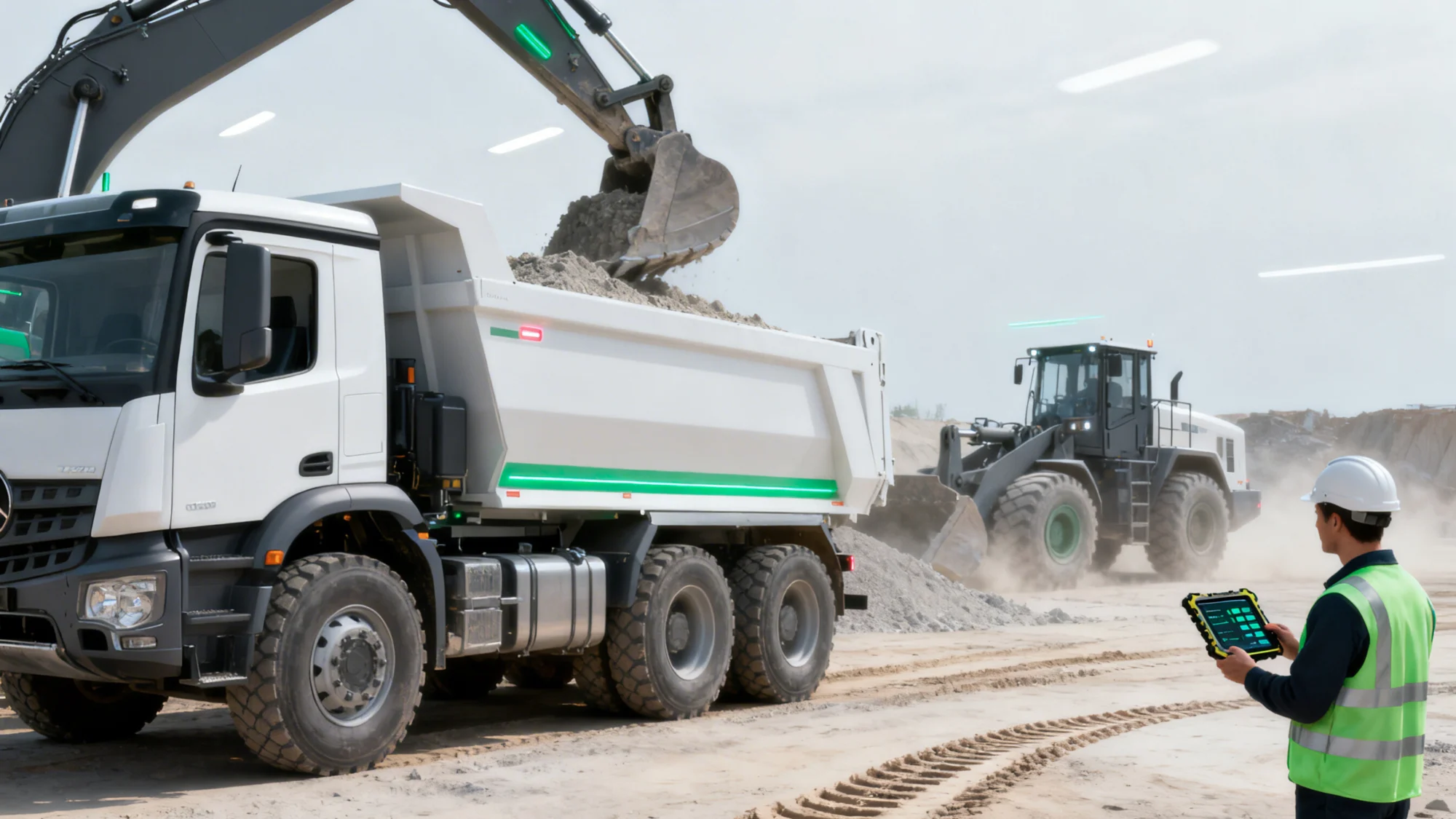
Heavy equipment fleet management software helps fleet and operations teams control equipment availability, utilization, maintenance, and fuel performance from one platform instead of scattered tools and manual follow-up. For companies running excavators, loaders, generators, support trucks, and mixed site assets, the goal is simple: reduce downtime, improve visibility, and enforce better operational control.
In this article, you will learn what heavy equipment fleet management software is, how it differs from standard fleet management systems, which features matter most, and how Safee supports heavy equipment operations through Equipment Activity Monitoring, Maintenance Module, Live Vehicle Tracking, Fuel Tracking, and Fleet Reporting.
What is heavy equipment fleet management software?
It is a centralized platform that helps businesses monitor, control, and optimize machinery and support assets across multiple sites. For operations teams, that means one system for tracking asset location, activity status, working time, maintenance due dates, and performance reporting.
For heavy equipment fleets, location data alone is not enough. Telematics brings GPS, sensor, diagnostics, and communications data into one platform so managers can understand utilization, idle time, engine working hours, and unauthorized or off-hours operation with better accuracy.
A practical solution should also work as Heavy Equipment Maintenance Software. Instead of managing maintenance through disconnected spreadsheets or manual follow-up, teams can link service planning to actual operating conditions such as date, odometer, periodic distance, periodic time, and periodic ignition time, with alerts and follow-up workflows built into the system.
Finally, it is better operational control. Supervisors can monitor equipment activity, managers can follow asset performance in real time, and leadership can rely on scheduled reports and dashboards instead of delayed manual updates.
View our Equipment Activity Monitoring and contact us today to invest in your fleet
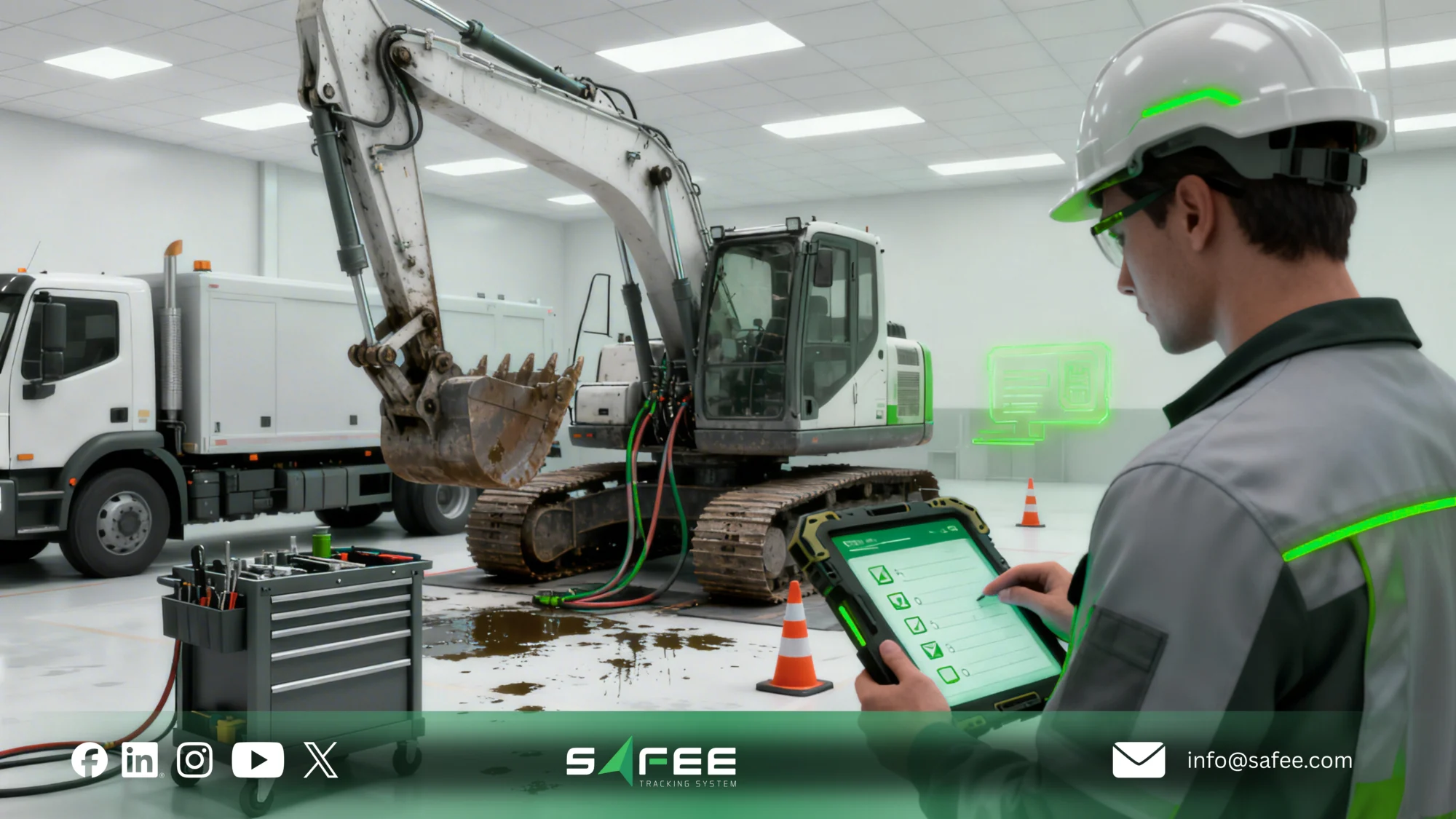
Heavy equipment vs. standard fleet management
Heavy equipment fleet management differs from standard fleet management in three core areas: how productivity is measured, how maintenance is planned, and how operations are governed.
1. Operational focus
Standard fleet management usually focuses on road vehicles, route visibility, driver behavior, and trip control. Heavy equipment fleet management focuses more on asset utilization, equipment activity, engine-hours logic, site productivity, and machine readiness.
In standard fleets, vehicle movement often signals productive use. In heavy equipment operations, that is not always the case. An excavator, loader, or dozer may stay within the same work zone for hours and still be operating productively. That is why heavy equipment management requires more than live location alone.
Safee’s construction-focused approach addresses this by showing whether equipment is working, idling, stopped, or operating outside approved hours. The platform also supports Equipment Activity Status, which can be interpreted from digital inputs on the AVL unit and displayed in the monitoring interface, dashboard, card, and explorer.
2. Maintenance logic
Another major difference is maintenance planning. Standard fleets often rely mainly on distance-based servicing. Heavy equipment operations usually need maintenance schedules tied to actual usage conditions, such as working hours, ignition time, and other machine-use indicators.
Safee’s maintenance framework supports multiple trigger types, including date-based, odometer-based, distance-based, time-based, and ignition-based rules. This makes the maintenance process more aligned with how heavy equipment is actually used in the field, rather than relying on mileage alone.
3. Governance and access control
Heavy equipment operations are often more complex from a governance perspective. Assets may be distributed across multiple sites, projects, subcontractors, and restricted-access areas. That creates a stronger need for structured permissions, clear ownership, and consistent visibility across the organization.
In the Safee guide, Company Structure and the permission model allow accounts to be limited by site or category, while the same access logic is applied across modules. This supports better role-based access, stronger auditability, and cleaner operational ownership.
Why this difference matters
Standard fleet tools are designed mainly to manage vehicle movement and transport activity. Heavy equipment fleet management is designed to help teams control machine utilization, maintenance readiness, site activity, and operational accountability. That is the difference decision-makers should evaluate when comparing the two.
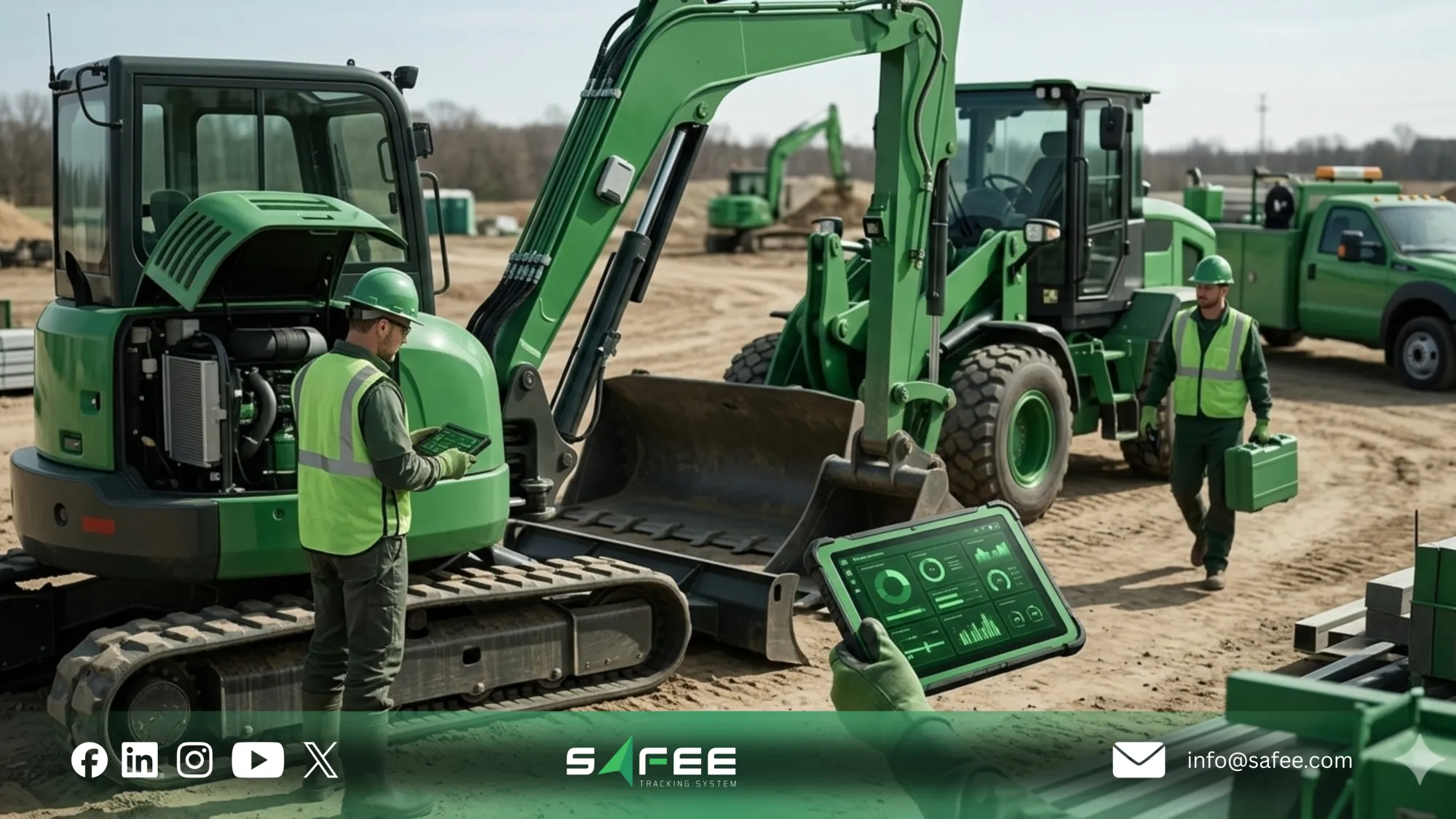
Essential features of heavy equipment fleet management software
The best heavy equipment fleet management software should help teams answer a small set of high-value questions every day: Which assets are truly active? Which ones are idle or underused? Which maintenance tasks are due? Where are support vehicles right now? Are fuel losses or safety issues increasing? Which reports should leadership review this week?
The Safee ecosystem covers those needs through connected modules rather than isolated tools.
Key capabilities to prioritize include:
- Equipment Activity Monitoring to understand whether machinery is active or not active based on actual equipment status, not only location.
- Maintenance Module to automate maintenance tasks, alerts, and reporting and to align service timing with real usage conditions.
- Live Vehicle Tracking for support fleets, transport units, and mixed operations that need real-time visibility, geofence activity, and route oversight.
- Fuel Tracking to monitor fuel consumption, detect discrepancies, and improve cost control.
- Fleet Reporting to convert raw operational data into scheduled, filtered, decision-ready reporting.
- Driver Management for organizations where operator accountability, driver profiles, and driver-vehicle linkage matter.
- Journey Management System (JMS) for equipment-support journeys, route planning, task validation, checkpoints, and journey control.
- Proactive Road Safety Solution where driver safety, predictive alerts, and broader fleet risk reduction are part of the operating model.
Strong platforms also need governance features that are easy to overlook during vendor evaluation, such as In Safee’s platform, including notifications, scheduled reports, audit-style history, site/category-based permissions, and workflows such as due-task resolution. These controls matter because heavy equipment operations fail when visibility improves, but accountability stays weak.
If your goal is to combine maintenance, real-time oversight, and cost control, request a walkthrough focused on Maintenance Module, Live Vehicle Tracking, Fuel Tracking, and Fleet Reporting together, not as separate tools.
Benefits of digital heavy equipment fleet management
Digital heavy equipment fleet management helps businesses improve control, reduce avoidable cost, and keep equipment operations aligned across sites.
1. Better visibility
Operations teams need more than asset location. They need to know whether equipment is active, idle, or operating outside approved hours. With Safee, this visibility extends beyond live tracking into Equipment Activity Monitoring, giving teams a clearer view of actual equipment usage across sites.
2. Lower operating cost
When idle time, fuel waste, unauthorized usage, and missed maintenance are easier to identify, teams can act earlier and reduce unnecessary cost. By connecting Fuel Tracking, maintenance alerts, and reporting, Safee helps turn operational data into faster cost-control decisions.
3. Better equipment readiness
Heavy equipment uptime depends on timely maintenance. A digital workflow makes it easier to plan service based on actual usage instead of manual follow-up. Through the Maintenance Module, Safee allows maintenance tasks to be tied to practical triggers such as date, distance, time, and ignition time, helping teams stay ahead of service gaps.
4. Stronger operational control
For businesses managing multiple sites, teams, or contractors, digital oversight improves consistency and accountability. Safee brings this together through alerts, permissions, and reporting workflows that support tighter control over how assets are used and monitored.
5. Better decision-making
Different stakeholders need different levels of visibility, from live operational updates to management reporting. Because Safee connects tracking, maintenance, fuel oversight, and reporting in one environment, teams can work from the same operational record instead of fragmented tools.
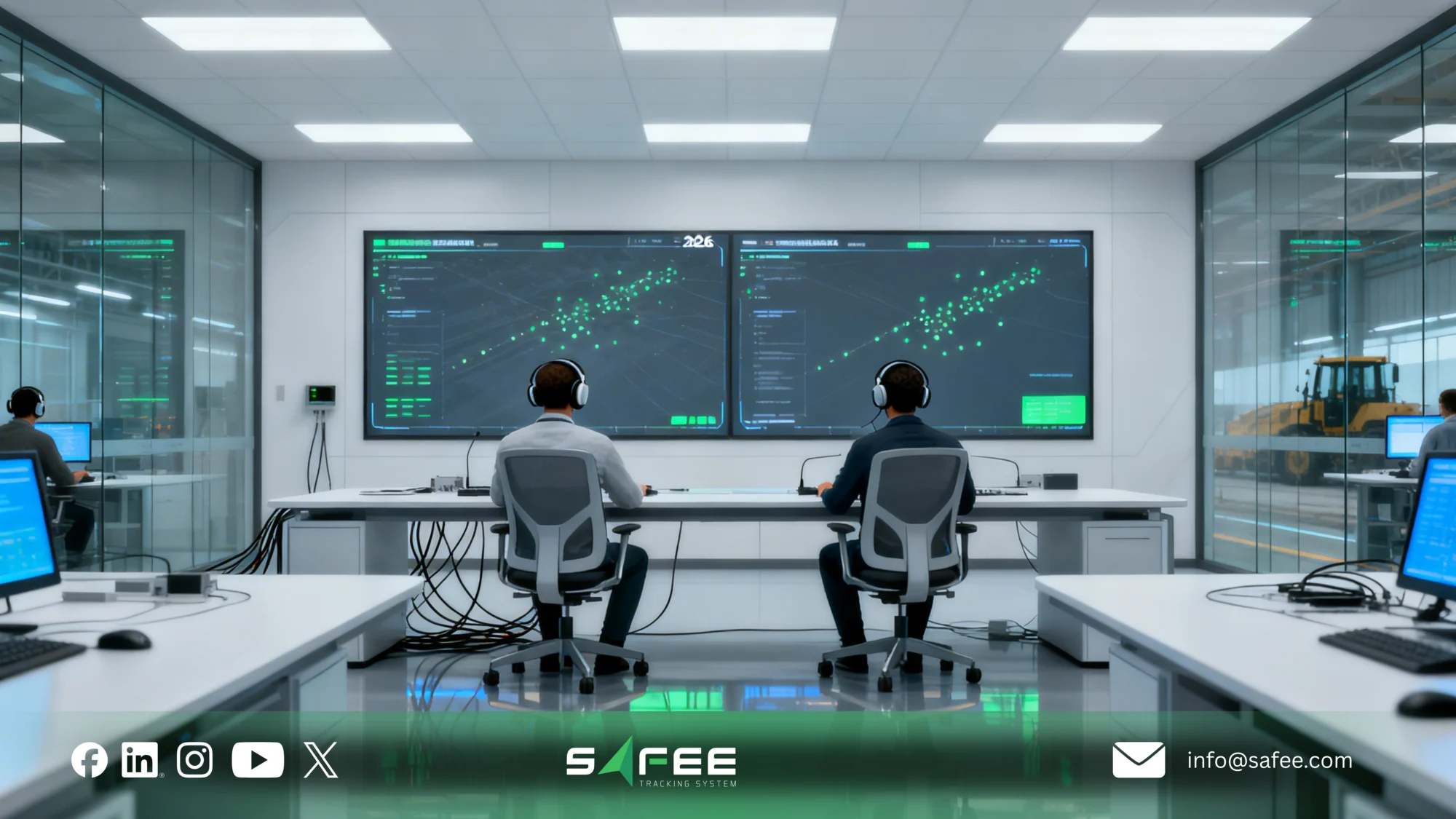
Industry use cases for heavy equipment fleet management
Construction and infrastructure
In construction and infrastructure, the main priorities are usually equipment utilization, idle reduction, maintenance planning, and control across multiple sites. This is where heavy equipment fleet management becomes operationally important, especially when teams need to monitor machine activity in real time and keep oversight consistent from one job site to another. Safee supports this environment through activity-based monitoring and live visibility that help teams understand how equipment is actually being used in the field.
Oil & gas and remote field operations
In oil & gas and remote operations, the requirement goes beyond equipment visibility. Teams often need stronger control over support-vehicle journeys, better safety follow-up, and reliable monitoring in remote areas. In these environments, combining Journey Management System (JMS) with safety workflows and Satcomm connectivity gives operations teams better control over field movement and response.
Government and public works
For government and public works fleets, the priority is often accountability, structured reporting, and tighter control over publicly managed assets. Heavy equipment fleet management helps create a clearer operating record, while Safee’s reporting and monitoring capabilities support organizations that need better visibility, controlled access, and more structured oversight across departments or projects.
Mixed fleets
In mixed fleets that combine heavy equipment with pickup trucks, service vehicles, or transport units, the challenge is usually fragmentation. Teams do not want one system for equipment and another for vehicle operations. By bringing together Equipment Activity Monitoring, Live Vehicle Tracking, Driver Management, and Fleet Reporting, Safee helps operations teams manage different asset types through one connected workflow.
High-risk operations
In high-risk environments, the value is not only in tracking assets but in reducing exposure before issues escalate. Safety alerts, journey validation, driver behavior monitoring, and historical review all help teams identify risks earlier and respond with better documentation and control. This makes the platform more useful for operations where prevention and accountability matter as much as visibility.
How to choose the right heavy equipment fleet management software?
Choosing the right heavy equipment fleet management software is not about getting more features. It is about finding a platform that fits your operation, supports your maintenance workflow, and gives your team the visibility and control they need.
What to evaluate
When comparing solutions, focus on what affects daily operations:
- Whether the platform supports heavy equipment only or mixed fleets
- Whether it shows real equipment activity, not just location
- Whether maintenance can be linked to actual usage triggers
- Whether access and permissions can be controlled by site, category, or role
- Whether reporting is flexible enough for both operations and management
- Whether key workflows such as maintenance, tracking, and journey control work together
- Whether the system can support integrations and remote operations when needed
Questions to ask the provider
Before choosing a platform, ask:
- Can it distinguish equipment activity from simple tracking?
- Can maintenance rules be configured around how our assets actually operate?
- Can alerts, reports, and access be assigned to the right teams?
- Can it support both heavy equipment and support vehicles in one system?
- Can it handle our reporting, integration, and remote coverage requirements?
A good evaluation process starts with data capture, then workflow fit, governance, reporting, and integration. That helps teams choose a system that works in real operations, not just in a product demo.
With Safee, the conversation can be built around your actual workflow, including asset types, maintenance triggers, reporting needs, and operational control requirements. Talk to Safee today about your fleet requirements
Safee as a heavy equipment fleet management partner
Safee brings the main operational needs of heavy equipment fleets into one platform. This includes Equipment Activity Monitoring, Maintenance Module, Live Vehicle Tracking, Fuel Tracking, Fleet Reporting, and Driver Management. For operations with more advanced requirements, the platform can also support Journey Management System (JMS), Proactive Road Safety Solution, and remote connectivity through Satcomm.
What makes this important is that Safee goes beyond basic tracking. The platform supports day-to-day operational control through features such as maintenance constraints, due-task follow-up, notifications, journey evaluations, checkpoints, permission controls by site or category, and structured reporting workflows.
For decision-makers, this means choosing more than a tracking tool or dashboard. It means choosing a system that helps teams monitor equipment activity, manage maintenance, improve accountability, support safety oversight, and rely on clearer operational records.
If the goal is to connect asset visibility, Heavy Equipment Maintenance Software workflows, reporting, and telematics in one environment, request a Safee demo.
At Saffe, we offer a practical starting point. A more useful next step is to review the relevant modules and request a demo based on your actual assets, sites, and operating requirements.
Ready to improve your fleet operations?
Tell us what you would like to improve. A Safee specialist will reply by email.
Usually replies within one business day • No sales spam
Your details are used only to respond to your request. Privacy Policy