


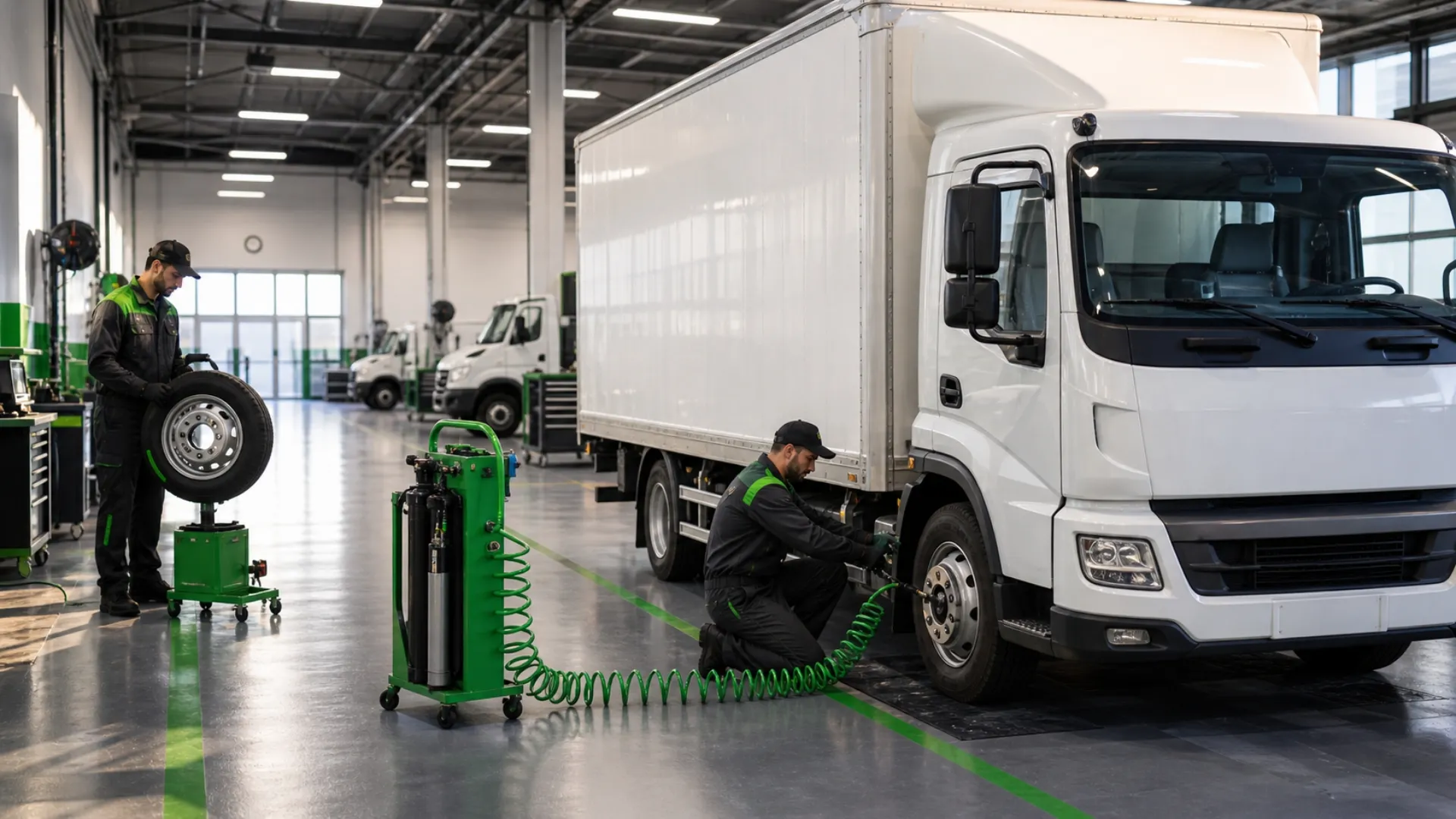
A tyre issue rarely starts as a dramatic roadside failure. It often starts as a small pressure loss that no one sees, a heat build-up during a long GCC route, or a repeated inspection gap that only becomes visible after fuel waste, uneven wear, downtime, or an urgent workshop visit. For fleet managers and maintenance leads, this is exactly where fleet tyre management becomes a fast cost-saving lever, especially for fleets operating from the UAE across the GCC and wider global routes.
This guide explains how fleet tyre management helps fleets control pressure, reduce fleet management fuel cost, support fleet maintenance management, and create measurable fleet management cost savings without redesigning the whole operation. You will also see how we at Safee connect tyre pressure monitoring, alerts, reports, live visibility, and maintenance follow-up into a practical workflow for GCC and global fleet operations.
Why is fleet tyre management a quick win for GCC fleets?
Fleet tyre management is a hidden profit lever because tyres sit at the point where every operational factor becomes physical: load, heat, braking, road condition, driver behaviour, route type, and maintenance discipline. When pressure is too low, too high, or inconsistent across vehicles, the fleet pays for it through higher rolling resistance, uneven tyre wear, more inspections, roadside risk, and avoidable maintenance work.
In GCC fleets, the pressure problem can become more expensive because vehicles often work in high temperatures, long-haul routes, dusty yards, heavy-load conditions, and mixed urban and remote environments. A fleet may already track vehicles, fuel, drivers, and trips, yet still lose money because tyre pressure is checked manually, inconsistently, or too late.
At Safee, our Tire Pressure Monitoring System (TPMS) is designed to provide real-time pressure and temperature visibility, custom alerts, sensor-based tyre history, and integration with broader fleet workflows. This makes tyre data useful for daily action, not just technical inspection.
Book a Safee demo to review where tyre pressure alerts, reports, and maintenance workflows can create the fastest cost-saving opportunity in your fleet.
What does fleet tyre management cover?
What does fleet tyre management cover?
Fleet tyre management covers every process used to keep tyres safe, efficient, and cost-controlled across the fleet. This includes selecting the right tyres, setting pressure standards, inspecting tyre condition, monitoring pressure and wear, assigning maintenance actions, and recording replacement decisions.
Pressure control is usually the best starting point because it is easy to define, easy to check, and directly connected to fuel use, vehicle uptime, safety, and tyre life. A practical fleet tyre management process should cover:
- Vehicle-specific pressure standards based on vehicle type, tyre size, load profile, and route condition.
- Driver pre-trip checks for visible damage, low-pressure warnings, unusual wear, or unsafe tyre condition.
- Maintenance inspection routines for deeper checks and repeated pressure issues.
- Sensor-based alerts where TPMS or compatible tyre pressure monitoring is available.
- Reports that show exceptions, recurring issues, open actions, and closure status.
- Replacement decision history so tyre spend can be reviewed with evidence instead of guesswork.
For mixed fleets, one standard rarely works for every vehicle. A delivery van, refrigerated truck, oil and gas field vehicle, construction unit, and government service vehicle may all need different tyre expectations. The operating principle stays the same: define the standard, detect the exception, assign the action, and review the result.

How does tire pressure affect fleet management fuel cost?
Tire pressure affects fleet management fuel cost because pressure changes rolling resistance. Rolling resistance is the effort needed to keep a vehicle moving. When a tyre is underinflated, the engine may need more energy to move the same load, which can increase fuel waste over time.
This is not only a long-haul truck issue. City delivery fleets, service vehicles, cold chain fleets, construction fleets, and field operations can all feel the impact because vehicles stop, start, turn, idle, and carry changing loads throughout the day.
Pressure problems can also hide inside normal fuel reports. A vehicle may appear to have poor fuel performance because of route conditions, driver behaviour, traffic, load, or idling. Tyre pressure may be one of the causes. That is why pressure data should be reviewed with fuel trends, route patterns, driver behaviour, and maintenance history.
For related cost-control context, our guide to a fleet fuel management system explains how fuel dashboards and consumption reports help managers identify inefficiencies and reduce waste.
Cost savings locked inside better fleet tyre management
Better fleet tyre management creates cost savings by reducing the small tyre-related problems that quietly increase fuel use, maintenance work, downtime, and operational risk. The saving is not limited to buying fewer tyres; it comes from controlling how tyres affect the whole fleet operation.
The biggest mistake is to view tyres as a replacement cost only. Stronger fleet tyre management can support fleet management cost savings through:
- Lower avoidable fuel waste when tyre pressure stays closer to the correct operating standard.
- Longer tyre life when uneven wear and unnecessary stress are reduced.
- Fewer urgent workshop interventions caused by tyre issues discovered too late.
- Better planning for tyre replacement and maintenance tasks.
- Clearer accountability between drivers, supervisors, and maintenance teams.
- More reliable evidence for management review and cost-saving decisions.
These savings rarely come from one dramatic action. They come from small, repeated improvements applied across vehicles, routes, depots, and maintenance routines every week.
Fleet management fuel cost reduction through optimal pressure
Optimal pressure helps control fleet management fuel cost by keeping tyres closer to their intended operating condition. The practical goal is not only to correct low pressure; it is to make exceptions visible before they affect fuel, uptime, or tyre life.
Question | Why It matters | Safee-style operational use |
Which vehicles are outside pressure standards? | Identifies immediate exceptions. | Use alerts or inspection reports to flag action. |
Which vehicles repeat the same issue? | Shows recurring tyre, route, or maintenance patterns. | Review historical reports by vehicle or depot. |
Which routes show higher tyre stress? | Connects pressure issues with road, load, and heat conditions. | Compare trips, locations, and operating areas. |
Which actions were completed? | Prevents alerts from becoming ignored notifications. | Track closure through maintenance workflows. |
Longer tyre life and lower fleet maintenance management spend
Poor pressure control can shorten tyre life because tyres may wear unevenly or operate under unnecessary stress. Fleet maintenance management should therefore treat tyre pressure as a preventive maintenance item, not a driver-only responsibility.
A practical pressure-control workflow can follow these steps:
- Define pressure standards by vehicle type, tyre type, load profile, and operating region.
- Train drivers on visible tyre warning signs and the correct reporting path.
- Record pressure checks at agreed intervals.
- Escalate exceptions to maintenance with ownership and priority.
- Review repeated issues by vehicle, depot, route, and driver group.
- Use alerts and reports to reduce missed follow-up.
- Connect tyre findings with fuel and maintenance trends.
Our Maintenance Module supports automated tasks, alerts, and reporting for fleet maintenance management, helping operators reduce downtime and move away from manual tracking.
Why choose Safee for fleet tyre management in the UAE, GCC and globally
Safee is a UAE-based fleet technology provider supporting fleets across the GCC and wider global operations. For fleet tyre management, our value is helping teams move from manual checks and scattered follow-up to a connected workflow of tyre monitoring, alerts, reports, fleet maintenance management, and cost review.
Instead of treating tyre pressure as a workshop-only task, our platform helps place it inside the wider fleet management process: vehicle visibility, maintenance routines, driver accountability, fuel cost analysis, and management reporting.
Read about: Fleet Tire Pressure Monitoring System: An Implementation Playbook in Safee.
Automated alerts that strengthen fleet tyre management
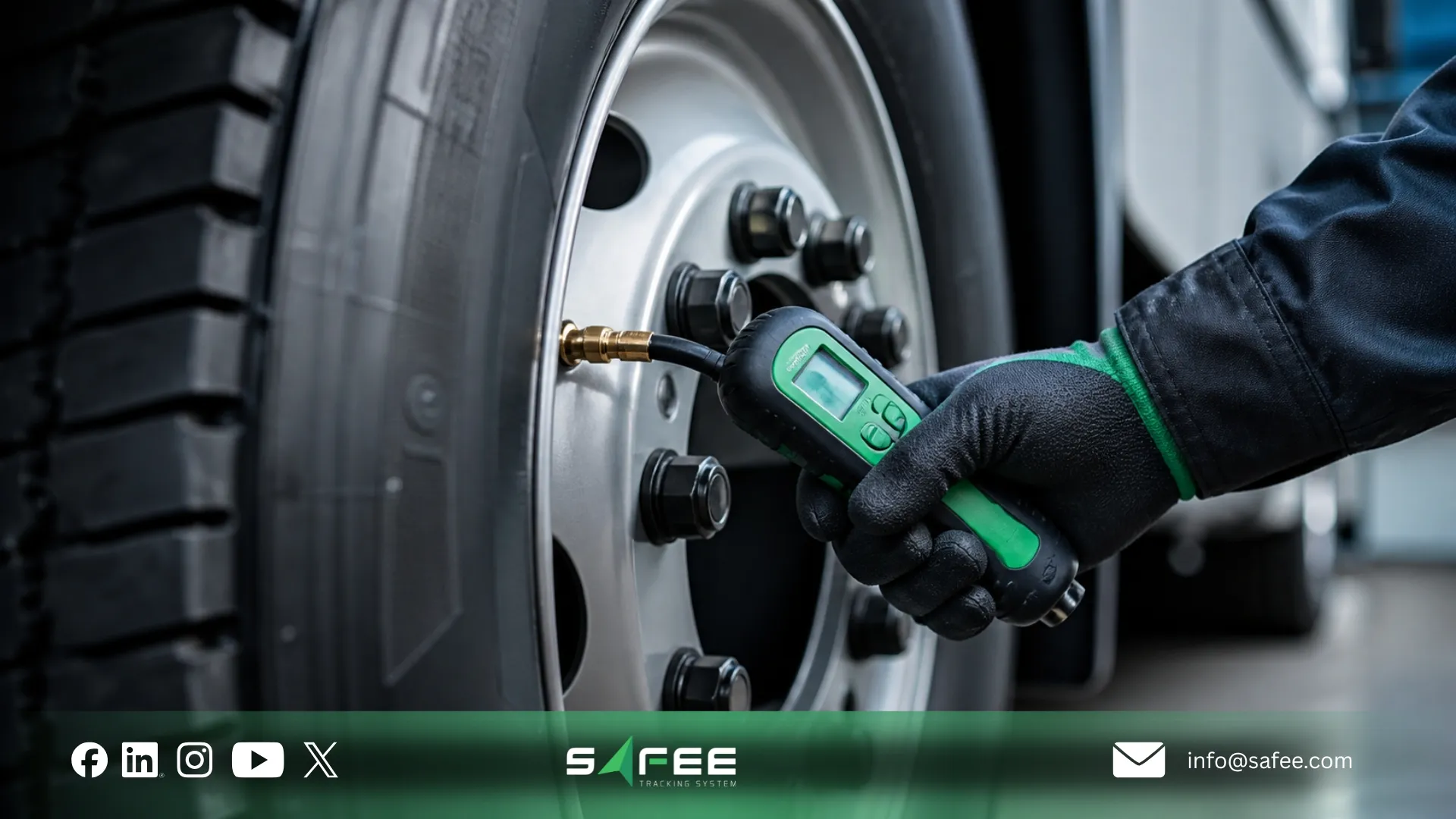
Automated alerts strengthen fleet tyre management because Safee makes tyre issues visible before they become fuel waste, downtime, or urgent maintenance. Through our Tire Pressure Monitoring System (TPMS), fleet teams can monitor tyre pressure and temperature in real time, assign each tyre to a sensor ID, and receive custom alerts when pressure or temperature moves outside the defined threshold.
In Safee, alerts are not just notifications. They become part of an operating workflow. Maintenance teams can review tyre pressure exceptions, supervisors can follow repeated issues by vehicle or route, and fleet managers can use reports to understand tyre health, pressure trends, and wear patterns. This helps connect tyre pressure monitoring with broader fleet maintenance management and cost control.
A practical alert setup in Safee should:
- Keep tyre alerts tied to a clear action.
- Set pressure and temperature thresholds by vehicle type or operating need.
- Send alerts to the right user through SMS, email, or in-app notifications.
- Review repeated alerts by vehicle, tyre position, depot, route, or operating area.
- Use reports to confirm whether pressure exceptions were reviewed and closed.
- Adjust alert settings when they create noise instead of useful action.
- Connect tyre alert reviews with maintenance meetings, fuel reviews, and cost-saving decisions.
Safee’s Alarms and Alerts module also supports real-time notifications, custom alert delivery, and categorized reports by driver, vehicle, trailer, or event. This makes it easier to manage tyre-related exceptions as part of the same fleet visibility and reporting process used for safety, maintenance, and operations.
Measurable fleet management cost savings without guesswork
Measurable fleet management cost savings in Safee start with visibility, not assumptions. Instead of guessing whether tyre pressure control is working, teams can use TPMS data, fleet reports, alerts, and maintenance records to track what changed and where action is still needed.
From the first day of a pressure-control workflow, Safee can help teams monitor practical indicators such as:
- Number of tyre pressure or temperature exceptions.
- Repeat exceptions by vehicle, trailer, depot, route, or tyre position.
- Tyre-related maintenance tasks and follow-up status.
- Vehicles with unusual fuel performance.
- Inspection completion and missed-check patterns.
- Time from alert to action.
- Tyre replacement reasons.
- Vehicles with repeated tyre damage or uneven wear.
The management rhythm can stay simple: review urgent tyre alerts daily, check repeated pressure exceptions weekly, and compare fuel trends, tyre spend, and maintenance patterns monthly. This turns pressure control from a one-time campaign into a repeatable fleet tyre management routine.
With Safee, tyre pressure monitoring can also connect with broader fleet visibility, maintenance workflows, fuel review, and reporting. That is what makes the saving measurable: teams can see the exception, assign the action, review the report, and improve the process over time.
Book a Safee demo to see how TPMS alerts, maintenance reports, fleet visibility, and fuel cost review can support your fleet tyre management and cost-saving goals.
For broader operational savings ideas, see Safee’s article on fleet management cost savings and the fleet maintenance management guide.
FAQs about fleet tyre management
How much can fleet tyre management reduce fleet management fuel cost?
Fleet tyre management can reduce avoidable fleet management fuel cost by helping vehicles operate closer to the correct pressure standard. The exact saving depends on vehicle type, mileage, load, tyre condition, route profile, driver behaviour, and how consistently the team acts on alerts and inspection findings.
How often should fleet maintenance management include pressure checks?
Fleet maintenance management should include pressure checks often enough to catch issues before they affect fuel, tyre wear, or vehicle availability. Many fleets combine driver pre-trip checks with scheduled maintenance-team reviews. The right cadence depends on vehicle use, operating environment, load profile, and internal safety policy.
What sensors help automate fleet tire management?
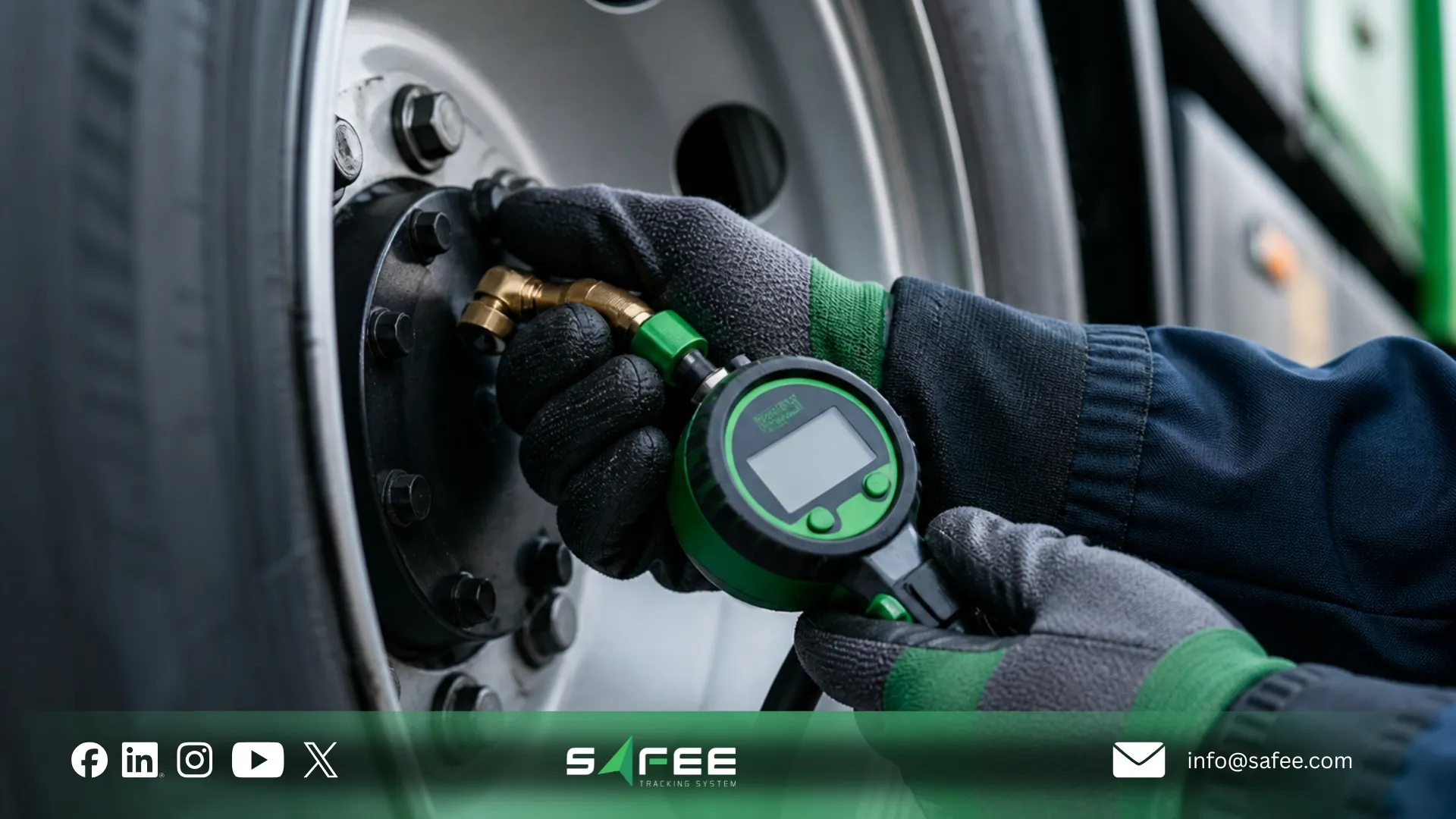
Fleet tire management can be supported by tyre pressure monitoring sensors, temperature sensors, vehicle telematics data, maintenance alerts, and reporting tools. The right setup depends on vehicle compatibility, hardware requirements, reporting needs, and how the team manages exceptions.
How quickly do fleet management cost savings show up?
Fleet management cost savings can begin showing operationally as soon as pressure exceptions are identified, assigned, and corrected. Financial proof takes longer because teams need baseline data, repeated checks, and trend reports. The fastest visible wins are usually fewer missed pressure issues, better inspection discipline, and clearer maintenance follow-up.
Is Safee suitable for fleet tyre management across GCC and global operations?
Yes. Safee is positioned for B2B fleets that need connected visibility, alerts, reports, maintenance workflows, and role-based review across the UAE, GCC, and wider global operations. The best setup depends on vehicle types, routes, tyre pressure monitoring needs, and reporting goals.