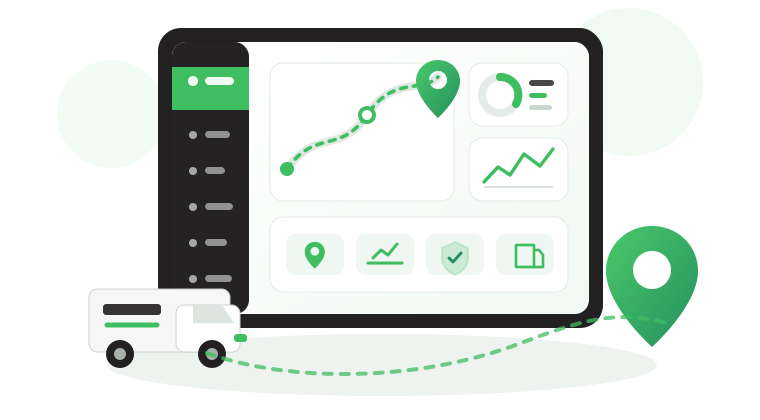
How Logistics Fleet Management Improves Supply Chain Control

A logistics fleet can look active while still losing control. Vehicles are moving, drivers are on the road, and deliveries are being completed, but managers may still deal with late ETAs, repeated customer calls, unplanned stops, fuel waste, driver fatigue, unclear accountability, and privacy concerns around how driver data is used.
For GCC logistics operators, UAE-based distribution teams, and global freight networks, these problems are rarely caused by one vehicle or one driver. They usually happen when fleet activity is disconnected from transport planning, warehouse operations, driver welfare policies, and reporting. That is where logistics fleet management becomes a business-control layer, not just a tracking screen.
In this guide, we explain how logistics fleet management connects live vehicle data with supply chain execution, driver welfare, privacy-aware monitoring, fleet and freight management, maintenance, and reporting. We also show how we at Safee help logistics, distribution, and supply chain teams build practical workflows across the GCC and wider international markets.
What is logistics fleet management?
Logistics fleet management is the process of managing vehicles, drivers, routes, depots, delivery schedules, shipments, alerts, maintenance, reports, and system integrations so freight moves safely, efficiently, and with clear operational evidence.
In a B2B logistics operation, fleet management logistics is not limited to locating vehicles on a map. It helps dispatch, operations, HR, HSE, customer service, finance, and senior management answer the questions that affect service quality and cost every day.
- Which vehicle is closest, available, and suitable for the next load?
- Which shipment is at risk because of late departure, route deviation, long stop, or vehicle downtime?
- Which driver is assigned to the journey and is the workload reasonable?
- Which depots are overloaded while others have spare capacity?
- Which routes create excessive idling, empty miles, or customer-site waiting time?
- Which events should be reviewed for coaching, safety, or operational improvement?
- Who can access driver and trip data, and for what purpose?
Why must logistics and fleet management work together?
Logistics and fleet management must work together because the supply chain plan only becomes real when the vehicle leaves the depot. A TMS may plan a load, a WMS may prepare the shipment, and an ERP may hold the order and customer data. Fleet data shows what actually happened during execution.
When fleet management in logistics is disconnected, teams depend on phone calls, driver messages, spreadsheets, and delayed reports. When it is connected, every route, stop, exception, ETA, driver assignment, and maintenance issue becomes part of a shared operating view.
Safee supports this operating model with Live Vehicle Tracking, Fleet Monitoring and Insights, alerts, reports, driver management, and journey workflows that help logistics leaders move from manual follow-up to governed control. Explore our essential modules for more details.
Also read: Best Fleet Management Software in Syria: Why Safee Fits Modern Fleets?
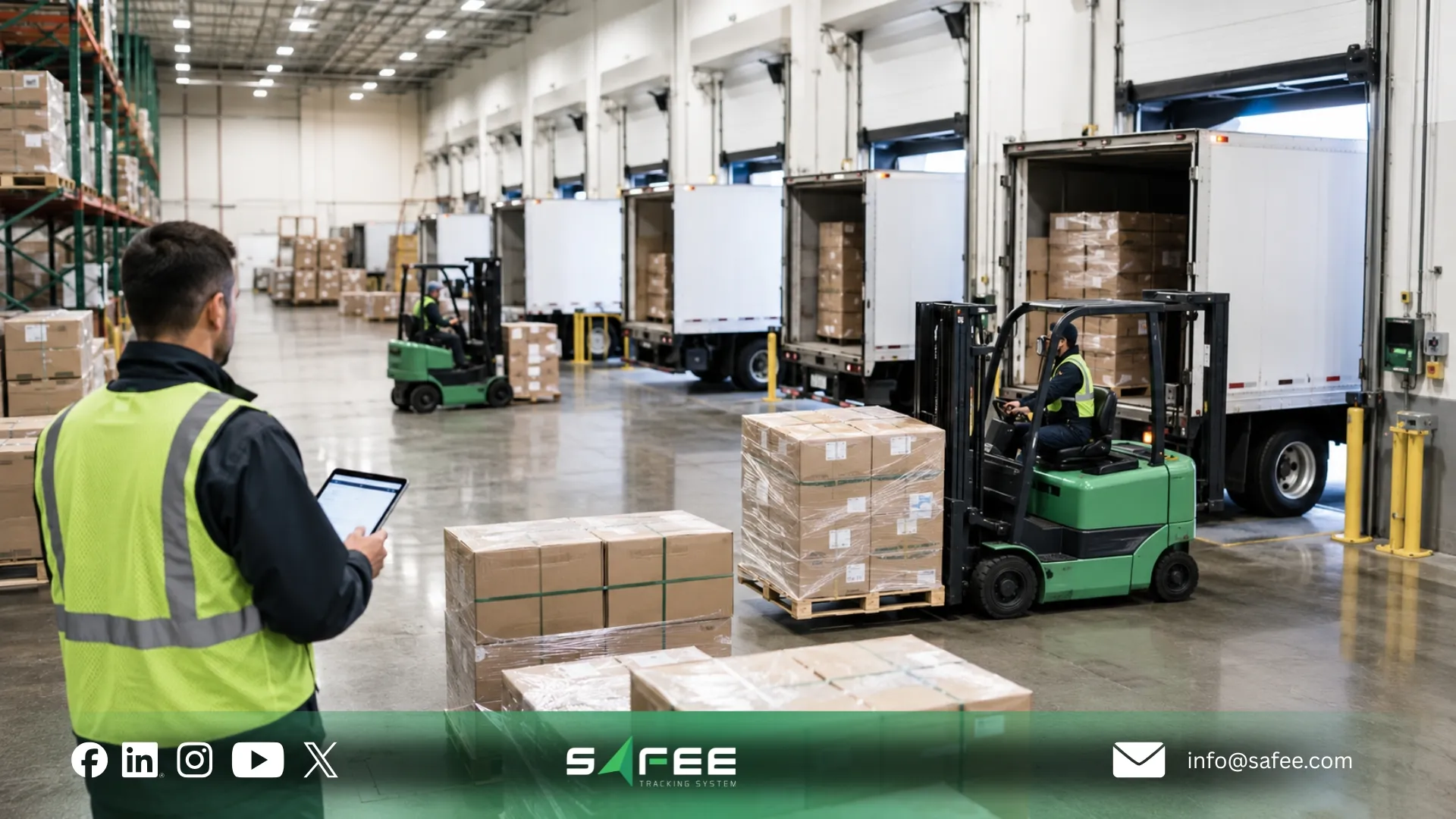
The missing layer in fleet management logistics
Driver welfare is a critical part of logistics fleet management because delivery pressure often lands directly on drivers. Tight windows, repeated urgent routes, long waiting time at customer sites, unplanned overtime, harsh driving expectations, and unclear escalation rules can create safety risks and staff dissatisfaction.
A welfare-aware setup should not treat telematics as surveillance. It should use fleet data to create fair rules, identify fatigue risks, reduce unnecessary pressure, support coaching, and protect both drivers and the business.
- Workload visibility: Review driving hours, repeated long routes, long shifts, and route intensity instead of judging drivers from isolated events.
- Fair incident review: Compare driver behavior events with route context, load type, delivery pressure, road conditions, and operational instructions.
- Fatigue and stop patterns: Use long-drive, long-idle, and abnormal stop patterns to guide escalation and scheduling decisions.
- Coaching over punishment: Use speeding, harsh braking, and idling data to build coaching plans, not blanket blame.
- Safer journey planning: Plan high-risk journeys, remote routes, night movements, or long-haul trips with stronger controls where needed.
To avoid this missing layer in your fleets, our Driver Management module helps connect drivers with assignments, behavior records, and review workflows, while the Journey Management System can support structured trip planning and monitoring for higher-risk routes.
Privacy-aware logistics fleet management
Privacy matters because logistics fleet management uses personal and operational data: driver identity, location, route history, behavior events, shift patterns, vehicle assignment, and sometimes customer-site or cargo-related records. For HR leads, HSE managers, and fleet leaders, the question is not only what the system can track. The question is how data should be governed.
At Safee, we always recommend treating privacy as part of deployment design. The goal is to give the right people the right operational evidence without creating unnecessary access, vague monitoring, or uncontrolled data use.
- Purpose limitation: Define why each data point is collected: safety, dispatch, maintenance, delivery proof, cost control, or compliance support.
- Role-based access: Give dispatch, HR, HSE, maintenance, finance, and leadership different access based on their responsibilities.
- Transparent policies: Explain to drivers what is monitored, why it is monitored, who reviews it, and how it affects coaching or escalation.
- Retention rules: Agree how long trip, location, driver behavior, and incident records are retained before deployment.
- Exception-based review: Focus human review on meaningful exceptions instead of continuously watching every driver movement.
- Audit discipline: Keep reporting structured so decisions are based on consistent evidence rather than screenshots or informal messages.
For teams that need structured evidence without excessive manual work, our Fleet Reporting and Fleet Control can support scheduled reports and management review workflows.
Real-time visibility for fleet logistics management
Fleet logistics management becomes stronger when operations teams can see live vehicle location, route progress, ETA, stop duration, depot movement, geofence activity, and active alerts. This visibility reduces manual calls and helps teams act before a delivery issue becomes a customer complaint.
- Dispatch can see which vehicle is available, delayed, or off-route.
- Customer service can give more accurate delivery updates.
- Warehouse teams can prepare loading bays or inbound receiving windows.
- HSE teams can review high-risk behavior trends with context.
- Managers can compare route performance and depot discipline from one reporting view.
With Safee, logistics teams can combine Live Vehicle Tracking with Alarms and Alerts for route deviation, geofence events, long stops, unsafe driving, unauthorized movement, maintenance triggers, and other operational exceptions.
Fleet and freight management
Fleet and freight management connects vehicle movement with shipment cost. Instead of reviewing freight spend only after delivery, logistics leaders can use operational data to identify the behaviors and bottlenecks that create avoidable cost.
- Empty or low-value miles after completed deliveries.
- Long waiting time at warehouses, ports, depots, or customer sites.
- Repeated route deviations or unplanned stops.
- Idling that increases fuel use and engine hours.
- Underused vehicles in one depot while another depot is overloaded.
- Maintenance downtime that forces urgent subcontracting or replacement vehicles.
- Driver behavior patterns that increase fuel, tire, brake, or safety risk.
Also read: 5 Fleet Management Cost Savings Tips for Higher GCC Fleet Performance
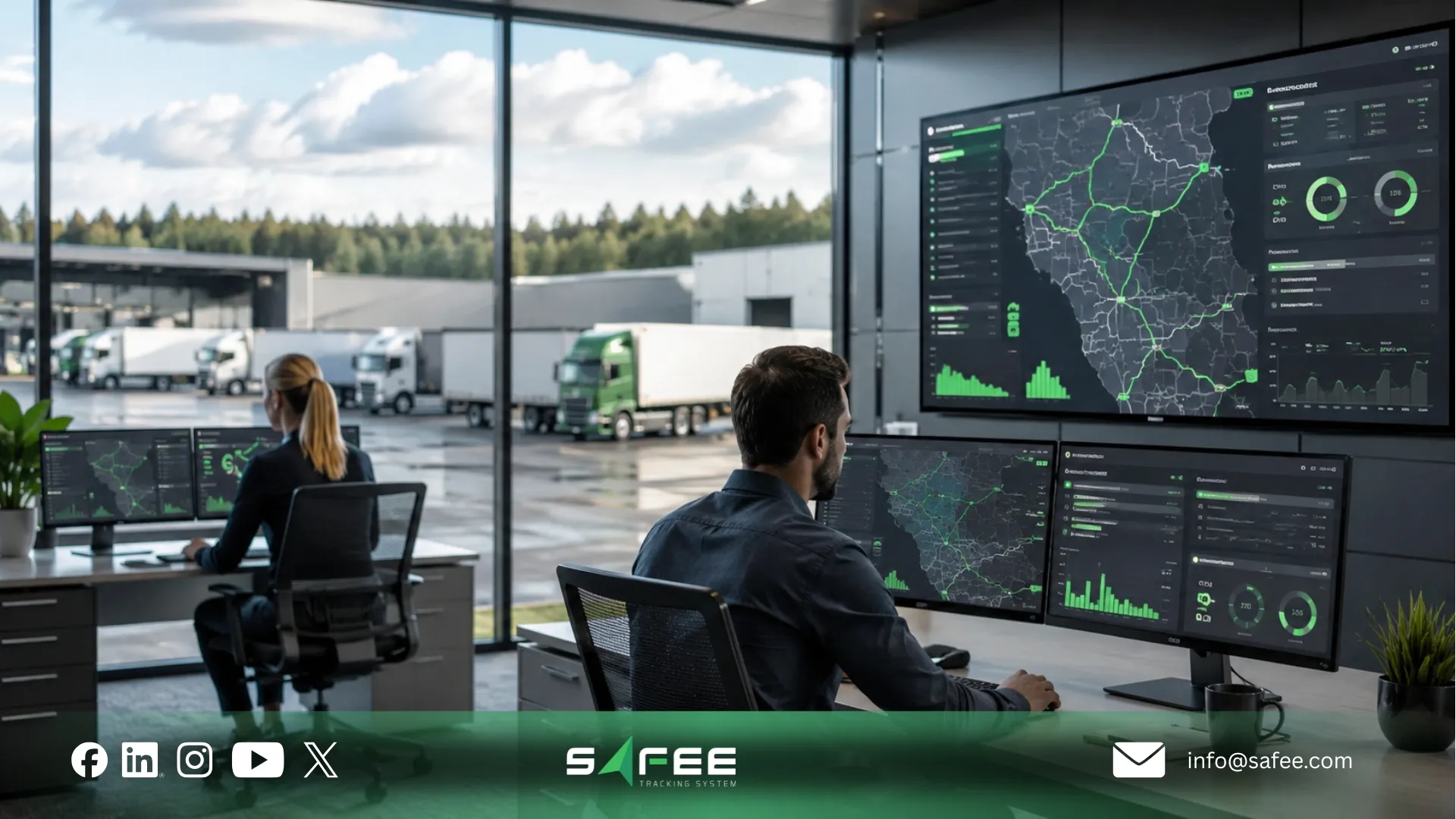
Distribution fleet management across warehouses, hubs and delivery zones
Distribution fleet management requires coordination between warehouses, hubs, vehicles, drivers, customer locations, route plans, and delivery zones. As the network grows, small visibility gaps become expensive: late departures, missed loading windows, repeated customer-site waiting, and unclear driver assignment.
- Vehicle assignment by depot, branch, or customer zone.
- Driver readiness and route assignment status.
- Loading, departure, arrival, and dwell-time records.
- Geofences for warehouses, hubs, yards, depots, and customer locations.
- Delivery exception alerts and escalation ownership.
- Maintenance readiness before vehicles are assigned to critical routes.
- Reports that compare depot performance by route, shift, or delivery lane.
For GCC distributors and global logistics operators, this shared view helps operations, warehouse, customer service, and management teams work from the same evidence instead of separate spreadsheets and driver calls.
Fleet management in supply chain management
Fleet management in supply chain management reduces the gap between what was promised to the customer and what happened on the road. It connects transport planning, delivery execution, driver activity, depot flow, and exception reporting.
A stockout or failed delivery can start with a fleet issue: a vehicle leaves late, waits too long at a warehouse, breaks down, misses a route checkpoint, or arrives after the receiving window. Integrated logistics fleet management gives teams early warning and clearer escalation paths.
- Late departure alerts before routes fall behind schedule.
- ETA monitoring for customer service and receiving teams.
- Geofence entry and exit records for depots, hubs, and customer sites.
- Route deviation alerts that show when planned movement has changed.
- Maintenance alerts before vehicle downtime disrupts delivery promises.
- Driver assignment visibility so teams know who owns the journey.
- Reports that connect delivery exceptions with route, vehicle, driver, depot, and maintenance data.
Integrating logistics fleet management with TMS, WMS and ERP systems
Logistic fleet management creates more value when it integrates with the systems that already manage orders, warehouses, routes, billing, and customer records. The goal is not to create another data silo. The goal is to connect fleet execution with business decisions.
Before integration, teams should define the source of truth for vehicles, drivers, shipment IDs, route IDs, customer locations, delivery status, cost centers, ETA updates, and exception codes. This prevents duplicate work and reduces reporting conflict between systems.
- TMS integration: Connect shipment plans, route IDs, delivery milestones, and ETA updates.
- WMS integration: Connect warehouse loading, departure, dock activity, and receiving events.
- ERP integration: Connect customer, order, invoice, cost center, and management reporting data.
- API or export workflows: Define whether data moves in real time, on a schedule, or through approved exports.
- Data governance: Assign ownership for corrections, missing fields, privacy review, and audit trails.
Also read: Fleet Management in UAE: What Every Logistics Company Must Set Up First

Maintenance and vehicle readiness in logistics fleet management
A delivery plan can fail even when the route is correct if the vehicle is not ready. Maintenance visibility is therefore central to logistics fleet management. It helps teams identify overdue service, repeated defects, downtime risk, and vehicle availability before a critical shipment is assigned.
- Schedule maintenance by date, distance, engine hours, or other configured rules.
- Review open defects before assigning vehicles to priority routes.
- Track downtime and repeated issues by vehicle, depot, or route type.
- Connect maintenance exceptions with route reliability and freight cost.
- Give maintenance teams the reports they need without exposing unnecessary driver data.
Our Maintenance Module supports service scheduling, alerts, and follow-up workflows so logistics teams can reduce avoidable disruption and keep vehicles ready for daily operations.
Cold chain and sensitive cargo visibility
For cold chain, food, pharmaceutical, or sensitive cargo operations, logistics fleet management may also need temperature, humidity, door, weight, or other sensor data. These signals should be linked with location, route, driver assignment, and alerts so teams can act quickly when cargo conditions move outside policy.
For temperature-critical logistics, Our Temperature Sensors can support monitoring workflows when configured as part of the broader fleet management system.
KPIs that logistics fleet management should measure
The most useful KPIs connect operational reality with decision-making. A B2B logistics dashboard should help managers act, not only observe.
KPI | What Fleet Data Shows | Why It Matters |
On-time delivery rate | Actual departure, route progress, arrival, and delay events | Improves customer service and delivery reliability |
ETA accuracy | Live movement, long stops, route deviation, and traffic-related exceptions | Helps customer service and planning teams communicate earlier |
Empty miles | Movement without productive freight or return-load activity | Supports better backhaul planning and asset utilization |
Depot dwell time | Time spent at warehouses, hubs, yards, and customer sites | Reveals loading, unloading, waiting, and handover bottlenecks |
Driver workload | Driving hours, long shifts, repeated route intensity, and exception patterns | Supports driver welfare, fatigue management, and fair coaching |
Maintenance impact | Downtime, overdue service, repeated defects, and vehicle availability | Protects service reliability and reduces avoidable disruption |
Cost per route | Distance, idling, stops, vehicle use, and driver time | Connects operational behavior with freight cost control |
Why choose Safee for logistics fleet management?
At Safee, we help logistics, distribution, transport, and supply chain teams build operational control around real vehicles, real drivers, real routes, and real reporting needs. As a UAE-based fleet technology provider serving B2B operators across the GCC and wider international markets, we focus on practical deployment rather than generic tracking claims.
For logistics teams, our solutions support the core workflows that turn fleet data into better operational decisions:
- Live Vehicle Tracking for real-time location, route progress, geofences, ETA support, and trip visibility.
- Fleet Monitoring and Insights for map-based operations, filtering, dashboard views, and faster situational awareness.
- Alarms and Alerts for route deviation, geofence, long stop, unsafe driving, idling, unauthorized movement, and maintenance exceptions.
- Driver Management for driver assignment, behavior review, accountability, and welfare-aware coaching workflows.
- Journey Management System for structured trip planning, route control, high-risk journeys, and post-journey review.
- Maintenance Module for service schedules, downtime visibility, recurring defects, and readiness follow-up.
- Fleet Reporting for scheduled reports, KPI dashboards, management review, and privacy-aware evidence trails.
- Mobile App for managers and supervisors who need visibility outside the office.
A practical Safee workflow for logistics and fleet management
- Define depots, vehicles, routes, drivers, delivery zones, customer locations, cargo types, and reporting owners.
- Configure live tracking, geofences, route views, ETA needs, and exception categories.
- Define fair use of driver behavior data, fatigue indicators, workload review, and coaching rules.
- Set user roles, access permissions, data-retention rules, and reporting responsibilities.
- Assign owners for late departures, route deviations, long stops, unsafe driving, maintenance issues, and cargo-condition exceptions.
- Use reports to review on-time delivery, ETA accuracy, depot dwell time, empty miles, vehicle utilization, driver workload, and maintenance impact.
- Refine routes, schedules, depot processes, driver coaching, maintenance priorities, and system integrations based on evidence.
Build a logistics fleet management workflow with Safee
Logistics fleet management becomes most valuable when it connects vehicles, drivers, routes, depots, alerts, maintenance, reports, and privacy-aware governance into one operating model. If your team is managing logistics operations across the UAE, GCC, or global delivery networks, Safee can help you design a practical workflow around real-time visibility, driver welfare, privacy, freight cost control, and supply chain execution. Contact us to discuss your fleet size, routes, integration needs, reporting priorities, and deployment plan.
FAQs about logistics fleet management
What is logistics fleet management?
Logistics fleet management is the process of managing vehicles, drivers, routes, depots, deliveries, alerts, maintenance, reporting, and system integrations so freight can move safely, efficiently, and with clear operational visibility.
How is logistics fleet management different from basic vehicle tracking?
Basic tracking shows where vehicles are. Logistics fleet management connects vehicle movement with shipments, depots, delivery windows, driver assignment, exceptions, maintenance, KPIs, privacy rules, and supply chain workflows.
Why does driver welfare matter in fleet management logistics?
Driver welfare matters because unsafe pressure, fatigue, long waits, unclear route expectations, and unfair incident review can affect safety, retention, and service quality. A good system uses driver data for fair coaching, workload visibility, and risk reduction, not constant surveillance.
How should logistics companies handle driver privacy in fleet software?
Logistics companies should define why data is collected, who can access it, how long it is retained, how drivers are informed, and when data is reviewed. Role-based access, transparent policies, exception-based review, and scheduled reports help reduce privacy risk.
What KPIs should distribution fleet management software track?
Distribution fleet management software should track on-time delivery, ETA accuracy, route adherence, depot dwell time, empty miles, vehicle utilization, driver workload, idling, maintenance downtime, delivery exceptions, and cost per route or shipment.
Can logistics fleet management integrate with TMS, WMS and ERP systems?
Yes, logistics fleet management can support integration with TMS, WMS, ERP, and reporting systems through APIs, exports, imports, or configured workflows. The exact setup depends on data fields, source-of-truth rules, user permissions, security, and reporting needs.
Ready to improve your fleet operations?
Tell us what you would like to improve. A Safee specialist will reply by email.
Usually replies within one business day • No sales spam
Your details are used only to respond to your request. Privacy Policy