

What Are the 7 Fleet Management Tasks That Matter Most?
If your fleet still handles maintenance, driver issues, trip updates, fuel reviews, and exceptions through separate spreadsheets, calls, and chat threads, the problem is not just workload. The real problem is fragmentation. Tasks may get completed, but not with enough speed, traceability, or control. For B2B fleets across the GCC, that gap quickly turns into downtime, delayed decisions, weak accountability, and unnecessary cost.
In this guide, we break down the seven fleet management tasks that matter most, explain where manual coordination starts to fail, and show how we at Safee help B2B fleets move toward stronger operational control.
As a UAE-based fleet technology company serving operators across the GCC and supporting wider international operations, we focus on turning routine fleet activities into structured, visible, and accountable workflows.
What are fleet management tasks?
Fleet tasks are the recurring operational, administrative, and control activities required to keep vehicles, drivers, and fleet workflows running efficiently. In practice, they cover the work needed to keep assets available, drivers accountable, trips controlled, costs visible, and decisions well documented.
These tasks usually span several areas at once:
- Vehicle readiness, including inspections, service planning, and maintenance follow-up
- Driver oversight, including behaviour review, coaching, and policy enforcement
- Dispatch and trip coordination, including route planning and service coverage
- Fuel and operating cost control, including waste detection and trend tracking
- Compliance and governance, including records, accountability, and reporting discipline
- Incident handling, including delays, breakdowns, route deviations, and escalation
- Performance review, including utilization, downtime, and improvement priorities
In many organizations, fleet activities are shared across operations, logistics, finance, HSE, and management. That is why fleet management tasks should not be treated as isolated actions.
For GCC fleets and multi-country operations in particular, task consistency matters because route conditions, heat, distance, site requirements, and reporting expectations can increase operational pressure very quickly.
A mature fleet team does not just manage vehicles. It manages service continuity, accountability, and decision quality across the full operating cycle. Contact us to help you
Also read: IoT Fleet Management: A Complete Guide to Fleet Management IoT for Modern Fleets

The 7 most important fleet management tasks
Not every fleet works the same way, but the most important fleet management tasks usually fall into the same seven operating areas.
These are the activities that most directly affect uptime, cost control, safety, and managerial visibility.
1. Vehicle maintenance planning and control
Maintenance is one of the most important fleet tasks because it directly affects uptime, safety, and total operating cost. This includes preventive maintenance planning, service history tracking, inspection follow-up, repair coordination, and overdue-action visibility.
When maintenance is handled inconsistently, fleets face avoidable downtime, delayed service delivery, and weaker asset reliability. A controlled process helps managers know what was completed, what is overdue, and what needs action next. If maintenance discipline is one of your biggest pressure points, explore our Maintenance Management module for a more structured workflow.
2. Driver monitoring and accountability
Drivers have a direct effect on safety, fuel consumption, asset wear, and customer service. Monitoring trip activity, idle time, speeding, harsh events, unauthorized use, and repeated policy exceptions helps managers move from assumptions to evidence.
This is not only about discipline. It is also about fairness, coaching, and consistency. When driver oversight is weak, the same issues repeat without follow-up. When it is structured, supervisors can identify patterns early and respond with better guidance and stronger accountability. Safee supports this through Fleet Monitoring & Insights and complementary driver-focused tools across its platform.
3. Fuel usage oversight
Fuel is often one of the most closely watched fleet costs, especially in high-utilization GCC fleets where route inefficiency, excessive idling, and unauthorized use can compound quickly. One of the most valuable fleet activities is understanding where fuel is being consumed efficiently and where waste is creeping into the operation.
Fuel control should not rely on invoices alone. Fleet teams need operational context: trip history, idle patterns, driver behaviour, vehicle usage, and exceptions that explain why one route, unit, or team performs differently from another. For a deeper look at this area, read our guide to fleet fuel management systems.
4. Dispatch, routing, and utilization management
Fleet managers need to know whether assets are being deployed correctly, whether routes are practical, and whether utilization matches business demand. This includes trip assignment, route adherence, turnaround awareness, utilization review, and workload balance across vehicles and teams.
A fleet with weak utilization control often ends up with some vehicles overused while others remain underused. Over time, that creates uneven wear, poor planning, and inaccurate resource decisions. For organizations managing high trip volumes or more structured trip approvals, Safee’s Journey Management System adds a stronger control layer.
5. Safety and compliance governance
Safety and governance tasks cover inspection readiness, policy enforcement, documentation control, event review, and the reporting structure needed to support internal accountability. In regulated environments, these responsibilities become even more important because missed follow-up can affect both operational continuity and risk exposure.
Teams should avoid treating compliance as a one-time checklist. The stronger model is a repeatable governance process with documented ownership, review cadence, and traceable actions. This matters across the GCC, where many fleets operate under tighter reporting and control expectations than simple manual logs can support.
6. Incident and exception management
Breakdowns, delays, unauthorized trips, route deviations, driver alerts, and service disruptions all need a defined response workflow. A strong exception-management process helps teams identify issues quickly, assign ownership, document what happened, and track whether follow-up was completed.
This is one of the most overlooked fleet management tasks. Many teams notice problems, but they do not capture them in a way that supports action, escalation, or learning. Safee’s Alarms and Alerts module is built around this exact need: identifying issues early enough for managers to act before they become bigger operational failures.
7. Reporting and performance improvement
Fleet operations generate a constant stream of decisions. Without reporting, managers react to problems instead of managing them. Useful reporting turns daily activity into visibility on trends, priorities, and improvement opportunities.
This usually includes recurring review of:
- Fuel trends
- Utilization levels
- Alerts and exceptions
- Maintenance status
- Driver behaviour patterns
- Operational follow-through
- Vehicle uptime and downtime
Good reporting does not just summarize activity. It supports decisions. Our Fleet Reporting module helps teams turn raw operational data into more actionable management reviews.
If your team is trying to decide which fleet tasks need the fastest improvement, request a Safee demo and map those priorities into clearer dashboards, alerts, and workflows.
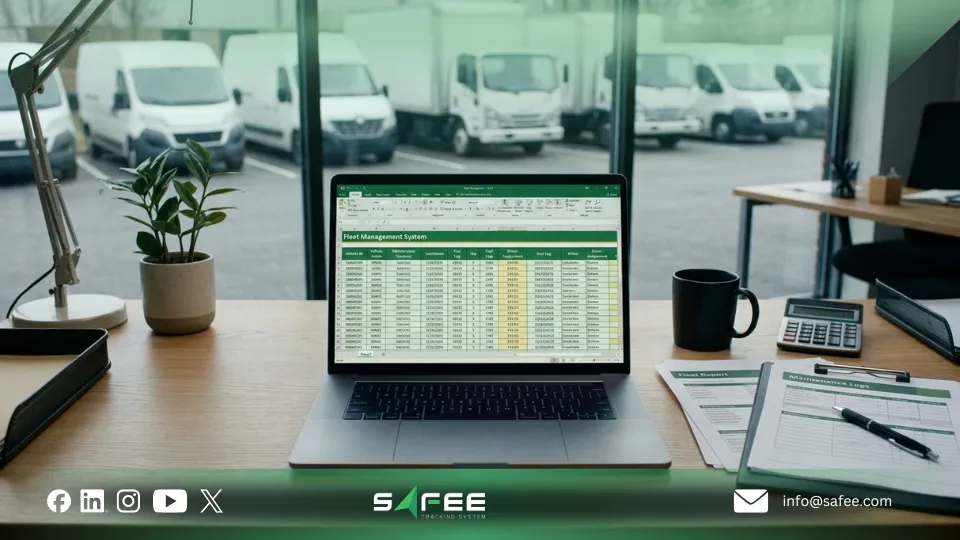
Also read: Excel Fleet Management: Benefits, Limits & Smarter Alternatives for Modern Fleets
How do digital solutions simplify fleet management tasks?
Digital tools simplify fleet management tasks by replacing fragmented manual follow-up with live visibility, automated alerts, centralized records, and more structured reporting.
Instead of chasing updates across spreadsheets, calls, and disconnected systems, fleet teams can work from one operational view.
They improve visibility
When managers can see vehicle status, trip activity, route behaviour, and asset movement in one place, they can respond faster and make better decisions. Visibility reduces blind spots and helps teams identify issues before they become larger operational problems.
They support alert-based management
Alerts help teams focus on the events that actually need attention, such as excessive idling, route deviation, unauthorized movement, delayed maintenance, or abnormal driving behaviour. That turns fleet tasks into manageable workflows rather than passive records.
They strengthen maintenance discipline
Digital maintenance tracking makes it easier to manage service intervals, inspection findings, maintenance history, and overdue actions. Instead of relying on memory or fragmented logs, teams can follow a repeatable process.
They make reporting more practical
Many organizations collect fleet data but struggle to turn it into decisions. Digital reporting helps managers move from raw activity to decision-ready insights that support weekly reviews, monthly reporting, and targeted action.
They improve auditability and governance
A strong fleet platform should support role-based access, traceable actions, and consistent review discipline. That becomes especially important when multiple teams, depots, or countries rely on the same operational data.
A practical evaluation framework looks like this:
Evaluation area | What to look for |
Operational visibility | Vehicle status, trip history, live activity, asset tracking |
Alerts and exceptions | Configurable alerts, ownership, escalation, follow-up |
Maintenance support | Service records, inspection tracking, overdue visibility |
Reporting | Customizable reports, recurring review cadence, exports |
Governance | Role-based access, audit trails, policy support |
Deployment fit | Scalability, onboarding support, configuration flexibility |
Integration readiness | Ability to connect with wider operational systems |
If you are comparing tools today, start with our Essential Modules and then review related guides on telematics vehicle tracking and moving from manual workflows to digital fleet management.
Also read: Fire Service Fleet Management Software for GCC Fleets
Fleet management tasks: In-house vs. outsourcing
One of the most important operating decisions is whether fleet management tasks should remain fully in-house, be outsourced, or follow a hybrid model.
There is no universal answer. The right model depends on fleet size, operational complexity, internal expertise, reporting expectations, and how closely fleet performance affects service delivery.
- In-house management gives your team direct control over policies, response times, reporting formats, and priorities. It works well when the fleet is strategically important and internal teams are ready to manage maintenance, driver oversight, dispatch discipline, and governance.
- Outsourcing can help when internal resources are limited or when the business needs specialized support for administrative control, maintenance coordination, or structured reporting. The trade-off is usually lower direct day-to-day control.
- A hybrid model is often the most practical option. In this approach, the organization keeps control-heavy responsibilities in-house, such as policy, risk oversight, and management reporting, while outsourcing selected execution tasks.
A simple comparison:
Model | Best fit for | Main advantage | Main trade-off |
In-house | Fleets needing close operational control | Strong ownership and internal visibility | Higher management workload |
Outsourcing | Teams with limited internal bandwidth | Access to external support | Less direct day-to-day control |
Hybrid | Fleets balancing control and efficiency | Flexible division of responsibilities | Requires clear governance |
Before choosing a model, ask:
- Which fleet tasks are core to operational control?
- Which activities create the most internal strain today?
- Do we need faster execution, stronger reporting, or both?
- Which tasks require internal decision-making authority?
- Where do delays or visibility gaps happen most often?
- What level of auditability do we need?
- Who owns alerts, exceptions, and escalation?
- How will performance be reviewed consistently?
For many B2B fleets, the goal is not simply to outsource work. It is to keep visibility and governance strong while improving execution.
Also read: Dealership Loaner Fleet Management: Track Courtesy Cars and Reduce Misuse
Best practices to improve fleet management tasks
Improving fleet management tasks is usually less about working harder and more about building repeatable processes. The strongest fleets are not simply busy. They are structured.
Standardize task ownership
Every major fleet activity should have a clear owner. Maintenance, driver follow-up, reporting, incident handling, alert review, and policy checks should not sit in a grey area.
Set review cadences
Fleet teams need operating rhythms. Daily exception checks, weekly operational reviews, and monthly performance reporting create discipline. Without review cadence, even good data becomes inactive.
Use alerts selectively
Too many alerts create noise. Too few create blind spots. The right approach is to define which alerts matter, who receives them, what action is expected, and how follow-up is tracked.
Connect data to action
Data only becomes useful when it changes behaviour. If a report shows repeated idling, route deviation, or delayed maintenance, the team should already know the next action.
Maintain clean records
Vehicle lists, driver assignments, service histories, and exception logs should be updated consistently. Poor data quality weakens every later decision.
Align policies with operations
Fleet policies should be realistic enough to follow and strict enough to govern behaviour. A policy that is never reviewed operationally eventually becomes symbolic rather than effective.
Train managers, not only drivers
A fleet program improves faster when supervisors know how to interpret alerts, read reports, coach fairly, and escalate correctly. Management capability is a major part of fleet performance.
A practical checklist:
- Define the top fleet tasks by business impact
- Assign an owner to each task
- Set a review frequency for each task
- Decide which alerts require action
- Create a simple escalation path
- Review recurring exceptions monthly
- Track whether reports lead to action
- Update policies when field conditions change
For GCC fleets building more disciplined operating rhythms across sites, routes, or business units, contact Safee to discuss the right reporting and governance setup.
Also read: Public Works Fleet Management: Keep Field Services Ready and Accountable

How Safee’s fleet management software streamlines fleet management tasks
At Safee, we help organizations streamline fleet management tasks by bringing visibility, alerts, reporting, and control into one operational workflow. Instead of managing fleet activities through disconnected tools and manual follow-up, teams can work from a more structured system built for day-to-day decision-making.
For operations teams, that means better awareness of vehicle movement, trip history, and asset usage. For managers, it means clearer follow-up on exceptions, easier access to reports, and stronger operational accountability. For governance-focused stakeholders, it means traceability, ownership, and more organized review processes.
Our platform supports fleet tasks across the full management cycle:
- Visibility and monitoring: Fleet Monitoring & Insights gives teams stronger day-to-day awareness of live operations.
- Exception response: Alarms and Alerts helps managers act on problems while they are still fixable.
- Maintenance discipline: Maintenance Management supports planned service and overdue-action control.
- Reporting and review: Fleet Reporting turns activity data into management visibility.
- Trip governance: Journey Management System helps organizations apply more structured trip planning and control.
- Mobile access: the Safee mobile app extends visibility and response beyond the office.
This matters because fleet management tasks are rarely solved by tracking alone. They improve when data is connected to decisions, ownership, and follow-through. That is where we add value at Safee: not only by showing activity, but by helping B2B fleets across the GCC — and operations with wider international footprints — run more disciplined and scalable workflows.
If your current setup still depends on spreadsheets, delayed reports, and manual follow-up, start with these next steps:
- Review our website to understand the platform structure
- Compare relevant modules through the Essential Modules page
- Explore related guides on digital fleet management, fleet telematics, and small business fleet software
- Request a demo or contact Safee for a discussion tailored to your fleet structure
Why do modern fleets need better control over fleet management tasks?
The problem is not that fleet teams do not know what needs to be done. The problem is that too many important tasks are still managed through fragmented processes that make follow-up harder than it should be.
Fleet management tasks become more valuable when they are visible, assigned, reviewed, and measured. That is the difference between a fleet that records activity and a fleet that controls operations.
For B2B fleets in the GCC, where uptime, accountability, cost control, and service reliability carry immediate business consequences, that distinction matters even more. And for organizations managing wider international operations, the need for structured workflows only grows as complexity increases.
If your fleet is ready to move beyond fragmented task management, book a conversation with Safee and see how we can help you build stronger visibility, reporting, and control.
Ready to improve your fleet operations?
Tell us what you would like to improve. A Safee specialist will reply by email.
Usually replies within one business day • No sales spam
Your details are used only to respond to your request. Privacy Policy