
How to Evaluate IVMS in Oman for High-Risk Fleet Operations
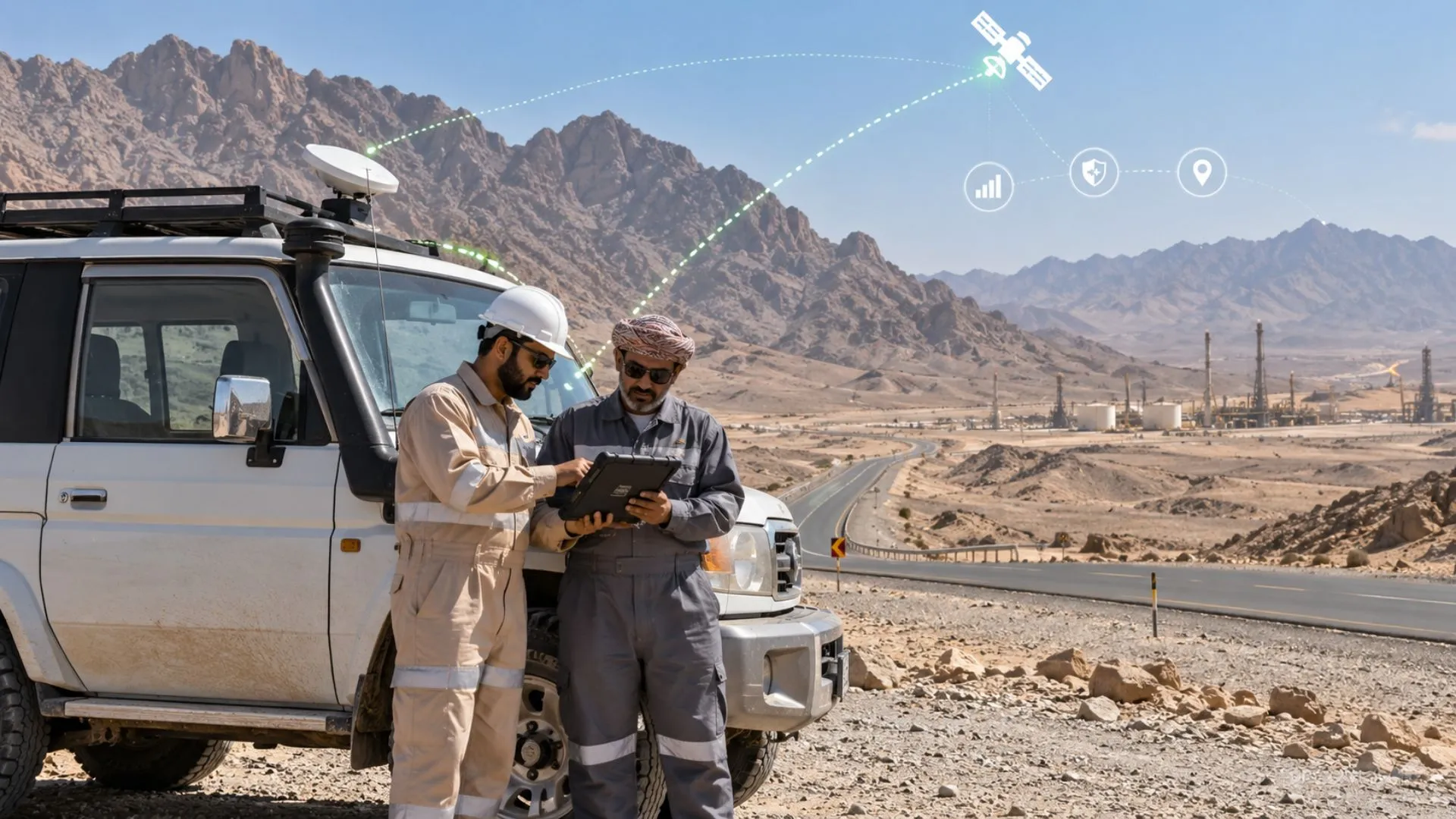
When a fleet crosses remote roads, Oil & Gas sites, long-distance routes, or client-controlled areas in Oman, the operational risk is rarely limited to knowing where a vehicle is. Fleet and HSE teams also need to know whether a journey was approved, whether a driver-safety event occurred, whether the driver received a warning, whether Operations received the event in time, and what evidence is available for review. That is why IVMS in Oman becomes an operating-control question, not simply a tracking-device purchase.
This guide explains how IVMS Oman requirements can be evaluated alongside journey control, fatigue management, driver monitoring, video evidence, reporting, and remote-route communications. You will see how Safee’s Video-iVMS, Driver Monitoring System (DMS), Advanced Driver Assistance Systems (ADAS), Journey Management System (JMS), Live Vehicle Tracking, Alarms and Alerts, Fleet Reporting, and SatComm can support a connected workflow, while the final configuration is still checked against the client contract, current HSE requirements, hardware, and the operating environment.
For a closer look at video-backed fleet safety, read Safee’s Video IVMS guide.
What does IVMS in Oman add to high-risk fleet operations?
For a high-risk fleet, the value of IVMS is not the number of data points it collects. The value is whether the data helps Fleet, Operations, and HSE make a defensible decision before, during, or after a journey.
That distinction matters in oil and gas fleet management Oman operations. A vehicle may be moving through a remote route under an approved journey, a client HSE procedure, restricted operating hours, driver-readiness rules, and defined escalation responsibilities. A map position tells you where the vehicle is; it does not, on its own, explain why a safety event happened or what the responsible team should do next.
At Safee, our Video-iVMS Module adds video and AI-supported safety context to Telematics. Depending on the selected device and configuration, Safee documents live video, AI-powered alerts, event recording, and video-backed incident review. Our Driver Monitoring System (DMS) supports detection of events such as fatigue or drowsiness, distraction, phone use, smoking, and seatbelt non-compliance, while Advanced Driver Assistance Systems (ADAS) supports road-facing events such as lane departure, forward-collision risk, pedestrian crossings, speed violations, and sudden braking.
For HSE and Operations, the useful workflow is straightforward: vehicle movement creates context; a safety event creates an exception; video or telematics evidence helps the team review it; the responsible person applies the agreed response; and the outcome is recorded for reporting or follow-up. This is more useful than collecting alerts that are never connected to a journey, driver, owner, or closure process.
If your Oman contract includes IVMS, journey-control, or driver-safety requirements, ask Safee to demonstrate the workflow using the events, users, reports, and escalation rules your HSE team will actually manage.
IVMS in Oman compared with location tracking alone
Location tracking remains essential because it answers operational questions such as where the vehicle is, whether it is moving, which route it travelled, whether it entered or left a Geofence, and whether the tracking unit is communicating.
Our Live Vehicle Tracking provides the location and operating context required for this layer of control, while Safee’s wider monitoring environment can expose vehicle status, driver-assignment context, Geofences, supported violations, alarms, and communication-related information according to the connected hardware and configuration.
IVMS in Oman adds a second layer of questions that matters to HSE and safety management:
- Was the driver warned locally inside the vehicle?
- Which driver and vehicle were associated with it?
- Did Operations or HSE receive a fleet-side alert?
- Was a supported driver or road-safety event detected?
- Was the event reviewed against the organization’s policy?
- What video or Telematics context is available around the event?
- Was fatigue, drowsiness, distraction, or another configured event identified?
- Does the evidence require coaching, investigation, escalation, or no further action?
This is where Video-iVMS differs from location-only tracking. Video and DMS/ADAS data can add event context; location data adds route and movement context; and Journey Management System (JMS) adds the governance around why the journey was approved, which route was expected, and which controls applied.
The stronger evaluation question is therefore not “Does the system track the vehicle?” It is: Can your team connect the journey, vehicle, driver, event, evidence, alert, response, and closure in one governed operating process?
For more detail on how Safee connects video events with fleet safety review, see AI Driver Behavior Analysis for Safer Fleets.
When OPAL IVMS requirements apply to a client contract
Safee states that its platform integrates advanced features designed to meet OPAL Oil & Gas standards. That makes OPAL IVMS an important evaluation topic for Oil & Gas operators, contractors, and subcontractors working under relevant requirements in Oman. It should not, however, be treated as a blanket statement that every fleet, every vehicle, or every project in Oman is governed by the same OPAL scope.
The first procurement task is to identify the governing requirement. Fleet, HSE, Procurement, and the contract owner should confirm the contracting client, activity, vehicle classes, driver categories, journey types, applicable HSE documents, current OPAL-related references, required IVMS functions, event types, fatigue controls, reporting obligations, journey-management requirements, escalation responsibilities, and remote-connectivity expectations.
That distinction protects the buyer from a common mistake: treating a technology label as if it were a contractual obligation. A configured Video-iVMS solution may be capable of detecting a supported event, but the governing procedure determines whether the event must be reviewed, who receives it, what evidence is retained, how quickly it is escalated, and what corrective action follows.
There is also a separate national transport context. Oman’s Ministry of Transport, Communications and Information Technology describes an Electronic Tracking System project under Ministerial Decision No. 47/2023 for land transport vehicles. That regulatory tracking requirement should be checked separately from OPAL or client-specific Oil & Gas requirements rather than merging them into one generic “IVMS compliance” claim.
At Safee, we can provide the technical fleet-management environment. Your client, contract, HSE procedure, applicable authority, and current standard define the operating rule. For broader sector evaluation, our Oil and Gas Fleet Management Software guide explains how journey control, driver safety, reporting, maintenance, and remote operations fit together.
For an Oman Oil & Gas deployment, bring our experts the relevant IVMS and journey-management clauses from your contract. The proposed configuration can then be mapped against documented requirements instead of relying on a generic “OPAL-ready” checklist.
Managing driver risk with journey management Oman
Journey management Oman teams make risk decisions before a vehicle moves, while it is on the road, and after the journey closes. If any of those stages is missing, an IVMS event can arrive without enough operational context to support a consistent response.
Before departure, the organization may need to confirm that the journey is necessary, the driver and vehicle are ready, the route is suitable, the relevant hazards are understood, and the required approval has been obtained. During the journey, Operations needs visibility into progress, deviations, stops, alerts, and communication gaps. After the journey, Fleet or HSE may need a traceable record for review, investigation, reporting, or improvement.
Our Journey Management System (JMS) is designed around journey planning, risk assessment, approval, route controls, monitoring, and driver/vehicle readiness. In practice, the workflow should move from journey request and risk assessment to approval, dispatch, monitoring, exception handling, closure, and review, with each stage assigned to the appropriate operational owner.
That is why IVMS evidence becomes more valuable when it sits inside journey governance rather than beside it. If you want a deeper explanation of this operating model, read our article on how Journey Management System simplifies trips.
Driver fatigue management in Oman under the applicable policy
Driver fatigue management Oman should not be reduced to a camera alarm. Fatigue management is the operating policy; fatigue detection is one technical input that can support that policy.
Your fatigue-management process may include driver readiness, working or driving periods, rest requirements, journey risk, route conditions, supervisor decisions, stop-work rules, and escalation when fatigue risk is identified. Which controls apply should come from the current client, employer, HSE, contractual, and legal requirements relevant to that operation.
Safee can support different parts of that control model. Journey Management System (JMS) can bring driver readiness and journey-risk factors into the pre-trip workflow. Safee’s reporting environment can also provide time-and-activity information such as driving hours and workload distribution where the required data is available. Separately, our Driver Monitoring System (DMS) can detect supported signs associated with fatigue or drowsiness and generate driver warnings and fleet-side events.
These functions should remain connected but distinct. A rest-policy decision asks whether the driver is eligible to start or continue the trip under the applicable rule, whether required rest has been recorded or verified, whether route risk requires additional controls, and what the supervisor must do if the requirement is not met. Fatigue detection asks whether the configured DMS identified a fatigue-related indicator during driving, whether the driver was warned, whether the event reached the appropriate team, and what the organization’s policy requires next.
A driver may comply with a scheduled rest rule and still become fatigued during the journey. Conversely, the absence of a DMS alert does not prove that every fatigue-policy condition was met. HSE should therefore treat policy, journey governance, and detection as three connected control layers rather than using one as a substitute for the others.
Driver monitoring system in Oman for event review
A driver monitoring system Oman deployment should be judged by what your team can do after an event is detected.
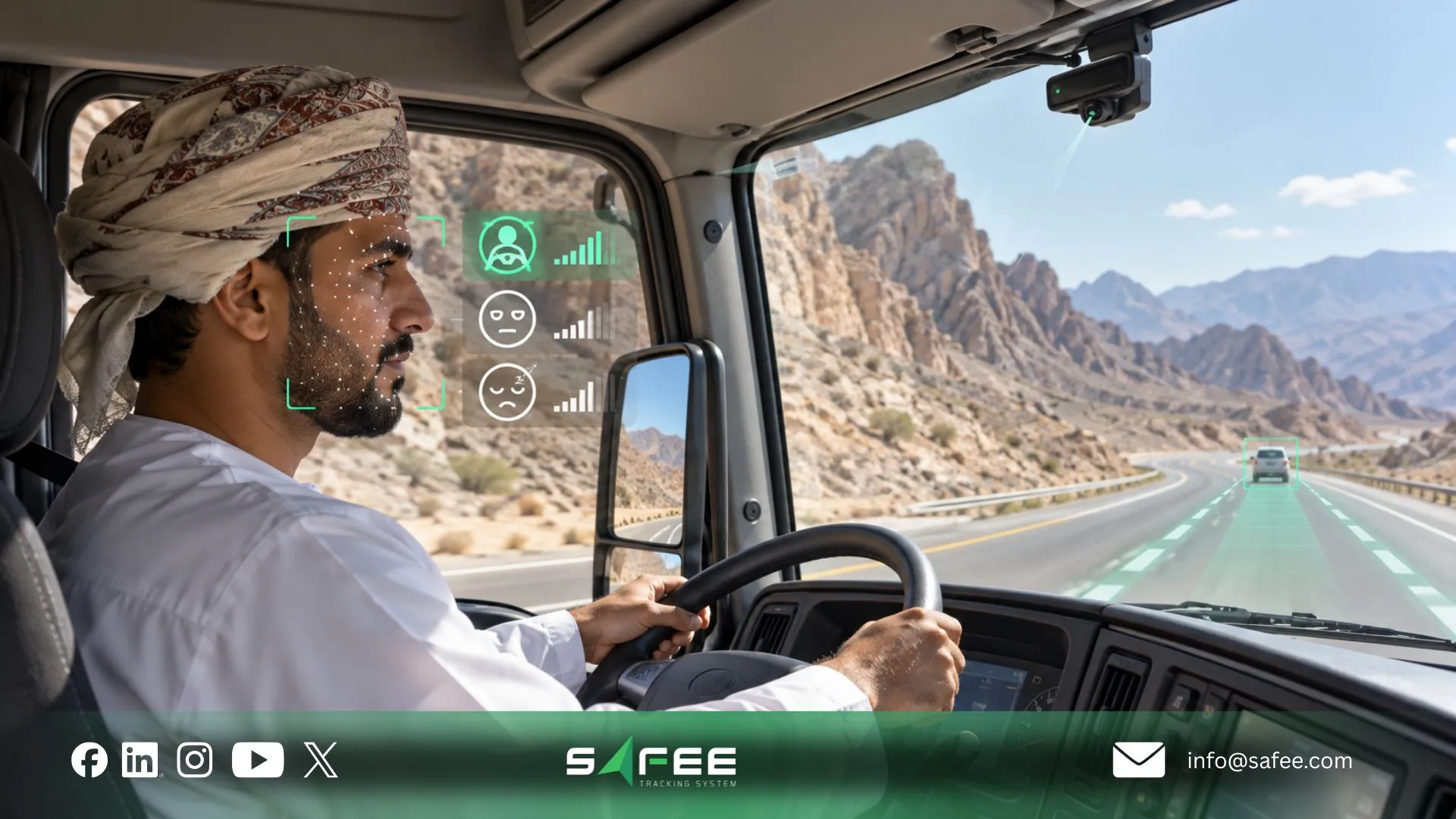
Our Driver Monitoring System (DMS) uses in-cabin monitoring to identify supported driver states and behaviours such as fatigue or drowsiness, distraction, phone handling, smoking, and seatbelt non-compliance. Within Safee’s broader Video-iVMS environment, the event can be connected with video and Telematics context so the authorized reviewer is not forced to make a decision from a single alert label.
A practical event-review workflow should answer eight questions:
- What was detected? Identify the exact DMS, ADAS, or Telematics event instead of relying on a vague “unsafe driving” label.
- When did it occur? Check the event timestamp and distinguish event time from notification time.
- Who was driving which vehicle? Confirm driver assignment rather than assuming the usual driver was operating the vehicle.
- What evidence is available? Review the relevant video, location, speed, journey, and event data available under the configured system and user permissions.
- What was happening in the journey? Compare the event with route, journey stage, Geofence, site, and other operational conditions.
- Was a warning or fleet alert generated? Separate a local in-cabin warning from a notification that must travel to Operations or HSE.
- What response was required? Apply the organization’s policy and escalation matrix rather than improvising a different response for every event.
- Was the event closed? Record the result so repeated patterns can be distinguished from unresolved events.
This turns DMS from a stream of notifications into a controlled safety workflow. Our driver-behaviour analysis guide is useful when you are designing the review and coaching layer around those events.
Oil and gas fleet management in Oman beyond cellular coverage
Remote routes create a different problem for oil and gas fleet management Oman: an onboard device may detect or store information, but the fleet team cannot act on data that has not reached the platform.
GPS positioning and communications are different functions. A vehicle may be able to determine its position while cellular coverage is unavailable, but a remote team still needs a communications path for that position or event to reach the platform. This distinction is especially important for desert routes, remote sites, tankers, and dangerous-goods operations where communications planning must sit beside the journey and emergency plan.
At Safee, our SatComm is designed for remote or low-coverage operations. Also, we offer satellite-enabled tracking, live vehicle location queries, panic alerts, communication monitoring, and compatibility with Orbcomm or Iridium satellite devices. SatComm therefore gives the deployment team another communications option for supported remote functions when normal cellular coverage is insufficient.
Do not assume that this means every Video-iVMS event, live video stream, or high-bandwidth payload automatically moves over satellite. For a remote-route deployment, verify which device creates each event, which alerts are local to the driver, what data is buffered during a communications gap, which messages can use the chosen satellite path, whether video is transmitted or retained for later retrieval, how timestamps are preserved, what the platform displays as stale versus current, and what synchronizes after cellular service returns.
The design question is not “Can we send everything everywhere?” It is “Which safety information must reach Operations during the journey, through which communications path, and which evidence can safely synchronize later?” Our desert fleet management checklist provides related planning guidance for low-coverage and remote routes.
How to deploy and review IVMS in Oman evidence
A successful IVMS Oman deployment should begin with requirements, owners, and acceptance evidence rather than with cameras and dashboards. If your team cannot state what must be detected, what must be transmitted, who must review it, and what evidence proves the requirement is met, the rollout is not ready for fleet-wide approval.
That preparation usually requires Fleet, Operations, HSE, IT, Procurement, the client contract owner, and the technology provider to work from the same requirement map. The purpose is not to create more administration; it is to prevent the fleet from discovering after rollout that a critical event, report, identity link, or connectivity behaviour was never tested.
Translate OPAL IVMS and client requirements into checks
Do not implement an OPAL IVMS or client requirement as a sentence copied from a tender. Convert it into a test that can pass, fail, or remain open.
| Requirement Layer | Question to Convert into a Test |
| Client contract | What exactly has the contractor committed to provide? |
| OPAL-related requirement | Which current requirement is referenced, and for which activity or contract scope? |
| Vehicle scope | Which vehicle groups require the proposed IVMS configuration? |
| Driver scope | Which drivers and activities are covered? |
| Event detection | Which driver, vehicle, or road events must be detected? |
| Driver warning | Which events require an in-cabin warning? |
| Fleet alert | Which events must reach Operations or HSE, and within what operating expectation? |
| Journey control | Is trip risk assessment, approval, route control, monitoring, or closure required? |
| Video evidence | Which events require video-backed review? |
| Connectivity | Which data or critical messages must remain available on remote routes? |
| Reporting | Which reports or evidence must be produced for management, client, or HSE review? |
| Governance | Who reviews, escalates, closes, and audits each event? |
Then require evidence from the proposed solution. Ask which Safee module addresses each requirement, which functions depend on hardware, which DMS and ADAS events are supported by the proposed camera, how driver identity is associated with the event, what happens when cellular connectivity fails, which SatComm functions are available, what is stored locally, how video is retained or retrieved, how HSE accesses evidence, how permissions are controlled, how reports are produced, and whether the full configuration can be demonstrated against your actual contractual checks.
This makes procurement auditable. Each requirement has an owner, a technical dependency, a test, and a result instead of disappearing inside a broad product claim.
20 things to check before IVMS in Oman deployment
Use this checklist before approving an IVMS in Oman deployment:
- Contract scope: Identify the exact client and project requirements that the IVMS must support.
- OPAL-related scope: Confirm which current OPAL requirement, if any, applies to the contract, activity, vehicle group, or driver population.
- Vehicle population: Separate vehicles that require the proposed IVMS configuration from vehicles operating under another scope.
- Driver identity: Define how the correct driver is associated with each vehicle, journey, and event.
- Video-iVMS hardware: Confirm the exact camera, Telematics device, installation design, and connectivity proposed for each vehicle class.
- Driver Monitoring System (DMS): Verify the exact fatigue, distraction, phone-use, smoking, seatbelt, or other required driver events supported by the selected hardware and configuration.
- Advanced Driver Assistance Systems (ADAS): Verify which road-facing events the proposed setup can detect.
- Driver warnings: Demonstrate what the driver sees or hears when a supported event occurs.
- Operations alerts: Define which events should generate a fleet-side alert instead of sending every event to every user.
- Alert ownership: Assign each alert category to the person or team responsible for review and escalation.
- Journey Management System (JMS): Verify whether the contract requires journey risk assessment, approval, route controls, monitoring, or closure.
- Driver-fatigue policy: Configure the workflow around the applicable fatigue policy rather than treating DMS detection as the policy itself.
- Route and Geofence controls: Confirm the route, site, restricted-area, speed, and Geofence rules that matter to the operation.
- Video review: Demonstrate how an authorized HSE user retrieves and reviews evidence around a supported event.
- Live Vehicle Tracking: Confirm how location, vehicle status, communication context, driver assignment, and relevant alarms are shown.
- Cellular dead zones: Map known low-coverage routes and determine what happens to each required data type during a loss of connectivity.
- SatComm scope: Identify which vehicles require satellite communication and exactly which supported location, panic, or communication functions it provides.
- Data recovery after reconnection: Verify buffering, timestamps, synchronization, and backfill behaviour for the selected device rather than assuming every hardware model behaves the same way.
- Fleet Reporting: Build the actual safety, operational, or client report that will be used and confirm the required information is available.
- Acceptance evidence: Define the test records, screenshots, reports, event examples, hardware details, configuration evidence, and sign-off required before the deployment is accepted.
Safee can connect Video-iVMS, Journey Management System, Live Vehicle Tracking, Alarms and Alerts, Fleet Reporting, Driver Management, and SatComm within the wider fleet-management environment. The final configuration still needs to be mapped to the agreed Oman contract, vehicle population, devices, user roles, and operating conditions.
Before fleet-wide rollout, ask our experts to test the proposed configuration against a representative vehicle, driver, high-risk journey, DMS event, HSE review process, report, and remote-connectivity scenario.
Review journey management in Oman events and connectivity gaps
The review process should connect journey management in Oman with safety events and communications health instead of investigating each source separately.
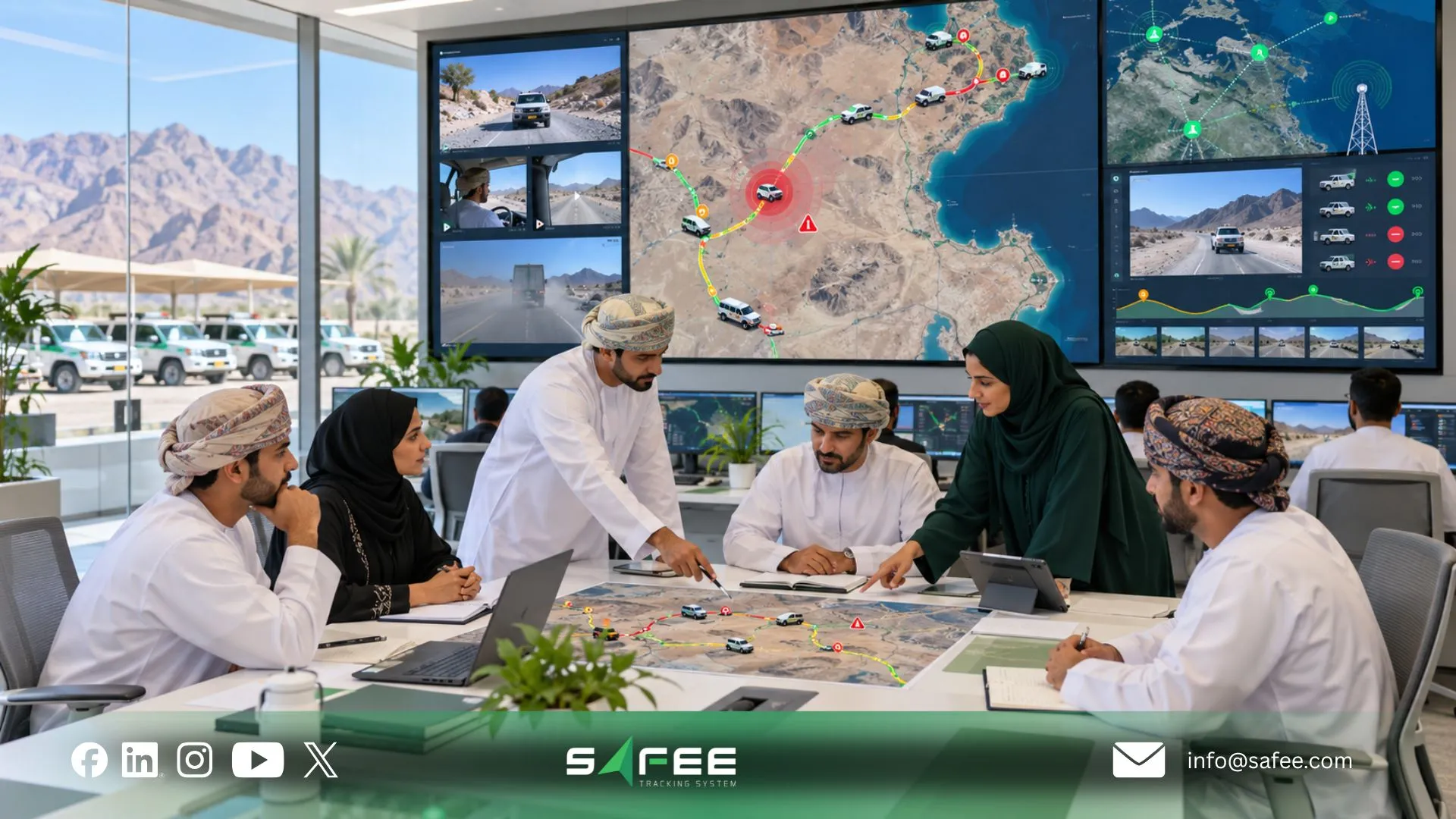
Consider a vehicle travelling on a remote Oil & Gas route. The journey has been approved through the applicable process. During travel, an onboard device records a safety event at about the same time that cellular connectivity becomes unavailable. The correct response is not to conclude immediately that “the alert failed” or that “nothing happened.”
HSE should reconstruct the evidence in sequence:
- Confirm the journey record. Identify the active journey, assigned driver and vehicle, route, and applicable operating conditions.
- Check the event timestamp. Establish when the DMS, ADAS, or Telematics event actually occurred.
- Check communication health. Determine whether the vehicle was communicating normally at that moment.
- Separate detection from transmission. An onboard event may be detected even if it cannot be transmitted immediately.
- Review the connectivity design. Confirm whether the vehicle uses cellular connectivity only or has SatComm for supported remote communications.
- Review stored evidence. Verify whether the selected hardware buffers Telematics data, event data, or video for later synchronization.
- Check the alert receipt. Establish when Operations or HSE actually received the information, if a fleet-side alert was configured.
- Review the response. Determine whether an operational action was possible at the time or whether the evidence became available only retrospectively.
- Close the event under policy. Record what happened, what evidence existed, and whether coaching, investigation, escalation, or another action is required.
- Feed the finding back into deployment design. If the same route repeatedly creates a critical blind spot, review the communications architecture and journey controls rather than treating every occurrence as an isolated user issue.
Our remote-operation architecture should therefore be tested at the level of the selected hardware, communication path, alert type, and business requirement. This is the difference between designing for a real route and assuming that a dashboard will remain equally live under every network condition.
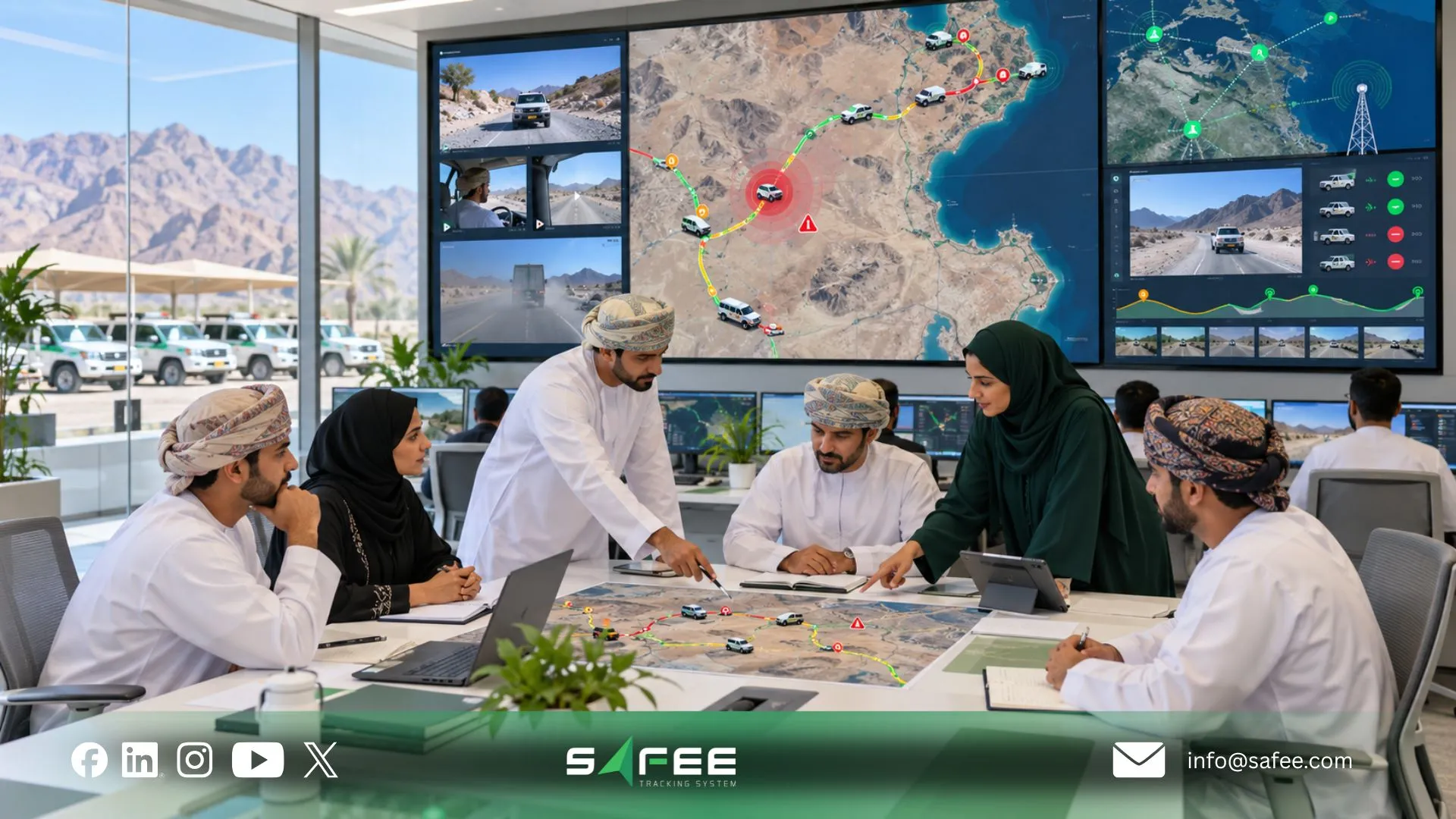
Safee: Best IVMS in Oman fit for your contract requirements
For us at Safee, the best IVMS in Oman is not the solution with the longest feature list. It is the configuration that fits your actual contract, HSE process, vehicle types, journey risks, reporting requirements, and operating conditions.
Our value is in connecting IVMS with the wider fleet-safety workflow instead of leaving cameras, journeys, alerts, and reporting in separate processes. Depending on your requirements, we can bring together:
- Video-iVMS, DMS, and ADAS to provide supported driver, road-safety, and video-backed event context.
- Journey Management System (JMS) to support journey planning, risk assessment, approvals, route control, and monitoring.
- Live Vehicle Tracking and Alarms and Alerts to give Operations and HSE visibility into vehicle activity and configured exceptions.
- Driver Management and Fleet Reporting to connect events with driver records and turn fleet activity into structured management outputs.
- SatComm to extend supported tracking and critical communication functions into remote or low-coverage operating areas.
For Oil & Gas fleets working under relevant OPAL IVMS requirements, Safee also provides advanced platform capabilities designed around OPAL Oil & Gas standards. The important step during procurement is to match those capabilities to the exact requirements that apply to your project rather than selecting a system based only on an “OPAL” label.
If you are comparing IVMS providers in Oman, bring us your contract requirements, vehicle scope, required safety events, journey process, reporting needs, and remote-route conditions. We can evaluate the required workflow with you and determine which Safee modules, hardware, alerts, and reporting setup provide the right operational fit.
Safee vs IVMS without journey control
| Dimension | IVMS Without Journey Control | Safee’s Scope | Evidence to Require During Evaluation |
| Client contract scope | Tracking or camera events may exist without a structured way to show how each contractual requirement is governed. | Safee can connect fleet, driver, journey, alert, video, reporting, and remote-connectivity capabilities, with OPAL-related functionality publicly documented. | Map every relevant clause to a module, hardware dependency, workflow, report, owner, and acceptance test. |
| IVMS | Vehicle and driver events may be available, but event context can remain separated from the wider fleet workflow. | Video-iVMS combines video visibility, AI-powered alerts, DMS and ADAS capabilities, and event recording/review. | Demonstrate the required event types with the exact proposed hardware and configuration. |
| Journey control | The system may show where a vehicle travelled without governing why the journey was approved or how trip risk was assessed. | Journey Management System (JMS) supports journey planning, risk assessment, approvals, route controls, monitoring, and readiness workflows. | Test one representative high-risk journey from request and approval through monitoring and closure. |
| Video review | HSE may receive an alert but still need another system or manual process to establish visual context. | Video-iVMS provides video-backed event context where the selected hardware, connectivity, retention, and permissions support it. | Retrieve an event, confirm the driver and vehicle, review available footage, and document the review/closure process. |
| Connectivity | Cellular-only IVMS can create remote-route visibility gaps, with post-reconnection behaviour depending on the device. | SatComm provides satellite-enabled tracking and supported critical communications for remote operations. | Test dead-zone behaviour, location requests, panic alerts, stored data, timestamps, reconnection, and the limits of the selected design. |
Use the same evidence standard for every bidder. Terms such as “IVMS,” “OPAL,” “fatigue detection,” and “satellite” are not self-proving; each one should be demonstrated in the actual operating workflow.
If your current IVMS generates alerts but leaves journey approval, video review, connectivity, and HSE follow-up in separate processes, contact Safee to map the complete contract workflow before you compare platforms.
How do Safee customers measure safety event response?
A safety event only creates value when your team can see how quickly it was detected, reviewed, acted on, and closed. For an IVMS Oman deployment, that means measuring the operational response around each event rather than relying on a broad claim that the system has “improved safety.”
At Safee, we help bring the information needed for that review into a connected workflow. Video-iVMS, DMS, and ADAS provide supported event and video context; Driver Management connects activity with the relevant driver; Journey Management System (JMS) and Live Vehicle Tracking add journey, route, and location context; Alarms and Alerts support configured notifications; and Fleet Reporting gives managers a structured way to review results over time.
A practical measurement model can focus on:
- Time from alert receipt to first review.
- Time from event detection to fleet-side visibility.
- Percentage of relevant events with usable video context.
- Number of unresolved or repeatedly occurring safety events.
- Completeness of the required HSE or management reporting.
- Percentage of events linked to the correct driver and vehicle.
By comparing these indicators across similar operating periods, your team can see whether the deployed workflow is improving event visibility, review discipline, and follow-up without relying on unsupported safety percentages.
For a broader reporting structure, read Fleet Management Reporting: Which Report Goes to Whom.
FAQs About Ivms in Oman
Do OPAL requirements apply to every fleet in Oman?
No. OPAL IVMS requirements depend on the relevant contract, activity, client, vehicle scope, and current governing requirements. Confirm the applicable requirement before selecting or configuring the solution.
How does a rest policy differ from fatigue detection?
A rest policy defines when and how drivers should rest and operate. Fatigue detection is a technical control; Safee’s Driver Monitoring System (DMS) can detect supported fatigue or drowsiness indicators and generate alerts, but it does not replace the fleet’s fatigue-management policy.
Can remote alerts continue when cellular coverage fails?
Safee’s SatComm can support satellite-enabled tracking, location queries, and panic alerts in remote or low-coverage areas. The exact functions available during a cellular outage depend on the selected hardware and configuration, so live video or every IVMS data type should not be assumed to use the satellite connection.
Which evidence should HSE review before choosing a solution?
Ask the provider to demonstrate one realistic high-risk journey from approval through event detection, alerting, video or telematics review, connectivity handling, HSE response, and reporting. This shows whether the proposed IVMS works as a complete operating workflow rather than only as a list of features.
Ready to improve your fleet operations?
Tell us what you would like to improve. A Safee specialist will reply by email.
Usually replies within one business day • No sales spam
Your details are used only to respond to your request. Privacy Policy