
How AI and IoT Improve Waste Management Fleet Optimization
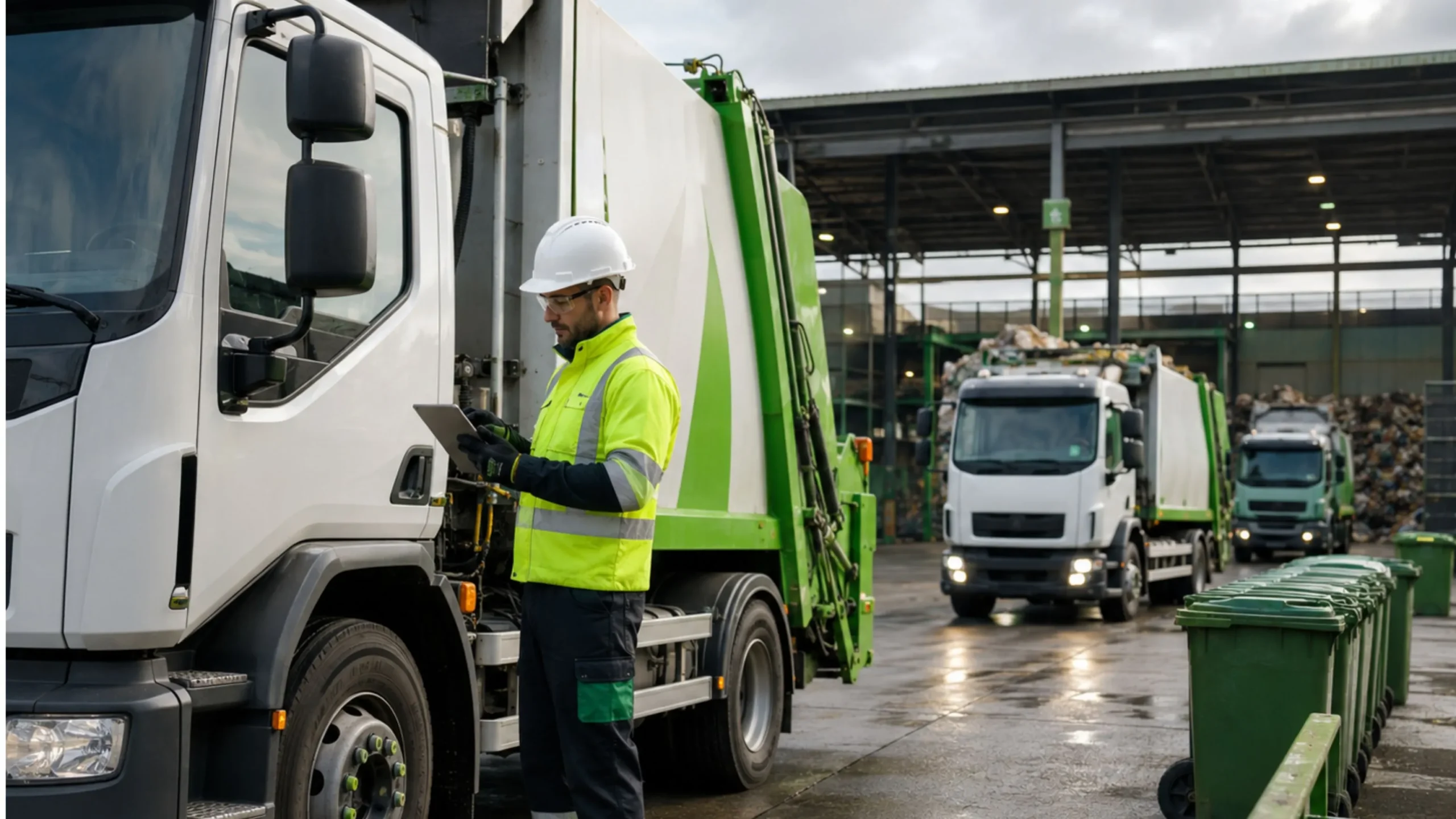
A waste fleet can look busy while performance quietly leaks from every route. Trucks are moving, crews are active, and pickups are being completed, yet missed collections still appear, idle time grows, disposal-site delays repeat, fuel use rises, and supervisors spend too much time reconstructing what happened after the shift. For municipalities, recycling fleets, and trash hauling companies, this is where tracking alone stops being enough.
At Safee, we help UAE-based and GCC B2B waste operators move from basic visibility to waste management fleet optimization by connecting routes, vehicles, drivers, alerts, reports, maintenance signals, and operational records into one governed workflow. The aim is practical improvement: fewer missed pickups, better route decisions, lower avoidable idle time, stronger service evidence, and clearer management review.
This guide explains how waste management fleet optimization works, how it differs from waste management fleet tracking and waste fleet management software, where AI, IoT, routing, maintenance, carbon reporting, and KPIs fit, and how Safee can support waste companies, municipalities, recycling fleets, and trash hauling operators with connected fleet workflows.
What is waste management fleet optimization?
Waste management fleet optimization is the practice of using vehicle data, route data, driver behavior, bin or container signals, disposal-site activity, and reporting workflows to improve waste fleet performance.
The focus is not only knowing where a truck is. It is improving what happens next: which route needs redesign, which missed pickup needs recovery, which vehicle is underused, which driver pattern needs coaching, and which maintenance issue may affect tomorrow’s collection plan.
Tracking shows what happened. Optimization helps operators decide what should happen next. In waste fleets, that outcome layer is built on GPS tracking, service confirmation, alerts, reports, maintenance workflows, driver visibility, and structured management review.
Waste management fleet tracking vs. waste management fleet optimization
- Waste management fleet tracking answers location-based questions: where the truck is, which route it followed, how long it stopped, and whether it entered a depot, transfer station, landfill, service zone, or customer location.
- Waste management fleet optimization uses that data to improve operational decisions. It helps supervisors reduce missed pickups, redesign routes, control idle time, schedule maintenance, verify service completion, and improve service reliability.
For the GPS, geofence, proof-of-service, and route history layer, read our waste management fleet tracking guide.
Waste fleet management software vs. waste management fleet Optimization
- Waste fleet management software is the platform used to manage vehicles, drivers, routes, alerts, reports, maintenance workflows, integrations, and operational records.
- Waste management fleet optimization is the measurable improvement achieved through that platform. The goal is better routes, fewer complaints, lower cost per stop, improved fleet utilization, stronger service verification, and clearer reporting.
For software selection, feature comparison, deployment, and vendor evaluation, use our waste management fleet software buyer guide.
Why do waste operators need fleet optimization in 2026?
Waste collection routes are repetitive, but daily operations are rarely identical. Traffic, blocked access, urgent requests, full containers, missed pickups, disposal-site waiting time, vehicle defects, driver behavior, and customer complaints can change the plan during the shift.
Without optimization, supervisors often deal with problems after they have already affected service quality. The most common issues include:
- Missed collections discovered after a customer complaint.
- Unnecessary mileage caused by route overlap or poor sequencing.
- High fuel consumption from long routes, idling, and inefficient stop patterns.
- Driver risk from speeding, harsh events, unauthorized movement, or unsafe deviations.
- Underused vehicles on one route while other trucks are overloaded.
- Unexpected breakdowns caused by heavy usage and weak maintenance visibility.
- Fragmented data across calls, spreadsheets, dispatch notes, and delayed reports.
Small inefficiencies multiply quickly in waste fleets because trucks repeat service patterns every day. A few minutes of avoidable idle time, repeated route overlap, or delayed exception handling can become a serious operational burden across vehicles, routes, and depots.
Core areas of waste management fleet optimization
Route optimization and dynamic collection planning
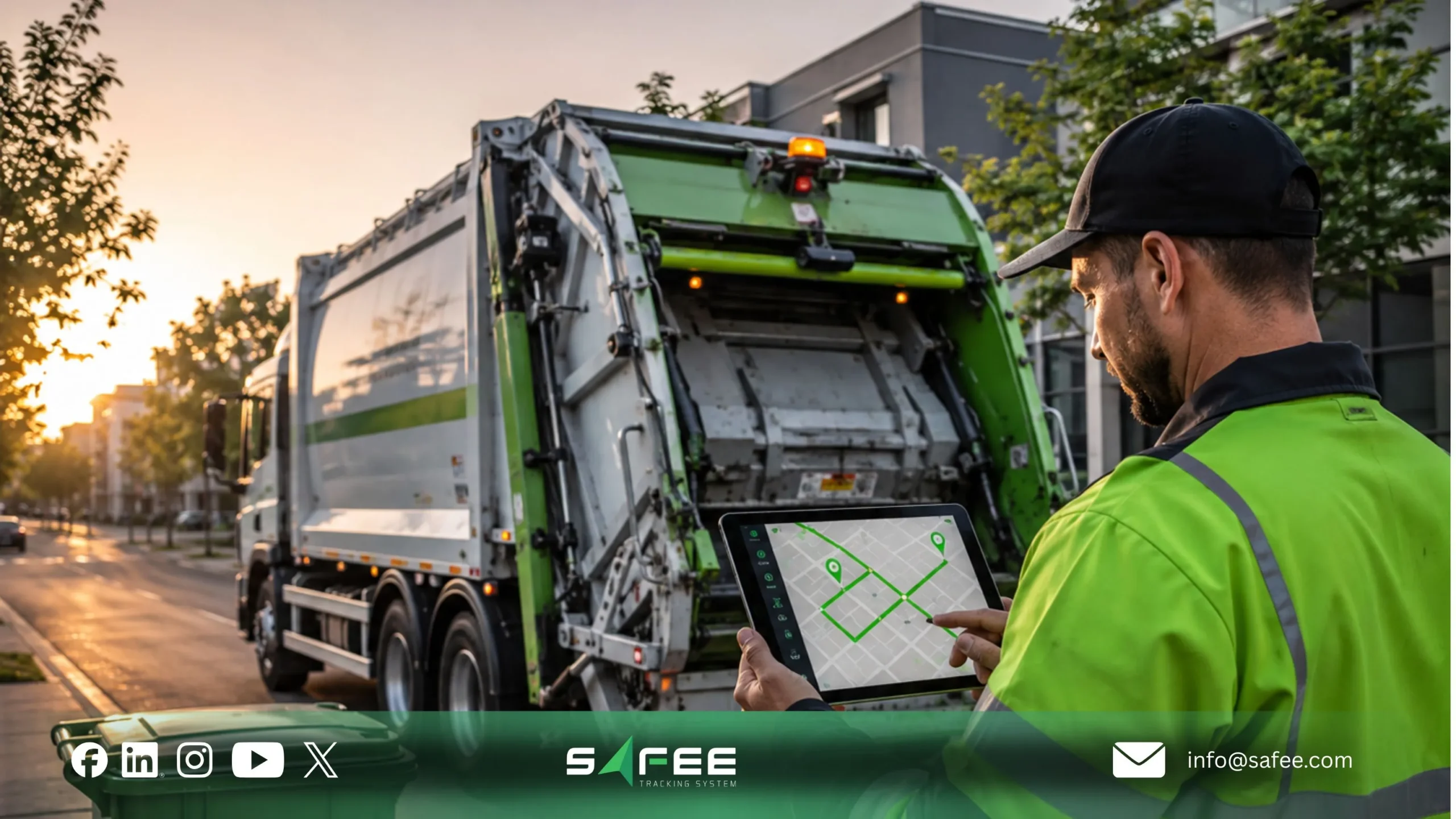
Route optimization improves how waste vehicles move through service zones, customer locations, transfer stations, disposal sites, and depots. In waste management fleet optimization, route improvement should consider collection sequence, truck capacity, disposal timing, high-priority customers, urgent service requests, missed pickup recovery, driver shifts, and depot return patterns.
Dynamic planning matters when the day changes. If a truck is delayed, a container requires urgent service, or a customer reports a missed pickup, dispatchers should be able to review route progress and adjust the plan before the shift ends.
Missed pickup reduction and service recovery
Missed pickups are one of the most visible service failures in waste operations. Optimization helps reduce them by combining route progress, geofence events, stop-level confirmation, exception alerts, and supervisor action workflows.
- An exception alert shows a skipped zone, missed stop, long delay, or route deviation.
- The supervisor checks route progress, vehicle location, and service history.
- Dispatch sends a correction or recovery instruction.
- The driver completes the pickup or adds an operational note.
- Service is confirmed with a timestamp, GPS record, geofence event, or supervisor review.
- The end-of-day exception report shows what happened and what was resolved.
This turns missed pickup management from reactive complaint handling into a controlled service recovery process.
Fuel, idle time, and operating cost control
Waste fleets can lose money through repeated stop-start movement, disposal trips, route overlap, long idling, and inefficient route design. Optimization connects fuel and idling visibility with route, vehicle, and driver context.
Useful signals include idle time per vehicle, route length, stop duration, fuel usage where available, driver behavior events, depot return patterns, disposal-site waiting time, and underused or overused vehicles. The goal is to reduce cost per route, cost per stop, and avoidable fuel waste by acting on patterns, not isolated events.
Vehicle utilization and maintenance optimization
Fleet management software for solid waste should reflect how collection vehicles actually work. These vehicles may face heavy wear from engine hours, compactor cycles, hydraulic system use, frequent stops, heavy payloads, reversing, tight streets, and disposal-site waiting time.
Maintenance planning should therefore consider usage intensity, not only mileage or calendar intervals. Safee’s Maintenance Module can support service schedules, maintenance alerts, open defects, and readiness follow-up when configured around the fleet’s real operating model.
Driver safety and productivity optimization
Driver monitoring becomes more useful when it supports coaching and productivity, not only discipline. Waste drivers operate large vehicles near public roads, customer premises, industrial areas, and crowded service zones. Supervisors need fair, evidence-based review of harsh braking, speeding, excessive idling, unsafe route deviations, unauthorized movement, long stops, and fatigue-related indicators where supported by policy and configuration.
Safee’s Driver Management workflows can help connect drivers, assignments, behavior events, and review processes so managers can identify coaching needs and reduce repeated risk with better context.
Disposal site, transfer station, and tonnage workflow optimization
Waste operations do not end when a route is completed. Transfer stations, landfills, recycling facilities, and disposal sites are part of the operating chain.
Optimization can use entry and exit geofencing, waiting time, disposal confirmation, weight records, trip history, and route records to improve disposal-site coordination. If a truck spends too long waiting at a transfer station, the issue may be scheduling, queueing, route timing, or site congestion rather than driver performance.
When tonnage data is connected with operational records, teams can align route activity, disposal confirmation, customer service records, and billing support more clearly.
Talk to Safee about configuring route visibility, missed pickup alerts, driver monitoring, maintenance signals, and disposal-site reporting around your waste fleet workflow.
Waste fleet management technology behind modern optimization
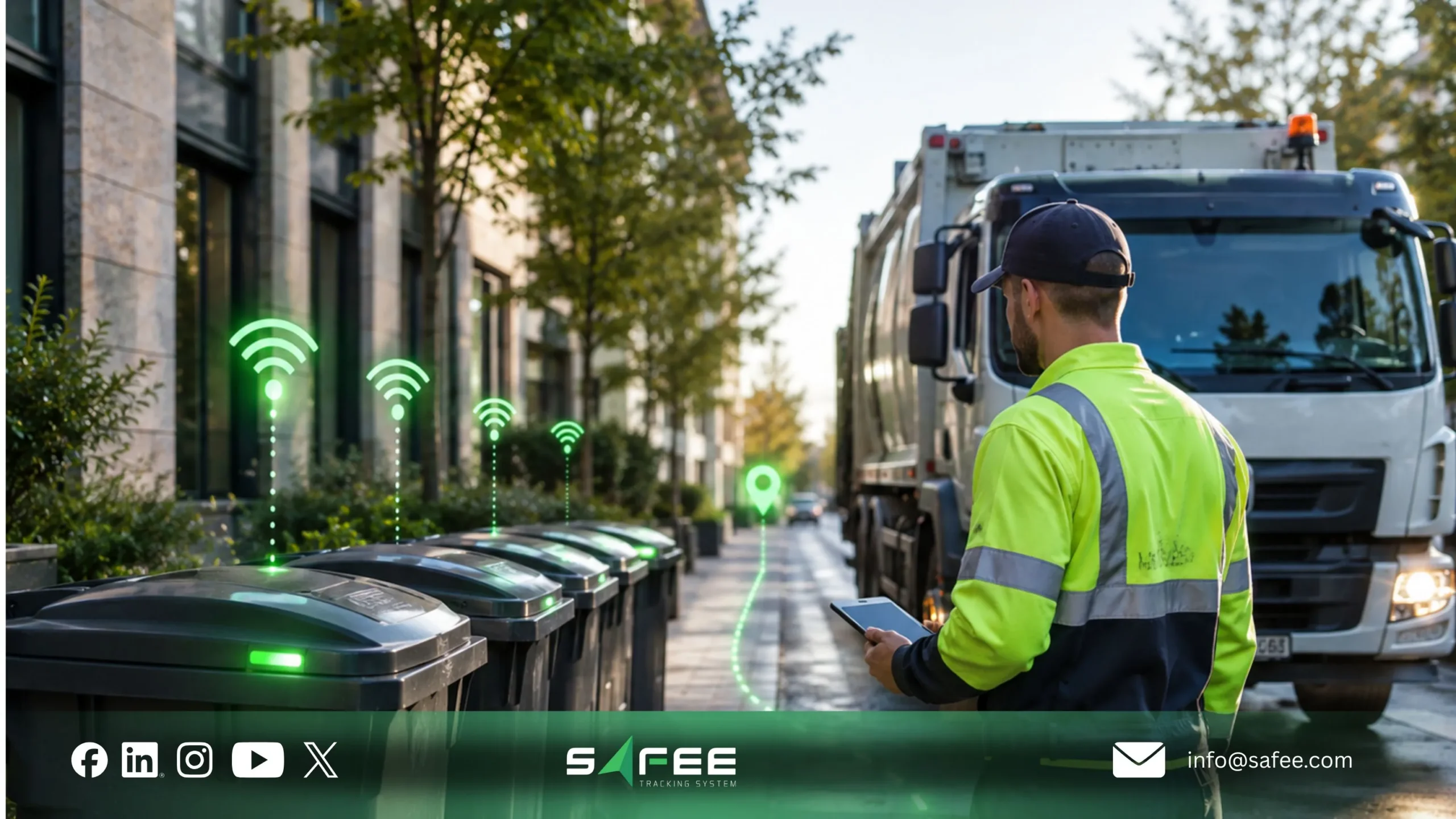
Modern waste fleet management technology depends on connected data sources such as GPS devices, driver apps, onboard sensors, IoT bin sensors, geofences, dashboards, APIs, and reporting tools.
An API is a technical connection that allows systems to exchange data, such as fleet software connecting with billing, ERP, maintenance, municipal, or IoT systems. The value is not the tool alone; it is the way signals become decisions during and after the shift.
AI-powered routing and demand prediction
AI-assisted analytics can support waste management fleet optimization by identifying inefficient routes, reviewing repeated patterns, predicting demand, and recommending route changes where data quality allows.
- Detect recurring route delays and idle hotspots.
- Compare planned routes with actual activity.
- Identify missed pickup risk patterns.
- Recommend route sequence improvements.
- Support demand-responsive collection where collection needs vary.
- Highlight maintenance or vehicle assignment patterns.
AI should be treated as a decision-support layer. Waste fleets still need supervisors to validate route changes against customer commitments, vehicle limits, disposal-site timing, driver availability, and service policies.
IoT bin sensor data and smart collection signals
IoT bin sensors can provide fill-level or smart collection signals from bins, containers, or smart waste assets. These signals can help operators prioritize containers that need service and avoid unnecessary trips.
The value of IoT comes from connecting bin signals with routing, dispatch, reporting, and service workflows. Our RFID-powered waste container tracking capabilities can help operators connect containers, vehicles, and service records so collection decisions become easier to verify and improve over time. A fill-level alert can guide collection priority, but optimization happens when the system turns that signal into a route action and a reportable service record.
Carbon reporting and sustainability dashboards
Carbon reporting should be treated as a by-product of better operational data. Waste fleets can improve emissions visibility by reviewing mileage, fuel consumption, idling, route efficiency, vehicle type, trip history, and service patterns.
A sustainability dashboard should help teams see which routes create unnecessary mileage, which vehicles idle too often, which service zones create repeated delays, and which reports leadership needs for environmental visibility. Operators should avoid unsupported emissions claims unless a validated calculation method and reporting framework are approved.
How does Fleet software for waste management support optimization?
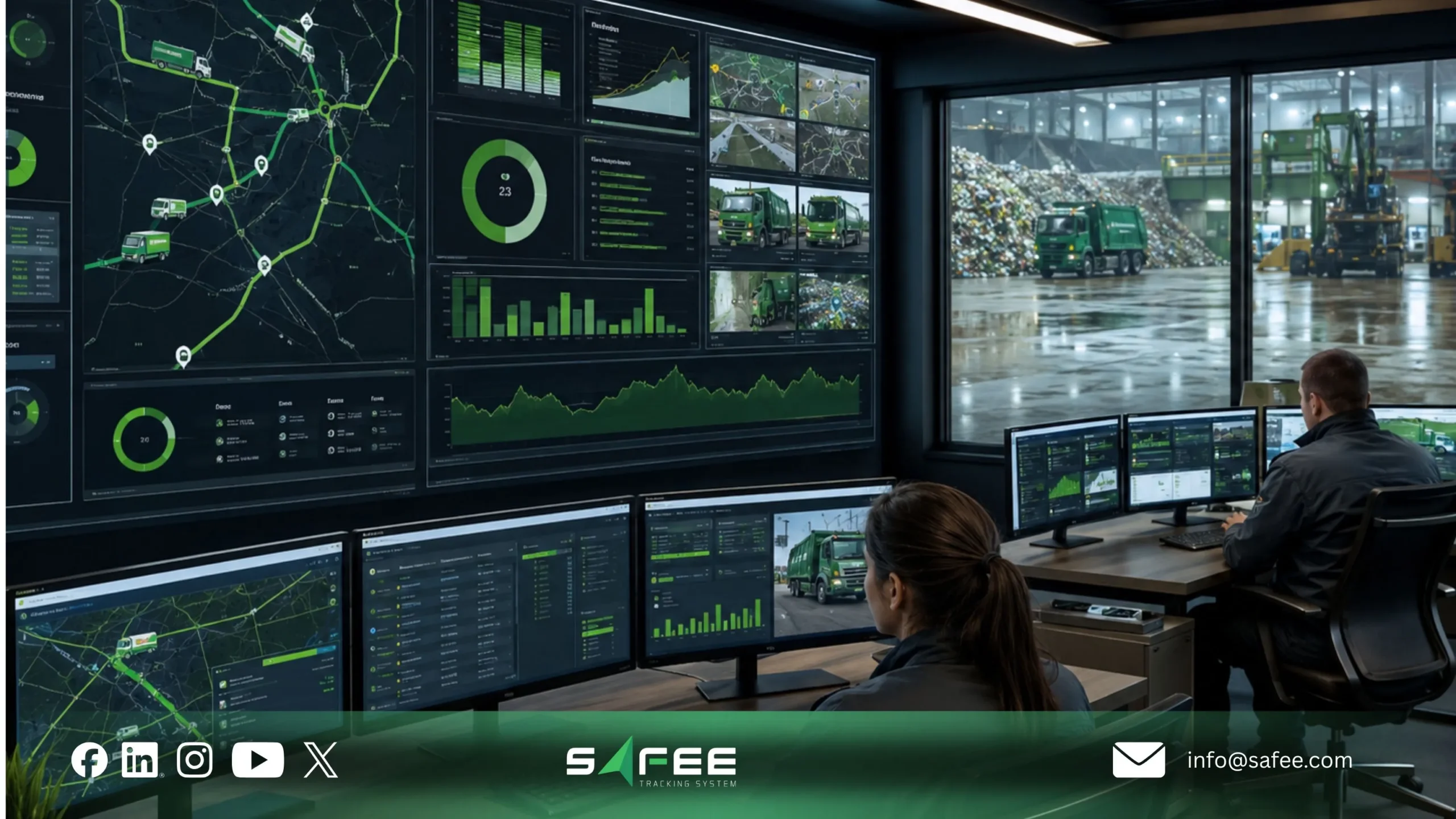
Fleet software for waste management provides the control center for optimization by combining tracking, alerts, reports, driver data, maintenance workflows, geofences, disposal-site records, and integrations into one operating model.
Fleet management software for solid waste should help supervisors answer practical questions during the shift: which routes are active, which trucks are delayed, which pickups are at risk, which vehicles are idling too long, which driver events require review, which trucks may not be ready for tomorrow, and which disposal-site visits need confirmation.
Fleet management software for waste industry use cases should also support management reporting. Daily dashboards help supervisors act quickly. Weekly reports help operations managers review routes, behavior, utilization, fuel, downtime, and exceptions. Monthly reports help leadership identify cost, risk, and service patterns.
Safee connects this control layer through its advanced solutions, including Live Vehicle Tracking, Alarms and Alerts, Fleet Reporting, Maintenance Module, Driver Management, Tracking Data Analyzer, and mobile visibility for supervisors using the Mobile App.
Trash hauling fleet management software for commercial waste operators
Trash hauling fleet management software is especially useful for commercial waste operators that manage recurring customer routes, roll-off services, disposal trips, service verification, and billing support.
Commercial waste operations often need to answer whether the truck reached the customer location, whether the bin or container was serviced, whether access was blocked, whether a roll-off container was delivered or exchanged, whether the approved disposal site was visited, and whether there is evidence for a customer dispute.
Optimization can reduce unnecessary dispatch, missed pickups, and customer disputes by connecting GPS history, geofence records, route progress, driver notes, disposal movement, and service confirmation. For roll-off operations, each stage – delivery, pickup, exchange, disposal, and return – should be clear enough for dispatch, customer service, operations, and billing teams to review.
Waste management fleet optimization workflow
A practical optimization program should start with the decisions the fleet needs to improve, not with dashboards alone.
- Collect vehicle, route, driver, bin, disposal-site, and service confirmation data to build a real operating baseline.
- Identify repeated inefficiencies such as route overlap, late stops, excessive idle time, missed pickups, and underused vehicles.
- Use analytics or AI-assisted recommendations to improve routes, schedules, and vehicle assignments.
- Send updated tasks, alerts, or route instructions to dispatch teams and drivers so insight becomes action.
- Confirm service completion with timestamp, GPS record, geofence event, or operational note.
- Review route KPIs, fuel use, driver behavior, downtime, and customer service exceptions weekly.
- Refine collection zones, maintenance schedules, staffing, and vehicle utilization as the fleet collects better data.
Contact Safee to map your current collection workflow and identify which alerts, reports, route views, and maintenance signals should be configured first.
Comparing waste fleet optimization capabilities
Use this comparison to assess optimization maturity, not only feature availability. The core question is whether the platform helps managers detect issues, assign ownership, act quickly, and review performance over time.
Capability | Basic Tracking | Waste Fleet Software | Safee Optimization Approach |
Live vehicle visibility | Vehicle location only | Location plus route history | Live tracking with route and operational context |
Route optimization | Manual planning | Static or rule-based routing | Data-driven route improvement workflows |
Missed pickup prevention | Reactive complaint handling | Alerts and route reports | Exception detection and service recovery support |
IoT bin sensor data | Not supported | Optional integration | Integration-ready data workflows |
Idle and fuel control | Basic vehicle report | Fuel and idle dashboards | Route, driver, and vehicle-level cost visibility |
Solid waste maintenance | Mileage-based only | Mileage plus service reminders | Usage-based maintenance signals for heavy-duty collection work |
Driver safety optimization | Speed alerts | Driver behavior events | Safety scoring and coaching insights |
Carbon and sustainability reporting | Not available | Basic estimates | Operational data that supports emissions visibility |
Billing and service records | Manual export | CSV or API support | Service records ready for operational and billing integration |
KPIs to track for waste management fleet optimization
Waste operators should improve from their own baseline. A useful KPI program defines the data source, report owner, review cadence, and action expected when performance moves in the wrong direction. Key KPIs to track include:
- Missed pickups per route: This KPI shows service reliability gaps and helps operators improve route coverage and recovery workflows.
- Cost per stop: This connects daily operations to financial performance and helps reduce unnecessary mileage, idle time, and inefficient resource use.
- Idle time per vehicle: This highlights avoidable fuel waste and supports driver coaching, better stop behavior, and improved route planning.
- Route completion rate: This measures execution quality and helps identify incomplete, delayed, or poorly planned routes.
- Fuel use per route: This reveals inefficient routes or vehicles and allows operators to compare vehicle performance, driver behavior, and route design.
- Disposal-site waiting time: This shows delays that happen outside driving time and helps improve scheduling, dispatching, and site coordination.
- Vehicle downtime: This measures fleet availability and supports better preventive maintenance planning.
- Driver safety score: This shows operating risk and helps target coaching, incident prevention, and safer driving practices.
How to evaluate optimization readiness in a waste fleet?
Before scaling optimization, waste fleet teams should evaluate whether their current data, workflows, reports, and ownership structure can support real operational decisions, not only produce dashboards.
- Can the platform show route performance by zone, vehicle, driver, and shift?
- Does it detect missed pickups or route exceptions before the customer complains?
- Can it connect GPS data with service confirmation and disposal-site records?
- Does it support solid waste vehicle usage patterns such as engine hours, frequent stops, and equipment use?
- Can it integrate with billing, ERP, municipal systems, maintenance tools, or IoT bin sensors?
- Does it provide reports for fuel use, idle time, driver risk, vehicle downtime, and sustainability tracking?
- Can supervisors act on data in real time, not only review reports after the shift ends?
- Can alerts be configured by route, depot, severity, vehicle group, driver group, or operating team?
- Can user roles separate dispatch, HSE, maintenance, finance, customer service, and leadership access?
- Can reports be exported or scheduled for weekly and monthly reviews?
The best evaluation framework is operational fit: route logic, missed pickup recovery, maintenance pressure, driver safety, disposal-site visibility, reporting needs, integration readiness, and future optimization.
Why choose Safee for waste management fleet optimization?
At Safee, we help waste operators move from basic location tracking to route visibility, service verification, driver monitoring, maintenance alerts, Fleet Reporting, and data-driven operational improvement. Waste operators can start with our essential fleet management modules to connect live tracking, alerts, maintenance, driver management, fuel visibility, and reporting before adding advanced waste-specific workflows.
For waste companies, municipalities, recycling fleets, and trash hauling operations across the GCC and global markets, Safee can support the workflows that matter most:
- Live Vehicle Tracking for real-time vehicle and route visibility.
- Alarms and Alerts for speeding, geofence breaches, route deviation, unauthorized movement, harsh driving, idling, and operational exceptions where configured.
- Driver Management for driver assignment visibility and behavior monitoring.
- Maintenance Module for service schedules, maintenance alerts, and readiness follow-up.
- Fleet Reporting for route, driver, vehicle, fuel, idling, maintenance, and exception review.
- Tracking Data Analyzer for deeper insight from repeated vehicle and route data.
- Mobile App access for supervisors and managers who need visibility away from the office.
- Integration-ready workflows for billing, ERP, municipal, maintenance, or IoT systems where required.
Request a Safee demo to see how your routes, vehicles, drivers, service records, alerts, and reports can be optimized from one platform.
Safee turns waste fleet data into actionable optimization
Data alone does not optimize a waste fleet. Optimization happens when data is connected to ownership and action.
- Route progress helps dispatchers understand whether collection is on schedule.
- Missed pickup alerts support earlier service recovery.
- Driver behavior data supports coaching and risk reduction.
- Vehicle reports help supervisors review utilization, idling, and route patterns.
- Maintenance signals help teams plan service based on operating pressure.
- Dashboards give managers visibility across vehicles, routes, drivers, alerts, and exceptions.
Instead of waiting for end-of-day reports or customer complaints, supervisors can review live activity, act on exceptions, and improve performance using real operating data.
From waste fleet tracking to continuous fleet optimization
Waste fleet tracking gives visibility. Waste fleet management software centralizes operations. Waste management fleet optimization improves performance over time.
That is the upgrade path for modern waste operators. A team may start with live vehicle location and route history. Then it adds geofences, alerts, driver monitoring, maintenance visibility, disposal-site records, and reports. Once the data is reliable, the team can review patterns, redesign routes, reduce missed pickups, control idle time, improve utilization, and strengthen service reporting.
Waste management fleet optimization is not a one-time project. It is a continuous operating discipline built around visibility, governance, action, and review.
Ready to improve waste management fleet optimization? Contact Safee to discuss your routes, vehicles, depots, alerts, reports, maintenance workflows, IoT needs, and rollout priorities.
FAQs about waste management fleet optimization
What is waste management fleet optimization?
Waste management fleet optimization is the use of fleet, route, driver, service, bin, disposal, and reporting data to reduce missed pickups, idle time, downtime, unnecessary mileage, cost per stop, and emissions visibility gaps.
How is waste management fleet optimization different from waste fleet management software?
Waste fleet management software is the platform used to manage vehicles, routes, drivers, alerts, reports, maintenance, and integrations. Waste management fleet optimization is the performance improvement achieved through that platform and its workflows.
How does AI improve waste management fleet optimization?
AI can support route recommendations, demand prediction, missed pickup risk detection, idle reduction, route pattern analysis, and maintenance planning. It should be used as decision support, with supervisors validating recommendations against real operating conditions.
Can fleet software for waste management reduce missed collections?
Yes, when it supports route progress, geofencing, service confirmation, exception alerts, and supervisor action workflows. The platform should help teams detect service gaps early and manage recovery before the issue becomes a customer complaint.
What role do IoT bin sensors play in waste fleet optimization?
IoT bin sensors can provide fill-level or smart collection signals. When integrated with routing, dispatch, and reporting workflows, they can help operators prioritize bins that need service and avoid unnecessary trips.
Is waste management fleet optimization useful for trash hauling companies?
Yes. It is useful for recurring commercial routes, roll-off operations, service confirmation, disposal trips, customer dispute handling, and billing support. Trash hauling companies can use optimization to reduce unnecessary dispatch, improve service reliability, and create clearer operational records.
Ready to improve your fleet operations?
Tell us what you would like to improve. A Safee specialist will reply by email.
Usually replies within one business day • No sales spam
Your details are used only to respond to your request. Privacy Policy