Wasl vs Madinati in Saudi Arabia: Which Requirements Apply to Your Fleet?
Your waste trucks are already connected to Wasl and transmitting data. But when a municipal waste contract comes into play, you may face additional requirements for vehicle registration, operational plans, or tracking data. Does your existing Wasl connection cover them, or are there gaps you need to resolve before operations begin?
This is where Wasl vs Madinati in Saudi Arabia becomes more than a platform comparison. A working connection to one does not automatically satisfy the requirements of the other. What matters is your fleet’s activity, operating city, contract, and the rules set by the relevant authority.
This guide helps you determine which requirements apply to your vehicles in Jeddah, Makkah, and Riyadh, identify potential gaps in registration and data reporting, and understand how Safee supports Wasl and Jeddah Madinati integrations.
Wasl vs Madinati: what is the difference?
Wasl is the connection to the Transport General Authority (TGA) platform for transport vehicles. TGA’s regulation for qualifying providers of technical equipment and electronic services for land transport vehicles lists integration with the Authority’s digital platform among the provider’s obligations. Our article on the Wasl Platform in Saudi Arabia explains what this means for fleet teams.
Madinati is the municipal side. Balady describes two services under its Waste Management (Madinati) product: the Waste Transporters Qualification Service and the Operational Plans Service. In the qualification service, the transporter registers its staff, vehicles, and containers and uploads attachments. The Amanah then reviews and approves the request, and the registration certificate is issued electronically. The Operational Plans Service lets transporters create trips and operational plans for active waste-management contracts.
The key difference is the regulatory scope, not the vehicle itself. A waste truck already connected to Wasl may still need to meet separate municipal requirements for transporter qualification, operational plans, or vehicle data reporting, depending on its activity, contract, and operating city. Connecting to Wasl alone does not establish compliance with those requirements.. And because more than one Amanah uses Madinati, the platform name alone does not tell you which city’s requirements apply.
Who is responsible for Wasl and Madinati requirements?
The same truck can answer to two authorities. Responsibilities usually split like this:
- Transport General Authority: Sets the transport requirements, and Wasl connects transport vehicles to its platform.
- The Amanah: Reviews and approves waste transporter qualification, and sets the city’s requirements for waste work.
- Your company: Registers staff, vehicles, and containers, creates operational plans for active contracts, and keeps vehicle records accurate.
- Your tracking provider: Configures supported devices and integrations, maps vehicle data to the relevant platform requirements, and helps verify that the required data is transmitted correctly.
A fleet can meet one authority’s requirements and still have work to finish with the other. Each authority updates its own rules, so refer to the latest official sources to confirm what applies to your activity.
Municipal requirements and technical integration arrangements may vary by city. The next section explains what fleet operators should verify in Jeddah, Makkah, and Riyadh.
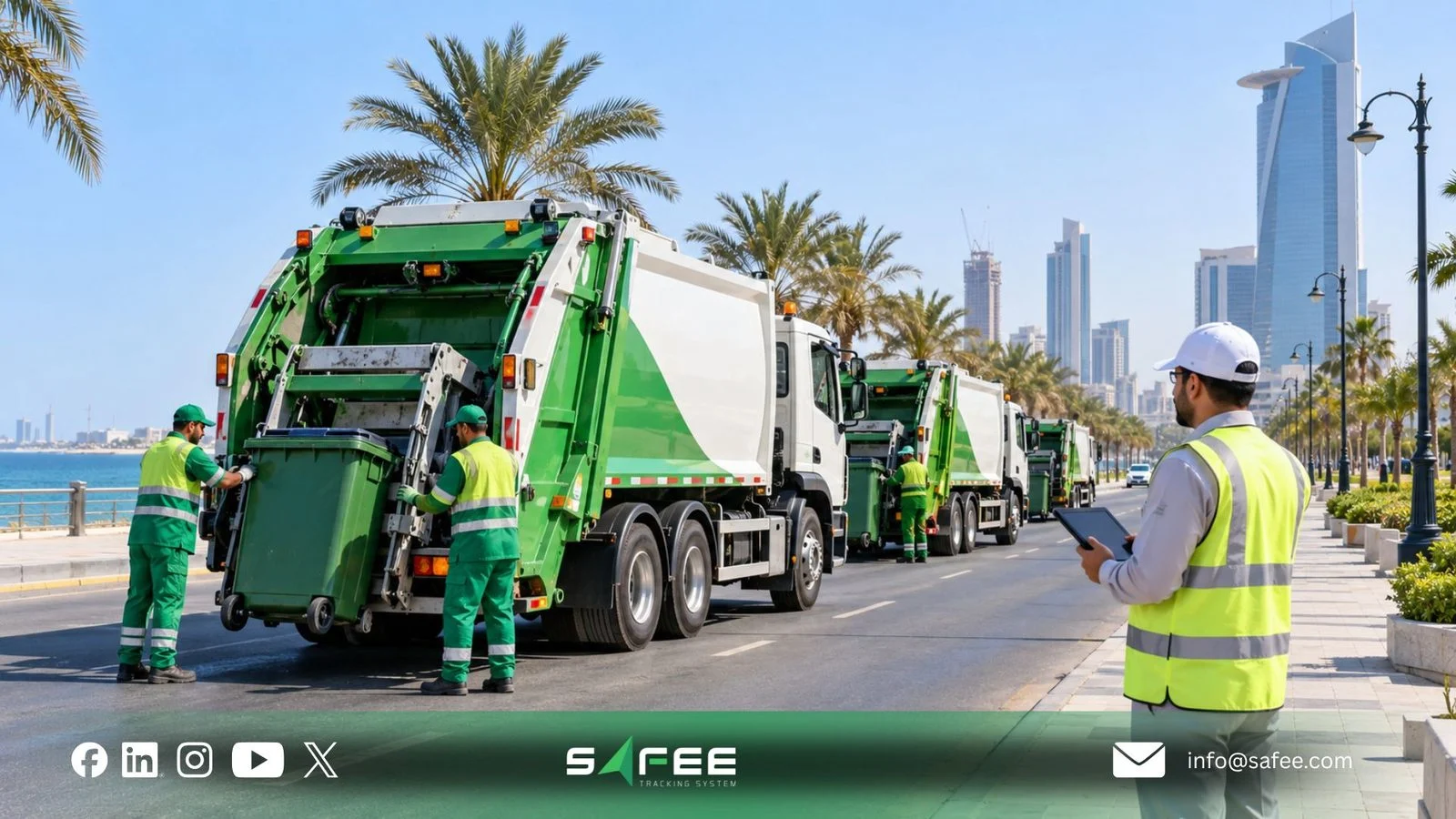
Waste fleet requirements in Jeddah, Makkah, and Riyadh
Even if your waste trucks are successfully reporting to Madinati in Jeddah, you cannot assume the same setup meets another municipality’s requirements. Each Amanah may have different conditions for waste transporter qualification, vehicle tracking, and operational data reporting. Before extending an existing integration to another city, verify what the relevant authority requires for your vehicles, activities, and contracts.
The practical distinction is that Safee documents a Jeddah Madinati integration, Makkah has published waste-carrier qualification and AVL requirements, while Riyadh’s current vehicle-tracking integration requirements need to be confirmed directly with the relevant municipality.
Madinati integration in Jeddah
Jeddah has the clearest path for a tracking provider. Balady’s qualification and operational plans services are not specific to Jeddah. In Jeddah, though, Safee is integrated with Jeddah Amanah requirements and reports vehicle location, weight, and status to Madinati.
That integration covers data reporting only. It does not make Safee a qualifier or an approver, and it does not replace the registration the transporter completes with the Amanah.
For the operational detail, read our Jeddah Madinati vehicle tracking article for waste fleets and our Balady waste hauler qualification article. Together they cover registration, operational plans, vehicle identity, and data transmission one by one.
Madinati requirements in Makkah
Makkah shares the platform with Jeddah, but not the document. According to a Saudi Press Agency report of December 5, 2024, the Holy Makkah Municipality uses Madinati to qualify commercial waste carriers. It also uses the platform to track qualified carriers’ vehicles with IoT technologies.
The municipality also publishes its own qualification document for commercial waste carriers at hmm.gov.sa. As published, it covers vehicle information, an automatic vehicle location (AVL) device on each vehicle with the ability to connect electronically, and a license reference. Check the current version on the municipality’s site before you rely on it.
An AVL clause describes what the fleet must carry, but it does not mean a specific integrationhas been accepted. Our article on Makkah waste hauler requirements covers the AVL and license points in more detail.
Waste fleet requirements in Riyadh
For waste fleets operating in Riyadh, the key question is whether the relevant municipal activity or contract requires vehicle tracking, transporter qualification, or reporting through a specific system.
Riyadh Municipality publishes cleaning operations data, but this does not establish the technical integration requirements for external waste transporters. Before applying a Jeddah or Makkah setup to a Riyadh project, confirm the current qualification requirements, accepted tracking arrangements, and any contract-specific reporting obligations directly with the relevant municipality.
Safee can help assess your existing fleet devices and available data against the confirmed requirements before defining an integration scope.
Operating waste fleets across multiple Saudi cities? Talk to Safee to review your existing tracking setup against the requirements confirmed for each project.
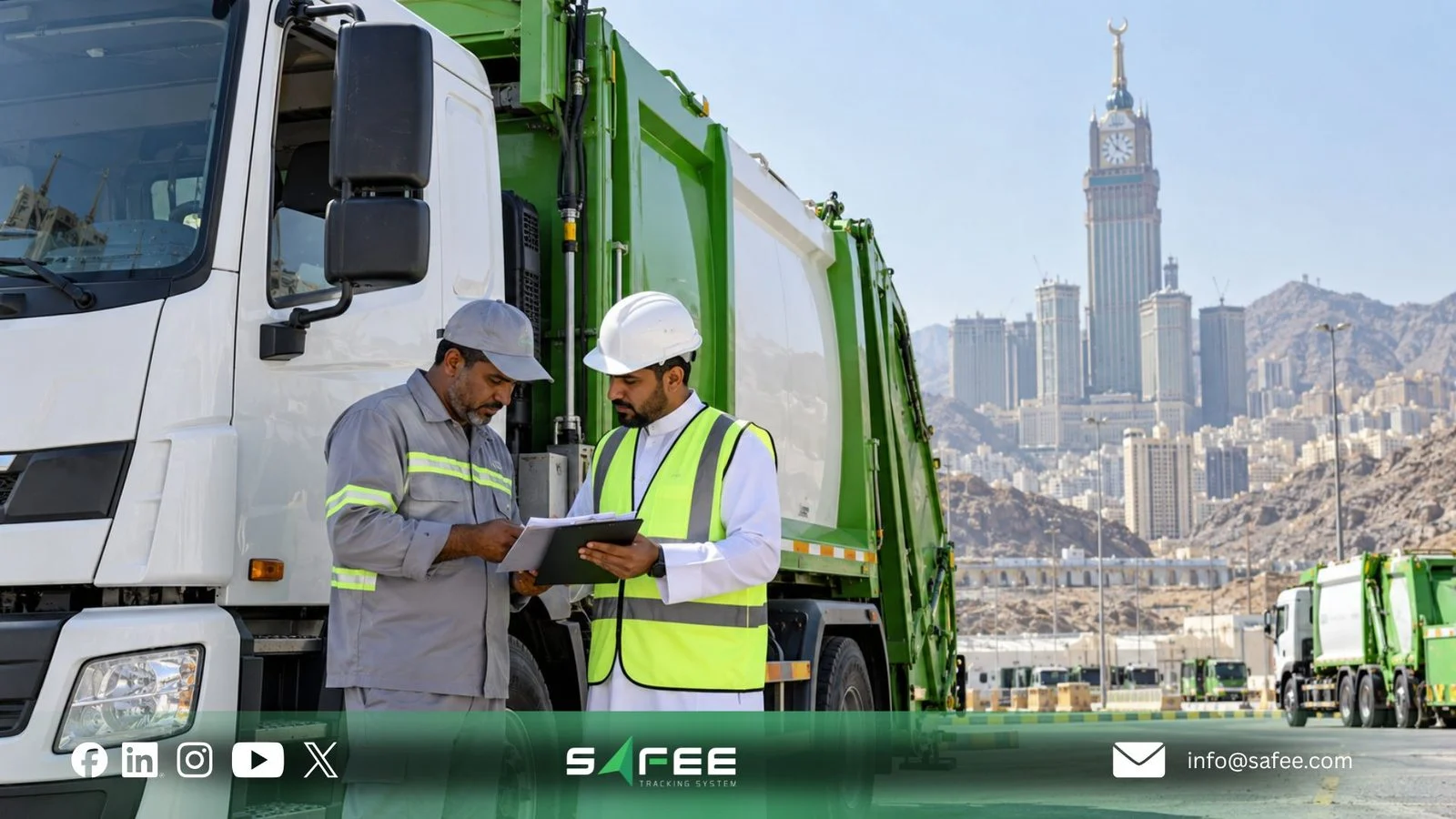
How to identify Wasl and Madinati requirements for your fleet
To determine which Wasl and Madinati requirements apply to your fleet, assess each vehicle group by its regulated activity, operating city, and contract. Then compare the applicable authority requirements with your existing registrations, tracking equipment, and data connections. A vehicle already connected to Wasl may still have separate municipal obligations to verify.
Review this mapping whenever a contract, city, activity, or vehicle group changes.
- Define the activity: transport only, waste collection, waste hauling, or a mix.
- Identify the authority for transport requirements and the one for municipal requirements.
- Confirm the city and the contract each vehicle group will serve.
- List the data each platform or document expects.
- Collect the current official documents and note their dates.
- Assign a responsible person to every open item.
What to record for each vehicle group
A simple table for each vehicle group prevents a common mistake: copying one city’s process into another. For each group, record:
- Authority: The Transport General Authority, the relevant Amanah, or both.
- Activity and vehicle category: The transport or waste work the group performs and the vehicle categories covered.
- City and contract: Where the group operates, under which agreement, and the relevant operational plan where applicable.
- Data requirements: Required fields such as location, weight, or status, along with the specified data format and reporting frequency.
- Equipment and integration: The tracking devices, sensors, and technical integration requirements that apply to the vehicle group.
- Supporting evidence: The current official document, test result, approval, or confirmation required by the relevant authority.
- Responsible person and date: Who maintains the records and when the requirements were last verified.
For the Wasl registration process, see ourWasl Registration in Saudi Arabia: Prepare, Connect & Verify Your Fleet
Key checks before connecting Jeddah waste vehicles to Madinati
Before activating a Jeddah waste fleet integration, review these five fleet-readiness areas against the applicable municipal and contract requirements. They are practical verification checks, not a substitute for the relevant authority’s official requirements.
- Qualification and contract: Confirm the transporter’s qualification status, applicable contract, and operational plan.
- Vehicle records: Match each contracted vehicle with its registration details, fleet identifier, and installed tracking device.
- Required data: Verify the location, status, weight, and other data fields required for the agreed integration scope.
- Technical verification: Check that the required information is generated correctly and that transmission can be verified through available logs, acknowledgements, or receiving-side evidence.
- Ongoing responsibility: Assign ownership for missing data, equipment replacements, record changes, and unresolved transmission issues.
For a detailed deployment checklist covering devices, sensors, vehicle identity, and reporting, see our Jeddah Madinati Vehicle Tracking Guide.
Before you connect your Jeddah vehicles, talk to a Fleet Expert to review device links and data requirements with our team.
What to monitor after integration goes live
Once vehicles are connected, these indicators show whether data is reaching each platform as expected:
- Reporting vehicles: What percentage of vehicles required to report to each platform are transmitting the expected data?
- Message delivery: Are the required messages being transmitted on schedule, and can successful receipt or acceptance be verified where the integration provides that evidence?
- Mismatched records: Which vehicles look different in your fleet system and on the authority’s platform?
- Weight readings: When weight is required, are readings arriving from every fitted sensor?
- Open data cases: How many cases of missing or wrong data are still open, and for how long?
Need to verify which of your vehicles require Wasl or Madinati reporting? Talk to Safee about your fleet activities, current devices, and integration requirements.
How Safee helps with Wasl and Madinati
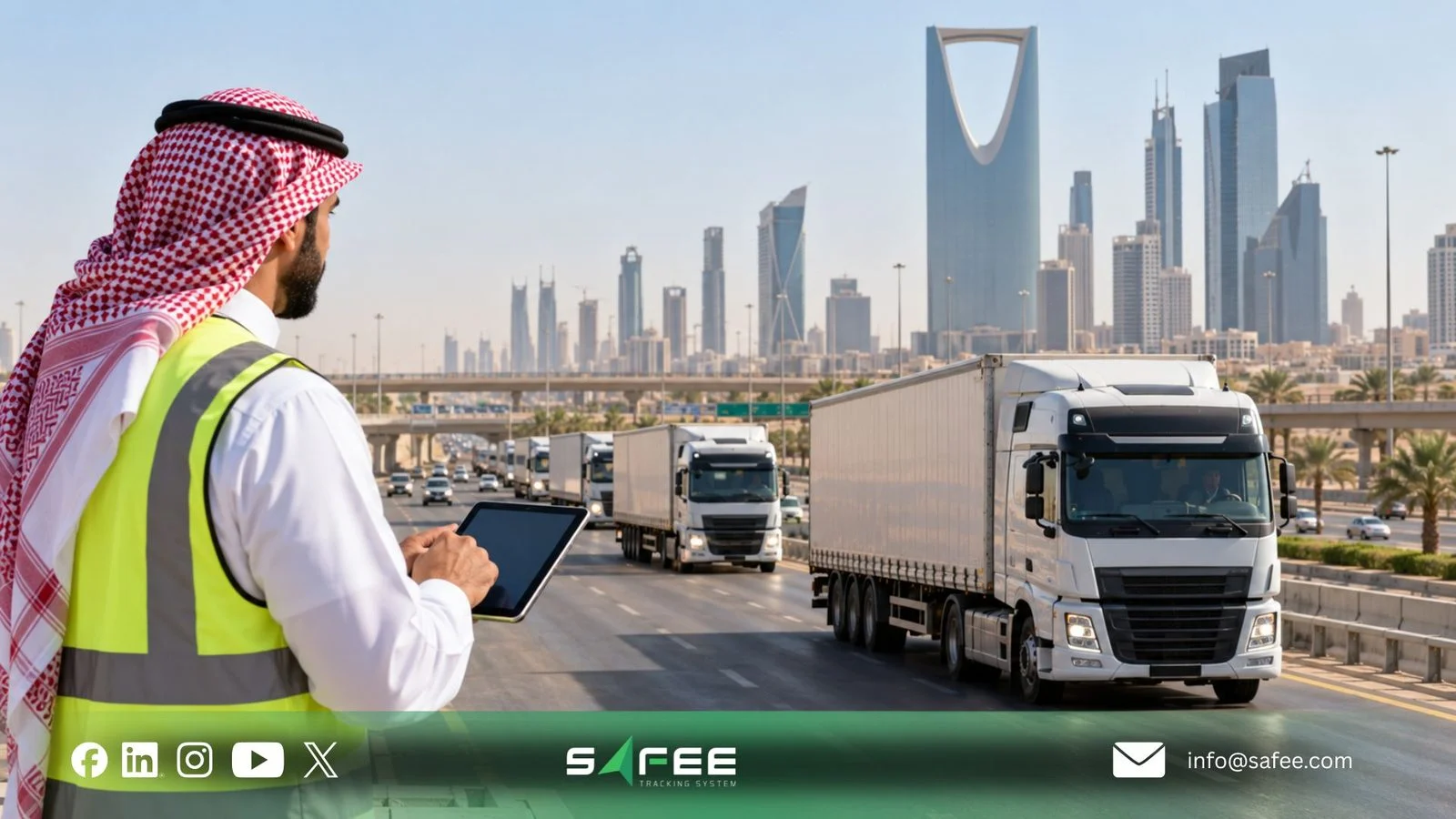
For waste and transport fleets, the challenge is not just connecting vehicles to Wasl or Madinati. It is making sure the right vehicles are configured for the applicable integration, the required data is transmitted, and reporting issues can be investigated when they arise.
Safee supports Wasl integration for applicable transport activities and Madinati data reporting for Jeddah waste operations. Our Waste Management module adds RFID-based collection records, route monitoring, weight visibility, and collection-history reporting.We support Wasl integration to connect transport vehicles to the Transport General Authority’s platform. Our Madinati integration reports vehicle location, weight, and status in line with Jeddah Amanah requirements. The Waste Management module adds RFID-based collection records, route monitoring, weight visibility, and collection-history reporting for the waste work itself.
With Safee, your team can:
- Follow current position, trip history, and playback with Live Vehicle Tracking.
- Review Wasl data transmission: Use Wasl Explorer, the Wasl Vehicle Messages Report, and the Wasl Dashboard to inspect vehicle records, transmitted messages, and available delivery acknowledgements.
- Identify operational exceptions: Use configurable Alarms and Alerts for supported events such as device disconnection, geofence breaches, and abnormal sensor readings, depending on your fleet setup.
- Schedule reviews and share the results with Fleet Reporting.
Safee does not qualify carriers or approve vehicles, and our Madinati integration is built for Jeddah Amanah. For Makkah, Riyadh, and other cities, we review the current municipal documents with you before we commit to any technical scope.
Sorting out Wasl vs Madinati in Saudi Arabia for a waste or transport fleet? Get a Fleet-Fit Recommendation to match each vehicle group with the right platform and modules.
Seeing the Madinati name, or a past project in another city, does not necessarily mean a connection covers your city.
FAQs about Wasl vs Madinati in Saudi Arabia
If my waste trucks are already connected to Wasl, do they also need Madinati?
Not automatically. A Wasl connection does not replace municipal waste-management requirements. Whether your trucks need Madinati registration, tracking-data reporting, or other municipal procedures depends on their activity, operating city, contract, and the applicable authority requirements.
Can the same tracking device be used for Wasl and Madinati?
Potentially, but device compatibility alone is not enough. The tracking provider must support the required integrations, data fields, and reporting arrangements for each applicable platform. Confirm whether your existing devices and sensors meet the project requirements before planning additional equipment.
Do Jeddah, Makkah, and Riyadh apply the same Madinati requirements?
Do not assume so. Jeddah has a documented Safee Madinati integration, while Makkah publishes its own waste-carrier qualification and AVL requirements. For Riyadh, the applicable municipal tracking and integration requirements must be confirmed for the relevant activity and contract.
How can I verify that a tracking provider supports the required integration?
Ask the provider to identify the supported authority, city, activities, vehicle categories, and data fields. Request evidence of the applicable integration scope and available transmission records. A platform name or application logo alone does not prove that a particular integration is accepted by the relevant authority.
Does Safee’s Madinati integration cover every Saudi city?
No. Safee supports Madinati data reporting for Jeddah Amanah requirements and offers Wasl integration for applicable transport operations. For Makkah, Riyadh, and other cities, Safee reviews the current technical requirements before agreeing on an integration scope. Municipal qualification and approval remain the responsibility of the relevant authorities.
Ready to improve your fleet operations?
Tell us what you would like to improve. A Safee specialist will reply by email.
Usually replies within one business day • No sales spam
Your details are used only to respond to your request. Privacy Policy