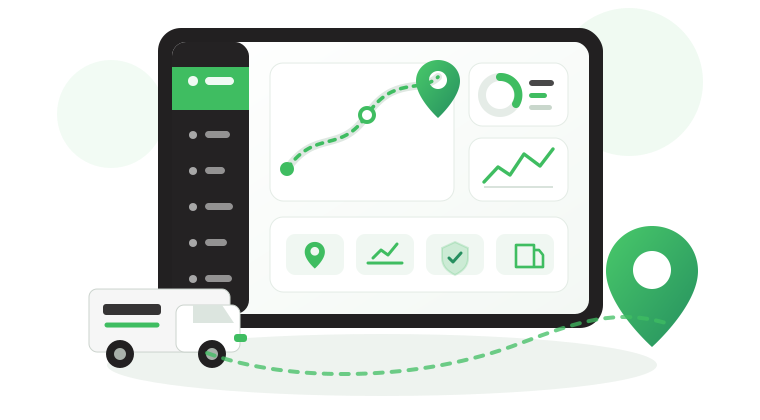
Fleet Management Explained: Tasks, Costs & How to Start
A vehicle can appear on your tracking map today but become unavailable tomorrow because its inspection has expired. Fleet management connects maintenance, drivers, fuel, compliance, and operating costs so your team can identify problems before they disrupt operations.
This guide explains what fleet management involves, how to organize it, and what Saudi transport operators need to consider.
What is fleet management?
Fleet management is the process of overseeing a company’s vehicles and drivers throughout the vehicle lifecycle, from acquisition and daily operations to maintenance and replacement.
Its purpose is to keep vehicles available, safe, compliant with applicable requirements, and cost-effective. This includes managing maintenance, fuel, drivers, vehicle documents, operational costs, and performance.
A fleet manager typically coordinates these responsibilities with operations, maintenance, finance, and HR teams. The priority is not simply collecting vehicle data but making sure someone is responsible for acting on it.
What counts as a fleet?
A fleet includes vehicles a company owns or leases for business operations. Its management requirements depend more on vehicle use and operational risk than fleet size.
Common examples include:
- Transport fleets: Trucks, tankers, and refrigerated vehicles, where vehicle availability, journey performance, and regulatory compliance are essential.
- Service and passenger fleets: Delivery vans, technician vehicles, company cars, and staff buses, where scheduling, utilization, and driver accountability matter.
- Heavy mobile equipment: Excavators, cranes, and other mobile machinery, where maintenance may depend more on operating hours than distance.
These differences determine which records, maintenance schedules, and performance indicators a company needs.
How is fleet tracking different from fleet management?
Vehicle tracking provides location, speed, movement history, and related data from compatible tracking devices. Fleet management uses that information alongside operational records to manage vehicle readiness, costs, drivers, and compliance.
For example, tracking can show how far a truck has travelled. Fleet management connects that distance to its maintenance schedule, identifies an upcoming service, and assigns someone to complete it.
The distinction is between monitoring vehicle activity and managing the decisions that follow.
Our guide to real-time GPS fleet tracking explains how location data supports fleet monitoring and operational responses.
Also read: 6 Ways Asset Tracking in Fleet Operations Protects ROI
Main fleet management tasks
Effective fleet management covers seven core areas, from vehicle acquisition to daily operations and performance reviews. Each requires clear responsibilities, reliable records, and decisions that keep vehicles available and operating costs under control.
| Fleet management task | What it involves | Key management decision |
|---|---|---|
| Vehicle acquisition and replacement | Buying or leasing, evaluating operating costs, and planning replacements | When should a vehicle be repaired, retained, or replaced? |
| Maintenance | Scheduling preventive servicing, managing repairs, and monitoring downtime | Which vehicles need attention before their next assignment? |
| Fuel management | Reviewing consumption, refills, idling, and fuel expenses | Which cost increases or discrepancies require investigation? |
| Driver management | Assigning drivers, reviewing driving behavior, and coordinating training | Which drivers need support or corrective action? |
| Safety and incidents | Investigating accidents, reviewing violations, and following up on corrective actions | What caused an incident, and what must change to prevent recurrence? |
| Documents and compliance | Managing licences, registration, inspections, and applicable operating permits | Which outstanding requirements could prevent a vehicle from operating? |
| Tracking and reporting | Monitoring journeys, vehicle utilization, operational exceptions, and KPIs | Where is performance falling short, and what action is required? |
These tasks are interconnected. A missed maintenance appointment can affect vehicle availability, driver assignments, delivery schedules, and operating costs.
The goal is to make each issue visible, assign responsibility, and confirm that the required action has been completed. Our guide to fleet management tasks explains the individual workflows in greater detail.
What does a fleet manager do?
A fleet manager coordinates vehicle readiness, drivers, costs, and operational risks. Rather than monitoring every movement, the role focuses on exceptions requiring action and the decisions needed to keep the fleet operating.
A typical review schedule includes:
- Daily readiness: Confirm vehicle availability, driver assignments, outstanding safety issues, and maintenance or document restrictions before dispatch.
- During operations: Respond to breakdowns, delays, route deviations, and safety alerts. Assign follow-up actions and escalate critical issues.
- Weekly review: Check upcoming maintenance, unresolved fuel discrepancies, recurring driving violations, and outstanding operational tasks.
- Monthly performance: Review vehicle availability, downtime, operating costs, and utilization against targets. Use the findings to adjust maintenance plans, budgets, or vehicle assignments.
The exact schedule depends on fleet size, operating hours, and risk. Critical safety issues and document expirations must be handled when they arise, not postponed until the next scheduled review.
In smaller companies, one person may coordinate these responsibilities. Larger fleets typically distribute them across Operations, Maintenance, HSE, and Finance, with the fleet manager overseeing priorities and follow-up.
The measure of effective fleet management is not how many reports the team produces, but whether identified problems lead to timely action and measurable results.
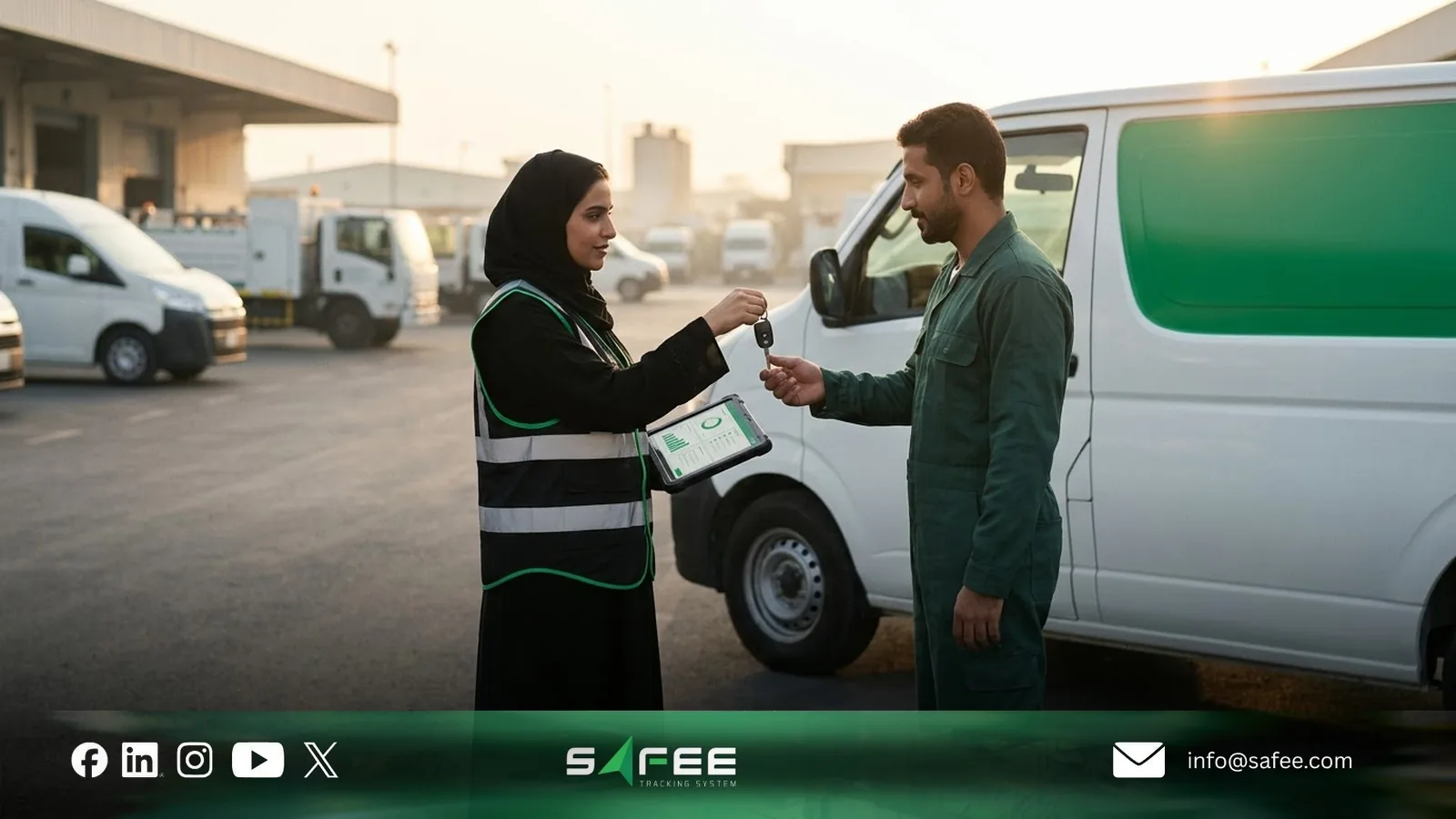
Why does your company need fleet management?
Fleet management helps companies control operating costs, maintain vehicle availability, and reduce safety and compliance risks.
Without coordinated maintenance, cost monitoring, and driver oversight, a vehicle may appear available for work while an unresolved fault, expired document, or recurring operational problem puts its next assignment at risk.
The value lies in identifying these issues early, assigning responsibility, and verifying that corrective actions have been completed.
Control operating costs and reduce avoidable waste
A vehicle’s purchase price or lease payment represents only part of its cost. Total Cost of Ownership (TCO) also considers fuel, maintenance, tyres, insurance, financing where applicable, depreciation, and the financial impact of downtime.
Tracking these costs helps managers distinguish between vehicles that are expensive to operate and those whose costs reflect heavier workloads.
For vehicles with comparable duties, cost per kilometer is a useful starting point. Divide the costs attributable to a reporting period by the distance travelled during that same period. Compare similar vehicles using consistent cost categories.
However, mileage is not always the right measure. Heavy equipment may be better assessed by cost per engine hour, while delivery fleets may also need to consider cost per completed delivery.
When costs rise, investigate the underlying cause rather than assuming fuel prices or driver behavior are responsible. For example:
- Fuel costs: Compare consumption, idling, and distance against similar vehicles and operating conditions.
- Maintenance expenses: Identify recurring repairs, unplanned downtime, and vehicles approaching replacement decisions.
- Vehicle utilization: Check whether underused vehicles are adding fixed costs without providing sufficient operational value.
These findings support decisions about maintenance planning, route adjustments, vehicle allocation, and replacement timing.
Reduce safety risks and compliance disruptions
Poor safety management can result in accidents, operational interruptions, financial losses, and contractual consequences.
Fleet teams need reliable incident records, driver assignments, and vehicle activity data to investigate what happened and determine appropriate corrective actions.
For example, when repeated speeding events occur, managers should identify the driver, review the circumstances, and decide whether coaching, additional supervision, or another intervention is required. Tracking records support investigations but do not establish fault on their own.
Compliance also affects vehicle availability. Expired registration, periodic inspection, or operating permits can prevent vehicles from undertaking activities for which valid documentation is required.
Effective fleet management connects document expiry dates with operational readiness. Assign each renewal to a responsible person, set reminders before deadlines, and prevent dispatch when an essential requirement remains unresolved.
For Saudi transport operators, additional requirements may apply depending on the licensed activity. We cover these in the section on fleet management regulations in Saudi Arabia.
Address industry-specific fleet challenges
Any company that depends on vehicles to deliver services or support operations needs fleet management, although its priorities differ by sector.
| Sector | Typical vehicles | Main management priorities |
|---|---|---|
| Transport and logistics | Trucks, trailers, refrigerated vehicles | Vehicle readiness, delivery performance, journey costs, and applicable Wasl requirements |
| Construction | Excavators, tippers, cranes, supervisor vehicles | Equipment utilization, maintenance by engine hours, and availability across sites |
| Oil and gas | 4×4 vehicles, tankers, service trucks | Journey safety, driver behavior, remote operations, and contractual IVMS requirements |
| Delivery and retail | Vans, motorcycles, light commercial vehicles | Delivery completion, route efficiency, vehicle utilization, and cost per delivery |
| Field services | Technician vans, maintenance vehicles | Vehicle availability, technician assignments, and arrival times |
| Staff and school transport | Buses, minibuses | Driver safety, vehicle inspections, route reliability, and passenger protection |
| Government and municipalities | Service vehicles, waste trucks, public works equipment | Asset utilization, service completion, operating costs, and accountability |
For example, a logistics fleet may prioritize delivery delays and vehicle availability, while a construction fleet needs reliable engine-hour records to schedule equipment maintenance. Municipal fleets may place greater emphasis on verifying that assigned service routes were completed.
Our guides to logistics fleet management in Saudi Arabia and waste management fleet tracking explain these sector-specific requirements in greater detail.
The right fleet management approach depends on which operational failures create the greatest cost, safety risk, or service disruption for your business.
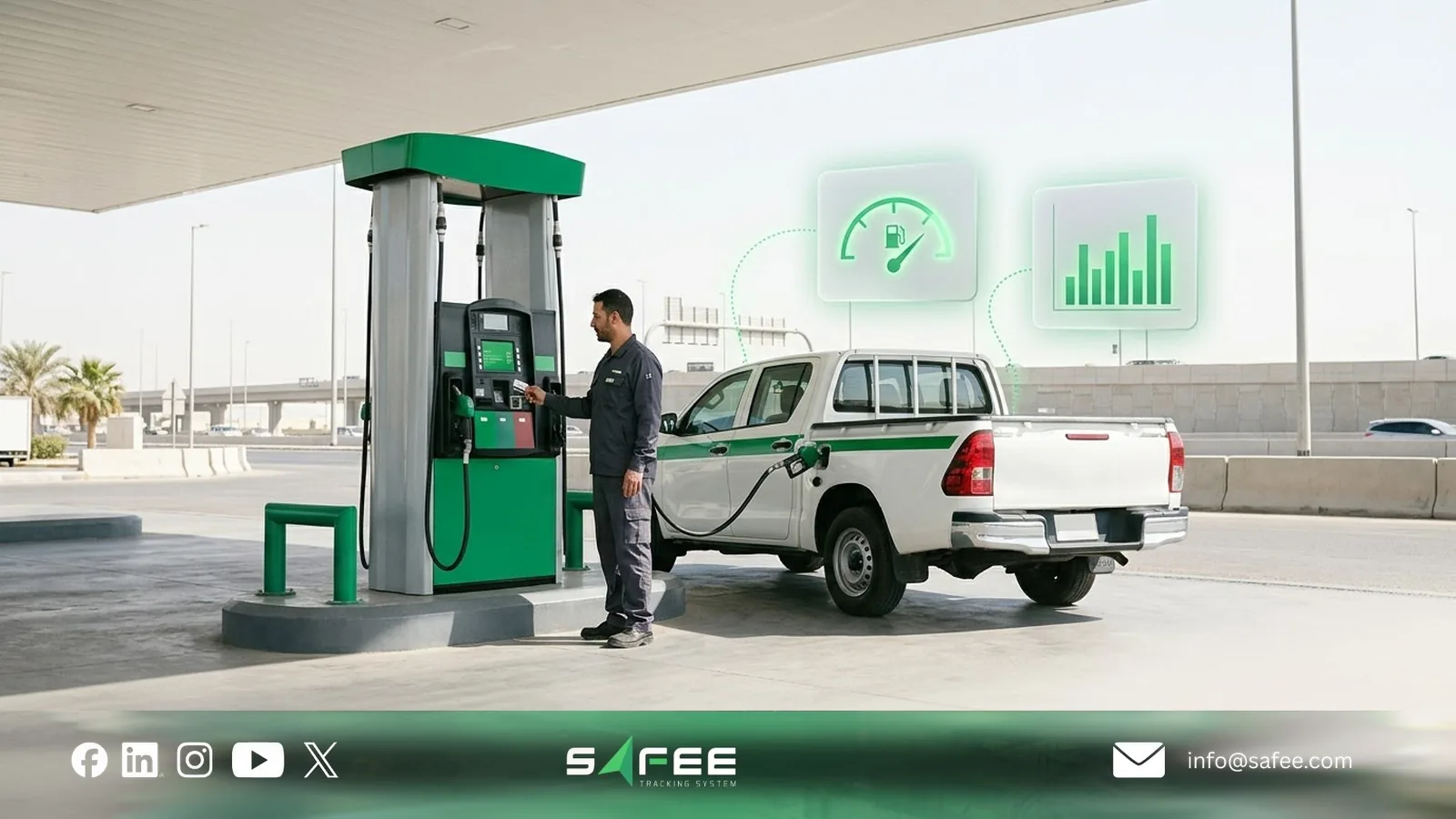
How does fleet management work?
Fleet management works through a continuous process of planning vehicle operations, monitoring performance, identifying problems, and taking corrective action.
Companies can manage this process manually or use fleet management software to connect vehicle data, maintenance records, driver assignments, and operational reports. The essential requirement is that every task has a responsible owner and a clear follow-up process.
Manual fleet management or a fleet management system?
Both approaches cover the same responsibilities. The difference lies in how information is collected, shared, and used.
| Management area | Manual management | Fleet management system |
|---|---|---|
| Vehicle activity | Driver updates, dispatch records, and manual trip logs | GPS tracking, trip history, and configured movement alerts |
| Maintenance | Spreadsheets and calendar reminders | Service schedules linked to dates, mileage, or supported engine-hour readings |
| Fuel | Receipts and manual expense reconciliation | Fuel reports using recorded transactions or compatible vehicle and sensor data |
| Driver accountability | Duty rosters and assignment records | Driver assignments linked to vehicle activity, with identification hardware where required |
| Documents and reports | Manually maintained records and periodic summaries | Expiry reminders, consolidated records, and scheduled reports |
Manual management can work when records are accurate and responsibilities are clear. However, coordinating separate spreadsheets, workshops, drivers, and branches becomes more difficult as operational complexity increases.
Fleet management software reduces this administrative burden by centralizing information and highlighting exceptions. It still depends on accurate records, compatible equipment, and employees who act on the information.
For a detailed transition process, see our guide to moving from manual to digital fleet management.
How does a fleet management system work?
A fleet management system supports four connected activities:
- Collect and organize data: Combine GPS tracking information with vehicle records, driver assignments, maintenance schedules, and available sensor readings. Check data accuracy before relying on it.
- Configure operational rules: Define maintenance intervals, driving restrictions, document reminders, and alert thresholds according to your fleet’s requirements.
- Detect issues and assign actions: When a configured condition is met, the system provides an alert or report. The responsible team investigates, takes action, and records the outcome.
- Review and improve performance: Compare vehicle availability, operating costs, safety events, and unresolved issues against your targets. Adjust procedures when recurring problems remain.
For example, when a vehicle approaches its scheduled service, the system can flag the upcoming task. The maintenance team must then schedule the work, confirm its completion, and update the service record.
The system provides information and supports workflows; your team remains responsible for operational decisions and follow-up.
Who manages the fleet: in-house, outsourced, or hybrid?
Companies can manage fleet operations internally, delegate selected responsibilities, or combine both approaches.
| Management model | How responsibilities are handled | Key consideration |
|---|---|---|
| In-house management | Internal teams control operations, maintenance, drivers, and reporting, supported by software or external suppliers where needed | Requires sufficient staff, expertise, and clear accountability |
| Outsourced management | A service provider handles agreed operational or administrative functions | Requires defined service levels, reporting access, and oversight |
| Hybrid management | Internal teams retain core operational decisions while external providers support maintenance, technology, or specialist functions | Requires clear boundaries between internal and external responsibilities |
Vehicle leasing is a separate decision. It determines how vehicles are obtained and financed, while the lease agreement may also include maintenance, insurance, or management services.
Before selecting a model, establish who approves maintenance, responds to incidents, manages drivers, and provides operational reports. Confirm data access, service levels, and escalation responsibilities in the agreement.
Our guide to fleet management services compares these operating models and the responsibilities that can be outsourced.
How to start fleet management in your company
Start with the operational problems your business needs to control, then build the processes and records required to address them.
- Assess your fleet: Record vehicles, locations, operating roles, responsible drivers, and existing management systems.
- Identify priority problems: Review recurring downtime, maintenance delays, fuel discrepancies, safety events, or reporting gaps. Establish a baseline for the problems you select.
- Assign responsibilities: Specify who manages maintenance, driver records, documents, alerts, and operational decisions.
- Establish essential controls: Create maintenance schedules, document expiry records, driver assignments, and incident reporting procedures. Check activity-specific regulatory obligations, including Wasl requirements where applicable.
- Select suitable tools: Determine whether existing records and software are sufficient or whether GPS tracking, additional sensors, or integrated fleet management software are needed.
- Configure and test workflows: Start with priority alerts and reports. Assign recipients, define response procedures, and verify that the information reaches the right people.
- Measure results: Review a small set of relevant KPIs, such as on-time maintenance, vehicle downtime, or unresolved safety alerts. Use the findings to adjust operations.
Avoid implementing every available function at once. Begin with a manageable operational problem, confirm that the chosen process works, and expand when your team can demonstrate reliable follow-up.
Our guide to fleet management KPIs explains how to select indicators that support operational decisions.

Fleet management compliance requirements in Saudi Arabia
Fleet management in Saudi Arabia includes regulatory obligations that vary by transport activity, vehicle category, and operating model. Fleet managers must identify which requirements apply to their vehicles and keep the relevant licences, documents, and technical connections valid.
The main areas to check are:
- Transport licences and operating cards: The Transport General Authority (TGA) regulates licensed transport activities and issues operating cards for vehicles where required. Check each vehicle’s eligibility, card status, and renewal requirements. See our guide to the Saudi operating card for transport vehicles.
- Vehicle registration and inspection: Keep vehicle registration (Istimara), insurance, and periodic technical inspection records current, following the requirements applicable to each vehicle category.
- Driver eligibility: Verify the appropriate driving licence, required authorizations, and applicable employment or residency documentation before assigning a driver.
- Wasl integration: Transport activities subject to Wasl requirements must meet the applicable registration, tracking, and data-sharing obligations. A connected tracking device alone does not establish full regulatory compliance. Our guide to the Wasl platform in Saudi Arabia explains the integration.
- Tracking service providers: Distinguish between CST tracking-service registration and any TGA technical-provider qualification required for your activity. Verify the provider’s legal identity, qualification category, supported devices, and integration scope before contracting.
The practical priority is preventing compliance gaps from disrupting operations. Maintain a register of applicable requirements, assign responsibility for renewals, and verify that regulatory data is transmitted correctly where required.
Always check the current rules for your specific transport activity through the relevant Saudi authority.
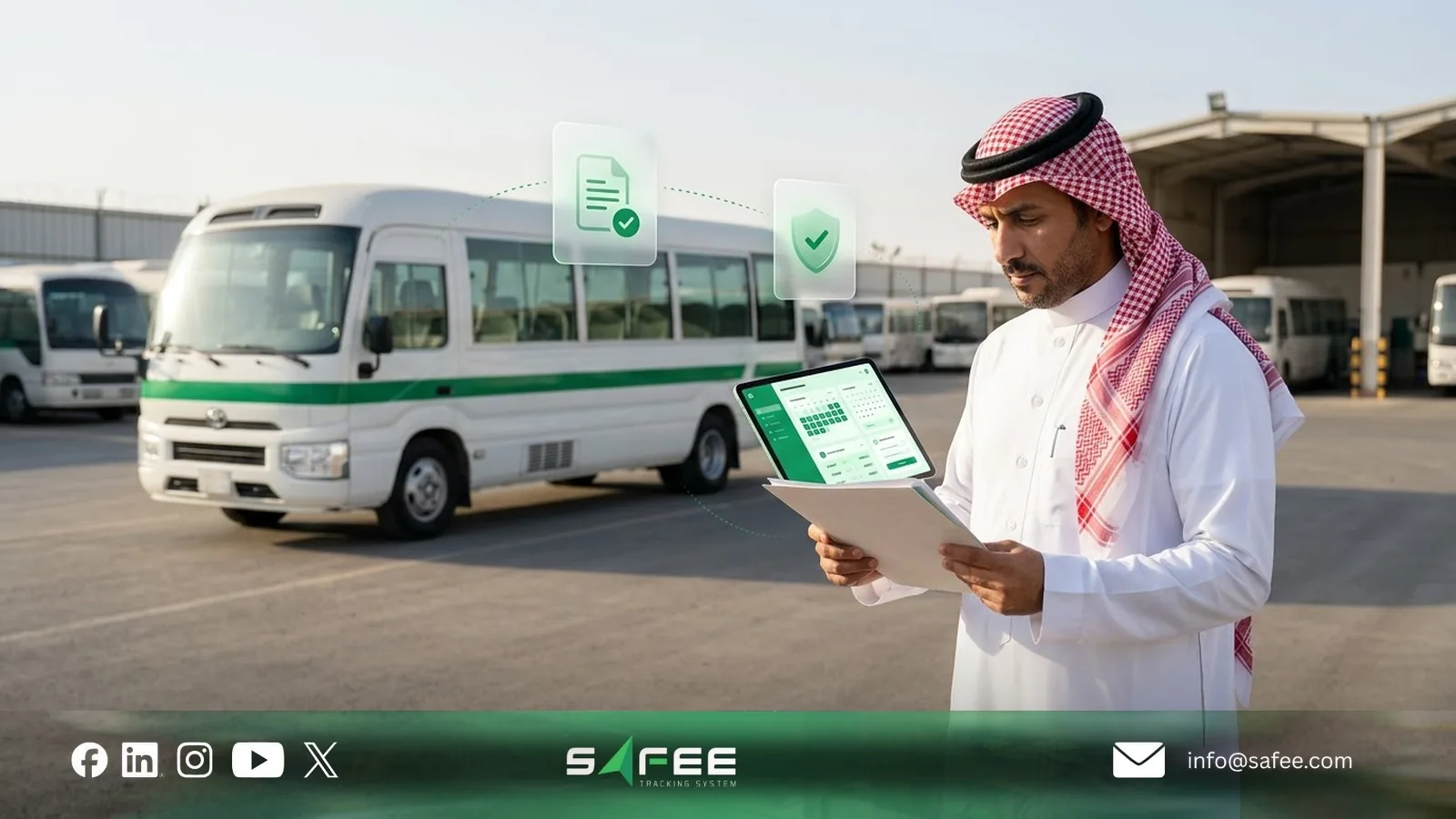
How Safee helps you manage your fleet
At Safee, we help fleet teams connect vehicle tracking data with the records, alerts, and reports needed to manage daily operations. Our platform brings these functions together in Arabic and English, reducing the need to investigate problems across separate systems.
Here’s how we support your fleet management responsibilities:
- Monitor vehicle availability: Live Vehicle Tracking shows vehicle locations, trip histories, and connectivity status. Your team can identify tracking interruptions and investigate vehicles that have stopped reporting.
- Prevent missed maintenance and renewals: Our Maintenance Module supports service schedules based on dates, mileage, or available engine-hour data. Expiries Explorer helps teams identify vehicle and driver documents approaching their renewal deadlines.
- Investigate fuel discrepancies: Fuel Explorer uses compatible sensor or CANbus data to review fuel levels, consumption, and unusual changes. Managers can compare these readings with vehicle activity before deciding whether further investigation is necessary.
- Improve driver accountability: Driver Management supports manual and dynamic driver assignments. Driver performance reports and Alarms and Alerts help supervisors identify repeated violations and follow up with the relevant drivers.
- Monitor planned journeys: Our Journey Management System (JMS) supports planned trips, checkpoints, and configured journey restrictions, helping operations teams investigate deviations during a trip.
- Review performance and Wasl data: Fleet Reporting provides scheduled reports for operational reviews. For applicable Saudi transport activities, our Wasl integration and Wasl Explorer help teams review transmitted data and identify communication or reporting issues.
Some capabilities require compatible tracking devices, vehicle data, additional sensors, or specific module configurations. Before deployment, we can help your team review the equipment and operational functions required.
Our role is to make relevant fleet information available for action. Your team remains responsible for maintenance decisions, driver coaching, regulatory obligations, and corrective measures.
Request a Safee Fleet Demo to explore how our platform can support your fleet’s existing operations and management requirements.
FAQs about fleet management
Is fleet management part of logistics?
Fleet management supports logistics but also applies to companies transporting staff, operating service vehicles, or managing equipment. Logistics coordinates the movement of goods, while fleet management focuses on the vehicles, drivers, and resources involved.
Does a company with only a few vehicles need fleet management?
Yes. Even a small fleet needs maintenance schedules, valid documents, cost records, and clear responsibilities. The management process can remain simple until operational complexity increases.
What are the goals of fleet management?
The main goals are controlling operating costs, maintaining vehicle availability, improving safety, and meeting applicable requirements. Companies measure progress using KPIs suited to their operations.
Will Safee take over my fleet team’s job?
No. We provide tracking information, alerts, and reports that support your team’s decisions. Your organization remains responsible for managing vehicles, drivers, and daily operations.
Ready to improve your fleet operations?
Tell us what you would like to improve. A Safee specialist will reply by email.
Usually replies within one business day • No sales spam
Your details are used only to respond to your request. Privacy Policy