
What to Look for in a Fleet Tracking System with Camera
GPS tells you where your trucks are, but it doesn’t tell you why your profits are leaking through accidents and false insurance claims. For years, fleet managers have operated with a visibility gap, relying on dots on a map while remaining blind to the road incidents and driver behaviors that actually dictate the bottom line.
In this guide by Safee, we bridge that gap. You will discover:
- How a fleet tracking system with camera provides the indisputable evidence needed for driver exoneration.
- Why vehicle tracking with camera technology—like —is the only way to prevent distracted driving in real-time.
- How to choose the right hardware and software features to maximize your ROI and lower insurance premiums.
Stop managing in the dark; it’s time to see the truth behind every kilometer.
What Is a Fleet Tracking System with Camera?
For years, fleet management was limited to dots on a map. You knew where your vehicle was, but you were blind to what was happening inside the cabin or on the road. A fleet tracking system with camera—often referred to as a Video Telematics system—is the technology that finally closes this visibility gap.
It is an integrated solution that combines traditional GPS tracking with high-definition video recording and, in advanced cases like Safee, Artificial Intelligence (AI). Unlike a standard consumer dashcam, a professional vehicle tracking system with camera is connected directly to the cloud. This means video footage is not just stored on an SD card; it is synchronized with vehicle data (speed, location, and G-force) to provide a 360-degree context of every trip.
At its core, fleet tracking with camera technology serves as a digital witness. It monitors:
- The Road Ahead: Capturing external events, traffic conditions, and accidents.
- The Driver (In-Cab): Identifying risky behaviors such as distracted driving, fatigue, or mobile phone usage through AI sensors.
- The Cargo: Ensuring that high-value goods remain secure and handled properly during transit.
Essentially, it turns “I think I know what happened” into “I have the video evidence to prove what happened.
Also read: Video IVMS: The Complete Solution for Safer and Smarter GCC Fleet Operations
How does a Vehicle Tracking System with Camera Work?
Understanding how a vehicle tracking system with camera operates is key to realizing its value. It’s not just about recording video; it’s about the seamless synchronization of visual evidence with telematics data. Think of it as a nervous system where the GPS provides the location, the sensors provide the feel, and the camera acts as the eyes.
The workflow of professional fleet tracking with camera technology follows four critical steps:
- Data & Video Capture: High-definition cameras (dual-facing or multi-angle) continuously record the road and the cabin. Simultaneously, the fleet tracking system with camera collects GPS coordinates, speed, and engine data.
- AI Analysis & Event Triggering: This is where the “intelligence” happens. Modern systems use AI to monitor for specific “events” like harsh braking, a sudden impact, or a driver falling asleep. Instead of uploading hours of useless footage, the system only flags the moments that matter.
- Instant Cloud Transmission: When an event is triggered, a short video clip (event-video) is instantly uploaded via cellular networks to the cloud platform.
- Real-Time Governance: You receive an instant alert on your dashboard. You can view the video alongside the vehicle’s exact location and speed at that precise millisecond.
By integrating this with Safee’s Intelligent Vehicle Video Management System (VIVMS), you aren’t just watching a movie; you are managing a data-driven operation where video provides the “why” behind every “where.” This automation ensures that you only spend time reviewing critical incidents, rather than scrubbing through hours of recordings.
Also read: How Telematics Vehicle Tracking Is Redefining Modern Fleet Management?
Benefits of Fleet Tracking with Camera Technology
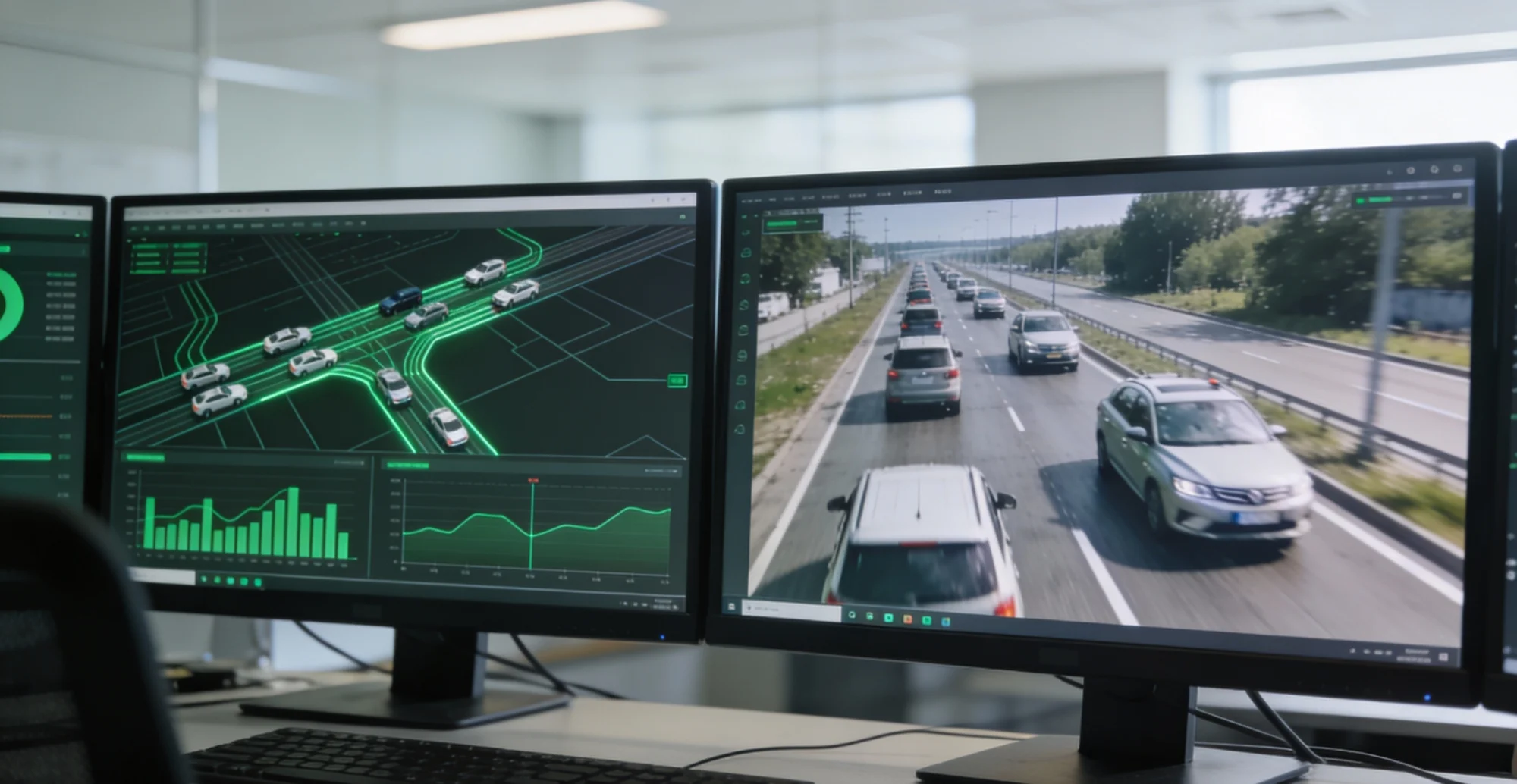
Implementing a fleet tracking system with camera is one of the most significant upgrades you can make to your operations. It moves your management style from “guessing” to “knowing.” While GPS gives you the data, video gives you the truth, providing a layer of protection that numbers alone cannot offer.
The strategic advantages of adopting fleet tracking with camera technology include:
- Instant Driver Exoneration: This is the #1 benefit. In the event of an accident, your drivers are often blamed by default. High-definition video evidence proves what really happened, protecting your drivers from false claims and saving your company from massive legal settlements and insurance hikes.
- Proactive Accident Prevention: By using a vehicle tracking system with camera equipped with AI, you can detect signs of fatigue or distraction (like phone usage) before an accident occurs. Real-time in-cab alerts warn the driver, effectively preventing collisions and saving lives.
- Drastic Reduction in Insurance Costs: Insurance providers favor fleets that take safety seriously. Having a fleet tracking system with camera often leads to lower premiums because you are lower-risk and have the data to prove your commitment to safety.
- Enhanced Driver Coaching: Instead of vague feedback, you can use real footage to train your team. Showing a driver a clip of their own near-miss is a far more powerful coaching tool than any manual or lecture.
- Security for High-Value Cargo: For fleets carrying expensive goods, fleet tracking with camera acts as a deterrent against theft and a tool for monitoring cargo handling, ensuring that your assets arrive in perfect condition.
By leveraging Safee’s VIVMS, you turn these benefits into a standard operating procedure. You gain total peace of mind knowing that every kilometer driven is recorded, analyzed, and protected by the best technology in the market.
Types of Cameras Used in Fleet Tracking Systems
Not all cameras are created equal. Depending on your business goals—whether it’s reducing accidents or preventing cargo theft. You need the right hardware to complement your fleet tracking system with camera. Choosing the correct type ensures you capture the critical angles that protect your business.
Here are the primary types of cameras integrated into a professional vehicle tracking system with camera:
- Road-Facing Dashcams: These are the most common. They record the view out of the windshield to capture traffic conditions, accidents, and near-misses. They are essential for fleet tracking with camera setups focused on accident exoneration.
- Driver-Facing (In-Cab) Cameras: These monitor the driver’s behavior. Using AI, they detect signs of distracted driving, such as mobile phone use, smoking, or yawning (fatigue).
- Dual-Facing Cameras: A popular “all-in-one” solution that houses two lenses in one device—one recording the road and the other recording the driver. This is the gold standard for a fleet tracking system with camera because it provides full context for any incident.
- Side & Rear Cameras: Ideal for heavy trucks and trailers. These help eliminate blind spots and provide evidence in cases of side-swipe accidents or during complex reversing maneuvers.
- Interior Cargo Cameras: Specifically designed for logistics fleets to monitor the security and condition of high-value goods inside the trailer or delivery van.
[Image showing different camera mounting positions on a commercial truck: Road-facing, In-cab, and Side-view]
The Safee Advantage: No matter which camera configuration you choose, our system seamlessly integrates all feeds into a single interface. You can view live streams or historical footage directly through the Safee Intelligent Video Management System, ensuring you have eyes on every part of your operation.
Stop guessing what happened on the road. Request a Personalized Safee Demo today and find the perfect camera setup for your fleet.
Also read: Heatmap Visualization: Optimize Fleet Performance – Safee
Key Features to Look for in a Fleet Tracking System with Camera
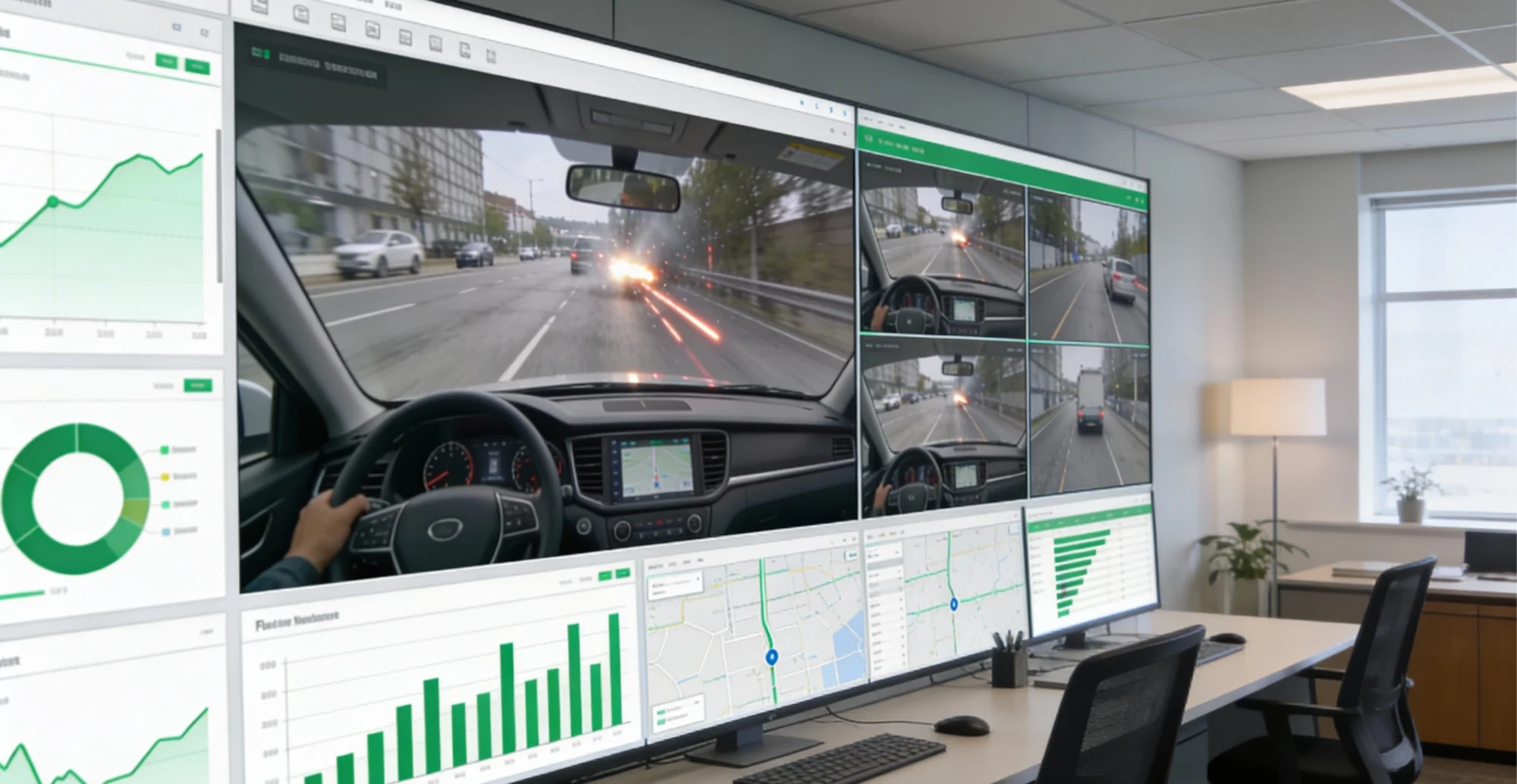
Choosing a fleet tracking system with camera is a long-term investment. To ensure you aren’t just buying “expensive dashcams” but a truly strategic tool, you must look for features that prioritize data integrity, ease of use, and automation.
At Safee, we recommend prioritizing these five key features:
- AI-Powered Behavioral Analysis: A high-quality vehicle tracking system with camera should do more than just record; it should think. Look for AI that detects distracted driving, cell phone usage, and fatigue in real-time to prevent accidents before they happen.
- High-Definition (HD) Night Vision: Accidents don’t only happen in daylight. Your fleet tracking with camera setup must have infrared (IR) or superior low-light sensors to ensure clear evidence during night shifts or in poor weather conditions.
- Instant Cloud Integration & Live Streaming: Avoid systems that require you to manually pull SD cards. A professional fleet tracking system with camera should offer instant “Event-Video” uploads to the cloud and the ability to “Live Stream” whenever you need to check on a high-value shipment.
- G-Sensor & Automatic Incident Tagging: The system should automatically lock and upload footage when it detects a sudden impact or harsh braking. This ensures that critical evidence is never overwritten.
- Scalable Storage & Security: Data privacy is paramount. Ensure the system provides secure, encrypted cloud storage that can handle months of data as your fleet grows.
The Safee Standard: We’ve built these features into the core of our . We don’t just give you video; we give you actionable insights that are easy to manage from a single dashboard.
Don’t settle for basic recording. and see how we redefine fleet safety.
Also read: Vehicles and Transportation Fleet Tracking Services
How to Choose the Right Vehicle Tracking System with Camera
Selecting the right vehicle tracking system with camera for your business is a strategic decision that goes beyond just buying hardware. The market is flooded with options, but for a professional fleet, you need a solution that balances technical reliability with actionable business intelligence.
To make the right choice, evaluate your options based on these four strategic criteria:
- Define Your Primary Use Case: Are you looking to lower insurance premiums? Or is your main goal preventing driver fatigue? If safety is your priority, choose a fleet tracking with camera system that features dual-facing AI lenses. If cargo security is the goal, prioritize multi-camera setups with wide-angle interior views.
- Evaluate Software Integration: A camera is only as good as the software behind it. Ensure your fleet tracking system with camera integrates seamlessly with your existing telematics platform. is designed to centralize all video and GPS data into one intuitive dashboard, preventing “data silos.”
- Check for Real-Time Connectivity: In an emergency, you can’t wait to retrieve an SD card. Look for a vehicle tracking system with camera that offers 4G/5G connectivity for instant event alerts and live streaming. This ensures you have immediate “eyes on the ground” when it matters most.
- Assess Scalability and Support: Your fleet will grow, and your technology should grow with it. Choose a provider that offers modular hardware and robust cloud storage. At Safee, we provide scalable solutions that adapt to your fleet’s size, backed by expert technical support to ensure your system never goes offline.
The Holland Strategy Tip: Don’t just look at the price tag; look at the “Total Cost of Ownership.” A cheap camera that fails in high temperatures or loses footage during a crash is more expensive in the long run than a high-quality, professional system.
Ready to make the right choice? Let our experts help you build the perfect fleet tracking system with camera.
Why Choose Safee for Your Fleet Tracking System with Camera
Choosing Safee means choosing a partner that understands the high stakes of fleet management. We don’t just sell hardware; we provide a high-integrity “Truth Engine” that protects your drivers, your reputation, and your bottom line. While others provide basic recording, our fleet tracking system with camera is built on the foundation of .
Here is what makes Safee the industry leader:
- Military-Grade Data Reliability: Our vehicle tracking system with camera ensures that critical footage is captured and uploaded even in the most challenging environments. With a 99% data accuracy rate, you can rely on us when you need evidence for insurance or legal protection.
- Seamless AI Integration: Unlike fragmented systems, Safee’s AI is baked into the dashboard. Our fleet tracking with camera technology doesn’t just record; it actively monitors for fatigue, smoking, and phone usage, sending instant alerts to prevent accidents before they occur.
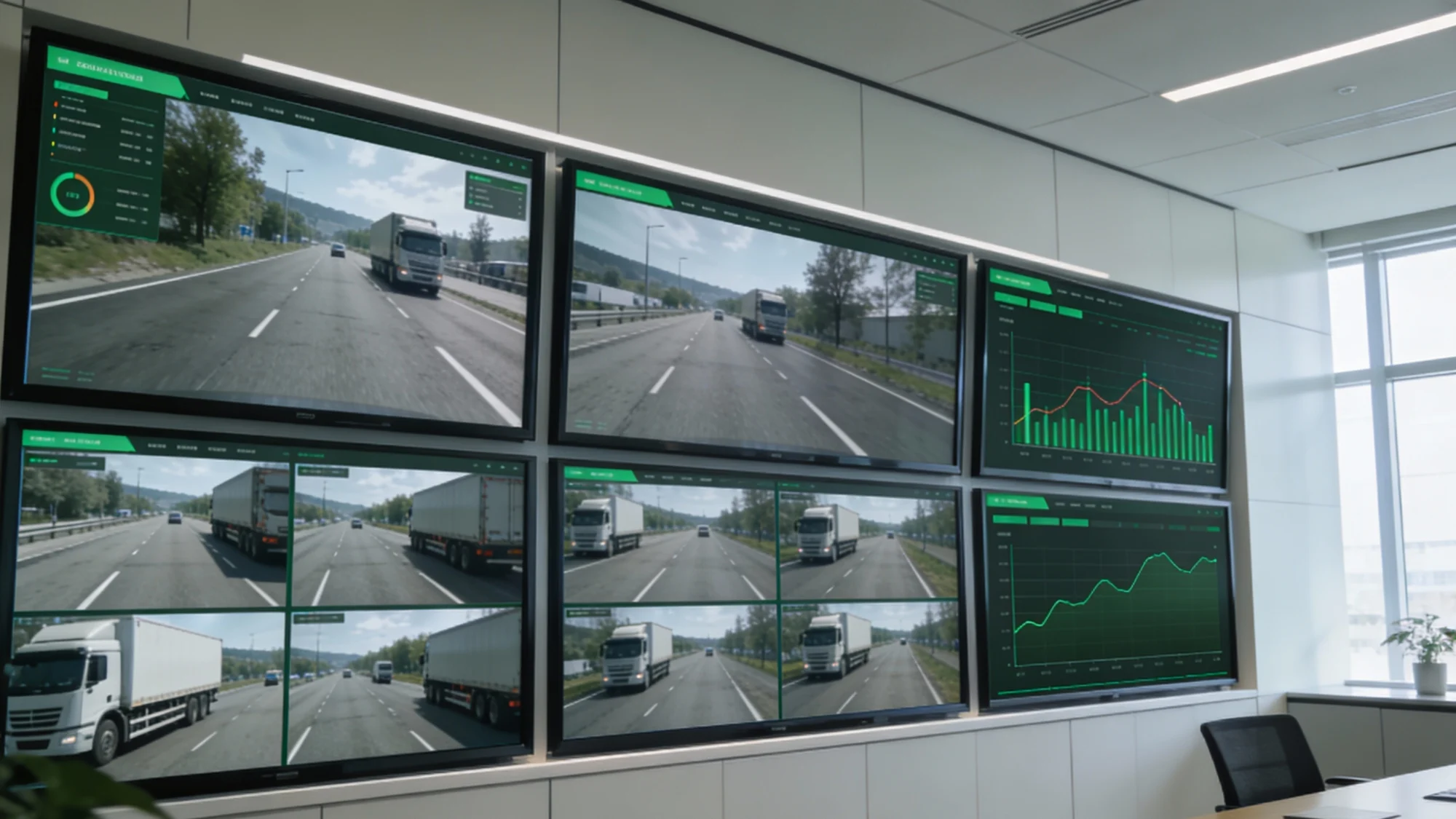
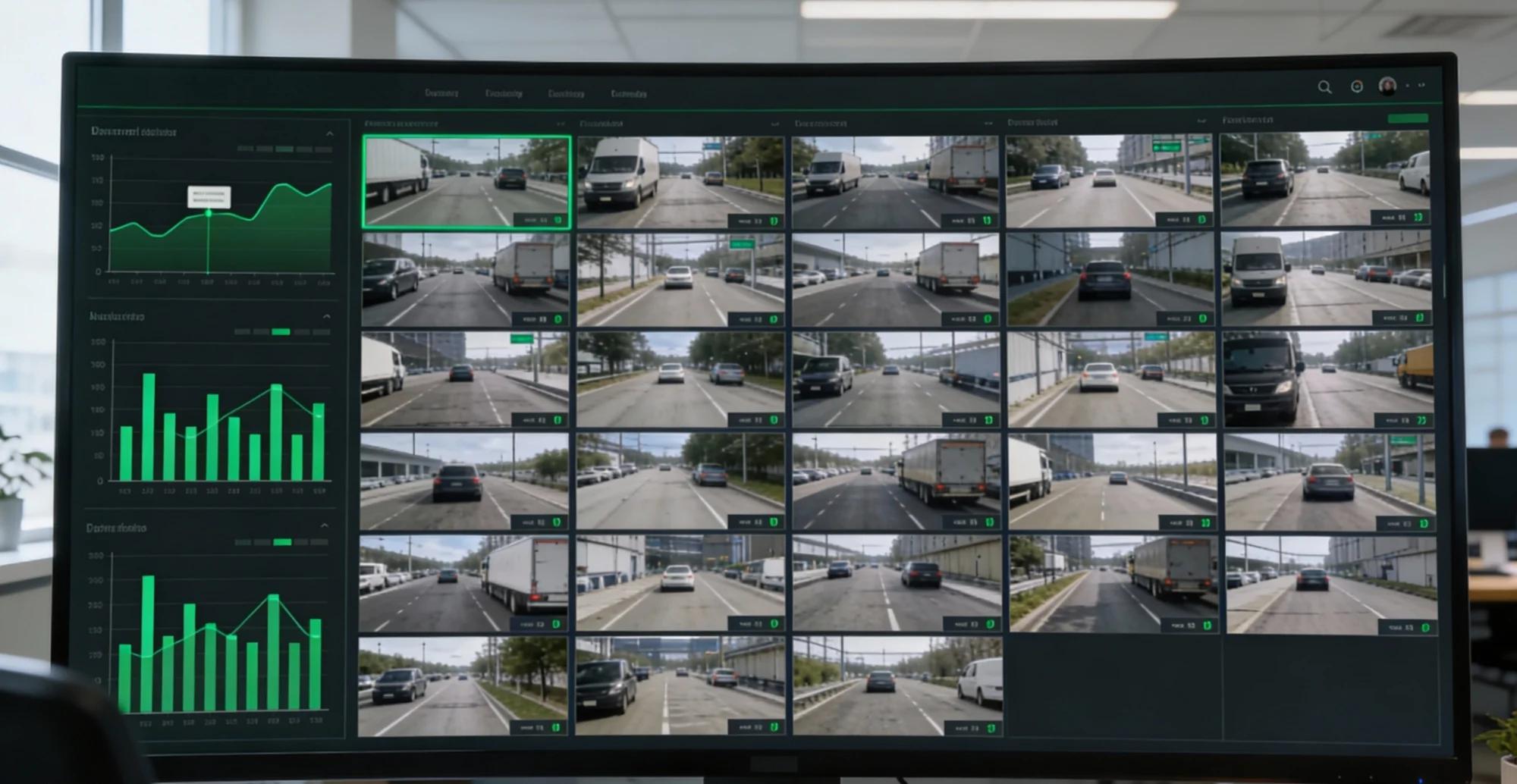
- Unified Control Hub: We eliminate the need for multiple apps. From, you can track GPS location, monitor fuel consumption, and view live video feeds simultaneously. It’s a 360-degree view of your entire operation in one window.
- Global Compatibility: Our system supports over 1,400 hardware protocols, meaning we can integrate the best camera hardware into our world-class software, giving you a truly customized and scalable solution.
At Safee, we turn video data into actionable intelligence. We help you move from being reactive to being a proactive, safe, and highly profitable fleet.
Experience the future of fleet safety today. and see why thousands of vehicles trust our fleet tracking system with camera.
FAQs about Fleet tracking with Camera:
What are fleet cameras?
Fleet cameras are specialized, ruggedized video recording devices designed for commercial vehicles. Unlike standard dashcams, they are integrated into a fleet tracking system with camera to provide synchronized video and telematics data. They can face the road, the driver, or the cargo to ensure total operational visibility and safety.
What is the best fleet tracking software?
The best software is one that offers a unified dashboard for video and GPS data. Safee is widely considered a top-tier choice because its vehicle tracking system with camera integrates AI-driven analytics with real-time tracking, allowing managers to monitor entire fleets through a single, scalable cloud platform.
What is the AI camera for fleet?
An AI camera is an advanced sensor used in fleet tracking with camera setups that can “see” and “interpret” behavior. It uses machine vision to detect risks such as driver fatigue, distracted driving (mobile phone use), or tailgating, and provides instant in-cab alerts to prevent accidents before they occur.
How is AI used in fleet management?
AI is used to automate the analysis of thousands of hours of footage. In a professional fleet tracking system with camera, AI identifies critical events—like harsh braking or lane departures and automatically tags them for review. This allows managers to focus on high-risk incidents instead of manually watching raw video.
How much does a fleet tracking system with camera cost?
The cost of a vehicle tracking system with camera varies based on the number of cameras (single, dual, or multi-view) and the level of AI features required. Generally, it involves an upfront hardware cost and a monthly subscription fee for cloud storage and live-streaming capabilities.
Can I install fleet cameras myself or do I need a professional?
While some basic dashcams are plug-and-play, a professional fleet tracking system with camera usually requires expert installation. This ensures that the cameras are correctly calibrated with the vehicle’s power source and sensors, and that all wiring is tamper-proof for maximum security and data integrity.
Ready to improve your fleet operations?
Tell us what you would like to improve. A Safee specialist will reply by email.
Usually replies within one business day • No sales spam
Your details are used only to respond to your request. Privacy Policy