

Essential Heavy Equipment Fleet Management Software Features
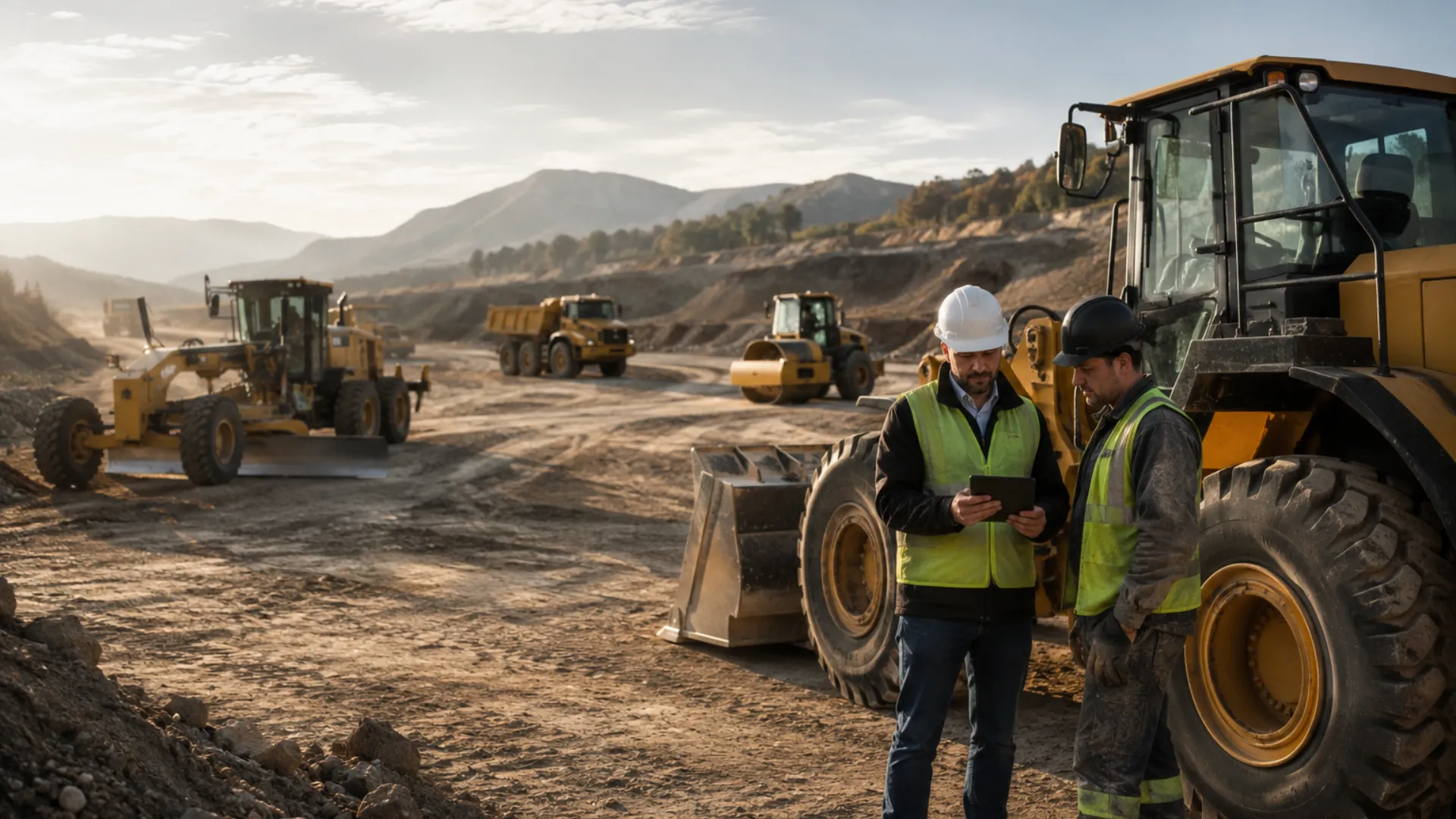
A job site can look fully equipped and still lose hours every day. Cranes wait for inspection clearance, excavators idle between tasks, generators run longer than expected, and maintenance teams hear about faults after the machine is already needed. For GCC construction and industrial operators, those gaps can delay work, increase rentals, raise fuel costs, and create avoidable safety pressure.
This guide explains how Heavy equipment fleet management software helps teams control machines, operators, sites, maintenance, fuel, safety alerts, and reports from one workflow. You will learn what fleet management software for heavy equipment should include, how crane fleet management software supports lifting operations, and how we at Safee help B2B fleets connect tracking, Equipment Activity Monitoring, engine-hour maintenance, alerts, reporting, mobile access, and integrations across the UAE, GCC, and global markets.
What is fleet management software for heavy equipment?
Heavy equipment fleet management software is a platform that helps construction, industrial, oil and gas, mining, infrastructure, and government teams track and manage high-value machines across job sites, yards, depots, and restricted areas. It should not only show where an asset is. It should help managers understand whether the machine is working, idle, unavailable, due for service, outside an approved zone, or linked to an unresolved fault.
For heavy assets, normal vehicle tracking is not enough. A crane may stay inside one project boundary for weeks. A loader may work for long engine hours without traveling far. A generator may run continuously but never leave the site. This is why Heavy equipment fleet management software (FMS) should connect location, engine hours, equipment activity, maintenance status, operator assignment, inspections, fuel visibility, alerts, and reporting into one operating model.
For a core of our platform view, review our website Safee’s fleet management platform and Live Vehicle Tracking capabilities.
Heavy equipment fleet management covers the full lifecycle of machines used to lift, dig, move, grade, compact, power, and support work on site. It can include cranes, excavators, loaders, bulldozers, compactors, graders, forklifts, generators, compressors, concrete equipment, and specialized industrial assets.
The workflow should help teams control:
- Active job sites, depots, yards, workshops, and restricted zones.
- Machine location, movement history, site entry, site exit, and unauthorized movement.
- Engine hours, working time, idle time, parked time, and downtime.
- Usage-based maintenance schedules and open defect follow-up.
- Operator assignment, certification records, and accountability.
- Pre-start and post-shift inspection checklists.
- Fuel consumption by machine, site, project, or shift.
- Crane-specific load or lift-record workflows where compatible systems are configured.
- Reports for operations, HSE, finance, maintenance, project teams, and leadership.
Our Equipment Activity Monitoring is especially relevant here because heavy equipment productivity is often measured by activity status, idle time, and working patterns, not road movement alone.
Why can’t construction and industrial companies afford poor equipment fleet tracking?
Poor equipment tracking creates hidden costs. When teams depend on phone calls, manual logs, paper checklists, and spreadsheets, it becomes harder to know which machines are available, which assets are underused, and which equipment should not be assigned because of maintenance or safety concerns.
Common operational gaps include:
- Machines sitting idle while managers assume they are working.
- Duplicate rentals because owned assets are hard to locate or reassign.
- Fuel waste from excessive idling, misuse, or weak site control.
- Weak accountability when operators are not connected to asset activity.
- Missing inspection evidence after incidents, disputes, or HSE reviews.
- Unauthorized movement of high-value equipment outside approved zones.
- Delayed decisions because reports are prepared too late to support project control.
- Unplanned downtime caused by missed engine-hour service or unresolved defects.
At Safee, we do not replace supervisors, maintenance teams, or HSE governance, we give those teams clearer evidence through live visibility, alerts, reports, and workflows so they can act earlier and more consistently.
Also read: Heavy Equipment Fleet Management & Maintenance Platform
Benefits of heavy equipment fleet management software
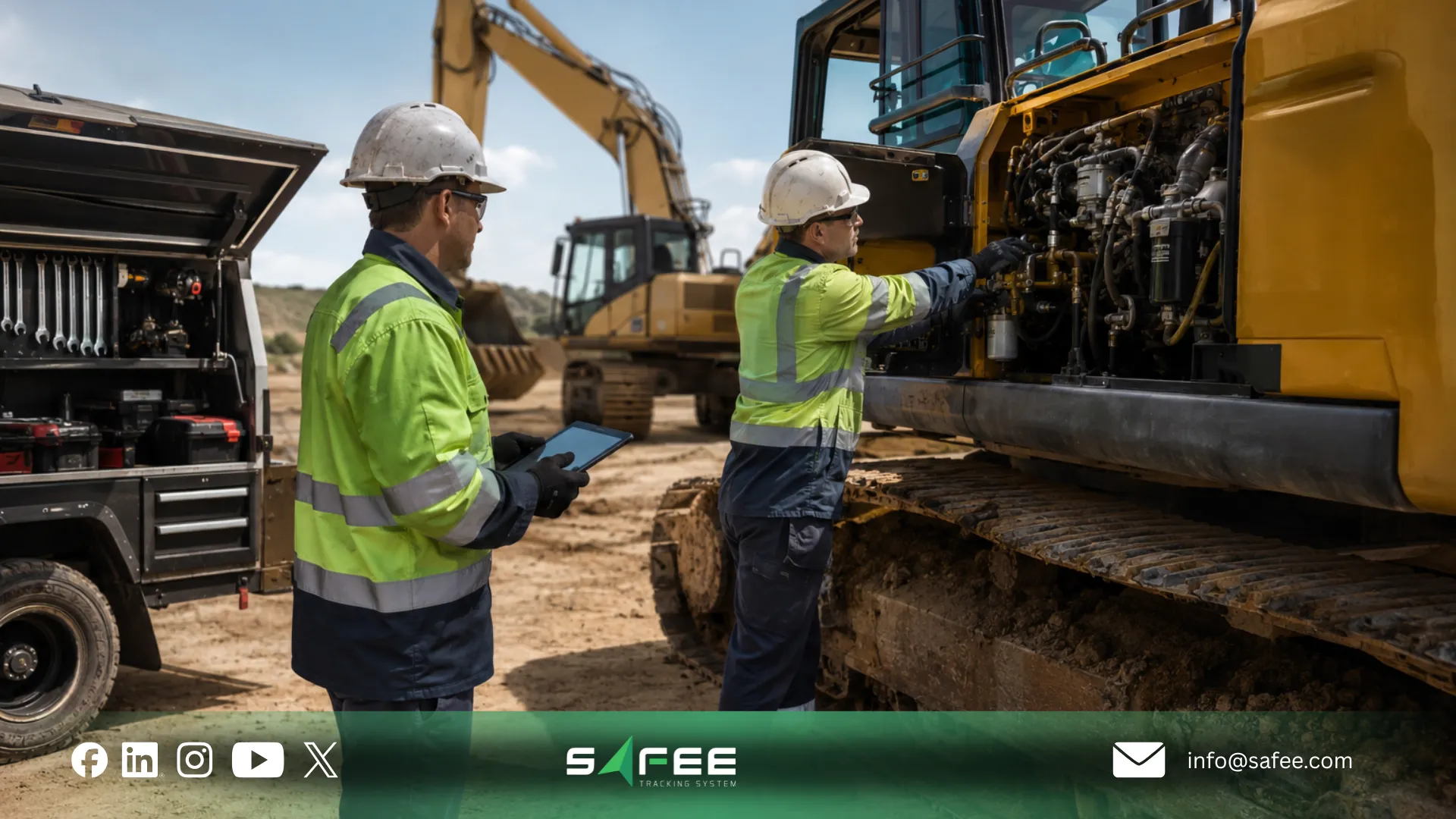
Heavy equipment fleet management software helps companies turn machine data into better decisions about uptime, safety, utilization, fuel, maintenance, and project cost. The value is not only knowing where each machine is; it is knowing whether the asset is active, idle, overdue for service, outside an approved zone, assigned to the right operator, or creating avoidable cost on site.
For construction, industrial, oil and gas, and infrastructure teams, this matters because heavy machines are expensive, safety-critical, and often spread across multiple job sites, depots, yards, and restricted zones. A strong system should connect machine visibility, maintenance control, operator accountability, alerts, reporting, and specialized equipment data in one practical workflow.
Reduce equipment downtime with predictive maintenance for heavy machines
Predictive maintenance helps reduce equipment downtime by using machine data to plan service before small issues become larger failures. In heavy equipment operations, this should be treated as a data-driven maintenance workflow, not a guaranteed savings claim.
The reason is simple: heavy machines do not all wear the same way. A crane working long shifts, an excavator operating in dust and heat, and a generator running continuously may need different maintenance logic. Calendar-based reminders alone are often too generic, while engine hours, inspection findings, service history, fault alerts, and usage patterns give maintenance teams a more realistic view of machine condition.
A practical maintenance workflow should help teams:
- Schedule service by engine hours, machine type, project, or operating conditions.
- Track open defects from daily inspection checklists.
- Separate critical no-operation issues from lower-priority service items.
- Give supervisors visibility into equipment readiness before assignment.
- Review repeated faults by asset, site, operator, or project.
- Build reports that show whether maintenance is protecting uptime.
This is where Our Maintenance Management and CANbus Integration can support the workflow. When compatible hardware and machine data are configured, teams can connect service rules, equipment health signals, fault-related alerts, and reporting into a more proactive maintenance process.
Need engine-hour maintenance instead of calendar-only reminders? Talk to us about configuring service rules, inspection follow-up, and reporting around your heavy machines.
Crane fleet management software for safer lifting workflows
Crane fleet management software supports safer lifting operations by connecting crane visibility, operator records, inspections, maintenance readiness, alerts, and reporting into one controlled workflow. Cranes are safety-critical assets, so location tracking alone is not enough.
A crane may be in the right location but still not ready for use if inspections are incomplete, the operator record is unclear, maintenance is overdue, or the lifting workflow requires additional evidence. For this reason, crane fleet management software should help teams monitor both the asset and the operating process around it.
A crane-specific setup should help track:
- Current site, approved operating zone, and movement between yards or projects.
- Operator assignment and authorization records.
- Pre-start and post-shift inspection completion.
- Engine hours and maintenance status before lift activity.
- Load monitoring and lift record logging where compatible hardware and systems are configured.
- Alerts for unauthorized movement, geofence breaches, faults, or safety exceptions.
- Exportable reports for HSE, maintenance, project teams, and management.
Compliance should be handled carefully. Requirements can vary by country, project owner, crane class, lifting plan, contractor policy, and local authority. The software can support documentation, alerts, and reporting workflows, but the fleet team should verify required documents, inspection obligations, operator certification rules, retention rules, and reporting evidence before deployment.
For crane and lifting workflows, Safee can help structure alerts, operator records, inspection visibility, Fleet Reporting, and asset monitoring. The final configuration should be built around the fleet’s crane types, project sites, hardware availability, sensor requirements, and HSE review process.
Improve equipment utilization and reduce idle time on construction sites
Heavy equipment fleet management software helps reduce idle time by showing which machines are active, parked, underused, overused, or assigned to the wrong site. Idle equipment is often a hidden cost because a machine may appear allocated to a project while adding little real productivity.
For construction and industrial companies, utilization visibility helps managers make better deployment decisions. Instead of relying on assumptions, teams can compare active time, idle time, parked time, movement history, project allocation, and operating patterns across sites and asset classes.
This can help teams:
- Move underused machines to higher-priority sites.
- Reduce unnecessary rental equipment.
- Compare usage between similar assets.
- Review idling patterns by site, shift, operator, or asset class.
- Improve maintenance planning based on actual workload.
- Create evidence for project cost allocation and asset lifecycle decisions.
The goal is not to remove every idle minute. Heavy machines often wait for access, materials, safety clearance, weather, or coordination with other trades. The real goal is to separate necessary standby time from avoidable waste.
Safee’s Fleet Reporting and Tracking Data Analyzer can help teams turn raw tracking data into utilization review, trend analysis, and management reporting. This gives operations, finance, maintenance, and project teams a clearer basis for deciding when to redeploy, service, replace, or rent equipment.
The benefits above work together as one operating system. Predictive maintenance protects uptime, crane workflows improve safety governance, and utilization reports help teams control idle equipment and project cost. The table below summarizes how each control area connects to a practical Safee capability.
Control Area | What It Helps Improve | Relevant Safee Capability |
Machine visibility | Know where assets are, whether they are active, idle, parked, or outside approved zones. | Live Vehicle Tracking, Equipment Activity Monitoring |
Maintenance control | Use engine hours, inspection findings, open defects, and service rules to plan maintenance earlier. | Maintenance Management, CANbus Integration |
Site and security control | Detect unauthorized movement, after-hours activity, and restricted-zone breaches. | Geofencing, Alarms and Alerts, Fleet Control |
Operator accountability | Connect operators to machines, shifts, alerts, inspections, and performance review. | Driver Management, Administration Panel |
Utilization reporting | Compare active time, idle time, site allocation, and project usage. | Fleet Reporting, Tracking Data Analyzer |
Specialized equipment workflows | Support fuel, TPMS, weight, remote visibility, or equipment-specific data where configured. | Advanced Modules, SatComm, Fuel Tracking |
Also read: Best Construction Equipment Fleet Management Software

Key features of fleet management software for heavy equipment
Fleet management software for heavy equipment should help teams control high-value machines across sites, yards, depots, and project zones. The right setup should not only show asset location; it should help managers track machine activity, engine hours, fuel use, operator assignments, safety alerts, inspections, utilization, and project reporting from one workflow.
For construction, industrial, oil and gas, and infrastructure fleets, these features matter because heavy equipment works differently from normal vehicles. A crane may stay inside one lifting zone, an excavator may work long hours without moving far, and a generator may run continuously on one site. The software should reflect that reality.
Real-time GPS tracking and geofencing
Real-time GPS tracking helps managers know where every machine is and whether it is active, idle, parked, or outside an approved zone. Geofencing adds another layer by creating virtual boundaries around sites, yards, depots, restricted zones, and after-hours storage areas.
For heavy equipment, this is less about road routing and more about site control. Safee’s Live Vehicle Tracking and Fleet Control can support asset visibility, movement history, geofence alerts, and better control over high-value equipment.
Engine-hours-based maintenance scheduling
Engine-hours-based maintenance is essential because heavy equipment can work intensively without traveling long distances. A calendar reminder alone may miss the real workload of cranes, excavators, generators, loaders, and compactors.
A stronger workflow connects engine hours, inspection findings, open defects, service thresholds, and fault-related alerts. Safee’s Maintenance Management and CANbus Integration can help teams use equipment data and diagnostic signals where compatible hardware and machine data are available.
Fuel consumption monitoring by machine and project
Fuel monitoring helps teams understand how each machine, site, shift, or project consumes fuel. This is useful for identifying excessive idling, unusual consumption patterns, misuse concerns, or mismatches between fuel use and actual work activity.
Our Fuel Tracking can support fuel visibility where the right data source or sensor setup is configured. For project teams, this helps move fuel review from general estimates to machine-level and site-level analysis.
Crane-specific load monitoring and lift records
Crane fleet management software should support safer lifting workflows when compatible hardware and process controls are available. Load monitoring and lift record logging can help HSE, operations, and project teams review lifting activity, operator records, inspection evidence, and exceptions.
This feature should be configured carefully. Requirements can vary by project, crane class, site owner, contractor policy, and local authority. Our Advanced Modules can support specialized workflows, while the fleet team should verify the exact hardware, sensor, reporting, and compliance requirements before deployment.
Equipment utilization reports by site and project
Utilization reports help managers see which machines are working, idle, parked, unavailable, or assigned to the wrong project. This supports better decisions around redeployment, rental reduction, maintenance planning, project allocation, and asset lifecycle review.
Our Fleet Reporting and Tracking Data Analyzer can help teams turn raw activity data into practical reports by site, project, asset class, or equipment type.
Operator assignment and certification tracking
Operator assignment connects each machine to the person using it, the shift, the site, and any related alerts or inspection records. This is important for accountability, safety review, and performance visibility.
Certification tracking should be handled according to the company’s policy and local requirements. Safee’s Driver Management and Administration Panel can support role-based records, assignment visibility, user access, and operational governance.
Daily inspection checklists
Digital pre-start and post-shift inspection checklists help teams catch defects before they become safety issues or downtime. The best workflow connects inspection results with maintenance tasks, alerts, and reports instead of leaving them as isolated forms.
Our Mobile App can support field access for supervisors and operators, while Alarms and Alerts can help route critical issues to the right team.
Fault and safety alert system
Alerts should help the right person act at the right time. For heavy equipment fleets, useful alerts may include machine faults, unauthorized movement, geofence breaches, safety exceptions, missed inspections, excessive idling, and unresolved defects.
The key is alert governance. Teams should define severity levels, owners, escalation rules, closure actions, and reporting cadence. Safee’s Alarms and Alerts can support this kind of structured exception management.
Anti-theft movement alerts for high-value equipment
Heavy equipment is often stored in open yards, temporary sites, remote project areas, or shared locations. Anti-theft movement alerts can help operations and security teams detect unauthorized use, after-hours movement, or geofence exits faster.
Our Fleet Control and Live Vehicle Tracking can support location history, geofence monitoring, and movement alerts for high-value assets.
Integration with project management and ERP systems
Integration helps reduce duplicate work between fleet operations and business systems such as ERP, project management, maintenance, finance, payroll, procurement, or reporting tools.
Before deployment, teams should verify whether the platform supports API connections, scheduled exports, webhooks, or manual imports. The goal is to connect asset IDs, operator records, project cost centers, maintenance tasks, fuel data, and utilization reports where needed.
Asset lifecycle and depreciation visibility
Asset lifecycle visibility helps managers and finance teams understand when to keep, repair, redeploy, replace, or rent equipment. Operational data adds context to accounting data by showing usage, downtime, repair frequency, idle time, and project allocation.
Our Tracking Data Analyzer can help teams review long-term performance patterns and identify equipment that needs closer operational or financial review.
Mobile access for site supervisors and fleet managers
Heavy equipment decisions often happen on site, not only in the office. Mobile access helps supervisors check machine location, alerts, inspection status, maintenance tasks, and reports while moving between sites or field teams.
Our Mobile App can support faster field decisions, especially when equipment is distributed across multiple projects, depots, yards, and operating teams.
Need to match these features to your actual sites, machines, operators, and reporting needs? Talk to our experts about building a heavy equipment fleet management software setup around your cranes, excavators, generators, loaders, project zones, alerts, maintenance rules, and integration requirements.
Why choose Safee for heavy equipment fleet management?
Choosing heavy equipment fleet management software is an operating decision, not only a feature comparison. The platform should fit your real job sites, machines, operators, shifts, inspection rules, maintenance process, reporting needs, and integration requirements.
At Safee, we support B2B fleets that need more than asset dots on a map. From our UAE base, we help heavy equipment teams across the GCC and global markets connect visibility, alerts, maintenance follow-up, operator accountability, mobile access, reporting, and data intelligence into a practical workflow.
Our specialized features for crane and heavy equipment fleet management software
Safee can support everything from cranes and excavators to bulldozers, compactors, generators, and support vehicles with configurable tracking, site control, maintenance, alerts, reports, and role-based access.
- Live Vehicle Tracking for asset location, geofences, movement activity, alarms, fuel, and performance visibility.
- Equipment Activity Monitoring for active/idle visibility and job-site activity review.
- Alarms and Alerts for geofence breaches, unauthorized movement, safety events, machine faults, and operational exceptions.
- Maintenance Management for service schedules, engine-hours logic, open defects, and follow-up tasks.
- Fleet Reporting and Tracking Data Analyzer for utilization, downtime, fuel, maintenance, project allocation, and executive review.
- Administration Panel for user, vehicle, site, category, and configuration management.
- CANbus Integration for diagnostic data and vehicle health signals where supported.
- Mobile App for supervisors and managers who need field visibility away from the office.
- Advanced Modules such as TPMS, weight monitoring, fuel visibility, temperature, humidity, or SatComm where the operating model requires them.
Also read: Fleet Management System in Saudi Arabia: What to Set Up First
How Safee helps reduce heavy equipment fleet costs and improve on-site productivity
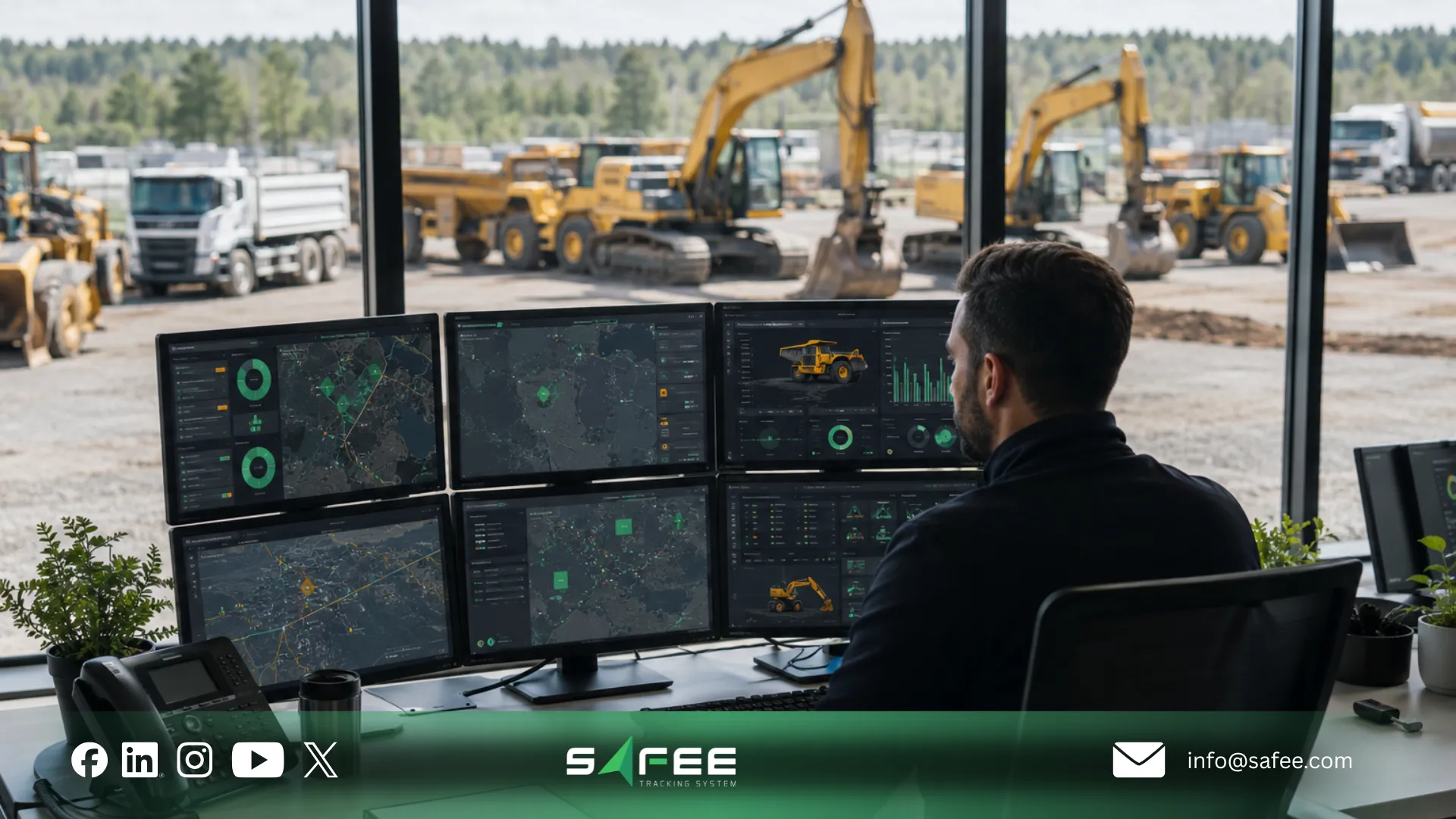
Safee helps heavy equipment teams control cost and improve productivity by making asset activity visible, measurable, and easier to manage. The strongest gains usually come from repeated operational improvements across utilization, maintenance, fuel review, operator accountability, site movement, and reporting.
A construction fleet may use Safee to identify machines parked during working hours. A maintenance team may use engine-hours data and inspection records to plan service more consistently. An HSE team may use alerts and reports to review exceptions. A finance team may use utilization reports to compare equipment usage by project or cost center.
The safest way to discuss ROI is to measure improvement from your own baseline. Before deployment, define your current position:
- How many machines are active, idle, rented, parked, or unavailable?
- Which assets have repeated downtime?
- Which sites show high idle time or underuse?
- Which machines have open defects or missed inspections?
- Which operators, shifts, or projects trigger repeated alerts?
- Which reports are currently manual or delayed?
- Which decisions still depend on calls, paper forms, or spreadsheets?
Then compare the same indicators after deployment. This creates a more reliable business case than relying on generic savings claims.
Heavy equipment fleet management software is most valuable when it fits your real job sites, machines, operators, and reporting needs. Book a Safee demo to build a configuration plan for tracking, alerts, maintenance, crane workflows, utilization reports, mobile access, and integrations.
FAQs about heavy equipment fleet management software
What types of equipment does heavy equipment fleet management software track?
Heavy equipment fleet management software can track cranes, excavators, bulldozers, loaders, compactors, graders, forklifts, generators, compressors, and other high-value construction or industrial assets. The exact setup depends on machine type, telematics hardware, sensors, site conditions, and reporting needs.
How does crane fleet management software improve safety and compliance?
Crane fleet management software can improve safety and compliance governance by connecting crane location, operator assignment, inspection records, maintenance status, alerts, lift records, and reporting workflows where configured. Fleet teams should verify local compliance requirements, certification rules, inspection obligations, retention needs, and hardware compatibility before deployment.
Can fleet management software for heavy equipment track fuel and engine hours?
Yes, fleet management software for heavy equipment can track fuel and engine hours when compatible devices, machine data, or sensors are configured. Engine hours support maintenance scheduling, while fuel data helps managers review idling, consumption patterns, project allocation, and unusual usage.
How does heavy equipment fleet management reduce downtime on construction sites?
Heavy equipment fleet management reduces downtime by making maintenance needs, engine hours, inspection defects, machine faults, unresolved alerts, and asset availability more visible. This helps maintenance and operations teams plan service earlier and avoid assigning machines with unresolved critical issues.
What integration options are available for heavy equipment fleet management software?
Integration options may include ERP, project management, maintenance, dispatch, finance, payroll, fuel, and reporting systems. Fleet teams should verify whether the provider supports APIs, scheduled exports, webhooks, or manual imports, and whether asset, operator, project, site, and cost-center data can be matched across systems.
Ready to improve your fleet operations?
Tell us what you would like to improve. A Safee specialist will reply by email.
Usually replies within one business day • No sales spam
Your details are used only to respond to your request. Privacy Policy