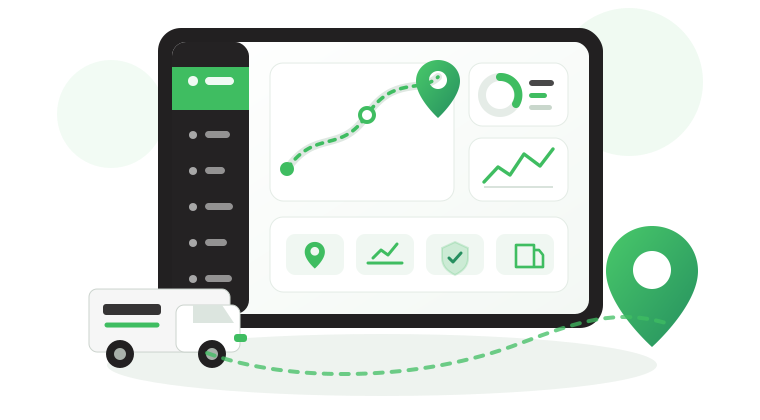
Car Rental Fleet Management Software: Keep Cars Rental-Ready
A rental car may be parked at a branch but unavailable for the next customer because it needs cleaning, maintenance, or an inspection. Disputes over mileage, fuel, and damage can also delay the vehicle’s return to service.
Effective car rental fleet management helps operators keep vehicles ready to rent, reduce avoidable downtime, and maintain reliable records from check-out to return. This guide covers the data, workflows, and Saudi regulations that rental operators need to manage these responsibilities.
What is car rental fleet management?
Car rental fleet management is the process of managing rental vehicles throughout their lifecycle, from acquisition and branch allocation to rental, maintenance, and eventual replacement or sale.
Its main objectives are to maximize rental availability, control operating costs, and ensure that each vehicle is safe and ready for its next contract.
This requires more than knowing where a car is. Managers must also know whether it is booked, awaiting inspection, undergoing maintenance, or available for another rental.
How rental fleets differ from company fleets
Unlike company vehicles assigned to employees, rental cars move between customers and contracts. This changes three management priorities:
- Driver accountability: Different customers use the same vehicle, so mileage, fuel, condition, and rental periods must be recorded against the correct contract.
- Vehicle availability: A car without an active rental generates no rental revenue. Managers need to distinguish available vehicles from those awaiting cleaning, repairs, or reassignment.
- Branch allocation: Demand varies by location. Managers must decide when to transfer vehicles between branches without disrupting existing reservations.
For employee-assigned vehicles, the priorities shift toward driver assignments, permitted use, and employee handovers. See our guide to company car fleet management.
Rental Management Software vs. Fleet tracking
Car rental management software handles the commercial side of the rental, while fleet tracking provides vehicle activity data. Both are useful, but they answer different questions:
- Rental management software: Who booked the vehicle, when does the contract start and end, what charges apply, and is the car available for another booking?
- Tracking device and sensors: Where is the vehicle, how far has it traveled, and what ignition or fuel data can its installed hardware provide?
- Fleet tracking platform: What trips, geofence events, alerts, and recorded activity require the team’s attention?
- Combined records: Do the vehicle readings and event timestamps match the correct rental contract and handover records?
For example, a car may appear inside a branch geofence but still be unavailable because it is booked or awaiting damage inspection. Tracking confirms its location; the rental system and branch team confirm whether it can be rented.
Before selecting a solution, verify how the systems match vehicle identifiers and contract timestamps, whether mileage readings agree with the dashboard odometer, and which fuel data is supported. GPS-derived distance is not necessarily the vehicle’s actual odometer reading.
For more on connecting operational data with business records, see fleet management ERP integration.
Where rental fleets lose revenue
In car rental fleet management, revenue losses often come from vehicles that cannot be rented, delayed returns, unresolved disputes, or avoidable downtime. Tracking data helps identify some of these problems, but rental records and branch operations determine what action to take.
Cars idle at one branch while another needs them
A branch may turn away customers while the same vehicle category sits unused elsewhere. GPS tracking can show where cars are parked and how long they have remained there, but it cannot confirm that they are available for rental.
Before transferring a vehicle, compare:
- Branch inventory: Vehicles physically present at each location.
- Rental availability: Cars without active bookings, maintenance restrictions, or pending inspections.
- Expected demand: Upcoming reservations and demand for each vehicle category.
- Transfer cost: The time and expense of moving the car between branches.
Move vehicles when the expected rental opportunity justifies the transfer and the destination branch can prepare them for customers.
To assess underused vehicles, use the fleet vehicle utilization calculator alongside rental booking records.
Mileage, fuel, and damage disputes
Disputes at check-in can delay closing a contract and returning the car to service. Each type requires different evidence:
- Extra kilometers: Compare verified check-out and check-in odometer readings with the mileage allowance in the rental contract.
- Fuel differences: Compare documented fuel levels at handover and return. Sensor readings can support the review where compatible hardware is installed.
- Vehicle damage: Compare dated inspection reports and photographs from both handovers. Trip history provides movement context but does not establish when a scratch occurred or who caused it.
Use readings tied to the correct vehicle and contract timestamps. If the GPS-calculated distance differs from the dashboard odometer, investigate the discrepancy before calculating charges.
Tracking records support dispute resolution; they do not automatically determine customer liability. Charges should follow the rental agreement and verified handover evidence.
Late returns and unexpected movement
A vehicle that returns late may disrupt the next booking. Movement outside an agreed area or an unexpected towing event may also require investigation.
Use the relevant records to decide what happens next:
- Late return: Compare the agreed return time in the rental system with the actual check-in record. Review the vehicle’s last reported location if it has not returned.
- Restricted-area movement: Investigate configured geofence alerts against the contract’s permitted operating area.
- Possible towing: Review movement reported while ignition is off. Confirm the event before treating it as towing or theft, since incorrect ignition signals can produce the same status.
Assign overdue returns and suspicious events to an authorized team. Follow the company’s escalation procedures and applicable legal requirements rather than treating a tracking alert as automatic grounds for vehicle recovery.
For more on location-based monitoring, see asset tracking in fleet operations.
Workshop delays and expired documents
Every day a rental car remains unavailable reduces its potential to generate revenue. Maintenance delays, unresolved defects, and expired documents can prevent a vehicle from being handed over.
To reduce avoidable downtime:
- Plan maintenance: Schedule routine servicing around mileage thresholds, upcoming bookings, and workshop capacity.
- Track document expiry: Assign renewal responsibilities and set reminders early enough to complete required procedures.
- Record unavailable days: Separate maintenance, repairs, inspections, and other causes of downtime to identify recurring delays.
- Confirm return to service: Release a vehicle for rental only after the required work, checks, and document updates are complete.
Review downtime by vehicle and cause. A car repeatedly waiting for repairs may need a different maintenance plan, while one delayed by renewals may indicate an administrative problem.
See how fleet maintenance software and fleet document management support these workflows.
To review how your existing tracking and maintenance data can reveal avoidable rental downtime, talk to a Fleet Expert.

What to record at each stage of a rental
Effective car rental fleet management requires accurate records linked to each vehicle, contract, and handover time. Here’s what to document at check-out, during the rental, at check-in, and before the next booking.
At check-out
Before releasing the car, record its dashboard odometer reading, fuel level, and existing damage. Take timestamped photographs of the interior and exterior, and link them to the rental contract.
Also confirm:
- Vehicle documents: Registration, insurance, and periodic inspection are valid.
- Key handover: Record who released the vehicle and when. See our fleet key management guide.
- Fuel requirement: Saudi TGA regulations require at least a quarter tank of fuel at handover.
Verify electronic readings before using them for billing. GPS-calculated distance may differ from the dashboard odometer, while fuel-level data requires compatible sensors or vehicle integration. Record any discrepancy before the customer leaves.
During the rental
Tracking helps identify events that may require follow-up without continuously monitoring every journey:
- Restricted-area movement: Review geofence alerts against the geographic limits specified in the contract.
- Overdue returns: Check the agreed return time and any approved extension before contacting the customer. Use the vehicle’s last reported location when needed.
- Possible towing: Investigate movement detected while the ignition is off, but verify the signal before treating it as a towing or theft event.
Record significant events, their timestamps, and the team’s response against the relevant contract.
Because vehicle location data may identify the renter, restrict access to authorized staff and use it only for legitimate purposes consistent with applicable privacy requirements.
At check-in
Record the actual return time, dashboard odometer, fuel level, and vehicle condition. Take new photographs and compare them with the check-out records.
Before finalizing charges, verify:
- Excess mileage: Calculate the distance traveled, subtract the contract’s mileage allowance, and apply the agreed rate to any chargeable excess.
- Fuel shortfall: Compare documented fuel levels and calculate charges according to the rental agreement.
- New damage: Compare inspection records and photographs, then review the applicable contract and insurance terms.
Trip history can support an investigation, but it cannot independently establish responsibility for vehicle damage.
For traffic fines received after the return, match the violation time to the contract period and verify the responsible driver before assigning charges.
Between rentals
A returned car should only become available for another booking after the branch confirms its readiness.
Check four items:
- Maintenance: Complete any scheduled servicing, required repairs, and safety checks.
- Documents: Confirm that registration, insurance, and periodic inspection will remain valid for the next rental.
- Vehicle condition: Complete cleaning, damage inspection, and any necessary repairs.
- Operating age: Confirm the vehicle remains within the applicable rental fleet age limit.
Update the vehicle’s availability in the rental management system once these checks are complete. A car parked at the branch or marked active in the tracking platform is not necessarily ready to rent.
Use Safee’s free car rental fleet workbook to organize vehicle and rental records.
To identify gaps between your rental records and available tracking data, talk to a Fleet Expert.

How car rental fleet Management differs by business model
Daily rentals, long-term leasing, and car subscriptions require different approaches to car rental fleet management. The main difference is how frequently vehicles change customers and which operational risks need attention.
| Business Model | Main Priority | What to Monitor |
|---|---|---|
| Daily rental | Maximize availability and reduce turnaround time | Utilization, branch distribution, late returns, and downtime |
| Long-term leasing | Control costs and maintain vehicles throughout extended contracts | Mileage limits, servicing, vehicle condition, and contract-end requirements |
| Car subscription | Manage recurring agreements and flexible vehicle changes | Mileage allowances, renewals, maintenance, and vehicle swaps |
For daily rentals, the priority is keeping cars ready for the next booking. Managers need to identify vehicles waiting for cleaning or repairs and decide whether transfers between branches justify their cost.
With long-term leasing, vehicles stay with customers for extended periods. Managers must compare recorded mileage with contractual allowances and arrange maintenance without unnecessary disruption. Service responsibilities depend on the lease agreement.
Car subscriptions often involve more frequent renewals, plan changes, or vehicle swaps. They require similar mileage and maintenance checks, alongside closer monitoring of contract changes.
In all three models, tracking provides available vehicle activity and distance data, while rental software manages contracts, reservations, and mileage allowances. Both sources must be checked before taking action.

Saudi car rental rules for fleet operators
Saudi Arabia’s Transport General Authority (TGA) regulates private car rental under its executive regulations, including the June 2026 amendment. These requirements affect rental contracts, vehicle eligibility, and fleet operations.
The applicable rules depend on the licensed activity. Rental operators should verify which requirements also apply to their leasing or subscription services.
Electronic rental contracts in Saudi Arabia
Licensed rental operators must issue contracts through the electronic system designated by the TGA, using the required contractual format.
The contract records information such as vehicle identification, authorized drivers, rental dates, mileage, fuel, vehicle condition, and applicable rental terms.
For fleet managers, these records provide the reference needed to investigate late returns and disputed charges.
Match tracking data with the correct contract and timestamps. A trip report can support an investigation, but it does not replace the official contract or independently establish which customer was driving.
Vehicle age, operating cards, and handover rules
Several Saudi rental requirements affect vehicle acquisition, replacement, and readiness:
- Operating age: Rental cars are generally subject to a maximum operating age of five years from their model year, with provisions allowing a higher limit for qualifying clean-energy vehicles.
- Operating cards: Vehicles used in the regulated activity must meet the applicable operating-card requirements.
- Fleet size: Minimum fleet requirements depend on the relevant licensing conditions.
- Fuel at handover: Cars must be handed over with at least one-quarter of their standard fuel-tank capacity.
- Insurance: Vehicles must maintain the insurance coverage required by the applicable rental regulations.
These requirements should be reflected in fleet planning rather than checked only when a customer arrives.
For example, a vehicle approaching its permitted operating age may still be mechanically sound, but management must arrange its replacement before it becomes ineligible for continued rental use.
Our guide on when to replace fleet vehicles explains how to assess replacement decisions.
For regulatory updates, review the June 2026 amendment to the Saudi car rental regulation alongside the underlying regulation and current TGA requirements.
Rental car tracking and renter privacy
Location data linked to an identifiable renter is personal data and may be subject to Saudi Arabia’s Personal Data Protection Law (PDPL).
Rental operators should establish three controls:
- Transparency: Inform renters about the tracking data collected, its purposes, and the applicable legal basis for processing.
- Access control: Limit location records to authorized employees who need them for defined responsibilities.
- Purpose and retention: Use tracking data for documented purposes and retain it only for justified periods.
A tracking notice in the rental agreement does not automatically satisfy every privacy obligation. Confirm the applicable notification, lawful basis, consent, and retention requirements with a qualified legal advisor.
Vehicle recovery also requires separate procedures. The availability of a remote immobilization command does not itself authorize a rental company to disable or recover a customer’s vehicle outside applicable legal requirements.
How Safee supports car rental fleet management
At Safee, we help rental operators monitor vehicles across branches, investigate unusual activity, and plan maintenance. The available capabilities depend on the tracking devices, vehicle data, and configured modules.
- Vehicle tracking: Live Vehicle Tracking provides current or last-reported locations, trip history, and movement records to support return investigations.
- Branch monitoring: Geofences help identify vehicles inside designated branches or operating areas and generate configured entry or exit alerts. Physical presence does not confirm rental availability.
- Vehicle status: Vehicle Active Status allows authorized users to record whether a car is operational, under maintenance, involved in an accident, or otherwise unavailable. These statuses require manual updates.
- Possible towing: The platform can identify movement while the ignition signal is off. Such events require verification because incorrect ignition wiring can produce similar results.
- Mileage and fuel: Distance reports support mileage reviews. Fuel-level monitoring depends on compatible sensors or vehicle data, and readings should be verified before use in customer billing.
- Maintenance and documents: Maintenance tools support scheduled service based on available mileage or date information. Expiry reminders help teams monitor recorded inspection, insurance, and operating-card dates where applicable.
- Alerts and reporting: Alarms and Alerts supports configured geofence and operational notifications. Fleet Reporting provides scheduled reports for recurring fleet reviews.
Safee also supports remote immobilization through compatible hardware and restricted user permissions. A safety-approved installation should prevent restarting rather than interrupt a running engine. Its use must comply with applicable law and approved safety and recovery procedures.
What rental software and branch teams still handle
Safee provides vehicle monitoring and supporting operational data. It does not replace the rental company’s booking, billing, or customer management systems.
Your rental software and branch teams remain responsible for:
- Reservations, contracts, invoices, and customer records.
- Vehicle handover inspections and damage assessments.
- Confirming cleaning, repairs, and readiness for the next booking.
- Calculating customer charges and resolving disputes.
- Authorizing and coordinating any lawful vehicle recovery action.
Before deployment, confirm which vehicle readings are supported and whether they can be matched reliably with rental contracts. Do not assume that integration with existing rental software is automatic.
To evaluate tracking, mileage monitoring, maintenance, and branch visibility for your cars, request a Safee Fleet Demo.
FAQs about car rental fleet management
Do rental companies need GPS tracking?
GPS tracking helps monitor vehicle locations, investigate late returns, and detect configured movement events. Its necessity depends on the operator’s requirements and applicable regulations. It does not replace rental contracts or vehicle inspections.
Can a rental company immobilize a car remotely?
Some devices support remote immobilization, but using it requires compatible hardware, appropriate permissions, safe implementation, and legal authorization. It must not endanger occupants or other road users or be used as an unlawful means of pressuring renters.
Does fleet tracking replace car rental software?
No. Rental software manages reservations, contracts, customers, and invoices. Fleet tracking provides location and activity records. Connecting the systems requires compatible integration and reliable matching of vehicle and contract data.
Can Safee calculate rental charges or resolve disputes?
Safee can provide supporting mileage, location, and compatible fuel data. Calculating charges, assessing damage, issuing invoices, and resolving disputes remain the rental operator’s responsibility.
Sources
Ready to improve your fleet operations?
Tell us what you would like to improve. A Safee specialist will reply by email.
Usually replies within one business day • No sales spam
Your details are used only to respond to your request. Privacy Policy