

GPS Fleet Tracking Device: OBD, Hardwired or Battery?
Choosing a GPS fleet tracking device can become an expensive fleet-wide mistake when the unit fits a specification sheet but not the vehicle, power source, installation position, or operating environment. An OBD-II tracker may be practical for one vehicle class but too exposed for another; a hardwired unit may be justified for a heavy commercial vehicle but unnecessary elsewhere; and a non-powered asset requires a different power strategy.
In this guide by Safee, we explain how we at Safee evaluate OBD-II, hardwired, and battery-based tracking units; antenna placement, tamper exposure, environmental and certification checks, and installation decisions for demanding Gulf operations. You will also see how to compare device reviews, validate the exact tracker on representative vehicles, and connect the resulting data with Live Vehicle Tracking, Alarms and Alerts, and Fleet Reporting before a wider rollout.
What a GPS fleet tracking device actually is
A GPS fleet tracking device is the physical unit installed in or associated with a vehicle or asset to capture and transmit positioning and other supported operational data.
Depending on the selected hardware and configuration, the information can include location, movement, ignition status, speed, supported engine data, and driver identity. The device does not automatically provide every one of these data points; availability depends on the vehicle interface, tracker, configuration, and integration. Detailed sensor selection is deliberately outside this guide’s scope.
In our Safee architecture, compatible GPS devices installed in vehicles can transmit supported data through cellular networks to the platform, where it becomes usable through operational functions such as Live Vehicle Tracking, Alarms and Alerts, Fleet Reporting, Driver Management, dashboards, and related modules where configured.
This is why the hardware decision should start with the business workflow rather than a specification sheet. A GPS tracker for fleet management is still only the field data source; the operational value comes from how the device, connectivity, platform rules, and responsible users work together. Supplier catalogs may also use phrases such as fleet tracking device GPS unit, GPS fleet tracking devices, or fleet GPS tracking devices for the same general hardware category.
A fleet team should first define:
- Which vehicles or assets need to be tracked.
- Whether each asset is powered or non-powered.
- Which operational data is required beyond location.
- Which exceptions should trigger Alarms and Alerts.
- Whether OBD-II, CANbus, external sensors, or Driver ID are required.
- What happens when cellular coverage is interrupted.
- Who will install and maintain the devices.
- Who owns device configuration and replacement.
- Which users will review the resulting information.
- What reports or audit evidence operations require.
For the broader connected-device layer beyond the tracking unit itself, see our Fleet Management Hardware & IoT guide.
GPS fleet tracking device vs fleet management tracker
The terms GPS fleet tracking device and fleet management tracker are often used interchangeably, but they can describe different layers of the system.
The tracking device is primarily the physical data source. It captures location and other supported signals and sends them onward.
A fleet management tracker becomes operationally valuable when the resulting information is connected with software processes. Location alone answers where a vehicle is. Fleet management requires additional context: which vehicle and driver are involved, whether an exception occurred, whether a Geofence or policy was breached, who should review the event, and how it will appear in historical reporting.
Our approach at Safee reflects this distinction. GPS information can feed Live Vehicle Tracking and then connect with operational context such as status, Driver ID, Alarms and Alerts, Geofences, history, and Fleet Reporting.
For procurement teams comparing fleet management trackers, the evaluation therefore needs two questions:
- Can the tracking unit collect and communicate the data the fleet needs?
- Can the fleet management environment turn that data into a usable operational workflow?
A technically capable tracker that remains disconnected from alert ownership, reporting, and operational processes may add data without adding much control. The same test applies to web based fleet management trackers and online fleet management tracking devices: a browser interface does not remove the need to validate the physical unit, its assignment, communication health, and the data it supplies.
Fleet GPS tracking device vs fleet management tracking devices
A fleet GPS tracking device usually refers to the unit assigned to an individual vehicle or asset. Fleet management tracking devices, in contrast, should be considered as a fleet-wide hardware architecture.
That architecture may not be identical across every vehicle.
For example:
- Passenger cars may have one installation requirement.
- Vans may use another depending on OBD-II compatibility and data requirements.
- Heavy commercial vehicles may require hardwired installation.
- Specialized equipment may require a tracking unit with additional supported input interfaces.
- Trailers and other non-powered assets may need a different power strategy.
- Vehicles requiring CANbus or Driver ID data need hardware and interfaces capable of supporting those signals.
At Safee, we advise against applying one hardware architecture across an entire mixed fleet before representative vehicles have been inspected and tested. Vehicle make, model, electrical architecture, connector location, CANbus requirements, external sensors, environmental conditions, tamper exposure, and maintenance access can all affect the correct choice.
Want to validate the hardware model before committing across the fleet? Contact us with your vehicle classes, required data, and operating environment to map the tracking approach to representative vehicles first.
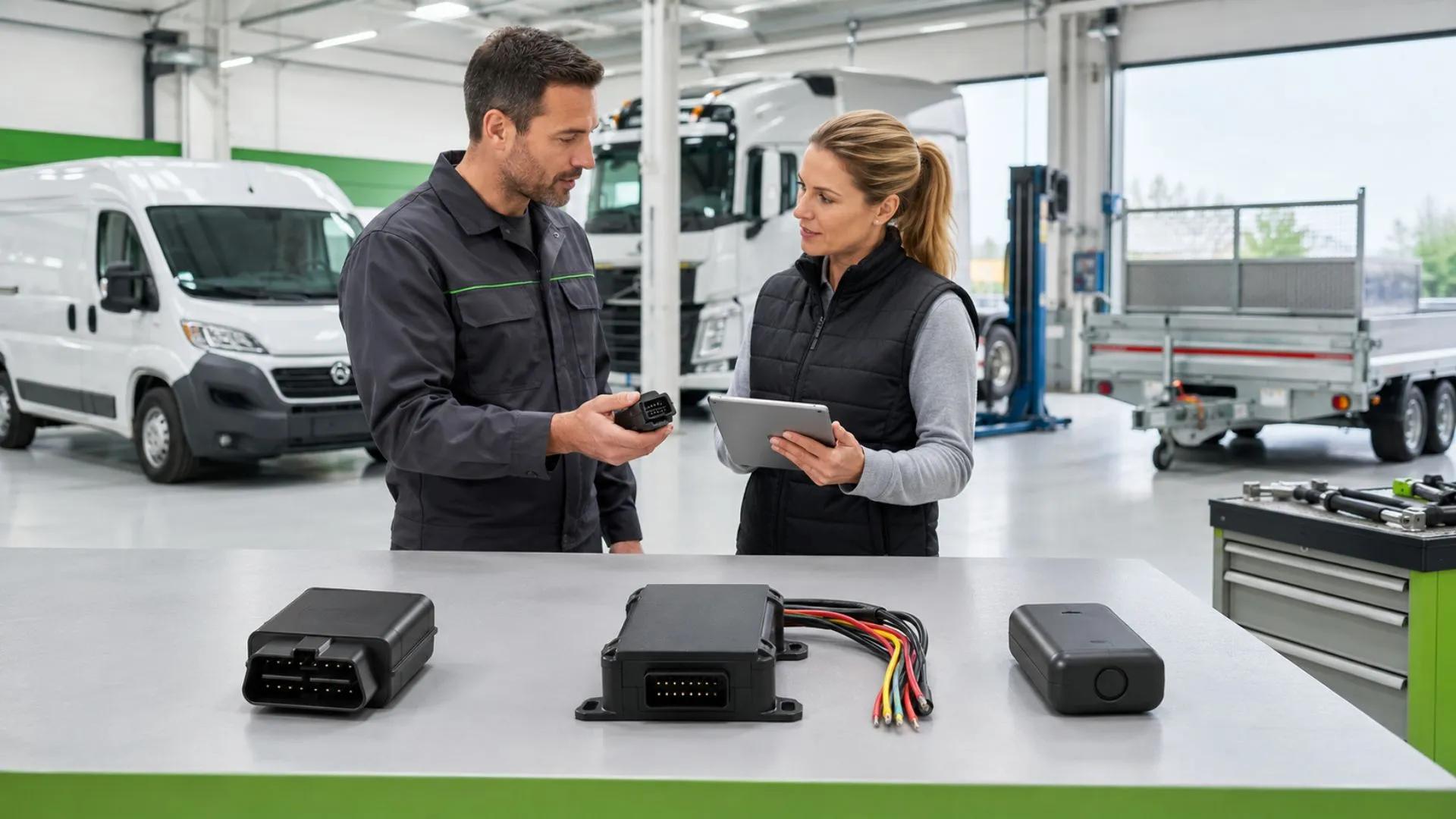
GPS fleet vehicle tracking devices for OBD, hardwired and battery installations
Different GPS fleet vehicle tracking devices solve different installation problems. OBD-II, hardwired, and battery-powered configurations should therefore be treated as deployment options rather than rankings from good to bad.
The better choice is the one that matches the asset, available power, required vehicle data, tamper exposure, operating conditions, and maintenance model.
For mixed fleets, that may mean using more than one tracker type within the same fleet management environment.
GPS devices for fleet tracking with OBD and hardwired installation options
Among GPS devices for fleet tracking, OBD-II and hardwired installations are common choices for powered road vehicles.
OBD-II refers to the vehicle’s onboard diagnostic interface. Where the vehicle, connector, tracker, and required data are compatible, an OBD-II fleet tracker can simplify deployment because the device connects through the available diagnostic port.
At Safee, we treat OBD-II as a potentially practical option for selected cars, vans, and light commercial vehicles. However, fleet teams still need to verify connector accessibility, compatibility, tamper exposure, and whether the available vehicle data meets the project requirement.
A hardwired GPS tracking device connects more permanently to the vehicle electrical system. This configuration can be more appropriate where stable power, reduced device accessibility, additional vehicle signals, or more permanent installation are required. Our fleet guidance notes that heavy trucks often require hardwired installation for stability, tamper resistance, and deeper data access, while still emphasizing that the final selection needs to be confirmed by vehicle class.
Battery-powered tracking introduces a different model. It can be relevant to trailers, equipment, attachments, and other non-powered or intermittently powered assets where a normal vehicle electrical connection is unavailable or unsuitable. Our asset guidance explicitly distinguishes powered and non-powered assets and recommends selecting the device and power model around the asset’s movement, communication, and installation requirements.
Before selecting among the three, verify:
- ·Power availability.
- Required reporting behavior.
- Vehicle or asset type.
- OBD-II compatibility.
- CANbus requirements.
- Ignition or engine signals needed.
- Driver ID requirements.
- Tamper exposure.
- Environmental exposure.
- Maintenance accessibility.
- Connectivity conditions.
- Backup-power requirements.
- Vehicle warranty or installation restrictions.
- The exact device model’s environmental rating and any certification or approval required for the operating market or industry.
The right fleet management tracking unit is therefore the unit that satisfies the operating requirement without introducing avoidable installation or data limitations. A GPS fleet automatic vehicle tracking unit should be judged by the same criteria: vehicle fit, power, communication, installation, and the data it can reliably deliver into the fleet workflow.
Best GPS tracker for fleet management by vehicle type
Searching for the best GPS tracker for fleet management can be misleading because there is no universal tracker architecture for every fleet.
Instead, match the installation type to the operational case.
- Passenger cars and selected light vehicles: An OBD-II configuration can be useful when fast deployment, straightforward access, and supported diagnostic data are priorities. The connector and required signals still need to be validated for representative models.
- Vans and light commercial fleets: Both OBD-II and hardwired configurations may be viable. Selection should depend on vehicle compatibility, installation exposure, required inputs, Driver ID or sensor requirements, and whether devices need to remain less accessible.
- Heavy trucks: A hardwired installation may be better suited to the stability and data requirements of heavy-fleet operations. CANbus integration, ignition data, additional sensors, environmental exposure, and tamper risk should be reviewed before installation.
- Oil & gas, construction, and specialized vehicles: Start with the operational requirement rather than the connector type. These fleets may require additional supported data inputs, equipment monitoring, Driver ID, more controlled installation, or a defined alert and escalation model; detailed sensor selection remains outside this guide.
- Trailers and non-powered assets: The key issue becomes power management. Battery or asset-specific tracking hardware may be required, with the expected movement pattern and location-update needs considered during device selection.
This is also why a search for the best GPS fleet tracking device, best fleet GPS tracking devices, or best GPS fleet tracking equipment should not be answered with a single product name without first knowing the fleet composition.
A better selection sequence is:
- Group the fleet by vehicle and asset class.
- Define the data needed from each class.
- Identify power and interface options.
- Review environmental and tamper exposure.
- Confirm required peripherals and supported input interfaces.
- Test representative units.
- Validate the data inside the operating platform.
- Confirm Alarms and Alerts and reporting workflows before wider deployment.
We recommend validating the actual workflow rather than evaluating GPS hardware only on a map. Provider questions should include what data is native or sensor-dependent, what happens during connectivity loss, which alerts can be configured, how Driver ID and assignments are handled, and what should be tested during a pilot.
Planning a mixed-fleet rollout? Request a Safee demo using a real vehicle class, route, and exception workflow so the hardware choice can be evaluated together with the operational result. See how the resulting tracker data appears in Live Vehicle Tracking.
GPS fleet tracking hardware and tracking equipment included in the setup
GPS fleet tracking hardware should be scoped as a system, not assumed to mean only the tracker itself.
The actual GPS fleet tracking equipment included in a deployment depends on the vehicle, tracker model, data requirements, and implementation design. A project may involve:
- GPS-enabled tracking hardware.
- OBD-II interface or hardwired connection components.
- SIM/connectivity configuration where applicable.
- Mounting and wiring components.
- CANbus interface where required.
- Driver ID hardware where required.
- External sensors or peripherals.
- Backup-power capability where required.
- Device identifiers such as IMEI for inventory and onboarding.
- Installation and configuration records.
Not every deployment requires every component.
At Safee, we treat the tracking unit as one part of the wider connected-fleet hardware layer. This guide stays focused on the tracker itself; broader device, IoT, and sensor selection is covered separately in our Fleet Management Hardware & IoT guide.
The implementation also needs a software-side setup. Devices have to be associated with the correct vehicle or asset record, validated for communication, and connected with the relevant monitoring, alert, and reporting processes.
Our device-onboarding guidance emphasizes maintaining standardized identifiers such as IMEI and vehicle or asset ID, recording installation information, linking devices to the correct vehicle, validating incoming data, and then configuring alarms and notification owners. Procurement documents may group these units under GPS fleet management tracking devices; the same onboarding and validation rules still apply.
That makes the real question for fleet management tracking equipment:
What has to be installed, connected, configured, and governed for the required business workflow to work reliably?
Device events that matter operationally should be connected with configured ownership through Alarms and Alerts.

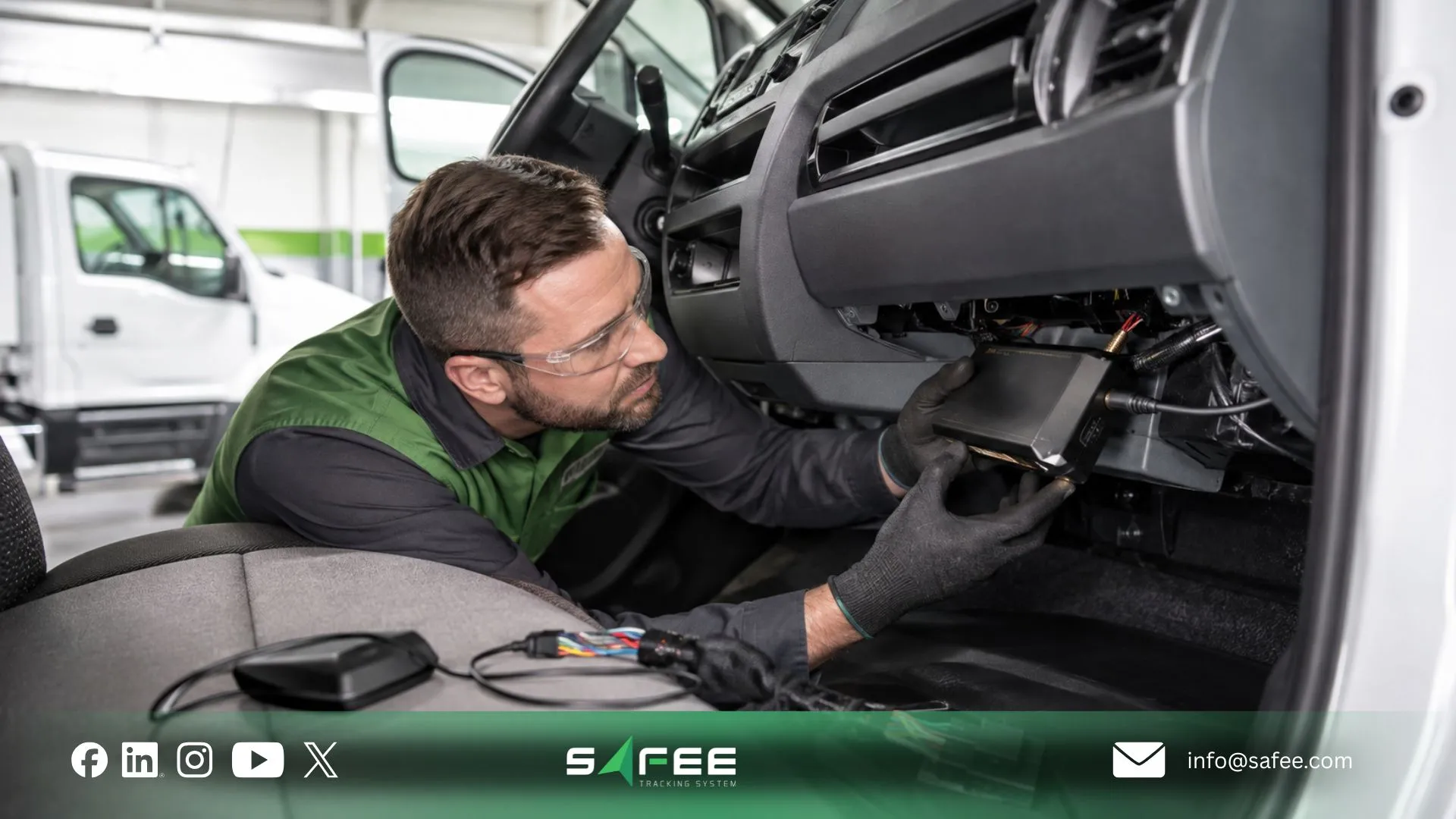
GPS fleet tracking hardware for antenna placement, installation and tamper detection
The performance of GPS fleet tracking hardware depends partly on installation quality. A tracker that is technically suitable can still produce operational problems when its mounting, power supply, antenna position, wiring, connectivity, or asset assignment is poorly planned.
Our hardware guidance specifically recommends reviewing wiring, power source, mounting, tamper risk, environmental exposure, vehicle downtime, and installer responsibility before deployment. In high-heat Gulf operations, the exact tracker and installation location should also be checked against the device manufacturer’s environmental specification rather than assuming that every compatible unit has the same temperature or ingress rating. Common installation mistakes at this stage are choosing the mounting position before checking those limits, assuming a powered device is automatically a valid installation, and skipping post-installation GPS and communication checks.
Installation should therefore be treated as part of system design rather than the last step after procurement.
GPS antenna fleet management tracking system placement guidelines
A GPS antenna fleet management tracking system needs a placement strategy that balances signal conditions with protection and maintainability.
There is no single antenna position that should be prescribed for every vehicle or device model. The correct position depends on whether the tracker has an internal or external antenna, the vehicle body and materials around the installation point, manufacturer instructions, wiring constraints, satellite visibility, communication performance, maintenance access, and tamper exposure.
During installation, verify that:
- The selected position follows the tracking-device manufacturer’s installation guidance.
- The location does not unnecessarily obstruct GPS reception.
- Wiring is protected and properly secured.
- The tracker or antenna is not placed where normal vehicle use can easily damage it.
- The installation does not interfere with vehicle controls or safety systems.
- The device remains serviceable when authorized maintenance is needed.
- The location does not make deliberate disconnection unnecessarily easy.
- GPS and communication performance are validated after installation.
GPS location quality can be affected when satellite signal is insufficient, making post-installation validation important rather than assuming that power to the tracker means the installation is complete. Our privacy guidance notes that GPS location data depends on the signal received by the installed GPS tracker and may be affected where sufficient GPS signal is unavailable.
For fleets operating across depots, highways, remote sites, or industrial areas, testing should reflect those operating conditions rather than only the installation workshop.
GPS installation services for fleet management for DIY or professional setup
The decision between DIY installation and GPS installation services for fleet management should be based on installation complexity and governance, not simply labor cost.
A straightforward compatible OBD-II unit may require less intervention than a hardwired unit connected with CANbus, Driver ID hardware, sensors, or vehicle-specific wiring.
DIY deployment may be manageable where:
- The tracker is designed for straightforward connection.
- Vehicle compatibility has already been confirmed.
- Installation instructions are clear.
- No specialist vehicle wiring is required.
- The fleet has competent internal technical staff.
- Installation quality can be documented and audited.
- Device-to-vehicle assignment can be controlled accurately.
Professional installation becomes more important where:
- Hardwiring is required.
- Vehicle wiring differs across models.
- CANbus or additional vehicle signals are involved.
- External sensors or peripherals must be connected.
- Tamper-resistant mounting is required.
- Specialized or heavy vehicles are involved.
- Installation records need to be standardized across multiple sites.
- Post-installation troubleshooting responsibility must be clearly assigned.
Our fleet hardware guidance treats installer responsibility, wiring, mounting, power, tamper exposure, and lifecycle support as procurement considerations rather than incidental details.
Questions to ask the provider before installation
- Which tracker and installation type will be used for each vehicle class?
- Which vehicle models have been checked for compatibility?
- Is OBD-II, hardwired, or another power model required?
- Which signals come directly from GPS, OBD-II, CANbus, or external sensors?
- What happens if vehicle power is disconnected?
- Is backup power required for the use case?
- How will tracker IMEI and vehicle or asset ID be recorded?
- How will the installation be tested before the vehicle returns to service?
- Who owns troubleshooting, device replacement, and reconfiguration?
- Which device events can feed Safee Alarms and Alerts?
- What must be retested after a tracker is replaced or moved?
- What installation documentation will the fleet retain?
15 things to check before you install a GPS fleet tracking device
- Confirm the vehicle or asset class: Record whether the unit is a passenger car, van, truck, trailer, machine, or other asset before selecting the tracker.
- Confirm the power model: Determine whether the asset provides continuous vehicle power, switched power, intermittent power, or requires a battery-based tracking approach.
- Check OBD-II compatibility: For an OBD-II installation, verify the connector, location, tracker compatibility, and available data rather than assuming every vehicle provides the same signals.
- Define CANbus requirements: Identify whether the project needs supported vehicle data beyond basic GPS location and whether CANbus integration is required.
- List required operational signals: Define whether the workflow needs ignition, movement, engine information, Driver ID, or other supported inputs.
- Define external sensor requirements: Confirm only whether the tracking unit needs supported external input interfaces. Detailed sensor type, calibration, and selection belong in the separate sensor/IoT topic.
- Select a protected mounting position: The device should be installed in a location appropriate to the vehicle, hardware instructions, signal needs, maintenance requirements, and tamper exposure.
- Validate antenna conditions: Confirm the selected location supports adequate GPS reception and any communication requirements of the device.
- Review tamper exposure: Check how easily the tracker, wiring, power source, or connector can be accessed or disconnected during normal operation.
- Check environmental exposure: Consider heat, vibration, dust, moisture, and other operating conditions relevant to the actual installation site. Verify the exact model’s stated environmental limits and any certification or approval required for the operating market or industry; do not infer a rating from the platform brand or from another device model.
- Confirm connectivity configuration: Validate SIM/APN and network configuration where cellular communication is used, including the fleet’s normal routes and operating sites.
- Define offline behavior: Ask what happens when connectivity is unavailable, how the platform identifies delayed or offline units, and how stored records are handled when communication returns.
- Record the tracker identity: Maintain the device IMEI or equivalent identifier and link it accurately with the vehicle plate, asset ID, depot, and other required records.
- Configure alert ownership: Decide which Alarms and Alerts matter and whether Dispatch, HSE, Maintenance, Security, or another role owns the response.
- Run an acceptance test before rollout: Validate location, communication status, required signals, supported alerts, vehicle assignment, reporting, and the real operating workflow on representative units before scaling across the fleet.
Our rollout guidance follows the same broader principle: installation preparation should be followed by device inventory control, onboarding, validation, and operational configuration rather than treating installation as the end of deployment.
Need to standardize installation across several vehicle classes or depots? Talk to Safee about the vehicle mix, required signals, alerts, and reporting workflow before finalizing the rollout plan. Then use Fleet Reporting to connect validated device data with recurring operational review.
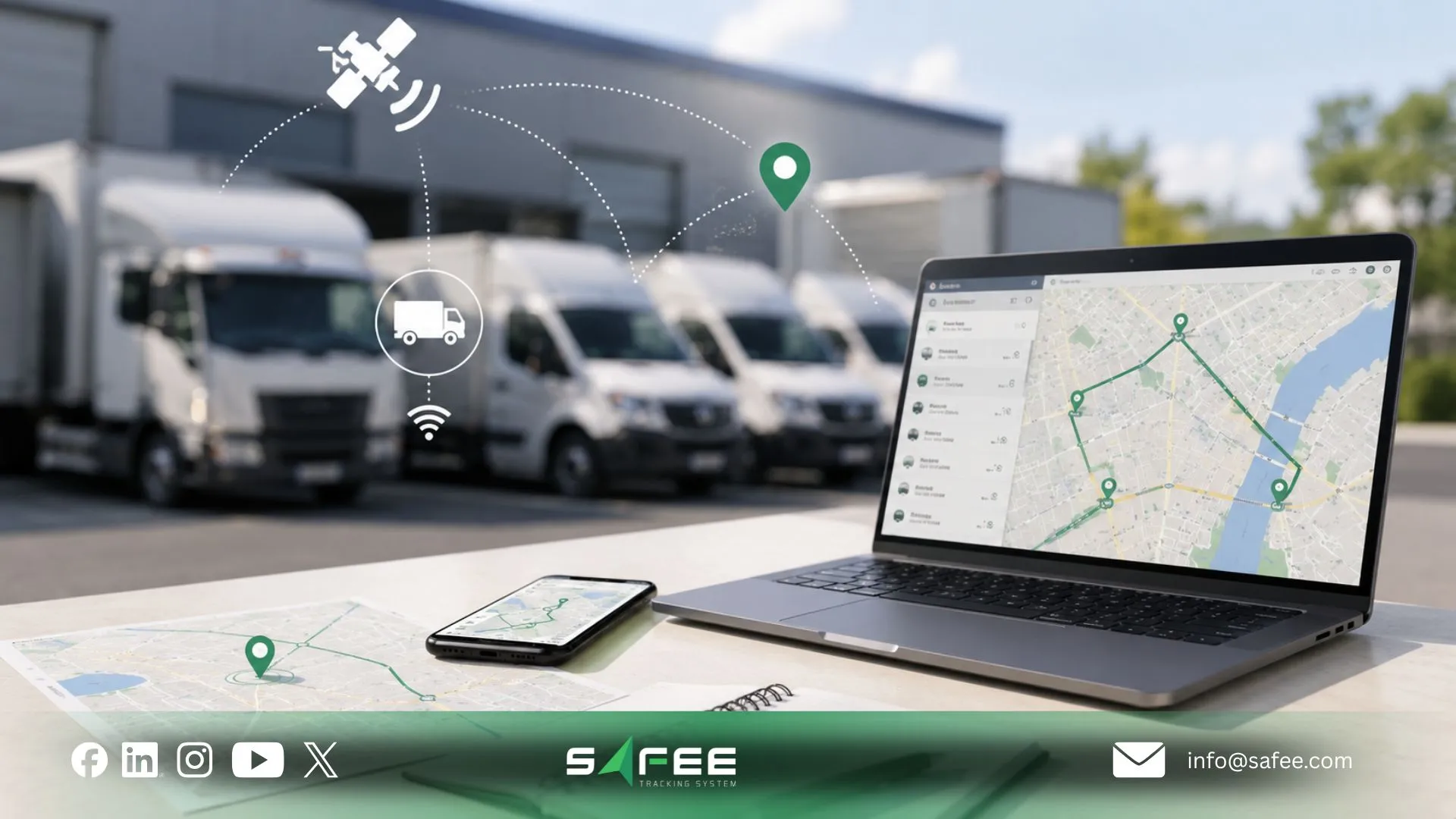
How Safee Evaluates GPS Fleet Tracking Devices for Gulf Heat and Terrain
Gulf fleet operations can expose tracking hardware to demanding conditions, including high temperatures, long routes, industrial sites, dust, vibration, changing connectivity, and different vehicle installation environments. At Safee, we do not assume that every compatible GPS fleet tracking device is equally suited to those conditions. The exact tracker model, installation position, power arrangement, and environmental specification need to be validated for the proposed deployment.
For Gulf operations, the evaluation should cover:
- Vehicle and asset compatibility.
- The device manufacturer’s environmental specification.
- Power stability and backup-power requirements.
- OBD-II, hardwired, battery, or asset-specific installation.
- GPS antenna placement and communication performance.
- Tamper and power-disconnection exposure.
- Required vehicle and operational data.
- CANbus, Driver ID, sensor, and peripheral compatibility where required.
- Device communication health.
- Maintenance, replacement, and lifecycle responsibilities.
- Integration with the required fleet workflows.
Safee is Hardware Agnostic, so the platform can work with diverse compatible tracking hardware and sensors when the selected devices, protocols, and required data are technically validated. This gives mixed fleets more flexibility than forcing every vehicle or asset into a single tracker model.
Hardware compatibility alone, however, is not enough. The selected device must also deliver usable data into the processes that Fleet Managers, Operations, HSE, Maintenance, and other authorized users rely on. Compatible tracking data can feed Live Vehicle Tracking, Alarms and Alerts, Fleet Reporting, Driver Management, equipment monitoring, and other configured Safee modules.
Safee vs generic GPS fleet trackers
The comparison below focuses on platform-level differences rather than claiming that every compatible tracker has the same technical specification. Environmental rating, antenna design, tamper events, certification, and installation method remain device-specific and should be confirmed for the exact hardware proposed.
| Attribute | Generic GPS Tracker | Safee Approach |
| Hardware dependency | May depend on a fixed device ecosystem | Hardware Agnostic platform that can integrate diverse compatible hardware and sensors after technical validation |
| Installation method | Depends on the tracker and vehicle | OBD-II, hardwired, battery, or asset-specific options are evaluated against vehicle class, power, data, and installation requirements |
| Tamper / power events | Depend on hardware and configuration | Supported device events can feed Alarms and Alerts when the selected hardware provides the required signal |
| Environmental fit | Must be confirmed for the individual device | The proposed device specification and installation conditions are validated rather than assuming a universal heat or ingress rating |
| Platform use | May provide location through a standalone portal | Compatible tracking data can connect with Live Vehicle Tracking, Alarms and Alerts, Fleet Reporting, and other configured workflows |
| Support | Varies by vendor and agreement | Safee provides platform-level support; hardware installation, replacement, and field-support responsibilities should be confirmed for each deployment |
Before approving a fleet management GPS tracker, procurement and fleet teams should therefore verify the exact device model, technical specification, operating conditions, power architecture, installation method, available signals, communication configuration, protocol integration, alert requirements, and replacement process.
The objective is not simply to find hardware that can transmit a GPS position. It is to select compatible tracking equipment that can provide the required data reliably and connect that data with a governed fleet-management workflow.
How to evaluate GPS fleet tracking device reviews before buying
GPS fleet tracking device reviews can provide useful context during procurement, but they should not replace technical validation. A positive review of a fleet-management platform does not automatically prove that a particular tracker model will perform equally well across different vehicles, installation methods, climates, or operating environments.
When reviewing fleet GPS tracking device reviews, look for evidence that relates to the conditions your fleet will actually face:
- Stability of GPS and communication data.
- Suitability for the stated vehicle or asset type.
- Installation quality and device placement.
- Accuracy and freshness of usable tracking information.
- Visibility of offline or delayed devices.
- Quality and relevance of Alarms and Alerts.
- Ability to connect required vehicle signals or supported peripherals.
- Support during deployment and troubleshooting.
- Reporting usefulness.
- Experience when devices are replaced, reassigned, or moved between vehicles.
The operating context behind a review matters as much as the rating itself. Feedback from a passenger-car fleet using OBD-II devices may not predict the result for heavy trucks, construction equipment, trailers, or vehicles using hardwired CANbus integration.
For B2B fleet procurement, reviews are therefore best used to identify questions that require validation rather than as proof that one device is universally suitable. The strongest evidence comes from testing the proposed tracking hardware on representative vehicles and confirming the complete data flow from device and connectivity through Live Vehicle Tracking, Alarms and Alerts, ownership, and Fleet Reporting before fleet-wide rollout.
For enterprise connectivity and access-governance questions, see our Fleet Management ERP Integration guide; market-specific approvals and device certification should still be verified for the exact deployment.
FAQs about GPS fleet tracking devices
What is the best type of GPS tracker for a commercial fleet?
There is no single best tracker for every commercial fleet. OBD-II can suit selected cars and light vehicles, hardwired tracking may be more appropriate for heavy or high-control applications, and battery-based devices can fit non-powered assets; the final choice should follow vehicle compatibility, power, required data, tamper exposure, and operating conditions.
What is the difference between OBD and hardwired GPS trackers?
An OBD-II GPS tracker connects through a compatible vehicle diagnostic port and can simplify installation where the required data is available. A hardwired tracker connects more permanently to the vehicle electrical system and may be better suited where stable power, lower tamper exposure, or deeper vehicle integration is required.
How does tamper detection work on a fleet GPS tracking device?
Tamper detection depends on the selected tracking hardware and configuration. Supported devices may report events such as power disconnection or other configured tamper conditions, which can then be routed through fleet Alarms and Alerts; fleets should verify exactly which tamper events the proposed tracker can detect.
Do GPS fleet trackers work reliably in extreme heat?
Reliability in extreme heat depends on the specific tracker’s environmental specification, installation position, power conditions, and operating environment. Fleets operating in Gulf conditions should verify the proposed device’s rated conditions and test representative installations rather than assuming every GPS tracker has the same heat tolerance.
Ready to improve your fleet operations?
Tell us what you would like to improve. A Safee specialist will reply by email.
Usually replies within one business day • No sales spam
Your details are used only to respond to your request. Privacy Policy