



Fleet Management Fuel Cards: How to Reconcile Spend and Control Costs?
Fleet management fuel cards can make fuel purchasing easier to record, but a clean statement does not prove that the spend was operationally valid. A card can confirm a transaction; it cannot by itself show whether the correct vehicle was at the location, whether the assigned driver was responsible, whether the quantity was reasonable, or whether the purchase matched the trip. That gap is where fuel-card administration becomes a fleet-control problem.
In this guide, you will learn how to connect fuel-card transactions with vehicle, trip, driver, location, and supported fuel data; how to build a fleet fuel expense management program that reconciles exceptions; which fleet management fuel cost and fuel-efficiency metrics matter; and how multi-carrier, construction, and 3PL fleets can structure the workflow. You also explore how Safee capabilities provide the operational context needed to move beyond monthly statements.
What fleet management fuel cards actually control
Fleet management fuel cards primarily control the commercial transaction layer of fueling. Depending on the card program and available data, that layer may contain information such as the card used, transaction time, fueling location, product purchased, quantity, price, and total transaction value.
That information is valuable, but it answers only part of the operational question.
A card record may show a legitimate purchase while leaving Fleet Managers with questions such as:
- Was the assigned vehicle actually at the fueling location?
- Was the card associated with the correct vehicle or driver?
- Was the transaction compatible with the journey being performed?
- Was the fuel quantity reasonable in relation to available tank or consumption information?
- Was there a second transaction that requires investigation?
- Did an unusual fuel change occur before or after the transaction?
- Does the event fit company fueling policy?
At Safee, we make the same distinction in our fuel-management guidance: fuel-card transactions can be one fuel-data input, but meaningful review requires additional operating context and reliable record mapping.
This means the strongest fleet card management process combines three layers:
- Commercial evidence: what was purchased and charged.
- Operational evidence: where the vehicle was, what journey it was performing, and who was responsible for it.
- Fuel evidence: what supported fuel-level, consumption, refueling, or related data indicates.
A discrepancy between those layers does not automatically prove fraud, theft, or misuse. It creates an exception that should be reviewed. For pump-level RFID, card, spreadsheet, and telematics comparisons that sit outside this article’s accounting focus, see our Fleet Fuel Pump Management guide.
For the fuel-data layer, review our Fuel Monitoring Module and confirm which vehicle or sensor inputs are compatible with your deployment.
Fleet management fuel card vs fuel management fleet card
A fleet management fuel card and a fuel management fleet card usually describe the same basic commercial tool from slightly different search perspectives. The more useful distinction is not the wording. It is whether the card is being used as an isolated payment mechanism or as one source inside a broader fuel-control workflow.
An isolated card program can help Finance organize purchases and impose card-level purchasing rules where the provider supports them. But a card does not inherently know everything that happened operationally around the vehicle.
A broader fuel-management process asks whether the card transaction is consistent with:
- Vehicle location;
- Trip or route activity;
- Driver assignment;
- Fueling time;
- Vehicle movement;
- Available fuel-level information;
- Refueling history;
- Expected operating pattern.
For example, a fuel transaction may be financially valid but still deserve review if the corresponding vehicle was operating somewhere else at the recorded time. Conversely, a high-value fill may look unusual in a spreadsheet but be completely reasonable when the vehicle’s route and previous fuel state are reviewed.
The objective is therefore not to make every card transaction suspicious. It is to make every material exception explainable. When location evidence is central to that review, our GPS Tracking for Fleet Vehicles guide explains the tracking, data-quality, alert, and reporting checks that matter beyond the map.
Fleet card management system and what managed actually means
A fleet card management system should do more than collect card statements into one place. “Managed” should mean that the organization has defined how records are received, mapped, checked, escalated, approved, and reported.
A controlled workflow normally needs to answer six questions:
- Identity: Which card, vehicle, driver, branch, or cost center does the record belong to?
- Timing: When did the transaction occur?
- Location: Where did it occur, and was that location consistent with the vehicle?
- Quantity and cost: What was purchased, in what quantity, and at what recorded cost?
- Operational context: What was the vehicle doing before, during, and after the event?
- Exception ownership: Who investigates a mismatch and how is the outcome documented?
The system also needs governance. Not every user should necessarily see or change every record. Our wider platform uses the Administration Panel to structure users, vehicles, sites, groups, and permissions, while Fleet Reporting supports filtered and scheduled operational reporting.
For Finance, this creates stronger evidence behind the expense. For Operations, it reduces the need to reconstruct events weeks later. For management, it creates a repeatable way to distinguish ordinary transactions from exceptions requiring attention.
Want to review how your current card statements could be connected with fleet activity? Request a Safee demo to map your fuel-reconciliation workflow and the data sources available to your fleet.
Fleet management fuel cost
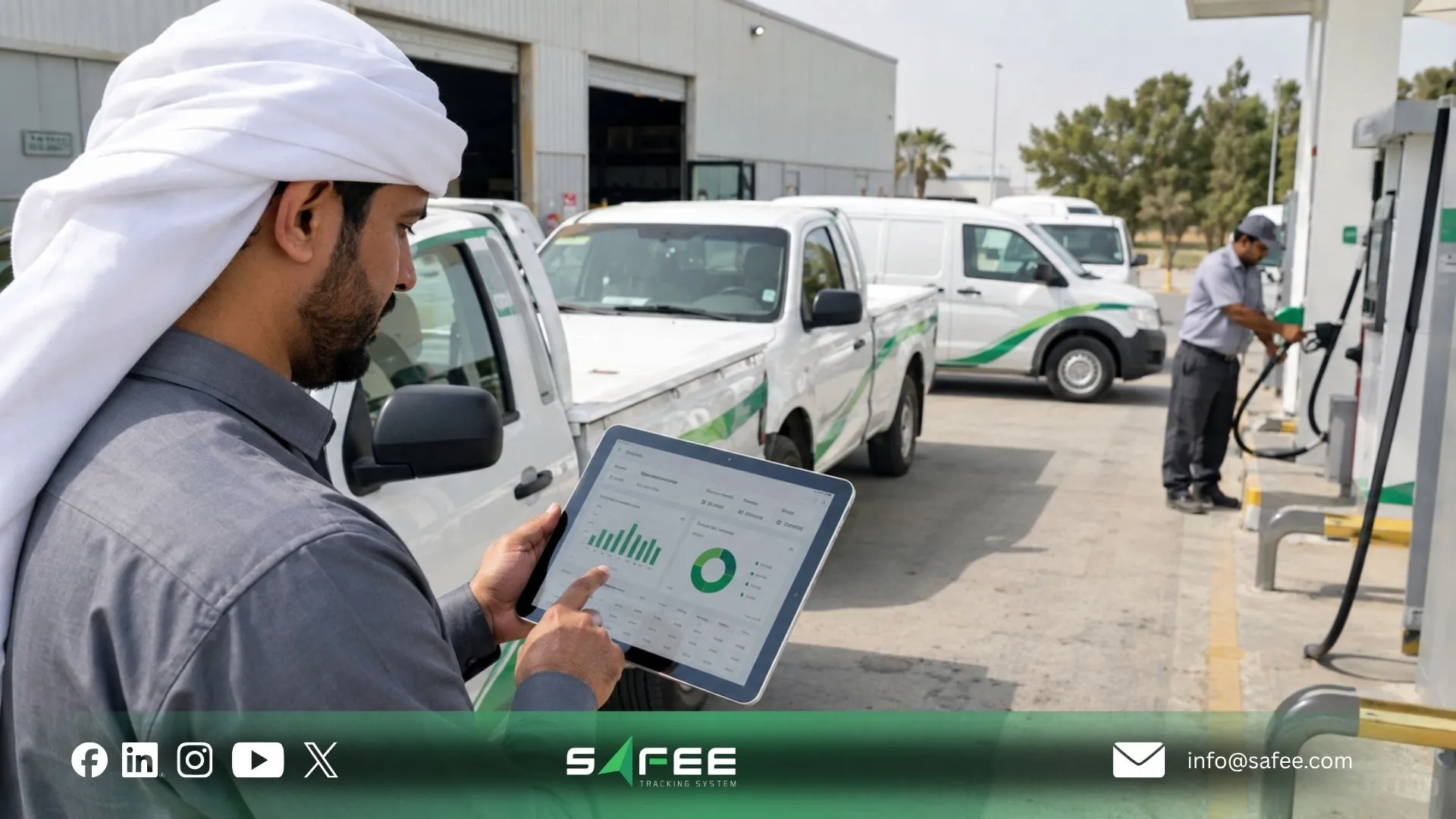
A fleet management fuel cost becomes reliable only when the financial amount can be interpreted against what happened operationally.
Finance may know exactly what appeared on an invoice or card statement. Fleet Operations may know where the vehicle travelled. Fuel monitoring may show supported consumption or fuel-level information. Driver records may identify the person responsible for the vehicle. The reconciliation process brings those records together.
We deal with fleet fueling management as controlling and verifying individual refueling events rather than relying only on monthly consumption totals. A useful refueling record can include vehicle identity, driver or responsible assignment, time, location, volume, available fuel data, trip or branch context, and the follow-up status of the event.
A practical reconciliation sequence is:
- Receive the fuel-card transaction or supplier record.
- Map it to the correct vehicle, card, driver, or operational unit.
- Match the timestamp against vehicle activity.
- Review vehicle location around the transaction.
- Check the trip, route, depot, or branch context.
- Compare the transaction with supported fuel information when available.
- Identify any mismatch or unusual pattern.
- Assign the exception to an owner.
- Record the resolution.
- Include the result in recurring management reporting.
That workflow matters because a transaction can be commercially correct while still being operationally unusual.
For the event-level verification workflow, read our Fleet Fueling Management guide.
Fleet fuel expense management program
A fleet fuel expense management program should define reconciliation as a policy, not as an occasional spreadsheet exercise.
Start by defining which records need to be connected. Depending on the deployment, these may include:
- Fuel-card transactions;
- Approved supplier records;
- Vehicle identifiers;
- Driver assignments;
- Trip or journey information;
- GPS and vehicle activity;
- Supported fuel-level or consumption data;
- Branch, depot, project, or cost-center data;
- Exception records;
- Financial or ERP records, where integrated.
We identify fuel-card transactions, supplier records, manual records, supported CANbus values, external sensors, Telematics data, and approved integrations as potential fuel-data inputs depending on configuration.
The next step is to define the matching logic.
A fleet should determine which identifiers remain consistent across its card provider, fleet platform, ERP, accounting records, and vehicle master data. A vehicle registration, internal vehicle ID, card ID, driver ID, or another controlled identifier may be needed depending on the systems involved.
Then establish the exceptions that deserve attention. Examples can include:
- Transaction with no matching vehicle activity;
- Transaction at an unexpected location;
- Card assigned to one vehicle but apparently used in another operating context;
- Unusual transaction frequency;
- Duplicated or near-duplicated records;
- Quantity inconsistent with available fuel context;
- Unusual transaction time;
- Transaction during an unexpected stop;
- Repeated exceptions associated with one vehicle, route, branch, or assignment;
- Financial record without sufficient operational evidence.
These should be treated as review triggers, not automatic accusations.
Questions to ask the provider
Before designing the reconciliation process, confirm:
- Can fuel-card transactions be imported or integrated?
- Which transaction fields are available?
- What identifiers can be mapped to Safee vehicle records?
- How are timestamps and time zones handled?
- How are duplicate or late records treated?
- Can transactions be compared with vehicle location and trip activity?
- Can driver assignment context be included?
- Which supported fuel data can be connected to the event?
- How are exceptions surfaced and assigned?
- Which reports or exports are available for Finance and Operations?
For API-based integrations, our own guidance recommends confirming available data fields, shared identifiers, authentication requirements, update frequency, timestamp handling, and how failed, missing, late, or duplicate records are handled.
Fleet management fuel cost
The fleet management fuel cost on an accounting statement tells you what was charged. The operational cost question is broader: what portion of that spend supported productive fleet activity, and what portion may be associated with avoidable consumption, poor operating practices, unexplained transactions, or unresolved exceptions?
A useful fuel-cost view therefore separates several dimensions:
- Cost by vehicle;
- Cost by trip or route where the necessary records are available;
- Cost by branch, site, or project;
- Cost by driver or assignment where mapping is reliable;
- Consumption by vehicle;
- Consumption by comparable vehicle group;
- Idle fuel use where supported;
- Refueling frequency;
- Fuel-related exceptions;
- Unresolved reconciliation items.
Our current fuel guidance distinguishes fleet management fuel tracking from reporting: tracking records the fuel-related activity, while reporting adds context such as mileage, trips, routes, locations, idle time, driver assignments, vehicle type, costs, and exceptions.
That difference is fundamental. A cost-per-kilometre number, for example, is useful only when the cost and distance records refer to the same vehicle, period, and operating scope. Otherwise, a polished KPI may simply make inconsistent data look precise.
The management rule should be: Validate the inputs before managing the ratio.
Construction fleet management fuel costs on remote sites
Construction fleet management fuel costs become harder to reconcile when assets work at remote or temporary sites.
The operating environment may include:
- Vehicles moving between project sites;
- Equipment remaining inside one geofenced location;
- Long periods of engine operation without equivalent road distance;
- Temporary fueling points;
- Mobile fuel supply;
- Subcontracted vehicles;
- Changing driver assignments;
- Project-based cost allocation;
- Weak or delayed communication in some locations;
- Different fuel-data sources across asset types.
That means a road-fleet metric cannot always be copied directly into a construction environment. Cost per kilometre may be useful for highway vehicles, while engine runtime, project allocation, fuel per operating period, or equipment-specific consumption may provide better context for certain site assets.
The fleet team should first decide what constitutes a valid fueling event for each asset class.
For example, ask:
- Is the vehicle expected to refuel only at an approved station?
- Can it receive fuel from a mobile bowser or project tank?
- Which site or project should carry the expense?
- Is the asset expected to move during the shift?
- Is engine runtime more useful than distance for this equipment?
- Can the assigned driver or operator be identified reliably?
- Which fuel data source is available for that vehicle type?
- What happens when Telematics data arrives late?
At Safee, the Fuel Monitoring Module supports fuel visibility through compatible vehicle or sensor sources, while Live Vehicle Tracking can add vehicle activity and location context. Available fuel data depends on the source, sensor configuration, calibration, and compatibility.
Managing construction sites or mixed assets? Contact Safee to review the fuel-data source, vehicle mapping, reporting structure, and exception rules needed for your operating environment.
Fleet management fuel savings and fuel efficiency, measured
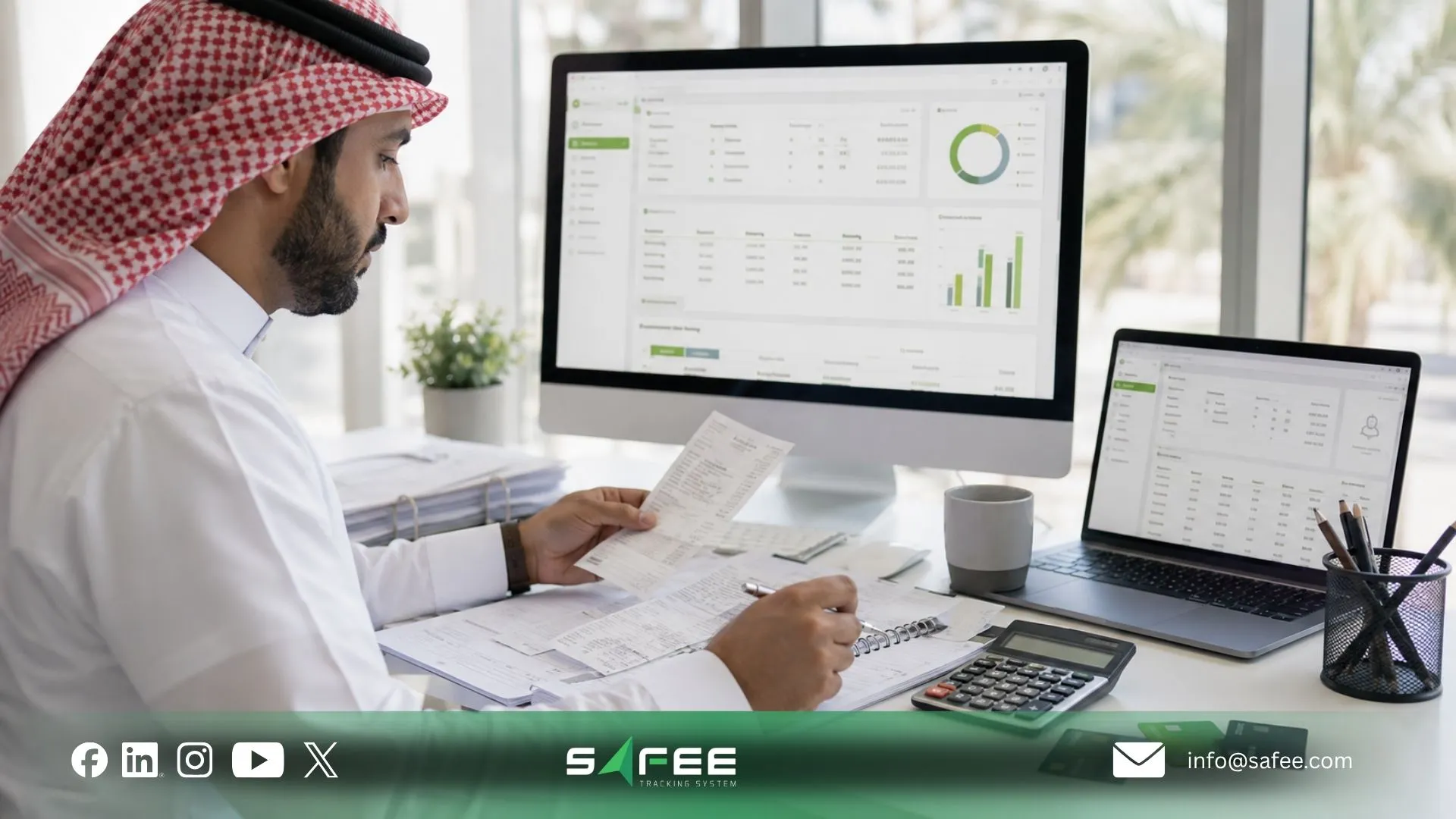
Fleet management fuel savings should be demonstrated through comparable operating data, not assumed because a new card or software platform has been introduced.
The baseline matters.
If Fleet Managers want to know whether fuel performance improved, they need to define:
- The comparison period;
- The included vehicles;
- Route or duty differences;
- Changes in workload;
- Vehicle classes;
- Driver assignment quality;
- Idle activity;
- Maintenance condition;
- Fuel-data reliability;
- Known operational changes.
Only then can Finance and Operations distinguish genuine fleet management fuel efficiency improvement from a change caused by different routes, workloads, assets, or data quality.
At Safee, we recommend reviewing fuel KPIs with operating context rather than interpreting a number in isolation. Relevant indicators include consumption per vehicle, fuel cost per trip or route where validated cost data exists, idle fuel waste, refueling frequency and volume, fuel use by driver or team where assignments are reliable, anomaly events, and variance among comparable vehicle groups. For a deeper weekly review framework, read Fleet Management Fuel Monitoring KPIs guide.
Fleet management fuel savings and efficiency metrics to track
The best metric depends on the management question.
For cost control, track:
- Total validated fuel spend;
- Fuel cost by vehicle;
- Fuel cost by route or trip where reliable mapping exists;
- Fuel cost by branch, project, or operating unit;
- Budget versus actual where financial data is available;
- Unresolved fuel-card exceptions.
For consumption control, track:
- Fuel consumption by vehicle;
- Fuel usage per trip;
- Fuel usage per 100 km where appropriate;
- Idle fuel usage;
- Refueling volume and frequency;
- Variance among comparable vehicles.
For exception management, track:
- Unusual refueling events;
- Unexpected fuel changes;
- Repeated location mismatches;
- Unresolved card transactions;
- Repeated exceptions by vehicle or assignment;
- Time from exception identification to resolution.
Our Fuel Monitoring Module supports fuel levels, consumption, idle use, refueling, history, and reporting data when compatible data sources are integrated. We also use Fuel Explorer and fuel history capabilities for reviewing fuel changes and usage.
A good KPI program should also specify:
Metric, data owner, review cadence, exception threshold, responsible action, and evidence of closure.
Without that governance, the dashboard may identify the same issue every month without changing the operating result.
For recurring management reviews, see our Fleet Reporting capability.
3PL fleet card management system for multi-carrier fuel programs
A 3PL fleet card management system has an additional challenge: the organization may need to reconcile transactions across multiple carriers, vehicles, contracts, operating entities, or card programs.
The first requirement is a consistent identity model. Each fuel record should be mapped, where available, to the correct:
- Carrier;
- Vehicle;
- Card or account;
- Driver or responsible assignment;
- Trip;
- Customer or contract;
- Branch or depot;
- Cost center;
- Transaction currency where relevant;
- Statement or settlement period.
Without consistent identifiers, consolidation can create a larger spreadsheet without creating better control.
A 3PL also needs to separate visibility from responsibility. A carrier may own the vehicle while the 3PL controls the transport contract. Finance may need cost allocation while Operations needs journey evidence. Management may need cross-carrier comparison without exposing unnecessary information to every user.
Role and permission design therefore matters alongside fuel reconciliation.
Our Administration Panel can structure users, vehicles, sites, groups, and permissions, while Fleet Reporting provides filtered and scheduled reporting. The appropriate 3PL architecture still depends on the commercial model, available integrations, and which party owns each source record.
For multi-carrier operations, a useful evaluation framework is:
- Can each carrier’s records be identified consistently?
- Can multiple card or supplier data sources be mapped?
- Can vehicle and trip context be connected?
- Can users see only the information appropriate to their responsibility?
- Can reports be separated by carrier, account, branch, or contract?
- Can unresolved exceptions be assigned and tracked?
- Can consolidated management reporting preserve source-level traceability?
This is where fleet fuel management cards become part of a governance system rather than simply a payment mechanism.
14 line items on every fleet fuel management cards statement
For effective reconciliation, a fleet fuel management cards statement or transaction export should ideally provide enough structured fields to identify the purchase and connect it with fleet records. Exact fields vary by card issuer and integration, so Fleet Managers should confirm availability rather than assume every provider supplies the same dataset.
- Transaction ID: A unique reference that prevents the same purchase from being reconciled twice and provides traceability during investigation.
- Card or Account Identifier: Identifies which fuel card or commercial account was used.
- Vehicle Identifier: The mapped registration, fleet ID, or another controlled vehicle reference, where supported.
- Driver or User Identifier: Useful when the card program records the person responsible for the transaction and the identifier can be mapped reliably.
- Transaction Date: Provides the calendar reference required for accounting and operational matching.
- Transaction Time: Allows the record to be compared with vehicle activity around the fueling event.
- Fueling Location or Merchant: Identifies where the transaction occurred and supports comparison with vehicle location.
- Fuel or Product Type: Helps verify whether the purchased product is compatible with the expected transaction.
- Fuel Quantity: Provides the transaction volume for comparison with available fuel and consumption records.
- Unit Price: Supports validation of how the transaction total was calculated when the data is provided.
- Total Transaction Amount: The financial value used for expense reconciliation and cost allocation.
- Currency: Important for fleets operating across more than one market or financial reporting environment.
- Odometer or Mileage Entry
- Where captured and reliable, this can add another reference point for consumption and vehicle-use analysis.
14. Transaction Status or Exception Reference: Records whether the purchase is posted, reversed, adjusted, disputed, or otherwise requires financial follow-up where the card data supports such status fields.
The important principle is not that every statement must look identical. It is that the available fields must be sufficient to establish a reliable connection between the financial transaction and the operational event.
If your Finance team is spending hours matching cards, vehicles, trips, and fueling records manually, talk to Safee about the data identifiers and integration workflow required to make the process more structured.
Safee: Fleet card management without the manual spreadsheet
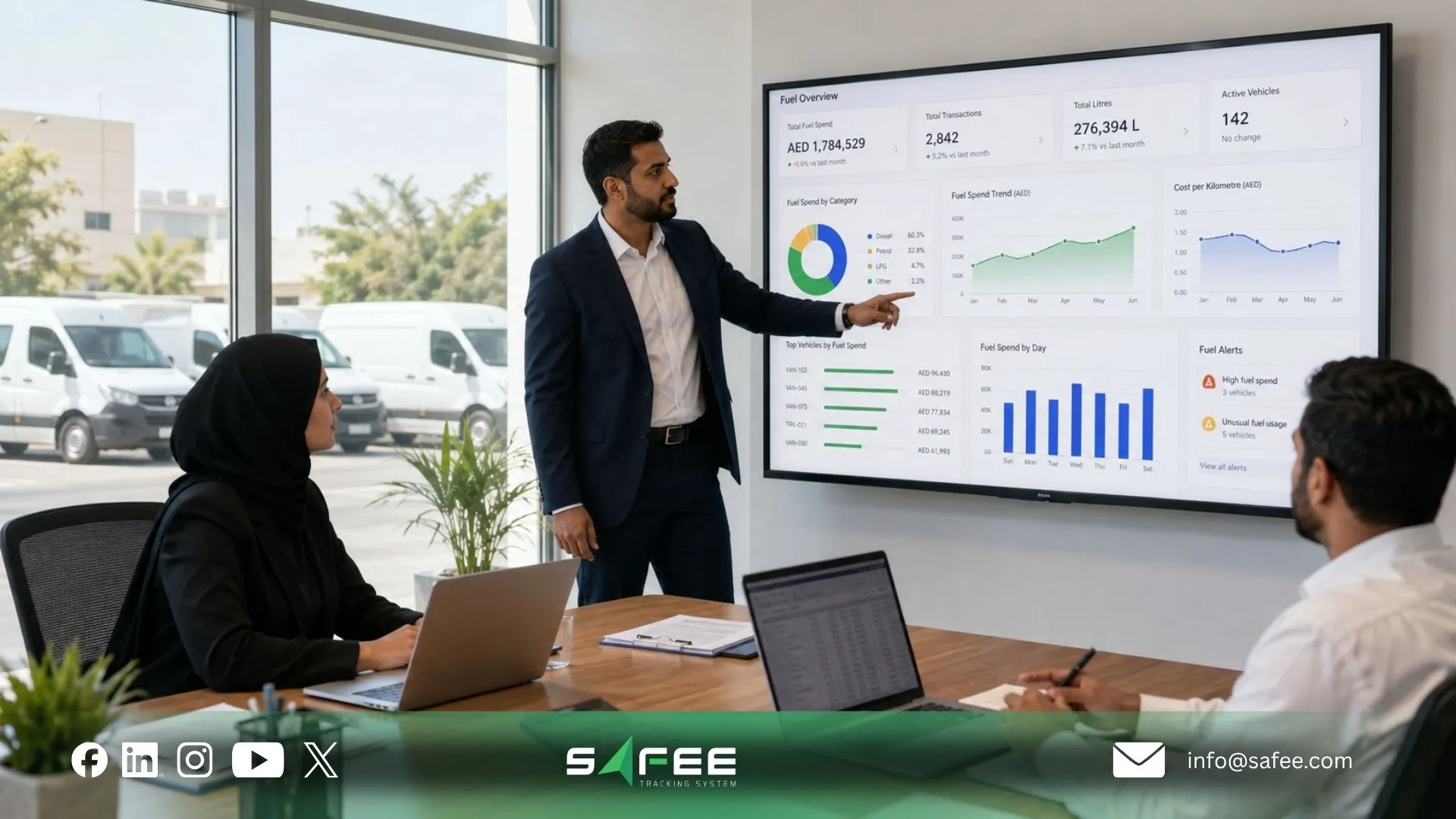
Our value in fleet card management is not simply replacing one spreadsheet with another screen. The stronger use case is connecting the fuel transaction with the operational evidence needed to review it.
At Safee, our fuel management guidance recognizes fuel-card transactions as one possible input alongside supported CANbus values, fuel sensors, supplier records, Telematics data, manual records, and approved third-party integrations.
The surrounding Safee capabilities can then add context:
- Fuel Monitoring Module / Fuel Tracking & Control for supported fuel-level, consumption, idle-use, refueling, history, and fuel-event information.
- Live Vehicle Tracking for location and vehicle activity.
- Driver Management for assignment and accountability context.
- Alarms and Alerts for configured exception workflows.
- Fleet Reporting for recurring operational and management review.
- Administration Panel for users, vehicles, sites, groups, and permissions.
- Telematics data for connected vehicle and device information where available.
This architecture matters because Safee does not have to replace the financial ledger or the commercial card provider. The fleet platform can provide the operational context that helps explain the expense.
For the wider fuel-control architecture, read our guide to Fleet Fuel Management Systems.
Safee vs manual fuel card reconciliation
The level of automation depends on the transaction feed, common identifiers, integration design, and available fleet data. These requirements should be confirmed during implementation.
| Task | Manual Reconciliation | Safee |
| Statement matching | Line-by-line manual check across statements and operational records | Matching can be structured around transaction, trip, vehicle, and other available identifiers when the required data is integrated |
| Anomaly detection | Found only when someone compares the records | Configured Alarms and Alerts and fuel-related review can surface supported exceptions for investigation |
| Cost-per-km reporting | Built manually from separate cost and distance records | Fleet Reporting can combine operational reporting with validated cost inputs where the required data is available |
| Multi-carrier / 3PL support | Separate spreadsheets can fragment carrier visibility | Structured vehicle, group, site, user, and reporting views can support a consolidated operating model, subject to integration design |
| Budget vs actual | Manual comparison between operational and finance records | Can be incorporated into a connected reporting workflow when the required budget and actual financial data are integrated |
The table should not be read as a claim that every fuel-card feed becomes automatically reconciled without configuration. Three things must first be validated:
- Data availability: Does the card or supplier provide the necessary transaction fields?
- Record mapping: Is there a reliable identifier connecting the card data with the correct vehicle, driver, or operating unit?
- Workflow design: What constitutes an exception, who owns it, and what evidence closes it?
That is the difference between digitizing a spreadsheet and improving fuel governance.
Why a fleet fueling management system pays for itself
The business case for a cost fleet fueling management system should not be based on an invented savings percentage. It should be based on the manual work, unresolved exceptions, preventable waste, and decision delays the organization can actually measure.
The starting point is to document the current cost of the process.
Consider:
- Time spent importing or formatting statements;
- Time spent matching transactions to vehicles;
- Time spent contacting drivers or branches for clarification;
- Unresolved or disputed transactions;
- Repeated idling or fuel-waste patterns;
- Unexplained consumption variance;
- Duplicate administrative work between Operations and Finance;
- Manual monthly reporting;
- Slow investigation because trip or location history is reviewed separately;
- Inability to measure whether corrective actions worked.
Headline price is only one variable. For a wider view of how fleets remove waste without cutting productive output, see our Fleet Management Cost Savings guide.
A better evaluation for a fuel management system for fleet cost is:
Required data sources + integration effort + reconciliation workflow + reporting requirements + user governance + ongoing operational value.
Questions to ask before comparing price include:
- Does the system work with our available fuel-data sources?
- Can our fuel-card records be integrated or imported?
- How will vehicles and transactions be mapped?
- Which fuel events can be validated using operational data?
- What alerts can be configured?
- What reports can Finance receive?
- What reports can Operations receive?
- How are permissions controlled?
- How are exceptions investigated and closed?
- What information must remain in the ERP or accounting platform?
This also explains why fleet fueling management system searches should lead to an operational requirement exercise rather than a simple price comparison.
For the wider financial framework, read our Fleet Management Cost Analysis guide.
FAQs about fleet management fuel cards
How do fleet fuel cards actually save money?
Fleet fuel cards can improve purchasing control and create structured transaction records, but fleet management fuel savings depend on how those transactions are managed. Connecting card data with vehicle, trip, location, driver, and supported fuel information helps teams identify exceptions and target avoidable fuel costs instead of relying only on monthly totals.
How do you reconcile fuel card statements against real fueling events?
Match the card transaction to the correct vehicle or assignment, then compare its time, location, quantity, and cost with available trip, GPS, driver, and fuel records. Any mismatch should be treated as an exception for investigation rather than automatic proof of misuse.
What Is the cheapest fleet fueling management system?
The cheapest fleet fueling management system cannot be identified from subscription price alone because requirements differ by data source, integrations, fleet structure, reporting, and hardware or sensor needs. Compare the total configuration required for your fleet and verify which capabilities are actually included before making a price decision.
Can fleet fuel cards work for 3PL and multi-carrier operations?
Yes, fuel cards can form part of a 3PL or multi-carrier fuel program when transactions can be mapped consistently to the relevant carrier, vehicle, account, trip, or cost center. The key requirement is a governance and reconciliation model that preserves source-level traceability while giving management a consolidated view.
Ready to improve your fleet operations?
Tell us what you would like to improve. A Safee specialist will reply by email.
Usually replies within one business day • No sales spam
Your details are used only to respond to your request. Privacy Policy