Fleet Management Software: Find the Right Fit for Your Fleet
Managing vehicle maintenance, fuel expenses, driver assignments, and operational reports across separate tools can make it difficult for fleet managers to identify problems and act on them. Missed service deadlines, inconsistent vehicle records, and time spent reconciling data can affect fleet availability and operating costs.
Choosing the right fleet management software means identifying which functions your operations need and whether a specialized program or an integrated platform can support them. This guide compares the available software types, explains their capabilities, and helps you evaluate the right fit for your fleet, existing business systems, and Saudi operational requirements.
What is fleet management software?
Fleet management software is an application that helps companies organize vehicle and driver information, manage fleet-related tasks, monitor operations, and review performance.
Depending on its capabilities, it may support vehicle tracking, maintenance planning, fuel monitoring, driver management, document control, and operational reporting. It can use manually entered records, connected vehicle data, or information exchanged with other business systems.
The software is the application layer of a broader fleet management system, which may also include tracking devices, connectivity, and other data sources. However, not every software product includes all fleet management functions or requires installed GPS hardware.
What does fleet management software do in daily operations?
Fleet management software helps teams coordinate recurring tasks, monitor vehicle performance, and identify issues requiring attention. Common functions include:
- Vehicle monitoring: Review vehicle locations, trip histories, and movement exceptions when tracking data is available.
- Maintenance management: Schedule servicing, monitor upcoming maintenance, and maintain work records using dates, mileage, or available engine-hour data.
- Fuel and cost monitoring: Review fuel expenses, refill records, and consumption data from compatible sources to investigate unusual costs.
- Driver management: Maintain driver assignments and connect available driving events with the responsible driver for investigation and follow-up.
- Document management: Track registrations, inspections, insurance, and applicable operating permits to identify upcoming renewals.
- Fleet reporting: Consolidate vehicle activity, operating costs, and performance indicators into reports that support operational reviews.
These functions are not included in every product. A dedicated maintenance program may focus on service schedules and work orders, while an integrated platform can connect several management functions.
For a detailed evaluation of individual capabilities, see our guide to fleet management software features.
Fleet management software vs TMS and ERP
Fleet management software, Transportation Management Systems (TMS), and Enterprise Resource Planning (ERP) platforms support related but different business responsibilities.
Fleet management software focuses on vehicles, drivers, maintenance, vehicle activity, and fleet operating performance. A TMS focuses on planning and executing transport movements, including shipment assignments, carrier management, and delivery operations. An ERP manages broader business processes such as finance, procurement, asset records, and cost allocation.
Their functions may overlap, particularly in maintenance, scheduling, and cost reporting. The relevant distinction is which system owns each process and record.
For example, a transport company may manage shipment orders in its TMS, monitor vehicle activity through fleet software, and record approved operating expenses in its ERP. Integration can reduce duplicate data entry, but it requires compatible interfaces, shared identifiers, and clearly defined responsibilities.
Our guide to fleet management ERP integration explains how to establish these connections without creating conflicting records.
How does fleet management software work?
Fleet management software brings vehicle and operational records together, keeps them updated from available data sources, and uses the information to support maintenance, monitoring, reporting, and other fleet management tasks.
What the software can automate depends on the data it receives, its available functions, and how your team configures them.
Collecting data from vehicles, teams, and business systems
Fleet management software typically uses three sources of information:
- Vehicle data: GPS trackers, compatible sensors, or manufacturer telematics provide information such as location, mileage, engine hours, and supported vehicle events.
- Operational records: Fleet, Maintenance, and Operations teams enter information that requires human input, including service invoices, inspection findings, repairs, and driver assignments.
- Business systems: Integrations or supported imports bring in relevant records from ERP, TMS, fuel card providers, or other applications.
The software must associate these records with the correct vehicle, driver, and reporting period. Missing identifiers, outdated mileage readings, or duplicate entries can affect maintenance schedules, cost calculations, and performance reports.
Manual entry is not inherently unreliable, but critical records need clear ownership, timely updates, and validation. For companies replacing spreadsheets, our guide to moving from manual to digital fleet management explains how to organize records before migration.
Turning fleet data into operational tasks and reports
Once the relevant data is available, the software uses configured schedules, rules, and workflows to support daily fleet operations.
Consider a vehicle approaching its scheduled maintenance interval. When an updated mileage reading reaches the software, a compatible maintenance module can compare it with the service schedule and flag the upcoming task.
The maintenance team can then arrange the service, record the completed work, and update the vehicle’s maintenance history. Fleet managers can review outstanding tasks and recurring maintenance issues through the available reports.
The same principle applies to other functions:
- Monitoring: Vehicle activity is organized into trip histories, dashboards, and configured alerts.
- Fuel management: Available fuel transactions and vehicle readings support consumption analysis and discrepancy investigations.
- Driver management: Driver assignments provide context for supported driving events and performance reviews.
- Reporting: Relevant records are consolidated into operational summaries or scheduled reports.
Not every program supports these workflows or automates them to the same extent. A specialized maintenance application may focus on work orders and service histories, while an integrated platform can connect maintenance, tracking, driver information, and reporting.
The key requirement is reliable information that supports the task your team needs to complete. Before relying on automated outputs, verify the source of each critical data field, how frequently it updates, and who is responsible for correcting inaccurate or missing records.

Types of Fleet Management Software
Fleet management software differs by the functions it supports, how it is hosted, and how it is licensed or developed. Understanding these differences helps companies select software that meets their operational requirements without paying for unnecessary capabilities.
Types of fleet management software by function
| Software type | Main capabilities | Best suited for |
|---|---|---|
| All-in-one fleet management platforms | Tracking, maintenance, fuel, drivers, documents, and reporting | Companies managing multiple fleet functions that require shared data |
| GPS tracking software | Vehicle locations, trips, and movement alerts | Fleets prioritizing vehicle visibility and activity monitoring |
| Maintenance software | Service schedules, work orders, and repair records | Fleets focused on maintenance planning and vehicle availability |
| Fuel management software | Fuel transactions, consumption analysis, and discrepancies | Companies seeking closer control over fuel expenditure |
| Driver safety and video software | Driving events, video evidence, and safety monitoring | Fleets requiring additional incident investigation capabilities |
| Route and dispatch software | Route planning, assignments, and delivery scheduling | Distribution, delivery, and field-service operations |
| ERP fleet modules | Vehicle records, contracts, and operating costs | Companies managing fleet administration within an existing ERP |
| OEM telematics platforms | Supported vehicle data from manufacturer-connected systems | Fleets using compatible factory-fitted telematics |
These categories can overlap. A company may use specialized programs together or choose an integrated platform when multiple functions require consistent vehicle records and consolidated reporting.
Cloud-based vs on-premises software
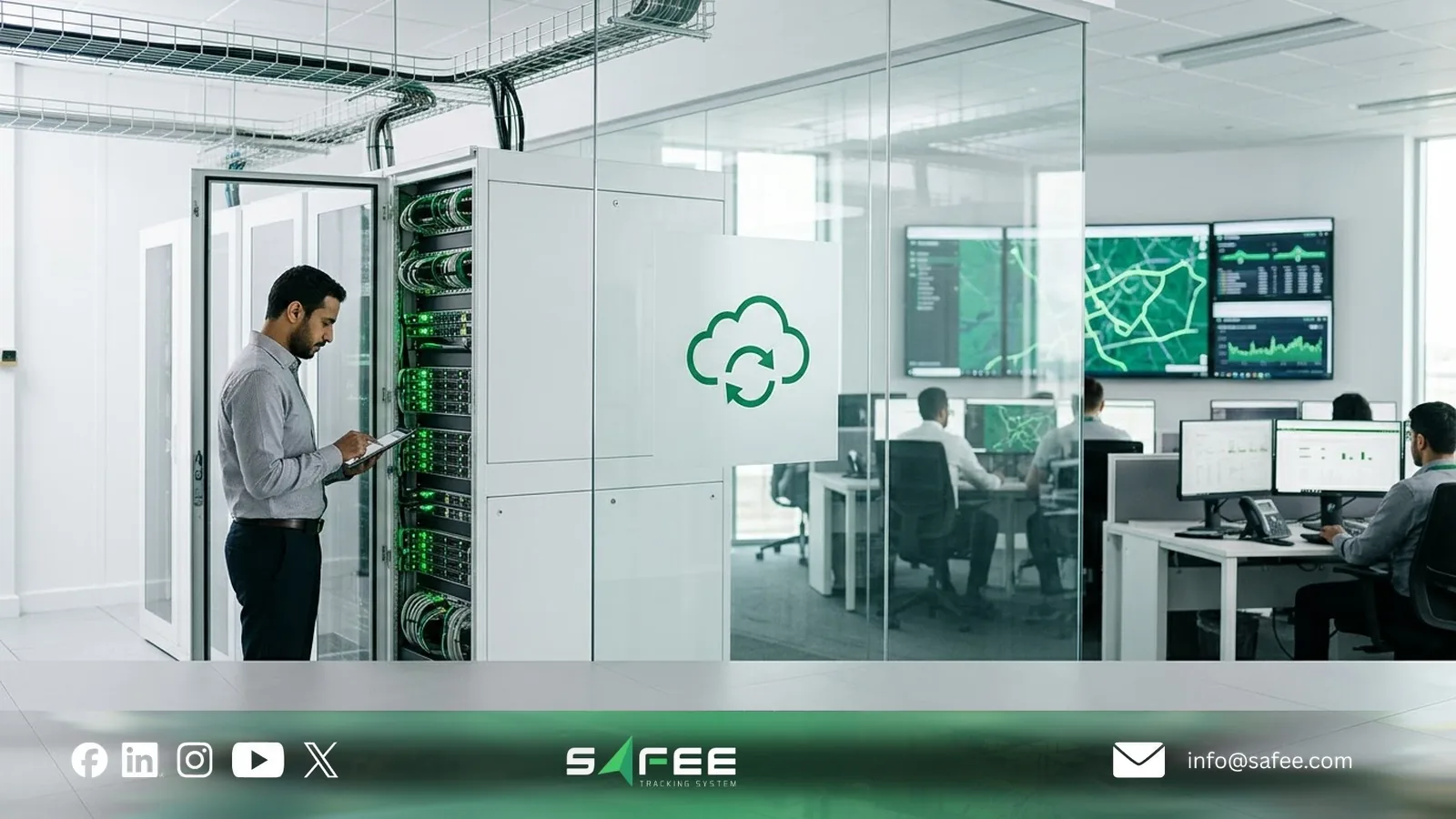
Cloud-based software runs on hosted infrastructure and typically offers remote access, provider-managed updates, and subscription options. On-premises software runs on infrastructure controlled by the organization, with maintenance and security responsibilities assigned internally or to a service provider.
Neither deployment model automatically guarantees lower costs or stronger security. Compare hosting locations, data access, support arrangements, and total operating costs before deciding.
For more detail, see our guide to cloud-based fleet management software.
Commercial, open-source, or custom-built software
- Commercial software: Ready-made products with defined features, licensing terms, support, and integration options.
- Open-source software: Provides access to source code under its licence terms but may require internal resources for hosting, configuration, and maintenance.
- Custom-built software: Developed for specialized requirements that existing products cannot reasonably meet through configuration or integration.
The right approach depends on your operational needs, internal IT capabilities, support requirements, and budget. Before developing a custom solution, evaluate whether existing software and integrations can meet your requirements.
How fleet management software solves operational challenges
The following examples illustrate how different types of fleet management software address specific operational requirements. The appropriate solution depends on the data available, the tasks your team needs to manage, and the results you need to verify.
Maintenance scheduling for construction equipment
A construction company operating excavators, cranes, and tippers needs maintenance schedules that reflect actual equipment use. Calendar-based reminders alone may not account for machines working different hours across project sites.
Fleet maintenance software can use engine-hour readings from compatible equipment or validated manual records to schedule servicing, flag upcoming maintenance, and track completed work.
Before choosing a solution, verify engine-hour data availability, maintenance alert settings, and work-order tracking. See our heavy equipment fleet management software guide.
Verifying delivery arrival times
When customers dispute delivery times, transport managers need reliable records of vehicle arrivals and departures rather than relying solely on driver updates.
GPS tracking or journey management software can use trip histories, geofences, and timestamps to document when a vehicle entered or left a delivery location.
These records help investigate delays, but vehicle arrival does not independently confirm that goods were delivered. Companies requiring proof of delivery should also verify integration with their delivery confirmation or TMS workflows.
Read more about delivery fleet management in the GCC.
Investigating fuel costs and discrepancies
A transport fleet experiencing rising fuel expenses needs to identify whether the increase reflects vehicle utilization, consumption changes, fuel prices, or unexplained transactions.
Fuel management software can combine purchase records, vehicle mileage, and compatible CANbus or fuel-sensor readings to investigate consumption trends and unusual tank-level changes.
The available evidence depends on the data sources and their accuracy. Unexpected readings should trigger investigation rather than automatically be classified as fuel theft.
Our guide to fleet fuel management systems explains the available monitoring approaches.
Monitoring Wasl integration for Saudi transport fleets
Transport operators subject to Wasl requirements need more than GPS tracking. Their fleet software must support the applicable data-sharing process and provide visibility into transmission issues.
A suitable solution should support the relevant integration and allow the operations team to verify vehicle and tracking-device assignments, current data, and available message statuses or acknowledgements.
Before deployment, confirm the provider qualifications required for the activity and test the connection using registered vehicles. Successful data transmission supports technical verification but does not replace the operator’s other regulatory obligations.
See our guide to the Wasl platform in Saudi Arabia.
These examples show why the right fleet management software is determined by the operational requirement, not the number of features offered. Evaluate the relevant data sources and workflows before comparing products.

How to choose the right fleet management software
Choosing fleet management software starts with identifying the operational functions your company needs, not comparing products by the number of features they offer.
Once you know whether your priority is maintenance, tracking, fuel control, or coordinating several fleet processes, you can narrow the options and evaluate their suitability.
Step 1: Match Software to Your Operational Needs
Start with your most important operational requirements:
- A single function: Specialized maintenance, fuel, or tracking software may be sufficient when the requirement is limited and existing systems already support other processes.
- Several connected functions: An integrated platform may be more suitable when vehicle activity, maintenance, drivers, and costs need consistent records and consolidated reporting.
- Existing ERP or TMS: Identify which system manages each record and whether reliable integration can eliminate duplicate entry.
- Existing tracking devices: Confirm whether the software supports their data protocols and available readings before planning hardware replacement.
- Multiple branches or contractors: Verify that user permissions and reporting access can be restricted by company, site, group, or assigned vehicles.
Fleet size alone should not determine the software category. A small fleet with demanding safety or regulatory obligations may need more advanced functions than a larger fleet with straightforward operations.
Step 2: Verify Saudi and GCC Requirements
For fleets operating in Saudi Arabia and other Gulf markets, confirm the requirements that apply to your activities and locations.
- Wasl and provider qualifications: Where Wasl integration is required, verify the applicable Transport General Authority (TGA) requirements, relevant provider qualifications, and supported data exchange. CST tracking-service registration is a separate requirement and does not replace TGA qualification where applicable.
- Documents and data protection: Check support for relevant vehicle and driver expiry records. Review data hosting, access controls, retention, and applicable Saudi Personal Data Protection Law requirements.
- Language and local support: Test whether the interfaces, notifications, and exported reports support your team’s required languages. Confirm installation, maintenance, and technical support arrangements in your operating locations.
Requirements differ between Saudi transport activities and across GCC jurisdictions. Include the relevant obligations in your procurement specification instead of assuming that a provider’s general compliance claim covers your operations.
For Saudi fleets, see our guide to operating cards for transport vehicles.
Step 3: Compare Solutions Before Purchase
Once you have shortlisted suitable software types, evaluate products against the same operational requirements.
Request a demonstration or pilot using representative vehicles and realistic workflows. Verify data accuracy, required alerts, reporting, existing-device compatibility, and any necessary ERP, TMS, or regulatory integrations.
Then compare the total cost of ownership, including licences, devices, installation, connectivity, integrations, support, and ongoing maintenance.
Before signing, confirm service levels, responsibilities for resolving faults, data export options, and contract exit terms.
Our guide to fleet management software companies explains how to assess providers, while the Tracking Quote Comparison Tool helps compare costs and contractual commitments.
How Safee supports your fleet operations
At Safee, we provide a connected fleet management platform for companies that need to coordinate tracking, maintenance, drivers, fuel monitoring, and operational reporting.
Rather than managing these functions through separate records, your team can use relevant modules within one environment.
- Monitor vehicles and investigate exceptions: Live Vehicle Tracking provides vehicle locations and trip histories, while Alarms and Alerts helps supervisors identify events requiring attention.
- Manage maintenance and document renewals: Our Maintenance Module supports service schedules and task monitoring. Expiries Explorer helps teams identify vehicle and driver documents approaching their deadlines.
- Investigate fuel costs and driver performance: Fuel Explorer supports consumption and tank-level reviews using compatible data sources. Driver Management connects vehicle assignments with available driving events and performance records.
- Coordinate journeys and performance reviews: Our Journey Management System (JMS) supports planned journey workflows, while Fleet Reporting provides reports and scheduled delivery for operational reviews.
- Connect fleet data with business and regulatory systems: Supported integrations allow relevant information to be exchanged with ERP or TMS applications. For applicable Saudi transport activities, Wasl Explorer and related message reports help teams review transmitted data and investigate connection issues.
The available capabilities depend on the selected modules, compatible devices, data sources, and integration requirements. Safee supports monitoring and operational workflows, while your team remains responsible for management decisions and applicable regulatory obligations.
Not every fleet needs every module. We can help you identify the functions that match your vehicles, existing systems, and operational priorities.
Request a Safee Fleet Demo to evaluate the relevant capabilities against your fleet’s requirements.

FAQs about fleet management software
Is free fleet management software enough for a company fleet?
It can be, if it supports your required functions and your team can manage its hosting, configuration, and maintenance. Verify technical support and regulatory integrations separately.
How much does fleet management software cost?
Pricing depends on licensing, fleet size, devices, connectivity, modules, integrations, and support. Compare the total contract cost rather than the subscription alone. See our fleet management software pricing guide.
Does fleet management software work on mobile phones?
Many platforms offer mobile access for supervisors and drivers, although available functions differ by application and user role. See our guide to fleet management apps.
Does Safee replace an ERP or accounting system?
No. Safee supports fleet operations and can exchange relevant data with compatible business systems through configured integrations. Financial accounting and payroll remain in the designated business systems.
Ready to improve your fleet operations?
Tell us what you would like to improve. A Safee specialist will reply by email.
Usually replies within one business day • No sales spam
Your details are used only to respond to your request. Privacy Policy