

Fleet Management Insurance: Using Data for Renewals and Claims
Your fleet management insurance renewal quote arrives with a higher premium, but can you prove that your fleet’s risks have decreased? Without documented improvements in driver behavior and safety, negotiating better terms becomes harder.
Fleet data can help you demonstrate those improvements, though lower premiums aren’t guaranteed. This guide explains how insurers assess fleet risks in Saudi Arabia and the UAE, how tracking and video data support claims, and how to prepare a stronger renewal file using Safee reports.
What is fleet management insurance?
Fleet management insurance generally refers to motor insurance arranged for multiple company vehicles under a fleet policy or other group insurance arrangement. A vehicle schedule identifies the insured vehicles and their respective coverage.
Rather than assessing each vehicle in isolation, insurers can consider the fleet’s overall claims history alongside vehicle types, usage, driver profiles, and other risk factors. The policy structure, coverage options, and renewal terms depend on the insurer and the agreed contract.
Fleet policy vs insuring each vehicle separately
With separate policies, each vehicle has its own coverage terms, premium, and renewal date. A fleet insurance arrangement can consolidate administration under a common vehicle schedule and renewal process, depending on the insurer.
Vehicles may be added or removed during the policy period, subject to the agreed conditions and premium adjustments.
When comparing fleet insurance with individual vehicle policies, check whether:
- Vehicles share a common renewal date and how additions or removals are handled.
- Different vehicles can have different coverage levels and deductibles.
- The insurer considers the fleet’s overall claims experience when assessing renewal terms.
There is no universal minimum fleet size accepted by every insurer, so confirm eligibility with your broker before requesting quotations.
To manage insurance expiry dates alongside registration, inspection, and other vehicle documents, see our guide to fleet document management.
Cover types on a fleet vehicle schedule
The main coverage options are:
- Third-party liability: Compulsory motor insurance that covers liabilities to third parties within the applicable policy terms and legal limits. It does not generally cover damage to your own vehicle.
- Comprehensive cover: Adds protection against specified damage or loss to the insured vehicle, subject to the policy’s coverage limits, deductibles, and exclusions.
- Mixed coverage levels: Depending on the insurer’s offering, a fleet may arrange comprehensive coverage for higher-value vehicles and third-party-only coverage for others.
- Optional extensions: Depending on the policy, these may include roadside assistance, replacement vehicles, or coverage for driving outside the country.
For corporate fleets in Saudi Arabia, it is important to distinguish individually regulated comprehensive policies from commercial insurance arrangements. The Saudi Central Bank’s November 2023 amendment limited the scope of the Comprehensive Motor Insurance Rules to individual customers, giving companies greater flexibility to customize coverage.
Before renewing, ask your insurer or broker to provide the vehicle schedule, deductibles, exclusions, authorized-driver conditions, and optional extensions in writing. Compare quotations against the same requirements, not premiums alone.
How fleet motor insurance works in Saudi Arabia and the UAE
Saudi Arabia and the UAE have different insurance regulators and accident-reporting procedures. These differences matter when reviewing coverage and preparing the documents needed for claims.
| Item | Saudi Arabia | UAE |
|---|---|---|
| Insurance regulator | Insurance Authority (IA) | Central Bank of the UAE (CBUAE) |
| Compulsory cover | Unified Compulsory Motor Insurance Policy | Unified Motor Vehicle Insurance Policy Against Third Party Liability |
| Own-vehicle protection | Commercial comprehensive coverage as agreed with the insurer | Cover under the Unified Motor Vehicle Insurance Policy Against Loss and Damage, subject to policy terms |
| Accident record | Najm or the relevant Traffic authority, depending on the incident | Police or an authorized accident-reporting service, depending on the emirate and incident |
| What fleet managers should verify | Commercial coverage terms, vehicle usage, exclusions, deductibles, and claims procedures | Policy coverage, vehicle usage, exclusions, deductibles, and local accident-reporting procedures |
Who regulates motor insurance today
In Saudi Arabia, the Insurance Authority (IA) has regulated the insurance sector since November 23, 2023. Its official regulations page provides access to the Unified Compulsory Motor Insurance Policy and other insurance rules.
In the UAE, the Central Bank of the UAE (CBUAE) regulates the insurance sector following the merger of the former Insurance Authority into the Central Bank under Federal Decree-Law No. 25 of 2020. Its motor insurance rulebook includes the unified motor policies.
For a fleet manager, the practical step is to verify the applicable rules and compare the insurer’s written terms before signing. Pay particular attention to commercial vehicle use, exclusions, authorized drivers, deductibles, and accident notification requirements.
Najm, police reports, and the accident record
In Saudi Arabia, Najm for Insurance Services handles eligible accidents involving insured vehicles within its coverage area. Drivers can use the Najm app to report an accident and follow its status until the report reaches the insurer. Other accidents fall under the relevant Traffic authority’s procedures.
In the UAE, reporting channels vary by emirate and incident. Authorized digital services include Dubai Police, Saaed, and other government-approved channels for eligible minor accidents.
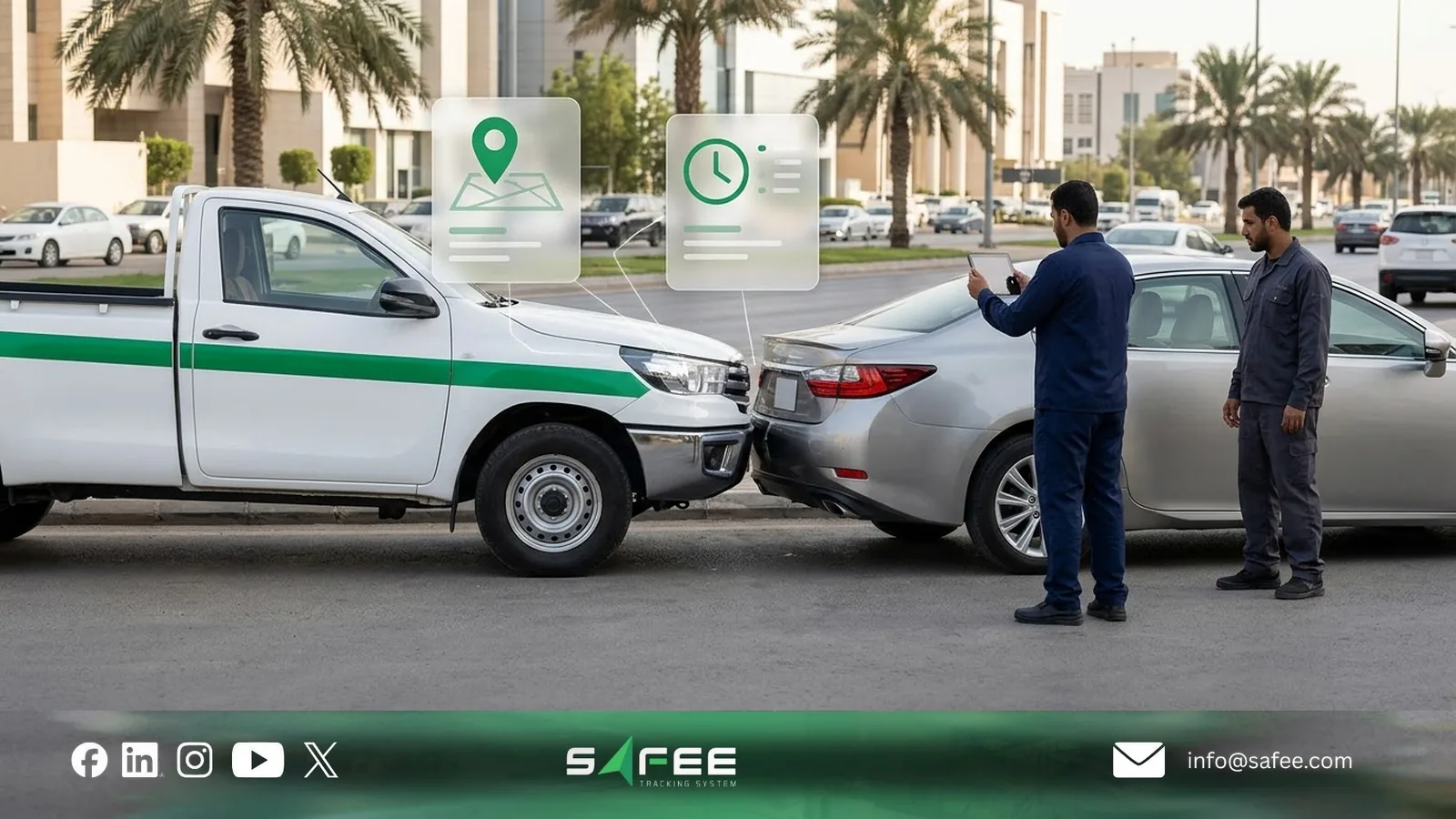
For each accident involving a fleet vehicle, keep the official accident report or reference number together with the vehicle and driver details, photographs, relevant trip records, and available camera footage.
Tracking and video data supplement the official accident record; they do not replace it or independently establish legal liability. They can help your team compare the driver’s account with the vehicle’s recorded movements, investigate discrepancies, and prepare evidence for the insurer.
For the operational steps from reporting an accident to documenting evidence and closing the claim, see our guide to fleet accident management.
How insurers price a fleet policy
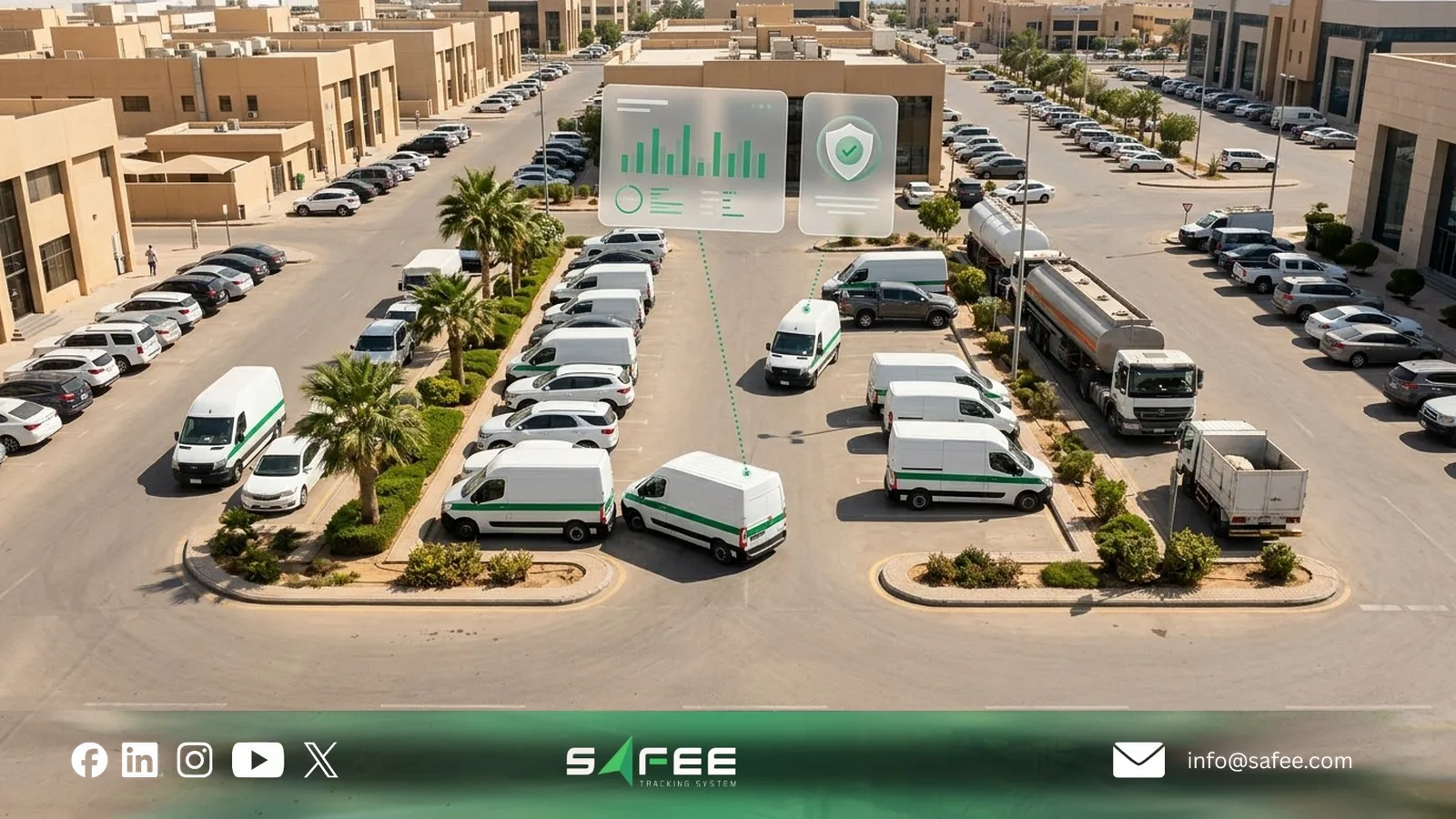
Fleet insurance premiums depend on the fleet’s claims history, operating risks, and policy terms. Insurers also consider how the company manages those risks, although the weight given to each factor varies between insurers.
Claims history and the fleet profile
When assessing a fleet insurance policy, underwriters typically consider:
- Claims history: The frequency and cost of previous claims, including outstanding and settled claims.
- Vehicles: Fleet size, vehicle types, ages, and insured values.
- Activity: Delivery, goods transport, passenger transport, or field services, and annual mileage.
- Operating areas: Urban routes, highways, and other areas where vehicles operate.
- Drivers: Driving experience, license qualifications, and violation records.
- Coverage and deductible: The coverage limits requested and the amount the company retains per claim.
Claims frequency and severity deserve separate attention. Frequent minor claims may indicate recurring operational problems, while a few costly claims can significantly affect the fleet’s loss history.
When comparing years, consider claims per million kilometers alongside total claims and average claim costs. This helps distinguish changes in driving exposure from changes in safety performance.
Also read: Fleet maintenance management.
Where driving data enters the underwriting conversation
Fleet telematics data can support insurance negotiations, but installing tracking devices alone does not guarantee lower premiums. Marsh explains that insurers may consider telematics when assessing risks, particularly when the data supports an active safety management program.
For example, instead of reporting how many vehicles have trackers, show whether speeding and harsh-braking events per 1,000 km decreased after driver coaching. Include the corrective actions taken, the subsequent results, and the proportion of your fleet covered by the data.
There is also a risk in collecting data without acting on it. US insurance industry specialists warn that ignored safety alerts may be raised in litigation following an accident. This does not establish equivalent legal liability in Saudi Arabia or the UAE.
Before renewal, ask your broker which driving and safety reports the insurer will consider. Our guide to fleet risk management explains how to prioritize recurring risks. You can also use out Fleet Insurance Cost & Loss Ratio Calculator to compare claims frequency, loss ratios, and insurance costs before meeting your broker.
Also read: Fleet management KPIs: how to measure fleet performance
Usage-based insurance for fleets: what is offered in the region
Usage-based insurance (UBI) uses vehicle mileage or driving behavior, such as speeding, harsh braking, and acceleration, to assess risk and potentially adjust premiums or offer rewards. However, eligibility and benefits depend on the insurer’s program and policy terms.
Telematics programs launched in Saudi Arabia and the UAE
In Saudi Arabia, Tawuniya Drive launched in 2021 to reward safer driving through telematics. According to Tawuniya’s sustainability report, 477 fleet clients had registered by the end of 2021. A Vitality case study also confirms that a fleet-specific program launched in August 2021. The program uses driving scores to support rewards and potential insurance discounts, but current fleet eligibility and premium terms must be confirmed with the insurer.
In the UAE, Beema has advertised mileage-based fleet insurance, offering potential discounts for lower-mileage vehicles. However, its published page identifies the fleet product as provisional, so its current availability and terms require confirmation. The CBUAE motor insurance rules do not establish a standard automatic discount for fleets using telematics.
Why fleet discounts are negotiated, not automatic
Having GPS trackers or improving driver scores does not automatically entitle a fleet to lower premiums. Insurers also consider claims history, vehicle use, coverage limits, and other underwriting factors.
Before renewal, ask your broker whether the insurer offers a fleet telematics program, which driving metrics it accepts, and whether improved performance can affect premiums or other policy terms. Also confirm whether any proposed discount is conditional on continued monitoring or data sharing.
How telematics and video help in claims and fraud disputes
Telematics and video records can help reconstruct an incident and identify discrepancies in a claim. However, they supplement official accident reports and investigations rather than independently determine fault or prove fraud.
| Stage | Useful data | What it cannot prove |
|---|---|---|
| Accident reporting | Location, time, trip history, and assigned driver | Legal responsibility for the accident |
| Disputed liability | Recorded speed, braking events, and available video | Events outside the recorded data or camera view |
| Suspected fraud | Vehicle location and movement compared with claim details | Intentional deception or fraud on their own |
| Theft | Last recorded location and connection status | The vehicle’s current location or guaranteed recovery |
Trip history and second-by-second data after a crash
After an accident, trip history can help establish where the vehicle was and how it moved before the incident. Depending on the device and available sensors, records may include speed, engine status, and driving events.
With compatible equipment, Safee’s Second by Second Report provides speed, RPM, and acceleration records at one-second intervals while the ignition is on. A driver identification device, such as RFID or iButton, can also link a trip to the registered driver. Learn more about what a black box fleet management system records.
For example, if a driver reports being stationary when a collision occurred, the fleet manager can compare that statement with the recorded speed and trip timestamps. Any discrepancy should be checked against the device’s timing, available footage, and official accident report before challenging the findings.
Location records can also flag inconsistencies in suspicious claims, such as a reported accident in a different city from the vehicle’s recorded location. Such discrepancies warrant investigation but do not establish fraud by themselves.
Video clips when liability is disputed
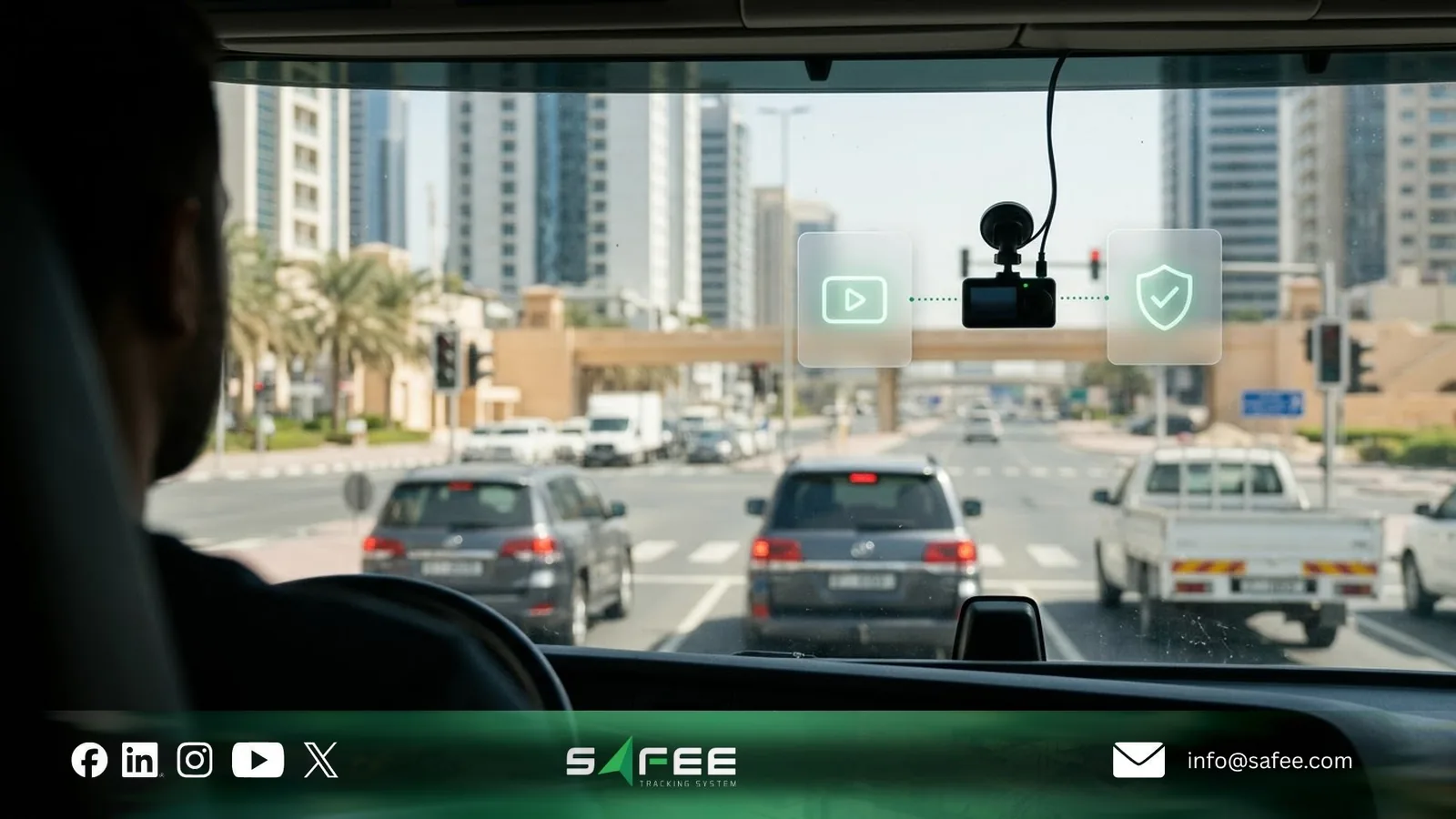
A road-facing camera can provide context that tracking data cannot, such as surrounding traffic, vehicle movements, and visible road signals. A driver-facing camera may help investigate distraction or fatigue where the equipment supports it and recording is permitted.
Preserve relevant footage as soon as an accident is reported. Local recorders may overwrite older files when storage fills up. Save the original available clip, match it with the trip timestamps and vehicle details, and document who accessed or exported the evidence.
Video acceptance depends on the competent authority and the circumstances of the case. Our Video-iVMS supports video monitoring and event clips, with DSM and ADAS alerts where compatible cameras and licenses are installed. Learn more about fleet tracking with cameras.
If disputed claims are a recurring problem, talk to a Safee Fleet Expert about the video and trip records your fleet’s equipment can provide.
How to share driver data with nsurers safely
Driver location, trip history, and driving scores can qualify as personal data when they identify an individual driver. Before sharing these records with an insurer or broker, your company must establish a valid legal basis, inform drivers as required, and limit disclosure to what is necessary.
What Saudi and UAE data protection laws mean for driver data
In Saudi Arabia, the Personal Data Protection Law (PDPL) is supervised by the Saudi Data and AI Authority (SDAIA). It requires a lawful basis for processing personal data, transparency about its purpose and recipients, and limiting collection and disclosure to necessary information. Consent is one possible basis, but the law provides exceptions and other permitted grounds under specific conditions.
In the UAE, Federal Decree-Law No. 45 of 2021 governs personal data protection within its scope. While consent is a general requirement, the law allows processing without consent in specified circumstances, including certain contractual, employment-related, and legal-claim purposes.
Neither framework gives fleet operators unrestricted permission to share identifiable driver records. Have your legal or privacy team confirm the appropriate basis before disclosure, particularly for detailed trip histories or driver-facing video.
For broader guidance, see our article on driver welfare and privacy in logistics fleets.
What to agree with the insurer before sharing data
Before sending driver-related information to an insurer or broker, document the following:
- Purpose and legal basis: Specify whether the data supports underwriting, renewal negotiations, or an individual claim, and confirm the lawful basis for disclosure.
- Data scope: Share aggregated safety trends for renewal assessments where sufficient, reserving identifiable trip records for cases that require them.
- Driver identification: Remove names and unnecessary identifiers from summary reports where possible.
- Access and security: Identify authorized recipients, permitted uses, and safeguards for storing and transferring records.
- Retention and deletion: Agree on retention periods and deletion procedures, subject to applicable legal obligations.
- Driver notice: Explain what is collected, why it may be shared, and who may receive it, as required by applicable law.
If the insurer or broker processes data outside the country, verify the applicable cross-border transfer requirements before sharing it.
Preparing a renewal file from your fleet data
A stronger fleet insurance renewal file combines the information insurers need to assess coverage and claims with evidence showing how your company manages driving risks.
Start by confirming the insurer’s requirements with your broker. Then organize your file around these ten items:
- Updated vehicle schedule: Vehicle types, ages, insured values, business use, and required coverage.
- Claims history: Previous claims, dates, amounts paid or outstanding, and claim status, using records from your insurer.
- Claim outcomes: Available liability findings, claim costs, and corrective actions following significant incidents.
- Driver performance trends: Comparable monthly driving scores showing whether risk indicators improved or deteriorated.
- Violation rates: Speeding and harsh-braking events normalized by distance, such as events per 1,000 km.
- Driver coaching records: Drivers identified for intervention, actions taken, and performance changes afterward.
- Camera coverage: Vehicles equipped with compatible cameras and the types of incident evidence available.
- Maintenance and inspections: Preventive maintenance completion, overdue work, and inspection records.
- Night-driving exposure: Driving hours or distances during higher-risk periods, where relevant to fleet operations.
- Post-accident improvements: Changes to driver training, routes, schedules, or operating procedures after incidents.
The first items establish the fleet’s insurance and claims profile. The remaining records help demonstrate active risk management, but insurers may differ in which telematics evidence they consider.
Begin preparing around 90 days before renewal. Request the claims history early, review the latest 12 months of safety performance, and document the actions taken to address recurring risks. Ask your broker whether the insurer needs a longer claims history.
Our Fleet Insurance Renewal Pack provides a vehicle schedule, claims and loss-ratio worksheets, risk-control records, quote comparisons, and a renewal timeline. Our guide to fleet management reporting explains how to schedule the operational reports needed to keep this information updated.
How Safee helps with your fleet insurance file
Safee helps fleet managers collect, review, and organize the operational evidence needed for accident investigations and insurance renewals. Instead of relying only on driver statements or manually compiled records, your team can use the following capabilities:
- Trip and incident records: Live Vehicle Tracking provides vehicle locations and trip histories to help reconstruct movements around reported incidents.
- Speed and vehicle data: The Second by Second Report provides detailed speed, RPM, and acceleration records where supported by the installed equipment.
- Driver identification: Driver Management and compatible RFID or iButton readers associate recorded trips with identified drivers.
- Risk and driver performance: The Driver Performance, RAG, and RALG reports help identify recurring violations, prioritize driver coaching, and monitor performance across reporting periods.
- Driving violations: Overspeeding and harsh-braking reports identify recorded events for operational review and follow-up.
- Network interruptions: Compatible trackers can store records during connectivity loss and upload them after reconnection, subject to device settings and storage limits.
- Video evidence: Video-iVMS can automatically associate available alarm clips with supported events. DSM and ADAS alerts depend on the installed cameras and licenses.
- Renewal reporting: Fleet Reporting supports filtered reports, exports, and scheduled email delivery to help maintain consistent performance records.
For additional information about supported camera-based alerts, see our guide to the Safee driver monitoring system.
Available data, reporting frequency, and video capabilities depend on the device, sensor configuration, and subscribed modules. Confirm these requirements with Safee before relying on a specific report for an insurance claim.
Safee vs paper accident forms and driver statements
The main difference is how quickly your team can retrieve consistent evidence and review it across vehicles and drivers.
| Insurance task | Manual or disconnected records | With Safee |
|---|---|---|
| Identify the driver | Check assignments and driver statements | Driver ID linked to recorded trips, where configured |
| Review speed before an accident | Gather available vehicle records | Second by Second Report, where supported |
| Retrieve incident video | Access the vehicle’s camera recorder | Available alarm clips linked to events |
| Assess driving risk | Combine separate logs and spreadsheets | Driver performance and violation reports |
| Prepare renewal evidence | Compile records from multiple sources | Filtered exports and scheduled reports |
What Safee does not decide
At Safee, we do not not determine insurance premiums, establish legal liability, or negotiate policy terms on your behalf. Insurers and competent authorities make those decisions.
Our role is to help your team produce organized trip, driver, and safety records so your insurer or broker can review relevant evidence during claims assessment and renewal negotiations.
To explore the reports available for your vehicles and equipment, request a Safee Fleet Demo.

FAQs about fleet insurance and telematics
Is fleet insurance cheaper than insuring each car separately?
Not always. Premiums depend on claims history, vehicle types, coverage, and insurer pricing. A fleet policy can simplify administration through consolidated vehicle schedules and renewals, but savings are not guaranteed.
Can insurance companies track your fleet vehicles?
Not through your existing tracking system by default. Insurers may access driving data through an agreed telematics program or data-sharing arrangement, subject to applicable privacy laws and contractual terms.
Can telematics data lower your fleet insurance premium?
Potentially. Some insurers offer telematics-based incentives, while others may consider documented safety improvements during renewal. Discounts depend on the insurer’s underwriting criteria and are not guaranteed.
Can Safee lower my fleet’s insurance premium?
Safee does not set premiums or guarantee discounts. Its driver performance, trip history, and safety reports help document risk improvements, supporting discussions with your insurer or broker.
Sources
- Central Bank of the UAE: Official website
- Central Bank of the UAE: Published rulebook
- Insurance Authority: Rules and instructions issued by the authority
- Business Insurance: Telematics becomes baseline for fleet cover (August 2026)
Ready to improve your fleet operations?
Tell us what you would like to improve. A Safee specialist will reply by email.
Usually replies within one business day • No sales spam
Your details are used only to respond to your request. Privacy Policy